A philosophical zombie is a hypothetical being that is physically identical to a human, behaves exactly like a human, and even claims to feel pain and be conscious, but lacks any inner experience, subjective awareness, or perception. This thought experiment, proposed by David Chalmers in 1990, illustrates the hard problem of consciousness—the fundamental challenge of explaining why physical brain processes lead to conscious experience. The concept highlights our epistemic limitation: we can observe behavior and scan brains, but we cannot directly access or verify whether others are consciously experiencing the world the same way we are.
Philosophical Zombies: The Hard Problem of Consciousness
Added:Deep Dive
The mind-body problem: the foundational philosophical debate regarding the relationship between mental states (consciousness) and physical states (the brain).

O Que é a Realidade?
745.6K
The mind-body problem asks how physical processes in the brain give rise to subjective experience (consciousness). Descartes proposed dualism—that mind and body are separate substances. Modern neuroscience shows that mental processes correlate with brain activity, but the exact relationship between physical processes and subjective experience remains mysterious. Emergence occurs when complex systems exhibit properties not present in their individual components. Consciousness might be an emergent property of the brain's complex neural network.
Click to watch →
क्या आप बिना शरीर के रह सकते हैं ? | Samkhya Darshan solves Descartes' Mind-Body Problem | #117
80.3K
The mind-body problem arises when we assume mind and body are two different substances - mind being non-physical and body being physical. For interaction to occur between two substances, both must be material or both must be energy. However, a non-material mind cannot interact with a material body, creating a fundamental philosophical problem. This is known as the mind-body problem in Western philosophy.
Click to watch →
NINGUÉM sabe onde está a CONSCIÊNCIA HUMANA
710.9K
The mind-body problem, also called the problem of commerce, asks how immaterial mind affects material body and vice versa. If mind and body are different substances that don't interact, how do they affect each other? This remains a fundamental challenge for dualist theories.
Click to watch →

कहानी सुनिए और कुछ बड़ा सीखिए , by vikas divyakirti sir || Vikas divyakirti sir new video ||
641.3K
The mind-body problem explores how consciousness relates to physical matter. If computers (made of physical matter) can think and reason, why can't biological bodies? This question connects to ancient philosophical debates about whether consciousness is a property of matter or something fundamentally different.
Click to watch →

Татьяна Черниговская главная тайна которую предстоит понять #Психология как это происходит
2.2M
The fundamental philosophical question of how non-material thoughts (ideas, thoughts) transform into material actions (walking, writing, physical behavior). This remains an unsolved mystery that humanity has not resolved despite thousands of years of inquiry.
Click to watch →
Deep Dive
Physicalism (or materialism): the metaphysical thesis that everything that exists is ultimately physical, and that mental states must be explainable by physical processes.
Vous n'avez pas d'âme (et c'est ok)
109K
Physicalism (or materialism) is the philosophical thesis that humans are nothing more than extraordinarily complex ensembles of chemical and physical mechanisms. All behaviors, psychology, and mental states are effects of these material mechanisms. There is no immaterial spirit or soul that animates the body—the body is merely a complex machine, and we are nothing outside the body. This thesis has become particularly relevant with AI advances, as accepting or rejecting it affects our relationship with AI systems.
Click to watch →

Peter Godfrey-Smith presents "Metazoa" with Carl Safina
2.6K
Materialism (or physicalism) holds that mentality or experience is not present in basic chemical reactions, physical interactions, or electromagnetic processes characteristic of non-living things. However, according to materialism, some particular kinds of physical processes and interactions among a subset of material things are sufficient for experience to exist. It is not that experience is made by physical processes, but rather that certain physical processes constitute or are experienced. The view challenges the idea that minds must be infused from somewhere external; instead, starting with ordinary physical things arranged in the right way produces a mind with experiences.
Click to watch →

Mind and Matter with Russell Targ
75.8K
Physicalism is a modern philosophical position that claims everything that exists is ultimately physical or can be explained by physical processes. Unlike strict materialism, physicalism is considered more flexible and serves as a form of 'promissory materialism' - promising that all phenomena will eventually be explained through physical mechanisms, even if current evidence doesn't support this claim. This position struggles to account for consciousness and parapsychological phenomena.
Click to watch →

Bats, Katy Perry, and the mind-body problem
522
Physicalism (materialism, reductionism) is the view that all facts about the universe consist only in information from physical, chemical, and biological sciences. According to this view, everything including conscious experiences can ultimately be reduced to physical effects. This view has become influential, suggesting thoughts and feelings can be expressed in scientific terms from physics, chemistry, or biology.
Click to watch →

An Introduction to Physicalism (Mirror)
302
Physicalism is the philosophical claim that everything in the mind—mental states like belief and desire, mental events like thought and sensation, and mental processes like memory and reason—is ultimately no different from any other physical event, state, or process. This view emerged from the Enlightenment and gained prominence during the Industrial Revolution, where practical technological benefits made the denial of physicalism seem perverse. Physicalism positions psychology as a physical science that need not invoke souls, supernatural forces, or magic, instead placing mental phenomena alongside the natural world studied by physicists, chemists, and biologists.
Click to watch →
Deep Dive
The concept of 'qualia': the subjective, qualitative aspects of conscious experience, such as the unique sensation of seeing the color red or feeling pain.
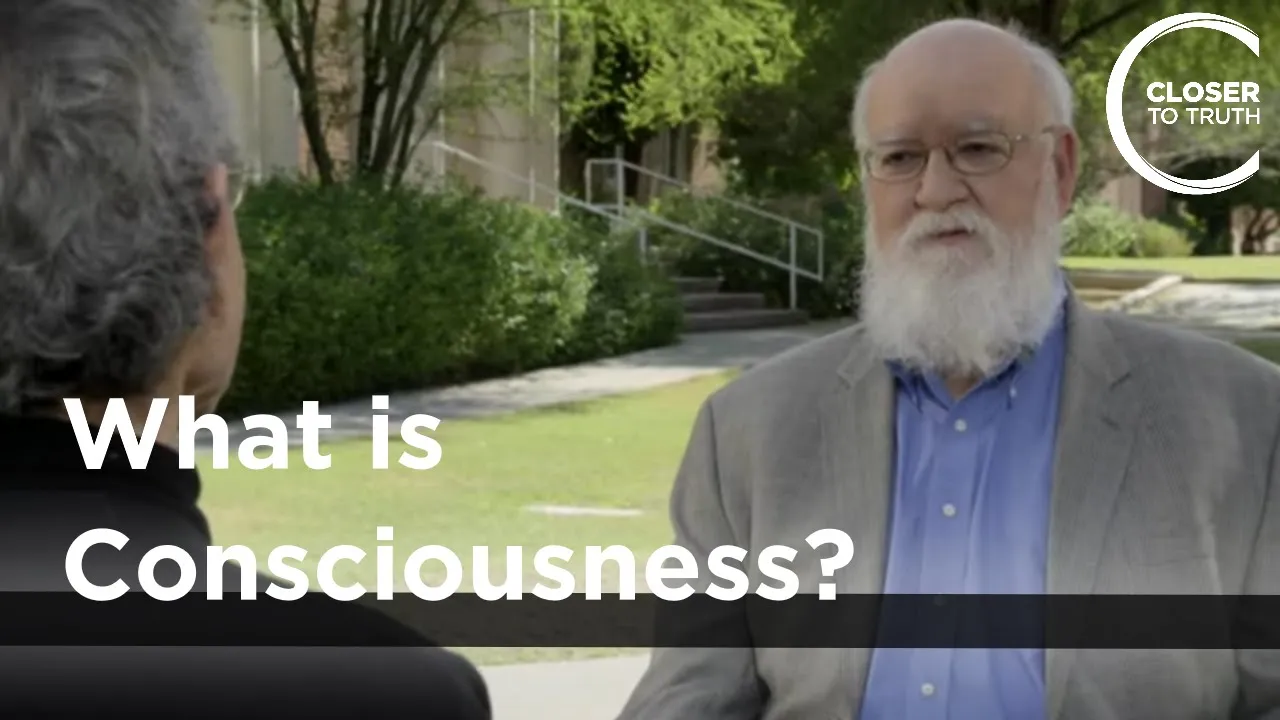
Daniel C. Dennett - What is Consciousness?
83.8K
The concept of qualia is fundamentally flawed because it means different things to different people and lacks a clear philosophical definition. Qualia are often characterized as intrinsic non-functional features, which by definition resists functional decomposition. However, empirical research demonstrates that subjective experiences like musical note qualities can be statistically analyzed and explained through neural mechanisms. Complex neural combinations directly produce emotional and affective reactions associated with qualia, leaving no room for qualia as separate entities. Identity theory fails because qualia lack clear definitions, preventing meaningful scientific progress.
Click to watch →

Ce este conștiința? 🧠 Explicația pe care ai așteptat-o!
54.7K
Qualia are the subjective qualities of experiences - the 'what it's like' aspects such as the feeling of redness or pain. Tononi's theory proposes that qualia correspond to irreducible elements in the causal structure of information exchange. Each qualia represents an element that cannot be further decomposed, similar to how atoms were thought to be fundamental building blocks of matter. This 'subjective atomism' suggests that experiences like the feeling of redness are fundamental, irreducible units of consciousness. The theory attempts to explain how the structure of information exchange produces these subjective qualities without additional ingredients.
Click to watch →

O que é Qualia (Filosofia da Mente)
14.1K
Qualia are the subjective experiences that exist only in first-person perspective, including visual experiences like seeing red, sounds, touch, smell, taste, thoughts, and emotions. They represent the 'what it is like' aspect of consciousness. Thomas Nagel's 'What It Is Like to Be a Bat' illustrates that even complete scientific knowledge of bat biology cannot reveal what it is like to be a bat, since bats perceive the world primarily through echolocation. This demonstrates that subjective experience cannot be captured by scientific observation alone. Qualia are crucial for philosophy of mind because they challenge the ability of science to fully explain consciousness, raising fundamental questions about the nature of reality and the relationship between mind and matter.
Click to watch →

Strange things happen when you examine consciousness
139.8K
This section defines qualia as the raw subjective building blocks of experience—the redness of red, sweetness of sugar, burn of shame. It presents the hard problem of consciousness: why does any neural processing come with subjective experience? The section demonstrates that while we can map neural activity, we cannot objectively describe what red looks like to another person. Experimental evidence shows different people experience even basic sensations like the color red in vastly different ways, revealing that subjective experience is fundamentally private and inaccessibly different for each individual.
Click to watch →

Do You Believe in God? Or Hell? WHY?? Call Matt Dillahunty + Jimmy Snow The Sunday Show 10.29.23
115.1K
The hosts discuss whether qualia can be communicated or measured. They note that language becomes very important in this discussion. The hosts argue that if you've perceived something in every possible aspect, both empirically and subjectively, there's no room left for anything else. They point out that the notion of qualia as an externally unknowable subjective experience is problematic because it's just about you, meaning you're adding a new word to something we already have words for.
Click to watch →
Deep Dive
Conceivability versus possibility: the basic philosophical distinction between what can be coherently imagined in the mind and what is metaphysically possible in reality.
Conceivability and Possibility
10.1K
This video examines the philosophical debate over whether conceivability can serve as a reliable guide to metaphysical possibility. While Hume's Maxim suggests that whatever we can clearly conceive is metaphysically possible, critics argue that conceivability fails as an epistemic guide because we can conceive of impossibilities (like round squares or a posteriori identities such as 'the Morning Star is not the Evening Star') and often misidentify what we are actually conceiving. The video explores different conceptions of conceivability—linguistic representation (which allows conceiving impossibilities) versus pictorial representation (which is too limited)—and concludes that conceivability arguments in philosophy may lack the rigor needed for establishing metaphysical conclusions.
Click to watch →

Hume and Shepherd on Conceivability
1.2K
David Hume argued that conceivability implies possibility, using the example that trees flowering in winter is conceivable and therefore not logically impossible; however, Mary Shepherd countered that once we understand the essential nature of things (such as trees requiring warmth for growth), conceivability no longer indicates possibility, as knowing an object's nature reveals what it can and cannot do, making some scenarios genuinely inconceivable rather than merely unintelligible.
Click to watch →

There is no evidence for god
565
Conceivability (the ability to imagine something) does not equate to actual possibility or truth. We can conceive of unicorns, Bigfoot, or Spider-Man, but this does not make them real. When making actual world claims, we must demonstrate that something is actually possible, not just conceivable. Epistemology is the study of knowledge - how we know what we know. For a claim to be justified, it must be epistemically demonstrated through observable, repeatable, and testable evidence.
Click to watch →
Why physicalism is FALSE
16.8K
Conceivability arguments infer from conceivability to possibility: if zombies (physical duplicates lacking consciousness) are conceivable, they are possible, and physicalism is false. Ghost arguments similarly claim we can conceive of beings with all phenomenal properties but no physical properties. Responses include: (1) denying conceivability (a priori physicalism), (2) accepting conceivability but denying it entails possibility (a posteriori physicalism), and (3) accepting possibility but denying it refutes physicalism. The a posteriori response is strongest but faces special pleading costs.
Click to watch →

Is Consciousness Physical? | Emerson Green
2.5K
The link between conceivability and possibility is central to the zombie argument but controversial. Different types of conceivability exist: primordial conceivability (immediate intuitive judgment) versus ideal conceivability (what an ideal reasoner could determine from armchair reflection). Positive conceivability involves forming detailed mental images, while negative conceivability only requires detecting no contradiction. The water/H2O example illustrates a counterexample: conceiving water as not H2O is negatively conceivable but not metaphysically possible. However, this works because water is an opaque concept—we can't determine its essence a priori. Pain, by contrast, is transparent: if you feel pain and reflect on it, you know what it is, suggesting phenomenal concepts differ from opaque concepts like water.
Click to watch →
Prerequisite Knowledge
- Concept 01The mind-body problem: the foundational philosophical debate regarding the relationship between mental states (consciousness) and physical states (the brain).
- Concept 02Physicalism (or materialism): the metaphysical thesis that everything that exists is ultimately physical, and that mental states must be explainable by physical processes.
- Concept 03The concept of 'qualia': the subjective, qualitative aspects of conscious experience, such as the unique sensation of seeing the color red or feeling pain.
- Concept 04Conceivability versus possibility: the basic philosophical distinction between what can be coherently imagined in the mind and what is metaphysically possible in reality.
Subsequent Learning
- Step 01David Chalmers' property dualism: the philosophical view that while there is only one kind of substance (physical matter), it can possess both physical and non-physical properties.
- Step 02Physicalist counterarguments: exploring critiques from philosophers like Daniel Dennett, who argue that the concept of a philosophical zombie is logically incoherent.
- Step 03Epiphenomenalism: the theory that mental states are merely byproducts of physical brain activity and have no causal influence on physical actions.
- Step 04Panpsychism: the alternative metaphysical view that consciousness is a fundamental and ubiquitous feature of the universe, present even at the level of fundamental particles.
- Step 05Artificial Intelligence and Machine Consciousness: applying the zombie argument to the ethical and practical challenge of determining whether an advanced AI has genuine inner experiences.
Concept
Origin
Key Issue
Implication
Concept
0:00Playing Section
- 1
Defines a philosophical zombie as physically identical but lacking inner experience.
- 2
Highlights the absence of subjective awareness despite normal behavior.
Physicalist Eliminativism and the Incoherency of P-Zombies
Many physicalist philosophers, most notably Daniel Dennett, argue that the concept of a 'philosophical zombie' is fundamentally incoherent and logically impossible. According to this counterpoint, if a zombie is truly identical to a human in every physical, behavioral, and functional way, it must also possess consciousness. Dennett contends that supporters of the zombie argument mistake a conceptual distinction for a real, metaphysical possibility. From a functionalist perspective, consciousness is not a separate, non-physical 'extra' added to physical processes; rather, it is the inevitable product of complex information processing. Therefore, any being that processes information and behaves exactly like a human would necessarily have subjective experiences. Other critics, known as illusionists, suggest that the 'qualia' or subjective experience we think we have is actually a cognitive illusion. In this view, there is no 'hard problem' of consciousness, and the premise of the philosophical zombie dissolves.
Deep Dive
David Chalmers' property dualism: the philosophical view that while there is only one kind of substance (physical matter), it can possess both physical and non-physical properties.

Property Dualism: Philosophy A-Level
711
Property dualism, as proposed by David Chalmers, argues that consciousness and qualia are non-physical properties that cannot be fully explained by physicalism, using thought experiments like p-zombies (physically identical beings lacking consciousness) and Mary's Room (a scientist who knows all physical facts about color but learns qualia upon first seeing red) to demonstrate that at least one phenomenal property exists outside physical explanation; critics respond by arguing that consciousness is not separable from physical systems, that conceivability doesn't guarantee metaphysical possibility, and that Mary actually gained ability or acquaintance knowledge rather than new factual knowledge.
Click to watch →

Fall Asleep to the Most Bizarre Paradoxes — 3 Hour Philosophy Sleep Story
112
David Chalmers' Zombie Argument asks whether a being could be physically identical to you in every way but with no conscious experience. Imagine your perfect physical duplicate—same neurons firing, same chemicals flowing, same responses to all stimuli—but inside there's nothing, no subjective experience. If such a zombie is conceivable, then consciousness must be something over and above physical processes. This leads to property dualism: physical properties (neurons firing) and mental properties (subjective experience) are fundamentally different kinds of properties. Critics respond that conceivability doesn't prove possibility, and that consciousness might necessarily emerge from the right physical organization.
Click to watch →
Mind and Body: Property Dualism David Chalmers for the Royal Institute of Philosophy
895
Property dualism is a philosophical position that asserts there is only one kind of substance in the world (physical things), but there are two fundamentally distinct types of properties: physical properties (like mass and charge) and mental properties (like consciousness and emotion). Unlike substance dualism, which posits separate non-physical minds and physical bodies, property dualism holds that physical entities possess both kinds of properties simultaneously. This view is motivated by the explanatory gap—the difficulty of explaining consciousness through purely physical properties—and draws an analogy to how science sometimes introduces new fundamental properties (like electric charge) when existing theories cannot account for observed phenomena. However, property dualism faces challenges regarding how non-physical mental properties could causally interact with physical systems, potentially leading to epiphenomenalism if such interaction cannot be reconciled with scientific understanding.
Click to watch →
Episode 25: David Chalmers on Consciousness, the Hard Problem, and Living in a Simulation
105.4K
Property dualism holds that there are mental properties alongside physical properties in the universe, without requiring a separate immaterial substance (unlike substance dualism). This view is analogous to how electromagnetism required positing charge as a new fundamental property when Maxwell's equations couldn't be explained mechanically. If consciousness cannot be reduced to physical properties, property dualism suggests consciousness might be an irreducible fundamental property of nature, similar to how charge was added to physics.
Click to watch →

Dualism Returns
139
Chalmers argues that there can be no physical explanation for consciousness. His argument structure is: if eliminativism is false and reductionism is false, then substance dualism is true. Eliminativism is false because of first-person experience—we know we have consciousness. Reductionism is false because there is no supervenience. However, this relies on assumptions that functionalism and identity theory are the only options, and that eliminativism and reductionism are the only options. If there are other options within materialism, his argument does not go through. The H2O case argument fails because logical possibility of alternatives does not undermine reductive explanations of what actually occurred. Zombies are beings physically identical to us but lacking qualitative experiences. If zombies are logically possible, consciousness does not logically supervene on the physical. This also conflicts with functionalism, which defines consciousness in terms of inputs and outputs. However, our concern is a scientific theory of mind, not a logically possible theory. The fact that it is logically possible we live in a Euclidean plane does not impact the actual non-Euclidean laws of our world. Chalmers argues that evidence for consciousness is first-person only, unlike other sciences. However, this is an outdated view of science. Science routinely uses indirect evidence—scientists do not directly see particles in a cloud chamber but detect them indirectly based on readouts. The fact that we cannot have direct evidence of your consciousness is just one instance of indirect evidence, which science routinely uses.
Click to watch →
Deep Dive
Physicalist counterarguments: exploring critiques from philosophers like Daniel Dennett, who argue that the concept of a philosophical zombie is logically incoherent.

물리주의 (feat. 김재권, 퍼트남, 메리, 좀비, 박쥐 등)
19.4K
Three major arguments challenge reductionist physicalism. The multiple realizability argument shows mental states can be realized by different physical substrates (humans and monkeys both feel pain but have different brains). Mary's Room thought experiment demonstrates that knowing all physical facts about color vision doesn't capture what it's like to see red. The zombie argument imagines beings physically identical to humans but lacking consciousness, suggesting physical states don't determine mental states.
Click to watch →
Sean Carroll & Philip Goff Debate 'Is Consciousness Fundamental?'
72.3K
Physicalism fails to explain consciousness because of a fundamental conceptual mismatch between the mental (which involves qualitative qualities) and the physical (which uses purely quantitative vocabulary). Despite enormous effort, physicalism has not explained a single conscious experience in terms of neural activity. A survey shows 60% of philosophers believe zombies are logically conceivable, indicating the conceptual mismatch problem. The vast majority of physicalist philosophers have abandoned the project of explaining consciousness, instead postulating brute identities between mental and physical without explanation.
Click to watch →
Why physicalism is FALSE
16.8K
Physicalism—the view that all mental facts are fully constituted by or grounded in physical facts—faces multiple philosophical challenges. The many-subjects argument suggests physicalism implies countless conscious beings in our vicinity (like brain parts or person candidates), which conflicts with common sense. Conceivability arguments (zombies, ghosts) and the knowledge argument (Mary's Room) claim we can conceive of scenarios where physical facts don't determine mental facts, suggesting an explanatory gap. Arguments from personal identity and mereological nihilism further challenge physicalist accounts of reality. These arguments collectively suggest that physicalism may fail to capture the full nature of consciousness and mental phenomena.
Click to watch →
What's Wrong With Physicalist Reductionism? (Aquinas 101)
32.1K
Physicalist reductionism—the view that physics alone explains everything and all other sciences are reducible to physics—is challenged on multiple grounds: historical evidence shows no science has ever been completely reduced to another; emergent properties exist that cannot be explained by parts alone; and powerful intuitions about human freedom, moral truth, purpose, and dignity contradict reductionist claims, making it a philosophy that clashes with both empirical evidence and fundamental human experience.
Click to watch →

Why Believe Physicalism?
23.3K
Physicalism, the metaphysical view that everything that exists is physical, is supported by four main arguments: (1) The explanatory argument, which notes that physicalism has unparalleled explanatory power as science has successfully reduced complex phenomena to fundamental physical constituents; (2) The causal closure argument, which claims that since all physical effects have sufficient physical causes, any purportedly non-physical thing with physical effects must itself be physical; (3) The simplicity argument, which appeals to Occam's razor by noting that physicalism postulates only one fundamental kind of property (physical properties); and (4) The methodological naturalism argument, which holds that metaphysical commitments should be guided by the methods and results of natural science, which favor physicalism.
Click to watch →
Deep Dive
Epiphenomenalism: the theory that mental states are merely byproducts of physical brain activity and have no causal influence on physical actions.

What is Epiphenomenalism? (Philosophy of Mind)
38.2K
Epiphenomenalism is a philosophical position in the philosophy of mind that proposes a one-way causal relationship between physical and mental states, where physical states can cause mental states but mental states cannot cause physical states, thereby attempting to reconcile the empirical claim that all brain processes can be causally explained by physical interactions with the idea that mental phenomena exist separately from physical processes.
Click to watch →

David Wood Vs Aron Ra | Is Naturalism True? | DEBATECON 4 in Dallas, TX
115.2K
Epiphenomenalism is the philosophical position that mental states are byproducts of physical processes that play no causal role in behavior. Thomas Huxley gave the famous example of a train: the train has working parts that make it go down the track, and there's a train whistle that affects the train but the whistle does not affect the workings of the train. According to epiphenomenalism, your physical parts are the train and your mental states are the whistle. Your thoughts and beliefs are a weird byproduct of physical processes that are going on in you, but they play no causal role in what leads to those beliefs. If non-rational physical processes are what are putting your body in the right place helping you survive and reproduce, and then you have this weird byproduct that is your mental states, why should we take those seriously?
Click to watch →
Frank Jackson's Mary's Room Thought Experiment Explained
285.3K
Epiphenomenalism is a dualist theory holding that consciousness is a non-physical byproduct of physical brain processes that never causes anything in the physical world. Using a steam engine analogy, just as smoke and sound are byproducts that don't drive the engine, mental experiences are produced by physical processes but don't influence physical events. This theory resolves Princess Elizabeth's problem (how non-physical minds could causally interact with bodies) by abandoning causal interaction entirely. However, it has radical implications: if true, virtually all our explanations of behavior (beliefs causing actions, desires motivating decisions) would be false, since mental states would be mere epiphenomena without causal power.
Click to watch →
La Solución Más DESESPERADA al Problema de la Conciencia | Filosofía de la mente
56.5K
The evolutionary argument against epiphenomenalism highlights a remarkable harmony between conscious experience and behavior: pain is associated with harmful behaviors, and pleasure with beneficial ones. The natural explanation is that organisms that didn't feel pain from harmful actions or pleasure from beneficial ones would have gone extinct. For the epiphenomenalist, this harmony is inexplicable because evolution would be indifferent to what organisms feel subjectively. If epiphenomenalism were true, we would expect no such correlation between experience and behavior, but we observe it constantly.
Click to watch →
The Meta-Problem of Consciousness | Professor David Chalmers | Talks at Google
174.6K
Strong criticisms exist against both illusionism and epiphenomenalism (the view that consciousness plays no causal role). Galen Strawson calls illusionism 'the most remarkable episode in the whole history of ideas' - denying something we know with certainty to exist. Eliezer Yudkowsky criticizes epiphenomenalism as requiring a 'miraculous coincidence' where physical algorithms correctly model non-physical consciousness. Both views face charges of absurdity, suggesting that progress requires finding middle ground that addresses these concerns.
Click to watch →
Deep Dive
Panpsychism: the alternative metaphysical view that consciousness is a fundamental and ubiquitous feature of the universe, present even at the level of fundamental particles.

Las 10 teorías filosóficas más extrañas de la historia
219.5K
Panpsychism is a serious theory proposing that all matter in the universe possesses some degree of mind or consciousness, from subatomic particles to complex organisms, rather than locating consciousness only in highly evolved brains. Panpsychism proposes that consciousness or at least proto-consciousness is a fundamental property of reality, similar to electric charge or mass. For example, an electron would have a kind of tiny internal experience, a rock composed of atoms would contain many fragments of diminished proto-consciousness, simple organisms would have very basic consciousness, animals would have more, and humans would have highly developed consciousness. It is important to distinguish that classical panpsychism does not claim that each object has a human-level mind, but rather that fundamental parts of matter—atoms, particles, and electromagnetic fields—have elementary mental aspects, which when combined in complex systems like brains give rise to rich conscious experiences. There are variations: panexperientialism (all matter has minimal subjective experience) and pan-cognitivism (attributing something analogous to cognition at the micro level). Panpsychism breaks the sharp distinction between insensible matter and mind, proposing that mind and matter are intrinsically linked in all parts of the universe. In recent decades, panpsychism has resurged in serious philosophical and scientific discussions, particularly through the work of neuroscientist Christof Koch and theorist Giulio Tononi, who proposed that their integrated information theory necessarily implies a form of technical panpsychism.
Click to watch →
What is Panpsychism? (Philosophical Definitions)
58.4K
Panpsychism is the philosophical position that everything has a mind or mental element. Historical positions include animism (everything has a spirit), hylozoism (all things are alive), pantheism (everything is God's mind), and panentheism (God is omnipresent in everything). Modern variants include panexperientialism (consciousness is fundamental), panproto-psychism (everything has proto-consciousness), constitutive panpsychism (human consciousness grounded in fundamental consciousness), constitutive micro-psychism (consciousness emerges from smallest particles), and constitutive cosmopsychism (grounded in cosmic mind). Thomas Nagel argues panpsychism solves the hard problem of consciousness: matter making up conscious beings isn't different from other matter, mental states are real properties, and cannot be derived from physical properties alone. The philosophical zombie argument supports this by showing consciousness cannot be explained by physical arrangements.
Click to watch →
What is Panpsychism? | Rupert Sheldrake, Donald Hoffman, Phillip Goff, James Ladyman
178.8K
Panpsychism addresses the hard problem by proposing consciousness exists in some form even in subatomic particles, transforming the problem from one of kind to one of degree. There are three main views: top-down (universe is conscious, matter is content), bottom-up (consciousness emerges from matter), and integrated (consciousness is both emergent and fundamental). The top-down view holds consciousness existed before matter, with evolution as content. The bottom-up view starts from particles and requires emergence. The third position sees consciousness appearing within larger conscious systems like galaxies or Earth.
Click to watch →
Bernardo Kastrup | Refuting Materialism: full lecture
35.1K
Panpsychism faces several serious problems: (1) It cannot conceive how two fundamentally separate microscopic subjects of experience can combine into a compound subject of experience—this is as hard as the original hard problem of consciousness; (2) It commits a logical error by attributing to experiences a structure (pixelation) observed only in the physical world, assuming that because our body appears pixelated (made of subatomic particles), our subjectivity must also be pixelated, which is not logically entailed; (3) It assumes elementary subatomic particles are separate billiard-ball-like entities, which quantum physics has shown is incorrect.
Click to watch →

O QUE É A QUALIA? | Cortes do Flow
36.8K
Panpsychism proposes that consciousness (qualia) is a fundamental property of all matter, not just complex organisms. The universe consists of 'pieces of qualia'—the same fundamental stuff that makes up human consciousness, but in a basic, unorganized form. The Big Bang can be understood as an explosion of these fundamental qualia particles. Simple matter like rocks has basic qualia, though not organized into complex experiences. The unified 'self' emerges from billions of interconnected neurons, not as an indestructible soul. This differs from idealism, which claims everything is fundamentally mental, by arguing that matter and mind share the same fundamental constituents.
Click to watch →
Deep Dive
Artificial Intelligence and Machine Consciousness: applying the zombie argument to the ethical and practical challenge of determining whether an advanced AI has genuine inner experiences.

Interview with Leslie Combs on Consciousness
209
Most researchers believe machines cannot achieve consciousness because they lack organic biological foundations. Functionalists argue that if a machine emulates human cognitive processes sufficiently well, it might deserve consideration as conscious. Historical examples like ELIZA (1960s computer that convinced users it was a therapist) show how easily people attribute consciousness to machines. The debate centers on whether consciousness requires biological substrate or can emerge from sufficiently complex information processing.
Click to watch →
What Is Consciousness? चेतना क्या है और यह कहाँ से आती है? | Sleeping Philosophy Documentary
19.8K
Artificial intelligence raises fundamental questions about consciousness. Turing proposed that if a machine can converse indistinguishably from a human, it should be considered intelligent. Neural networks in AI are inspired by biological neurons, with deep learning allowing machines to recognize complex patterns. The Chinese Room argument suggests machines manipulate symbols without genuine understanding. Integrated Information Theory proposes consciousness emerges when information integrates sufficiently, suggesting machines might possess consciousness if they reach this threshold. However, whether machines could have subjective experience (qualia) remains debated. This connects to broader questions about whether consciousness requires biological substrate or can arise from any sufficiently complex information processing system.
Click to watch →
Can Machines be Conscious?
152
Machine consciousness differs fundamentally from artificial intelligence research. While AI focuses on building predictive models and performing well on specific tasks (intelligence as the ability to build models), machine consciousness investigates whether consciousness itself can be implemented on artificial substrates. This represents a distinct intersection of consciousness studies with artificial systems, separate from traditional neuroscience approaches that study biological consciousness.
Click to watch →
10 Things About Consciousness That Don’t Make Sense (To Fall Asleep To)
550
With the rise of artificial intelligence, a new question has emerged: could machines become conscious? Modern AI systems can write essays, play chess, diagnose diseases, and even carry on conversations. Some AIs can process vast amounts of information, learn from feedback, and adapt to new challenges. At what point does this become something more than computation? Some thinkers argue that if consciousness arises from information processing, then a sufficiently advanced computer could in theory develop subjective experience. This is the premise behind the functionalist view that what matters isn't the substance—carbon or silicon—but the structure and organization. If the right patterns are in place, consciousness might emerge, whether in a brain, a network, or a circuit board.
Click to watch →
The future of the mind: Exploring machine consciousness | Dr. Susan Schneider
23.4K
Consciousness is defined as the felt quality of experience—the subjective awareness of seeing sunsets or smelling coffee. The hard problem of consciousness, posed by David Chalmers, asks why consciousness must exist when the brain is merely an information processor. The problem of AI consciousness differs: it questions whether machines could ever be conscious beings. As AI develops rapidly, determining machine consciousness becomes ethically critical. If sophisticated AIs become sentient, we must avoid treating them as slave classes for dangerous tasks. Understanding whether machines are conscious helps us develop appropriate ethical frameworks for AI development and understand consciousness's role in intelligent systems.
Click to watch →
Concept
Origin
Key Issue
Implication
Concept
0:00- 1
Defines a philosophical zombie as physically identical but lacking inner experience.
- 2
Highlights the absence of subjective awareness despite normal behavior.
Physicalist Eliminativism and the Incoherency of P-Zombies
Many physicalist philosophers, most notably Daniel Dennett, argue that the concept of a 'philosophical zombie' is fundamentally incoherent and logically impossible. According to this counterpoint, if a zombie is truly identical to a human in every physical, behavioral, and functional way, it must also possess consciousness. Dennett contends that supporters of the zombie argument mistake a conceptual distinction for a real, metaphysical possibility. From a functionalist perspective, consciousness is not a separate, non-physical 'extra' added to physical processes; rather, it is the inevitable product of complex information processing. Therefore, any being that processes information and behaves exactly like a human would necessarily have subjective experiences. Other critics, known as illusionists, suggest that the 'qualia' or subjective experience we think we have is actually a cognitive illusion. In this view, there is no 'hard problem' of consciousness, and the premise of the philosophical zombie dissolves.
The mind-body problem: the foundational philosophical debate regarding the relationship between mental states (consciousness) and physical states (the brain).
Physicalism (or materialism): the metaphysical thesis that everything that exists is ultimately physical, and that mental states must be explainable by physical processes.
The concept of 'qualia': the subjective, qualitative aspects of conscious experience, such as the unique sensation of seeing the color red or feeling pain.
Conceivability versus possibility: the basic philosophical distinction between what can be coherently imagined in the mind and what is metaphysically possible in reality.
David Chalmers' property dualism: the philosophical view that while there is only one kind of substance (physical matter), it can possess both physical and non-physical properties.
Physicalist counterarguments: exploring critiques from philosophers like Daniel Dennett, who argue that the concept of a philosophical zombie is logically incoherent.
Epiphenomenalism: the theory that mental states are merely byproducts of physical brain activity and have no causal influence on physical actions.
Panpsychism: the alternative metaphysical view that consciousness is a fundamental and ubiquitous feature of the universe, present even at the level of fundamental particles.
Artificial Intelligence and Machine Consciousness: applying the zombie argument to the ethical and practical challenge of determining whether an advanced AI has genuine inner experiences.
779.4K views41.9Klikes0:54@thomasmulliganOriginal Release: 2025-06-05
A philosophical zombie is a being that is physically identical to a human, behaves exactly like a human and might even say things like, "I feel pain and I am conscious." But inside there is no inner experience. They are completely lacking any form of consciousness, subjective awareness or perception. The idea was first proposed by David Chomers in 1990 to try and illustrate the hard problem of consciousness. It's easy for us to explain how the brain processes information, reacts to stimuli, or controls behavior. But what we don't understand is why do any of those physical processes lead to a conscious experience? Why does it feel like something to be you? And does it feel like that for everyone? He wanted to find a thought experiment to highlight how we wouldn't have any way of knowing.
We can observe behavior and we can scan brains, but we can't look inside someone's mind. So there's no way for us to really know if someone else is consciously experiencing the world the same way we
Up Next

10:00
Why Property Dualism Fails: Mental Causation & Emergence
@MonisticIdealism
3.8K views•2021-08-01

164:01
John of Damascus on Holy Images: A Theological Defense
@BannedBooks
139 views•2026-04-25

68:32
Should We Destroy the Machines? Big Tech Surveillance Critique
@TheStoriesWeTell303
167.9K views•2025-11-30
4:57
The Myth of Sisyphus: A Greek Legend of Eternal Punishment
@TEDEd
8.6M views•2018-11-13
Related Study Plans & Knowledge Roadmaps
Structured learning paths in Philosophy
philosophy
Frankfurt School: Critical Theory & Culture
01Foundations of the Frankfurt School and Critical Theory
02Horkheimer & Adorno: The Critique of Instrumental Reason
03The Culture Industry and Mass Deception
+ 2 more learning modules
12h5 modules
Explore Roadmap
philosophy
Philosophy of Language: From Frege to Austin
01The Linguistic Turn: An Introduction to Language in Philosophy
02Gottlob Frege: Sense and Reference
03Early Wittgenstein: The Picture Theory of Meaning
+ 3 more learning modules
15h6 modules
Explore Roadmap
philosophy
Feminist Epistemology: Standpoint & Injustice
01Introduction to Epistemology and Feminist Critiques
02Sandra Harding and Standpoint Theory
03Donna Haraway and Situated Knowledges
+ 2 more learning modules
12h5 modules
Explore Roadmap
philosophy
Environmental Philosophy: Ethics & Deep Ecology
01Foundations of Environmental Ethics & Anthropocentrism
02Biocentric Individualism and Animal Liberation
03Ecocentric Holism and Deep Ecology
+ 1 more learning modules
10h4 modules
Explore Roadmap