Miranda rights only apply when two conditions are met: the person must be in custody AND must be interrogated; if a person is arrested but not questioned, or if they voluntarily speak without being asked anything, Miranda rights do not apply, so individuals should remain silent after arrest and let a lawyer review the situation.
Understanding When Miranda Rights Apply in Criminal Cases
Added:Deep Dive
Understanding the Fifth Amendment of the U.S. Constitution, particularly the privilege against self-incrimination.
Fifth Amendment Rights | The Right to Silence - USA and UK | BlackBeltBarrister
19.2K
The Fifth Amendment is formally a 'privilege against self-incrimination' rather than merely a right to silence. This privilege gives every individual an absolute right to refuse to answer any questions and refuse to make any statements that may be used in criminal proceedings to establish guilt. It is important to note that this privilege can only be invoked by individuals, not corporations or other business entities, as established in the case of Brasswell v United States (1988).
Click to watch →

Chapter 8 Self Incrimination
287
The Fifth Amendment establishes that no person shall be compelled in any criminal case to be a witness against themselves. This constitutional protection is one of civilization's great landmarks, serving as a moral symbol upholding community values. Unlike societies that rely heavily on confessions (such as Japan historically), American law recognizes that confessions often result in greater rather than lesser penalties. The privilege applies across multiple settings including confessions to friends, religious figures, during plea bargaining, at sentencing, and during police interrogations. The fundamental tension exists between law enforcement's need for information and individual rights to privacy and liberty.
Click to watch →

Innocent Until Proven Guilty: The History of our 4th & 5th Amendments
942
The Fifth Amendment provides: 'No person shall be compelled in any criminal case to be a witness against himself.' This privilege protects against self-incrimination and stems from ancient traditions including the Torah and English common law. The privilege serves multiple purposes: preventing false confessions through coercion, protecting the dignity of individuals by preventing forced self-incrimination, and recognizing that thoughts and private information should remain confidential. It applies not just at trial but also during police questioning, ensuring that the government cannot compel individuals to provide evidence against themselves.
Click to watch →
Legal Privileges explained by Attorney Steve®
3.6K
The Fifth Amendment provides a constitutional right against self-incrimination, protecting individuals from being forced to testify against themselves. This right applies to depositions and court proceedings. Under the Fourteenth Amendment, this protection extends to state courts. A defendant can invoke this privilege question-by-question when answering might incriminate them. However, courts can compel responses if they determine a question does not pose a genuine risk of self-incrimination.
Click to watch →

Hasanabi DESTROYS Fresh & Fit in Debate
374.3K
The Fifth Amendment protects against self-incrimination, meaning a person cannot be compelled to provide testimony that could be used against them in a criminal prosecution. This protection applies regardless of whether the person is actually guilty or innocent. The privilege can only be invoked when a person has a reasonable expectation that their testimony might incriminate them.
Click to watch →
Deep Dive
Understanding the Sixth Amendment of the U.S. Constitution, specifically the right to legal counsel during criminal proceedings.

Frank Castle and Karen Page being two sides of the same coin for 34 minutes and 45 seconds
121.7K
The Sixth Amendment to the United States Constitution establishes a defendant's right to the assistance of counsel in criminal proceedings. This constitutional protection ensures that individuals accused of crimes have legal representation to help navigate the complexities of the justice system. Neither federal nor state governments may deprive persons of this fundamental legal right, establishing a cornerstone of American criminal procedure.
Click to watch →
Court Shorts: The Right to Counsel
10.4K
The Sixth Amendment to the U.S. Constitution guarantees the right to counsel, which is the fundamental cornerstone of the American justice system, ensuring that everyone accused of a crime, including minors, has the right to a lawyer regardless of their ability to pay; this right was firmly established by the landmark 1963 U.S. Supreme Court decision in Gideon v. Wainwright, which held that if you cannot afford an attorney, one will be appointed to you, thereby protecting citizens from government overreach and ensuring fair trials for all.
Click to watch →

미국 법이 생기는 과정 | 미란다 권리, 미국 대법원
188.4K
The Sixth Amendment guarantees the right to counsel, meaning that individuals accused of crimes have the right to legal representation. This right attaches once formal criminal charges are filed against a person. The amendment ensures that accused individuals have access to legal assistance to protect their rights and mount a defense against criminal charges.
Click to watch →

Biden SCOTUS Pick Is a Complete DISASTER | @libertysvoice
37.1K
The Sixth Amendment to the U.S. Constitution guarantees the right to counsel in criminal prosecutions. This right ensures that individuals facing criminal charges have access to legal representation. Understanding this constitutional protection is essential for judges who must balance the rights of the accused with the interests of justice and law enforcement.
Click to watch →
Legal Myths That Will Land You in Prison || r/BadLegalAdvice
2M
The Sixth Amendment guarantees the right to counsel in all criminal prosecutions. The Supreme Court's 1963 decision in Gideon v. Wainwright established that states must provide attorneys to indigent defendants in felony cases. The right to counsel is considered the most pervasive right because it affects a defendant's ability to assert any other rights.
Click to watch →
Deep Dive
Familiarity with the landmark Supreme Court case Miranda v. Arizona (1966) and the historical context of police interrogation practices.

Miranda v. Arizona: The Right to Remain Silent Explained
155.1K
The landmark Supreme Court decision Miranda v. Arizona (1966) established that criminal suspects must be informed of their Fifth Amendment protection against self-incrimination and Sixth Amendment right to counsel before any interrogation, resulting in the familiar Miranda warning that ensures fair treatment in police custody by preventing coercive interrogation practices and protecting individual liberty against government overreach.
Click to watch →

Craig Ferrell Program Coordinator, Criminal Justice
743
Miranda v. Arizona (1966) was a landmark Supreme Court case that established the requirement for police to inform criminal suspects of their Fifth Amendment right to remain silent and Sixth Amendment right to counsel before conducting custodial interrogations. The Court consolidated four cases (Miranda v. Arizona, Vengra v. New York, Westover v. United States, and California v. Stewart) where suspects had confessed without being advised of their constitutional rights. The Court ruled that without proper warnings, any confession obtained would be inadmissible in court, fundamentally changing law enforcement practices nationwide. The case created the famous 'Miranda Rights' warning that police must read to suspects, and established a three-part test for confession admissibility: whether Miranda warnings were given, whether the suspect waived their rights, and whether that waiver was knowing, intelligent, and voluntary.
Click to watch →
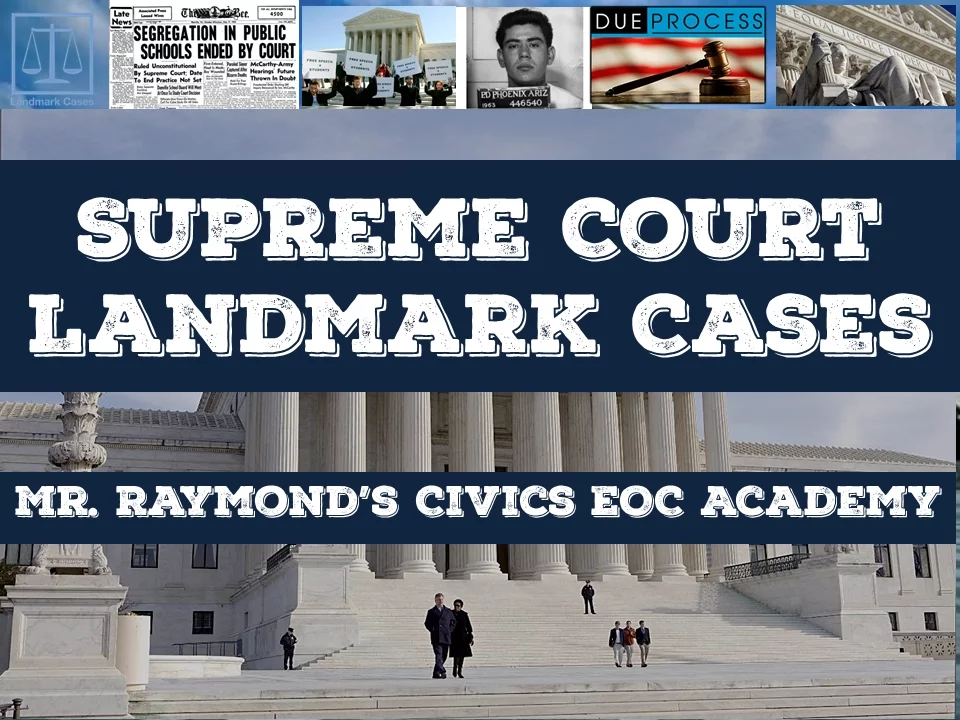
Landmark Supreme Court Cases 3.11
247.6K
Miranda v. Arizona (1966) established that police must inform arrested individuals of their rights. Ernesto Miranda was found guilty of a serious crime, but his lawyer argued that Miranda did not know he had the right to a lawyer or to remain silent. The Supreme Court ruled that police officers are required to notify people placed under arrest that they have the right to remain silent and the right to a lawyer. This case changed how police operate in the United States and established the famous 'Miranda rights' that are recited to suspects.
Click to watch →
![Miranda v. Arizona [SCOTUSbrief]](https://i.ytimg.com/vi_webp/_XkcoGwxEvg/maxresdefault.webp)
Miranda v. Arizona [SCOTUSbrief]
90.8K
Miranda v. Arizona (1966) is the landmark US Supreme Court case that established the requirement for police to read suspects their constitutional rights before custodial interrogation, including the right to remain silent, the warning that statements can be used against them, the right to an attorney, and the assurance of appointed counsel if needed; this decision added an additional layer of protection beyond existing voluntariness rules by creating a specific exclusionary rule that makes confessions inadmissible unless these warnings are properly administered, thereby ensuring suspects' Fifth Amendment rights against self-incrimination are protected during police interrogations.
Click to watch →

C-SPAN - Miranda v. Arizona
6.1K
The 1966 Supreme Court case Miranda v. Arizona established that police must inform suspects of their Fifth Amendment right to remain silent and Sixth Amendment right to counsel during custodial interrogation, fundamentally transforming American policing practices and creating the famous 'Miranda warning' that has become embedded in popular culture.
Click to watch →
Deep Dive
Basic knowledge of the stages of the criminal justice system, specifically the transition from investigation to arrest.
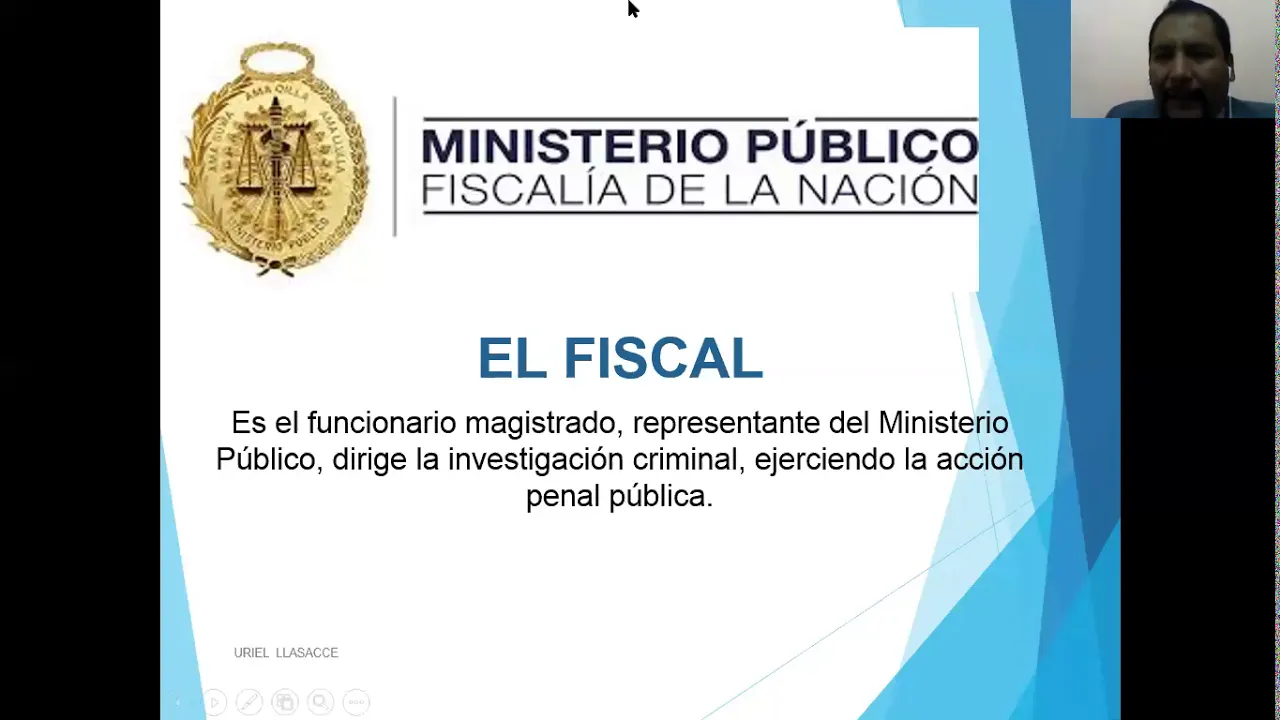
FUNCIONES Y ATRIBUCIONES DEL MINISTERIO PÚBLICO
24.1K
The criminal process proper begins with the disposition of formalization of the investigation preparatory stage. Before this disposition, there is only an investigation at the fiscal office or police level, without judicial control. Once formalization occurs, the process enters the intermediate stage where a judge controls and guarantees that the criminal process is conducted respecting due process and fundamental rights.
Click to watch →

INTRODUCTION TO THE CRIMINAL JUSTICE SYSTEM-PART 1
34.8K
The five stages are: (1) Arrest - taking a person into custody of law, (2) Charging - filing of complaint or information, (3) Adjudication - court judgment determining guilt or innocence, (4) Sentencing - imposition of penalty, and (5) Serving sentence in correctional facilities or probation.
Click to watch →

Control de detención. Juan Manuel Gutiérrez Rocha.
450
The accusatorial criminal justice system consists of three main stages: investigation (subdivided into initial and complementary phases), intermediate stage (written and oral phases), and trial stage (oral trial divided into guilt determination and penalty individualization). The initial investigation stage begins with the control of detention, followed by formulation of accusation, opportunity to resolve the legal situation (within 72 or 144 hours), binding to process, and cautelar measures. The system also includes three types of detention scenarios: flagrancy, urgent cases, and warrant of arrest cases.
Click to watch →

Why Would They Do This Now? | Nick Reiner Investigation
476
The criminal justice process includes: arrest (suspicion/probable cause), charge (formal accusation), arraignment (rights explained), plea entry, trial (evidence tested), and conviction (guilt proven beyond reasonable doubt). Most arrests never result in convictions.
Click to watch →

Webinar Hukum Nasional "Teknik Penyusunan Surat Dakwaan dan Surat Tuntutan dalam Perkara Pidana".
2.5K
The criminal justice system begins with investigation by investigators, followed by the investigation stage where evidence is collected to clarify the criminal act and identify the perpetrator. The investigation stage is conducted by police and PPNS (Prosecutors).
Click to watch →
Prerequisite Knowledge
- Concept 01Understanding the Fifth Amendment of the U.S. Constitution, particularly the privilege against self-incrimination.
- Concept 02Understanding the Sixth Amendment of the U.S. Constitution, specifically the right to legal counsel during criminal proceedings.
- Concept 03Familiarity with the landmark Supreme Court case Miranda v. Arizona (1966) and the historical context of police interrogation practices.
- Concept 04Basic knowledge of the stages of the criminal justice system, specifically the transition from investigation to arrest.
Subsequent Learning
- Step 01The 'Exclusionary Rule' and the 'Fruit of the Poisonous Tree' doctrine, which dictate how illegally obtained evidence is treated in court.
- Step 02Recognized exceptions to the Miranda requirement, such as the public safety exception and routine booking questions.
- Step 03The legal standards for what constitutes a 'knowing, intelligent, and voluntary' waiver of Miranda rights.
- Step 04Judicial interpretations and case law defining the precise boundaries of 'custody' (e.g., traffic stops vs. jail) and 'interrogation' (e.g., express questioning vs. its functional equivalent).
Miranda Basics
Custody Requirement
Interrogation Needed
Jail Scenario
Voluntary Speech
Custody Only
Poor Strategy
Silence Advice
Miranda Basics
0:00Playing Section
- 1
Explains that Miranda warnings apply only under specific legal conditions, not automatically.
- 2
Custody and interrogation are the two core requirements for the warnings to be required.
The Erosion and Practical Inadequacy of Miranda Protections
While the Miranda framework theoretically protects suspects during custodial interrogation, legal scholars and critics argue that its practical protections have been severely eroded by subsequent Supreme Court rulings. For instance, in Berghuis v. Thompkins (2010), the Court ruled that a suspect must unambiguously invoke their right to remain silent; merely remaining silent is not enough to stop an interrogation. Furthermore, in Vega v. Tekoh (2022), the Court limited the ability of individuals to sue officers for civil damages over Miranda violations. Critics argue that these rulings, combined with police techniques designed to secure waivers, turn Miranda warnings into a formalistic ritual rather than a robust shield against self-incrimination, misleading suspects into believing they have protections that are far more difficult to exercise in practice.
Deep Dive
The 'Exclusionary Rule' and the 'Fruit of the Poisonous Tree' doctrine, which dictate how illegally obtained evidence is treated in court.

When a Lawyer Destroys 3 Corrupt Cops in Court
41.5K
This segment covers the defense's argument that all alleged evidence should be suppressed under the exclusionary rule, which suppresses evidence obtained as a direct result of an unlawful unconstitutional search or seizure. The defense argued that because the initial arrest lacked legal justification, any subsequent evidence, including an intoxilizer test at the station, would be suppressed under the fruit of the poisonous tree doctrine. The defense emphasized that the initial arrest was for felonious assault on a police officer, and since the officers openly conceded that the sweeping of the firearm was entirely accidental, the essential element of criminal intent was absent.
Click to watch →

Настоящий Юрист Разбирает Суд В Better Call Saul | Суд над Лало
194.6K
The exclusionary rule (known as the 'fruit of the poisonous tree' doctrine in the United States) prohibits the use of evidence obtained through illegal means in court proceedings. If law enforcement obtains evidence through improper methods such as witness intimidation, that evidence and any subsequent evidence derived from it cannot be used against the accused. This doctrine serves as a deterrent against illegal investigative practices and protects the rights of the accused.
Click to watch →

Exclusionary Rule & Fruit of Poisonous Tree: Criminal Procedure Analysis
60.7K
The exclusionary rule and fruit of the poisonous tree doctrine establish that evidence obtained in violation of the Fourth, Fifth, or Sixth Amendments is generally inadmissible, with the original violation serving as the 'poisonous tree' and any derivative evidence being the 'fruit' that is also typically excluded; however, several key exceptions exist including the Miranda exception (derivative evidence remains admissible), independent source exception, inevitable discovery exception, attenuation doctrine, good faith exception, impeachment exception, and harmless error rule, which allow otherwise inadmissible evidence to be used in court under specific circumstances.
Click to watch →

Supreme Court Tosses "Ignorant Cop" Defense - Ep. 7.214
98.5K
A fundamental legal principle is that if the initial police action (the traffic stop) is flawed, it can lead to the dismissal of all subsequent charges and evidence. This is known as the 'fruit of the poisonous tree' doctrine. The video notes this is 'stuff they teach you in law school' - that if the first step is flawed, everything that follows should be excluded.
Click to watch →

’WAG GAWING "FISHING EXPEDITION” ANG IMPEACHMENT PROCEEDINGS —DEFENSOR SA HOUSE JUSTICE COMMITTEE
102.5K
The exclusionary rule and the fruit of the poisonous tree doctrine are legal principles that protect against the use of illegally obtained evidence. If information is proven to have been unlawfully acquired, it may be considered inadmissible in legal proceedings. This doctrine prevents the use of evidence obtained through illegal means, even if the evidence itself is otherwise relevant. These principles serve as safeguards against government overreach and protect constitutional rights.
Click to watch →
Deep Dive
Recognized exceptions to the Miranda requirement, such as the public safety exception and routine booking questions.

DON'T Listen to LIES about MIRANDA Decision with Retired Deputy Sheriff
1K
There are three main exceptions to Miranda requirements: (1) Public Safety Exception - when questioning is necessary for immediate public safety, such as when someone is about to shoot someone or there is a bomb in a building; (2) Standard Booking Questions - routine questions about health, background, and personal information do not require Miranda; (3) Jailhouse Informants - law enforcement can compel statements from inmates without Miranda warnings. Additionally, Miranda only applies when law enforcement is asking questions (interrogation); spontaneous statements made without being asked questions are not subject to Miranda protections. Regardless of what you have heard on television or in movies, when law enforcement asks you about a crime, the safest course of action is to remain silent and request an attorney.
Click to watch →
Miranda v. Arizona | BRI's Homework Help Series
268.7K
While police must normally inform accused persons of their rights, there are exceptions: (1) General booking questions like where a suspect lives or works; (2) When a jailhouse informant (not a police officer) solicits information; (3) Public safety or emergency concerns, such as kidnappings where someone's life is immediately endangered. In these circumstances, suspects may not hear the full Miranda warning.
Click to watch →

The Miranda Decision | How Americans Got the Right to Remain Silent
445
The burden of proving Miranda compliance falls on the government through evidentiary hearings where officers testify about reading rights and defendants sign acknowledgments. Several exceptions exist to Miranda's bright-line rule: the public safety exception allows questioning without warnings when there is a genuine threat to public safety; routine booking questions are permitted regardless of custody status; courts require clear, unequivocal waivers, so ambiguous statements do not trigger protections. In Brewer v. Williams, the Supreme Court held that Miranda protects not only express questioning but also its functional equivalent—interactions serving the same coercive purpose. Once suspects invoke rights, police must stop questioning and cannot return later to badger or use tricks. This doctrine prevents police from exploiting psychological vulnerabilities through indirect means to circumvent Miranda protections, revealing tensions between protecting vulnerable suspects and allowing legitimate investigative techniques.
Click to watch →
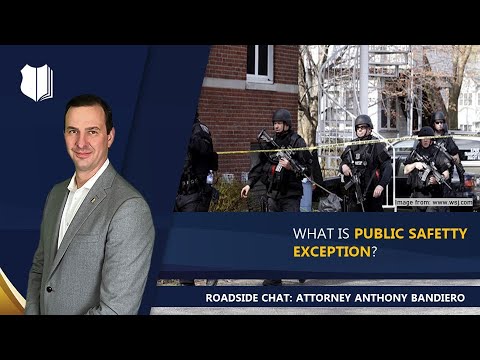
Ep. #287: What Is the Public Safety Exception?
1.8K
The public safety exception allows police to ask incriminating questions of a suspect without Miranda warnings when there is an immediate threat to public safety, such as a shooter on the loose who may harm others; however, police must focus on 'where' questions (e.g., where did you hide the gun?) rather than 'why' questions (e.g., why did you shoot them), as only the former helps prevent imminent harm.
Click to watch →

Criminal Law I - Interrogations - Part II
271
The public safety exception allows police to ask questions before reading Miranda warnings when prompted by concern for public safety. Three factors must be present: (1) police must have a reasonable belief that a threat is imminent, (2) questioning must be directed toward protecting public safety rather than establishing guilt or innocence, and (3) statements must not be the product of police compulsion that overcomes the suspect's will to resist. This exception does not mean Miranda doesn't apply—it still applies, but police don't need to read warnings.
Click to watch →
Deep Dive
The legal standards for what constitutes a 'knowing, intelligent, and voluntary' waiver of Miranda rights.

LIVE: Sarah Boone Takes the Stand Ahead of Her Murder Trial
33.1K
For a Miranda waiver to be valid, law enforcement must read the rights, ask if the person understands those rights, and then ask if they wish to talk. The critical question is whether the person knowingly, intelligently, and voluntarily waived their rights. The totality of circumstances is considered, including whether the person was in custody, whether they were free to leave, and whether they understood their rights. The Supreme Court has established that Miranda warnings must include four specific components: the right to remain silent, the right to an attorney, the warning that anything said can be used against you, and the warning that if you cannot afford an attorney, one will be provided.
Click to watch →
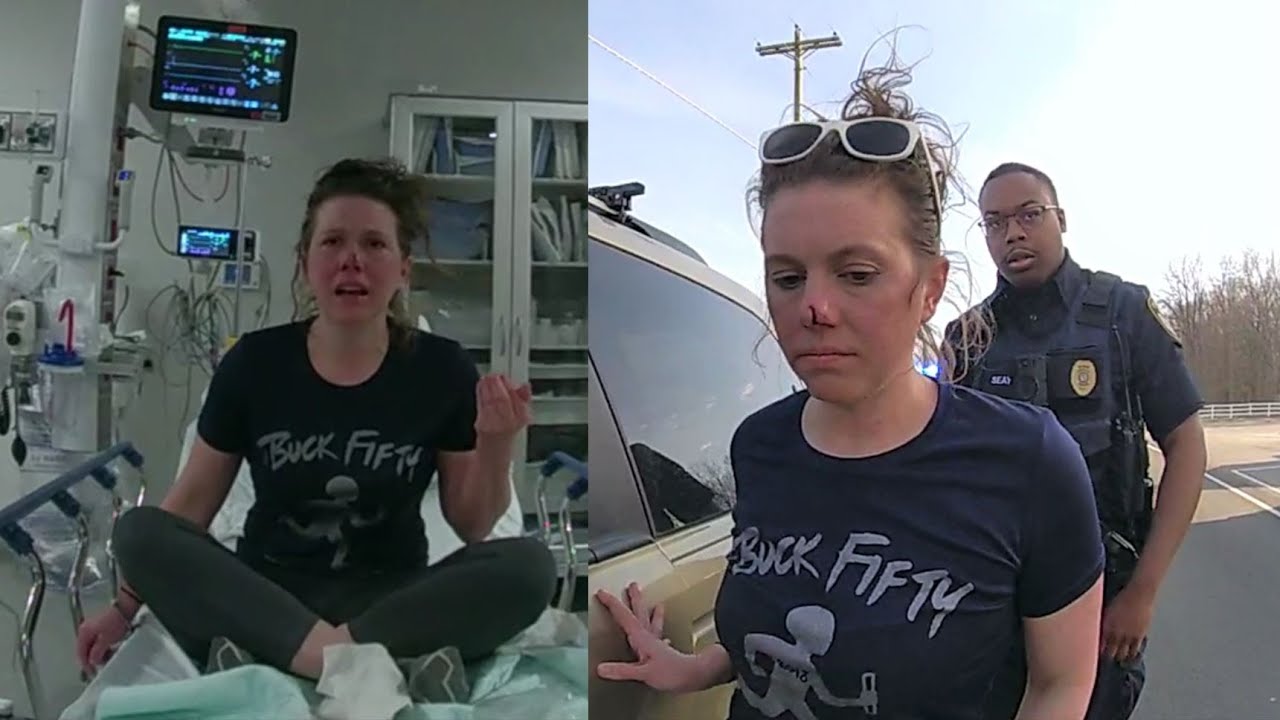
Mom Arrested for OVI After Driving to Pick up her Kids
1.2M
This segment covers the process of a suspect voluntarily waiving their Miranda rights. The officer reads the rights again to ensure understanding, and the suspect explicitly states they understand their rights and are willing to answer questions without a lawyer present. The suspect confirms that no promises or threats have been made and no pressure has been used. This demonstrates the legal requirement that waivers must be knowing, intelligent, and voluntary. The suspect's voluntary waiver allows law enforcement to proceed with questioning.
Click to watch →
Coffee & Cursey Words | Josh Duggar Defense Motions, Tati Westbrook Lawsuit Motions
190.1K
Waiver of Miranda rights occurs when a suspect voluntarily, knowingly, and intelligently chooses to give up their constitutional protections and agree to be questioned without an attorney present. For a waiver to be valid, the suspect must understand their rights and the consequences of waiving them. Courts examine whether the waiver was voluntary (not coerced), knowing (the suspect understood what they were giving up), and intelligent (the suspect understood the consequences). If a suspect initially invokes their right to counsel but then later waives it, courts will examine whether the waiver was truly voluntary and whether sufficient time passed between the invocation and the waiver.
Click to watch →

LIVE! Boone's Two Hour Interrogation Thrown Out?!
123K
This segment details the essential components that must be conveyed in Miranda warnings and the legal standard for determining whether a suspect's waiver was knowing and intelligent. The host explains that the essential information includes: the right to remain silent, the right to an attorney before and during questioning, the right to have an attorney appointed if they cannot afford one, and the understanding that anything they say may be used against them. The host notes that suspects must make a knowing and intelligent waiver of these rights. The host identifies common errors including omitting the final question about whether the suspect wishes to talk, using incorrect phrasing such as 'can and will be used against you' instead of 'may be used against you,' and failing to include 'before and during questioning without charge' when discussing the right to an attorney. The host explains that police must ask if the suspect understands the rights just explained, and the suspect must affirmatively confirm understanding. The host notes that in the Sarah Boone case, the detective asked 'do you understand what I just read to you' and Sarah Boone said 'yes,' which supports the conclusion that the waiver was knowing and intelligent.
Click to watch →

Episode 3: Boone Accused Of Zipping Fiance In A Suitcase And Going To Sleep
112K
A defendant can voluntarily waive their Miranda rights if they understand them and choose to talk. Sarah Boone came to the police station voluntarily, brought questions for the officers, and spoke freely. She was not coerced or forced to talk. The totality of circumstances showed she had a knowing and intelligent waiver of her rights.
Click to watch →
Deep Dive
Judicial interpretations and case law defining the precise boundaries of 'custody' (e.g., traffic stops vs. jail) and 'interrogation' (e.g., express questioning vs. its functional equivalent).
Criminal Law I - Interrogations - Part II
271
Miranda applies only during custodial interrogations where suspects are not free to leave. The objective test asks whether a reasonable person would feel free to leave under the totality of circumstances. Key factors include: number of officers present, whether officers tell the suspect they are free to leave, length and intensity of questioning, public versus private setting, use of force or restraint, and the suspect's familiarity with the surroundings. Being in a police station or home typically indicates custody, while brief roadside questioning may not. In J.D.B. v. North Carolina, the Supreme Court established that for minors, custody determination uses a 'reasonable child of that age' standard rather than the adult 'reasonable person' standard. For adults with dementia or cognitive impairments, courts may apply similar standards, though this remains an unresolved legal question. During traffic stops, suspects are in custody but police generally do not need to read Miranda warnings due to the short duration of encounters. Interrogation is defined as express questioning or its functional equivalent—words or actions by police that they should know are reasonably likely to elicit an incriminating statement.
Click to watch →

Delusional TikTok Star Thought He Was TOO FAMOUS To Be Arrested
1.2M
The Supreme Court defined custodial interrogation as questioning initiated by law enforcement officers after a person has been taken into custody or otherwise deprived of their freedom of action in any significant way. Importantly, Miranda safeguards come into play whenever a person in custody is subjected to either express questioning or its functional equivalent. This means interrogation under Miranda refers not only to express questioning but also to any words or actions on the part of the police that the police should know are reasonably likely to elicit an incriminating response from the suspect.
Click to watch →

CRIM LAW MBE LECTURE FEB 2023
2.6K
Miranda rights must be read before custodial interrogation - questioning where the defendant is not free to leave. Custody is determined by whether a reasonable person would feel they could not leave. A traffic stop is not custody, but being taken out of a car and placed on the sidewalk may constitute custody.
Click to watch →
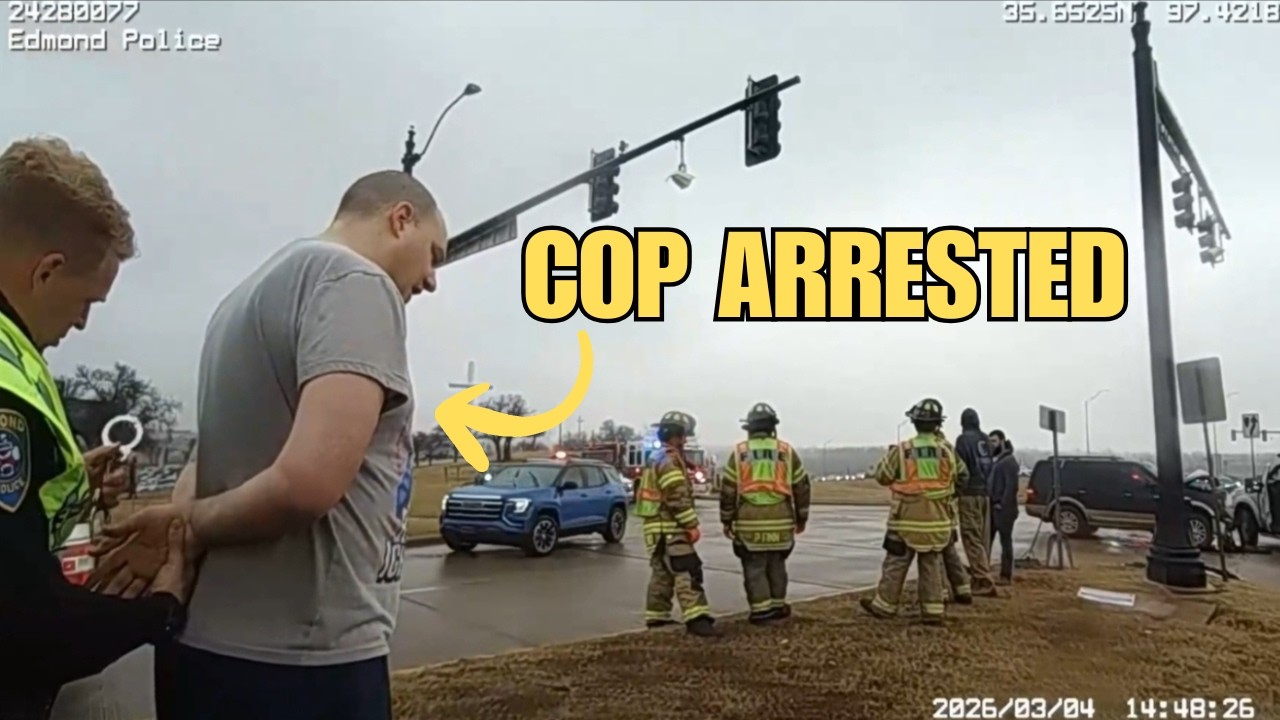
Bodycam: Sheriff’s Deputy Gets Arrested for Felony "I'm going to jail"
514
Custodial interrogation occurs when a person is in custody and being questioned by law enforcement. Custody means either a full arrest or a restraint in free movement such that a reasonable person would believe they cannot leave given the totality of circumstances. Traffic stops generally do not rise to this level because they are considered temporary and brief.
Click to watch →

228: Listen and Learn -- Criminal Procedure: Miranda Warnings | The Bar Exam Toolbox Podcast:...
297
Custody exists when a person is not free to leave or is otherwise deprived of freedom in any significant way. The test is whether a reasonable person would believe they are free to leave. Interrogation refers not only to express questioning but also to any words or actions that the police know or should know are likely to elicit an incriminating response. For example, a conversation between two officers with a suspect in the back seat where officers knew their words would elicit an incriminating response constitutes interrogation even without direct questioning.
Click to watch →
Miranda Basics
Custody Requirement
Interrogation Needed
Jail Scenario
Voluntary Speech
Custody Only
Poor Strategy
Silence Advice
Miranda Basics
0:00- 1
Explains that Miranda warnings apply only under specific legal conditions, not automatically.
- 2
Custody and interrogation are the two core requirements for the warnings to be required.
The Erosion and Practical Inadequacy of Miranda Protections
While the Miranda framework theoretically protects suspects during custodial interrogation, legal scholars and critics argue that its practical protections have been severely eroded by subsequent Supreme Court rulings. For instance, in Berghuis v. Thompkins (2010), the Court ruled that a suspect must unambiguously invoke their right to remain silent; merely remaining silent is not enough to stop an interrogation. Furthermore, in Vega v. Tekoh (2022), the Court limited the ability of individuals to sue officers for civil damages over Miranda violations. Critics argue that these rulings, combined with police techniques designed to secure waivers, turn Miranda warnings into a formalistic ritual rather than a robust shield against self-incrimination, misleading suspects into believing they have protections that are far more difficult to exercise in practice.
Understanding the Fifth Amendment of the U.S. Constitution, particularly the privilege against self-incrimination.
Understanding the Sixth Amendment of the U.S. Constitution, specifically the right to legal counsel during criminal proceedings.
Familiarity with the landmark Supreme Court case Miranda v. Arizona (1966) and the historical context of police interrogation practices.
Basic knowledge of the stages of the criminal justice system, specifically the transition from investigation to arrest.
The 'Exclusionary Rule' and the 'Fruit of the Poisonous Tree' doctrine, which dictate how illegally obtained evidence is treated in court.
Recognized exceptions to the Miranda requirement, such as the public safety exception and routine booking questions.
The legal standards for what constitutes a 'knowing, intelligent, and voluntary' waiver of Miranda rights.
Judicial interpretations and case law defining the precise boundaries of 'custody' (e.g., traffic stops vs. jail) and 'interrogation' (e.g., express questioning vs. its functional equivalent).
152 views0likes1:05@LawOfficeofAdamPollackOriginal Release: 2026-01-03
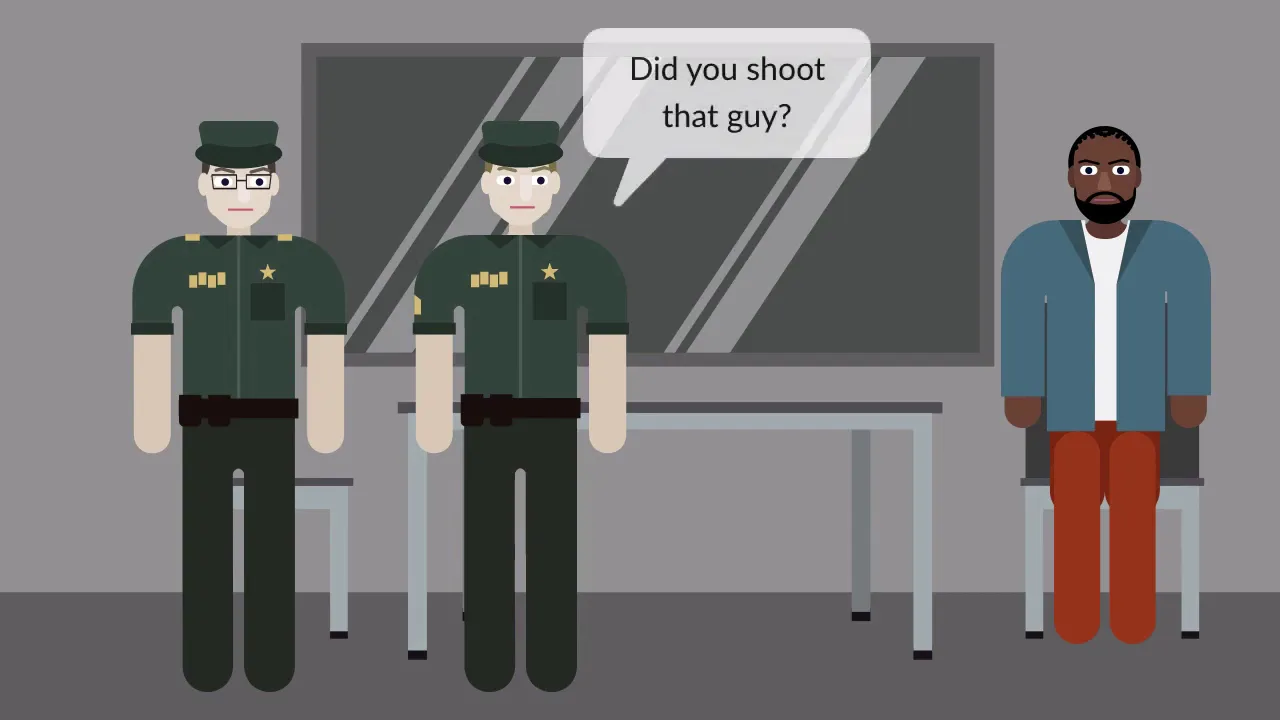
Miranda is it's one of those things that you have to understand when it applies and when it doesn't apply. Oftentimes I'll get people who come to me and say, "Well, the officer never read me my rights. That that means this must all go away." No, it doesn't mean that automatically. Uh because there's two parts to Miranda. The first part is you have to be in custody and the second part is you have to be interrogated. So, you could be arrested uh and taken down to the uh jail um and the police never questioned you and so Miranda warnings don't apply or you know, you've been arrested and you start telling the officer your side of the story and the officer never even asked you a question.
Miranda doesn't apply. Yes, you're in custody, but the officer wasn't asking you anything. You just decided to, you know, try to talk your way out of the situation. Not a good idea. If if you've been arrested, you need to remain silent and let you know, let the lawyer take a look at what's going on. Let someone like myself, you know, read everything to understand what's happening to you.
Up Next
2:38
Berghuis v. Thompkins Case Brief | Supreme Court Law Explained
@QuimbeeDotCom
6.6K views•2020-10-13

4:27
US Secondary Sanctions Impact on EU Businesses and Blocking Legislation
@Bureauvandijk
1.6K views•2019-03-20

5:27
Forensic Phonetics: Speaker Identification in Legal Cases
@nptel-nociitm9240
539 views•2025-03-19

24:42
Police Interrogation Tactics: False Confessions & Legal Reform
@LastWeekTonight
7M views•2022-04-18
Related Study Plans & Knowledge Roadmaps
Structured learning paths in Law
law
Self-Defense Law: Imminence & Castle Doctrine
01Foundations of Self-Defense Law
02Imminent Threat & Reasonable Belief
03The Principle of Proportionality
+ 3 more learning modules
12h6 modules
Explore Roadmap
law
Defamation Law: First Amendment & Actual Malice
01Introduction to civil torts and the First Amendment
02Elements of Defamation: Libel and Slander
03Public Figures vs. Private Individuals
+ 2 more learning modules
8h5 modules
Explore Roadmap
law
Hearsay Rule: Trial Evidence & Exceptions
01Introduction to Trial Evidence & Courtroom Basics
02Demystifying Hearsay: The Core Definition
03Non-Hearsay: Exclusions Under FRE 801(d)
+ 3 more learning modules
14h6 modules
Explore Roadmap
law
Medical Malpractice: Law, Liability & Care
01Foundations of Tort Law and Civil Liability
02The Four Elements of Medical Malpractice
03Defining and Proving the Standard of Care
+ 2 more learning modules
12h5 modules
Explore Roadmap