





![ACORDES DE EMPRESTIMO MODAL - O que são como e funcionam. [tabela de AEM p/ download grátis]](https://i.ytimg.com/vi/NEeYrFxjc8I/hqdefault.jpg)
![Modos Gregos Pt.4 - Aplicando os Modos na Improvisação [AULA-PAPO]](https://i.ytimg.com/vi/aXJGFnbugi4/hqdefault.jpg)


![Writing Exotic Music with Phrygian Dominant- 5th mode of Harmonic Minor [MUSIC THEORY - SCALES]](https://i.ytimg.com/vi_webp/aCZezZf9bi0/maxresdefault.webp)




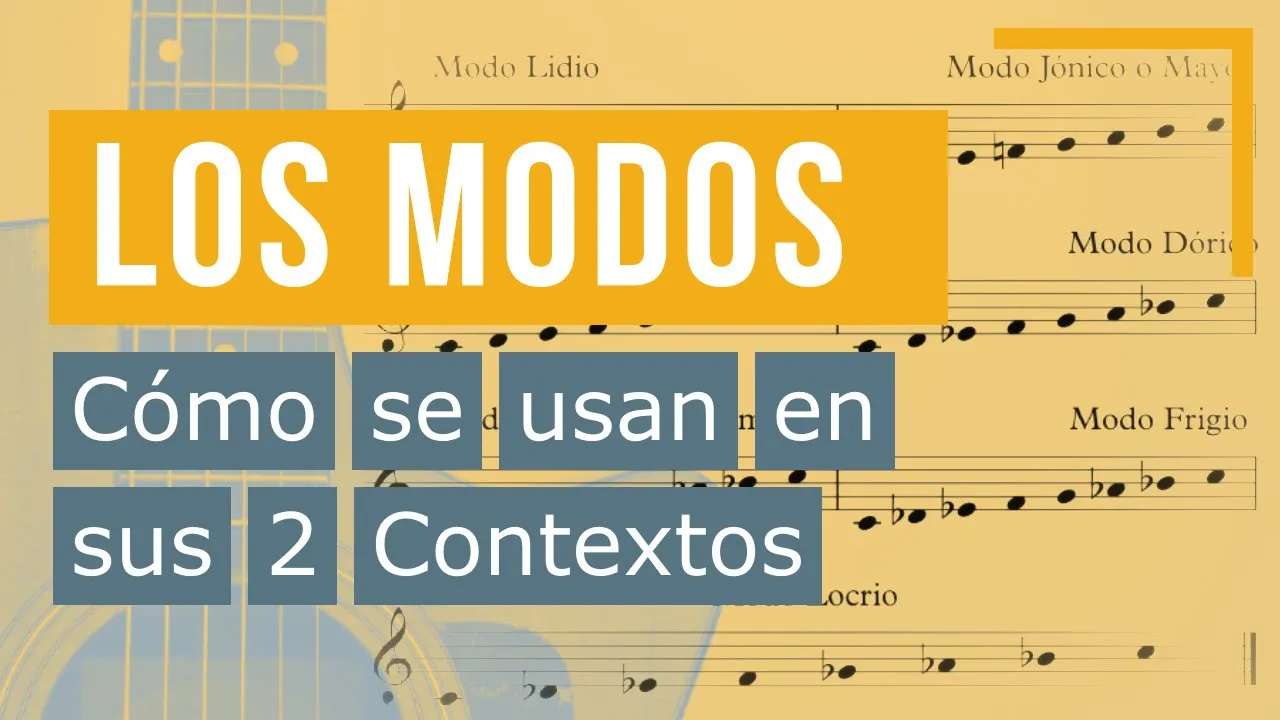
To write a modal chord progression, stay on the tonic chord as much as possible, avoid using dominant chords (5 and 7) that contain the tritone, and incorporate the mode's characteristic note (major 6 for Dorian, flat 2 for Phrygian, sharp 4 for Lydian, flat 7 for Mixolydian, or flat 5 for Locrian) into your chords; when moving away from the tonic, use chords 2, 4, 5, or 7, with chords 2 and 7 being the most effective choices.
Modal Chord Progressions: Composition and Harmony Guide
Added:Standard diatonic harmony and the construction of triads and seventh chords within major and minor keys.
The derivation and structure of the seven diatonic modes of the major scale (Ionian, Dorian, Phrygian, Lydian, Mixolydian, Aeolian, and Locrian).
Interval analysis, specifically identifying the tritone interval (augmented fourth/diminished fifth) and its role in creating dominant-to-tonic tension.
Basic Roman numeral analysis to identify chord functions and progressions in standard tonal music.
Modal Interchange (or chord borrowing), exploring how to integrate modal chords into standard major/minor functional key signatures.
Advanced modal writing using modes of other scale systems, such as the Melodic Minor and Harmonic Minor scales (e.g., Lydian Dominant, Phrygian Dominant).
Modal improvisation techniques, focusing on how to construct melodic lines that emphasize the characteristic pitch of each mode over the corresponding progression.
Analyzing historical and modern applications of modal harmony, from Impressionist classical music (Debussy, Ravel) to Modal Jazz (Miles Davis, John Coltrane) and film scoring.
480 views30likes9:47Original Release: 2020-08-18
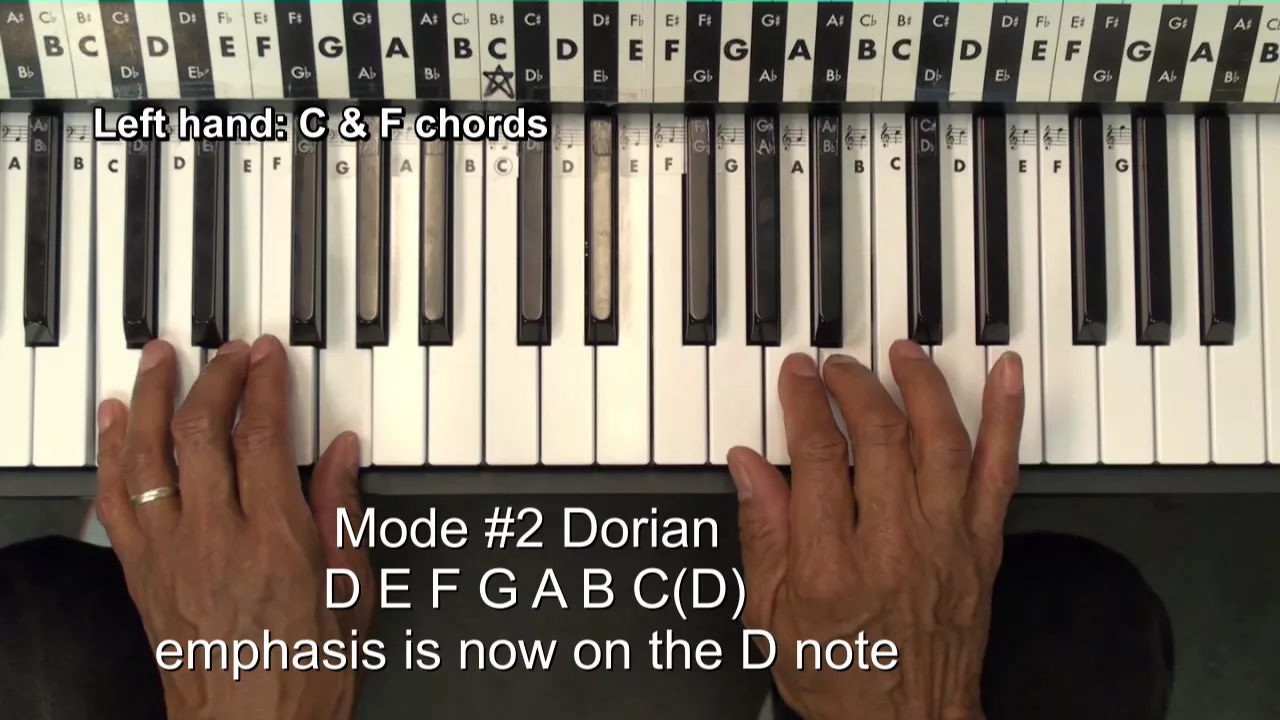
how's it going dave here and in today's video i'm going to be talking about how to create a modal chord progression so it'd be useful if you knew about modes already so if you want to check out my crash course on modes then do that there but if you already know what modes are how they work then this video is going to be great for you so first of all before we learn how to write a modal chord progression let's talk quickly about how a standard major or minor chord progression is formed in our major scale we've got the notes let's take in the case of c c d e f g a and b and some of these notes are called stable notes that's c e and g and these notes are notes that sound at home and resolved uh they're a good choice to end the melody on because they're part of that c major triad then the other notes the d f a and b these are called active notes and these active notes want to resolve somewhere so the b wants to resolve up to the c the a wants to resolve down to the g the f wants to resolve down to the e and the d wants to resolve either to the e or the c the ones that are a semitone apart are particularly pleasing to listen to so f going down to e and b going up to c we can build chords on every single one of these notes so we have c major d minor e minor f major g major a minor and b diminished and from these chords we can create chord progressions and in a major key for example the purpose of everything is to go away from the tonic but eventually come back to the tonic so we're gonna start on c for example and build tension and finish back on c again this whole concept is called functional harmony with functional harmony each chord has a function so there are three functions tonic subdominant and dominant and each one of these chords fits into one of these sections so the tonic chords are the chords that sound at home sound nice and settled and resolved and they are c major e minor and a minor chords one three and six then our sub dominant chords add a little bit of tension to the chord progression take us on a bit of a journey and that's because they have the note f which is an active note that wants to resolve down to e and those chords are d minor and f and then we have dominant chords which also contain the f but they also contain the note b as well and these chords are chords five and seven your g and b diminished and i said they have the f and the b which are a tritone apart which create extra tension but both of them want to resolve a semitone apart so b wants to resolve to c and f wants to resolve to e and that creates even more tension and we land back on our tonic chord so as you can see that tonic chord in a major key or even in a minor key has some pull to it everything that goes away from it wants to lead back to it again now this is not exactly the case when we are using modes and that's why it's important to know the difference between functional harmony and what we're going to call modal harmony so let's just quickly analyze the modes we have seven modes uh major scale being ionian the minor scale being aeolian and then the other five being dorian phrygian lydian mixolydian and locrian now each one of these particular modes has a specific characteristic note for example dorian d dorian has a major six e phrygian has the flat second [Music] f lydian has the sharp fourth g mixolydian has the flat seventh and b locrian has the flat fifth and this note helps the mode sound like the mode so what we want to do is when we're playing our chord that our modal tonic is built off if we can add that specific characteristic note into the chord then you're already going to get a quite cool modal sound so for example d dorian if i add that major sixth into our minor chord we get a d minor six and it's already sounding like dorian uh just by playing one chord same thing with e phrygian if i was to add that flat second into a standard e minor chord so e minor by e minor with the added flat nine already sounding like phrygian just by playing one chord same with f if i can add that b i'll sharp fourth into the f major chord and we're already going to sound like lydian [Music] and then with the g mixolydian scale all i have to do is play a dominant chord because he got that flat seven to achieve a dorian sound with b uh b locrian we are just playing a diminished chord that has the flat fifth in there if we can add the flat second in as well that will add to the the locrian sound just like that so we're already sounding quite modal just by playing one chord i know you want to make progressions and you want to switch between chords so let's talk about that now we have to be very particular about our chord choices when we're switching to other chords in a modal chord progression this is because if we use one of those dominant chords so for example g seven or b diminished then we run the risk of though that f and b in those chords our listener is going to want to hear that resolve to a tonic chord so to like c major or a minor something like that so we want to try and minimize the use of those two chords in whichever mode we're playing and because functional harmony really doesn't apply with modes we have to take a completely different approach to writing chords we don't build chord progressions with the mindset of building tension and resolving that tension each particular chord kind of floats in its own kind of space and kind of you just pull things back to the tonic it's nothing draws you back to the tonic if you know what i'm saying there in every mode there are specific chords that take you away from that tonic and those would be chords two four five and seven that's because chords one three and six all have at least two notes of your major minor diminished triad so we want to try and use either chords two four five or seven when we're moving away from our tonic chord in our particular mode so if we're playing in d dorian again we'll use d dorian as the example we could use chord two which is e minor chord four is g major now you can use a g major because it doesn't contain that tritone if you if we were to play a g7 you hear that wants to resolve back to c and then for chord five we could play a minor as well or we could play c major but what i've found particularly is that chords two and seven are the best ones to use if we just move up a step and then back to our tonic chord and if we move down a step and back to our tonic chord and what we really want to do is really emphasize that tonic chord that's a really important uh step you really want to spend uh the vast majority of the time on your tonic chord so on this d playing in dorian then maybe just quickly go back to c or to e minor you want to make sure you're adding that characteristic note in as much as possible so if we can try and incorporate that into maybe our c major so play a c major seven because the major seven is the characteristic note of our d doing then you're sorted and your chord progression is going to sound very modal so let's just recap all the steps for writing a modal chord progression so you want to stay on the tonic as much as possible you want to convince your listener that your tonic is the tonic and you're not moving into a tonal kind of sounding chord progression you want to try and avoid using those chords that contain that tritone to chords five and seven of your major key so in the case of c major g seven and b diminished you want to avoid those chords you want to target your characteristic note of your mode so for example in dorian it's the major six phrygians the flat second lydian's the sharp fourth mixolydian is the flat seventh and locrian is the flat fifth if you're moving to another chord in your modal chord progression try and make it one of those chords that move away from your tonic so chord two four five or seven but especially chords two and seven i find those to work the best so that's how you write a modal chord progression and if you enjoyed the video and got a lot out of it please click like let me know what you thought in the comments subscribe to the channel and hit that notification bell so that every time i release a new video you're notified also if you want to dive deeper into chord progressions and learn to create some really awesome major and minor chord progressions head down to the description and for absolutely free you can grab the first two chapters of my book chord charisma and in those first two chapters you'll learn the tonic subdominant and dominant functions and then you'll learn how to add seventh knight's 11th and 13th to your chords as well as sixths and other interesting variations to make your chord progressions sound jazzier and more sophisticated all the chord shapes are there so you don't have to kind of figure them out so that's free for you so make sure you go and check that out and i will see you in the next video see you later
Up Next

35:02
The Role of Patterns in Music Composition Theory
@TableTopComposer
116.8K views•2023-10-18

10:20
Mozart's Musical Dice Game Explained: History, Rules, & Fun
@webpianoacademy
5K views•2023-03-13

47:36
Understanding Diatonic 7th Chords in Major Keys | Music Theory Tutorial
@GracieTerzian
54.7K views•2022-03-02
10:49
Understanding John Coltrane's Giant Steps: A Music Theory Analysis
@Vox
10.4M views•2018-11-12
Related Study Plans & Knowledge Roadmaps
Structured learning paths in Music Theory
music-theory
Composing Galant Music: Partimento & Schemata
01Foundations of Figured Bass and Keyboard Harmony
02The Rule of the Octave (Regola dell'Ottava)
03Galant Schemata: The Building Blocks of Form
+ 2 more learning modules
30h5 modules
Explore Roadmap
music-theory
Decoding Overtone Series: Tuning & Drone Music
01Acoustic Foundations: The Physics of the Overtone Series
02Tuning Systems: Equal Temperament vs. Just Intonation
03Microtonality and Spectralism: Beyond Standard Pitches
+ 2 more learning modules
24h5 modules
Explore Roadmap
music-theory
Impressionist Harmony: Scales, Planing & RPGs
01Foundational Music Theory: Keys, Intervals, and Seventh Chords
02Impressionist Color: Chord Planing and Parallel Harmony
03Whimsical Textures: Pentatonic Cascades and Whole-Tone Scales
+ 1 more learning modules
14h4 modules
Explore Roadmap
music-theory
Negative Harmony: Axis Reflection in Indie Pop
01Music Theory Foundations: Scales, Intervals, and Triads
02Functional Harmony and the Circle of Fifths
03Demystifying the Negative Harmony Axis Reflection
+ 2 more learning modules
16h5 modules
Explore Roadmap