






























Whales don't deafen themselves from their extremely loud sounds (blue whale calls at 188 dB, sperm whale clicks exceeding 230 dB) because sound propagation in water differs fundamentally from air, requiring different decibel reference values (1 micropascal for water vs. 20 micropascals for air), meaning a 188 dB underwater sound is equivalent to about 126 dB in air; additionally, whales have specialized hearing adaptations including disconnected ear bones, directional sound production, and the ability to reduce hearing sensitivity by 13-17 dB when warned of loud sounds, plus they hear through their jaw tissues and acoustic funnel rather than ear canals.
How Do Whales Avoid Deafening Themselves? Hearing Explained
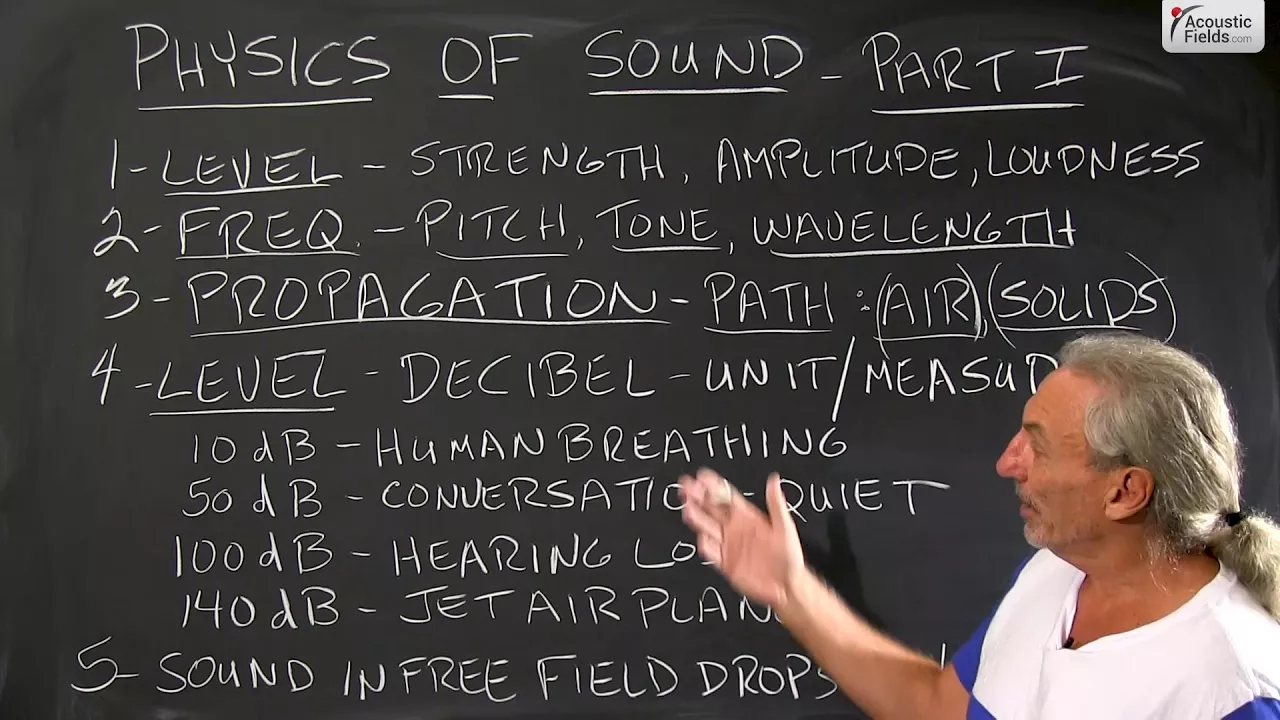
Added:Basic physics of sound waves, including concepts of frequency, amplitude, decibels, and medium-dependent propagation.
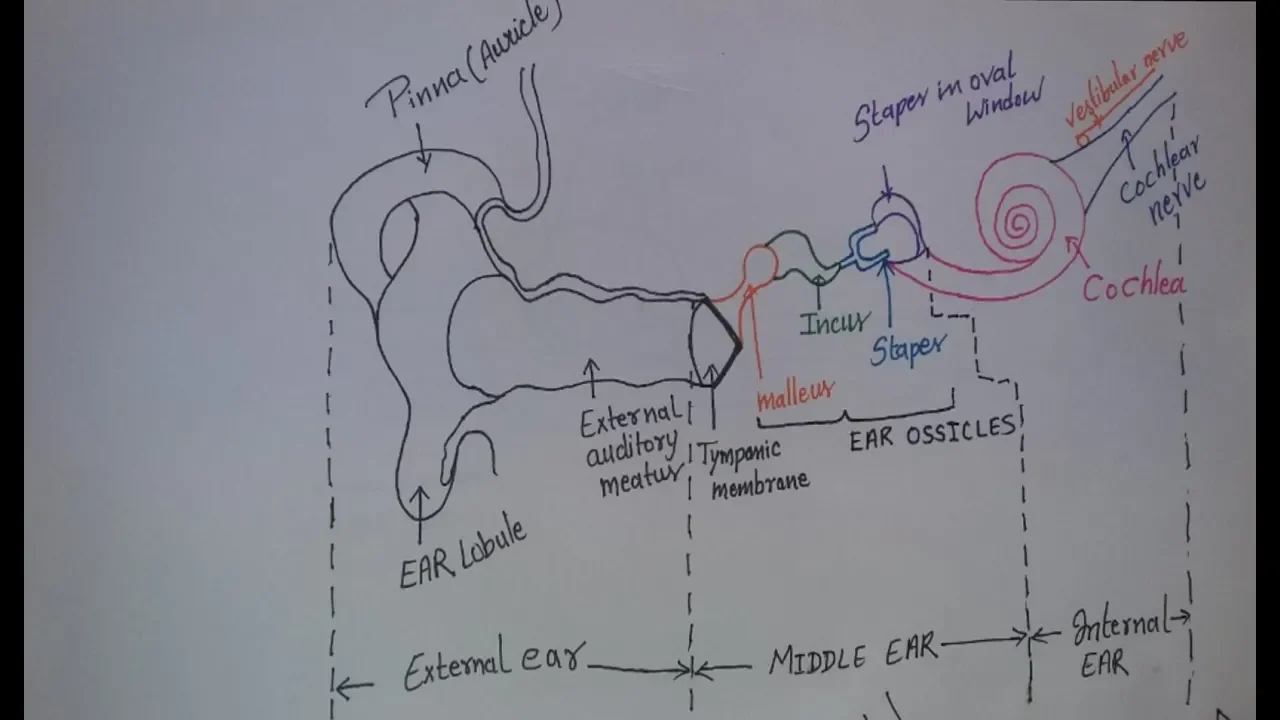
Standard mammalian ear anatomy, specifically the functions of the tympanic membrane, middle ear ossicles, and the cochlea.
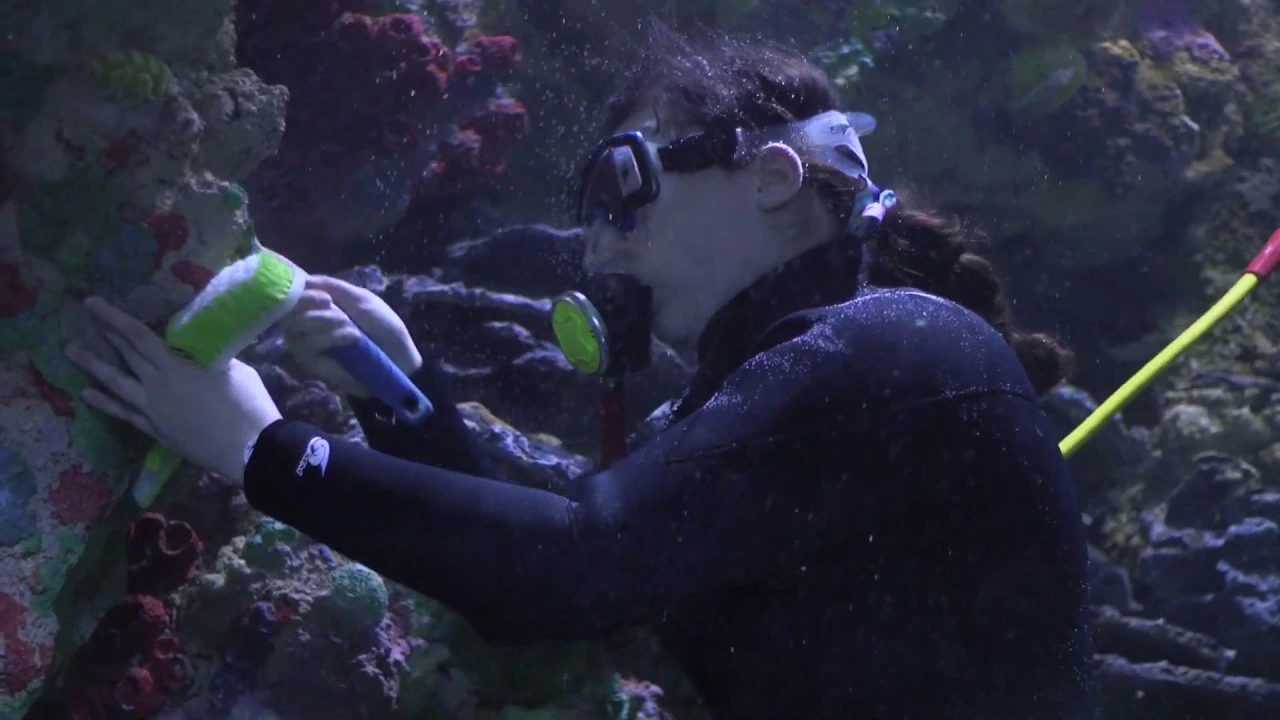
The principles of underwater acoustics, particularly how sound travels faster and more efficiently in water than in air due to density differences.
The fundamental concept of biosonar (echolocation) and how marine mammals use sound for navigation and hunting.
The impact of anthropogenic (human-made) ocean noise pollution, such as military sonar and shipping, on marine mammal communication and survival.
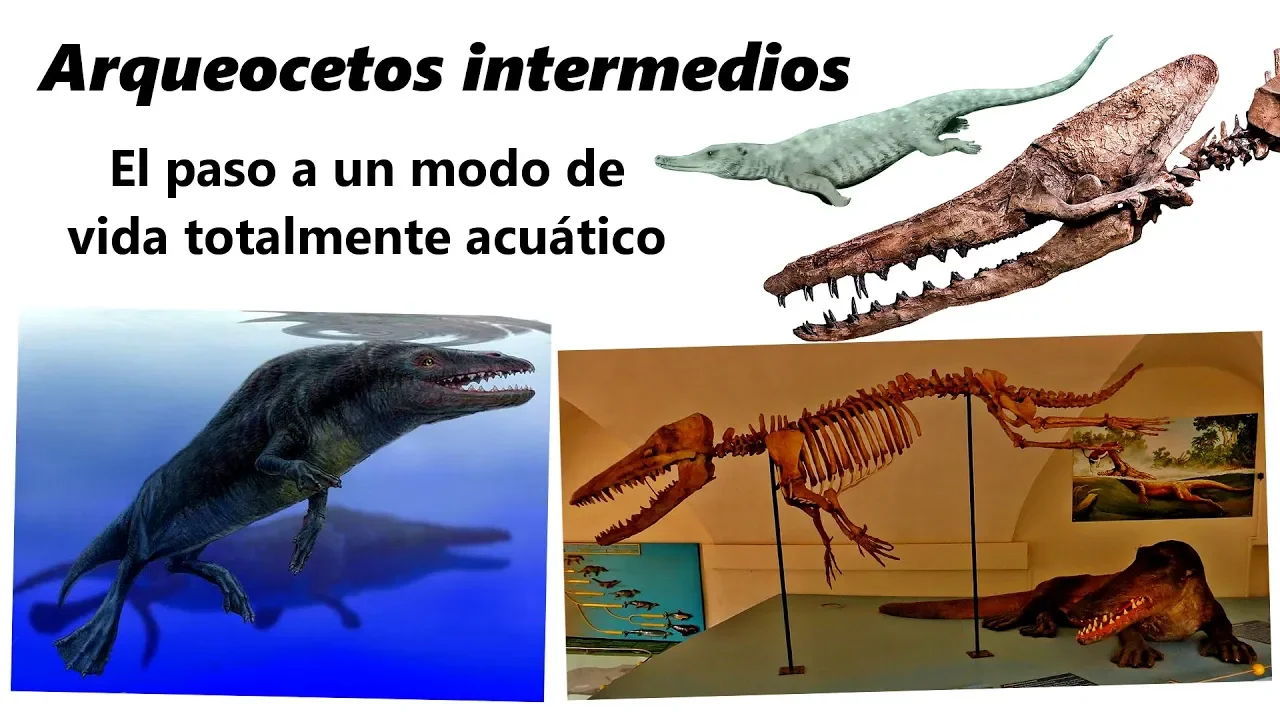
The evolutionary biology of cetaceans, specifically tracking how the auditory structures of land-dwelling mammalian ancestors adapted to marine environments.
Biomimetic applications in acoustic engineering, such as developing advanced underwater hydrophones or sound-dampening technologies modeled after whale ear morphology.
Comparative bioacoustics, focusing on the anatomical and functional differences in sound production and reception between baleen whales (mysticetes) and toothed whales (odontocetes).
187.4K views7.1Klikes3:50Original Release: 2018-06-30
♩ Whales and dolphins can make some impressively loud sounds.
For example, blue whales use calls almost 190 decibels in volume to communicate with one another up to 800 kilometers away.
And the clicks sperm whales use to find and track their prey can be louder than 230 decibels.
But the human eardrum is said to rupture at 150 decibels, and anything above 85 can cause hearing loss.
So how do whales, which have many of the same ear parts we do, constantly hear such loud sounds and not go deaf?
Turns out there are a few reasons whales don’t deafen themselves.
But the main one is that sound is just very different underwater.
What we call sounds are really pressure waves, and since water is a lot denser than air, sound waves move through it differently.
So scientists actually use slightly different units when describing sound intensity in air and in water.
Decibels aren’t a simple unit of measurement like a centimeter — they’re based on a ratio that compares a sound pressure to a reference value.
So the number is meaningless unless you know that reference, Ted Cranford, a whale biologist at San Diego State University, explained to SciShow.
When scientists say a blue whale’s call is 188 decibels, they’re using the in-water reference pressure for the ratio: 1 micropascal.
But when they say a jet engine makes a painful, 150 decibel sound, they’re using the air reference pressure of 20 micropascals.
If you do the math, a 188 decibel sound in water works out to about 126 decibels in air.
This comparison isn’t completely accurate because of other differences between water and air, but it can partly explain why whales don’t go completely deaf: their calls are probably more like rock concerts than jet engines.
Except, of course, for the sperm whale.
A sperm whale’s clicks are the loudest biologically generated sounds we know of, Cranford said.
They’re so loud that they’re just about the loudest sound possible in water, before the pressure would be so high that the water would start to do some strange things like heat up or even boil.
And how they make such loud noises without going deaf is not as well understood.
[Ode Pah-chee-nee] But there are a few possible explanations, Aude Pacini, a marine mammalogist from the University of Hawaii, told SciShow.
For one thing, their clicks are directed forward in a very pointed manner, so the sound isn’t traveling towards their ears when it’s loudest.
And their ear bones are disconnected from their skull, which means that any vibrating that happens during sound production doesn’t directly rattle their ears like it would for us.
But perhaps more importantly, like other toothed whales, sperm whales can probably tune out loud sounds when they know they’re coming.
That’s something Pacini and her colleagues showed.
When given a warning sound that indicated a loud 170 decibel sound was following, four different species were able to make some kind of adjustment so the sounds they heard were 13 to 17 decibels lower.
While sperm whales weren’t one of the species tested, odds are they can do this, too.
They might also be able to handle such loud sounds because they hear things differently: that is, they don’t rely on their ear canals.
Sperm whales and large baleen whales like blue whales don’t have open ear canals that take in and focus sound—those are plugged with wax.
Instead, the waves first vibrate fatty tissues in their jaw.
Those vibrations are then propagated through a special structure called the acoustic funnel, which relays the sound information to their ears.
And other bones and tissues may also conduct sound, so basically, they hear with their entire head.
That, plus the whole being-in-water thing, means we can’t apply the same kinds of damage thresholds we use for our hearing to theirs.
But it’s still important that scientists figure out which sounds are damaging and why, because there’s evidence that the noises we’re creating underwater can be a problem, even if they’re not that loud.
And while the animals might be able to make extreme sounds without going deaf, they can still be harmed or confused by the sounds we add to their environment through things like sonar and boating.
Thanks for watching this episode of SciShow, and special thanks to Ted Cranford and Aude Pacini for their time and insights!
If you’re interested in more weird questions with even weirder answers, just go to youtube.com/scishow and subscribe.
♩
Up Next
5:31
Parabolic vs Spherical Mirrors: Optics Explained
@mniops
160 views•2024-11-22

12:53
21cm Hyperfine Transition in Neutral Hydrogen: Radio Astronomy Basics
@AaronRobertParsons
12.4K views•2011-10-13

8:54
Atoms Proven: X-Ray Crystallography in Science
@SciShow
236.2K views•2026-03-13

27:14
Entropy and the Second Law of Thermodynamics Explained
@veritasium
27.5M views•2023-07-01
Related Study Plans & Knowledge Roadmaps
Structured learning paths in Physics
physics
Nuclear Physics (Decay, Fission & Reactors)
01Atomic Structure and the Binding Force
02Radioactive Decay and Half-Life
03Nuclear Fission Mechanics and Chain Reactions
+ 2 more learning modules
12h5 modules
Explore Roadmap
physics
Soft Matter (Polymers, Colloids & Rheology)
01Foundations of Soft Matter & Thermal Forces
02Polymer Physics and Macromolecules
03Colloids, Surfactants, and Self-Assembly
+ 2 more learning modules
38h5 modules
Explore Roadmap
physics
Analytical Mechanics: Lagrangian & Hamiltonian
01Mathematical Foundations: Calculus of Variations
02From Newtonian Mechanics to Constraint Dynamics
03The Principle of Least Action & Lagrangian Mechanics
+ 3 more learning modules
28h6 modules
Explore Roadmap
physics
General Relativity (Spacetime & Cosmology)
01Foundations of Relativity: Special Relativity
02The Geometry of Spacetime: Equivalence Principle & Curvature
03Einstein's Field Equations: The Mathematics of Gravity
+ 2 more learning modules
55h5 modules
Explore Roadmap