













Forensic linguistics, the scientific analysis of language in legal contexts, can reveal critical insights into criminal investigations by examining patterns, repetitions, and stylistic anomalies in written communications; in the JonBenet Ramsey case, linguistic analysis of the ransom note revealed it contained excessive extraneous content (76%), borrowed phrases from popular movies like Dirty Harry and Speed, and took approximately 22 minutes to write—far longer than necessary for a genuine kidnapping scenario—suggesting the letter was staged to mislead investigators about the crime's nature, while also highlighting how the original investigation suffered from delays in interviewing suspects and lack of specialized expertise that contributed to the case remaining unsolved for nearly two decades.
JonBenét Ramsey Case: Forensic Linguistics Expert Analysis
Added:[Music] When the Boulder investigators came to me and showed me this letter, I noticed some quotes in here that I said, "Boy, I recognized them from somewhere." And it was sort of early in the internet days, and it wasn't as easy to search things back then, but I rented a few movies that I thought I recognized these lines from. And the first of them comes from these four sentences I'm about to read.
So, if you follow along with me here on the second page, we have something borrowed from a cinematic version of a kidnapping of a young girl, the 1972 movie Dirty Harry. One of the things that we know from the actual crime scene video was that the house is filled with movie posters. If we catch you talking to a stray dog, she dies in the movie.
Instead of it actually being a dog, a dog breed is actually mentioned. If you alert bank authorities, she dies. She dies. She dies. But we're not done. Last page.
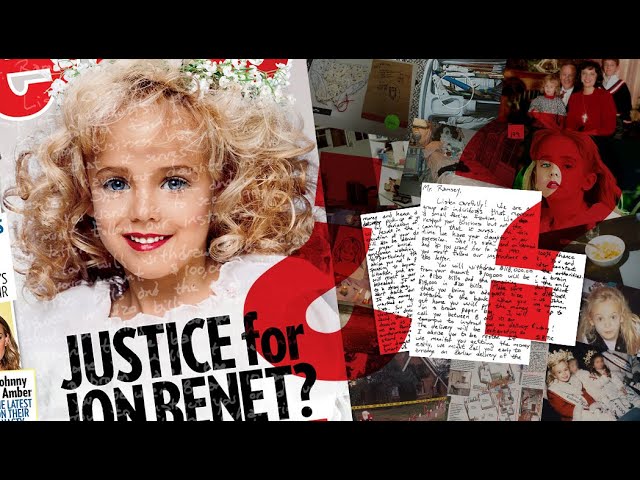
Don't try to grow a brain, John. A certain character who was an LAPD police officer who was on a runaway bus was talking to a mad bomber on his cell phone. The movie was speed. This here, if you alert bank authorities, she dies. You told us early on, follow your instructions or she'll be beheaded, executed, beheaded. So, why do you have to keep telling this over and over again? 76% of this is extraneous. Really, it's not necessary to me. They're trying to sell this now.
It's a sales job. This whole thing could have been done in four lines. We have your daughter withdraw 118,000. Put the money in a paper bag. I will call you between 8 and 10:00 a.m. Don't call the FBI or the police or she'll die. SBTC.
What you just said from a historical perspective is essentially what we have in the three ransom notes going back to Lindberg, Weineberger, and WS. And one other mitigating factor in these other three kidnappings, the person was actually missing, wasn't dead in the house somewhere. We just have so much in the way of variation between these particular historical kidnappings and this letter.
Thank you so much for being here to talk about this. It's great to be here.
Thanks for inviting me. Okay, thanks for having coming today too. Guys, do you guys remember the whole Jean Benet Ramsay frenzy and the endless the wall to-wall coverage that we had of it?
And would you believe that she would be 26 years old today? That's how much time has passed. Why do you think we remain so fascinated with this case?
Quite frankly, it's um justice not resolved. and she happened to have been a pretty girl from a wealthy family.
There are many other young girls and young boys who perhaps don't come from wealth and and and what that brings. But nonetheless, it seemed that the advent of even uh now was in 96, three cable news channels that were on 24 hours a day. AOL was in its earliest of of ages then, including, you know, 24-hour news coverage. And we have a pretty girl with a lot of videotape of her in beauty contest and all. That's a whole other part of the story that will be discussed um certainly in the uh in our in our 4-hour special. So there's so many dynamics going on here uh from a family perspective, from a societal perspective, and we have so many images of this young girl. It's not just one still shot taken in, you know, her kindergarten class. And we almost feel, I think, to some degree, um that some of us know her. And having worked the case with the Boulder investigators, at least to some degree, back in in the late 1990s, I certainly got to learn a lot more about her and all the participants both, you know, within the family and without. And um and the general public is going to learn even more about these folks uh come this Sunday and Monday evening. As an expert, why do you think that this case remains unsolved?
um probably because there were no experts on the scene that day. Um and there were some dedicated police officers and prosecutors early on, but none of them really had this kind of an experience to work uh of a homicide of this nature. And they went into it first believing every word of the note, the the three-page long note, about 385 words of my memory. in the special uh they you guys actually wrote that note, transcribed it and it took almost 22 minutes. It did. Uh we we kind of exercised did a little exercise among ourselves. Let's write this note out.
All my years of working this case, I never thought of trying to write it out myself, but our colleague Laura Richards came up with the idea and we said, "Hey, let's give this a try." And it took us that long to do it, knowing exactly what we were writing. All we were doing was copying. Um, but for somebody to have to create this from scratch, so to speak, uh, knowing that something bad just sort of happened a little while ago and make up this fantastic story about beheading people and and stray dogs and don't call the police and what's the number again?
Oh, yeah. $118,000, which was so random considering how rich the family was. Well, it it was random in one way, but very purposeful in another because it happened to be the bonus that John Ramsay received that year from his company. So, uh but you're right, it was much they could have had a million in cash the next day and that would have been chump change uh for a for the return the safe return of a young girl. So, um that amount was bizarre, too. We discuss that a little bit uh certainly uh on the CBS special coming up. How did you come to be part of this?
Well, I was part of the original case. I had just come off um helping to solve the Unibomb case back in 1995 and 96.
And then um I sort of was recognized in the FBI as the guy that has sort of a language expertise uh in terms of looking at anonymous letters or synonymous letters, notes, whatever.
There weren't too many emails around back then. Some of you may not even remember back that far, but uh but it was mostly handwritten letters. So, I helped with the case back then. I I helped put some aspects to it together.
Uh there was so much resistance from prosecutors, from attorneys, and again, this this uh this the the embronic world of uh of of social media, the internet, and there were bloggers all over the place. I'm not sure they were even called bloggers back then, quite frankly, but uh if you dared come out and say something on one side or the other, you would be almost demonized depending on what side that person stood for. So, but but bringing up to date here, about a year ago, I'm good friends with Jim Clemente and Laura Richards. Uh they're in LA now. They have a production company. I'm a part of it. We sat around thinking of some things to do. And right, we're not even thinking of TV or or or documentaries or anything like that. We just said, "What about the case of poor John Benet? Is there some way we can come upon solving that case?"
Because was it the 20th anniversary of the Uni Bombers's arrest was coming up?
And we said, "That's an idea." and Jim and Laura really ran with it from that point and they got uh various production companies involved. CBS greenlighted it and uh they were very supportive and um we're here today and u you know waiting for the Sunday night's uh premiere. What surprised you the most on the second goound when you revisited the case? Because I can tell you what surprised me, but and I think I already told you backstage that today if you get arrested or there's you're a suspect in something, you are brought in and interviewed immediately by the police.
The Ramsies weren't interviewed for four months. I could not believe that in retrospect that that happened.
Well, the the Constitution hasn't changed then. If someone chose not to be interviewed in that particular situation, certainly the Fifth Amendment protects people from doing that. And they did in fact through their attorneys invoke the Fifth Amendment, if not directly, indirectly, and not wishing to talk to the police. What we did find sort of odd is though within I within one week of the little girl's death, they were on CNN giving an interview.
and some people question them if they're not going to talk to the police, why get involved with CNN? And then I think within a month or so after that, they're with Barbara Waters giving her an interview. And um the law enforcement community was quite concerned about that and unfortunately the best information they could get back then was from watching TV and that's not how you want to run a criminal investigation. So they desperately wanted to talk to them. Uh, and the only deal that the lawyers would say, well, you're only going to talk to John and Paty together. No, you can't do that. You have to separate suspects or even witnesses to a crime. You don't want one witnesses tainting what the other witness is going to say. So, you have to separate them. Even if everybody's a good guy, you're not even suspecting anybody. Um the police knew back then statistically speaking most young children murdered and this is an unfortunate statistic we all have to live with there is usually someone within the family that is involved or at least a direct connection to the family a mother's boyfriend or you know lover or something like that. So the police would have been remiss if they didn't at least say Mr. and Mrs. Ramsey, we got to talk to you. We got to do it separately.
But they kept putting off, putting off, and it wasn't until months later and a few TV interviews later that the police finally had their opportunity to talk to them. Of course, they each had a lawyer in the room, which was their their right. Um, but with so much time having elapsed at that point, quite frankly, from the interviews themselves, not a whole lot came out of them. Do you think the case, if handled differently, could have been solvable?
Well, um, as you and, uh, our viewers may know, I wear a few different hats.
One is that of a criminal profiler, and the other that is is that of a forensic linguist. And when I was brought into, uh, the CBS documentary, they said, Jim, can you kind of keep your forensic linguist hat on today? And just real quick here, linguistics is the scientific study of language. And of course, forensic means applying the law to it. And so that's what I do. Uh, I actually went back to school and got a second master's degree from Georgetown University in linguistics. Thank you, Georgetown.
Who's ever back there? Uh, go Hoyas. And um, and but I didn't even have that yet when the Ramsay case first broke. And uh so when they brought me into the special I said well let me focus on the language aspects the linguistic aspect and we'll we'll try to educate the audience on just how these crimes can be solved um using an in-depth analysis of language.
So I did some of it back in the early days. It was suggested we bring someone else in and we'll tell that little story um you know when the show airs. Um but certainly going back years later and I teach graduate courses uh around right here in Hopster University. Anybody from Hopster uh and Stockton College uh University in New Jersey as well as a few other schools in the US and around the world. And I always spend I always want plan to spend about 15 minutes on this case. I put the note up on the uh on the PowerPoint and next thing you know I'm an hour into it and say students we got to move ahead and but but look I can't believe they wrote that or wrote this. So um there's so much there in the language and once I attained my masters in in linguistics and uh I could look at it from a more scientific perspective and I knew the the value of u of of corpus assessment corpus being a a body of of documents or letters. So comparing just comparing the Ramsay note to other kidnappings in the US and it was so different from everything else that was out there and I I we referenced that quickly in the in the piece you saw. Uh the Lindberg kidnapping letter which was a legitimate kidnapping back in the early 1930s had I think 76 words to it. Now that baby did die but we everyone sort of thinks it was accidental and the the body was buried you know a couple hundred yards away. And you may think I'm old, but no, I didn't work that case. That was I wasn't around then. But I am a student of uh criminal history and criminalistics. And I even as a young boy, I read that uh I I read a book about the Lindberg kidnapping. And years later when the alleged ransom uh the alleged kidnapping of John Benet Ramsay, you know, right when I heard about it and uh and of course she was found dead within six hours, I said, "I can't believe anybody ever even thought this was a legitimate kidnapping." So, um, anyway, kind of a roundabout answer to your question here, but, uh, uh, but there's just so much more that we learned even the second time around, me going into it with the new technology, some new witnesses we uncovered, some new information that's never presented to the public before. We have, you know, an actual former, uh, investigator from Boulder, uh, the prosecutor's office.
He's on our team. So, there's seven of the best experts in the world. I'm very humbly glad to consider myself to have been asked to join this August group and um and uh we did our best to uh solve the case and we name names toward the end and we're not going to reveal that.
You guys have to watch the show. But going back to the letter, it is so fascinating because first of all, the fact that 22 minutes is how long it took to write it. That's just that's without even thinking of what you're going to say. But when you analyzed it, what was your biggest takeaway from it?
As a profiler, I learned all about staging crime scenes. Uh that's when somebody um we'll say a man murders his wife and in the bedroom and then he opens up all the drawers, takes some jewelry out, hides it, throws it away, whatever. um you know, maybe without getting graphic here, but just does some things at a crime scene because he's trying to stage it to make it look like a stranger broke in and then killed his wife and they're usually the some of the easiest cases to solve. Well, what we have here, we don't really have a fake breakin. There was no forced entry to the Ramsay house, but the staging really all took place um or much of it took place with the letter. There was some staging with the body itself, the garat around the neck. And you'll hear more of those details during the show itself.
But the letter was one big act of staging. Staging is making a crime look like it's something other than what it is and that someone other than the log the logical suspect is the one who committed the crime. So, uh, the letter just rire of of staging of someone writing something in 385 words to make it look like something other than what it really is.
Do you think that if the crime was committed today, given the technology out there, and I know this is such a big what if or hypothetical, but do you think it would be solvable? The answer would be yes. It'll depend on all the circumstances and the variables involved and um um and depending on the jurisdiction in which it occurred. But I have a feeling if it incurred here in New York City, it would have been solved much sooner uh if not right away. And there's always a 24 to 48 hour window of any violent crime.
Certainly a homicide that is the most valuable and the most important time to get it solved and resolved. And of course that went to 24 days and 24 weeks and almost 24 years, sad to say. Um um that it's been unsolved. Although we hope, you know, by Monday night at least the general public will know that the team of experts put together, we think we've solved it. Have you heard from John Ramsey at all or from any of the the family members about this? Uh we um the the producers on the show and various participants contacted the Ramsay family, but they weren't interested in uh in involving themselves directly in this. And that's how it goes. So, we had to kind of work around them, which um was kind of how the police investigation went. uh not coincidentally. So, uh we're kind of replicating that part of it, but we've again came up with so much more information and synthesized it all into these four hours. You'll see how it uh how it all comes together. What other CA I mean, you've worked on some incredible cases. What other case would you want to reopen and rein investigate?
I used to say that about the anthrax case, but be right after I retired from the FBI, it was eventually solved and I'm convinced it was solved. And uh I was a early proponent of to my supervisors at headquarters that they were looking at the wrong guy in the anthrax case. And I don't even mention his name. It was eventually basically proven he wasn't the logical suspect. We profilers told him that. There's even an episode in the TV show Criminal Minds.
um one of the uh technical adviserss for that show uh where there was some sort of a weapon of mass destruction used and I had the writer go over it and change it around where he said that the camera was the Hodge character the profilers had it right for the anthrax case even though profilers damn it that's right we wrote profilers had it right we kept saying it's not this guy look for someone else but they wouldn't listen to us finally it got fixed around but what case aside Aside from the anthrax one, any historical case that remains? I'll tell you this is very personal to me.
Um, a friend of mine I grew up with in Philadelphia was killed in a street robbery. It's from I don't know if it's historical. It's not something that most people know about. And um, it's kind of tough to use profiling on a street robbery because there's very little behavioral interaction. Um, but to this day that case bothers me so much. his name was Joe Welsh and uh regular everyday guy and just killed on the street corner someone trying to get his money and never solved after all these years and I feel almost helpless to my friends and family their family members where that remains unsolved but um uh and other than that but and I I even said in the beginning of the show I don't know exactly what I'll get on the air but there's two cases in my professional life that really bother me that haven't been solved uh my friend Joe Welsh and of course John Benet Ramsey and um depending how you define the word solved, whether uh anyone gets handcuffs put on them after the show or not, that remains to be seen, but uh the seven experts, and I'm pretty sure the rest of the viewing public will agree that in fact it has been solved. I'm sure you guys have uh questions for Jim here about this insanely fascinating case.
Hi. Um my question is, how has your career impacted your daily life? And if you if you were if you were to go back, what would you do differently?
Uh, very good question. Um, I was a police officer for 11 years before I joined the FBI. And I learned early on to kind of uh pull a curtain down once the uh once the job was over, once you got out of your patrol car. I was detective, detective sergeant. Once you close the door behind you, focus on your personal life, your family. um not just have friends that do the same thing as you do. I think no matter what career or profession you're in, have friends that are also in other careers and professions. It kind of keeps you balanced. Um um I wound up with two master's degrees.
It may have been nicer to get them earlier in life and I could have maybe advanced even that much more. My first one's in psychology from Villanova University and the other one is uh is is linguistics at Georgetown. Uh it was kind of strange going back to school. um in my late 40s on the Georgetown campus.
I'm looking at pictures of crime scenes during the morning and and videos of uh of nasty things happening to people and all of a sudden I'm walking on campus with a bunch of you know kids about 20 22 years old. They all think I'm a professor. I'm not. I'm a student there like them. But uh they didn't necessarily know you know my details. So uh so uh yeah so education you know really opened some doors for me. Um, but if I had to do anything over, maybe start a little bit earlier in terms of at least my second master's degree. And last question, please. Hi, Jim. It's an honor having you on our set today. So, my question is, um, as we all know that there was DNA, uh, found on John Bernay's body, right? So, why was it never traced? And according to you, what caused the failure in the whole conviction process? I mean, that's my question. Okay. We go into the DNA aspects of this case in depth uh Sunday and Monday night. Dr. Henry Lee, a worldwide recognized expert in this field. We'll discuss that in detail. I'm not an expert in that area. DNA was in its very embionic stages, DNA analysis as it relates to a crime or crime scene.
The very early stages in 95, 96,97 when the John Benet Ramsey uh um murder occurred. So, there's a lot that couldn't really be done yet back then.
Um, and quite frankly, DNA can conf the finding of DNA um remnants can be confusing sometimes to folks who aren't familiar with a particular type of case because it can make it look like um just because someone's DNA wasn't on someone, it doesn't mean they didn't commit a crime. Uh so that's going to be explained in detail um in the in the show. And as far as the investigation um why it didn't go where it could have gone even after or we'll say for 19 and a half years until our show airs. Um it was what I've said before. It's a perfect storm of what could go wrong in an investigation and perhaps if you're the person involved in the murder, what could go right. So, a beautiful perfect sunny day depending on your point of view. But, uh, if you're in an area, a jurisdiction in which perhaps police and prosecutors don't necessarily have this kind of experience, if you have money to pay for lawyers right away, and if you keep your mouth shut and you don't bring experts in, perhaps with DNA background, perhaps as forensic linguist, others with child crime, you know, child victimization crimes, sometimes it can run away from you and then you lose your best chance to solve the crime. And um I think we've educated law enforcement and the criminal justice system lots since that particular case. And hopefully the show will continue to educate those folks and we won't have lapses in uh our investigations and our jurist prudence system anymore. At least not like this one. And speaking of the show, when can we see it? When can we see the show? Oh, it's on most important question. It's on uh this Sunday night uh after 60 minutes. It's about 8:30 at least Eastern time. And the second half will be Monday night uh 9:00 Eastern time.
And um on CBS on of course CBS. And uh um yeah, check it out. And it's the the show of shows as far as I'm concerned, the best experts in the land, people that actually worked this case um before and now again. And uh you will learn a lot and you'll be I'm pretty sure convinced who killed John Bené Ramsey.
Thank you so much for being here.
[Music]
Up Next

Statement Analysis of Nichol Kessinger's Police Interview
@martindecoder
53.7K views•2020-10-20
Constraint Interaction in Optimality Theory: Epenthesis & Deletion
@Vidyamitra
180 views•2018-08-20

Forensic Linguistics: How Language Solves Crimes | PBS
@pbsstoried
1M views•2024-01-25

Accent Expert Explains U.S. Regional Dialects | Part 1
@WIRED
9.3M views•2021-01-21
Related Study Plans & Knowledge Roadmaps
Structured learning paths in Linguistics