





![Localisation of Function in the Brain - Biological Psychology [AQA ALevel]](https://i.ytimg.com/vi_webp/Nu3fFB9rxKE/maxresdefault.webp)

















![MIGUEL NICOLELIS [+ ÁLVARO MACHADO DIAS E SACANI] - Flow #48 🤝 @CiênciaSemFim](https://i.ytimg.com/vi/KISC7ZMITgs/maxresdefault.jpg)
Neuralink is developing a high-bandwidth brain-machine interface that uses ultra-fine polymer threads (approximately one-tenth the width of a human hair) with thousands of electrodes to record and stimulate neural activity, enabling paralyzed patients to control computers and potentially achieving symbiosis with artificial intelligence through bidirectional neural communication.
Neuralink's Brain-Machine Interface: Science and Vision Explained
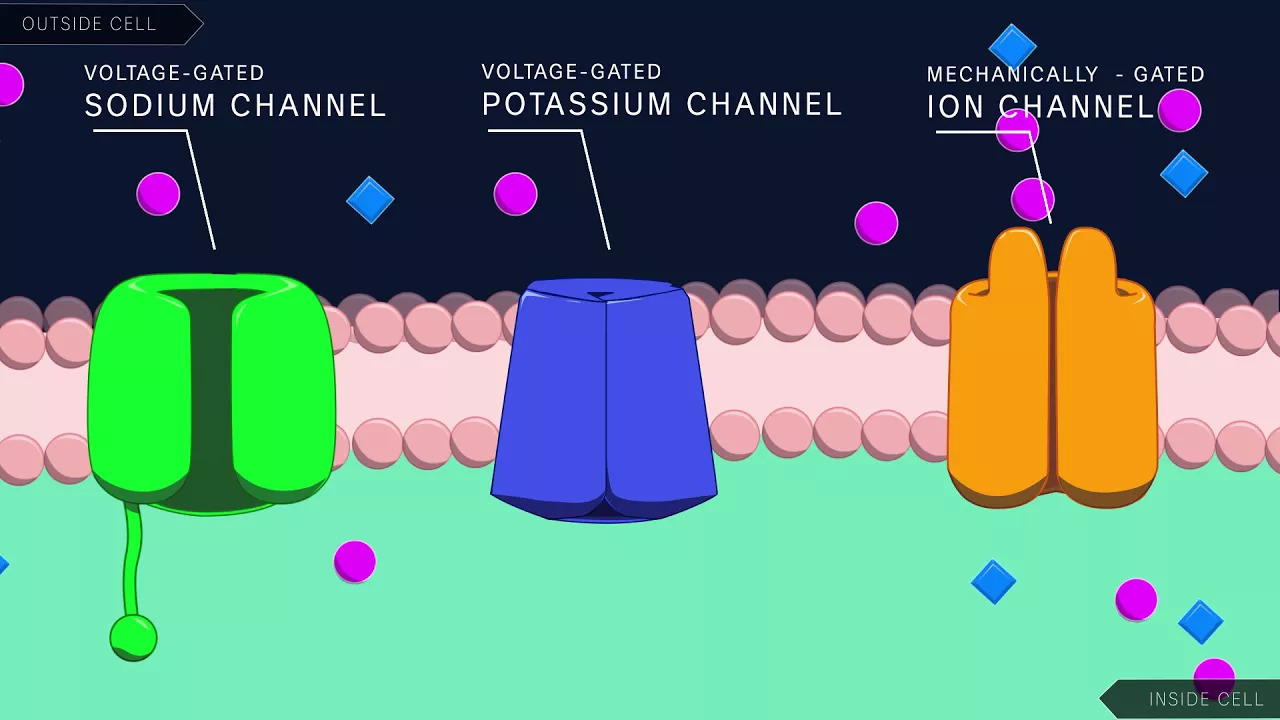
Added:Basic neurobiology and action potentials: Understanding how individual neurons generate electrical signals to communicate within the nervous system.
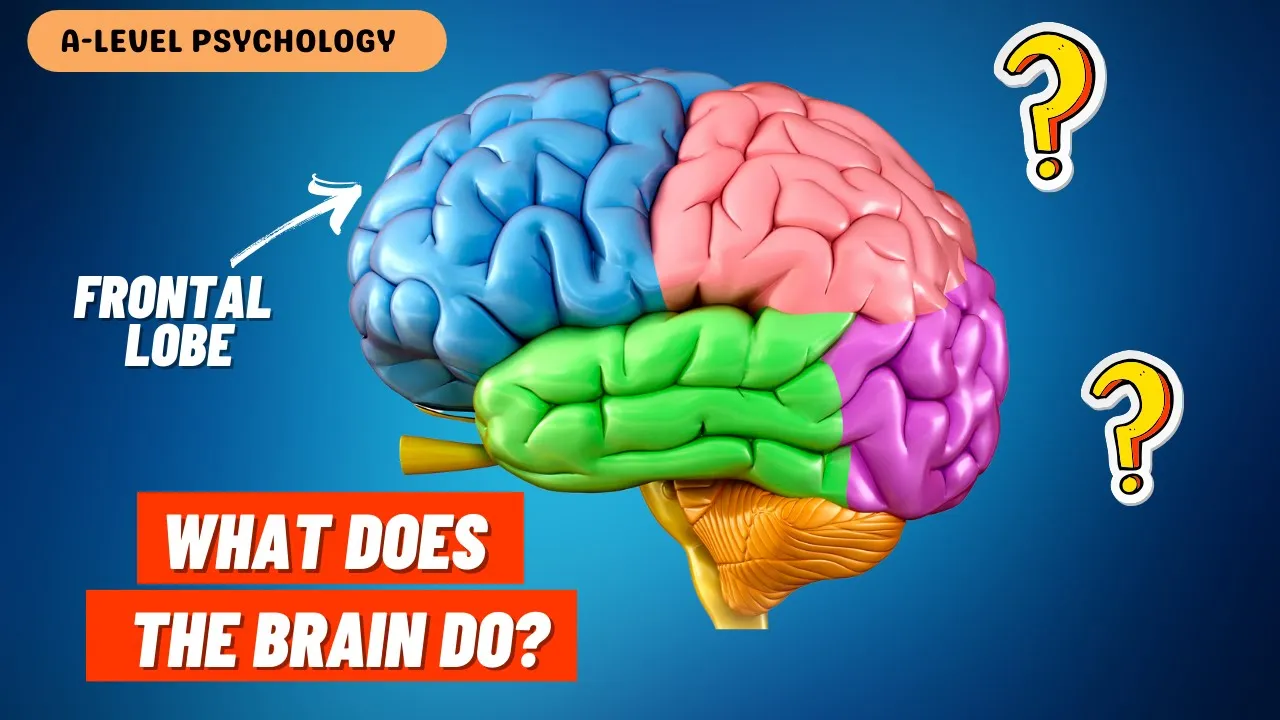
Brain anatomy and localization of function: Familiarity with the cerebral cortex, particularly the motor and sensory cortices, to understand where signals are recorded.
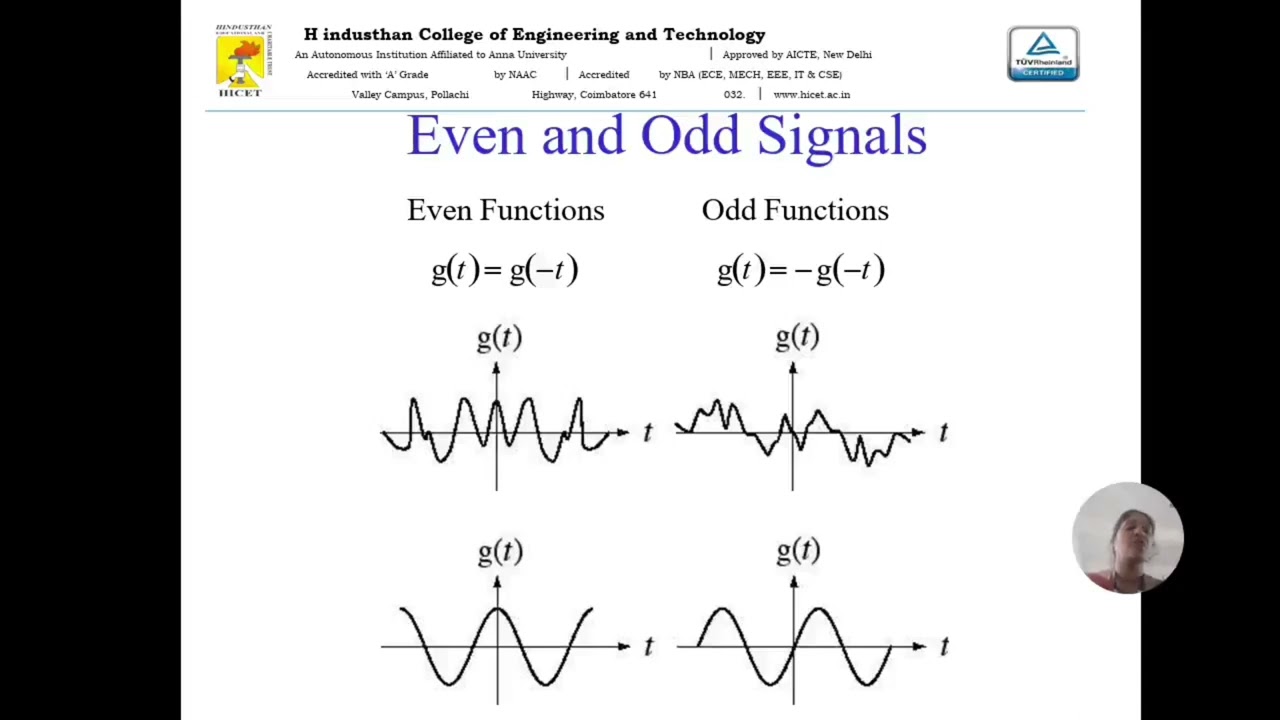
Introduction to bio-signal processing: Knowing how analog electrical signals from the body are captured, amplified, filtered, and converted to digital data.
Fundamentals of machine learning: Understanding how mathematical models can be trained to recognize patterns in complex datasets.
Advanced neural decoding: Exploring deep learning and reinforcement learning techniques used to translate complex neural firing patterns into precise commands.
Materials science and biocompatibility: Investigating the engineering challenges of creating flexible, long-lasting electrodes that do not trigger a foreign body response in brain tissue.
Neuroethics and cognitive enhancement: Examining the ethical, legal, and social implications of direct brain-to-computer interfaces, thought privacy, and human enhancement.
Clinical neuroprosthetics: Studying the practical integration of brain-machine interfaces with robotic limbs, wheelchair controllers, and sensory feedback systems.
1.7M views37.1Klikes1:44:41Original Release: 2019-07-17
called neurotransmitters.
Neurotransmitters are released from the end of an axon in response to an electrical spike called an action potential.
When a cell receives enough of the right kind of neurotransmitter input, a chain reaction is triggered that causes an action potential to fire and the neuron to in turn relay messages to its own downstream synapses.
Action potentials produce an electric field that spreads from the neuron and can be detected by placing electrodes nearby, allowing recording of the information represented by a neuron.
[Applause] [Music] Heat. Heat.
[Music] Heat. Heat.
[Music] Heat. Heat.
[Music] Heat. Heat.
[Music] Hello everybody.
So that uh that video was uh not shutter stock that was actually uh Neurolink.
So uh that that's actual video from the company. So if you want to get a sense for what it's like to work at Neurolink, that video is indicative of the atmosphere of Neuralink. Uh it's an incredibly talented team and you're going to hear a lot from from them tonight. Um, so we're going to actually go quite into depth on what we're doing, why we're doing, how we're doing it. Um, and, uh, I'm just incredibly impressed with the the the caliber of, uh, of talent at Neurolink. And, uh, in fact, the the main reason for doing this presentation is recruiting. So, we we really want to, um, have the the best talent in the world, uh, come and work at Neurolink. uh anyone that's interested in trying to solve this problem. Um and that's uh that's actually the primary purpose for this uh this presentation. So okay um so the the why of neurolink uh just to to go over it is I think it's important for us to address brain related diseases. um the the everyone if they if you survive cancer and heart disease the odds are that you will have uh some brain related disorder. So be like Alzheimer's or dementia and if you don't uh friends and family will for sure. Um and I think unless we have some sort of brain machine interface uh that can solve u brain ailments of all kinds whether it's an accident or uh congenital or any kind of brain related disorder or or a spinal disorder. If you know somebody who's uh broken their neck or broken their spine, uh we can solve that with a chip and and this is something that I think most people don't uh quite understand yet.
And we're going to go over in detail how this is possible. Um but I think I think there's there's an incredible amount we can do to to solve um brain disorders act damage um and and all this will will occur actually I think quite slowly um so I do want to emphasize that it's not going to be like suddenly uh neurolink will have this incredible neural lace and start taking over people's brains okay it will take a long time um so and and and you'll see it coming.
So getting getting FDA approval for implantable or devices of any kind is quite quite difficult. Um and this will be a slow process where we will gradually increase the um issues that we solve until ultimately we can do a full brain machine interface. uh meaning that we can ultimately yeah this is gonna sound pretty weird but um achieve a sort of symbiosis with artificial intelligence. So uh but this is this is not a mandatory thing. Um this is a thing that you can choose to have if you want. Um and and this this is something I think that's going to be really important um at a civilization level scale. So um and I I've said a lot about AI over the years. Uh but I I think even in a benign AI scenario, we will be left behind. Um and so hopefully it is a benign scenario. Um but I think with um a high bandwidth brain machine interface I think we can actually go along for the ride. Um and we can effectively have the option of merging with AI. This is extremely important. Um and and if you think about your lyic system and your cortex your limic system is kind of your primal needs and wants and it's like where your a lot of your emotions are coming from. And then the cortex is like the the thinking planning part of your brain. And I haven't met anyone who yet who wants to get rid of either the cortex or the lyic system. So clearly they worked work together well even though your cortex is in principle far smarter than your lyic system. Uh everybody wants to keep the lyic system and their cortex. So hopefully um we can have a tertiary layer which is the kind of a digital super intelligence layer.
And in fact, you already have this layer. So it's your phone and your laptop. And the constraint is just the how well you interface the the input and output speed. Um so the output speed is especially slow since most people are typing with thumbs these days. So you have a very slow output speed. Your input speed is much faster due to vision. But the thing that will ultimately constrain our ability to uh be symbiotic with AI is bandwidth.
Um so in in the limit after after solving a bunch of brain related uh diseases there is the the existential uh it's mitigation of the existential threat of AI or yeah this is the point of it. Um so creating a well- aligned future is that that's the idea of nearly 100 billion cells called neurons. Neurons come in many complex shapes but generally they have a dendritic arbor, a cell body called a soma and an axon.
The neurons of your brain connect to form a large network through axon dendrite junctions called synapses.
At these connection points, neurons communicate with each other using chemical signals called neurotransmitters.
Neurotransmitters are released from the end of an axon in response to an electrical spike called an action potential.
When a cell receives enough of the right kind of neurotransmitter input, a chain reaction is triggered that causes an action potential to fire and the neuron to in turn relay messages to its own downstream synapses.
Action potentials produce an electric field that spreads from the neuron and can be detected by placing electrodes nearby, allowing recording of the information represented by a neuron.
[Music] We thought we'd play that twice.
It's so good you have to play it twice.
Um, well, I think like a lot of people in the audience, you know, there's a wide range of of uh knowledge about neurons. Um I mean some people view the brain as like this incredibly mystical thing that cannot you cannot interface with the brain but and and then some people are aware of deep brain stimulation uh such as occurs for Parkinson's patients. So um try trying to address the broad range of of understanding. Um so um I mean neurons essentially like uh you know there's that whole idea what if we were just a brain in a vat. Uh this is often posed by philosophers except we are a brain in a vat and that that vat is our skull. um everything that you perceive, feel, hear, think, it's it's all action potentials. It's all just it's neural spikes. Um and it feels so real. You it feels very real, but but it's it's this these are all uh impulses from neurons, what what's called a a spike. And our goal is to record from and stimulate um spikes in neurons and and do so in a way that is orders of magnitude um more than anything that's been done to date.
And uh safe and um good enough that you can it's it's not like a majored operation.
It's it's sort of equivalent to to sort of a LASIC type of thing. So where where you can sort of sit down machine does its thing and you can walk away uh with within a few hours that's it and you you're not even in a hospital. So um so like there's there's basically uh in terms of key points that are worth taking away the system that we were designed in version one is capable of on the order of 10,000 electrodes. So each each chip which is 4x4 millimeters is capable of of a thousand um electrodes or has thousand electrodes. Um and we think doing up to 10 is feasible. So this is in contrast to um the the best FDA approved system which is like a a Parkinson's deep brain stimulation thing which would have on the order of of 10 electrodes. So um the system even in version one that we're going to unveil today is capable of of a thousand times more uh electrodes than the uh the best system out there and they're all read and write. So this is this is really quite I think I mean for something to be a thousand times more than what is public approved is quite a big difference. Um and and this will this will get better with uh subsequent um yes subsequent uh versions. Um now this this slide may seem a little generic um because like everything's got robust electronics and algorithms at this point but not threads.
So the the feel like I'm in transcendence.
Um there's actually I was in transcendence.
Um um so there's there's very tiny threads that are about um about a tenth roughly of the cross-sectional area of a of a human hair. So they're extremely tiny threads. In fact, the the threads that uh we we have, like I said, even in version one, are are about the same size as a neuron. So, if you're going to go stick something in your brain, you you you want it to not be giant. Uh you want it to be tiny. Um and to be approximately on par with the things that are already there, the neurons. So, this is about the size of of a neuron.
Um each thread. Um and then you really need this to be done with a robot because it's very tiny and it needs to be very precise. So, you don't and you don't want to pierce a blood vessel. So when you in so each thread that the robot looks looks sort of basically through a microscope and puts a inserts each electrode specifically um bypassing uh any vascular you know any kind of like blood vessel um uh and and making sure it can be inserted without causing trauma or minimal trauma. Um, yeah, it's not zero, but um, you won't notice it.
That's the important part. You won't like, you know, yeah, you you won't feel a thing. Um, so, um, and, uh, yeah, obviously algorithms. Um, so just give you a sense of scale, this is how tiny the threads are. Uh that is not even a big finger. That is a small finger. Um so the there's a these threads are just like like I said way smaller than a hair. Um and there's a thousand of them.
And this is what what the robot looks like. Um it's it's sort of a quite quite a complex device, but it uh it all comes down to a very tiny tiny point.
Um, so just just we want just like you see the robot robot on the left and um and then the um what looks like the needles for insertion next to a penny, but in fact the the the actual needle that gets inserted is way way tinier. It's that little tiny thing at the where the arrow is pointing. That's actually the size of the the needle. It's about 24 microns in diameter.
Extremely extremely small. Uh it's it's so small you can't really even see it with in the picture with the penny.
And then this is uh your rain on uranium. Um, no, it's not really. Um, that's Agar. Um, so you can get a sense for the, uh, robot doing the electrode insertion. Um, that that's a very zoomed in view. So, they're all very very tiny and the robot is very selectively applying them very del very delicately. Um, and uh, and then This is what the chip looks like.
So action potentials. Um so each one of those represents one electrode. So there would be up to 10,000 of of these uh of these lines. Um yeah. So um I guess like it's always difficult to this is going to be there's a lot more in this presentation. So in terms of things that I think are important to bear in mind this um I think has a very good purpose uh which is to cure important diseases um and ultimately to help secure humanity's uh future as a civilization relative to AI.
Um the threads are very tiny um and there's a lot of them and they're very carefully placed and um the the the operation on a perchip basis uh it involves just a a two 2 mm uh incision which is dilated to 8 mm and then the the CHV is placed placed through that and then it re it goes back to being 2 millimeters and you can basically glue it shut. uh you don't even need a stitch. So, and then the the interface to the um to the to the chip is is wireless. So, you have no wires poking out of your head. Very, very important. Um so, you it's it's basically Bluetooth to your phone. We'll have to watch the App Store updates for that one. Make sure we don't have a driver issue. Um updating.
Um so uh but but the key is like this this is something that um is is going to be uh not not stressful. Our goal is not stressful to to put in uh should work well hopefully. Uh you know we'll check it out very carefully before it becomes obviously FDA approved. Um and uh and it's wireless. So you you this this I think has tremendous potential. Um and we we hope to uh have this uh aspirationally in in a human patient um before the end of next year. So this is not not far. Um and then as as I mentioned earlier this is the main purpose of this presentation is recruiting and we need very talented people in very talented people in all these areas. So it's a a lot of very talented people are needed to make this uh ultimately successful. Um, and then speaking of talented people, let me hand it over to Max.
Yeah.
Thank you. Thank you. I'm Max Hodak. I'm the president of of Neuralink. Um, I remember a couple years ago when uh we started talking about the idea of Neuralink and that there might be a company and whether this was even a good idea. I remember my first reaction was that I wasn't sure that this actually was a good idea that the technology was there yet. And I think it's Elon has this incredible like incredible optimism where he'll pierce through these imagined constraints and show you that really a lot more is cap a lot more is possible than you really think uh is today. And you have to be very careful telling him that something's impossible.
It better be limited by a law of physics or you're going to end up looking stupid. Um, and so I uh, so I've wanting to build a a neural interface has really been like a a central goal of my life for basically as long as I can remember.
This is it. I think like we talked about AI being potentially the last invention that we have. I think that a high bandwidth BMI might be like really the first invention in many ways of like the next chapter of of us. It's just really like as Elon alluded to earlier, everything about your experience, your thoughts, your memories, it's all in your brain and represented in the firing statistics of action potentials. So all right. So just what is a BMI? And we'll go through this really like fairly quickly I think. So there's you start with hopefully a brain and a machine. Um but the machine is just a standin for the outside world. It could be it could be another brain. It could be software.
It could be a robotic arm. Um but you want to receive uh energy from that world and impart through the senses like vision and audition and impart energy back uh into the world through things like motor control. um and that that language that they use to communicate other putting aside the the interface hardware for a second. It's very important to understand what that is because people ask like oh go can I talk to my dog or can I I do these things but it's important to understand what that language is and that language in the most general sense is information um to a first approximation everything is information um but we just consider here the information represented in neurons and so consider two like toy neurons one uh so these lines are imagine action potentials and so imagine a neuron that fires very regularly like a metronome like this doesn't tell us anything there's no information conveyed in this signal. We don't learn anything from it.
On the opposite end of the spectrum, imagine a neuron that fires completely randomly. This also doesn't tell us anything. This also doesn't carry any information. Now, we know that this is these two degenerate cases are not what neurons do because if you fit a model from recorded neural activity to behavior of things like a cursor of a of a a patient or a subject that's implanted and you correlate these, then you can build a graph that looks like this. And this is a figure from a classic paper in this field from like the academic heritage of this field from 2003. I think that actually some of the authors of this paper in the audience today and you can see it's the x-axis is number of neurons and the r is the goodness of fit. And you can see that as you add neurons the the quality of the model improves. This tells us that neurons car and their spike trains carry information about things. Um here it asmtotes fairly quickly. That's because what they were fitting here was just 2D cursor control which has simple dynamics. And if you have tasks that are more complicated, then you need more neurons.
Um, so the classic definition of information is a difference that makes a difference. It's just some piece of information or knowledge that tells you something. It's like a very abstract concept, but it's such like information theory is such a deep rabbit hole. If you haven't seen it before, the original paper, mathematical theory of communication, is like it's very readable. I highly recommend it. You'll start seeing information everywhere. It will totally change the way you view the world because the world is information.
um as we've talked about before and understanding information also gets this question of well why do you have to have an implantable device why don't you have EEG or wearable or an optical thing and the answer of course is like well what's like these are different information carriers and what information are they carrying and uh we know that like if you open a back issue of the journal of neuroscience and you want to understand how some species of bird encode sound localization or something you'll find a discussion of spikes and we as far as we know everything that we care about is found in the statistics of spikes. So that's what we focus on. Um there are other things like fMRI or EEG. These are different information carriers carrying different information which we think is which we believe is impoverished relative to spikes. I think that's the scientific consensus. And so the question for all these different things is well what information is found in your carrier? We focus on spikes. That means we have to be inside the brain because the there's no ceiling that we're aware of on that with respect to that like grand vision of your perception, your thoughts, everything.
um like motor output, new like re-mboding uh lost limbs.
And so why does that mean that you have to be inside the brain? So you want spikes? Um well, people have studied if you take a neuron and you put an electrode on that specific neuron. So you have a ground truth electrical potential of the of that one neuron. And then you place an extracellular electrode nearby, which is what our electrodes and the UTRA and other people are like. We're not in the cell, we're near the cells. And then you measure how far away from a neuron can you be when you know what the ground truth spike connectivity is. Can you no longer see the spikes? And it turns out that the answer is about 60 microns which is like 0.06. It's it's very small. It's a lot less than a millimeter. Um so you have to be firmly under the skull. Like you're not there's no wearable that is going to get you spikes. This is a physics constraint as far as we're aware. Um and so now I want to I just want to talk about briefly that there's like neural didn't come out of nowhere.
There's a long academic heritage of research here. The colear implant has reached millions of patients since the uh 50s for uh deaf patients. Um over 100,000 patients have received deep brain stimulation for Parkinson's and essential trauma and donia and now other other indications. And about 20 patients uh have received the Utah array, which is a little 100 electrode rigid uh metal silicon device. And even though it has very few channels, they've been able to do some really cool stuff with it.
There's videos on YouTube of of brain gate patients doing things like controlling tablet computers or even texting each other um through through Utah arrays um just from these the small number of electrodes. And so there's many of the people on the team at Neuralink came from this academic like this academic work. Um, I got my start working in a lab at Duke University studying the uh how mappings between uh brain and and and like the screen space change. So if you make it so that the joystick goes like the cursor goes sideways when you push forward instead of up like how does the brain change the representation? So the point is that there are lots of people that have been looking at this problem from lots of angles for decades and we're in the greatest sense building on the shoulders of giants here and so the question is why not use one of those devices? Why not use a Utah array or or a deep brain stimulator implanted pulse generator?
And there's it's just in the Utah array case, the the rigid sharp metal electrodes produce a fairly strong immune response. And this doesn't end up hurting the patient, but it does mean that you lose the ability to record single spikes over some period of time, usually between one and a couple years.
Um, there's also a big perccutaneous connector through the scalp. So, you need to plug in big external electronics and you're never really confident that the risk of infection is is gone for the duration that you have the implant. Um, deep brain stimulators solve a just solve a very different type of problem.
They are very effective for some Parkinson's patients, but they have only a couple electrodes and they're really geared towards injecting large amounts of current, not recording single spikes.
Um, so they're really a very different uh the DBS is really just a very different type of um platform for a very different type of problem. So we had to go back to the drawing board and start over to uh build something that met the goals that Elon laid out for us. Um, we knew as as Elon mentioned that whatever we built, we wanted it to be completely wireless. Um, we didn't want any connectors or wires coming through the skin. It had to be something that would last for a long period of time, not something that you'd have to take out at 2, three, or or four years in. um it had to have practical bandwidth. So we talk about high bandwidth or ultra high bandwidth like what matters is that for the task that you're after there is practical bandwidth that allows you to effectively do that thing whether that's cursor control or typing or robotic arm or maybe in the future vision. Um and it has to be usable at home. It can't be something that you go into a a clinic at the hospital for two hours a week and under tight supervision of technicians plug you into the amplifiers and turn it on. It has to be something that you can live with. And so two and a half years ago, we were nowhere close uh to any of that. Um this is a photo of some of the prototypes that we've gone through um over that over that time. So we started on the uh far left. That's a entirely passive board that has 64 electrodes on it and connects to connectors that go to big external amplifiers. And then we added integrated electronics with our first custom chip that's also 64 64 channels. And then there was a big leap to the the device that Elon showed a photo of earlier that has 3,72 electrodes in a fully implantable package with just a USBC port coming out.
And then we uh we took a step back in channel count because remember we have to optimize safety, longevity and bandwidth altogether. And so in order to optimize some of those other things, we moved to an easier to manufacture system that has 1536 channels and a USBC port.
And those last two are the focus of the paper that uh we released today. Um, and so we've we've learned a lot from these. We've recorded a lot of data through these. Like these are actually used every day at Durlink to to record neural data and work with it. And they taught us a lot about the architecture that we think was the basis for our first human product that we're calling N1. And the central component of that is the N1 sensor.
This is it's a little um hermetic package. It's about it's when it's fully assembled, this is missing an outer mold. um fits into an 8 millimeter diameter uh 4 millimeter tall cylinder and it each of these has 10 24 electrodes and we can stem and record through through every one of those channels exploding it blowing like opening it up a little bit you can see there's there's a thin film which has the threads that Elen talked about which is the wisp going off to the side there's a hermetic substrate and then that gets welded later to a package that goes over top and that's made to our custom electronics and we'll go into more det we'll the technical leaders that work on each of these talk about these in more detail over the the rest of this presentation.
So yeah, I mean this is just to not to belver the point. I know that Elon really hammered this in, but these things are very very small. They're like they're not you can't you can't manipulate these. This is one photo.
This is not two photos joined together and you really can't manipulate these with your hand. That that part at the top is uh just a backing material that's surgical packaging. they're they're peeled off uh the threads were peeled off that one at a time by the robot to place into the brain and um and yeah and we had to build a surgical robot and the first uh impetus for this is just you have to place these threads you can't manipulate these threads you need a robot and then that turned out to that grew into understanding where the blood vessels are and imaging into the tissue and the surface of the brain moves because you're breathing and you have a heartbeat and there's lots of complexity of dealing with this incredibly high entropy substrate and it's not all offload to the robot. It's the robot's under the supervision of a human neurosurgeon who lays out where the threads are placed, but it would not be the the surgery is not possible without the robot.
And so the N1 implant um we can place as Elon mentioned many of these possibly up to 10 in one hemisphere for our first patients. We're looking at four four sensors, three in motor areas and one in a smata sensory area which are connected via very small wires tunnneled under the scalp to an inductive coil behind the ear.
And that connects wirelessly through the skin to a wearable device that we call the link which contains a Bluetooth radio and a battery. And this is importantly the only battery and radio in the implant. So, if you take this off, the implant shuts off. And if there's software upgrades or security issues, it's much easier to upgrade the firmware on the pod than it is to try and change the implant.
It'll be controlled through an iPhone app. You won't have to go to a doctor's office and have them have an exotic programmer to uh to configure it. And the first thing that you'll have to do is learn to use it. Like imagine if you've never had arms and then suddenly you have an arm and you have to pick up a glass on the table. It's like not a cognitive task. you just like how how do you you can't think your way through that. And so it's kind of a trippy experience at the beginning where like patients at first it just kind of wanders around and then they figure out how to break the symmetry and they learn how to control it. And um and that's like a it's a long process. It's like learning to touch type or play piano.
And so the for the first product um we're we're really focusing on three distinct types of control. Um, the first is giving patients the ability to control their mobile device because we heard from over and over again from patient groups that if you have to have a caretaker around to press buttons for you, what's the point? You might as well have them do the thing. You have to get self-sufficient using uh using the devices on your own and then uh redirect the output from from your phone to a keyboard or a mouse on a normal computer. It'll just show up as a as a Bluetooth mouse or Bluetooth keyboard like any keyboard or mouse that you can use on any computer. And as Elon mentioned, this is now this is a forward-looking statement. There's a whole FDA process we have to go through.
We haven't done that yet.
This is this is like these are aspirations. Um but we are working as hard as we can towards our first inhuman clinical study next year. Um and again, these are plans, but the the primary indication for that will be um complete paralysis by spinal by upper cervical spinal cord injury. And we're expecting that those patients will get four 1024 channel sensors. um one each in primary motor cortex, sematic uh supplementaryary motor area and dorsal uh premoter cortex which are two motor planning areas and closed loop feedback into primary semata sensory cortex which is like when you type or or walk or pick up a pen you don't those aren't visually guided movements. You have your body has all these senses of where it is in space and pressure and temperature and lots of other feedback and and we think for really high uh fluent control you have to provide that back to the brain for the synthetic aectors also and of course fully wireless and able to use it at home. We think that there's a huge difference between something that you get to use two hours a week at the hospital versus something that you're living with every day. And your brain is adapting to as much as the device is adapting to your brain.
And so to bring up um the other other colleagues, this team is like I'm incredibly lucky to get to work with this team. We're going to go into a little bit more detail on um I think that decoupling implantation from the electrodes is incredibly important. Um, the reason that you have these issues where things like these electric like tungsten micro wires get rejected is they're stiff and they h they're stiff and sharp and they they tear the brain and they have to be because they have to get into the brain. And so if you can decouple the process of getting it into the brain from what is left there where it can be much softer and have material properties like the brain and maybe be coated in things that help the brain recognize it as itself, um, that's that's really important. And then the thin film polymer leads, the threads themselves are really cool material science and uh and we'll we'll go into more detail on that. And then we'll also talk more about the chips and then a little bit more on just the neuroscience of how information is represented in in firing statistics in your brain. Um and so with that, I'd like to welcome Dr. Matthew McDougall.
Thanks Max. I'm Dr. Matthew McDougall.
I'm head neurosurgeon at Neurolink. When I'm not at Neurolink, I'm a brain and spine surgeon here in San Francisco at CPMC, California Pacific Medical Center.
Before that, I was at Stanford uh where I worked in labs that uh implanted and designed advanced brain computer interfaces.
I originally became a neurosurgeon because I wanted to help people live happier, healthier, longer lives.
Uh I've been humbled in practice by how powerless we are to treat many of the most uh debilitating neurologic diseases.
People afflicted with spinal cord injury, schizophrenia, autism, and a host of other neurologic conditions uh have far too few options.
I work with Neurolink because we for the first time in history have the potential to solve some of these problems.
Before we get to how we get the device in, we have to talk about our guiding principle at Neuralink. It's safety.
Everything we do at Neuralink is filtered through the question, will this make me more likely to want to get one?
Will it make me more likely to recommend this to my family and friends? This approach impacts every design decision we make.
So while for the immediate future Neuralink devices will only be intended for patients with serious unmet medical needs, our design philosophy is that this should be safe enough that it can be an elective procedure.
So what have we done to try to make it safe?
For starters, we've created very small threads. They displace a lot less tissue than the traditional methods. In my regular practice today, I routinely implant large deep brain stimulator electrodes into the brains of my patients. They're big enough to have about a one in a hundred chance of causing a significant hemorrhage.
They displace and disrupt enough brain tissue that you can often see neurologic consequences just from placing the wire.
We can do better than that.
Neurolinks threads are so thin that they're difficult to see with the naked eye. They're much smaller than the width of a human hair. They're small enough that a human surgeon can't actually implant them without help. So, we created help.
Neuralink developed a tool that we're extremely proud of, the robotic inserter.
Inspired by designs conceived of in labs here in the Bay at UCSF and Berkeley, uh we developed this robot that can rapidly and precisely insert hundreds of individual threads representing thousands of distinct electrodes into the cortex in less than an hour.
This tool allows a surgeon to aim between the blood vessels that cover the surface of the brain with micron scale precision.
The region of the brain shown in this video uh represents uh only a few millimeters of surface of the brain.
As you can see, the brain surface moves with the heartbeat and breathing. The robot tracks and adjusts for this movement.
Using this tool, we can greatly reduce the risk of harming cortical vessels and causing bleeding.
Here the robot is selecting individual electrode threads and placing them into the brain in the pre-planned location with remarkable accuracy and repeatability.
Using this system, we've been able to rapidly place thousands of electrodes into the cortex without causing noticeable bleeding.
We also have an in-house hisystologology team that examines brain tissue to help us choose electrode profiles and materials uh to help us minimize tissue damage.
When you think of traditional neurosurgery, you probably think of something uh very invasive. Traditional surgery uh on the brain isn't something that patients ever look forward to uh or are excited about except in the most dire circumstances.
Usually a a clamp is attached to the skull to keep it rigidly immobilized to the operating table. We often shave all or most of the patients hair. Uh patients can end up with large visible scars. At Neurolink, we want to create an entirely different patient experience. Something more like LASIK.
No scars, no big scars, no hospital stays, no short procedures. Sorry, no hospital stays, very short procedures, and of course, in the end, you get to keep all your hair. We even want this to be possible under conscious sedation.
That means you can get rid of the complexity and the risk of general anesthesia, as well as many of the unpleasant side effects, nausea, sore throat from a breathing tube.
To be absolutely clear, our first clinical trial patients are going to receive an experience much more like traditional neurosurgery.
But our aim is to simplify the procedure down to the injection of local anesthetic, a very small opening in the skin, a painless opening in the skull below, quick and precise placement of threads into the cortex, and then we fill that hole in the skull with the sensor, allowing the scalp to be closed up over it.
Behind the ear, we'll make a small incision to insert the coil. We will tunnel tiny wires under the scalp to connect the sensors to the coil.
That's the process.
I believe that Neurolink is going to be able to provide us in the medical community uh with a platform that can finally enable us to treat some of these very difficult uh to treat diseases also to understand them better. I hope you find this as exciting as I find it. If you feel you might be able to help us, don't hesitate to contact us.
To talk more about the technology behind all this, I'd like to introduce Vanessa Tlosa, uh, director of our neural interfaces group.
Hi, I'm Vanessa Slosa. I lead the neural interface group at Neurolink. Our team consists of engineers and material scientists who are responsible for making the probes that get implanted into tissue, the packaging for the electronics, and integrating these two components together.
We also do all the testing and characterization of these parts. Before joining Neurolink, I led a neuroch team at Lawrence Livermore National Lab.
There we worked on a wide range of neuropthetic technologies that were used both in the academic and clinical settings. I decided to join Neurolink because I saw an opportunity to take all of this exciting work that we were seeing in neuroch research and actually make them accessible to patients at a much faster time rate than what medical device companies have traditionally been able to do.
With that in mind, at Neuralink, we set out to create a fully implantable neural interface with thousands of channels that are capable of single spike resolution.
This device must last a long time in the body. To do this, it must be small, flexible, and made of biocompatible materials that will minimize the brain's immune response.
To protect the electronics from the costic environment of the body, it must have airtight packaging, also known as hermetic packaging.
The device must also be able to both record from and stimulate neurons. This is essential for a highly functioning BMI.
Finally, the manufacturing process must be scalable and capable of making micrometer sized features consistently.
Currently, there are no research or commercial commercial devices that meet all of our requirements.
So, we built one out of micr fabricated film film polymers.
Just like in semiconductor chip manufacturing, we use a layerbylayer process that generally consists of three repeating steps. We're either always depositing material, patterning a material through photoiththography, or etching away a material.
Depending on complexity of the design, these steps could be repeated over a hundred times. And to make things more challenging, we are limited to materials that are safe for the body.
In our current design, we have a three metal layer process that results in a five micron thick and 10 to 40 micron wide probe. To give you an idea of how small this is, red blood cells have a diameter of about eight microns and an average strand of hair is about 100 microns. Yet in the small footprint, we're able to fit our electrodes, our wires, and the insulation for each of those wires.
With micr fabrication, we can drive features down to the size of an electron beam. So, this is great because we want to make our probes as small as possible.
Essentially, we want it to be invisible to the brain. But there are other factors that limit the size of our probes. For example, as we make the wires smaller, it increases the resistance of those wires. And as resistance increases, it makes it more difficult for us to separate our signals from our noise. Similarly, there are other technical challenges and trade-offs that related to higher channel counts and manufacturing yield, electrode size, and material and tissue m safety.
At Neurolink, we have an incredible team that's been tackling these challenges and have been able to make high channel count polymer probes.
And this image is a silicon wafer that holds 10 of these arrays, these polymer arrays. In this design, each of those arrays has over 3,000 channels. So, what that means is in this one wafer, we've manufactured over 30,000 electrodes and over 30,000 insulated wires. This is something that can't be done with the way current medical devices are being made.
That rainbow effect is caused by the small feature sizes on these devices that are interacting with the nanometer w um size wavelengths of light that are reflecting off of them.
If you were to zoom in on the ends of one of these arrays, you'll see these this region where we uh put all of our electrodes. So each of these vertical filaments that end in a loop is what we refer to as a thread. And each of these threads can be placed independently into the brain using our robot during surgery.
This design is called linear edge. It's one of over 20 designs that we've made for our R&D work. We progressively been increasing the number number of electrodes per thread without significantly increasing the width of each of these threads at the base.
We've been able to do this by adding layers and reducing the sizes of the of the wires down to as small as 350 nanometers. This is less than the wavelength of visible light. Because we're using a lithographic process essentially if we can draw it, we can also make it.
So on one end of our probes are the electrodes. on the other end are where we connect the probes to the electronic package or to the electronics through conductive feedroughs. This substrate is part of the hermetic electronics package. Standard methods of connecting the probes to the electronics package usually involves some kind of large plug-in type connector or a polymerbased glue that bonds the two components together.
But as we increase density and decrease the the footprint becomes impossible to receive uh to achieve heraticity in standard medical device connect connectors. This is due to several reasons.
One of them is how these substrates are currently manufactured.
Hermetic feedroughs consist of holes that have been packed with conductive materials and are embedded in an insulating substrate. As you drill more holes and pack them more tightly together, these brittle substrates, typically made of ceramics, become more susceptible to cracking. Also, as you make the holes smaller, it becomes more difficult to fill them with this conductive material without getting non- hermetic voids.
Standard processing also requires exposure to high temperatures typ typically over 700° C. At these high temperatures, the coefficient of thermal expansion or CTE mismatch between the insulator and the conductor can cause circumferential cracking or interfacial gaps during the cooling phase.
We're able to get around these problems by developing a new process.
So rather than making the probes and then the substrates and then connecting them together, instead we micr fabricate them together into one monolithic component.
This provides a tight seal at densities that current methods with uh standard materials for medical devices can't achieve. So far we've used this process to make a hermetic thin film substrate with over a thousand connections over a 2.4 4 mm by 2.4 mm footprint.
Next, we assemble the electronics and then also attach a wired lid using a laser welding process. These two steps have required a lot of um internal development as well. The result is the sensor that's ready for final assembly and implant into the body.
Next, you'll hear from my colleague DJ, our custom about our custom electronics.
Thank you, Vanessa. My name is DJ Saw and I'm the director of implant systems at Neurolink. My team focuses on building chips and systems to get neural signals recorded from our electrodes out of the brain and also to put information into the brain.
Before Neuralink, I was at UC Berkeley where I co-invented Neural Dust, which is a technology to power and communicate with small implantable systems using ultrasound waves.
Typical chip life cycle from design to verification to tape out is approximately one to several years.
At Neurolink, we had the ability to co-design our chip with the rest of the system. And the tight feedback loop from this organization has enabled our small team of analog and digital chip designers to tape out a new design every three months on average. That means over the past 24 months, we've done eight tape in total representing 15 different chips that have been designed, fabricated, tested, and used in development.
The artwork that you see on the top of the slide is of some of the actual chips that we made. So far, for any custom chips we make, the architecture can vary substantially, but the basic ideas are the same. Neural signals recorded from the electro typically look like the one on the slide. And in order for us to extract the information that we care about, we need to first amplify, filter, and digitize those neural signals and use digital logic to process and send out the bits we want for BMI.
We also need ways to diagnose any issues with our electrodes and be able to drive stim stimulation engine to inject charge to the brain when required.
Our latest chip is called N1 system on chip and it is physically small measuring only 20 mm squares or 4x5 mm.
It is low power, highly configurable, and it has 1,024 simultaneous record and stimulation capable channels.
And it has onchip spike detection.
To dive deeper into N1 SOC, I'd like to highlight three key innovations and they are one analog pixel, two onchip spike detection and three stimulation on every channel.
The first is analog pixel.
Before we can convert analog neural signals into digital bits, we need to amplify and filter them. And this is where the analog pixel comes in. We want to have one analog pixel per electrode so that we can configure them independently. So in the case of N1 SOC, there are 1,024 analog pixels.
Analog pixels also take up a significant portion of the physical space on the chip. And how well they work determines both the signal quality and the characteristics of the overall neural interface.
The goal of analog design is analog pixel design is to make it as small as possible so we can fit more as low power as possible so we generate less heat and have longer battery run times and as low noise as possible so we get the best signals.
Now the challenge here is that these goals are at odds with each other.
For example, we want to achieve lower noise on the amplifier so that more spikes can be detected.
But as transistors get smaller, it becomes harder to get lower noise while keeping the power the same or less.
Since the start of Neurolink, we've gone through three major revisions to the analog pixel, progressively improving both the size and power while maintaining performance.
Over the past 24 months, we had sevenfold improvements in the size of the analog pixel. And our latest pixel on the right is at least five times smaller than the known state-of-the-art of similar architecture with one pixel dedicated per electrode as published in the academic literature.
Second innovation is onchip spike detection.
Once the signals are amplified, they're converted and digitized to zeros and ones by our onchip analog to digital converters.
As you'll hear in a second, spikes or action potentials shown in this slide are often critical for certain BMI tasks.
Currently, there are several different methods for detecting spikes, such as thresholding or more sophisticated methods such as principal component analysis.
At Neurolink, one of the robust ways that we came up with is by directly characterizing the shape. And it's worth noting that this is different than template matching in that it gives us more information in a general way.
In certain cases, we can actually identify different neurons from the same electrode based on their shapes.
Our analog pixel can capture the entire neural signals sampled at 20,000 samplers per second with 10 bits of resolution resulting in over 200 megabits per second of neural data for each 1,024 channels that we uh that we record.
In our previous systems that you heard about, we were able to stream this entire broadband signals through a single USBC connector and cable. And we performed real-time spike detection on an 8 core machine running our optimized C code.
Now, we wanted to completely eliminate connectors and cables for N1. So, we had to modify our algorithms to fit into the hardware by scaling both making it both scalable and also low power.
And then we were able to also implement this algorithm in our N1 SOC.
Our algorithms can compress neural data by more than 200 times and it only takes 900 nconds to compute which is faster than the time it takes for the brain to realize it happened.
Finally, it was important for us to enable stimulation from every channel that we can record from and make it configurable and high resolution.
To make this work, we customd designed stimulation engine for electrical stimulation that can coexist alongside our analog pixels.
Our stimulation engine has 2 micro amp of amplitude resolution and 7.8 microcond of time resolution.
There is a 16:1 ratio of electro to stimulation engine. So we can't stimulate every channel simultaneously, but we can within each stim pulse usually in milliseconds. And we can also stimulate any combination of 64 channels at the same time.
So in summary, looking through our N1 SOC, it has 1,024 analog pixels that we can record from simultaneously with 7.2 microvolt RMS noise while only consuming 6.6 microwatt of power.
It has onchip analog to digital converters on chip spike detection that can compress neural data more than 200 times and it only takes 900 nconds to compute stimulation engine with 2 micro amp of amplitude and 7.8 microcond of time resolution and finally diagnostics for electrode and impedance measurement.
All of these functionalities that I outlined are integrated into a single 4x5 millimeter silicon die.
Next, my colleague Flip will tell you more about what can be done with these signals.
[Applause] Thanks, DJ.
My name is Philip Savis and I'm the senior scientist at Neuralink. Before Neuralink, I was at UCSF where I was a professor of physiology.
Um, there for 16 years, I ran a lab that studied how the brain processes sensory and motor signals. We developed uh new neurochnologies and we studied how to take those tools and use them for neural engineering applications.
Today I'm going to tell you about how it is that we can use those amazing devices that Vanessa and DJ just told you about to communicate with the brain.
Now, specifically, I want to tell you about two things.
First, I want to show you that the work that we're doing doesn't come out of thin air. We're building on over a century of neuroscience research and decades of neural engineering research.
Um, these provide a solid foundation for the sorts of things that that we're talking about.
Second, I I want to show you why we believe that even more advanced applications are possible with more advanced devices. Now um when Elon contacted me uh over two and a half years ago now and told me about his vision for the company, I knew that I wanted to join for these two reasons because I knew that the technology was at a point where with the right team and the right right uh vision and a long-term vision, we could do the sorts of things that we're talking about. And I knew that with that team, we could do things that no one had even dreamed about yet. Okay. So, the first thing I want to show you is a video.
Um, many of you who are seeing this have seen videos like this before, so you know what it is. But if you don't know what this is, I have the distinct pleasure of telling you that right now what you're looking at is the brain at work.
uh each of this is in fact traces of a bunch of electrodes that came off of one of our devices. A bunch of electrodes from a single thread and um each trace shows you the voltage waveform in time as it's coming off of one of those threads. Now, if we focus in on one of those traces, the first thing you may notice is that there are these big voltage deflections that happen periodically. And these are the spikes that Max and Elon and others have talked about. Um, these spikes occur again when a neuron has an action potential. And this is the fundamental element of communication within the brain. And this is the thing that we want to tap into. This is what we want to be able to record. Now, as DJ just told you, uh, we have algorithms that can detect these spikes in real time as they're happening. And that allows us to collect data that looks something like this. This is what we call a spike raster. So each row there represents one channel of recording and time goes from left to right. And each of those little tick marks is the time of a single spike and action potential.
All right. So presumably there's some information somewhere in there. How do we get at it? What are we going to do with it?
Well, for the first application, which Max told you about, which is allowing paralyzed individuals to be able to control a computer, what we want to do is we want to reach into primary motor cortex and record the activity that's happening there. Primary motor cortex is the part of the brain that sends signals down the spinal cord into the muscles to drive movement. Of course, it does that with action potentials. And um in particular, we want to record from the hand and arm portions of primary motor cortex.
So, imagine imagine that you have a person sitting holding a mouse and they're sitting still and then they make an outward movement with their mouse and then they reach back. What would you see in the brain? Well, here's a here's a synthetic neuron. I made these data up, but but it gives you the idea. Here's a synthetic neuron that shows that um in in the background activity when the person's at rest maybe there's some firing but when that neuron when that person reaches outward that neuron starts to fire a lot and when he reaches back uh the neuron becomes quiet. So this is what we call a neuron that's tuned to a particular direction of movement.
Now uh maybe we'll record from another neuron and this neuron may have a different pattern. It may be tuned to the return movement and not to the outward movement. So it fires more on the return.
What if we ask the person to do that movement again?
What we would see is a similar pattern of activation. So the neuron on top still fires more for outward movement and the neuron neuron on the bottom still fires more for the return movement. But you'll notice that the patterns are different. And that's because neural activity in the brain is random. It has stokasticity.
uh which means that even though the person may be intending to do the exact same thing from one movement to the next, the neural code, the neural representation at the level of an individual neuron is noisy. And this is just one of the reasons why we need to record from lots of neurons in order to be able to gain a highfidelity readout of what the intention is. So, okay, so let's say we record from a bunch of neurons. It might look something like this. Now, if you look at that, you might think that looks pretty messy and it's not clear what's going on. But I'm gonna do a little trick. I'm going to take those neurons and I'm going to rearrange them so that they're in the order of the tuning that they have just as I told you about those two neurons.
And if you do that, look what happens.
Now, suddenly structure emerges. And I think you'll agree looking at that that there's information in that stack of neurons that tells you about the movement. And that's exactly what we want to do. We want to do that kind of magic in an automated way to read out in to read out the movement. The way we do that is by building something that we call decoding algorithms. These are mathematical algorithms that we tune based on data like these to be able to take in just those raers of spiking activity and output the movement that's that the person wants to make.
Okay. So for these little fake data I built a s very very simple decoder and sure enough it's able to uh to capture the intended movement. This is what we want to do on a bigger scale. Now, you might say to yourself, I don't understand. You talk about moving, but I thought it was about paralyzed people, right? So, how does that work? Well, it turns out we know from a lot of prior research that even if you're not actually making the movement, even if you're just thinking about the movement or even if you're watching someone else make movement, the cells and motor cortex respond in a similar way. So, we can build up these decoding algorithms just from from those kind of data. And then a paralyzed person can think about moving the mouse and the cursor will move. Now sorry um this this kind of decoding has been done in uh a fair number of academic labs including my own before I came here and in in and in humans in academic uh studies.
Um, what what we want, what Neuralink's goal though is to be able to do this with a clinical device that people can take home and use on their own and that is orders of magnitude more channels, orders of magnitude more neurons that we're recording from. With that, we think that people will be able to get naturalistic control over their computers, not just a mouse, but also keyboard, game controllers, and potentially other devices. That's what we're trying to do.
Um now I've told you about the arm and hand area of motor cortex but the devices that we're talking about because of their high bandwidth um and the ability to tailor the location of each indiv individual electrode to a person's individualized cortical anatomy we should be able to reach anywhere in motor cortex. So for example um there are areas um at at the base of motor cortex that are responsible for driving activation of the speech articulators.
There was a recent lovely study from UCSF that um showed uh that from activity like that you can actually decode uh speech. So you can you can decode the movement of the articulators and from that you can create synthetic speech.
Uh so potentially with a device like this you could restore speech to a paralyzed person who's no longer able to talk but there's no reason in principle that we can't reach all of motor cortex and that would give us access to any movement that a person thinks about any movement at all. A person could imagine running or dancing or even kung fu and we would be able to decode that signal.
So that could give a paralyzed person the ability to control, say for example, a 3D avatar that they could use for online gaming or sports. It could allow them to control a wide range of assisted robotic devices. And ultimately, if and when the technology for spinal cord, nerve, or muscle stimulation gets far enough, ultimately it could be used to restore that individual's control of their own body.
Okay, I've talked about readout, but we remember we want birectional information. We don't only want to read information out of the brain. We want to be able to put it back into the brain.
Now, to some of you, that may seem a little bit fantastical that you could write information into the brain. But actually, the the basic building blocks of that technology are already there.
Um, this is the same uh image that you saw before of an electrode next to a cell. It turns out if you pass a tiny amount of current through that electrode, what happens is that you activate cells nearby, you cause them to to fire an action potential, one or or many.
And that is the technology that is already being used widely outside the brain. Say for example, for colear implants, which have been used for decades to restore hearing to the deaf and more recently um in the eye to restore vision to the blind in a in a fairly rudimentary way, as I'll tell you more later.
But in addition, you can use the same technology in the brain um for example to restore the sense of touch or to restore vision. And I'm going to tell you very briefly about those two applications.
So let's start um with the sense of touch. Consider this little bit of of tissue that of brain that I've just highlighted here that's at the border between motor and semataensory cortex.
So if we blow that up uh what you can see is that um semata centric cortex has a very special property. It has what we refer to as spatial a spatial map. And what I mean by that is that there are regions that encode the palm of the hand and each of the five digits for example. So if we were to stimulate at one little location say in the thumb part of the of the cortex the person would feel a sense of touch or pressure on their thumb. or if we were to stimulate two sites uh on the palm in the palm area of cortex you might feel a couple of points or touches on your hand. This kind of technology has been demonstrated in in many academic labs. And in a recent uh really nice paper, it was shown that uh with subjects controlling a robot arm through BMI, getting tactile feedback of when that arm or when the hand of that arm was grasping an object improved the ability to pick up and place objects with the robot. So this is this is the kind of thing that can really help uh decoding.
So imagine what we could do if we're able to take our device and cover all of sata sensory cortex. We could give rich sensation of objects of haptic feedback when you're manipulating objects. We could maybe feel different textures. Um but it's not just about improving the user experience. It's also about getting to the level of functionality that we want. Uh imagine for a second, imagine typing.
Now imagine typing with your fingers anesthetized.
that's going to be pretty hard. So that haptic feedback, that sense of sensory feedback during movement is going to be important going forward. And uh and yeah. Okay.
So uh that sensory feedback uh for the hand we can also potentially provide visual feedback. So uh visual cortex just like sata sensory cortex has maps.
So uh there's a spatial map in visual cortex which is here in orange in the back of the brain. So for example, if we stimulate a particular point in cortex, we might see a flash of light uh in a in a little punctate spot in front of us.
And this was demonstrated many years ago um in in by neurosurgeons and it's been used in academic labs and that we call that little dot a phosphine. And you know if you stimulate another area you'll get a phosphine in a different location.
So the idea here is that you could stimulate a bunch of different areas and you could create kind of like a dot dot matrix image of the visual world which could provide a rudimentary form of vision. And there are academic labs and and even companies that are working on technology just like this. But there isn't just one map in visual cortex. Actually there are a bunch of different maps. This is a good example of how the brain works. There's a spatial map, but there are also there are also maps telling you about the orientation of edges in the field. There are maps telling you about color. There are maps telling you about the size and speed of objects moving. So what we want is a device that has sensors that are small enough, electrodes that are small enough and a high enough density that we can tap into that rich collection of maps with our stimulation devices so that we can do better than just dot matrix so that we can actually create rich visual feedback for the blind.
That's that's the long-term goal.
Okay, that's just um again one more example of the way that these devices can be used.
So I've talked about recording signals and I've talked about stimulating.
Um you can combine those two to treat a variety of neurological disorders. Um Max talked earlier about deep brain stimulation to treat say for example Parkinson's disease and many people have have those devices in um academic labs have recently shown that you can do better with stimulation you can treat better if you also are able to record the state of the brain say from motor cortex and use that to shape the pattern of stimulation.
uh deep brain stimulation or DBS has also been used for donia is already approved for donia and obsessivempulsive disorder and we think again closed loop therapies can do better and in fact for epilepsy there's already a commercial product that does this kind of closed loop seizure detection and disruption although it does it with only about eight electrodes there are many other uh sorry many other diseases oh Oh, all right.
We'll get there. Sorry.
There are a number of other neurological disorders where DBS has promise but is still an investigational stage like depression, chronic pain, tinitis.
Now, even though these diseases are currently being treated with these big DBS electrodes, like you've seen, we think that there's a potential here for the kinds of devices we're we're designing to get individualized, highly focused treatment that will reach broader patient populations and be able to be more effective in the way that they treat these disorders.
All right. Lastly, I want to tell you about um not just sensory input and motor output, but about about thought. So, there are parts of the brain where we know that there's neural activity that encodes the things that you're thinking about. And one great example is an area called the hippocampus. Uh the hippocampus is involved in memory formation and it helps store uh episodic memory things that you remember from your life. It also has a particular kind of memory for locations and views that that you know um for example um it'll have cells that represent places in your own home or in a city that you know well. So imagine that you had that you could record from a collection of neurons in the hippocampus of somebody who lived in San Francisco and knew it well, then it's likely that they would have some neurons there in the hippocampus that represent various locations in Golden Gate Park. And so if that person were to take a car ride, for example, from the ocean through the park, you would see those neurons fire in order as they took that that ride.
First, a neuron that maybe represents a view of the ocean and then the bison in their paddock and so on.
All right. So, I've told you about the way that the brain represents information and that these these sorts of of encoding methods, representations in the brain are things that we can learn to decode.
And I've told you about some of the applications and how they might work.
Um, as the device technology gets better and better and as we get more and more experience with those devices, we and other researchers will be able to bootstrap off of those advances to reach other brain areas and other applications. That's that's what we're trying to do.
Um, Neuralink's goal, neuroscience has shown that a wide variety of information content is readily available in the brain. We know, for example, that there are signals that encode speech and language. There are signals that encode your mood. There are signals that encode the sense of pain, when you're hungry, and when you're thirsty. There are signals that encode your memories. and even esoteric things like mathematical reasoning.
What Neurlink wants to do is to give people the ability to tap into those representations to get act better access to that information both to repair broken brain circuits and also to ultimately give us better access to better connections to the world, to each other, and to ourselves. Thank you.
All right, thanks. So, um, we're going to take a risk here and just do some Q&A. Uh, so, uh, that's hopefully it was a a good understanding of the brain for, you know, nice nice work, guys. Like That's the very proud of the neural link team done amazing work and uh yeah it's a really smart smart group. Um there's a lot more where where that there's a lot more really smart people. Um so what you're seeing here is the um outcome of a lot of uh hard work by the neural link team. Um and um yeah I think it's it's there's some pretty impressive stuff. So we take some more questions from the audience. Uh it's it's the lights are bright so you might have to like Yeah.
Just take you later or something.
Yeah. Uh is there a road map towards allowing uh people or organizations to actually push um custom code to these devices?
This is this is a really interesting question. So it's it's definitely too early to to really think about this. Um there's I mean Elon I don't I think we'll we'll hold up on the custom code immediately. Um but but I think I think I think I mean it's conceivably there could be some kind of app store thing in the future um or or some sort of platform uh with like a very rigorous uh you know verification of the of the application. Um but but yeah, I mean I think the this this is certainly not meant to be like sort of a a closed system ultimately um if we can enable others to contribute uh whether they're at neon or not that that would be a good thing for sure.
And just add one more thing to this.
We've had some discussions like it it might be that if you want to build an app or a business on top of like a brain enabled API then your business model can't be advertising for example.
Yeah.
Well, there's that's like it's very important to us that this ads that this turns out well for everyone and so there's there's thinking like that going on.
Yeah, sure.
Does does the brain neuroplasticity easier for you guys?
Or is there a chance for like a symbiosis once the brain realizes what's happening to it?
Yeah. uh there's no doubt that that plasticity will make things uh uh so the question was whether uh neuroplasticity will help or hurt uh our effort and I think there's no doubt that it will help um first of all there's just the the fact that you have to learn how to use these devices but um for example in work that we did in my lab earlier we showed that you can write in information that isn't perfect it doesn't get that map perfect um or even it can be somewhat quite different from the map uh but ultimately you can learn to use that through plasticity And um you know it's it so it's it's there's going to be a lot of learning required and the ability of the brain to adapt to new information and in particular the ability of the brain to take information that comes from multiple sources and merge it in an effective way is I think the kind of thing that really will will facilitate complex new uh tasks with these devices.
I mean it stands reason that the the the neurons are responding to electrical pulses. So to as a the uh electrode is providing electrical pulses, it it to the neuron, an electrical pulse is is a neuron. It just thinks it's a neuron. Um and it's going to for sure adapt dynamically because it just sees electrical pulses and it's it's going to respond to those.
Yeah.
So there's no advertising.
I mean Jesus.
I mean you'd have really no escape. I we we cannot do that. That would be ethical barrier.
Yeah. So the question is um if this will not be advertising driven which I think would be unwise um then how will it be paid for essentially? Is that correct or how and how will we ensure that it's broadly available?
Yeah. Um well um I I think that uh the cost of of these um uh you know brain disease or brain injuries is is extremely high to society. Um if you have to take care of somebody or or they need if they need uh comprehensive medical care or hospice this is actually very very costly to society. So I think um it it the economics of of solving for that make a ton of sense. Um and if you enable somebody to uh you know work and and be a productive you know you know contri contribute to the economy I think uh that that will I think that the economics of that will will easily uh pay for itself. Um and and then in the limit of course if you want to um be sympotic with with AI it' be like I think it's safe to say you could repay the loan uh with superhuman intelligence. Um I think it's a safe bet. So I I think the economics of this will will will work out. Um and the first order is is really just to make sure that that it works and works safely. Um and then um and then I think it'll really be the the option of of of the person. Um but but it it is critical that this be sort of as we've talked about for like a laser device. If if if one has to be if this has to be done by a neurosurgeon, it is it cannot be scaled. There just aren't enough neurosurgeons. Um so it it must be um you know just just as one one wouldn't want sort of like a hand operated laser uh for you know uh an opthalmology situation you really want the the robot doing it with precision. Um the same thing goes for the brain interface.
So what is the strategy?
Sure.
Um yeah so the question is um have we implanted the chip in animals um and uh if so what what are the results? Um so I think first it's important to say that u you know we regard you know any any chip implant uh even if it's in a rat um as a very serious thing like so we care we even care about rats uh even though they have the black plague and everything you know so like they arguably have some comic payback um but but nonetheless nonetheless we care about rats um so and and then we're extremely sensitive with with with monkeys um and we work with University of California uh at Davis for the any of the monkey activity. So um and the results have been been very positive. Um do you want to maybe talk about I I know this is this this is a sensitive subject.
Yeah.
Um but I think it is we definitely need to address the elephant in the room. The monkey in the room.
Yeah. I mean, I think that it's there's uh we we wish that we didn't have to to to work with animals, right? That we just wish that wasn't like a step in the process, but it but it is it's like it's a very important part in in the research development process to produce um better outcomes for human patients and improvements in human health and we're try to be very thoughtful and and we follow the the three Rs of like reduction, replacement, and refinement of of laboratory animal medicine. And we try to be very careful and thoughtful about it and do it as efficiently as possible. Um because we believe that the benefit to to humanity is is in the end like the b the the benefits outweigh the the negatives.
Uh the the questioner also asked about the results and um there is a paper available I think now soon um that has some of the results in them.
Yeah. Yeah, I mean but I we we have made you know monkey has been able to control the computer with its brain just yeah why I I didn't realize we were running that result today but there it goes the monkeyy's going to come out of the bag so this is much good for final point of yeah can you speak a little bit to the pathway you're hoping to pursue but maybe Um so um can we speak about the FDA path that we want to pursue and how we might work with scientific community? You guys want to talk about?
Yeah, sure. It's it uh well should why don't we start with FDA?
Well, I I also say like we're under no illusion that we think we can do all of the science required for this ourselves.
like there's an immense amount of neuroscience to be done with these devices and there's a huge amount that we have to learn about the brain and and that's going to be a much larger thing than just neuralink and we want to get um these tools into the hands eventually at the right time I think that we're we're still very small company just focused on getting our first patients and we have to be laser focused on that but we want this to be a thing that is much larger like we want this to be a field right we want this to really fuel advancement of the field because the most important thing is not that like neuralink is this like one specific place but that it advances all of us and for the uh for the FDA there's there's a pathway. We're we're pursuing an early feasibility study uh IDE. Um and it's and and there's uh the FDA actually put out draft guidance in February that's very specific to the type of thing we're doing and it's pretty prescriptive. It's it's a checklist of what they want to see and and there's a lot in it. You have to show that it's going to be expected to be safe and biompatible and and stable, but you work through that and you give them the documentation.
But I mean it people in academia right now are quite constrained um in working with the the Utah arrays that that's the most advanced thing in academia. Um and our system is at least 100 arguably a thousand times um well the on the order of 100 I said I suppose relative to the potential of the Utah array towards magnitude improvement um at the experimental level. So I think it probably would make sense for us to make more of the robots and provide the chips to academia to further the science.
Sure. Sorry. It's hard for me to see.
So, you've obviously been working under the radar for quite some time and you've made significant advances now that you're public and very obviously recruiting today and and I would assume looking for additional academic uh partnerships to to sort of accelerate your development. What is the best way for academics to get in touch with you and start to to create these new collaborations and advance mutually on the side of academia and the side of neural?
Sure. What what is the best way for academics to get in touch with us to collaborate um on furthering the field and and uh and N1?
Yeah. Um what do you guys think? So, first, um, if anybody out there has technologies or ideas that they haven't heard us talk about today and that they think could be useful for us, they should reach out and tell us about it.
We're always interested in new technology and new things that are happening in the field. So, that's a first. Um, as far as getting the academic community access to data, for example, this is something that we are committed to doing. Uh, the details of the pathway on that aren't aren't fully worked out. There are a number of options and to be honest, if you have ideas about ways that anyone in the academic community thinks that it would be good to engage with us, we're we're willing to listen and we'll we'll pick one or two and we'll we will make it possible for the technology that we're working on to have a very broad impact on the field. That's definitely one of our goals.
Yeah. Yeah, I mean the the the things that that sort of really drive the technology are, you know, advancing the the chip design. uh the the the software on chip and for interpretation of the results. uh material science uh for the especially for the the codings of the electrodes like how do you have a long-life electrode um is it's quite a difficult thing to uh get get that coding get the materials right and then the application of the materials uh for the uh you know something that you you you want to be because you want these electrodes to last for many decades uh in in the brain but the is quite a difficult environment um it really wants to corrode uh so getting the right the codings is incredibly difficult. It's a tough material science problem. Sure.
On that note, you push quite a bit on material science.
Do you guys have a sense been doing it for two years and things are changing?
Do you have a sense of the longevity? Is it a solid?
Right. Right. Do do we consider longevity a solved problem? Uh definitely not. Um, so I think the longevity is is is one of the key questions and it's simple to say like until you actually have it implanted, how long does it last? Um, and then if if it if it does if it does start failing, does it fail in a benign way or or in a bad way? Um, so I think the it's is there's not enough time yet to actually say whether it is um gonna live for a long time. Obviously makes sense to have accelerated live testing of the electrodes. So in in a non-brain situation. So you figure out something that's actually a worse environment than the brain and actually which is actually quite a difficult environment for a chip. Um so and and electrodes find something that's even worse and have accelerated life testing. That's that's one of the key things and then they need to confirm that in in in a actual brain. Um, so I mean the the latest results are are are quite promising, but it's it's too early to reach conclusion conclusions. I think we've just recently seen what we think is a remarkable breakthrough, but we're time will tell.
Sure. Yeah, I can brain.
How will we address the mechanical mismatch of the electrodes uh and the brain essentially because the cells are like jello and electrodes are really hard and so you have a big stiffness difference between uh brain cells and metal electrode. Um, yeah. Do you want as a question?
Oh, I'm on.
Um, yeah. I mean, that's part of the reason one of the reasons why we went towards flexible materials. Like there were a lot of different kinds of uh probes out there right now if you look it up. And that's that's the main purpose of going flexible and also going smaller. So, as I said that we're really trying to make it as invisible to the brain as possible. And then on top of that, as was mentioned, codings. So all of those combined, we're hoping to significantly decrease that immune response.
But essentially, if you have something with high modulus um and something with low modulus, but if you make if you make the high modulus thing very thin, it it becomes quite flexible. Yeah. Moment of inertia.
So I'll try to answer questions at the back there. It's hard for me to see behind the camera. Yeah.
So recent research from Dr. Baylor has shown a temporal de necessary for the patient.
So if you stimulate the entire letter at one time across similar things I think if um summarize the question like essentially if we do we look at like uh high higher order feedback uh where it's sort of at the uh maybe whole limb level or combination of limbs uh or a whole word or letter as opposed to an individual fine or or something like that.
Okay.
Yeah. I think that um of course that's a stimulation result, not a not a recording result. And it it may have something to do with the kind of low resolution of the stimulus that the psychopysics of that it's hard to perceive it as a complete letter, but you get filling in of motion that helps you perceive the object. I that's kind of sort of my thinking of what's going on. Um and so, you know, I think these are the kinds of questions that honestly we we haven't yet addressed. when I talked about visual stimulation and the kind of rich visual stimulation that we want to just to be clear that was aspirational um and so you know come back and ask us in a little bit and and I'll I'll answer yeah but I mean there are is the uh you know there are like individual neurons that you can trace to particular names and and concepts and people um and uh you know at at kind of uh advanced long-term level I think people would would have kind like a if you if two people had u a neural link, you would be able to effectively have a sort of really high bandwidth telepathy or or you know actually technically going over radio waves, but uh it would you you could actually communicate at the at a sort of complex meme structure level. Um using the Dawkins version of the meme.
Uh yeah. Um so then you you could really have like potentially a new kind of communication. Um, it's sort of a a con conceptual telepathy essentially. Um, it would also be consensual.
Um, I'll try to answer something in the in the back. Uh, yeah, I can hardly see you, but anyone anyone in the back there basically if you talk Yeah, I'd like to congratulate you guys.
Thanks. Great team.
I think I'd like to know the solision [Music] worldwide.
So I understand that you know humans under these circumstances find great meaning and I wanted to know if their ultimate goal is to eliminate suffering if so if we given the tools to accurately understand the faced how are able to find a I have like a crude.
Okay. What's What's your answer to? What do you think we should do? I mean, we're open to ideas here. The overarching objective is to make the future better aspirationally and and you know to to hopefully not pave the road to hell with good intentions.
I think the road to hell is mostly paid with bad intentions though.
But essentially this technology has never right now completely asking It's big question.
Yeah, I think it's it's it's a it's a big philosophical question.
What what will it's hard to say what the future will be w with something like this brain machine interface. Um, I I doubt that we would be able to eliminate all suffering and it actually may be ultimately oddly dystopian if we do eliminate all all suffering. Um, it that actually may not be a true utopia. Um, you know, there's this there's like generally like stories about utopia tend to turn into dystopia. Uh, so I I but I I think we can definitely make a significant difference. Um and we can address you know when I say we as I mean humanity can address uh a lot of the suffering that occurs in the world and make things a lot better. Um and I think you know a lot of a lot of times people are quite sort of neg about negative about the present and and and about the future. But really I think if if you're a student of history the you when would you when else would you really want to be alive? Now is the best time pretty much. Um, yeah.
It's like those who think the past is better have not read enough history.
Okay. Way in the back there. I see a actually I can see a hand. Yeah.
Can you talk a bit about the computational back end that deres meaning from these report from these reported streams? Is it like traditional comput, bunch of GPUs, a bunch of asynchronous FPGAs? Does it run can it run on AWS? Is it going Yeah.
Yeah. Guys, yeah, I think that DJ should answer some of this, but so so no no also say that you often have very tight latency constraints in the system. You really have to run locally.
Yeah. So the question is um how are we doing the backend computation? What are some of the methods that we're doing it?
Um yeah, so as as Max just mentioned, latency is something that we do I want to minimize as much as possible, especially in the context of doing close loop BMI. So being able to record and also stimulate and put information back into the brain. So in order to make sure that that latency between the end toend system is minimized, we need to have all of that computation locally. So that's you know one instance of the evidence of spike detection that you saw that's slowly progressed from you know computation on to from the computer onto the integrated chip is something that we strive to do as well with um closed loop BMI algorithms.
Yeah. Yeah, I mean essentially the the vast amount of the computation is actually done locally on a on an ASIC uh effectively. Um so um the amount of data that needs to be communicated uh be beyond the body or the brain is uh really distilled down to a small amount.
Um and and uh as DJ was saying, like especially important for if you if you want to say uh give someone who's a tetroplegic the ability to uh type at uh 40 words minute, which is one of our goals. Um and that that that requires a very very uh low latency uh feedback loop, I think. Last last question.
Okay, last question. Who who really Okay, go. Yeah, far away. In terms of the vision of the company, are you trying to get to the stage where you have one threat per neuron? And if not, what kind of number are you aiming at?
And at what order magnitude of channels would you consider trying?
Okay, this is a few questions packed in there. Um, so one of the first question was, uh, I mean actually I mean essentially summarize what we're saying is like what's the ratio of electrodes to neurons? um because you you wouldn't want a one to one ratio because that's a lot of electrodes. Um so you really want to actually have that ratio be as as big as possible and ideally at least 100 to one as you know maybe a th00and to1 ideally. Um uh so because the bigger the ratio of of um neurons to electrodes, the fewer implantations, it's going to be just way better. Um so um for sure you'd want you'd want to to read a whole bunch of neurons and then be able to stimulate uh neurons um and or a cluster of neurons uh by varying the field potential so that you don't you don't need to have a onetoone stem or read ratio ideally 100 to1 you guys want to add yeah I guess or more yeah I think it's important to add to that that any answer we give to what's the right number of electrodes at this point is speculation.
Yeah.
Um that's that's part of the speculate.
Yeah. But but but but but the the point I'm trying to make though is that this bootstrapping that we anticipate is going to happen. We're going to put in devices. They're going to be lower level from that. We'll be able to find out the information content and information density in the areas that we're looking at with the electrodes we have. And we'll and we'll be able to bootstrap up from that. So you know I actually believe that we are the ones that are going to be able to answer that question without speculation.
And I'll say when you look at the anatomy of the brain um the brain is mostly silent. Like if so on average a classic electrode can see somewhere between zero and four neurons electrically by by different waveform templates. But when you just look at the anatomy and like the distances, you'd expect it to see more like a thousand.
And so this question of why is the brain so silent is an interesting one. And uh one of the hypotheses is that there have a lot of neurons that have very narrow receptive fields that only fire when they have very high information content updates with respect to something specific. And one of the challenges with spike sorting is that you can't tell um like you you can't tell apart like another spike uh of a neuron that you think you're recording from with that was the first time I heard from that neuron specifically that I don't know is there. Right. And as you have these longlasting chronic devices um you'll be able to get more of that out in in the decoding.
Yeah. Yeah. Yeah, I mean I think it's going to vary the the electro to neuron density is going to vary quite a bit depending upon what part of the brain it is as well. Um if if it's sort of um sort of smat sensory is probably like a pretty big ratio you like you can like you can get pretty impressive results like controlling you know a essentially a cursor with your brain. You don't need very many electrodes for that. So, and there's a there's a a lot of neurons in the sort of motor cortex. Um, so I think there's some cases where you you could have I don't know. This is this this is really speculation of course. Uh I mean some some places where you could have maybe 10,000 to one and some places where you'd want maybe 10 to one. It could probably I suspect it will vary quite a bit. And I I just really quickly I think Dan's question um because this is a longevity is is a really important question we think about all the time. I I don't think that we're releasing histologology in the paper today, but um I think that that just to put some pressure on this team, I think that we're running that around SFN probably.
There's some really cool stuff in progress.
All right, thanks everyone for coming.
Thank you.
Great questions.
Up Next

46:13
Richard Dawkins on AI, Ethics, and the Future of Humanity
@poetryofreality
26K views•2024-08-19

12:54
Triumph of Orthodoxy Icon: Byzantine Art & History Explained
@BenCallan
2.1K views•2024-08-06

9:49
FastAPI vs Flask vs Django: Choosing the Right Python Web Framework
@TechWithTim
302.5K views•2024-05-26

1:42
Game of Thrones Opening Credits: A Cinematic Analysis
@gameofthrones
46.3M views•2011-04-18
Related Study Plans & Knowledge Roadmaps
Structured learning paths in General & Interdisciplinary Studies
general-studies
Elevator Engineering: History, Physics & Cities
01From Hoists to Safety Brakes: The Dawn of Vertical Lift
02Hydraulic vs. Traction: The Engineering Physics of Elevators
03Modern Speed, Safety, and Algorithms
+ 2 more learning modules
12h5 modules
Explore Roadmap
general-studies
Rubber: Material Science, History & Geopolitics
01Origins of Natural Rubber & Mesoamerican History
02The Chemistry of Natural Rubber & Vulcanization
03The Geopolitics of the Rubber Boom & Colonization
+ 2 more learning modules
12h5 modules
Explore Roadmap
general-studies
Containerization: Evolution, Logistics & Trade
01Ancient Trade & Bulk Cargo: Amphorae to Barrels
02The Industrial Revolution & Cardboard Packaging
03The Containerization Revolution: Malcom McLean
+ 2 more learning modules
12h5 modules
Explore Roadmap
general-studies
Textile Tech: Evolution, Labor & Global Impact
01Pre-Industrial Textiles: Handloom & Cottage Industry
02Mechanization: The Spinning Jenny to the Power Loom
03The Factory System & Global Labor Transformation
+ 2 more learning modules
10h5 modules
Explore Roadmap