






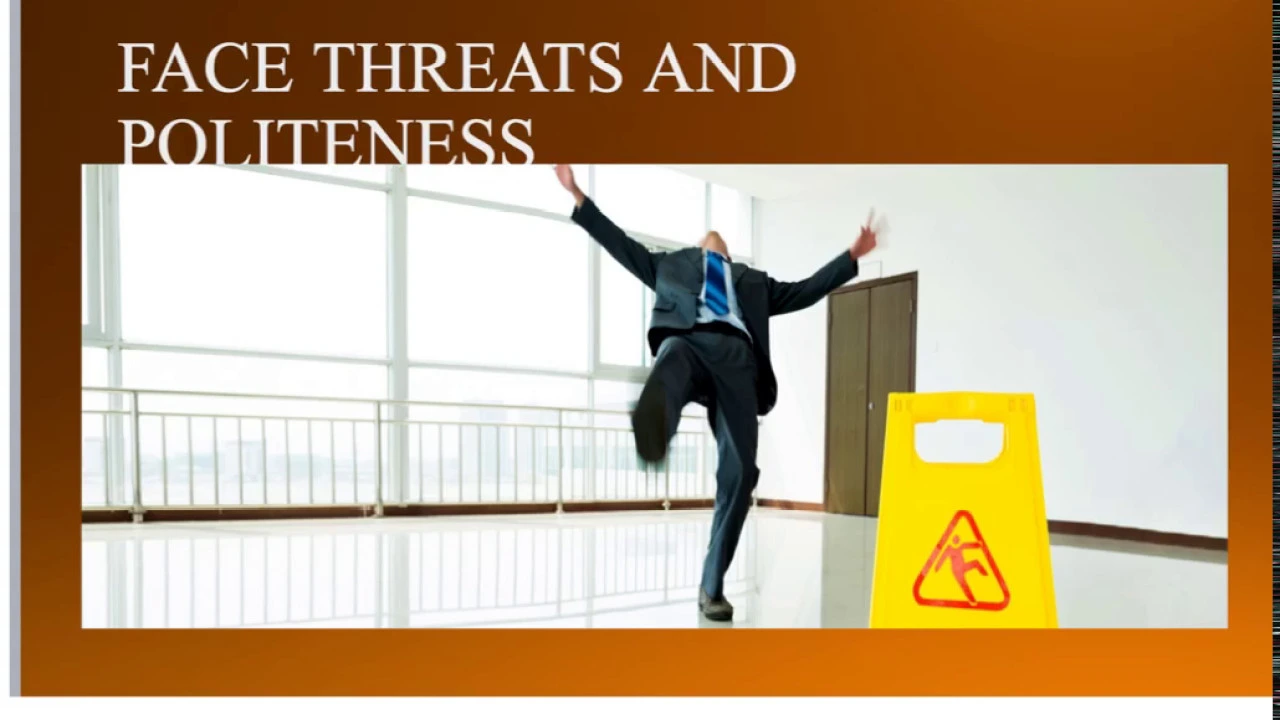







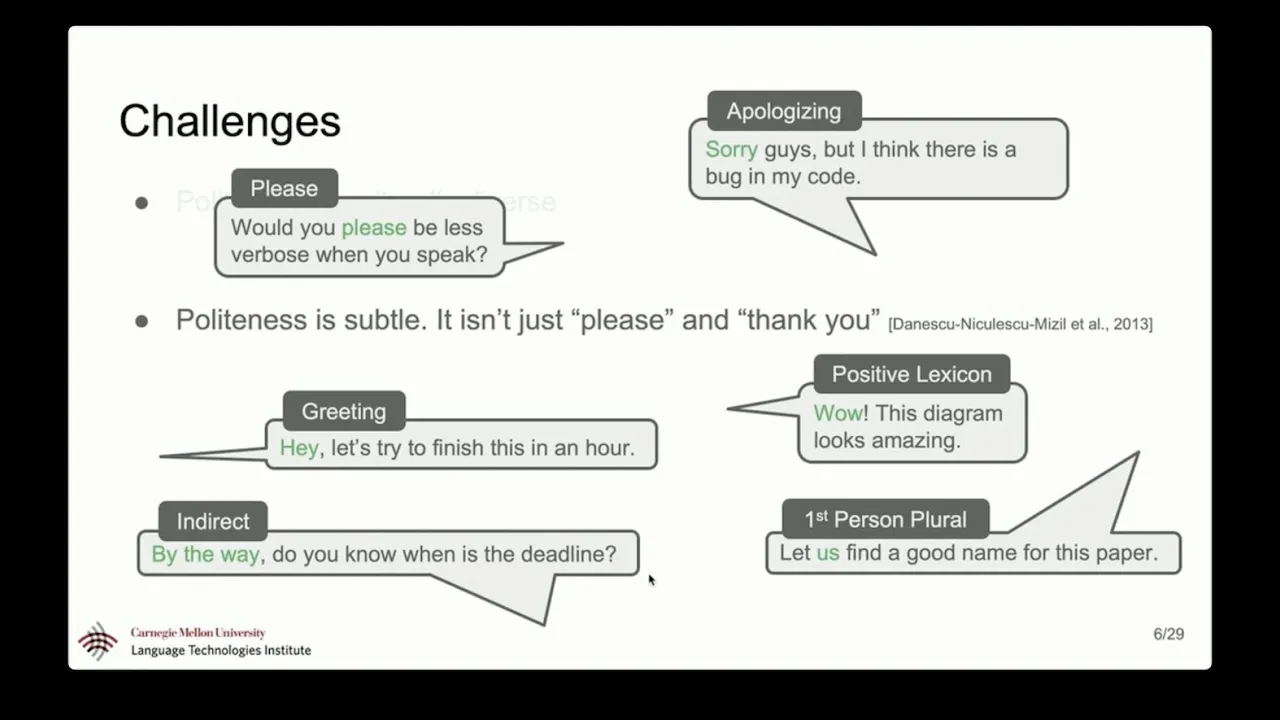

Politeness is a universal communication strategy that manages the inherent tension between efficiency (getting things done) and regard for others' feelings (preserving face). Brown and Levinson identified four basic politeness strategies: (1) Bald on the record - performing face-threatening acts directly without apology or hedging; (2) On the record with redress - performing the act but compensating by addressing the other person's face needs; (3) Off the record - hinting at the face-threatening act so the listener infers meaning indirectly; and (4) Don't do the face-threatening act at all - avoiding the action entirely when it would cause too much harm. These strategies exist across all human languages and cultures, revealing the fundamental social skill of balancing task accomplishment with maintaining positive interpersonal relationships.
Politeness Strategies in Communication: Brown & Levinson's 4 Types Explained
Added:hi everybody it's Bruce Lambert from how communication works calm and today I'm going to teach you about politeness how politeness works politeness is more than just please and thank you it's actually a deep concept in communication theory and in how communication works and reveals a tremendous amount about the relationship between people how much politeness they use reveals a tremendous amount about the relationship between people there are only four basic politeness strategies I'm going to teach them to you so let's get started in my previous video I was talking about Ray Dalio the hedge fund billionaire and his idea of radical honesty or radical transparency or radical truth-telling and I was suggesting that it wasn't such a good idea and I said it wasn't such a good idea because it it ignores how feelings work and it ignores especially this idea of face that each one of us when we enter into a social interaction assumes that we have a certain basic value and we don't want to be humiliated we don't want to lose face as they say so we don't want to be ashamed or embarrassed or humiliated in social interaction and yet social interaction is intrinsically somewhat risky every time we enter into social interaction there's some risk that we might lose face and not only that but we have to constantly in everyday life ask people to do things tell people to do things criticize people compliment people ask questions that all these things have the potential to cause problems between people to threaten face as we say and so politeness is a set of strategies that human beings have evolved for managing these everyday threats to the safety of social interaction so in the previous video I talked about a fundamental tension in all communication and that fundamental tension is between what some people have called the task level of communication that is the desire to get things done and the relational or their relationship level of communication and that is the desire to preserve harmony in our social relationships and to preserve our friendships and our intimate relationships without hurting people's feelings so the desire to be efficient and get things done almost always trades off against the desire to maintain our relationships and not to hurt people's feelings another way to think about this tension is the tension between efficiency and regard for people's feelings or efficiency in regard for face where face is defined as the positive social value that people claim for themselves or there's this desire to be liked and approved of and also to a certain extent to be left alone so the one hand we can be efficient on the other hand we can show regard for face or feelings or the desire to be liked and approved of the desire to be left alone and so on but it's hard to do both at the same time so language and actually being socially skillful being diplomatic being polite having the social graces having savoir faire whatever you want to call it being cool is all a matter of being able to balance this tension between efficiency and regard for a face or people's feelings another way of thinking about the contrast is the difference between directness and deference so we can either be direct or we can be deferential to people's feelings and their need to be respected and so on this is such a basic conundrum such a basic tension in all of human social interaction that we shouldn't be surprised then that there's a standard solution and the standard solution is in fact politeness politeness is this universal set of strategies for managing this basic tension between directness and deference or between efficiency and the relationship and it turns out it's it's cultural Universal of sociologists have looked at languages all around the and in every language there are these basic strategies for being polite and there are only four of them and I'm gonna teach them to you know give you some examples of of how each of the strategies works but first a little bit more about about-face so generally speaking politeness is a set of strategies for managing threats to face we're managing face threatening actions so face threatening action is anything that we might do in a social interaction that threatens the either my own face as the speaker like if I have to admit fault that threatens my face my desire to be liked and approved of the five to apologise that threatens my face or if I have to if I have to ask you to do something and you don't want to be interrupted that threatens your face or if I have to to criticize you or give you advice or or make a recommendation these things all threaten your desire to be liked or be approved up so all these fall into the general heading as a face threatening acts so politeness is a set of strategies for doing face threatening acts now every day life is full of face threatening acts people are sort of fragile creatures that we always we want to both be liked and be left alone so these are the two basic face once or Ardas are persistent desire to be liked and approved of in every interaction and similarly that but paradoxically are persistent desire to be left alone to go about our business in every social interaction well the social world and life is such that we can't always be liked and approved of when we can't always be left alone so our face is constantly being threatened face threats are are nothing can be more common than face threats every day in all sorts of ways we have to do things that are face threatening to other people or to ourselves and other people have to do things that are face threatening to themselves or to us so in every everyday we're called upon to use politeness so politeness is a set of strategies for managing these routine face threatening hats and they're so basic that we begin to teach them to children as soon as children can speak we teach them to say things like please and thank you which are ways of showing regard please just if you please thank you these are ways of showing regard for other people excuse me pardon me these are the most basic forms of politeness we teach them even to little kids because we know intuitively that politeness is a fundamental set of skills for the social world that even the youngest children need to learn them for most kids one of the first words they they learn is please and thank you and then as they get slightly older things like pardon me and excuse me come in soon after that this is a proof of how fundamental these these strategies are so this desire to be liked and approved up communication theorist sometimes called positive face and the desire to be left alone communication theorist sometimes called negative face and anything that threatens either of those desires either on the part of the speaker or the part of the hearer the one who's who's being spoken to threatens our face and we need to be polite in order to manage that face threat so there are four basic politeness strategies and I'll teach them to you in order of increasing politeness so the first strategy I'll teach you is the least polite and the first strategy is called bald on the record now sometimes people say bold on the record this I think is a malapropism the sentence should be baldly let's just say something bald agree you know baldly on the record and with no adornment with nothing eyeball they got no adornment on my head so to say something bald on the record means to say without any apology without any adornment without any hedging without any beating around the bush so to do a face threatening act bald on the record is to do it the way Ray Dalio would have you do it with brutal honesty with radical transparency so I'm going to use a couple of different examples to teach these principles of these strategies so let's imagine I talked about this in the Ray Dalio video - so let's imagine you're at Thanksgiving dinner or Christmas dinner some sort of holly dinner at your in-laws house and your mother-in-law or grandmother or whatever it is some relative who you love and respect makes food that you don't like the taste of it it's really really bad so to tell them that you don't like their food is face threatening they want to believe that they're a good cook right they have the desire to be liked and approved of so to tell them that their food is bad is intrinsically face threatening the least polite way of telling someone that the turkey at Thanksgiving tastes bad is just to say that turkey tastes bad that's bald on the record right no adornment no apology no hedging no attempt to be polite pure efficiency this turkey sucks that is bald on the record it's incredibly impolite but it's incredibly efficient so applied no strategies illustrate this trade-off between efficiency and regard for the other person's feelings or regard for managing the threat to face bald on the record disregards the threat to face basically says I want to be efficient only and I don't care if it threatens face so it's rude well that's the first strategy bald on the record the other example I'm going to use as I work through this is what if someone at work our friend invites you out and you don't want to go out with that person so to reject an invitation is face threatening to the other person because they want to be liked and approved of and to reject an invitation to go out with them suggests that you don't like them you don't want to spend time with them so it's intrinsically face threatening to reject an invitation so it calls for politeness but to reject an invitation bald on the record you would just say something like I decline your invitation it's so rare to go bald on the record though to do it ball the other it doesn't even sound right it sounds strange say something like I don't want to go out with you even that's a little bit indirect but just it's the most balm on the record with a something just like no or I decline the invitation but these direct forms of politeness are so unusual because we're almost never bald on the record because it's so impolite and in most of us have more regard for face than that so that the second strategy is on the record with redress so redress means payback compensation remedy so when we do that the face threatening act on the record we're still doing it we're still saying the face threatening thing but we're paying back imagine that you have a bank account in your head a face bank account or a self esteem bank account and as people say rude things to you the balance on your bank account gets lower but as people are polite to you the bank is giving the balance on your bank gets higher again so redress is like payment we're taking something away by saying something face threatening and rude and we're paying it back by by making up for it with her address so let's imagine this that we're at dinner Thanksgiving dinner at Grandma's our mother-in-law's house again the turkey tastes bad and grandma says you know or mother loves us how do you like the turkey and you say the turkeys not very good but your dress looks lovely grandma or you say the turkeys stuck sucks but the stuffing is amazing or the the gravy is incredible or the place settings look just fantastic so you sort of give the tape with one hand and give back with the other that's on the record with redress and making the face threatening action on the record but I'm paying back with the compliment so I give with one hand and take away with the other or take away with one end and give the redress with the other for the invitation example on the record with redress would be something like how kind of you to ask but no oh that's a lovely invitation but I can't just you know things like that so you're you're paying back you're giving you're addressing other examples I have I made a long list of more than 100 ways to refuse an invitation which if you email me or sign up for how communication works calm for a mailing list I'll send you a copy of some things like oh I don't want to buddy you know that's a way of making some redress anything that suggests that you're attending to the other person's desire to be liked and approved of while you're declining the invitation so that's fine the record with redress you say oh that would be fun wouldn't it but no thank you so that's on the record with redress the third strategy for politeness is off the record and I think this is there are so many examples of going off the record that I can't even list them all and there are many many more on the record with redress strategies that I haven't even mentioned but I want to keep the video sort of short but off the record means we don't actually say the face threatening act directly we don't say it literally we hint at the face threatening fact or action and we allow people to understand what we meant by making inferences so by making things indirectly we are paying respect to the other person because what we're saying to them is I know if I said this directly it would be insulting to you it would threaten face the weight I know that you're a person who wants to be liked and approved of and I'm going to show my acknowledgement of that by saying this thing indirectly so grandma presents you the turkey and they says how do you like the turkey Bruce I say oh this is this is unlike any turkey I've ever eaten before so this is indirect I never say the turkey is bad I never even say I don't like the turkey what any intelligent ordinary person would realize I probably don't like the turkey if they say how is the turkey I say well I'll tell you what this stuffing is delicious where the place settings look magnificent the fact that I'm not saying anything about how the turkey tastes its people can make the correct inference but by doing it indirectly it shows my respect for the person it's when I say well this is unlike any turkey I've ever tasted before it's more polite than saying this turkey sucks even though the person might be able to correctly infer that I don't actually like the turkey something like if the person invites you out and you don't want to go you can refuse the invitation and directly by saying something like look at this stack of reports I have to get through or I'm really beat or if they ask you out for carcasses boy I've had enough coffee today all of these will be heard as refusals of the invitation because people are not stupid they make inferences from indirect communication all the time but the very fact that ice hint ad it rather than saying it directly is the way I show respect for face that's how indirectness works and indirectly this is incredibly rich resource that we use where we can say one thing and mean another because we assume people can correctly make the inferences I need to make a bunch more videos just about indirectness because the vast majority of what we communicate in everyday life is communicated indirectly that is by inference not by literal statement but we say one thing and when say this one thing in this context knowing what we know the other person can we can count on the other person to make the correct inference about what we mean so I could give you more examples so someone invites you out for coffee and you say coffee huh or you say I'm not too excited or you say hi I've got a thousand things left to do all of these lead them to make the correction for said that they that you don't want to go out for coffee with it or there's a million other examples which I can give you in this handout if you if you sign up or send me an email so finally the last strategy for being polite is the most polite strategy and that is don't do the face threatening act at all sometimes the the act that you want to do is so face threatening it would hurt the other person so much it would it would almost certainly cause them to be humiliated or to lose face that we'd be out of respect and regard for them and liking for them we don't do it so examples of this is something so grandma asked you Bruce how's the turkey and you say it's delicious so here you just lie ray dal you wouldn't like it but sometimes we just won't do the face threatening act it's just not worth it to hurt the other person's feeling or when someone asks you to go out for drinks and you don't want to you just go anyway so this is don't do the face threatening act or sometimes you know other face threatening axes sometimes we need to borrow money from somebody but if you're at the Coke machine you might say to your friend hey let me a quarter to get a coke but if you need $1,000 to pay a debt you might hesitate to ask for $1,000 because it's two-face threatening so we don't do the act at all so those are the four politeness strategies one ball on the record the turkey sucks - on the record with your dress the turkey doesn't taste very good grandma but I really love the place settings or I really love the stuffing or I really love your dress or I really love you grandma any of those are with redress the third strategy is off the record this is the most unusual turkey I've ever tasted and the fourth strategy is don't do the at all I love this turkey so those the four politeness strategies from least polite to most polite the more polite you are that it reveals something about the nature of the relationship between the speaker in the ear but this video is already getting long enough so I'll talk about that another time for now that's politeness strategies universal strategies for managing the threats to face for managing this tension between efficiency and regard for other people's feelings used all over the world in every known language politeness and the four politeness strategies thanks for listening if you enjoyed this kind of video please subscribe to our YouTube channel or go to how communication works comm and sign up to be notified when new videos are posted and new content comes online thanks so much for listening and I'll talk to you soon you
Up Next

Edexcel LangLit: 'When I Lived in Peru' Text Analysis
@elisefalla8131
2.5K views•2020-09-24
Constraint Interaction in Optimality Theory: Epenthesis & Deletion
@Vidyamitra
180 views•2018-08-20
Grice's Cooperative Principle in Pragmatics Explained | Communication
@HowCommunicationWorks
49.2K views•2019-05-12

Accent Expert Explains U.S. Regional Dialects | Part 1
@WIRED
9.3M views•2021-01-21
Related Study Plans & Knowledge Roadmaps
Structured learning paths in Linguistics