












![What are the latest developments in conflict mineral regulation? [Minespider TV | Episode 7]](https://i.ytimg.com/vi/aT9pKQm5EFA/maxresdefault.jpg)


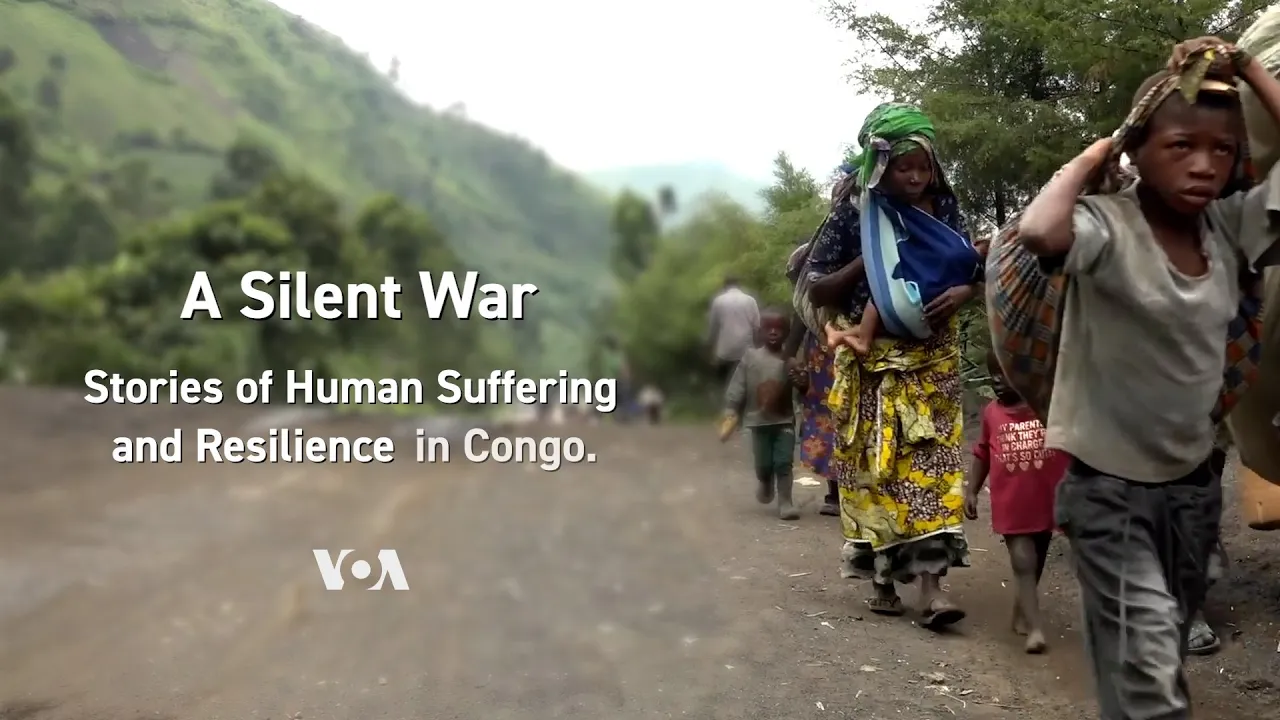



The Democratic Republic of the Congo hosts one of the world's most overlooked conflicts, characterized by hundreds of armed groups competing for territory and resources rather than attempting to seize state control; this fractal warfare persists because the central government has never held a monopoly on violence, and instead of fighting to govern, armed groups extract value through mineral mining (particularly gold, tungsten, tantalum, and tin), roadblocks, and illegal taxation, creating a self-sustaining war economy where violence provides both destruction and a form of stability for local populations.
The DRC's Endless War Economy Explained | Conflict Minerals
Added:The historical context of Belgian colonialism in the Congo, including King Leopold II's regime and its legacy of structural and economic exploitation.
The economic theory of the 'Resource Curse' (or paradox of plenty), explaining why countries rich in natural resources often suffer from weak governance and conflict.
The geopolitics of the African Great Lakes region, particularly the spillover effects and regional dynamics following the 1994 Rwandan Genocide.
Basic knowledge of global electronics supply chains and the critical role of key minerals like coltan, cobalt, gold, and tin.
Analysis of international regulatory frameworks aimed at curbing conflict mineral trade, such as Section 1502 of the U.S. Dodd-Frank Act and EU regulations.
The geopolitical challenges of the global green energy transition, specifically the ethical dilemmas surrounding the extraction of Congolese cobalt for electric vehicles.
Critical evaluation of the effectiveness and limitations of United Nations peacekeeping missions, focusing on MONUSCO's presence in the DRC.
Emerging supply chain tracking technologies, such as blockchain-enabled transparency initiatives, designed to certify conflict-free mineral sourcing.
2.7M views54.4Klikes32:22Original Release: 2025-06-12
(intriguing orchestral music) (reporter speaking foreign language) (protestors clamoring) (bullets sputtering) - This place, the Democratic Republic of the Congo, one of the most complex, longest running conflicts in the world, and you're probably not hearing about it much on the news, but it is important, and it is connected to the entire world.
It's a war where the front lines are always changing.
There's militia, hundreds of them, they control little patches of territory.
Let me show you the one map that got me deep into this story.
It looks like this.
(intriguing dramatic orchestral music) All of these are the groups, the many, many different groups, armed groups, and this is the territory they control, or controlled.
This map is totally outdated, because, every day, it shifts.
These groups blob together, they break apart, they join alliances with the national army and then with the rebels.
(intriguing dramatic orchestral music) This is a war that is funded by minerals, by roadblocks, by illegal taxes, extortion.
And in February, 2025, the logic of this war reached Washington, DC.
(intriguing dramatic orchestral music) The President of the Congo is offering Congo's vast minerals in exchange for military support to push back Rwanda-backed rebels.
These are the kinds of deals Donald Trump loves, and the US is moving forward with, what it calls, "a path forward" for a deal.
(intriguing dramatic orchestral music) But this video is not about that.
That will be on the news, and we'll see where it goes.
To me, what's much more interesting is what is going on here?
How did it get to look like this, this patchwork of all these different groups?
Where's the government in all of this?
Well, it turns out the government is actually a part of all of this.
(intriguing dramatic music) This isn't just about minerals, it's not just about rebels, it's about power.
How power is extracted and sold and traded in a space where a central government does not control or have a monopoly on violence, like in most countries.
And it's all happening in this country that is much bigger than you think.
At least it was much bigger than I thought.
- Congo's a continent of a country, it's as large as all of Western Europe combined.
(intriguing dramatic orchestral music) - Congo is home to tens of trillions of dollars of untapped mineral resources.
I mean, we cover a lot of wars on this channel, but this one's different.
If you watch our videos, you'll see a lot of maps with icons, this group versus that group, sometimes it's like four different groups, sometimes it gets really complex.
We make icons to represent these different groups.
But for this one, we can't really do that, and I wanted to understand why.
- There's something about the nature of modern conflict we're describing that is not what most people are probably familiar with.
They see maps where Ukraine is versus Russia, or Hamas is versus Israel, and what we see here is a much more fractal kinds of conflict, which is actually much more common than those conflicts I just said.
- That's Jason Stearns, he's like world expert on this topic, and he will help us navigate this very complicated, difficult to understand, conflict.
So let's dive into this conflict, the context, the background, and how it got to look like this, how it's lasted decades, how it's reshaped itself over and over again, and how the sides aren't trying to take over the country?
They're just trying to extract value from it.
And it turns out that war can be very valuable, especially when you add to the equation what's beneath the ground, and the power that comes with controlling people and land and movement.
(intriguing dramatic orchestral music) (intriguing orchestral music) Now the roots of the story, of course, start with Europeans carving up Africa.
We covered that pretty extensively in our "How Europe Stole the World" series.
So if you wanna deep dive, go there.
But why don't we start here.
This image that we've sort of doctored up to make it a little bit more immersive.
This is European leaders inventing countries in Africa in the late 1800s, carving up this map looking for resources.
And the Congo was one of the many inventions of Europeans.
- Congo was created actually as the private fiefdom of a Belgian king in 1885.
And so, the whole purpose of the Congolese state was always to extract from the local population.
It was never to create a government or a state that provides public services or public goods, including security.
- The Belgians mapped it and discovered just how many valuable resources the place had.
The most valuable at the time was rubber, and it led to one of the most brutal colonial exploitation campaigns in history.
- It's got an enormous amount of natural resources.
Congo is geological scandal is what Congolese call it.
It's the largest producer of copper in Africa, it's the largest producer of cobalts, it's one of the largest producers of diamonds, tungsten, tantalum, tin.
You go down the lists, they have it.
The uranium used for Hiroshima, Nagasaki came from the Congo.
In fact, a lot of Belgium's wealth came from Congo's mines.
(intriguing dramatic orchestral music) - Again, go watch part three of that series if you want a deeper dive.
So the most important part of this section of the story is that Belgium didn't build a country out of Congo.
They built a pipeline for resources to Europe.
(enthralling orchestral music) (train whirring) The roads and railways led from mines and plantations to ports, not between cities.
It created ethnic groups and tribal identities, and then played them off each other, so that they could conquer them.
But, also, in the process, sowing the seeds for future conflict and division.
- That deep history really is important in understanding where we are today, because a lot of the habits, and the trends, and the logics of the state is sort of persistence of today.
- Some of the structural issues Congo is still facing, moving from bad governance, the structured army, lack of a sustainable policy, that is actually where we can situate some of these trends.
(enthralling orchestral music) - Hey, real quick, let me tell you about Threat Protection and these new tools coming out of NordVPN who is the sponsor of today's video.
I'm very grateful that they sponsor our journalism.
I started using a VPN like years ago now.
Originally, when I would travel, I would connect to the internet via the United States, which is what a VPN allows you to do.
And for a lot of years, that was the big perk, like I wouldn't get kicked out of my Gmail or something if I was in another country, with some like security two-factor death loop.
But since then, Nord has become a much more useful tool.
I've recently been learning how vulnerable we all can be when we are surfing the internet on public Wi-Fi, like, when I'm in a coffee shop or a hotel or whatever.
When you're connected to Nord, your internet traffic is secure, it's encrypted.
It's one of many perks you get as a part of their threat protection suite of tools.
This blocks malware and phishing attempts, annoying ads.
It generally makes being on the internet safer, which, like, cyber attacks are getting weirdly sophisticated.
So I feel good when I'm connected to NordVPN.
And it just happens in the background, like it's not like I don't have to like type anything in it, it just is in the background, doesn't mess with my speed.
Oh, and I can watch streaming shows from other countries when I connect to other countries, which is kind of sick.
Anyway.
So I'm a big fan of NordVPN, it's really affordable, and they're giving a discount to anyone who uses the link in my description, it is nordvpn.com/johnnyharris.
When you sign up for the 2 Year Plan, you get four extra months for free, and there's a 30 day money back guarantee, so you can get all your money back if it's not a good fit for you. So nordvpn.com/johnnyharris, clicking the link helps support the channel, gets you in on that discount.
Thank you NordVPN for sponsoring today's video.
And with that, let's get back to the DRC.
(enthralling dramatic orchestral music) Let's now fast forward to modern day where the Democratic Republic of the Congo is a independent country.
It's one that is shaped by a lot of conflict, especially in the '90s.
It's also shaped by what happened next door in the '90s, in Rwanda, where a civil war and genocide led to the fleeing of millions into the Congo.
Some of them gathered together as anti-Rwanda rebel groups.
All of this leading to what became known as The Great War of Africa.
(enthralling dramatic orchestral music) Okay, again, we're not gonna get into Africa's World War, it's a huge thing, but just look at the map of this war.
It did turn into a complex web of actors, some allying with the Congolese government, some being backed by foreign governments, I mean there was a lot of players in this war.
But it's still not this, this fractured group that we're eventually going to explain.
The big difference is that the goal for these groups during the big war in the '90s was to win, was to take over the government, winning power of the state.
I mean, that's how most civil wars are, one side wants to take over the government.
Okay, but here's something you don't see on this map, and it's very important for how we get to the fractured group.
There are actually tons of small militias in a bunch of different villages in this region.
Over the years, a lot of small self-defense forces formed militias that were meant to protect villages in the absence of a functioning state.
- There were self-defense groups that had emerged, in part because the state had collapsed.
- Again, these aren't rebel groups, these aren't political groups, these are just people trying to protect their community.
They're like their local police force.
(intriguing dramatic orchestral music) So keep that in mind, the self-defense forces that each community has, they'll become important in just a second.
This big war ends in 2003, and all the different groups come to a peace deal.
There's elections, democracy tries to sprout, and it fails.
(intriguing dramatic music) After one of the groups loses in elections, they flee to the east and form a new rebellion, widely believed to be backed by Rwanda.
So it's like the early 2000s and the DRC is headed towards another full-blown civil war.
- Now, the Congolese government at that point was a weak government, it had just emerged out of a war, its army was hodgepodge of different armed groups thrown into one joint army.
And so, they really didn't have much of an army to push back against this new rebellion.
- This moment is crucial for understanding what happens next.
You got the rebels, you got the DRC, government that is super weak, they don't have a super cohesive army.
So who do they turn to but these dozens and dozens of small community self-defense militias, the ones I was talking about earlier, like local police force for these communities, they turn to them, they say, "You're fighters, help us counter this rebellion.
We will give you weapons and support."
- "In addition to our army, let's just pump weapons and ammunition into all of these local militia in the Eastern Congo."
- So the state funnels weapons into the eastern DRC to help them fight back the rebels.
And in the short term, it kind of worked.
The Congolese government achieved what it wanted to, halting the advance of the rebels.
And, eventually, in 2009, this kind of reemergence of a civil war was ended in a peace deal that was brokered by Rwanda.
But remember all the guns and ammunition that the government sent to the small defense forces?
Yeah, that's still there.
- A flush with weapons, mostly old Soviet-era weapons, so Kalashnikovs.
(intriguing dramatic orchestral music) - These groups are now more armed and more hardened by war, and these small defense militias now see an opportunity for more power and for growth.
- The big reason of why there's so many and why they're so prevalent is because of a lack of kind of a security footprint from the Congolese state.
It's kinda like the Wild West out in Eastern Congo that, if you wanna provide security, isn't gotta be on a village by village basis, which is how these are all kind of springing up.
- Moving around some of the very remote villages, farmers were still not aware that former President Kabila had died.
There is a sort of disconnection from locals, especially in remote areas, to peri-urban and urban centers.
- And so, here we are at the explanation of why we have so many armed groups in the Eastern Congo.
But do you see how this is different than the typical civil war that we cover on the channel, and that you usually think about when you think about a civil war?
This isn't as political.
- These are now a hundred different armed groups spread over an area, roughly the size of California, whose goal is not to take the state, they're too weak to take the state.
Their goal is basically just to survive and to extract whatever resources they can extract.
A generation of fighters who all they know how to do is fight.
- When you have absence of states, people will refer to them as their protectors.
- War becomes a mean of survival, becomes a mean of dignity.
That's the origin of this fragmentation.
(intriguing dramatic orchestral music) - Congo's really kind of got this rainbow of individuals here as far as what group looks like what.
They'll come across very professionally, you know, camouflage and full fatigues, well-equipped.
And then, in contrast, you'll see some of these groups and they're obviously much poorer equipped, I mean, these guys aren't running around in fatigues, but they have, you know, rain boots and soccer jerseys on and just carrying around beat up AK.
(intriguing dramatic orchestral music) (enthralling orchestral music) - So this gets us closer to what it looks like today, and why this war continues.
There's no front line, there's no single enemy.
So the question is, what do these groups want?
What is their goal?
- Almost every single armed group, if you go and talk to them in the Eastern Congo, they'll say, "We're here to protect our people."
But if you go and talk to those people, they'll tell you, "Well, that's how they started off as, and, yes, those are our sons and our nephews and whatnot, but now, these guys are not here to protect us."
Almost every single armed group, almost by necessity, because they need to feed themselves, they recruit sometimes forcefully, they extract, they tax, and they become predatory.
And so, you have this transition from local self-protection groups really to extract to this, to groups.
- Everyone keeps saying that they tax people.
Taxing is what a government does to its people to run the government.
So what do they mean by tax?
Well, this takes us back to the resources and the minerals that lie beneath Congo's soil.
You got some diamonds, not a ton, but it's mostly tungsten, tantalum, tin, and perhaps most valuable and abundant in these mines, gold.
(enthralling traditional music) We're making a whole video about gold, just gold, everything gold.
Because, in researching this piece and reporting out the global supply chain and trade of gold, I became endlessly fascinated with the stuff.
Much like everyone in history, gold is this insanely magical, weird, crazy thing, and we're making a whole video about it.
So, expect that some time in coming months.
Okay, but before we go any further, let's clear something up.
'Cause the way that this is reported, all the conflict in Eastern Congo, the way that it's usually reported by media outlets is blood gold, conflict minerals, there's a conflict in Congo, and it's all about minerals.
As you will see, that is a part of the story, but it is not the whole thing.
It goes far beyond minerals.
- That is part of the motives, but it does not justify or explain the overall scope around armed groups, militia, or self defense initiatives implementation.
- These groups will "tax" anything they can; cattle, charcoal, cassava, market stalls, some guy on a motorbike.
And this one report was titled, "Everything that moves will be taxed."
- Whoever is perceived as a protector, meaning an authority, then they are rightful to perceive or to fix, to put in place taxation.
And recently, we noticed that some armed groups were now easily collecting taxes, like nobody could thought of, an armed group delivering a building license, yet it is happening now.
- And I will show you what those taxes look like in just a sec, but let's get back to gold, because, even though gold isn't the root or the main driver of the conflict, it is a huge part of how the war economy works, how these groups are funded, and how this stuff is connected to the global economy.
(enthralling orchestral music) So all these dots, look at all of these dots.
Every one of these dots represents a gold mine.
This is very difficult data to get your hands on, and the International Peace Information Service are the group that collected this.
They do incredible work and have generously helped us in providing their data and expertise for this story.
I would not be able to tell this story without those on the ground collecting data.
Okay, so you've got all these gold mines, but look what happens next.
(enthralling dramatic orchestral music) These are the armed groups that we talked about, the ones that started as self-defense groups, and then got a bunch of weapons and ammunition from the government to help stave off the rebels, and now use that firepower to make money off of a lot of things, including, as we see on this map, gold mines.
(enthralling dramatic orchestral music) - It's the perfect economy for the mafia really, right?
What does the mafia provide?
The mafia provides two things.
The mafia provides financing, it has good access to huge amounts of money, and it provides protection.
And for something like gold, which you have, if you're a gold digger in the Eastern Congo, and you have 50 grams of gold to sell, that's an enormous amount of money in the middle of nowhere.
And so, you need protection, and you need somebody to buy it, you need financing.
And so, these are very easily militarized sectors.
(enthralling dramatic orchestral music) - So let's get really specific now, so we can see what this looks like.
Let's zoom into one of these mines, so I can show you how these local turf wars work, how this war economy works, how this gold flows from a hill in Eastern Congo to the international markets.
(intriguing orchestral music) And along the way, we will see how all these armed groups and the government have built some version of "violent order," half war, half cooperation, all happening in a space where the government is at once totally absent, but also, as you'll see, very present, but in a way that you might not think.
(intriguing dramatic orchestral music) - You have millions of people digging for tin, tungsten, and mostly gold, actually.
(enthralling dramatic orchestral music) - [Johnny] This is a pit mined, or artisanal mined.
- [Jason] This is thousands of young men digging in hillsides, sometimes in terrible conditions, in lots of different pits.
They're all, they're dotting mostly very remote hillsides in the Eastern Congo.
- [Johnny] They work in these harsh conditions, often with little more than shovels, pans, sometimes bare hands, pulling gold from the soil.
- These are fairly militarized pits.
You'll find soldiers, they'll provide quote-unquote "protection and security" in exchange for payments.
- This is unrefined gold.
So it's extracted, maybe it's powder or flakes or a small nugget, and then it starts its journey towards the city.
But this journey will cross through the territory of dozens of different groups.
- Roadblocks are one feature of the landscape of the Congo, and there are thousands of them.
- Roadblocks are everything.
So one of these armed groups has a roadblock, and they demand a cut from anyone transporting minerals.
(enthralling dramatic orchestral music) If you know the system well, and you're well-connected, you have relationships, that will help you with these transactions, ensure that they don't get violent.
- Go into a little hut, and you give them what is expected.
There'll be some negotiating back and forth, but you pretty much know what you're gonna have to settle for, they'll get some of that.
- Now, again, I wanna emphasize, this doesn't just happen for gold.
You can be stopped for anything.
You can be stopped for carrying cattle, you may have to pay just to move through the checkpoint.
Again, "Everything that moves will be taxed."
- There could be 50 or 60 of these roadblocks before you get to a major city.
- A motorcycle could be taxed a few bucks to pass.
If you're a big truck, maybe you're taxed $700 for a single checkpoint.
And according to the people we talked to, a lot of these transactions happen without violence, it's the threat of violence that keeps the order going out here where there is no government.
Wait a minute, but look, that is a soldier.
That is an official Congolese military soldier, like, from the government military.
And this is where it starts to get even more kind of mind bending on our normal boxes and categories and frameworks for understanding conflict.
Turns out that the government military is very present out here.
(enthralling dramatic orchestral music) They move around in this system, they have roadblocks of their own, and they end up behaving very similarly to these armed groups.
They set up checkpoints, they extract illegal informal taxes, they'll pocket some of them, or they will distribute them, not to the state coffers, but to their network of alliances and relationships, which could include other armed groups, or local police, or even commanders back in the Capitol who want in on all of this.
And, again, what you start to see is a kind of quasi-order where there is a equilibrium of the tax rate, the same that the Congolese government would impose if they were out here, but now it's an armed group, or a Congolese soldier, that's sort of acting like an armed group, but also technically works for the government, but doesn't get paid very much, so they subsidize their pay by setting up a checkpoint to make more money, like... You start to see that all of these power systems, none of them are strong enough to command the whole state and to impose order, and so, they fracture, and they all end up grabbing what they can.
- If you are a peasant in the Eastern Congo and your day-to-day job is farming cassava and beans, two staple crops in eastern DRC, then you have to get them to market.
Chances are, if you take them to market, you'll run into a roadblock met by people with guns, you have to pay taxes to them.
If you don't pay taxes to them, they could get violent.
And so, abuse and violence is part of day-to-day life.
Funerals are, I mean, it's a very social world, and so, it's rare that several months go by without there being a funeral.
And so, death and violence are things that are just much more present.
(enthralling dramatic orchestral music) - So we're gonna get back to our journey of gold from the mine to the global market, but, first, let me just drive this point home by going back to our map.
(intriguing orchestral music) Remember these are the dots that are gold mines, these are the local armed groups, and these dots are instances where between 2021 and 2023, the military of the Democratic Republic of the Congo was reported to be interfering, which basically means showing up with roadblocks or showing up to pit mines and threatening violence and demanding payment, not for the government, but for themselves and their alliances.
Again, thank you IPIS for this data.
- Violence permeates life.
Most of the population knows nothing but war.
- We grew up as children, kids, who only knew violence and war.
Growing as a child, I think you don't actually perceive that as something that's appealed to you.
And as I said, people somehow some ways rationalize that as a way of living.
- But at the same time, they know how to navigate these wars and these press, they know how to deal with soldiers, they know what the logic is of violence.
(intriguing orchestral music) - [Johnny] Okay, we're back to the truck that's driving, it's passing through all of these checkpoints, these roadblocks.
(enthralling dramatic orchestral music) Once you've made it through the checkpoints, maybe 60 of them, so the gold makes it to the border, and it's almost always smuggled across.
Gold is very small, you can put it in your pocket, and walk across the border.
- Well, they'll be walking across the border.
Sometimes that would be official border and they just hide that on their person.
- And it mostly goes to either Rwanda or Uganda, this is where it gets refined.
There's this one Belgian businessman who has been convicted of money laundering.
He's on the sanction list for the U.S. Treasury for contributing to armed conflicts and illicit trade in the DRC region.
He owns one of Africa's largest gold refineries, it's in Uganda, and it processes a lot of this smuggled gold that comes from this conflict region.
Uganda's gold exports were about a half a million dollars in 2014.
In 2023, not even 10 years later, they jumped to $2.3 billion.
A lot of that's coming from the war economy next door.
- Global markets needs at a lower cost, some of the minor roles that can be found in Congo.
And multinationals have tested and saw it working to get what they needed out of Congo through local armed groups rather than dealing directly with the central government.
And so, they perpetrate that.
- Same thing happens in Rwanda.
If the gold is smuggled across the border in Rwanda, it goes to a refinery that is owned and operated by Rwanda's army.
And then, once it's refined... - It's put on an airplane, and it goes to Dubai.
(enthralling dramatic orchestral music) - We are now out of the checkpoints, and artisanal mines, and threats of violence, and in the gleaming city built off of oil, which is the epicenter of gold.
It's one of the world's major gold hubs, tax free, strategically located here at the center of the globe.
A huge amount of the gold, especially coming from the DRC and a bunch of other regions in Africa, including a bunch that fund this war economy, come to the United Arab Emirates, who doesn't ask very many questions.
Instead, they combine it with all the other gold, it's washed clean of all of its conflict blood, and it's sold off to the world.
The origins disappear, the corruption is polished away into a universally desired store of value, impossible to trace.
- It goes into jewelry, some of it goes into industrial manufacturing, a gold is still used for coating in electronics and other things, and some of it is used for laundering money by gold.
And all of a sudden, you know, like magic, your dirty money becomes clean money, because it's gold now, right?
It's very opaque, once it reaches Dubai.
- This gold disappears again into Dubai, into Russia, again, into the EU, to push for the minerals and the resources that are in this region are absolutely massive.
And, again, you know, it's everything for electric cars to satellites.
I mean, there's a lot of money involved in this, and they're a massive exporter.
(enthralling dramatic orchestral music) (intriguing orchestral music) - Okay, but let's get back to the Congo, because I'm less interested in gold, although, I'm really interested in gold, and I'll make an entire video about it, and I'm more interested in what keeps this system going.
This system of artisanal mines with soldiers, hundreds and hundreds of checkpoints, military soldiers that work for the government, but also behave like armed militias that are extorting people at every turn, the threat of violence that breaks out and ends up destroying the lives of the locals at a moment's notice.
And I wanted to understand what keeps it going.
This system has been going on for decades, just like this.
It turns out that this eternal war economy produces a lot of value, mostly for the warlords and power brokers and government officials that are in on it, but also somewhat paradoxically, this provides a sense of, albeit violent, stability and security for the people.
It brings a lot of money to the region.
- You know, it's a double-edged sword.
It also provides enormous value to local societies.
Does it fuel violence?
Yes, absolutely.
I think that ambiguous nature of the mining sector is not something that many people have been able to grapple with.
When, for example, under President Obama, they passed the Conflict Minerals Acts in 2010, it led to a temporary boycott of minerals in the Eastern Congo, and it created an enormous amount of hardship and a resentment towards the United States by people digging in these mines.
(enthralling dramatic orchestral music) - So the war economy in the Eastern Congo is not going away anytime soon, and especially because, recently, in addition to these local turf wars that is fueled by minerals and a global gold trade, the regional proxy dynamics, where outside countries start to meddle in bigger ways, are back in full force.
- [Reporter] After a bloody invasion, M23 rebels now in full command in the city of Goma.
(firearm banging) - So Rwanda has invaded the Eastern Congo and backed arm groups in the Eastern Congo on five occasions, right?
And so, these are pattern that goes back almost 30 years now.
Rwanda considers the eastern DRC as part of its sphere of influence, much like Israel and Southern Lebanon, much like Pakistan and Southern Afghanistan.
Last week, Rwandan government newspaper announced that $1.5 billion of gold had been exported from Rwanda in 2024.
The entire Rwandan budget is $4 billion.
That is an enormous amount of money, and it's difficult to say that doesn't play a role.
I am sure it plays some sort of a role.
So I think there's a bunch of different factors, I think it'll be misleading to boil it down to one factor.
(enthralling dramatic orchestral music) The story of the Congo has been a dismembering and dilapidation of the state since it was first created.
The state was a predator when it was created by the colonial enterprise in 1885, and it's remained so really since its creation.
- These are the same communities that are destructed, because kids that are born within these communities, they see this as a model, that is the only model they have been exposed to.
- And so long as you have a state that's really invested in violence, I mean, the Congolese elites are also invested in violence for a whole host of different reasons, as long as you have that, it's hard for me to see neighboring countries will continue to meddle, multinational corporations will continue to profit.
So I think really what you have is inelectable state, really.
You have to go back to the state that would be able to provide the most basic of goods, which is security.
And so, I think that's the foremost challenge for this generation.
It's really a generational challenge, it's not something that can be fixed quickly.
And I think it will not come from outsiders.
I mean, from what I've seen in the Congo over almost three decades is those people are there, they're ready to build, you just need to give 'em space to do that.
(pedestrian speaking foreign language) - Hey, everyone, thanks for watching.
This video was different in some ways, because this is an area that is an information vacuum.
That's why I'm really grateful to our sources who helped us get insight into what's happening here.
If you have unique insight, whether local or professional, or whatever, in this region or anywhere else that is an information vacuum, I'd like to know about it, 'cause I wanna report more on these parts of the world that are not paid attention to as much, and are harder to report on, because they are shrouded in conflict, or are remote, or difficult to understand or whatever.
That's something I'm very interested in.
So, please, leave comments, reach out, and thank you all for watching, for being here.
And I'm going to make this video on gold, like, what is your questions about gold?
Tell me everything you want to know about gold, its history, the chemical properties of gold, how it's used in medical treatments?
Like, gold is an endless rabbit hole that I plan to descend into, and I would love to know what you're curious about.
Okay, that's it, thank you so much for being here, and I'll see you in the next one.
(enthralling orchestral music)
Up Next
8:48
Lord Mountbatten's Partition Broadcast: June 3, 1947 Plan
@XplorerInd
21K views•2016-06-05

33:02
The Great Schism of 1054: Causes and Consequences
@SacredCathedrals
113.5K views•2026-02-19
91:57
The Geopolitics of the Ukraine War and the Rise of Global Autocracy
@JordanHarbingerShow
468K views•2025-04-19
17:05
Understanding the Cold War: Superpower Conflicts and the Road to Détente
@OverSimplified
46.1M views•2019-01-24
Related Study Plans & Knowledge Roadmaps
Structured learning paths in History
history
Byzantine Iconoclasm: Theology, Art & Politics
01Foundations of Byzantium and Early Christian Images
02The First Iconoclasm: Leo III and the Crisis of Images
03Empress Irene, Nicaea II, and the Second Iconoclasm
+ 2 more learning modules
9h5 modules
Explore Roadmap
history
Iranian Revolution (Causes, Events & Legacy)
01The Pahlavi Dynasty and the Roots of Discontent
02The Spark of Rebellion and the Rise of Khomeini
031979: The Fall of the Shah and the Climax of the Revolution
+ 2 more learning modules
8h5 modules
Explore Roadmap
history
Mali Empire: Mansa Musa, Trade & Timbuktu
01Foundations of the Mali Empire
02The Trans-Saharan Gold and Salt Trade
03The Reign and Pilgrimage of Mansa Musa
+ 1 more learning modules
6h4 modules
Explore Roadmap
history
1947 Partition: Politics, Borders & Legacies
01Foundations of British India and the Divide
02The Political Negotiations and the Mountbatten Plan
03Drawing the Boundary: The Radcliffe Line
+ 2 more learning modules
8h5 modules
Explore Roadmap