












![[Vinesauce] Vinny - The Legend of Zelda: The Wind Waker Randomized (PART 3)](https://i.ytimg.com/vi_webp/UfH6TdsTKmY/maxresdefault.webp)


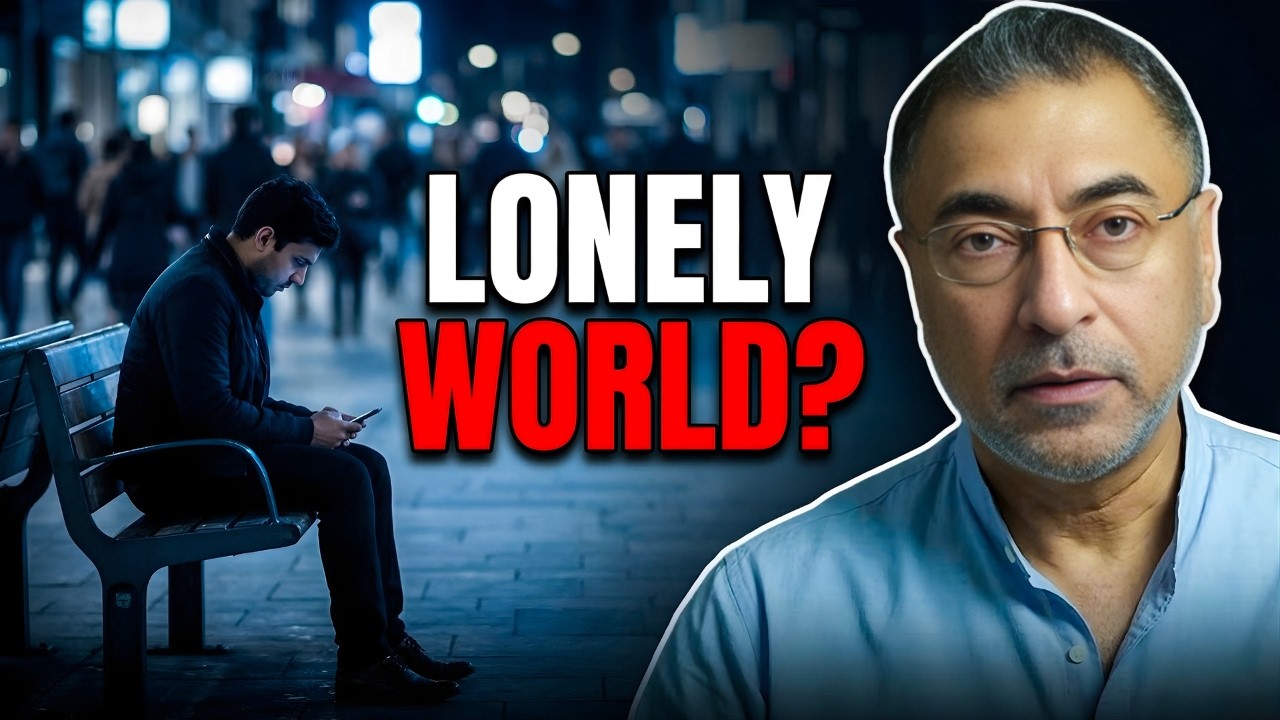
Loneliness differs fundamentally from being alone; while solitude can be beneficial for creativity and attention, loneliness represents a biological alarm system that drives our yearning for social connection similarly to how hunger drives our desire for food. Research reveals that genetic factors, specifically variants of the serotonin transporter gene, can predispose individuals to feel lonelier in similar social situations. While brief periods of isolation may not harm health, prolonged social isolation increases mortality risk by approximately 26%, underscoring the critical importance of human connection for survival. Interestingly, nostalgia serves as a psychological countermeasure against loneliness, helping individuals restore emotional balance and reduce feelings of social disconnection.
The Science of Loneliness: Genetics, Health, and Isolation Risks
Added:This is Michael.
“Hi” He’s 31 years old, lives in a major US city, went to college and earns $60,000 a year.
He’s the most common demographic you’ll find on online dating.
And he’s kind of lonely.
Actually, really lonely.
“So pepperlonely” But… Why do we feel lonely?
First of all, there’s something we need to clear up.
Michael is lonely and he’s also alone.
“Oh, man...” But there are lots of people who choose to be alone, and are not necessarily lonely.
It’s not a bad thing!
Some suggest that solitude is essential for creativity and it can improve your attention span.
But… Michael doesn’t feel that way.
“deep sigh” And some of us are prone to feel just like Michael.
Recent studies have linked loneliness to our genes.
“huh?” People with certain genetic markers - namely, a variant of the serotonin transporter gene, will feel lonelier than people without this genetic marker when they’re in the same situation.
If Michael is genetically predispositioned to feel lonely, then he’s just really hungry.
For company.
But he’s not the most isolated person.
“Really?” This honour goes to the seven Apollo command module pilots who orbited the Moon alone while their fellow astronauts walked on the surface.
Al Worden, the Apollo 15 pilot, was, at times, 3,600 km away from his colleagues Dave Scott and Jim Irwin as they drove their moon buggy around the Imbrium Basin.
Al was the most isolated person ever.
He spent 3 days alone in orbit, hundreds of thousands of kms away from his home and often out of contact with those on Earth.
And… Al enjoyed it.
He said “There's a thing about being alone and there's a thing about being lonely, and they're two different things.
I was alone but I was not lonely... On the backside of the Moon, I didn't even have to talk to Houston and that was the best part of the flight.” But being alone for long periods of time isn’t so out of this world.
Even if you enjoy it.
One study found that actual social isolation increased people’s likelihood of death by 26 percent.
Even when people didn’t consider themselves lonely.
Isolated people don’t have others around to give them advice, make sure they see a doctor or be there when things go wrong.
Being alone is a biological alarm bell.
Social species like us depend on other members of our species since birth.
Another study suggests that loneliness drives a yearning for social connection in the same way that hunger drives a yearning for food.
But if you’re struggling for company, a healthy dose of nostalgia can counteract those lonely feels.
So whether you sit on the Michael or Al side of the loneliness spectrum, “Over here!” science says that surrounding yourself with others keeps you orbiting around the sun for more and more years to come.
Hey everyone it's Vanessa!
I just wanted to pop in and say thank you so much for watching BrainCraft.
I also have an announcement, which is next week if you're going to Vidcon, which is that huge YouTube love fest that happens in Los Angeles every year, we're having a meet up with all of the PBSDS hosts.
And I'd love for you to come along!
If you can't make it, you can follow me on Facebook or Twitter or Instagram or Snapchat, all of those things!
So you can feel like you're a part of our meet up as well.
And look at this little guy!
This is one of the astronauts you just saw.
He's like, the size of my fingernail.
Crazy.
Anyway, see you next - Oh!
I won't see you next Thursday because I'll be at Vidcon.
I'll see you in two Thursdays time!
Up Next

John Cacioppo on Loneliness: The Need for Social Connection
@Cornell
33.7K views•2009-08-17

Cognitive Skills for Differentiated Instruction | Teacher PD
@BrainWareLearning
631 views•2017-12-17

Thinking, Fast and Slow: Daniel Kahneman Animated Book Summary
@FightMediocrity
2.3M views•2015-06-05

The Nocebo Effect: How Beliefs Can Cause Real Harm
@CGPGrey
10.4M views•2013-12-23
Related Study Plans & Knowledge Roadmaps
Structured learning paths in Psychology