



















Hippocampal place cells generate sequential neuronal firing patterns called 'replay' during sharp wave ripples that capture the navigational structure of experienced environments, enabling both memory retrieval and imagination of future trajectories; these sequences require NMDA receptor-dependent learning during exploration to form, and can predict future behavior even for novel combinations of experiences, suggesting they represent a fundamental mechanism for deliberative cognition.
Neuronal Sequences in the Hippocampus: Memory & Imagination | David Foster
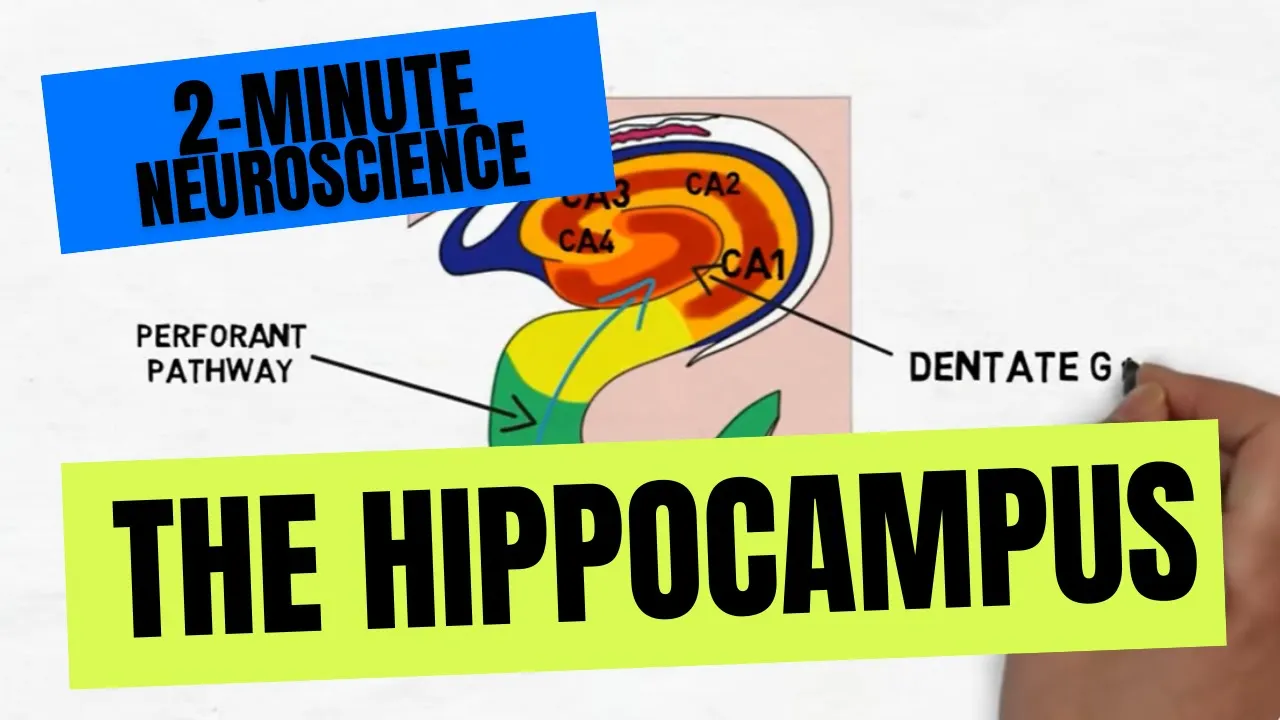
Added:Basic neuroanatomy of the hippocampus and its primary role in memory formation and spatial processing.
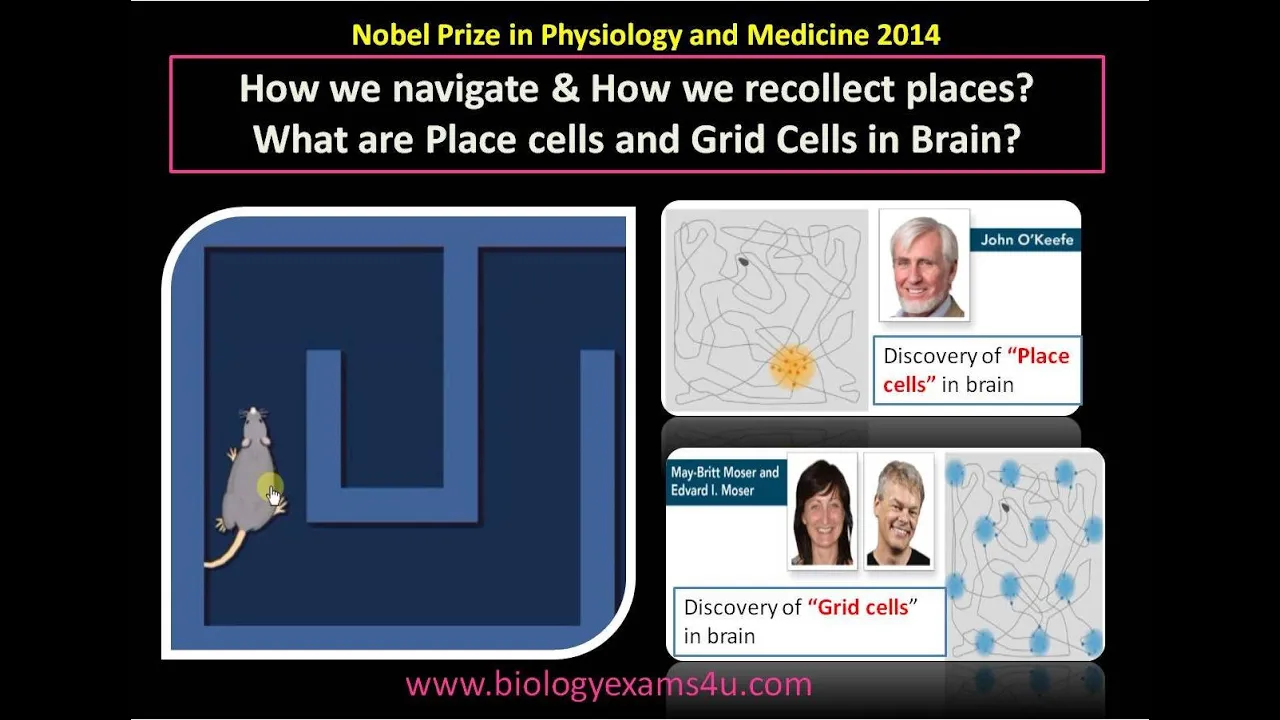
The function of place cells and grid cells in establishing the brain's internal GPS and spatial mapping.
Fundamental concepts of neural coding, specifically how populations of neurons fire in temporal sequences to represent information.
The biological basis of synaptic plasticity (e.g., Hebbian learning) and how neural connections are strengthened.
The role of sharp-wave ripples (SWRs) during sleep and quiet waking states in memory consolidation.
How hippocampal 'experience replay' is utilized in computational neuroscience and reinforcement learning algorithms in Artificial Intelligence.
The expansion of hippocampal cognitive maps into non-spatial domains, such as mapping social networks, semantic concepts, and abstract schemas.
Clinical applications and the impact of disrupted hippocampal replay in neurological disorders like Alzheimer's disease, schizophrenia, and PTSD.
6.2K views87likes1:14:50Original Release: 2014-06-06
it's a pleasure today to welcome david foster from johns hopkins university david is here as part of our series on crafting the nero code which is sponsored by the center for guidance and neuroscience and culture jim hats being our director david is from the uk so he earned his bachelor's degree from imperial college in london you see when i received his phd in 2000 from the university of vettelborough where he worked with both richard morris of the morris waterman spain and peter diane i think and he received his degree in computational neuroscience he then went on to the post-op with matt wilson at mit and joined the faculty at hopkins in 2008. now the first sentence of david's website i actually happen to look this up says and this is to quote says that my lab focuses on her on how large populations or ensembles of neurons encode and process information in a way behaving animals and i thought this was very apropos for our series of cracking the real code david combines work both with physiology and computational approaches and as you're going to see you can hear about today he records from like over 200 neurons at a time simultaneously and awake freely and tries to correlate the activity understanding what that code is actually doing so the title of this talk today is neuronal sequences and there's a campus for memory and imagination so please join me in welcoming david so just turn it on yeah all right well thanks jeff uh thanks for inviting me and um i've had a just terrific time today meeting with people uh and lunch with the students it's awesome um so yeah i'm gonna talk about the hippocampus and i get the feeling this audience will be pretty familiar with things like place cells and let's see spatial memory tasks and things like that so so i'll try and go through quickly because there's quite a lot to get through but i want to so i am going to be talking about hippocampal place cells and telling you things that play cells do that you might not have realized that they can do but i'm going to start with a rat's eye view of the problem that people think hippocampal place cells are a solution to which is the problem of navigation and here's a real maze you know you're used to looking at things like water mazes this is a real maze where you go in and you don't know what you're doing and you've got to somehow figure out how to get to the food and i want to point out a couple of things that are difficult about this the first thing is difficult is the direct bearing to the food from the starting location doesn't tell you very much because the actual decisions you need to make are almost unrelated to this to this direction in fact there is a relationship which is that the vector sum of all of these moves that you have to make does add up to this vector but that's an extraordinarily weak constraint because they're an infinite number of sequences of vectors that would have the same property uh another example might be uh if i want to get out of this building i have an absolutely no idea but it's approach i mean it could be here or here i have no idea where the exit is but it's irrelevant because i need to leave take that action the second problem is uh is is to do with associative learning so if i just want to associate being a being in this location or some actions that i take near to this location that that's not going to solve the whole problem of all the things i have to do from far away so people have used this kind of task to suggest that animals and people must have some representation of the world with some degree of complexity that can be used to formulate plans and to figure out how to navigate so i'm going to explore that idea with respect to neurons in the hippocampus and this is just showing the rat hippocampus and i'm particularly interested in these cells the workhorse experimentally in the hippocampus the ca1 pyramidal cells and i'm going to be dropping electrodes into the hippocampus recording from these cells in freely moving freely behaving rats and mice i'm sure everybody's familiar with the technique but i use a technique called it's extracellular recording and i use tetrodes which are very small microwires on of the order of 10 or just over 10 microns in diameter four wires wrapped together so that the tips are recording are very close together just a few tens of microns apart and they're recording from the same population of cells so we can triangulate the signals to separate out the spatially the the the different sources the different cells that are giving rise to action potentials in this way um i'm going through this very fast i'm sure everybody understands that you can isolate different physical sources of the signals which corresponds to different cells and that's the trick where we can go from a single tetrode to recording multiple units off of that electrode and then what we do is we implant lots of these tetrods and in some of the experiments i'll tell you we actually have up to 40 of these tetrad so we have 160 channels in total to record as many neurons as possible so it's well understood that in the hippocampus and nearby regions there are these representations of allocentric space of of external space that an organism walks through or runs through and so the classic uh long-standing example is the hippocampal place cell so these pyramidal cells were each cell will fire in a localized area of the environment so what you're looking at in black is the search pattern that the behavior of an animal over the course of about 20 minutes in something like a two meter by two meter arena and in red you can see the spikes from one neuron so they're spatially localized and we call that the place field but one synapse upstream you have neurons in the medial entry and cortex which called grid cells and there a single neuron will fire with this extraordinary lattice like firing field in space which is a hexagonal grid and different grid cells will fire at different spatial phases and at different uh separations between the grid nodes but there's this very regular representation of space and then i probably don't need to tell people here but there's the head direction cells in many different areas that have a very strong signal that represents something like an internal compass it's not the absolute north they care about but they have it's as if in any environment they select a particular direction to be north and then different neurons will be tuned to different um heading directions in that environment so across these and other areas that have other firing characteristics there's this idea that there's a real representation of space so i'm going to talk about what this might mean in terms of navigation just thinking about this task again and what might you want to do with a set of place cells well you know you're in this environment you might want to ask yourself let's say you find some food you might want to say well where where have i been how did i get to this location or alternatively you might be in the middle of the maze and you're trying to get out and you ask yourself how do i get out the key thing about place cells is they tell you where you are so as a map there seem to be stuck in the current location because by definition they only fire when you're in the place field so this is the uh this is what's been difficult at least for me to understand about place cells as a as a map system but it's also true for grid cells and it's also true for any other special representation in terms of their field representations that they fire by definition within their receptive fields now it's been known for a long time that there are two states of activity in hippocampus as you can see in the hippocampal local field potential there's one kind of activity that you see a theta rhythm eight hertz theta rhythm when animals are running around as soon as the animal stops running in this case it's a wrap since the rat stops running the theta goes away and you get these periodic what are known as sharp waves so see it's interesting because all of the place field everything we know about place fields has been gathered from this behavioral state but this is quite a different behavioral state um so this is known as a sharp wave on this time scale of this is about a minute and when you blow this up you can see these high frequency one to two hundred hertz uh oscillations riding on the top of it this is known as a ripple so this whole thing gets called a sharp wave ripple so i'm actually gonna everything i tell you about is essentially about what the placeholders are doing during sharp wave ripples so the plan of the talk i'm going to talk about sharp wave ripples and something called play cell sequences and they're going to explain that both sharp waves ripples and playstore sequences capture something about the shape of experienced environments that i believe must be learned i'm going to explain that these sequences are actually endear dependent further proof that there's something is learned i'm going to make the case that these sequences represent a kind of goal directed memory retrieval that you will see offers some kind of solution to the navigation problem and i'm going to end with a talking about the possibility of diseases of shockwave ripples so we'll just jump right in with the recordings so this is 20 minutes in the life of a rat running up and down a linear track that's about a meter and a half long and you can see in grey he's sweeping from one end to the other but he's also pausing at each end on the top in red you can see the the times and positions where one hippocampal cell fired spikes you can see it only fires when the animal rounds the corner that's a place cell we can capture this place field in one dimensions as a basically a histogram it's normalized by occupancy for those who care but it's just like a histogram and if we record several of these cells at the same time we find that they tend to tile the entire experienced environment so there's there's a cell for every location they're not perfect the way that perhaps grid cells are or hydration cells but they they seem to cover the entire environment so these are recorded simultaneously so now let's zoom in on one minute during this task where a rat is running from one end of the track to the other and then pausing this takes a few seconds and this is the rest of the minute if we just show the raster the the spikes from each of these 19 cells so uh they're recorded simultaneously right and this is time you can see this the animal runs through the place fields the cells fire in their place fields as you'd expect them to but when the animal stops at the end you get these characteristic population events where all the cells seem to fire together if you zoom in on this you find that these events are actually sequential and in this case it's quite interesting these events start at the end of the track and proceed in a sequence all the way so these are the these are the neurons that fired at the end of the track they fire first and you get a sequence that proceeds all the way back to the beginning of the track so the animal's stationary at this point right but the place cells are firing in a sequence that corresponds to his previous trajectory in reverse order interestingly and this whole thing takes just 100 or so milliseconds and this is what happens during the shockwave ripple it's a very uh robust thing that happens while the animals are fully awake and you get lots of these events during the course of a short 20 30 second stopping period so this is after the first second and third laps on a novel track and you can see each of these has the same x and y axis it's about 200 milliseconds and these are the 19 cells and the events are very uh almost stereotypical so what i've taken aside because i know some people are interested in reinforcement learning why would you want to have reverse sequences this is a question i sometimes get asked well one reason you might want to do this is to develop some kind of expectation of the goal that could guide you in navigation so this is just an imagine you know we just dreamt this up this is a scheme which there's no direct evidence but imagine if every reverse replay co-occurs with a fast onset slowly decaying reward signal then these two signals impinging on some downstream area will allow them to be associated so that places these are the place cells near the goal these will be associated with high levels of reward and the the places further away will be associated with low levels of reward so you could actually end up developing some mapping from your place cells to a slowly increasing representation of reward and this ends up doing something which in reinforcement learning is known as uh finding a value function and it's actually mathematically quite well defined and the point is that it actually solves the difficult global solves difficult global navigation problems so this is an example which you will find in in textbooks on dynamic programming and markov decision problems which is you want to solve a problem you want to solve a maze like this well you start at the end and you could count the number of steps see five six seven eight you flood the number of steps out from the end but you must do it in reverse order and if you do this you end up with a set of values for each place that renders the navigation problem completely local because at any point in the maze you just have to take the step that will take you one step closer to the goal we can talk more about that later because that's uh because i have a lot of data to get through but that's that's a that's that's actually a to me it's a very interesting idea that you could actually have a reverse replay could serve this this interesting learning uh role but both reverse replay and forwards replay in the awake state has been replicated many times now and extended so as i just said you get forwards and reverse replay uh you can have replay replay sequences that extend over very long spatial tracks so here's a track that's about 10 meters long and the replay will just happily chug along at a speeded up rate but at a constant speed so if the if there's a replay that's depicts a 10 meter long trajectory it'll just take five six seven hundred milliseconds to complete it's kind of amazing so this shows this nice relationship between the duration of these events and the the the the space that's being uh depicted and it's really uh clearly correlated uh and there's some work suggesting that these events are necessary at decision points for animals to be able to choose for example uh in this alternation task to at this choice point they have to have these events and if they can't have these events then they can't do the task i'm going to expand upon that uh later so sequences aren't going to be any use unless they capture the navigational structure of the environment that's i would posit that but how can we test this well one thing we did was to take uh an unusual shaped environment this y maze where one arm is twice as long as the others um and and show that we can just examine what kind of replay sequences we get on this track so here's a linearization of position so i've taken these arms and projected them onto a linear onto a line and you can see that there's this behavior which corresponds to the animal uh let's see starting here moving down along the y arrow moving back to the center moving into the green arm moving back to the center and moving into the purple arm okay we recorded over 80 cells with fields along this track uh and as you can see it's uh we've we've aligned the cells according to where their peak peak is along the track but it's quite messy because some hippocampal cells fire in more than one place so just picking one position isn't necessarily that informative and also the if the distribution of the place field is informative and so just picking the peak it doesn't tell you very much so we actually make extensive use of what we call decoding a decoding strategy which is basically a it's a very simple statistical strategy where we take each of the cells spike rates and each of the cells place fields and we say what's the most likely position for the animal to be in at any given moment given these spike trains and place fields actually we don't even do that we calculate for every single position a posterior probability that that is the position that the hippocampus is depicting and as you can see that nicely captures a very a very tight prediction at every point so the very first time an animal goes on to this funny shape why maze in very short order the system starts producing replay sequences so these are just some of the examples it's not all of the replay sequences that you'll get within about 20 minutes uh well this is a bit long it's within about an hour of experience on this novel track uh and you get replay sequences that correspond to each of the arms each of the uh sorry each of the two arm trajectories that involve going from one end of an arm to another everybody know what that means so you've got three ends there are three possible ways to get from different combinations of ends to other ends and every single one of them uh is is replayed in in a very strong way at some point this actually is a bit hard to see but at different stopping points you actually get many replays and replays of different trajectories and in fact we see replay very quickly so this uh what you're seeing here is that counting the number of significant replay events and comparing to the number you'd expect by chance if just the cells were firing randomly and what we find what just focus on this red to blue to red uh depiction of significance basically we find significant amounts of replay very quickly and after only one or two experiences of of the individual trajectory so an animal has only to run up and down the trajectory once or twice and you can immediately start replaying it so your first thought might be well that's interesting but how do we know there's any learning i mean maybe there's just some uh maybe maybe the these trajectories are encoded as elapsed time or some representation of experience that doesn't require any uh any spatial knowledge and we've just mapped it onto space with this decoding strategy how do we know that this thing is really spatial so this analysis turned out to be quite important we say okay imagine the animals sitting here at this what we call the sea end and you're spitting out replays some of them go up here and some of them go up there well are they using the same cells to code for the common portion of the of the environment as as in this case or are they using different populations of cells to encode for the different experiences this would be easy to generate quickly essentially without learning because you can take pre-existing sequences and just map them onto the new uh environments but just you you essentially don't need to learn anything in this case this would involve stitching together the sequences in a manner that really captures the topology of the environment so what we did was we uh uh well let me back up we look at the firing rate there are let's say these 82 cells firing during just during replay sequences and you can see that some cells fire a lot and some cells fire a little there's a lot of uh variation in the to the extent to which these different cells take part in these different sequences however there's no variation at all uh in whether it's a sequence that goes to the left or to the right in other words uh you cannot tell from from uh that the same population of cells takes part in this part of the replay and in the same with the exact same firing rates regardless of whether the replay is going to then move up here or move here so um and we verify that by just shuffling the identity in the end between left and right going sequences this is kind of a complex point but we believe that the evidence favors this mapping in the brain for this generating these sequences over this so we think that this is the kind of thing that couldn't be uh couldn't be guessed before experience it must involve some kind of learning i'll give you one more piece of evidence that favors that so we also find that these joint replays that span the arms the local free potential the ripples have in the local food potential have an interesting structure as well so this is the raw trace but what we're looking at here is the power the ripple power in this in this event here so here's a replay that moves smoothly down one arm and into the into a second arm but you can see that there's a peak in the ripple power that falls to a minimum and then another peak on the other arm on the other hand we sometimes see these single arm replays and you see in these examples there are no such peaks so across all the data we find particularly when there is a long arm that there is a dip in the ripple power at the at the point where the with the imagine the replay trajectory crosses the choice point in other words we can infer from the ripple structure alone something about the structure of the environment that the animals experienced in this case that it has a single choice point so that's the most complicated part that's always a little complicated to explain um but i do think that it suggests that the topology has been captured now we're taking a very different strategy if sequences are learned we should be able to block synaptic mechanisms of learning and get rid of them right this is actually a really interesting question because place cells react to blockade of nmda receptors and then and therefore nmda receptor synaptic plasticity in a very strange way uh actually they don't so first order of approximation they don't react so these are this is a classic result from cliff kentros and eric handel uh some time ago almost 20 years ago um where they showed that you can give a drug which blocks nmda receptors systemically and blocks synaptic plasticity in the brain and place an animal in a novel environment and place fields will form and be more or less stable for up to an hour and only when they record 24 hours later do they find that in these animals unlike control animals that there's a remapping so they don't hold on the place feels no longer fire in the same place in a normal animal the place fields will fire in the same place i will skip that the next point why is this important it's important because we know that spatial learning doesn't work like that in this ex this is an experiment that's recently published by richard morris's group which nicely shows uh the performance of an energy receptor blockade group and a control group in a just a bug standard water maze task reference memory learn the single platform in a novel environment and but in this time with enough trials that you can actually see performance reach an asymptote four trials in and control animals are performing as well as any animals can in this novel environment and indeed each trial is a minute or so of experience so they've had well each trial is this much experience so they've had about two minutes of experience spread out over about 10 minutes over that time scale animals with nmda receptor blockade are completely unable to learn place cells with place fields have formed we can infer and are perfectly normal throughout this so what's going on maybe something else maybe we can find something else that breaks under an mds receptor blockage and you can see where i'm going i'm going to say i think the sequences are the thing that fails to form even though the place fields are more or less fine so to test this we have this experiment this timeline where we have the animal being exposed to simple linear tracks a non-hippocampal independent behavior that our mda receptive blockade drug won't affect we expose them to novel tracts both uh before and after giving giving a systemic nmda receptor antagonist or assailing control and we look and see what happens well we partially replicate the can trust results what i didn't tell you was there was another there was sort of competing literature where people have found small effects as cliff said there was no effect for the first hour uh there was a there were some um nr1 knockout mouse studies that suggested that you could have effects of of uh knocking out the function of nmda receptors although that was a a knockout mouse so there were the usual attendant qualifications for whether or not it was a developmental effect and so on we we come up with a result which is which is somewhere between the two so here's in blue you see typical place fields these are all just different cells typical place fields for under saline and under cpp this is before jug and this is after drug and the drug slowly kicks in and is actually at its strongest uh effect in run three and what you can see here is that the size of place fields does get a little bigger under drug and the sparsely this measure actually should be called diffuseness but for historical reasons we say sparsity the measure of how diffused the place field is on the track does increase a little bit also but the critical thing is our ability to decode space from this population cells is barely affected and you can get well above chance decoding with these slightly bigger fields in the under the um under drug so in the spirit of what cliff can trust found cpp is not uh is slightly smooshing some of the place fields but it's not removing a substantial amount of spatial information in fact position can be decoded from uh from these place fields but replay is a different story so the top rows are uh replays actually the best correlated replays from uh saline animals and in the red cpp and what you can see is the drug these are the best so drug completely obliterates replay these are weight replays in in the cpp case and this is an interesting dissociation because we've got now we've got the animal running up and down the track through place fields which are more or less fine and acting in a fairly coordinated way at least to be able to decode position on a behavioral time scale but every time the animal stops it's just garbage and this is a shuffle analysis which proves this effect but you can just see it so there are still two possibilities maybe an interesting one and a slightly less interesting one the slightly less interesting one is that maybe nmga receptors are just interfering with the ability of the system to generate this this more precise these fine timed 100 millisecond long events the interesting possibility is that the animals learn something during experience and that learning is necessary to produce replays so we look in a subsequent sleep session and we find in sailing you can get replay of in fact all three preceding experiences at different moments over the course of uh whatever several hours we'll find different replays corresponding to different uh experiences and you can see here this is our shuffle analysis you get significant numbers of replays of the of the first experience for example and significant numbers of experiences of the last experience the last experience actually looks a little bit better but in the cpp case as you'd expect the replay of the most recent experience that was uh experienced under drug is completely gone but there is plentiful an excellent looking replay of the experience that was occurred before the drug was given even now under drug so the drug isn't interfering with the ability to produce replay it's interfering with the ability to learn something from experience which allows you later to produce replays one two and three are in different tracks yes and can be distinguished in the later sleep session and how many cells do you have to be recording from in order to be able to pick out the cells that have these patterns well so we're looking at all the cells and the patterns are across all the cells because we're all the cells are feeding into our decoding uh procedure but we're we're averaging something like 80 cells with fields just to illustrate the effect as a rate uh this is in the sleep uh so i say most recent experience replays best so blue is sailing right so the most recent experience is we're playing at a fairly high rate this is noisy because you know it's still hard to pick out replays when we're even with 80 cells you know the more cells you record the more replays you can detect but and we've chopped this up into small time bins so you can see a rate but you see it's a fairly constant rate across uh uh what was this about 40 minutes of replay in the sailing case for the most recent experience less so for the previous experiences but still significant numbers but in the cpp you get no replay of the two experiences experienced under drug but essentially maximal levels of replay of the experience from that was experienced before the drug and interestingly better than in the saline case so the cute way to put this is for the cpp guys this was the last experience and this is done during sleep yeah and what stage of sleep do you need so this is actually a during a we call it sleep it's doing a rest so the animal's in a different environment it's been taken out of the any of the tracks is in a a in an enclosed sort of environment uh but it's really just a rest uh box so they curl up and but we don't know how that we're not claiming that they're in a particular depth of sleep uh just as a control we can take the worst fields in the saline case that all have a diffuseness that is at least as bad as the i think median level from the worst cpp group and it doesn't make any difference so it's not a it's not the place fields per se that are responsible for this there really is a failure of the coordination in replay so what i'm saying is i think you get place feels for free but when the animal runs he learns something about the connectivity between the places that enables you later to retrieve that in the form of replay so so let me push on retrieve that as the in the form of replay so what am i saying i'm saying this we think place cell sequences may be a kind of memory retrieval so uh so that's what i'm going to talk about next um i think it's it's fair to say that it's been difficult in the field in the place field field to get a good handle on whether on whether place cell sequences can reflect goals or remembered information about the environment i mean some people including those present have done i've done pioneering work on this but uh it's it's it's a difficult uh it's a different question and there are two reasons um one is that i mean consider a water maze the statistical power of a water maze is that there's one small little platform hidden in a huge great big pool of water and if the animal can go there then you have a pretty strong belief that he's remembered it but if you have a teammate or something then you know the the number of trials you need to get significance in a with this binary choice is huge and then there are other factors like fatigue and i mean that's why teammates are so hard for so long to get get a a a good handle on uh uh to really prove that there was spatial memory uh and then the water maze i think was was very useful in that regard that and a number of other reasons like cue control but anyway so we needed a spatial task where the goal could be any one of 36 little wells of chocolate in a very large well relatively large two meter by two meter arena but there are two problems firstly that means we needed place fields everywhere now if you think that to do a replay experiment on a linear track you're going to need between 10 and 20 place fields in a row that means roughly speaking in an open arena i'm going to need between 10 squared and 20 squared place fields right we sort of ended up landing in the middle of that range but uh that's a lot the second problem is uh it's just experimental design if you get a task where the animal learns to do something like get to a food uh location you know let's say let's say this was designed exactly like a water maze well then i'd have lots of trials like this where the animal gets released at the side and just runs straight to the food and uh you know you're not getting sampling of the entire environment you're getting this very reduced sampling of the environment because the animal is doing something very in a very goal-directed manner so we developed a task that would toggle between two different kinds of exploration goal directed memory based navigation and random foraging so here's the task the animal has to uh let's see on odd trials he's got a he doesn't know where the food's going to be he's got to search for it and he finds it the next trial he can go straight back to the remembered location then he's got to wander around again he finds some food the next trial he can go straight back to the remote location and he toggles between these two things random foraging and goal directive navigation we know that they remember where the food is because it's much faster getting to uh it takes a much shorter path both getting to the for the remember child and the random foraging trial and note that one nice aspect of this is that the the shortest path is the same in each case right so if he goes from here out or back the shortest path between these two points is the same right so we know that the animal can't smell the food because if we could smell the food he'd be just as good on the random trials as on the home trials we know that he cares enough to do it because he's faster et cetera so the second problem we had was the number of cells so we we miniaturized everything i had previously put in 20 tetrads to the right hippocampus now i decided to put in 20 in the right and 20 in the left we 3d print our drives and we were able to get the weight down we just shaved off everything else make it as small as possible these are actually not much these are these are little chips so they're actually not very heavy this is not very different to the size of what i was implanting in the rats as a postdoc but that was 18 tetras this is now 40.
and this is what we get for our trouble so this is not the best session the best session was actually uh 250 uh uh cells with place fields and uh actually we've just been looking at the data some more and there's another session that's 263 so i think that's the limit 263 but this is an example of a day where the 212 cells each of these is the place field right by definition it's the firing rate of the one cell as a function of location in the two by two arena right so here's a cell that fires kind of on to the left uh here's the cell fires to the right and so on right these guys are inhibiting into neurons they fire everywhere but it's easy to identify them just on the basis of the waveform spike waveform width let's zoom in um this is sort of typical fields see some of them have firing in other places but many of them fire in one place the size of the fields is interesting they're pretty big right i mean a rat might be 10 or 20 10 10 to 20 centimeters and these are more like 50 centimeters in in width um what are we going to do with all these cells in a way i wish i'd said this at the beginning because this explains the decoding strategy a little bit better for efficient ideas we're just calculating a uh a posterior probability under two simple assumptions that we know are wrong and we want and we want to see deviations from this so that the cells are all independent and that the only thing that governs the spiking is the firing rate if the only thing that governs the spiking is the firing rate that means it's press on so those that's uh those are our assumptions and we're um we're just it's very easy to generate a posterior probability of position from that but the intuition behind it is that we're looking for the overlap in the fields of spike a fee of cells that spike so let's see where four cells that each fire one or two spikes with these fields well i'm going to have a very strong belief that the animal is here right what's cool about this technique is that it doesn't have to be where the animal actually is if these four cells fire one or two spikes i'm going to have a very strong belief that the animal's here the belief's going to be wrong but it's interesting you'll see what that means and i don't always get a position because if these four cells fire then i'm not going to have any strong beliefs at all so with all that said let me show you a movie of the animal running around in this task and well i guess before it goes let me explain what you're looking at these this is the arena these are the 36 possible food wells where chocolate liquid chocolate can bubble up this is the depiction of the rats of the rat's body his nose and his tail the this is the home well that's consistently rewarded though this is actually the random well uh time is going by here and you'll see this is in real time and underneath all of this is this flickering bright light and actually what that is is there's a there's a uh every pixel on this screen has a probability and we've depicted that probability as a brightness level and the fact that it's only bright here is because it's only these positions that are being picked out by the population activity so let's watch this as it moves around though the computer has to warm up so you can see is the animals running around um the the activity of this these 212 cells is pretty consistently reflecting his current position and remember how big those place fields were so these cells are really combining and coordinating the activity to represent a much more precise location and then you might have seen i'll just play it again you might have seen some interesting stuff happening where the activity seems to move away from the current location i won't deny that's interesting um that's almost certainly related to it was the animals in theta at this time uh we're not decoding on a fine enough time scale to pull out the meaning of those of that flickering uh but that's other work that we're doing and you certainly can do that so now the animal's parked over here and the question is what happens next so this is what happens next all right so now we're looking at the succession of four sharp wave ripples that occurred one after the other over the period of just a few seconds while the animal was parked in this corner the only difference to the previous movie is that this movie is going 20 times slower and he's also re relies on a 20th of the date right because our time bins are now 20 times smaller we're looking at i think it's 10 millisecond time bins before they were nice 250 millisecond timing so we've got far fewer spikes so you expect it to be noisier but i'll just play it again but what you can see is consistently in each of these events the representation position starts in the current location moves off smoothly in a sequence and ends at the remembered go location why did he pause there any particular reason well he's actually uh so that that particular one wasn't right so normally he's pausing at the random well walls you can see other movies there are other places he sometimes just likes to hang out and this bottom corner was one but if you saw the amount of time it was uh i can't remember it's just a few seconds it's like 10 seconds or less well in this case he should be going here so he's not he's not totally on top of the right in this example that's right although there's a tendency for them to do that when when it's relevant but they also do it other times so yeah it was about four seconds i mean wouldn't you expect that after he got to the random while because next time yeah so you get it more at those times but you also get so you also get it at all other times and you get and it's interesting it can also it's strongly predicted what he's going to do when he doesn't go to the goal also so it's it's not um it's not a rigid sort of uh memory signal it looks more like a planning signal than a memory system in that case i was yeah for within a period of time so this is just saying trying to pick out what's going on here individual frames are very tightly focused so the cells are coordinating to represent locations even when they're distant locations where the animal is and then there's a sequence to it which we haven't imposed um uh the way we've done the decoding these these the all these locations could have been in any order i mean what i mean is we we we we don't have any history uh term or any prior moving prior here or smoothing to make this happen the sequence is a property of the system you can see there are many different kinds of sequences this is just to show sort of the examples of the kind of sequences you can see now collapsed in time because they're clean enough that we could just collect them um and this figure so so yeah he's doing a task where he has to use his memory and he makes his plans what's interesting about this so it's an interesting question whether this is really memory or planning or whether those things should be differentiated but i'll just show you this one way of looking at the data which is that when the if you take all of the events that occur when the animal is at the home well and you just superimpose them they have in common the home well because there's a tendency for replace to start in the current location if you take all of the replays that occur when the animal is not at the home well which is usually at random wells but also can occur in other places they also have in common the location of the homeworld and if you quantify this you actually find that across all of the 36 wells the home well is the statistical outlier so what this means is that as an experimenter i can look at the activity of hippocampal cells when the animal's not at is stationary and not at any particular location and okay i have to average across 20 minutes of data but i can tell you what the remembered goal was in this task so i think that's interesting because we haven't had that before um it's not because one location was more was particularly for me it's not because the home location was familiar because there are these locations where the animal does actually like to hang out and they're actually more familiar he spends more time there than than a home well but if we look at just group locations according to whether they're more familiar or less familiar than i mean more he's the animal spends more time or less time than the home well we'll find that there's really no difference and uh it's only the homeworld that has more representation now what i didn't tell you at the beginning i'll tell you now is that every day we actually move the home well to a different location the element has to figure it out for himself but he has to learn a new fixed location right so he's every child has to kind of figure out what he's doing but the the location that gets repeated every second trial is different from day to day and it gets moved to another location but you can see on the next day uh we're also able to pick out the next day's location too so this is not something about the particular location on this on this day one it really is a feature of the of the girl is the um it's a general property that these sequences go from where this the where they're at is standing yes to some other location exactly yeah it's a very strong bias so we know that they start in the current location we know they kind of end many of them enter the goal and then the question is what route did they take to get there because you could still have a very securities route in fact you could have if you've taken a long windy path to get to the to the random well you could reverse replay that whole thing and still get those results so so we needed to show that the path that the actual the path taken is actually directly or at least matches what the animal is about to do which hopefully we've already showed you is it tends to be a pretty good path from the random world to the homework so we have this kind of angular analysis so uh black is the reap as an example black is a replay trajectory green is the future path pink is the past path and we look for the mean angular displacement in along at these at these radii along the minimum the least of the two possible and what we find is the match to the future path is very good much better than chance very strong you see most of the most of the events are within just a few uh have a mean here uh angular separation which is uh i can't see the what that is but it's uh this is pi yeah so this is like within within within within 90 degrees probably yes for the past path it's not nearly as good so so it tends to match the future path right uh and then this is this is what jeff was talking about so the the tendency to get a match is actually better when you're at the random well and about to go home that it is when you're at the home well and about to go somewhere else my interpretation of this is that it's not that the animal couldn't predict what he's about to do but that he changes his mind i mean he doesn't know where the food is going to be so he makes a plan he probably starts off on that plan and then changes his mind because it's not working out that explanation is as good as any other at this point but that would be one reason why you get poorer prediction uh at the home well and then this is quite interesting it looks like you get an anti-prediction an anti-correlation of the direction for the uh for the past path at the home well now another thing i didn't tell you is the random wells don't repeat within the day so this may reflect some in some knowledge that the system has that the direction of the next random goal is not going to be well predicted by the uh by the past one so the final thing i didn't tell you about this experiment well i i did just tell you so every day the goal the homeworld is in a novel location and within a day the random wells are i don't repeat at least for the first 19 trials right so i'm just talking about the foot that's there's plenty so the first 19 trials um and they're unpredictable so what does that mean it means that we've kind of got an all-to-wall navigation problem and if for at least the 19 trials of every day every single trial is actually a novel trial in terms of the start and end location in other words anytime the animal has to is that the random one has to go back to the home well he's never actually had to start there and go there before for every child so the trial is simply each trial starts as soon as he's eating the food as well yeah so nothing else nothing happens yes yeah so in fact all the movies relate to this but this is an example which uh it's gonna into it's gonna um you're gonna see run time and replay time uh um activity so we're gonna move from one to the other um all mixed in but it should give you an idea this is this is showing you that you know this he's going to get here and then he's never had to go start from here and go there before and that was the complete sharpie and this is an interesting one it goes down here you might want to remember that let me get another one right and then he does it what this tells me is able to generate sequences that are essentially novel combinations of experiences and look and then he has another one of these sequences and then he goes there so make up that what you will but um we actually see several examples of this kind of what seems to be a two-step prediction of him actually pre-playing a sequence which appears to be relevant after the next thing he's done but i wanted to just focus on on this on this sequence you saw two nice examples where it starts in the current location goes straight there and hovers and that's a novel sequence that appears time after time and you know using the same analysis but just restricted to these trials these first 19 trials of each day you know it's it's just as good as using the other trials basically the system can generate these good predictions of the future trajectory for novel trials so that to me that's where the imagination bit comes from uh because um because because the hippocampus is putting together experience into novel combinations and and i think i was talking to a couple of folks about problem solving today so this to me is could be a model of of problem solving so i'm in the interest of time i'm going to go really quick through this final part which is just a just by way of introduction uh i want to spend too much time one of my interests is also to ask the question well is this um can you have diseases of sharp wave ripples is this some is this a mode of activity if it's really a unique mode of activity uh for this kind of exploratory thinking can it fail we expect it to fail in particular disease models and i'll just mention it because there is this idea which is uh in the imaging literature and in the human patient literature of something called the default network which some people might be quite familiar with this is a number of areas but includes hippocampus that are active when uh during this sort of rest states uh if you like when you're sitting here kind of zoning out not listening to me and your mind is wandering and suddenly all these areas start lighting up and being active together and it's interesting because it sort of relates to a little bit to episodic memory this quote from mendel tolving episodic memories mental time travel but it's really been it's randy buckner at harvard has described it as a network for free thinking remembering the past envisioning or imagining the future and considering the thoughts and perspectives of others um i had the good fortune to be able to examine a uh uh a an animal mass model of schizophrenia which is to say it's a mouse with um it's a calcineum knockout it's a mouse that uh with the knock out of a gene that uh has some implication in schizophrenia the story about scrutiny mouse models is that there is no accepted mass model of schizophrenia but there are many possible candidates for genes that can confer risk and i won't go into the details in for reasons of time but i'll just say we were able to characterize this mouse um that that really has a plasticity phenotype it's it's has too much ltp and no ltd in the hippocampus and what's interesting about these animals is they exhibit two to three times as many ripple events as normal animals but what's really stunning is that the place field activity when the animals running is completely normal the firing rates the directionality various other measures completely normal as soon as the animal stops you get two to three times as many sharp wave ripples each of which involves two times as many spikes as normal so the net effect is a more than six fielding a six-fold increase in excitability as soon as the animal pauses associated with sharper ripples and then the animal runs and everything's fine uh and then we used pairwise measures i won't go into this but we couldn't record enough cells in these small mice to to talk about replay directly we in this case we only had six tetrads in the mouse but we could get pairs of cells and we could say there should be a relation if replaced happening there should be a relationship between how physically the distance between two place fields and the spike time separation in these sharpies ripple events and that relationship in control animals is was all right yeah but it knows it knows it's just microsoft it came back that relationship has completely gone in these in these mutants so um so we think this is interesting and um i won't be able to tell you about it but we based on this couldn't you do a similar experiment in a human that's got a hippocampal electrode in place for example somebody who's preparing for medicine well yeah so you're preparing for surgery you've got a dental lecture then they have a canvas by a number of individual cells how many cells would they have to be finding in order to test the hypothesis that there are similar shortly again well we're working on it i'm lucky enough to be able to work with a neurosurgeon at hopkins and we're uh we're trying something like that let me try and scoot i've gone way over time really sorry thanks to everybody for staying but the summary so shelby associated play cell sequences can depict recently experienced trajectories and future trajectories they can predict what the animal is going to do they can even imagine trajectories that the animal in the strictest sense hasn't done before so i say here a bit of a reach perhaps shortwave ripples are a model of deliberative cognition okay they require nfda receptors during exploration in order for you to see them subsequently they do not require nfj receptors just for the generation of sequences if the environment is already familiar so i think that that adds to the idea that this this kind of activity could be a model of hippocampal retrieval and also the idea that that these events although they can depict novel trajectories they draw from a structure a map if you will or a set of contingencies between places that has to be learned and finally uh i mean i didn't tell you but we actually decided to take a comparative approach in fact to be looking at a second model of schizophrenia and finding very similar results so we're sort of interested in this as a model of a psychiatric disease um and also ways to try and this is where the humans that comes in to decode the content just from local field potentials so we suggest that sharper ripples could be a novel target for studying models and therapies well i was going to show you one more example just for the hell of it yeah let's see so here we have another another event right and the animal goes off back to the food now start spitting out these these sequences they go all sort of willy-nilly then he seems to take this kind of behavior now he doesn't know where the food's going to be he stops there finds it and he starts spinning so yeah now that one went sort of through but in this kind of a shape and that's him he finds the food okay uh so every strawberry can be just in this particular animal every all right so this is this is a point of uh uh contention with my peers uh basically it's it's uh we've set a threshold we said all right for some of this analysis we only want to look at sequences that have uh a certain sequential structure and then we don't say where it has to go we just imposed some kind of smoothness to it for some of the analysis to say the analysis for example where did these sequences go you know looking for the memory uh but if you look at all of them um basically the amount that the amount of uh i don't have the figure here but if you know if i plot i mean it really is like this if i plot the number of cells i've got and the number of the proportion of replays that satisfy this constraint it just goes up like this across different sessions so i and so i believe that if we could record that at some point you i see no evidence for the proposition that there are any non-sequential shut up with uh events yeah you can have remote so so you can have remote replay but they also look like replays they're also sequential events but you can have uh you can have events that relate to other environments so that has been shown i in my hands it's actually relatively rare but you can have it and then certainly obviously in sleep as we said sleep isn't really i'm not monitoring a particular behavioral state it's really just gone into a different box it's a boring little enclosure and then he starts to produce these replays for different experiences uh i should just thank um several people my members of my lab particularly brad pfeiffer who's the hero postdoc who did the 250 place sales is now um he's going to start as a faculty at ut southwestern shortly um i should thank xiao xing and dahlia for the for the other data i talked about my collaborators and my funding sources thank you honestly i'm sure david happy to take some questions and then we'll have some reception afterwards outside um great to understand so at first we have these replays with checking in reverse right and those um are those really the same thing as the short wave ripples in this open environment as but um the replays in reverse are just constrained by a linear environment are they doing the same thing or so they're not because uh so unfortunately with the open field uh all right let me back up so there are several things that places coming uh playstyle's gonna code uh one is position another is direction so on the linear track you actually find that um uh you know some some cells you know there might be a cell with a place field here but it only fires really when the animal is running in this direction but there might be another cell with a very similar field that only fires or fires a lot more when the animal's running in the other direction so reverse replay was defined very explicitly as the animal runs in this direction we look at these cells that fire in this direction they're firing in reverse the cells that fire in the other direction that would be the prospective uh sequences they don't fire and then the bi-directional cells do fire so it was that was the basis of saying it was a reverse replay in the open field directionality is anyway a bit of a tricky subject i it looks like you probably can't so we've tried to do it you probably can encode some information about direction as it happens but we don't have we haven't been able to really say definitively anything about what's going on in terms of i would expect that you probably do have some events that are more forwards than reverse and vice versa but one other thing is that you tend to get a lot more reverse replay in a novel environment which is interesting so from what what you're showing others abstract this seems to be a phenomenon that is an active process that the rat is actually asking himself i'm about to go there or one thing that other means should like you know yeah right so my problem is like from almighty i know that this is initiated from ca3 so does that mean that c3 is the wheel of the wrapping but what's he going to do after or is there an involvement of other processes what is causing these things to happen is that just the passive and cheese right i was supposing wrong about that but what i will say is these events are 100 milliseconds long and uh could be 500 milliseconds long and seemingly composed potentially of actual ripple events um when you when you uh filter for the ripple frequency you actually see sometimes you see these events chained together uh and and basically it's and i should have shown a lot there's actually even within these there's suppose there may be a sort of pulsing at gamma so that's a new story the point is this is 100 milliseconds and it's way long it's it's it's much longer than the time it takes for information to get from co3 to ca1 it's more than enough time to go round through the cortex back in several times and uh lauren frank has this new result that um that that this the power of this so this will be wrong this is correct the power of uh these ripples is modulated at the gamma frequency so you may have several gamma cycles who knows that could be several spins around the hippocampus right so ca3 could play a role in this but it doesn't have to be all ca3 well for me it's a research program right what what initiates them what directs them what terminates them what propagates them and how are they learned and which synapses i'm in and who listens yeah i didn't show you but i mean there for example i'm sure there are many areas that are modulated by replay but prefrontal units are strongly modulated okay yeah so how do you recognize the reconciliation story because why why is in the cell what is the mechanism in the cell that causes them to be affected for recently experienced places versus not being affected for the old ones you see only it's like i don't understand what yeah so what happens in the cell level so my simple model so uh so you know that um that's have emphasized it you know there isn't a topographic map in the hippocampus right so there's not a fixed relationship between where cells fire and where they are in the brain and the reason for that has always been thought to be so that you can get a new so you can get a rapid you can have a whole new map rapidly occurring in a new environment and form essentially arbitrary associations between places so i do think that's probably what's happening so i think that when you go in the novel environment you've got a new collection of cells for each place that i don't i'm particularly associated together and you've got to put those so you've got to write those associations in the synaptic connections who knows between ca3 cells that would be a simple way but it doesn't have to be but somewhere your synaptic changes that encode those contingencies this place is next to that place but having done that you can then uh run these you can then retrieve these sequences even not in precisely the order you know as long as you've got the uh the contingency between places you can as demonstrably produce sequences that haven't been experienced before so in a sense if you want to call it a map you learn the map through experience and as the connectivity between places but then you can your eyes can wander along the map in any any way you like any day to create the map so you you start off with the places nba receptors link the associations between the places and then the third step is retrieving that information but in a flexible way which can wander off along different paths in a gold-related way but very flexibly to me that's just what the data says i'm theoretically i don't know it's not necessarily what i wanted to find but i think that's what fits the data best any last burning questions slim there's wine out there come on all right well we can all have our sequence now head out we got one once again thank you very much
Up Next

33:00
Gyorgy Buzsaki: Brain Mechanisms of Navigation & Memory
@weareceu
4.4K views•2017-09-18
21:55
Deciphering Neural Circuits Controlling Anorexia in Mice | Richard Palmiter
@AllenInstitute
2.3K views•2011-10-10

4:10
Vagus Nerve (CN X): Anatomy, Nuclei & Functions Explained
@Alilamedicalmedia
305.2K views•2022-10-31
13:03
How Exercise Benefits Your Brain: Science Explained
@TED
11.4M views•2018-03-21
Related Study Plans & Knowledge Roadmaps
Structured learning paths in Neuroscience
neuroscience
Appetite Regulation: Brain Circuits & Hormones
01Foundations of Endocrinology and Brain Anatomy
02Introduction to Energy Homeostasis
03Peripheral Signals: Leptin, Ghrelin, and Insulin
+ 2 more learning modules
14h5 modules
Explore Roadmap
neuroscience
Neuroeconomics: Value, Risk & Brain Mechanisms
01Foundations of Neuroscience and Brain Anatomy
02Introduction to Neuroeconomics and Subjective Value
03Dopaminergic Prediction Errors & Reinforcement Learning
+ 3 more learning modules
18h6 modules
Explore Roadmap
neuroscience
Spatial Navigation: Cells, Grids & Brain Maps
01Foundations of Brain Anatomy and Memory
02Place Cells and Head-Direction Cells
03Grid Cells: The Brain's Coordinate System
+ 2 more learning modules
12h5 modules
Explore Roadmap
neuroscience
BCIs: Neural Decoding & Prosthetic Control
01Neuroscience Foundations: How the Brain Signals Intent
02Signal Acquisition: Recording the Brain's Activity
03Neural Decoding: Translating Brain Waves into Data
+ 2 more learning modules
25h5 modules
Explore Roadmap