
















Post-synaptic potentials (PSPs) are graded electrical changes in the postsynaptic neuron's membrane potential caused by neurotransmitter binding to receptors; excitatory post-synaptic potentials (EPSPs) cause depolarization (positive potential) making action potential more likely, while inhibitory post-synaptic potentials (IPSPs) cause hyperpolarization (negative potential) reducing action potential likelihood. Neurons integrate these signals through spatial summation (multiple inputs at different locations adding together) and temporal summation (repeated inputs at the same location before returning to resting potential), with the initial segment having the lowest threshold due to high voltage-gated sodium channel concentration.
Post-Synaptic Potentials & Integration | Neuroscience Basics
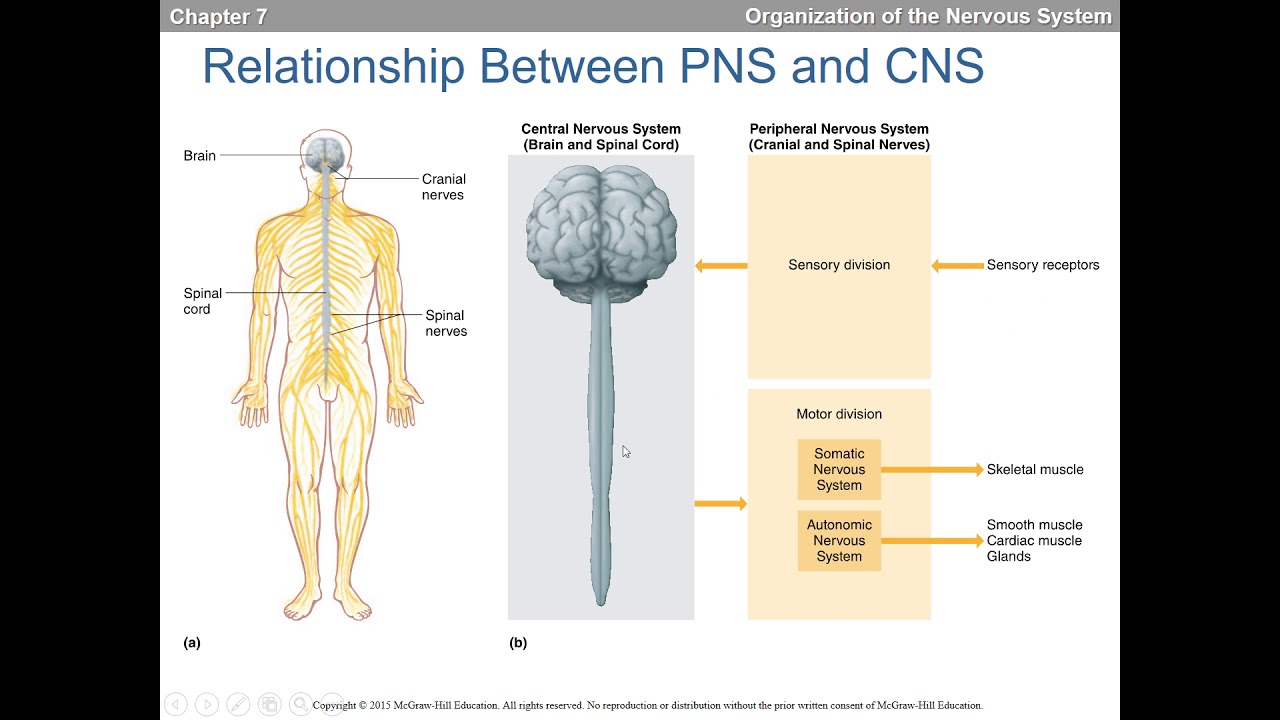
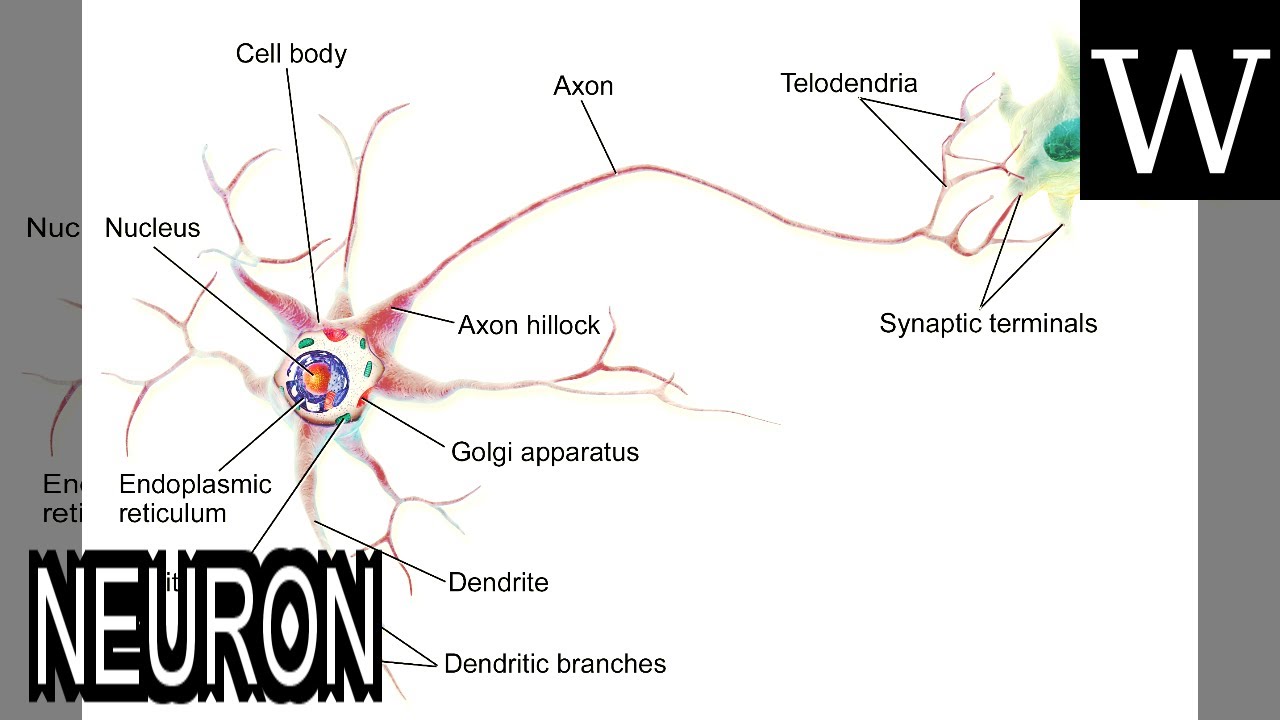
Added:Structure of a neuron, specifically the roles of dendrites, the soma, axons, and the synapse.
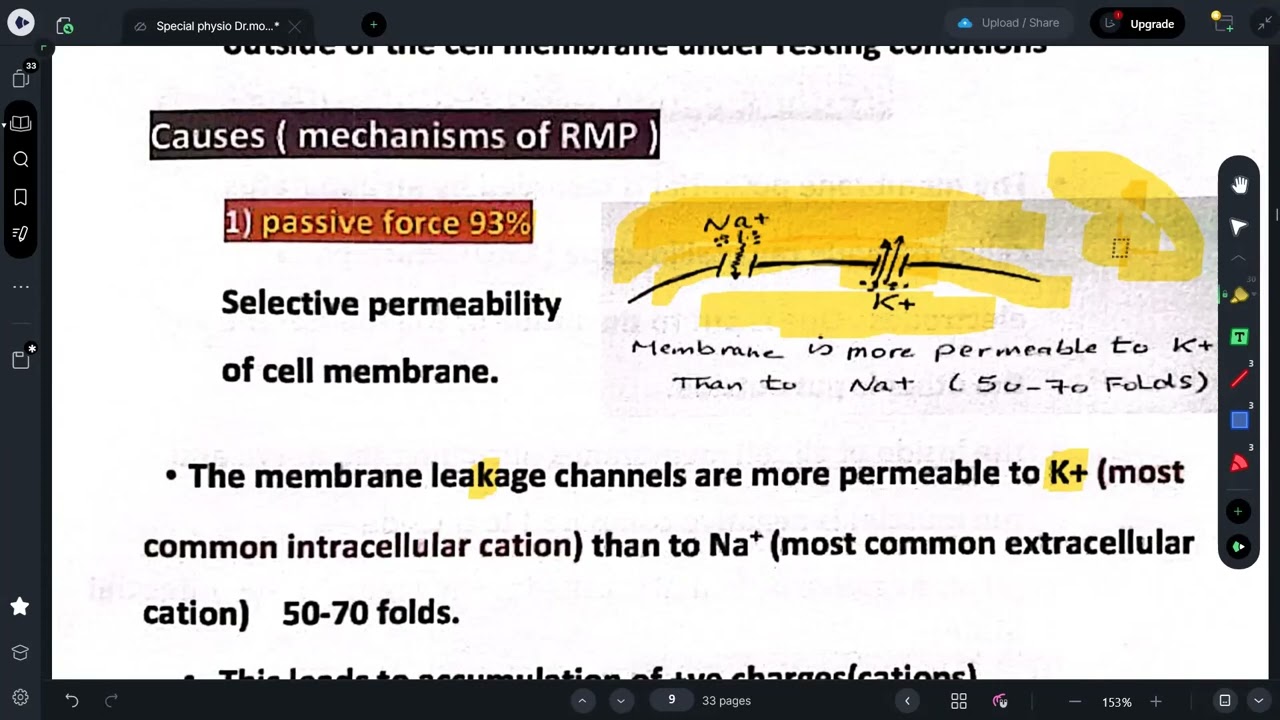
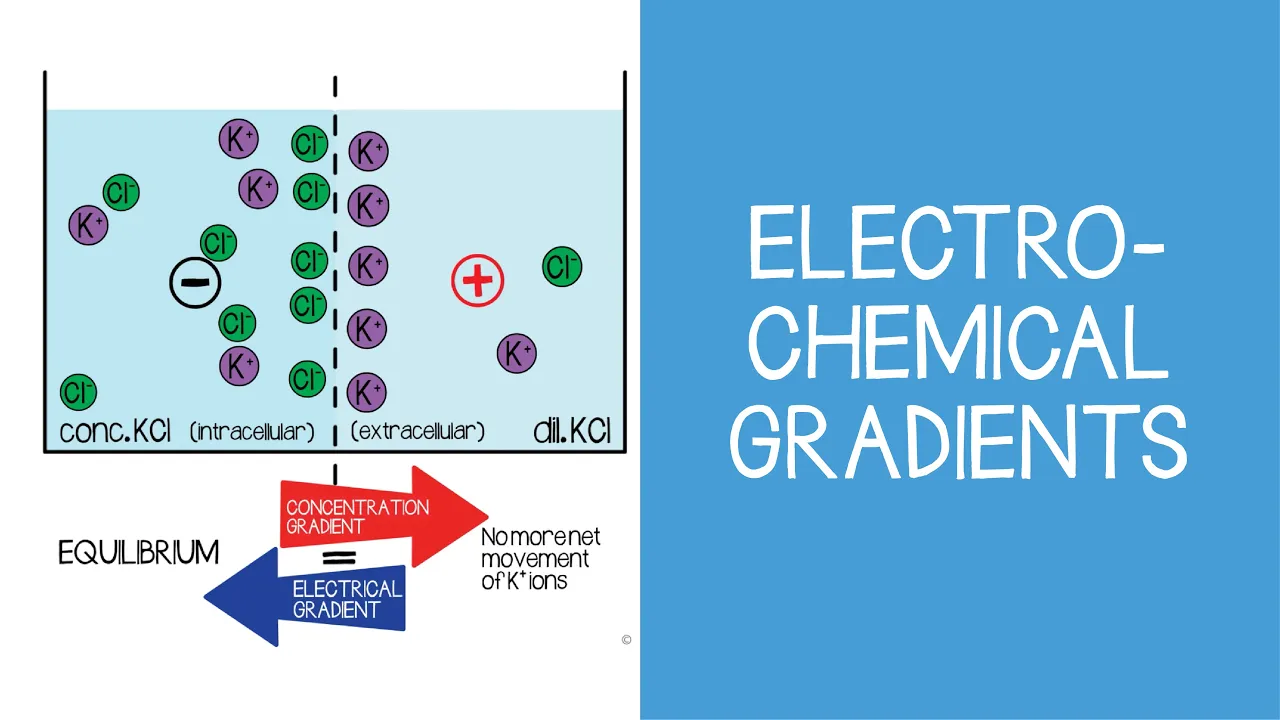
The concept of resting membrane potential and the electrochemical gradients of key ions (Na+, K+, Cl-).
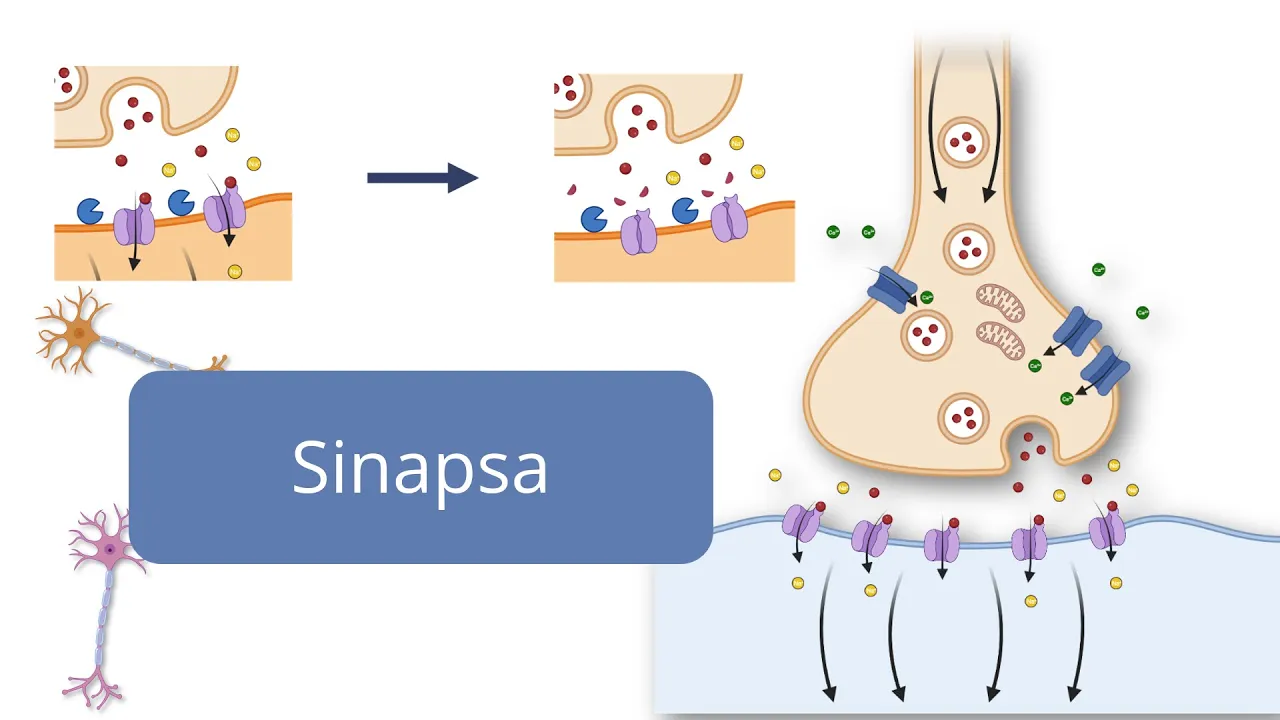
The basic mechanism of synaptic transmission, including neurotransmitter release and receptor binding.
The fundamental stages of an action potential, including depolarization, repolarization, and the 'all-or-none' threshold.
Synaptic plasticity mechanisms, such as Long-Term Potentiation (LTP) and Long-Term Depression (LTD), which underlie learning and memory.
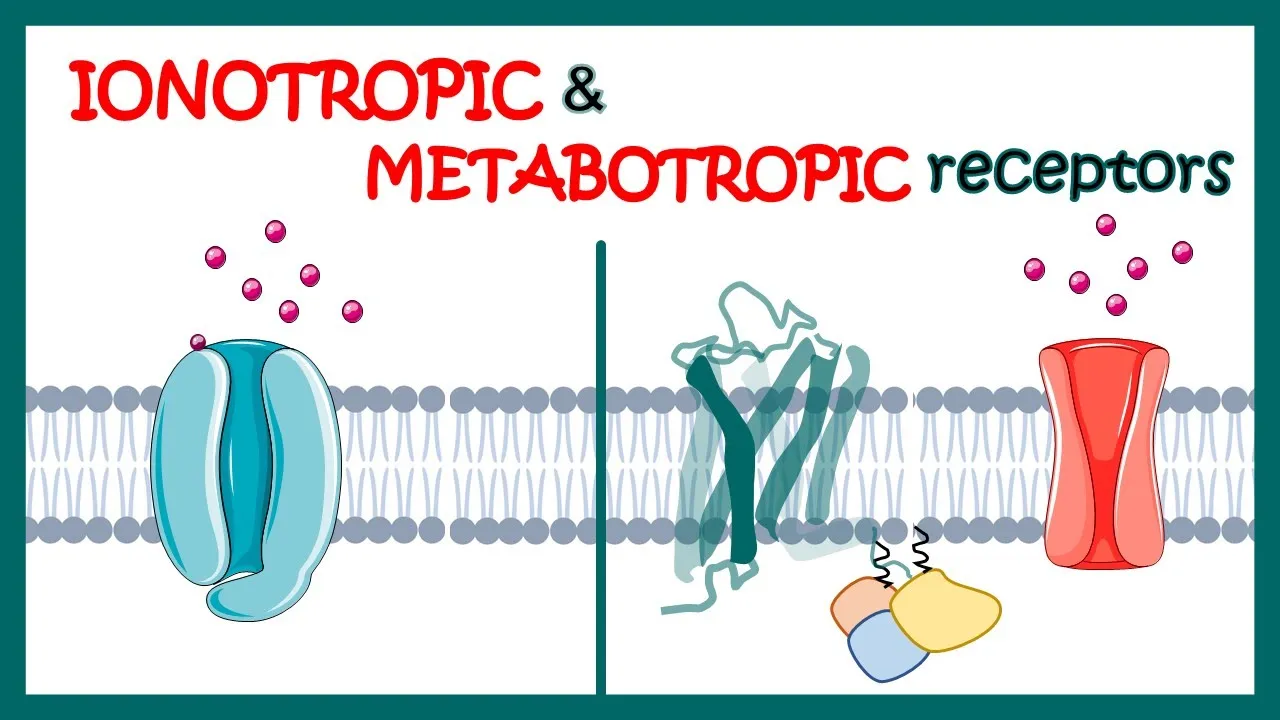
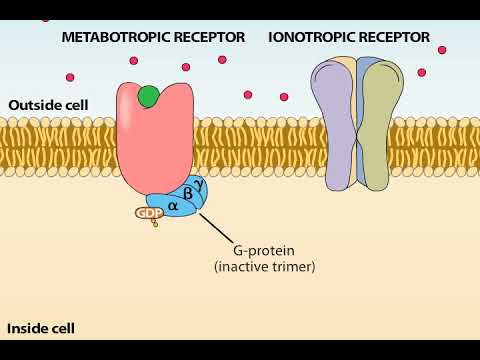
The differences between ionotropic (ligand-gated ion channels) and metabotropic (G-protein coupled) receptors in post-synaptic signaling.
How neural circuits and networks process information through feedforward and feedback inhibition.
Neuropharmacology, exploring how psychoactive drugs and toxins modulate EPSPs and IPSPs to alter brain function.
31.3K views120likes12:21Original Release: 2012-04-23
Good day. My name is Tom and today I'd like to talk to you about uh postsaptic potentials and integration.
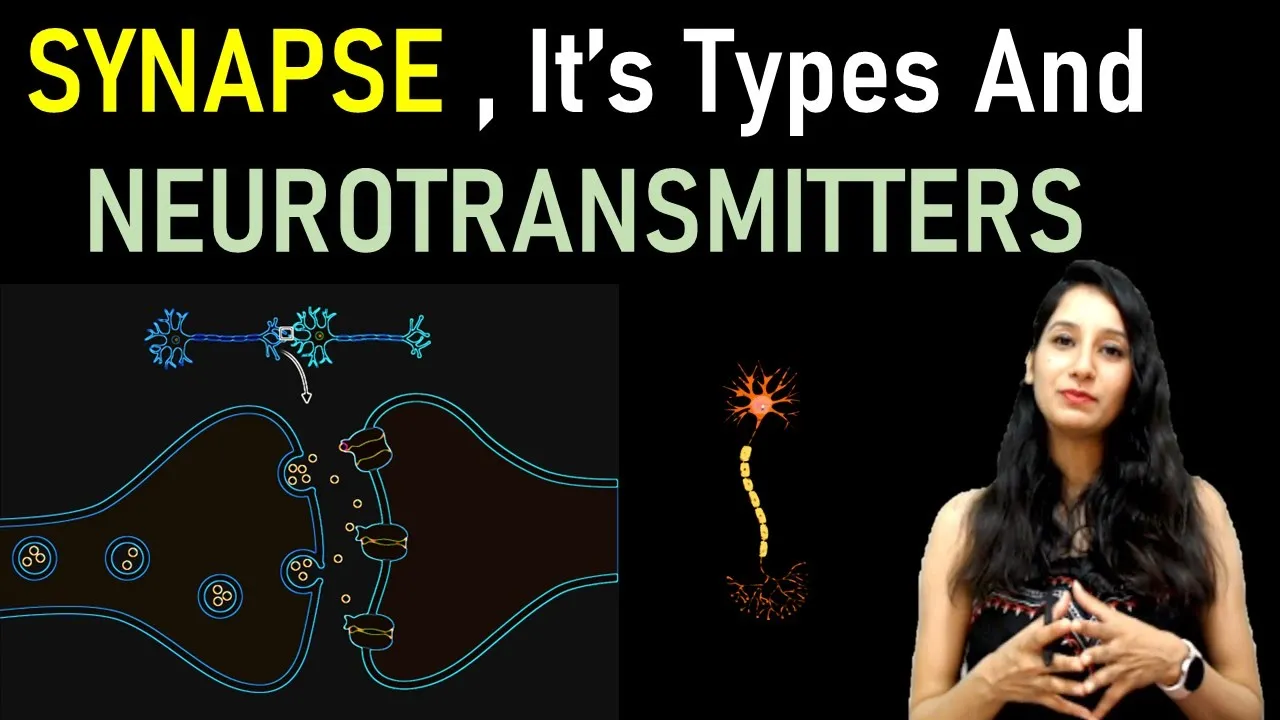
So this is a picture you should be familiar with from uh part A and I won't go through all of it but uh basically you have a an action potential here causes all this stuff to go on pardon me and uh eventually you get the exocytosis of uh neurotransmitter into the synaptic cleft which this area here and of course the neurot transmitter binds onto the receptors. And I'm going to use each one of these receptors slightly differently, but in a normal neuron, they they would generally be of similar nature. Uh but you know, you you would have one of these receptors on. So, you know, you'd have different combinations, but for this one, it's a bit unusual.
Um basically and as we discussed in part eight uh these receptors control the movement of ions via ion channels. So we can have ion channels being opened that will let in positive uh positive ions such as uh well in this example it would probably be small uh you know not non- selective particular ions but just small positive ions being let through. Um and also though it's you know has to let some out as well. Well, it's it's it's just opening a channel.
It's not actively bringing stuff in or out. It's just opening a gate. And that gate um it depending on the concentration gradients of particular ions will depend on what comes through that gate. In this example, we'll have um a lot of sodium ions coming in and we'll have some uh potassium ions going out. But the net result, the net flux if you like is going to be positive inside. Um but we can also have uh negative ions going in or out. Um or you know we can have a negative potential inside. Um so you know if we if well actually some what some neurons do is they actively pump out uh chloride through the use of ATP and then they can pump it back in because they've created this artificial concentration gradient. And so when chloride comes in then you have negative um a negative potential inside. Um, another way is that you can have um sodium uh sorry potassium being sent out and that actually causes because it's only selected for uh potassium uh it'll and and it's being let out. It's going down to me it's concentration gradient then you'll have a negative result as well. So these negative potentials here are what's called as inhibitory postsaptic potentials because they will inhibit the ability of in this case the postsaptic neuron to um to create an action potential.
uh whereas uh the this one here where we have the result of a positive potential is called an excitatory postnaptic potential because it's creating a situation where the neuron is more likely to create an action potential. So here we'll graph the the EPSB. basically it's a just a small increase here generally.
Um and so you know that's that's where um the you know neurotransmitter bound and you know let some ions in and you create that EPSB and um don't know why I'm doing this on two different graphs but oh well. Um, and then going down there, that would be an IPS. Um, yeah. So, obviously right there is where the ion channels opened um in these examples. So, so that's IPS and EPS.
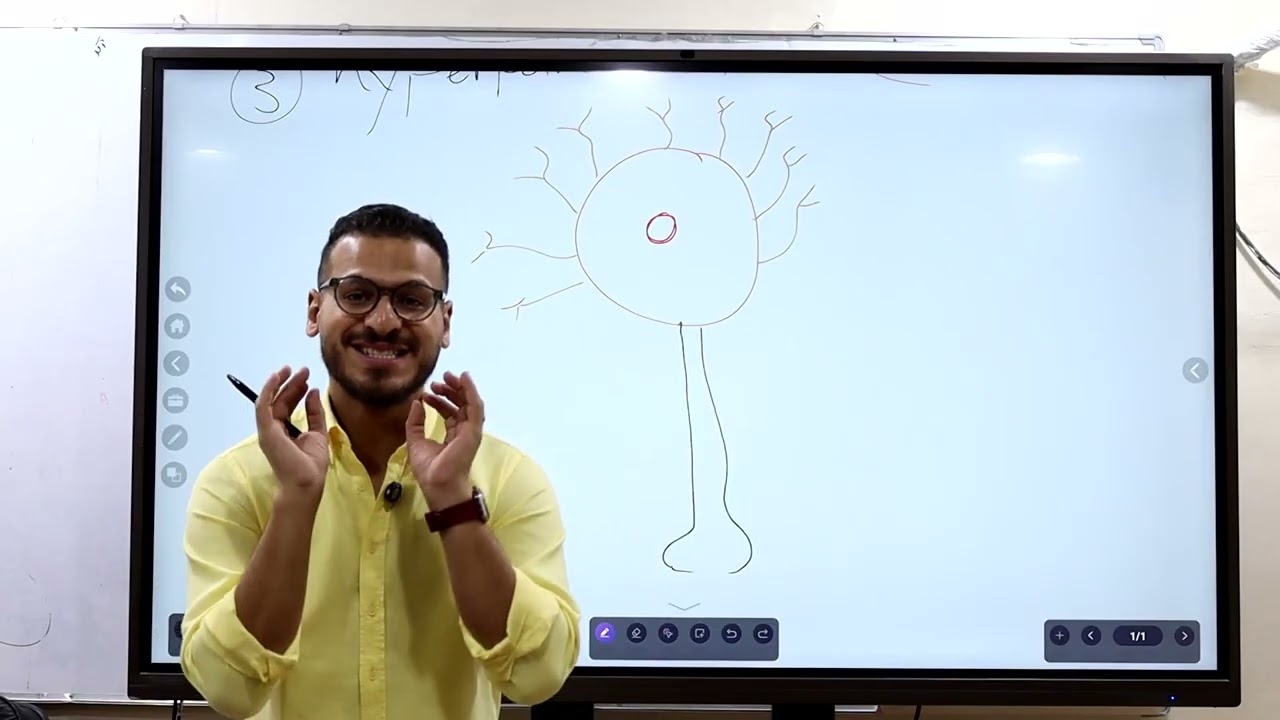
And um now we're going to talk about how they can integrate or how they can uh work together to create or limit um the amount of uh you know action potentials or whether or not an action potential is produced at all in a neuron. So here's you know here's a a neuron uh its axon goes down that way and these are dendrites here. There's the cell body. Uh, and these are uh presinaptic neurons in influencing this this neuron.
So, this one is going to be uh we'll call this one A and we'll call this one B. and they're they're exhibiting or they're they're making EPSPS um and of and of course that is a greater potential remember and so it'll slowly you know it's going in all directions but this is the direction we care about bit towards the initial site because it's got the lowest threshold um for creating an action potential and that's actually due mostly to its high concentration of um voltage voltage gated in sodium voltage gated sodium channels sorry and um and this one here we'll call this C and that's uh creating IPS and that you know again it's a greater potential. So here it's looking like if we fired all of these three at the same time overall we'd get a positive you know roughly um and we can graph that here. uh if we find just a say here and then b and then c um we'd get something like you know like that for a like that for b then for c we'd get an IPS all right what we saw before but if we had um if we fired A and B at the same time. So if we fire both of these um and they both created uh EPSBS then we'd get something called summation and in this case it would be called spatial summation. So that looks something like this. So you know it just adds them together. It's nothing particularly special but you might remember it from the graded potential videos.
Now if we did uh say A and C at the same time then we might get something like this pretty much nothing because uh the the EPSB is going to be cancelled out by the IPS.
So you know pretty much no change.
Um now so this is all these these are examples of spatial summation. There's also something called temporal summation. So that's over time. And if we if we did say a a a lots of a's then what would we get?
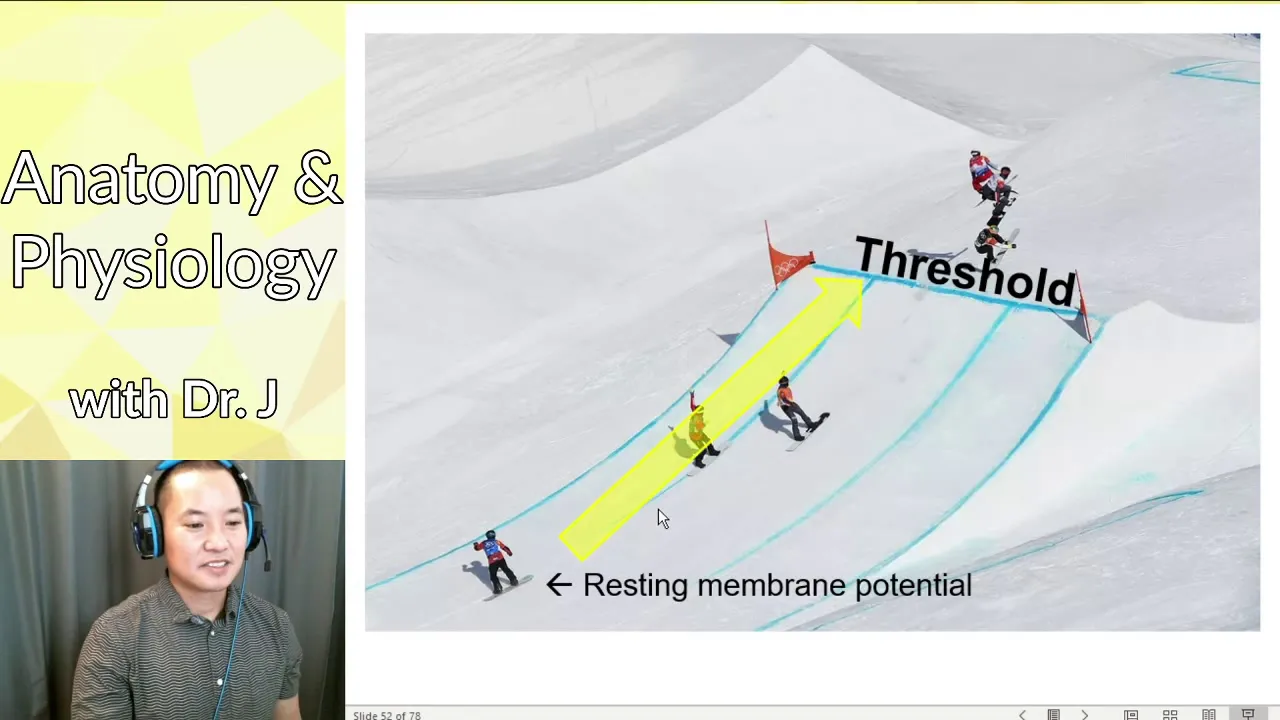
Well, we'd get a situation where it doesn't get a chance to to fully get back to the resting membrane potential.
So, it goes up then before it's able to get all the way down, goes up again, goes up again, goes up again.
Maybe in this case, it just doesn't quite get there. And it'll eventually come down. It'll take a bit longer, but it'll be something like that. And so, this is called temporal summation and then over here uh this sort of stuff where we have a and b or a and c this is called spatial summation.
Now I talked about before that at the initial segment uh there's um there's a high concentration of uh voltage gated sodium ion channels and that's what causes the threshold to be so low there. Well, so yeah, and this the this initial segment part that I was talking about. Well, actually there's um other spots along in the neuron that can have lower thresholds due to higher concentrations of these voltage gated sodium channels and they can actually be along dendrites. So if for example we had one here then um or or you know actually well no it's not going to work like that. Forget that bit. If we had one here, um then what would happen is if we had uh this EPSB reach a threshold here to create an action potential, then we get an action potential here, right? And that will mean that we get a graded a subsequent graded potential which is stronger and and you know stronger than it would have been otherwise.
basically. So this can amplify signals along a particular dendrite. Um in this case it wouldn't work because um you can't have a negative action potential.
That's not there is no such thing. So um action potentials are you know always um always positive. So um yeah. So I hope this has been interesting. Uh actually there's one other thing um I suppose just just to help consolidate this idea of uh you know where you have inputs uh it matters quite greatly where you have inputs. If you had um if you had an uh a neuron exhibiting an IPSB here, but the EPSBS were back there, then you can imagine again this would have a very large negative impact here and probably override, you know, it doesn't matter how much these guys fire or in unison, you know, when they fire, it probably is not going to overpower it or get it, you know, to threshold.
um probably not. But you know, it's it's sort of like because it's a greater potential, it's getting exponentially weaker as it as it travels distance um or as it spreads. It doesn't really travel. So yeah, I hope this has been interesting and um yeah, this has been part nine uh postsaptic potentials and integration. Thanks.
Up Next
12:11
NMDA Receptors: Function, Blockade & Role in LTP | Neuroscience
@animatedbiologywitharpan
55K views•2022-07-07
21:55
Deciphering Neural Circuits Controlling Anorexia in Mice | Richard Palmiter
@AllenInstitute
2.3K views•2011-10-10

4:10
Vagus Nerve (CN X): Anatomy, Nuclei & Functions Explained
@Alilamedicalmedia
305.2K views•2022-10-31
13:03
How Exercise Benefits Your Brain: Science Explained
@TED
11.4M views•2018-03-21
Related Study Plans & Knowledge Roadmaps
Structured learning paths in Neuroscience
neuroscience
Appetite Regulation: Brain Circuits & Hormones
01Foundations of Endocrinology and Brain Anatomy
02Introduction to Energy Homeostasis
03Peripheral Signals: Leptin, Ghrelin, and Insulin
+ 2 more learning modules
14h5 modules
Explore Roadmap
neuroscience
Neuroeconomics: Value, Risk & Brain Mechanisms
01Foundations of Neuroscience and Brain Anatomy
02Introduction to Neuroeconomics and Subjective Value
03Dopaminergic Prediction Errors & Reinforcement Learning
+ 3 more learning modules
18h6 modules
Explore Roadmap
neuroscience
Spatial Navigation: Cells, Grids & Brain Maps
01Foundations of Brain Anatomy and Memory
02Place Cells and Head-Direction Cells
03Grid Cells: The Brain's Coordinate System
+ 2 more learning modules
12h5 modules
Explore Roadmap
neuroscience
BCIs: Neural Decoding & Prosthetic Control
01Neuroscience Foundations: How the Brain Signals Intent
02Signal Acquisition: Recording the Brain's Activity
03Neural Decoding: Translating Brain Waves into Data
+ 2 more learning modules
25h5 modules
Explore Roadmap