


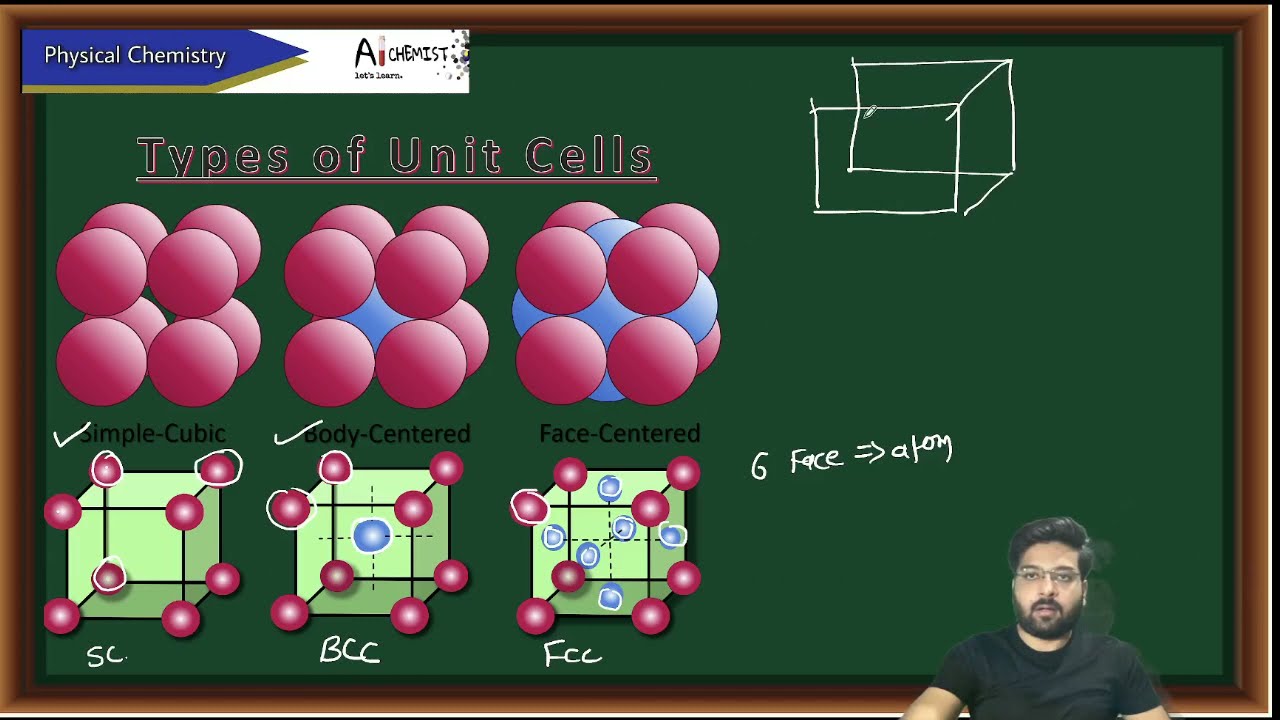
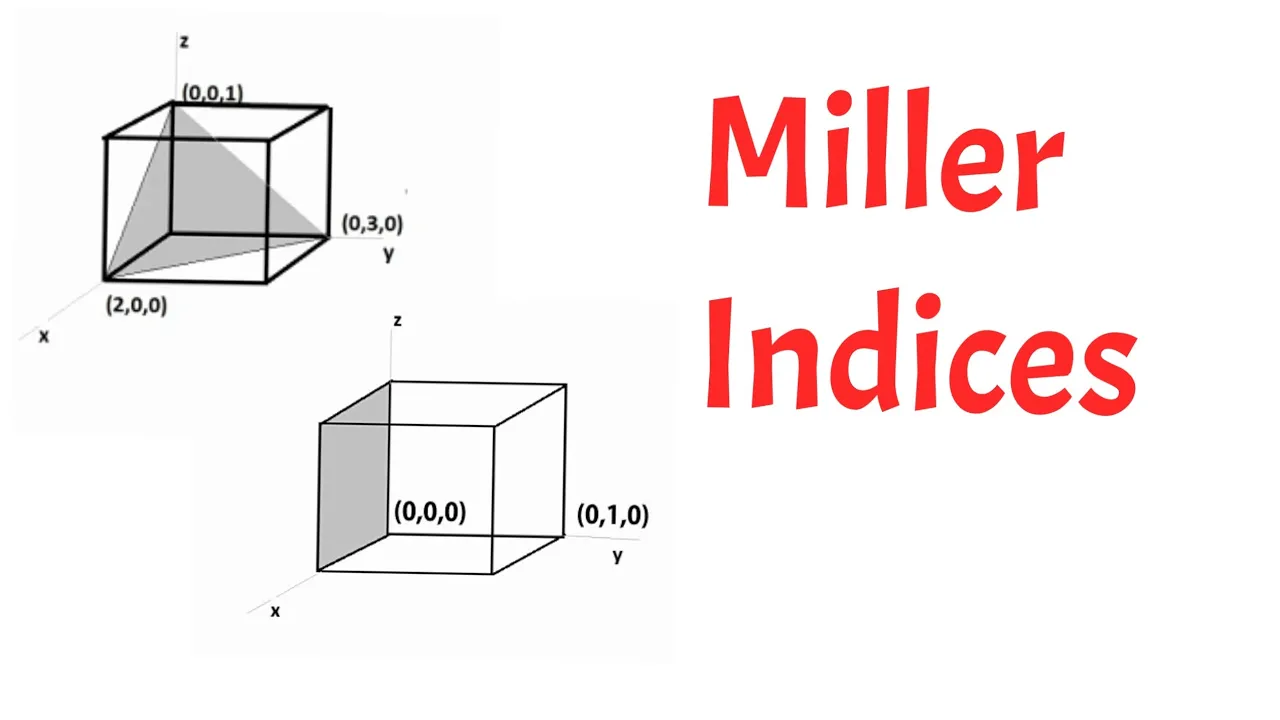


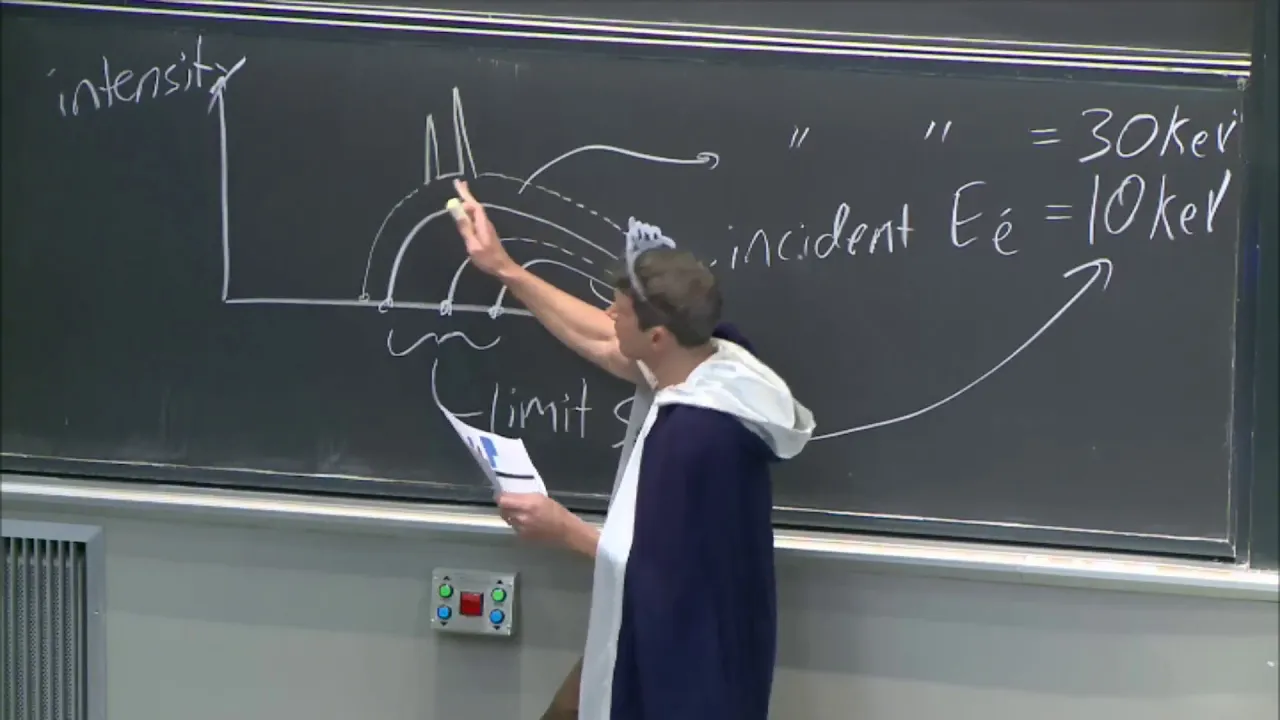


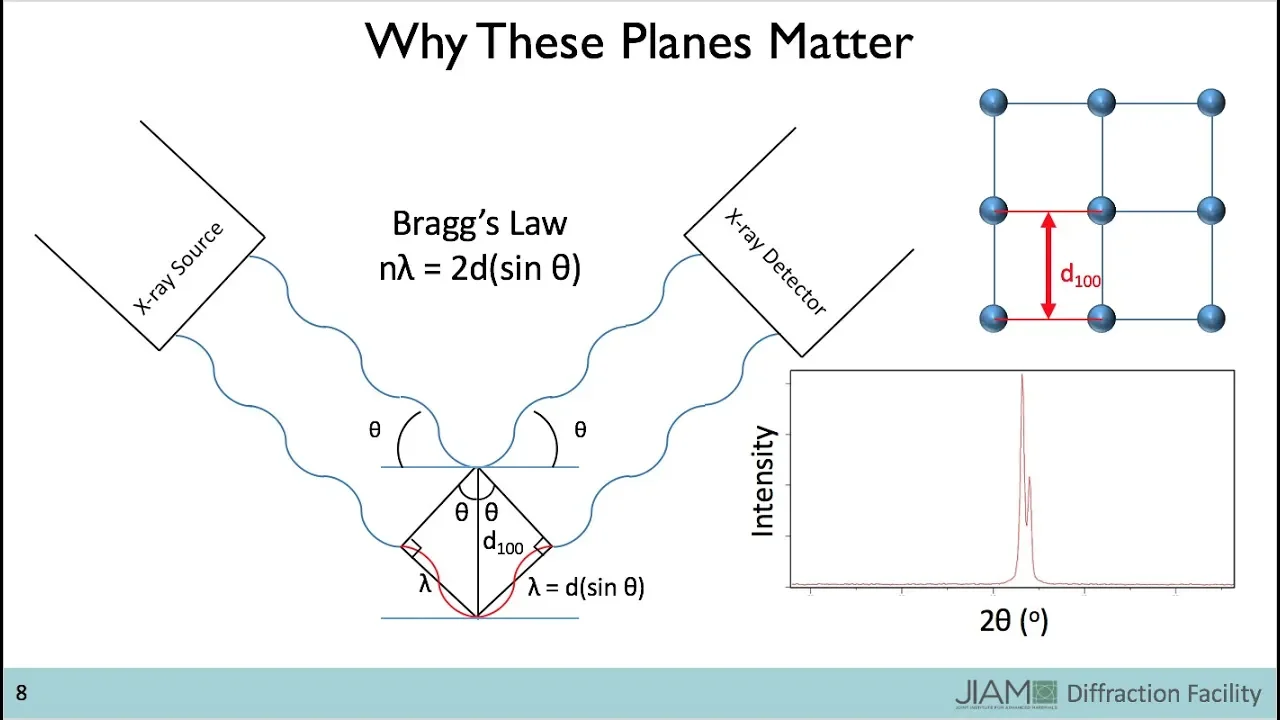












The structural factor S determines which crystal planes produce diffraction peaks: for simple cubic (SC), all planes diffract (S=1); for body-centered cubic (BCC), diffraction occurs only when h+k+l is even (S=2), while odd sums yield S=0; for face-centered cubic (FCC), diffraction occurs only when all Miller indices are all even or all odd (S=4), while mixed indices yield S=0. These selection rules allow identification of crystal structures from diffraction patterns, with the first peak for FCC occurring at (111) plane.
Structural Factor Calculation for SC, BCC & FCC
Added:Understanding of basic crystal lattices and unit cells, specifically Simple Cubic (SC), Body-Centered Cubic (BCC), and Face-Centered Cubic (FCC) structures, including their atomic coordinates.
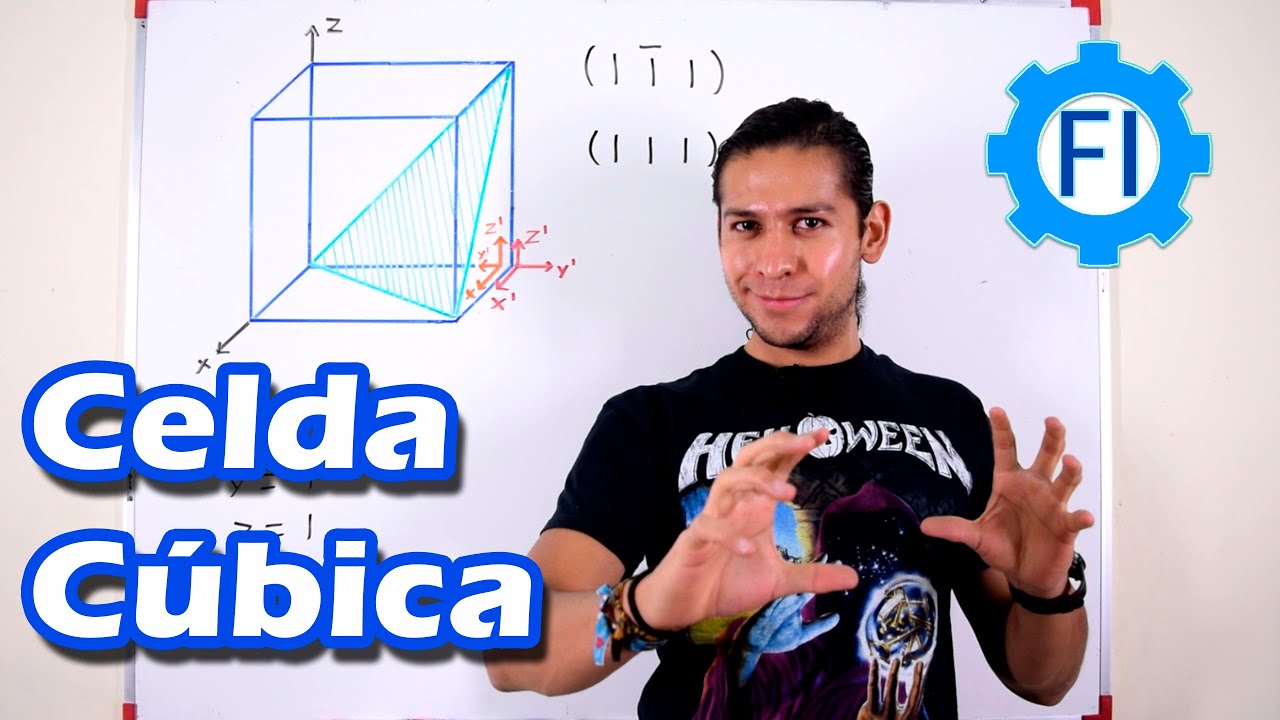
Concept of Miller Indices (h, k, l) and how they represent crystallographic planes.
Fundamentals of X-ray diffraction (XRD) and Bragg's Law of constructive interference.
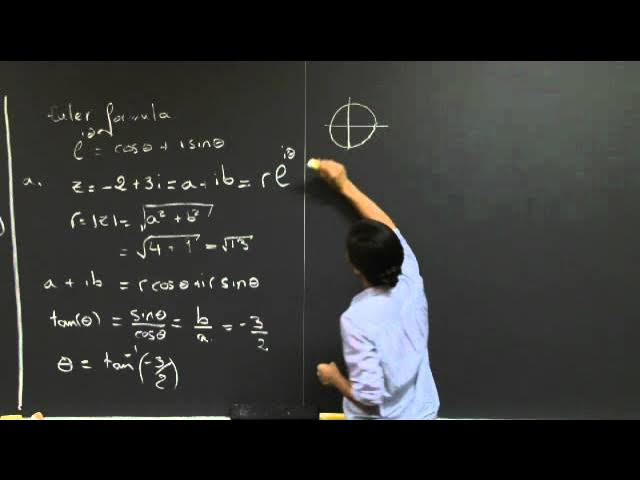
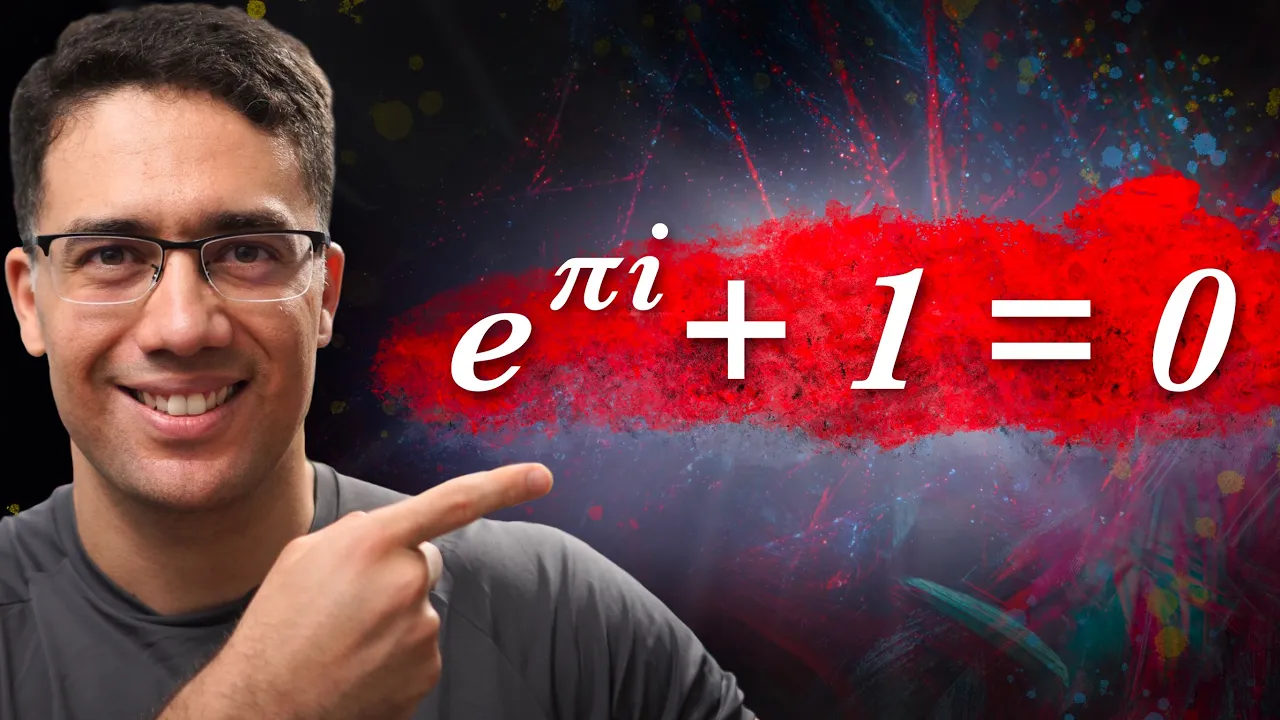
Mathematical proficiency with complex numbers and Euler's formula, which are essential for representing wave phase shifts in structure factor equations.
Application of selection rules (systematic absences) to index diffraction patterns and identify unknown crystal structures.
Calculation of structure factors for multi-component systems with a multi-atom basis, such as NaCl, CsCl, and Diamond cubic structures.
Analyzing the effects of the Atomic Scattering Factor (form factor) and how it depends on electron density and scattering angle.
Calculating the actual intensities of diffracted peaks, which involves multiplying the square of the structure factor by multiplicity and polarization factors.
8.1K views90likes8:09Original Release: 2017-09-11
we know intensity is directly proportional destruct scattering factor of unit cell F is equals to s into F s is structural factor f is scattering vector of atom so s struck Elektra is equals to Sigma e to the power 2 pi I h IX plus ki mi plus li z xf y and z are coordinates of atom for simple cubic XYZ is 0 so s will be sigma e to the power 0 that is 1 therefore 1 is the number of a term present in the unit cell any XY value in simple cubic s is equals to 1.so or HK values lie in simple cubic for BCC structure XYZ is equals to 0 0 0 for corner X Y Z is equals to 1 by 2 1 by 2 1 by 2 for body centered so for the points 1 1 1 s will be equals to e to the power 2 pi 1 into 0 plus 1 into 0 plus 1 into 0 plus e to the power 2 pi 1 into 1 by 2 1 into 1 by 2 plus 1 into 1 by 2 so e to the power 0 plus e to the power 2 pi into 3 by 2 so e to the power 0 is 1 and this will equal to e to the power 3 pi so 1 minus 1 is 0 this plain doesn't exist in BCC if n is equal to odd e if in the power if n is odd then the value of this term will be minus 1 and if n is even then the value of this term will be plus 1 for 1 1 0 su will be equals to e to the power 2 pi 1 into 0 plus 1 into 0 plus 1 0 into 0 plus e to the power 2 pi I 1 into 1 by 2 plus 1 into 1 by 2 plus 1 into 1 sorry 0 into 1 by 2 so this will be equals to e to the power 0 plus 2 pi I into 1 so this is 1 this is also 1 so it will be 2 this plain lies in BCC so another question is deeply into 2 3 into 2 2 which plane lies in BCC so that is body centered cubic so s will be equal to e to the power 2 pi I 2 into 0 plus 2 into 0 plus 3 into 0 plus e to the power 2 pi I am 1 by 2 into 2 plus 1 by 2 into 2 plus 1 by 2 into 3 so this will be e to the power 0 and which will be equals to 1 and this will be e to the power 2 pi I into 7 by 2 so it will also be equal it will be equal to minus 1 so 1 minus 1 is 0 so this plane doesn't lie in BCC 4 deeply into 2 2 e to the power 2 I 2 into 2 0 plus 2 into 0 plus 2 into 0 plus e to the power 2 pi I 1 by 2 into 2 1 by 2 into 2 plus 1 by 2 and 2 2 so this term e to the power 0 and this term will be equals to e to the power 6 by I so this will be 1 and this is will be 1 so 1 plus 1 2 this plane lying we see them so the shortcut is h plus k plus L value should be even then it will lie in BCC and if it is odd then it doesn't lie in BCC for FCC structure for the planes XY y is 8 + ZX these are the points and this is for lakorn up this is for a plane 0 1 by 2 1 by 2 1 by 2 0 1 by 2 1 by 2 1 by 2 0 so for D plane 1 1 1 s is goes to e to the power 2 pi I 0 into 1 plus 0 into 1 plus 0 into 1 for the corner and for the these three ik e to the power 2 pi I plus 0 into 1 1 by 2 into 1 1 by 2 into 1 plus e to the power 2 pi 1 by 2 into 1 plus 0 into 1 plus 1 by 2 into 1 and for the last one e to the power 2 pi I 1 by 2 into 1 1 by 2 into 1 & 0 into 1 so on solving it will be first term will be e to the power 0 that is 1 e to the power 2 pi e to the power 2 pi to the power 2 pi so 1 plus 3 e to the power 2 pi that is 1 plus 3 it will be equals to 4 so it lies in FCC so shortcut for FCC is if the HK value all are even that the example 1 1 1 2 2 sorry if all even all points example 1 1 1 is all odd 2 2 2 is all even 2 to 4 is or even 0 0 2 is all even so these points lie in FCC now the question is if the crystal ate the crack from 1 1 1 and 2 0 0 plane but don't from 1 1 0 and while the B crystal the flag from 1 1 0 and 2 2 2 0 0 but not from 1 1 plane from the above we may conclude that is FCC because a is deflecting from 1 1 1 and 2 0 0 this is all odd and this is all even but do not wrong 1 1 0 because it tells the mixture of even and odd and these BCC because we different from these two planes and these some of the HKL value is 2 that is even here also 2 that is even but here 3 it is odd so be crystallized BCC now we know Bragg equation is n lambda is equal to 2 D sine theta and lambda is equal to 2 D is a 1 under root X square plus K square plus a square sin theta so on rearranging we get sine theta is equals to n lambda upon 2 a under root X square plus K square plus L square so sine square on a whole squaring the both side we get sine square theta is equals to n square lambda square upon 4 s square X square plus K square plus L square so putting this value is equals to K so sine square theta goes to K s square plus K square plus L square so K will be equal to n square lambda square upon 4 a square no if you see that for the plane Z these are the plane above 1 and this is the H square plus K square plus L square values so for 1 K and this this is the possible plane for 2 K this is the possible plane and so on so all these planes line simple cubic but for BCC if the value the sum of HK value is even then only it can lie and for FCC if all odd and odd even at scale values then only it can rise so this is the plane where a simple cubic be BCC and FCC all lie the question is for FCC the Miller indices for the first back peak smallest back angle is the option for ABCD are given the answer is 1 1 1 because the FCC as you can say 1 1 1 all odd that this is the first peak where FCC is a occurring
Up Next

12:53
Manual Indexing and Lattice Parameter Calculation of Diffraction Data
@SuperBladesman87
116K views•2016-05-20

22:39
Fluorescence & Jablonski Diagram | Molecular Photophysics
@yairmeiry
192.2K views•2012-01-12

32:32
NMR Spin Physics I: Zeeman Effect, Resonance Condition & Larmor Frequency
@nptel-indianinstituteofsci8064
2.3K views•2024-01-17

27:14
Entropy and the Second Law of Thermodynamics Explained
@veritasium
27.5M views•2023-07-01
Related Study Plans & Knowledge Roadmaps
Structured learning paths in Physics
physics
Analytical Mechanics: Lagrangian & Hamiltonian
01Mathematical Foundations: Calculus of Variations
02From Newtonian Mechanics to Constraint Dynamics
03The Principle of Least Action & Lagrangian Mechanics
+ 3 more learning modules
28h6 modules
Explore Roadmap
physics
General Relativity (Spacetime & Cosmology)
01Foundations of Relativity: Special Relativity
02The Geometry of Spacetime: Equivalence Principle & Curvature
03Einstein's Field Equations: The Mathematics of Gravity
+ 2 more learning modules
55h5 modules
Explore Roadmap
physics
Chaos Theory: Pendulums, Bifurcation & Limits
01Foundations of Classical Mechanics and Pendulums
02The Transition to Nonlinearity and the Double Pendulum
03Core Principles of Deterministic Chaos
+ 3 more learning modules
18h6 modules
Explore Roadmap
physics
Optics (Lenses, Wavefronts & Instruments)
01Foundations of Light and Geometrical Optics
02Mirrors, Lenses, and Image Formation
03Wave Optics: Wavefronts and Interference
+ 2 more learning modules
28h5 modules
Explore Roadmap