









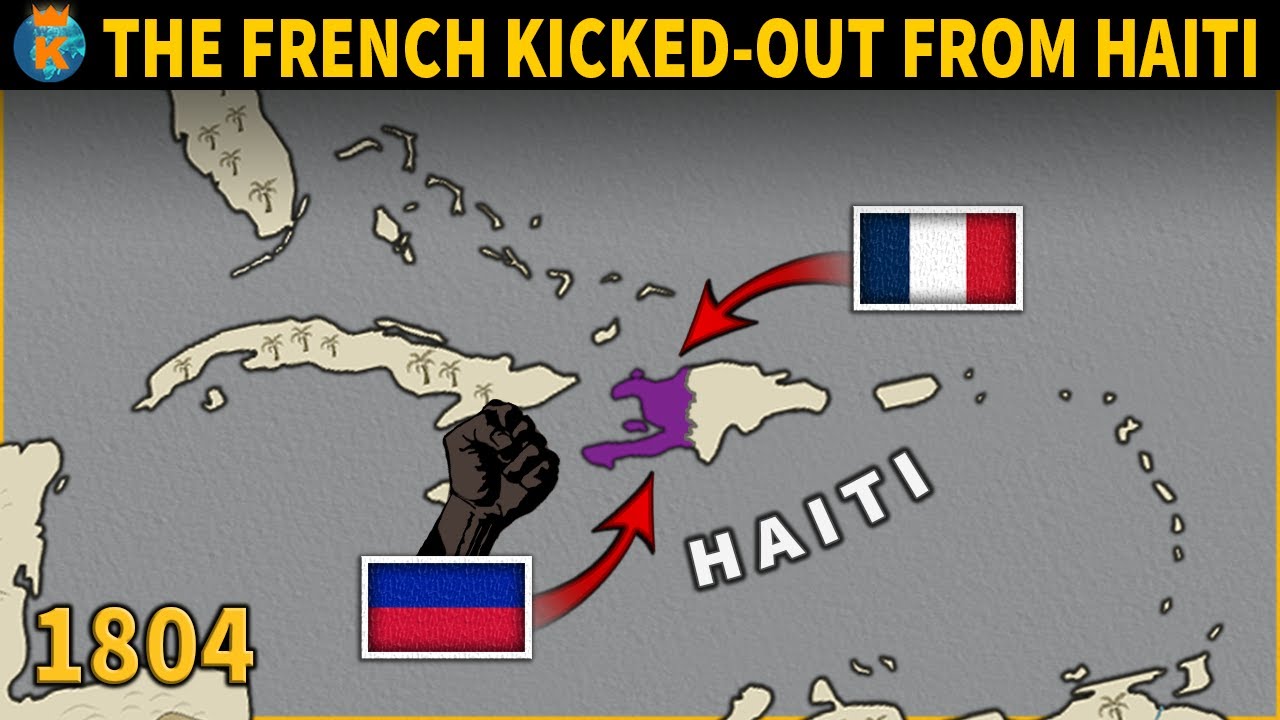




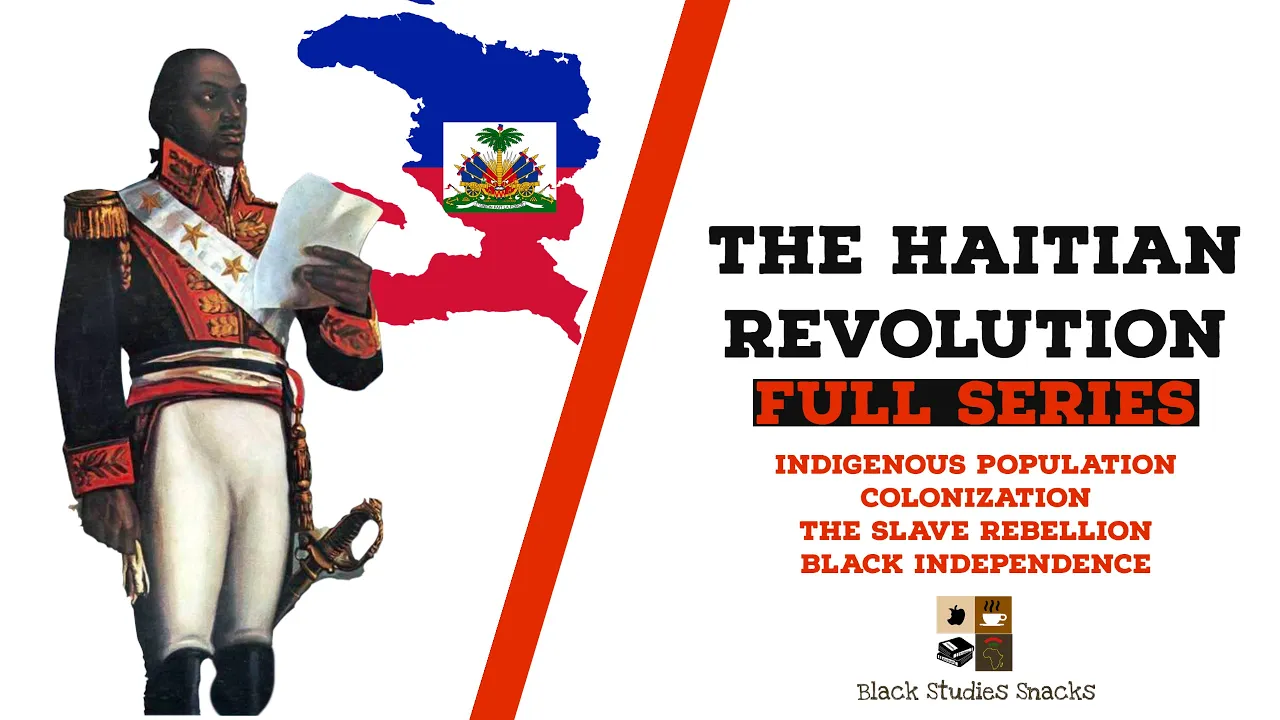


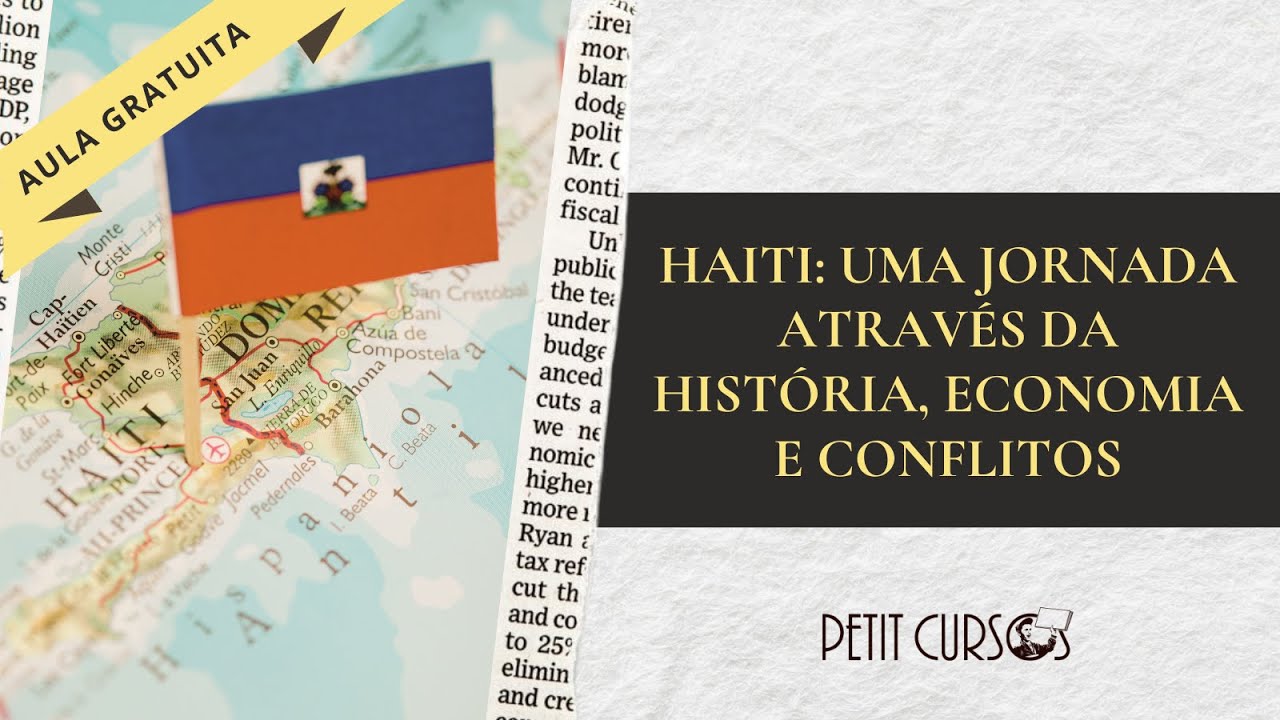





The Haitian Revolution (1791-1804) was the only successful slave uprising in history, emerging from the French colony of Saint-Domingue (modern Haiti), which became the world's most lucrative colony through sugar, coffee, and indigo production; the colony's social structure consisted of three main groups—the Grande Blanc (wealthy white planters), Petit Blanc (white administrators), and free coloreds (people of mixed race)—with over 500,000 enslaved Africans comprising 90% of the population, creating extreme tensions that culminated in revolution when revolutionary ideals from France reached the colony.
Haitian Revolution Overview: Origins of the Uprising | Mike Duncan
Added:Understanding the Transatlantic Slave Trade and the dynamics of the plantation economy, particularly regarding sugar production in the Caribbean.
Familiarity with the concepts of European mercantilism and the colonial rivalry between Spain and France on the island of Hispaniola.
Basic knowledge of the French Revolution (1789) and its core ideals of liberty, equality, and human rights, which acted as a catalyst in French colonies.
An introduction to the rigid racial and social hierarchy of colonial Saint-Domingue, including Grand Blancs, Petit Blancs, Gens de Couleur Libres, and enslaved populations.
The military and political phases of the Haitian Revolution, including the leadership of Toussaint Louverture and Jean-Jacques Dessalines.
The global repercussions of Haitian independence (1804), such as its impact on the Louisiana Purchase, neighboring slave-holding societies, and the transatlantic abolitionist movement.
The geopolitical and economic challenges faced by post-independence Haiti, including diplomatic isolation and the devastating 1825 French indemnity.
A comparative analysis of the Haitian Revolution alongside the American and French Revolutions to examine how 'universal rights' were defined and applied.
31.4K views359likes37:48Original Release: 2018-06-01
this week's episode is brought to you by lynda.com lynda.com is the online learning platform with over 3,000 on-demand video courses to help you strengthen your business technology and creative skills for a free 10-day trial visit lynda.com slash Revolutions @ly & EI comm slash revolutions so if you're looking for the perfect gift this holiday season lynda.com is the gift that keeps on giving it's for problem solvers for the curious for people who want to make things happen lynda.com might help somebody master excel their negotiating tactics build a website or build their digital art skills with a lynda.com membership you can learn from passionate experts who stream thousands of video courses on demand and you can always learn at your own pace you can watch tutorials from start to finish or consume them in bite-sized pieces you can browse each course transcript to follow along you can take notes as you go and then refer to them later then you can download those tutorials and watch them on the go including access on your iOS or Android devices you can create and save playlists of courses you want to watch you can customize your learning path or share with friends and colleagues or other team members your lynda.com membership will give you unlimited access to training on hundreds of topics all for one flat rate so whether you're looking to become an industry expert or you're just passionate about a hobby or you just want to learn something new I want you to visit lynda.com slash Revolutions and sign up for your free 10 day trial that's ly NDA com /r e V 0 L u TI ons hello and welcome to revolutions episode 4.1 sand omec welcome to the beginning of our fourth revolution together and one that is a bit different from the rest the English American and French Revolutions are all regarded as huge turning points in history often studied often discussed and at least moderately understood by the general public they at least know that it happened but the Haitian Revolution is not like that for a variety of reasons the story of the collapse of the French slave colony of sendou mang and the eventual declaration of an independent Haiti is little known and even those who know that it happened know almost nothing about the details if anything you might know that it was the only successful slave uprising in history and that indeed it was but it was so so much more than that and as we trace the history of the Haitian Revolution from the initial revolts of 1791 through the declaration of independence in 1804 hopefully you'll walk away appreciating how much the Haitian Revolution deserves to take its place alongside its more famous brethren as one of the most fascinating and important revolutions in world history so today we're gonna cover the early history of Santo mang talk some basic economics and geography and then move on to a discussion of the three main groups who inhabited the colony and it will serve as the main players in the revolution the whites the free coloreds and of course the slaves with the building blocks in place we can then spend next week talking about the insane web of tension between and within these groups as we approach the beginning of the French Revolution back in France which will put into motion a parallel revolution to send doming that will fully erupted in 1791 before we get going I'd like to start with my usual disclaimer about how I am about to butcher the holy living crap out of French but I'm also just gonna keep on trying because you know what else am I going to do our story begins in 1492 when Columbus sailed the ocean blue seriously it does Columbus is fleet of three ships arrived in the new world in October 1492 after exploring around the Bahamas and then Cuba Columbus sailed over to the big island southeast of Cuba in December 1492 the native inhabitants of the island the tyno called their home IET but Columbus promptly dubbed it Hispaniola it was well anchored off the northwest coast of the island inside the borders of modern Haiti that the Santa Maria ran aground on Christmas Day 1492 with permission from the local tyno chief Columbus built a little settlement using salvaged material from the ship and called the settlement La Navidad in honor of the sunken Santa Maria he left 39 men behind and sailed away when Columbus returned the following year he found all 39 men dead the local tie no chief blamed a raid by the rival Carib people but nobody knows what actually happened to them after Columbus's initial voyages the Spanish continued to explore and settle the new world and in the early years they used Hispaniola as their springboard in 1496 they established the port of Santo Domingo on a deep and protected Harbor on the southeast side of the island Santo Domingo became the capital city and Hispaniola was often referred to amongst the Europeans as simply Santo Domingo as the Spanish were primarily on a quest for gold the native Taiyo Indians of Hispaniola were systematically rounded up and put to work mining what limited precious metal the island contained they were subjected to this forced labor under the encomienda system whereby the Spanish protected natives in exchange for service and it was slavery in all but name the regular order of tyno life was destroyed and replaced by brutal slave gang labor between European diseases murders overwork and regular suicide the indigenous population plummeted from somewhere between 500 and 750 thousand 1492 to just 29,000 in 1514 along with looking for precious metals to extract Columbus and the men who followed him also brought with them the critical crop of our story sugar cane sugar originally came out of the Middle East migrated over to Western Europe and was now being imported into the Caribbean in the hopes that it might be a lucrative cash crop by the 1530s there were more than two dozen sugar mills in Hispaniola all of them on the east side of the island near Santo Domingo but though the Spanish were ultimately correct about the future profits of sugar the further development of Hispaniola was arrested by Spanish gold discoveries on the South American mainland the draw of Inca and Aztec gold led the Spanish to virtually abandoned Hispaniola and by the late 1500s the island was a complete colonial backwater inhabited only by an array of small cattle farmers but just as Hispaniola was slipping off the Spanish radar it was showing up on the French radar in the beginning of the 1600s both the French and the English started making forays into the new world and challenging Spanish and Portuguese age enemy their first move was to sanction privateers both officially and unofficially who preyed on Spanish treasure ships the British set up their first major foothold in the Caribbean in Barbados the island was claimed in the name of King James in 1625 and then his son Charles the first established it as a proprietary colony in 1627 Hey look we know those guys hi Stuart's long time no see the French meanwhile claim Martinique and Guadeloupe and pretty soon every rocky outcropping in the Caribbean was claimed by some European power or another the native population was of course annihilated right around this same time the mid 1620s a coalition of French and English pirates who became known as the Brethren of the coast set up a base on the small island of Tortuga Tortuga lay off the northwest coast of Hispaniola on the opposite side of the island from the Spanish capital of Santo Domingo now though the Spanish had massively deprioritized Hispaniola and only sparsely settled the west side of the island they were not too happy about the impurity intruders especially when some of them started setting up shop on mainland Hispaniola supplementing their pirate income by hunting the wild cattle that now roamed the island smoking the meat and selling it to passing ships this smoked meat was called bukhan we is how these guys became known as Buccaneers the Spanish and pirates battled for the next few decades over control of Tortuga I think the island changed hands at least four times but the Pirates always wound up coming back in 1665 this independent little pirate colony on Tortuga asked the French crown to appoint a royal governor to give their settlement official legitimacy the request was granted by young louis xiv a royal governor arrived with 400 additional colonists beginning the transition of the region from pirate base to more settled colony by 1680 the community numbered some 6,000 with planter colonists now far outnumbering the old pirates finally at the conclusion of the nine years war in 1697 the Spanish officially ceded the Western third of Hispaniola to the French and since the island was now generally referred to as Santo Domingo the French colony took the French version of Santo Domingo Santo mang it was one of the last European colonies to be established in the Caribbean and from its humble origins as a mere pirate base it would soon rise to become literally the most lucrative single colony in the new world as the French took possession and started settling plantations a pretty even mix of African slaves and white indentured servants were imported to provide labour French indentured servants were only bound for three years whereupon they got a chunk of land for themselves in the early days the small planters focused on tobacco since it cost very little to get a tobacco farm off the ground but by the early 1700s North American tobacco was a well-oiled machine and there was no way some small planters in Santo Ming were going to compete so tobacco was quickly abandoned another early crop that did wind up taking root was indigo which was used to produce dye for the growing textile operations back in Europe it required a smallish amount of initial capital to get started but once you got going you could make a pretty decent living as a small indigo farmer and indigo wound up being a staple of the san domain economy by the time of the revolution it was solidly number three on the list of the big three crops the other two are of course sugar and coffee which became not just staple of the Santo mang economy but they became staples of the world economy by the 1780s and Oh mang was producing a huge portion of Europe sugar and fully 50 percent of its coffee it was indeed exports from san domain that transformed both from aristocratic luxuries to staples of the everyday diet our coffee arrived on the island much later but sugar landed almost as soon as the French took over and immediately it became the signature crop of the colony now getting a sugar plantation off the ground is incredibly expensive you needed a ton of specialized equipment to actually extract the sugar from the cane and then if you wanted to refine it you need an even more specialized equipment so getting into sugar was a rich man's game to begin with and even then it was going to put you into some serious debt before you harvest in a single crop this kind of outlay obviously lent itself to large plantations rather than tons of small freeholds most of the financing came from merchant houses in the French Atlantic port cities like knot and La Rochelle and Bordeaux if your plantation turned out to be a success then fortunes were there for the taking but if for whatever reason you happen to faceplant the merchant houses took it over and ultimately about half the sugar plantations in Santo mang were owned by these merchant houses and run by salaried administrators making a sugar plantation profitable required a ton of manual labor and after the death of louis xiv in 1713 and the end of his incessant wars against the rest of europe the French were able to plug in to the African slave trade mostly run by the Portuguese at this point indentured servants were completely abandoned in favour of Africans who were considered more suited for working in the climate some poor whites did try to emigrate to the colony hoping to strike it rich somehow but diseases and lack of capital doomed them all - an early poppers grave so as the colony grew it was mostly a very small clique of white planters and administrators and a ton of slaves which through the middle of the century were coming in at about ten to 20,000 a year in 1687 shortly before the official takeover by the French the population of Santo mang was about four thousand whites and 3,300 slaves by 1715 it was 6600 whites and 35,000 slaves by 1730 the white population had barely moved while the slave population was up to nearly 80,000 in 1750 the numbers were 14,000 whites and a hundred and fifty thousand slaves the pattern of settlements and domain pretty much followed the geography of the colony sugar needs a flat land that is well irrigated to grow on so the initial settlement boom was in the plains of the north now I made a map of the colony hey you remember when I used to do that so you can follow along with all this at home because it is important to understand the geography of the colony the plains in the north were the first to be staked out as they were well run through by streams that made it ideal for raising sugarcane the early sugar boom in the north led the port of cap francais to become the most important city in the colony it actually wound up as one of the most important cities in the Western Hemisphere usually referred to as la cap which is what I'm mostly going to call it so I don't have to mangle cap from I'll say all the time by the time of the Revolution the city had a population of nearly 20,000 so roughly the size of Boston on the eve of the American Revolution the cap was the capital of the colony from the time it was founded in 1711 until the royal headquarters were transferred down to port-au-prince in 1770 for reasons we'll talk about next week as the lucrative sugar plantations surrounding the cap made money hand-over-fist the city rapidly grew and soon became known as the Paris of the Antilles it was in every way a modern European city with a regular grid work Street pattern stone construction it boasted a 1500 seat theater cafes philosophical the works it also became quite possibly the busiest port in the Western Hemisphere with ships constantly coming and going the communication lag time between France and Santo mang will become a running joke as the colony tries to keep up with the French Revolution but though news often ran six weeks behind the news did come in daily as ships departed France for lockup almost everyday once all the best land in the north was taken colonists started to move south into what will become the western province the largest city of the western province port-au-prince was founded in 1750 and it was a poor cousin of the cap as were all the other quote-unquote cities in the colony which most of them were like glorified villages there were two large plains that suited sugar production in the Western Province though they were drier than the plains in the north than required concerted irrigation to make them work the northern province and western province were separated by a steep mountain range that did not have a real road cut through it until port-au-prince was founded so travel between the provinces was usually done entirely by water south of the Western Province was the southern province a thin east-west running peninsula of mountains that jutted out of the southwest side of Hispaniola the western and southern provinces were likewise divided by sharp mountains Haiti has some of the steepest and tallest mountains in the Caribbean and that topography is going to be important as we watch the revolution unfold the rougher terrain in the south made it less well-suited to sugar and was thus the last province to be settled and ultimately the least populated of the three the South indeed had a different character than the north which was well connected to life back in Europe international traders were probably willing to swing down to port-au-prince after arriving first INLA cap but after that it was harder to convince them that it was worth it to keep on going the main city of the southern province Lakai was actually on the other side of the peninsula it was on the Caribbean seaside not the Atlantic side so the southern province tended to be a bit more dependent minded than the western and northern provinces and they looked to rival colonies in British Jamaica and Spanish Cuba not as rivals at all but his trading partners even though all this was technically illegal contraband trade was a staple of the economy in the south so after all the good sugar land was taken the next huge boost to the economy came when the coffee bean arrived as the colony was hit with an influx of new colonists after the end of the Seven Years War these guys discovered that they could grow coffee in the mountainous regions where sugar could not so there was a major economic boom as coffee plantations sprang up everywhere and because the coffee was not in competition with the sugar for land or resources or even buyers it was just a pure addition to the profit side of the colonies ledger consumers back in Europe became addicted to both sugar and coffee and collectively the sugar coffee and indigo plantations turned sin domain into the single most lucrative colony in the new world I'd call it a gold mine but by this point it was more lucrative than the Spanish gold mines so with a little history geography and economics under our belt let's move on to the three main groups who inhabited the colony and who will be the major players in the coming revolution the white the free coloreds and the slaves so to start with the whites they were actually divided into two informal groups the Grande Blanc and the petit Blanc that is the big whites and the small white and since a ton of my books just go ahead and call them the big whites and the small whites I am going to - the big whites were at the very top of the colonial pyramid they represented a combination of the major planters and the principal traders and merchants in the colony the leading planters were usually younger sons of nobility who had been looking for a way to establish an independent fortune for themselves often after a stint in the Army the big white dominated colonial life they owned practically everything and everyone but there is one important thing to understand about the big whites they were not really looking to make sendou mang their home their investments in the colony were about laying the groundwork for a fortune that would sustain them while they lived in France where things were decent Caribbean life was dangerous with its tropical diseases monotonous with its never changing seasons and oppressive heat and boring with only a few gambling dens and brothels to keep you entertained the idea was to get out as soon as you possibly could of the main sugar plantations in the north fully half were owned by absentee landlords who did their best to never come visit their estates in person but that said at any given time major landowners and traders did live in the colony and they were the dominant political and social force the small whites then were all the other whites and they were the men who actually ran the colony day in and day out these could be the managers and stewards agents of the absentee landlords salaried employees of the merchants houses and then on down in the urban areas you would find minor lawyers and notaries various shop clerks and skilled artisans also thrown into this mix were the vagabonds that you always find in a colonial port city runaways X Pirates failed immigrants who had nowhere else to go none of them did any manual labor or worked as a servant because those jobs were exclusively done by slaves out in the rural areas all the small whites worked on the plantations if a plantation was absentee owned the hierarchy basically looked like this a hired procure lived in the nearest city and had power of attorney over the estate the procure would hire a manager actually live out on the plantation and run the operation below the managers were overseers who actually monitor the activities of the slaves and these overseers were usually drawn from the ranks of the urban poor or from the ranks of new arrivals who had no other prospects the plantation managers were as a rule the biggest bastards on the island even more so than the big white owners all the managers wanted to do was make enough money to get the hell out of there and they had very few school about how they were going to achieve that goal with little actual oversight they outright stole from their employers stole from their slaves put slaves to work on personal projects and we're free to abuse any slave who dared challenge them the managers would be prime targets for the machetes during the initial rebellion above and between the big whites and the small white was a little group of royal administrators all native French all there to do their jobs make some money and get out at the top of the Royal administrative hierarchy was the royal governor a soldier whose principal occupation was the defense of the colony he had at his disposal two regiments of regular soldiers and control over the local militias but the governor also had a wide and often self-proclaimed and self-serving jurisdiction over judicial and administrative affairs technically though this was all the purview of the second man in the administrative hierarchy the Intendant who was the head civilian and whose portfolio included justice and finance beneath these two were about 500 salaried bureaucrats who represented the will and power of the king in the colony and as we will see next week these royal officials were often at loggerheads with the big whites who presented these bureaucrats coming in and bossing them around so that covers the white population and on the eve of the revolution they numbered about 30,000 since 99% of the men who sought their fortunes and sent domain were men the colony was soon populated with a significant number of free coloreds now you will see them sometimes referred to as the mulatos but no one today calls them that because a it's a slur and B as we'll see next week it's technically inaccurate according to the handbook everybody started using to determine racial status the free Colored were the product of the union's of white men and black women and then the subsequent inter relation between everyone over the years now oddly enough race prejudice was not particularly strong for most of the history of the colony and there was nothing abnormal about a white man taking a black mistress or a black wife indeed according to the law if a white man married a black slave woman she and her children automatically became free but aside from the dare I call them positive relationships where a white master married a black slave raised colored children and lived happily ever after there was also a ton of just straight-up rape and if one of these sexual assaults happened to produce a child many of the fathers were happy to keep both the mothers and even their own children in slavery if it suited them but over time more and more free Colored children grew up and became free colored adults and then they intermarried with each other or with other whites or other blacks to produce more free Colored children and soon there was a whole free colored community by the time of the Revolution this community was just under 30,000 so almost as large as the white population and according to all French law there was nothing about race itself that barred you from enjoying normal rights they could do anything any free Frenchmen could they could marry and turn to contracts live wherever they wanted get educated inherit property bequeath property without limit or restriction the wealthiest of the free colors were not as rich as the big whites but they did a mass considerable wealth and property over the years including of course slaves to work on their estates slavery was an economic condition at this point it was not a racial condition and even men who had themselves been freed later owned slaves newly arrived white men were all too happy to marry free colored women because they were often very well-connected and came with property that would immediately vault the newcomer into the property classes as we will see next week however after the end of the Seven Years War in 1763 French colonial policy would change and create a legal category of non-white and we'll talk about why they did this and what the consequences were for everyone so that brings us finally to the slaves on the eve of the Haitian Revolution there were more than 500,000 slaves in Santo main to put in another way 90 percent of the population of the colony was a slave by way of contrast the ratio of free to slave in the American South on the eve of the American Revolution was just a bit under fifty fifty one slave per free inhabitant in Santo Ming this ratio was ten to one so this was not a society that had slaves this was a slave Society one slave imports to the French side of Hispaniola got going in earnest after 1713 about ten to twenty thousand slaves were brought in annually they were imported by way of the triangle trade which was European ships heading down to the African coast loaded with merchandise that would be then traded for slaves then those slaves would be transported to the new world where the new slaves would be sold and the product of existing slaves would be loaded back up and taken to Europe to sell for a huge profit the usual process of enslavement began with either direct European raids into the interior of West Central Africa or with tribes selling other tribes to the whites often enemies defeated in various tribal conflicts these new slaves would then be marched to the coast sold to European traders and packed into the holds of ships with about three by five feet allotted to each human being for the long voyage across the Atlantic the hold of a slave ship is one of the most nightmarish things you can imagine just putrid sick suffocating the dead piling up around you as you have no room to move or to breathe about 15 percent of the Africans would die enroute the rest would emerge malnourished weak and traumatized the slave ships would then stop off at various ports of call to sell the men and women too eager colonial buyers in Santo Ming this usually took place in la cap and upon being purchased the slave would be branded and led off to whatever fate awaited them if they survived the voyage the mortality rate of a new slave was roughly fifty percent after three to five years this was due to overwork disease malnutrition severe punishments and as often as not work accidents with such an incredibly high mortality rate the economic calculation among the slave owners was to work slaves as long and as hard as they could before they died and then just purchased replacements there was no sense of protecting their investment by treating the slaves well because the value of the individual slave was nothing compared to the profits being made from his or her work over the course of the 1700s roughly six hundred and seventy five thousand slaves were imported into san domain and combined with contraband off the books imports from the British or the Dutch that number might have hit a full million or about 10% of the total trade in African slaves in the whole sorry history of the business the rate picked up markedly after the end of the American War of Independence which freed up the new world economy and its trade routes in the mid 1780s slave imports hit thirty to forty thousand a year and then peaked in 1790 with forty-eight thousand new arrivals the mortality rate of the slaves coupled with the huge influx of new slaves meant that on the eve of the revolution seventy percent of the slaves and fully two-thirds of the colony's population had been born in Africa when a new slave arrived at his or her plantation they found themselves in an alien world for one thing the enslaved Africans represented an array of tribes who spoke a variety of language practice their own customs and were just different people if history had reversed itself and it was Africans who enslaved Europeans and not the other way around this was basically some new English slave being thrown into a plantation with some Germans a few Italians Russians and Norwegians all white but all different from it and that's to say nothing of the men and women born into slavery who already spoke Creole the mix of French and African that was the lingua franca of the colony the new arrivals were just thrust into this alien world and some of them might have been chiefs or respected leaders back home and being reduced to slavery was an intolerable affront to their dignity they actively resented their condition and they were likely to resist or just commit suicide after a few years the treatment of slaves was allegedly governed by the code war which had been promulgated in 1685 and that applied to slaves and owners in all French colonies slaves were legally human property but they did have some basic protections the owner was supposed to provide adequate provisions to new sets of clothes per year and educate them in Christianity there was also a provision allowing for a slave to appeal to royal authorities in cases of mistreatment but you can imagine how many slaves were told about that clause in practice though the code noir was just ignored for example owners found it much less expensive to give the slaves small pots of land to work for themselves to produce enough food to sustain themselves rather than pay for provisions thus any period of rest or day off for the slaves were not for rest at all but rather for working your own plot but these plots did provide a small way for slaves to make a little money because they would often take some of their produce down to the sunday markets to sell all with the Masters permission of course because one of the best ways to keep a slave docile is to hold out the hope that they might one day be able to buy their freedom which was something that happened just enough to hold that hope out there so to take your average sugar plantation the able-bodied men that is not counting children old men if they existed and the recent arrivals worked in the fields this meant digging canals tilling the soil planting the sugarcane and then harvesting it they would rise just before dawn until a short breakfast and go back to work until midday break and then go back to work until sundown and this was repeated every day but Sunday week in and week out until you dropped dead and in case you're wondering yes cutting and harvesting sugarcane with a machete is awful the plants are very sharp you get covered in little Nicks and cuts and then the sweat gets into the cuts and if you're exhausted and just stop working for a minute you get whipped or beaten I mean this is pure misery this is real slavery once the cane was cut it had to be immediately fed into mills to squeeze the juice out because if the cane sat out the juice would turn starchy and lose its all-important sweetness so during the harvest season which ran from December to July the mills would be run practically 24 hours a day by rotating teams and this is usually what the women did the combination of overwork and lack of sleep would inevitably lead to accidents and if even a little part of your hand got caught in the mill it was liable to just suck your whole arm right off and mutilated slaves were a common sight on every plantation after the juice was pressed it had to be boiled for hours and stirred constantly don't fall in or get hit with any boiling hot sugar or again it's death and mutilation then this hot liquid would be poured into a mold to harden for shipping back to Europe where it would net the owner of fortune leaving behind it of course a trail of mutilated and dead bodies now the plantation itself as we've already discussed was run by a manager and his hired white overseers but the actual running of the plantation was done by drivers slaves themselves who actually ran the workgangs they were the ones who got the slaves up put them to work made sure they stayed working they controlled the whip and dealt out all punishments almost always Creole slaves that his slaves born in the colony they were given perks and special status because good drivers were the difference between a successful plantation and a failing one but though these drivers basically worked for the whites they were also the leaders inside the slave communities and when the revolt came in 1791 they were the principal leaders of that revolt so the sugar plantations used up most of the island slaves but if you got lucky you might get sent off to a coffee plantation where the work was merely monotonous rather than fatal coffee plantations were also usually smaller and far less likely to be owned by absentee owners which usually meant conditions were better about 80 percent of the rural slaves worked out in the field with the other 20% working in the household performing every duty a house required the Cook's maids Butler's nurses or performing skilled jobs like coachman barrel builders sugar production assistants which required a great deal of training this led to a natural house slave field slave dynamic with the better treated house slaves tending to identify with their masters rather than the field slaves but as with the drivers the house field distinction was by no means rigid and many of the principal leaders of the revolt and the men who would one day rule the island came from the ranks of these privileged slaves Toussaint L'Ouverture was a coachman and the future Emperor ornery Christophe was a waiter these privileged slaves were the men who would overthrow their masters okay so now that we've got some good background material to work with we'll be able to turn to the complex interrelationship between and within these groups and next week we will pick up the thread of colonial history in about 1763 with the end of the Seven Years War which brought major changes to French colonial policy and by the time of the Revolution everyone will be at everyone else's throats over everything and when the year of revolt comes in 1791 it is not just the slaves who will rise up everybody is going to go into revolt against everybody else you [Music]
Up Next
9:11
The Haitian Revolution: Slave Society of Saint-Domingue
@extrahistory
1.2M views•2020-01-18

33:02
The Great Schism of 1054: Causes and Consequences
@SacredCathedrals
113.5K views•2026-02-19

78:08
Simón Bolívar: Battle of Boyacá & New Granada's Liberation
@khwarezmid1399
7.9K views•2018-07-11

17:05
Understanding the Cold War: Superpower Conflicts and the Road to Détente
@OverSimplified
46.1M views•2019-01-24
Related Study Plans & Knowledge Roadmaps
Structured learning paths in History
history
Byzantine Iconoclasm: Theology, Art & Politics
01Foundations of Byzantium and Early Christian Images
02The First Iconoclasm: Leo III and the Crisis of Images
03Empress Irene, Nicaea II, and the Second Iconoclasm
+ 2 more learning modules
9h5 modules
Explore Roadmap
history
Iranian Revolution (Causes, Events & Legacy)
01The Pahlavi Dynasty and the Roots of Discontent
02The Spark of Rebellion and the Rise of Khomeini
031979: The Fall of the Shah and the Climax of the Revolution
+ 2 more learning modules
8h5 modules
Explore Roadmap
history
Mali Empire: Mansa Musa, Trade & Timbuktu
01Foundations of the Mali Empire
02The Trans-Saharan Gold and Salt Trade
03The Reign and Pilgrimage of Mansa Musa
+ 1 more learning modules
6h4 modules
Explore Roadmap
history
1947 Partition: Politics, Borders & Legacies
01Foundations of British India and the Divide
02The Political Negotiations and the Mountbatten Plan
03Drawing the Boundary: The Radcliffe Line
+ 2 more learning modules
8h5 modules
Explore Roadmap