






India is no longer a patronage democracy in the strict sense of vote-buying and direct clientelism, but it has evolved into what can be termed 'brokered democracy' or 'calculative clientelism,' where voters and politicians rely on intermediaries (brokers, fixers, social workers) to navigate the state system rather than direct patronage exchanges; this transformation reflects both continuity in the importance of intermediation and change in how political relationships function, with new leaders (nayanetas) emerging who operate through effectiveness-based networks rather than traditional caste-based patronage systems.
Is India Still a Patronage Democracy? A Political Analysis
Added:Basic concepts of political clientelism, patronage, and the distinction between programmatic and non-programmatic distributive politics.
An overview of India's democratic structure, including the federal system, local governance (Panchayati Raj), and the role of political parties.
The concept of political intermediation, specifically how local brokers (middlemen) facilitate citizens' access to state resources.
The historical context of India's political economy, particularly the transition from the dominant-party system to coalition politics.
Comparative analysis of clientelism in other developing nations (e.g., Brazil, Indonesia, or South Africa) to understand global patterns of patronage democracy.
The impact of rights-based welfare policies (such as MGNREGA) on traditional patron-client relationships in rural India.
How digital governance, biometric identification (Aadhaar), and Direct Benefit Transfers (DBT) are transforming or bypassing traditional brokerage networks.
Advanced studies on the intersection of identity politics (caste, ethnicity, and religion) and patronage allocation in contemporary Indian elections.
213 views6likes1:46:15Original Release: 2020-11-27
uh professor john harris uh as you as i mean he certainly needs no introduction in my department and in various other scholarly geographies in the world because he has stranded i think the continents he was kind of not only a professor but a founding father of the development studies area in the united kingdom i was so surprised to find that coming from the discipline of anthropology he engaged serious economists such as barry douglas north in his work so not only has he studied the indian village as an anthropologist he's been part of a remarkable study of slater villages in tamilnadu which whose power structure has been evaluated over decades in the 19th in the 20th and the 21st centuries it's really amazing the amount of breadth and depth that he brings into his work not only as a scholar of humanities who worries deeply about detail and richness but also as a scholar of social science who certainly wants to perform with rigor this particular topic that he has presented before us today is india still a patronage democracy is a topic with which our department to some extent i think the department of my colleague professor stefan klona engages with we have been doing some work in this area and that work that we've been doing in this area tells us that this classical idea that the only way to understand india as a democracy which with so much poverty and inequality must be through the causal root of patronage and this idea of patronage has actually produced many tenures many endowed professorships and lots and lots of credentials in the scholarly world because this has been one way of trying to understand that how can a country which is overall performed reasonably well as a democracy no military rule two years of formal autocratic rule peaceful transfer of power routinely taking place and yet so much inequality and poverty perhaps the way to understand why democracy doesn't work in the way that it should is through the root of patronage and it is to this subject that professor harris will address himself today and therefore i am very eagerly looking forward to what his position might be the floor is yours john uh rahul thank you very much for that very generous uh in introduction um uh and uh let me say you know how what a pleasure it is to uh to be uh with you and your colleagues and and so many others uh today um i do wish that uh it were to be in person but uh and in heidelberg but then that means that lots of people who are participating today wouldn't be there there are uh the pluses and minuses of the situation that we're in at the moment so this lecture um is based on an essay that's still very much a work in progress and i'm really looking forward to the vigorous critical feedback that i've experienced before when i've made presentations at the south asia institute i think i might one might say as well uh before going any further that in some ways i find it a bit strange to be talking now about india as any sort of a democracy i guess that what i'm going to say remains uh relevant even in the context of the electoral autocracy that i fear that india is fast becoming if indeed it's not become such already so getting straight to the point my argument is that if by describing india as a patronage democracy we understand that elected officials use their discretionary powers over over access to jobs and services that are controlled by the state to win electoral support from individuals which is in line with standard definitions of patronage in political science then the country probably is no longer such a democracy there is vote buying no doubt but probably not much in national elections and only a little more uh in elections at lower levels but before we completely dismiss the idea of india as a patronage democracy how can we better describe what is i think the complex landscape of intimate of intermediation and brokerage varying between levels of the state and between rural and urban contexts that characterizes indian politics and defines the way in which democracy works india may no longer be appropriately described as a patronage democracy sensu stricto but there's no doubt i think about the continuing importance of intermediation by brokers and fixers between voters and politicians i think that perhaps brokered democracy may be a better term post-clientelist india certainly is not the argument that india is post-clientelist post-patronage was made i think first or certainly early on uh by james mainer and it's been made by a number of others including uh colleagues in heidelberg indeed and i think that the argument about india as being post-patronage post-clientelism was triggered especially by the observation of the increasing importance of program expenditure in government budgets that point is a good one but clientelism in the sense of intermediation and brokerage has not i think become any less important than it was before okay so why should india actually be expected to be a patronage democracy a patronage democracy uh i'll just remind you is said by kanchanchandra to be one in which the state monopolizes access to jobs and services and in which elected officials have individualized discretion in the implementation of policy distributing these jobs and services elected officials can in other words distribute patronage chandra proceeds to elaborate evidence from around the turn of the 20th century on the extensive discretionary control that the indian state exercises and the opportunities for securing rents for public officials that this creates evidence on the sale of state resources and services in return for votes and on the availability of information about voting patterns given that politicians need to know whether recipients of patronage have voted as they promised the thesis that she develops is that the distribution of patronage produces and sustains caste politics but why india might be expected to be such a patronage democracy is i think in the light of an important vein of research that has drawn attention to the significance of the timing of bureaucratic reform in relation to that of democratization and the beginning of mass politics comparison of the histories of a number of countries shows that programmatic political parties supplying public goods have been more likely to arise in those countries in which bureaucratic reform establishing that his administrative systems corresponding at least fairly well with the viberian ideal type of democracy took place before the establishment of mass democracy building on this argument in their work on the historical trajectories of clientelism bustikova and kodoneno huchi in an article in world politics draw on data relating to 88 countries in order to test hypotheses concerning the importance of the long experience in a society of competent public administration for building trust in the state and this as a crucial factor in shaping levels of clientelism they conclude i'll quote them where public administration has historically failed to satisfy citizens needs entrenched memories of that failure lead to skepticism and deepen the reliance on personalized clientelistic relations today on the demand side if voters expect electoral promises to be implemented by a bureaucracy with a weak reputation they do not find party platforms based on public goods provision credible on the supply side in states with weak historical state capacity politicians facing re-election refrain from from making promises to deliver public goods knowing that it's unlikely that they'll be regarded as credible now that finding of these two authors recalls for me uh arguments based on his long experience as a senior civil servant in india put by nc saxena saxena's view is that the inability historically of the indian bureaucracy to deliver services effectively has meant that politicians i quote him do not perceive good governance as feasible or even important for getting votes they know very well that promises to improve schooling for instance or the supply of electricity the delivery of rations under the pds are unlikely to be believed because of the voters experience of the way in which the state administration works and xeno writes if the civil ser if the civil service is no longer able to ensure the delivery of services politicians are forced to find other ways to keep alive the faith of the voter in the political system these other ways include of course the distribution of patronage perhaps to signal as kanchanchandra argues favoritism for particular communities as well as populism india has a history of the public administration usually failing to satisfy citizens needs they can't rely on the administration for impartial delivery of services stephen wilkinson's argued that the colonial state in india for all the mythology surrounding the so-called steel frame of the indian civil service was in fact deeply clientelistic or as sudipta kaviraj put it quite memorably the steel frame of the ics he said had feet of vernacular clay at the time of independence india lacked exactly the kind of autonomous bureaucracy that comparative analysis suggests should be in place before mass participation in democratic politics if the extent of clientelism is to be limited and as we know independent india embarked upon its democratic journey uh within a very few years of the achievement of freedom from colonial rule administrative reform perhaps most importantly to eliminate the powers of elected politicians to transfer civil servants which i think is one of the most significant obstacles to the establishment of the autonomy of the bureaucracy has still not seriously been attempted the burden of comparative historical analysis is therefore that there's every reason to expect that india should have extensive clientelism that it should be indeed a patronage democracy well what about evidence for and against the idea of india as a patronage democracy i think i have to pass a bit more rapidly than i'd like uh over this part of my paper in in view of time the essential points really i think are these if we think of of what kanchan chandra described or argued to be the sort of critical elements of that make for patronage democracy in india how do they stand up against evidence in the present what she was talking about was state monopoly of jobs in the organized economy well there are fewer relatively fewer jobs public sector jobs in the organized economy than the time she was writing 15 or so years ago but it's still about 50 i think between 50 and 60 percent uh of uh of jobs in the organized economy are our state jobs the second point that she made was that the great majority of these jobs are in the lower grades where recruitment remains subject to the discretion of elected officials talking about the appointment of teachers of policemen peons clerks and and so on and i think it remains true that recruitment to such jobs does still remain uh very largely at the discretion of elected officials certainly that of uh of teachers and then of course kanchan referred to uh the extensiveness of uh discretion in access to agricultural and social services but i think there's lots of evidence that that that such discretion continues to be very significant in access to such services the work of james mainer and rob jenkins for example on uh the pds shows yes uh the discretion of south punches and uh and panchayat officials uh remains important in spite of the relatively good proofing of the pdf of the uh of narega sorry did i say pds of narega um against corruption so i think a lot of the conditions that were specified for the existence of patronage democracy uh remain in place but i believe that there is an emerging consensus that in the words of freddie and rahul verma vote buying is a myth certainly in national level elections and that it isn't all that much more significant in local levels at lower levels but unlike chiba and verma i believe that there's strong evidence that access to public sector jobs and services over which elected officials can exercise discretion remains electorally significant not least because we know now we know that even now government jobs are those that are most sought after by young people that's the findings of the more recent surveys amongst young people done by uh by sanjay kumar from csds and i think the contra chipper and verma it doesn't matter that of course there aren't all that many people out there who've actually secured government government jobs the point is that government jobs really still remain terribly attractive to people and so access to them is really politically very significant but for me the narrow focus on whether or not politicians are able directly to buy votes sidesteps critical aspects of the way in which democratic politics works in india indeed chiba and verma themselves say i quote them to be clear we are in no way suggesting that cash and other gifts do not flow during elections or that citizens in india do not look to the state for provision of material benefits or that connections and bribes are not important when it comes to ordinary citizens ability to access the state and they go on to document and explain the role of cash in indian elections drawing on their own ethnographic observations and the work of some others including particularly the anthropologist lisa bjerkman whose article on meanings of money in a mumbai election has been widely noted cash is practically very important in a context in which there's little in the way of party organization and where there aren't committed volunteers willing to get out to mobilize the vote gifts of money are important in producing relations of debt and obligation but money is also highly important symbolically signaling access to powerful networks of knowledge and influence as chipper and burma explain with reference to their own observation of a candidate a man eager to establish a political career who handed out money and in an election that he knew he was going to lose the cash signaled he was someone with access to resources and power the wider point is the following in many parts of india the display of money during elections uh is socially approved in certain ways it's a political necessity and born of cultural expectations voters ask themselves whether someone who has no clout monetary political or familial can work the levers of the state for them the answer is no here then these two authors arguments connect with the work of other writers notably with milan vaishnavs on the extent of criminality in indian politics and the reason for it and with the studies of individual criminal bosses by a group of anthropologists who describe what they call mafia raj in in south asia version of vaishnav's findings might seem on the face of it to conflict with the case made by chiba varma concerning the importance of ideology in indian elections if voters really are motivated by ideology as chiba verma uh argue why should they be supportive of candidates who have records of serious crime and some of them at least have the character that is vividly described by micheluti and her fellow authors of the great book on mafia raj the strong men big men whom they've studied are said above all to serve as violent protectors whose power may be derived in part from their flagrant transgression of the law and their reputation for violence including sometimes a reputation for having committed murder but such criminal politicians bring money which makes them attractive as candidates to political parties in the ever more costly world of indian electoral politics parties value muscle because of the money that comes along with it and they are attractive to voters as men who can get stuff done such men do have clout and can work the levers of the state for the voters in various ways and criminality requires organization as well as facilitating crime the criminal uh criminal politicians organize uh organizations can carry out constituency service serving as platforms for dealing with voters everyday problems criminal politicians only succeed over the longer run if they're able to do stuff that voters value what chiba and vermont refer to as ideology refers to basic dispositions among indians at least somewhat influenced by caste status in favor of or against efforts by the state to reform society and to intervene in the favor of particular groups that is that is through policies of affirmative action and there can be no doubt that an important part of the electoral success of the bjp has to do with the way it's built support for its conservative majoritarian perspectives and has shifted the mainstream of indian political ideas away from the inclusiveness that was once espoused by the congress in national elections therefore there's little reason to doubt that ideology in the sense defined by chiba and verma and latterly related sentiments having to do with nationalism and the qualities of leadership exhibited by narendra modi are often of decisive importance but that doesn't mean to say that the practices of politicians and the ways in which they relate to voters don't continue to embrace what we've usually thought of as clientelistic modes of operation some of them depending on the discretion that can be exercised by public officials over access to state resources i turn now to recent research on uh brokers and the transformations of clientelism uh referring to some i think quite rich research by anthropologists and political scientists uh and i come at the end to some observations uh of my own i think there's reason therefore to believe that practices associated with patronage democracy remains significant exactly as might be expected from the comparative studies that highlight the importance of the way in which the bureaucracy functions as a determinant of the politicians modes of operation these practices i think display elements both of continuity and of change with regard to continuity i've been struck by how much of what the anthropologist f g bailey observed in odisha in in the 1950s about the significance of brokerage and the way it works remains more or less true today unfortunately i don't have time to go into bayley's study today uh take up too much time but for those who don't know it i think it's really worth looking back at that book what is it politics and social change in erisa published in 1963 this continuity between bailey's observations and those made much more recently following of course the more immediate stimulu stimulus of james maynard's paper on the work of small-time fixers in indian politics in performing roles once in the heyday of the congress handled by party organizations ward berenshot in work on political fixes in gujarat shows how they connect people with politicians the fixer's own relationships with politicians are characterized by interdependence rather than the asymmetry of what we might think of as traditional patron client relations such as those described in indian villages by anthropologists such as m srinivas in what's been called the classical era of indian anthropology fixers need the backing of politicians to develop their capacity for solving local problems since it's the politicians who have the power to intervene in the bureaucracy the fixers political connections are effective formal audits of spending under various government programs for example provide strong evidence that political connections often play a decisive role in accessing state funds so fixers needs to have strong relations with politicians but then politicians become dependent on the fixers those who often refer to themselves as social workers politicians depend on the social workers the fixers for turning out the vote because the social worker who has a reputation for being able to secure access and to get stuff done for people can command a vote bank constituted by clients who take his advice on who to vote for voters choice it's been shown is to a great ex to a great extent an expression of trust or distrust in the political fixer in this particular case as ward berenshaw shows the dependence of poor people including many dalits on the fixers had led them to support the bjp in spite of its uppercast image and outlook even if the bjp didn't buy votes at least some part of its electoral success had to do with patronage-mediated access to the state rather than with ideology lisa bjorkman develops comparable arguments in her research from her research in mumbai and the lack of predictability in the way in which so social life in the city is regulated makes for great precariousness for people and consequently for their dependence upon mediation supplied by brokers who are able to bridge the blurred boundaries between the state whose agents can't be relied upon to act impartially and society it is as a result of this the vote banking she argues is the very stuff of democratic politics brokers fixers can mobilize votes for candidates not because of their hereditary status standing in society but if they have a reputation for being effective the political fortunes of candidates hinge on their relations with local brokers adam aubach and tariq tuttle's studies in the smaller cities of jaipur and bhopal point to the same conclusion though their central point is to emphasize the agency that clients exercise people in the slum areas that the two authors studied do have some preference for co-ethnics in selecting their brokers but they placed more emphasis on the brokers capabilities in making claims upon the state these are cases then of really of instrumental calculation rather than of patronage as a relationship of moral obligation but they also show the enduring significance of intermediaries in the relationships of people and the indian state and in the way in which uh democracy works these studies by auerbach and tatchell bjerkman and berenshot were all made in raw in urban settings but similar observations have been made in rural india notably by anirudh krishna in his extensive research mainly in rajasthan records the decline of mediation through the old caste and patronage-based networks and shows how participation in politics and in the everyday tasks of influencing government have become much more widespread that's come about with the rise of those he refers to as nayanetas new leaders who are younger and better educated than the traditional village leaders and who may come from low castes they aren't bound to particular political parties and voters aren't bound to them people exercise choice just as aarbach and tuchel found and it's the relative effectiveness of different netters that above all determines these choices politicians chase after the nionators in mobilizing uh political support for themselves just as much as the nayanetas chase after them there's another extremely interesting rural study that makes uh some comparable points but adds a new set of arguments it's researched by singh and hemarajani based on extensive research in saharanpu district in the far northwest of u.p in this case state and national level politicians mps and mlas established links with members of the panchayati raj institutions who act as intermediaries with voters while the politicians support their intermediaries the panchayati raj officials in local elections this makes for what the researchers call concentric clientelism bridging from parliamentary uh and assembly constituencies via the jilla parishad down through the block panchayat to the village franchise clientelism here is secured not by vote buying which is rare nor by patronage securing access to government employment that's fairly rare too but clientelism is secured through the provision of services singh and hamradhani described the services that politician patrons supply to voters mostly through their intermediaries in the pri institutions as guardianship what they do is provide security for people in relation to the police they facilitate exchanges in tussle offices and mediate in disputes that would otherwise go to go to the courts and probably never be resolved a characteristic statement from a villager in saharanpur was that he would vote for a leader quotes who will save me from the police and who will get my work done in the government office the material payoffs for the office holders are through the rents that they can secure from contractors not from voters and the kind of clientelism that singh and hamrajani observed serves to counterbalance they say the failure of the indian state to provide essential services and it makes for an accountable political class is this how accountability is secured there might be differences in the significance of brokers between urban and rural areas um singh and hamra dhani found that the model of guardianship didn't apply in the urban assembly constituency in saharanpur and while auerbach found in surveys in slums in jaipur and bhopal that only 12 percent of his respondents thought they could act alone and get the attention of a government official uh crooks visitors comparable surveys in rural rajasthan showed a figure of around 50 percent thinking they could act alone and get the attention of a government official there may be differences too between states as jim maynard argued from his studies in the 1990s of fixers across seven states the research that i've referred to hitherto seems to show change with the declining importance even disappearance of old structures of patronage and the limited significance of patronage in the specific and restrictive sense referred to by kanchanchandra and according to standard definitions in political science but calculative clientelism certainly endures there's continuity in the importance of intermediation in the way in which indian democracy works so i come to my conclusions uh where i will briefly refer to some findings of my own i i believe that the evidence that i've referred to in the lecture from the findings of a number of really good studies that have been conducted in the first decades of the 21st century show that clientelistic practices remain vitally important in the ways in which politicians relate to voters and in the ways in which so-called citizens of india relate to the state only if the idea of clientelism uh is understood in the restricted sense this is a classic definition uh in political science i take this from susan stokes only if the idea of clientelism is understood in the restricted sense of quotes giving material goods in return for electoral support is it possible to conclude that india is not a democracy in which intermediation continues to matter hugely the mediations of brokers or fixers are frequently indispensable in the ways in which people relate to state agencies and those intermediaries who win reputations for being able to get things done for people the plumbers in mumbai who secure access to water in bjorkman's research or the panchayati raj offices in saharan that of singh and hemrajani can deliver votes to politicians in return for their necessary help so the way in which clientelism works may now be very different from the patronage-based relay relationships described and analyzed in classic village ethnographies but it's not so far away from what was described in the politics of odisha in the mid-1950s by f.g bailey so that's why i want to say that most emphatically india is certainly not post post-clientelist post-patronage but i want to conclude with a few remarks about the implications of the ways in which indian democracy depends on the mediations of patrons and brokers in comparative research that i carried out with latin americanist colleagues on political participation broadly understood in delhi mexico city and sao paulo using in each case exactly the same research design a significant finding was that the approach to the solving of public problems by many more of the people of delhi than in either of the latin american cities was mediated or brokered by political parties and by local big men in some areas particularly such brokers the pradhans of the juvides are usually connected with one or other of the major parties and my latin americanist colleagues found it really very striking that in the indian city people very rarely undertook action as individuals it only occurred in seven percent of cases whereas in sao paulo for instance 48 of problem solving efforts were undertaken by individuals acting alone the conclusion seemed inescapable that in delhi by comparison with the two latin american cities the relationships between citizens and the state were very much more frequently mediated or brokered and especially so among poorer people from the point of view of poorer citizens especially turning to the broker here the pradhan is a much more attractive way of getting access to state resources than civic forms of collective action after all demonstrations rallies getting up petitions are time-consuming activities and are often less effective while people of lower class and status lacking in credentials or influence are unlikely to get anywhere in approaches on an individual basis to the state bureaucracy at whatever level adam about working in the slums of smaller cities more recently has come up with comparable findings about the significance of claims making by people acting in groups and through party networks these observations lead led me to speculate that citizenship for the majority of indians is constrained by their dependence on intermediaries that there is indeed as carolyn elliot argued on the basis of some comparable findings in andhra a democratic deficit yet at about the same time i was writing three other researchers jar raw and wolcoc who also studied delhi slums argued that slum dwellers benefit they said from remarkable access to politicians and other government officials through the mediation of the pradhans they ended up celebrating the voice of poor people in democratic discourse through these through such intermediation and other scholars argue in a similar vein lisa bjorkman argues that vote bank politics the kind you know she's described that ward berenshaw describes helps non-elite mumbaikars make political claims and anirudh krishna thinks that the rise of the nayanaters has increased political participation and contestation so that more ordinary villagers have gained access to the benefits of democracy so is the glass of democratic citizenship half full as i've argued or is the glass half full as both lisa bjorkman and anirudh krishna suggest on reflection i really think that's probably not a sensible opposition to suggest that i'll be interested in what you guys think about this on the one hand i think i've posed rather an idealized conception of what democratic citizenship should mean and on the other an analysis of how democratic accountability can work in practice even in the difficult circumstances of an hierarchical and deeply unequal society anurid krishna also argues however nayanaters do not constitute a sustainable solution to the vacuum of upward representation that separates villagers from the state they are not a permanent and institutionalized force that can stand in the place of well-organized political parties i think much the same applies about the intermediaries whom lisa bjorkman just discusses in in mumbai or the fixes of ward berenshaw's research researches in in gujarat or the fixers in the researches of adam arbuck and tariq in bhopal and jaipur anirud is pessimistic about the prospects for the formation of a political party that would serve as an effective vehicle of the needs and aspirations of the mass of the people and so am i i think that the continuing importance of intermediaries in indian politics means that indian democracy is very far from being post-clientelist post-patronage and there me lord i rest my case deathly harsh thank you john for uh certainly uh moving a little bit away from uh you know positioning yourself somewhere in between the two radical camps those who would disagree that nothing has happened to india in relation to clientelism at the same time those who would take the extreme view that we've entered an era of blow post clientalistic politics i will there is plenty of time and since john and i can always have this conversation i see professor i see dr christian wagner has the first question and then then himanshuja has the second question and then professor suranjan das has the third question and then we will move on to anish that will be sort of the order as i can see it right now christian would you like to come in first please yes thank you very much rahul thank you very much professor harris for a very fascinating presentation on a very tricky subject um i have let's say two small points one point is what's the relationship in your in your work between corruption and clientelism is corruption the small sister of clientelism or is it the other way around christian i'm sorry i i just missed uh yeah what is what's the relationship between corruption co uh uh okay yeah corruption second point uh second question is what is the impact of of technology the indian state is is going to introduce more and more technological solutions to address the service issue that you have raised so the so the so the service part in clientelism is going is going to go down because it's also it meant to be anti-corruption and all these things um at the same time we also see that the state is also becoming smaller the bureaucracy is not enlarging in the in the same way that we would expect so what is the effect of if you just focus on on the on technology what's the effect will it reduce clientelism will it open new areas of clientelism in the future thank you yeah good uh rahul i guess we're we're going uh going to have a group of three and then and then i'll comment shall i yeah yeah maybe we have at least two and then you comment and then we'll we'll go ahead with uh yes your question please uh thanks john for this excellent presentation um my question is related to uh clientelism arguments on clientelism or patronage democracy and uh and state capacity so they assume that the state capacity is there but it tries to explain either the presence or absence of state capacity or the use of state capacity selectively to appease a selective group of voters or citizens but you know clientelism is not able to speak to some of the cases where the state has successfully been strengthened clientelism where some of the traditionally historically weak states have been able to uh display remarkable capacity of state capacity so uh you know the most recent example is there are the reforms which happened in vr which is a unknown clientelistic state where the the nexus between the politicians and uh bureaucrats and the contractors run deep and despite that they have been able to successfully perform their electricity reforms roads and bridges the cash transfer to school going children so i i wanted to get a sense of how does clientelism argument talk to some of these cases right um okay uh so christian i'm i'm not sure about [Music] in what way some of the cases that i was referring to from uh from the the recent literature including a little bit of my own research i'm not quite sure why you think that there's co-optation there so i think i have to sort of actually ask for for clarification i i was talking on corruption oh corruption corruption if i pay one one lakh to get a job is it clientelism or is it corruption um well uh i i i mean i think quite clearly uh the relationship between clientelism uh and corruption you know there's a very a very fuzzy uh fuzzy boundary there but in any of the cases uh that uh i'm i'm referring to from the recent literature i don't think corruption is involved um no what uh is described by singh uh and uh him rajani uh in saranpur in in northwestern u.p is a is a good is a good case uh case in point um what the uh the the panchati raj officials there are uh are supplying the services of of of guardianship they're not actually according to these researchers you know receiving anything from the voters whom they the people whom they help in return for uh the service of guardianship the returns for the elected officials i think with the panchati raj officials uh and for the uh the mlas and and mps is rather through the kinds of rents that they can obtain uh from contractors and so on so uh you know i think quite a quite quite a lot of this yeah and with you know what lisa describes with the the the plumbers in in in mumbai who secure access for people to to water and who then may become very important political fixers again i don't think there's there's corruption in involved there so i think there is a distinction to be made between um sort of clientelistic relations and corruption i mean your point about uh the impact of technology uh is is very well taken um but i mean two sort of responses two points in response to that um one is to refer to the research of rob jenkins and james maynard um on the administration of narega i think i said pds earlier i'm sorry about that on the administration of narega in in rajasthan and and mp they argue that uh that narraga is probably better proofed against corruption um partly through the use of technology um than than such gov programs of the indian government uh have been proofed historically but there is still uh clientelism involved in the way in which people get access to um to jobs uh in narega in those in those two states according to their analysis and then uh sort of you know the second point in regard to the impact of technology uh is uh let's say that it'll be nice when it's available and i think of of the work of uh of uh for example of ashok courtois uh lovely economist at the university of british columbia who is a sort of passionate advocate of uh of um of adar and the potential uh of you know targeting uh cash transfers uh using uh that and and the the technology and and ashok not so long ago said sorry to say but that the technology still doesn't work anything like well enough and there are tremendous losses to to people who you know really need uh the support the help of the the state you know because you know it can be simply that the computer doesn't work um you know because of power failures and and and whatever um so yes i think you know technology will come to make an important have an important impact on the provision of services and will influence the extent of the kind of clientelism that i have described but it ain't happened yet is kind of the answer and himanshu um yeah i was sort of kind of expecting that that that you or one other colleague in in heidelberg might uh might raise exactly this uh this point um that we do seem to have instances of indian states which have uh historically uh been characterized by very limited capacity by very weak capacity and which you know should according to the the comparative research uh be really characterized by enduring a clientelism um some of these states laterally seem to have been doing pretty well uh in the delivery of of some services at at least um yeah i think i i'm perhaps less impressed by uh the bihar case than say by the uh the case of uh of the administration of the the pds in in chattisgarh uh under the the former uh uh bjp uh administration um yeah so maybe that's a a there is a case there for saying well you know we begin to see this i think is what rahul and um has argued in work on uh it's it's possible for politicians to use rahul's words you know to power um civil servants to to deliver to deliver if effectively um yep i i can i concede that um but uh then i think um i didn't uh get into into this part of uh of the paper that i've written here because of constraints of space but then maina and jenkins argue that clientelism has sort of moved up and moved up the uh the sort of administrative uh and political hierarchy and uh you know jeffrey whitso uh has argued something of the same in regard to to bihar so uh i take your point but i i think i want to qualify it in that way say hello to to sanjay rupa reliability i have already said hello to sanjay uh over chat uh it's it's it's always uh surprising when i can discover something on the internet which is commonplace for most people with an ordinary iq oh you're as bad as me rahu i suffer from various ailments of autism which confined me to realms that are very restrictive but i was lucky to see sanjay and he is going to be our next speaker i think professor sanjay ruparelia from ryerson university in canada will actually be talking about the welfare state and he will also be asking a question uh after i think the next person is professor shuranjan dash he had the vice chancellor of jadarpur university followed by a niche well thank you rahul uh could i first congratulate professor harris for their wonderful provocative thought-provoking presentation having said that i would like to raise two points of clarification the first concerns the first concerns what i would call the historical roots of patronage democracy in india and the second is concerned with my own reservations about the absolute use of the term patronage democracy to come to the first even if i agree that india has a petroleum democracy we need to understand why this has happened i have a proposition to make and i'd like to have your reaction to that i would argue that much of this relates to the nature of the transfer of power that took place on 15th of august 1947 now what we had in india was an imperfect transfer of power and to use gramsci's notion of passive revolution what occurred was a passive revolution passive not because the people were passive but passive because the political transfer of power was unaccompanied by a structural and socio-economic transfer of power and as a result there was a considerable element of continuity between the pattern of administration in the british period and the pattern of administration in the immediate post-independence media whether in terms of bureaucracy terms of police force terms of land revenue system terms of other economic forms of planning and as a result just as the british state largely relied on the petroleum system for survival we inherited continued to uh uh continued with that particular practice even in immediate post-independence video i'd also like to add this is not peculiar to india itself this is peculiar to all those third world countries where the states emerge as a result of the artificial decolonization by the retreating colonial power and all of these states most of the states were real estates and as a result of the artificial decolonization there was a non-convergence between the nation and the state and all these states had to take recalls to nation building process and what happened was some distortions in the functioning of democracy we look look at sukharan of indonesia of egypt kenyatta of kenya the kuruma of ghana in all these places we have the same form of what you call the petroleum democracy and therefore india need not be singled out for this particular process we had to take into account the historical context for this the second i have serious reservations about the absolute views of the term petroleum democracy some of the elements of petroleum democracy that you outline are even prevalent in what we celebrate as advanced democracies of the west look at what's in america the family members of the president are directly involved in administration and in the distribution of patronage democracy we have our own name we have this we had the son of a former british prime minister who was also involved in this look at the lobbying system in the united states of america isn't it a form of petroleum distribution associated with the name of democracy you refer to criminalization criminalization of course we have criminalization in india but look at the mafia in italy isn't there a connection between the mafia raj and the distribution of petrol under italian democracy so therefore we should not fall victims to an absolutist use of a particular category and restrict it to one particular case study the final point i have made in serious reservations of using the term petroleum democracy even within india itself india is a heterogeneous country lot of diversities what is true in rajasthan village might not be true in the village in west bengal what is true in madrid's village might not be true in a village in kerala so we need to take it take a very degraded picture of petronas democracy before arriving at a particular conclusion i also reserve a chance to discount the role of ideology or the very strong civil society movements that india had that india has been witnessing how do we explain the very strong anti-emergency movement can we explain it only by petroleum democracy look at the norma dabachar movement look at the chipko movement look at the movement in bengal where on the occasion of the transfer of agriculture land for industry there was a huge dhontagram movement which brought the president chief minister to power yeah look at the hazard movement which has some particular impact on the political process look at the movement that ultimately led to the announcement or the right to information how do we explain this only if we pinpoint our attention to this notion of patrons democracy i think india is a much complex country of course the elements of petroleum of course there are elements of criminalization of course there's element of nexus between the politicians and the other sections of the undesirable people but a we need to have a desegregated picture so far as india is concerned b this is not peculiar only to india we see traces of it even in those countries where which we call advanced democratic countries thank you very much given the the the breadth and the intensity of these questions i think john may you kindly address these questions and then we move to anish okay if you like um that's fine uh thank you very much uh surrender for these uh uh these comments um uh very wide-ranging as as rahul said um i i i certainly don't disagree with you about the his the historical roots of patronage democracy uh in the case of of india um i mean it's really a just a minor point in relation to what you to what you said um but of course the process of the tr the so-called transfer of of power um in in the in india um led to a very significant weakening brought about a very significant weakening of the civil service in in any case um so that the you know the bureaucracy was in a a pretty weak uh pretty weak state um at the time of uh of of independence um yeah and there was then no uh no no sort of social social revolution exactly as as you've as you've said i i really don't disagree with uh with what you said there neither do i disagree uh with what you said uh about what you call the absolutist character of the idea of patronage democracy i certainly didn't mean to imply that india is sort of unique uh or that there aren't important elements of patronage uh in in yes in the so-called advanced democracies uh in my own native uh my own native country you know in the uk we still have a second chamber of parliament um which is now uh very largely made up by people who are are appointed um yeah by i mean mr johnson is is packing the house of lords with people who've been his friends who've been supportive of brexit and so on yeah of course there is extensive there is extensive patronage nonetheless you see it i mean it seems it's it's not a kind of case of either or i think it's a question of um of how significant and in what ways um is as i would put it intermediation uh significant you know i remain very struck by the the observation from that comparative research in delhi and uh mexico city and sao paulo but you know only seven percent of people in in delhi when they were trying to tackle public uh public problems went to a government office on their own they went in groups and they went usually uh uh you know with uh the local pradhan or somebody else with uh with with some influence whereas in as i said in in sao paulo basically half of the cases of people trying to tackle public problems individuals just went along to a government office just to try to get to try to get something done i think you know that does tell us something important about in this case the differences between uh between the way in which citizens relate to the state the ways in which democracy works in india by comparison within that case uh brazil yeah so i'm you know i'm with you on uh you know not having an absolutist concept of a patronage democracy or restricting it to to india and i um i also take your point about diversity that comes back really to the point that that himanshu made that we do seem to find a good many instances where politicians um are actually able to achieve pretty good results with programs i think i i didn't say this to himanshu but i i i wish i had it it seems to me that these cases have occurred when politicians take actions which in some ways substitute for bureaucratic or administrative reform you know i think of the missions um uh that dick vijay singh set up in in madhya pradesh in his decade as as chief minister there what he did there was to uh to ins to an important extent was to insulate key bureaucrats from a politic from day-to-day political pressures uh and from uh the special pleading of of of lobbies of powerful individuals in the bureaucracy uh and and politically because in a sense substituting for administrative reform by securing the autonomy uh of of those uh of those of of those officials so i you know i i'm still rather persuaded by the argument the arguments about the importance of administrative reform um and its implications for uh for the ways in which democracy works and i mean i do continue to think that uh administrative reform particularly the uh doing away with the the powers that uh elect the politicians have over the transfers of uh even senior civil servants in india is a crucially important area uh that has has to be uh has to be addressed um that's quite a long response to quite a long set of comments thank you very much thanks john i think we are having a very very interesting discussion uh beyond your lecture there's been wonderful responses i i think i will now take the two uh questions together uh aneesh who was uh doing a masters with us has just completed and then professor ruberlia oh yeah hello may i ask my question hello hello hello yes i was just singing my voice thank you very much for your lecture um um um um [Music] are different forms of accountability as well so um so how far does accountability actually features in the research that we are doing and um yeah and and another another important point i'd like to make is that you have spoken very much about patreon behavior and and and how you know uh still exists in india but i think what maybe you did not how does this actually impact the economic development in india one example i would like to give this um uh published by bobino and uh [Music] and um they decided this thing called the uh original model where this patron um uh relationships and there's an oligarch in place and this is resistant to mass education and because it's not just again in the developing they will world uh disease education because when people become more educated they want power to be redistributed so that's one point and the [Music] analysis and uh is states and then you can have a very um comprehensive comprehensive that can be built from the indian case which then can be used to explain other cases in other uh postcodes thank you very much uh sanjay the floor is yours now he's disappeared yeah he just disappeared okay all right so we will wait for him to come back and uh if you just want to have a response to anish's questions we'll wait for him to come back and uh um i i will apologize um anish i don't think i can answer your questions adequately because i'm afraid that uh for me uh the the sound was absolutely absolutely awful and i found it quite hard to uh make out uh what you were saying so much sort of static or something uh in the in the s in the sound there um i i did gather did pick up that you uh perfectly rightly were asking me a question about about my methodology uh what i've sought to do in in this uh in this in this piece um i uh fairly fairly obviously uh what i was doing was reviewing uh reviewing recent recent literature in anthropology and political science um and uh finding um quite a lot of uh yes of comparability between the observations of uh of a number of of scholars about the uh the ways in which uh intermediation takes place between voters and and politicians i'm i want to keep talking about it as as intermediation or brokerage rather than uh as a patronage or or clientelism because i i think it isn't exactly the same it it doesn't correspond very well with these sort of standard definitions of patronage and clientelism in the political science literature i mean i referred to a work of susan stokes but you know her her definitions are very much in line with those that kitshell uh shelton wilkinson whom anish referred to they're very very much in in line um and the sort of intermediation which i i find being described by so many different writers who've done studies over the last 15 15 years or so um seems to me is quite distinctive it's not the same as what has been uh described in in the past as patronage or or or or clientelism the vote banks that are delivered by brokers or in in mumbai according to uh to lisa bjorkman uh the vote banks that are delivered by baron shots fixers or social workers these aren't like the vote banks that were supposedly delivered um by um local big man dominant castes um in the past according to uh studies that were done observations uh in the in the 1950s and into the into the 1960s as uh as several of the writers uh whom i'm talking about emphasize um clients exercise a lot of choice over over over fixes um and yeah the politicians similarly exercise choice because they're interested in in fixers who can uh who can deliver a vote bank and the fixers can only deliver a vote bank if they are actually able to either supply services that uh that people need like the plumbers in lisa bjorkman's analysis of how people get access to water in in in mumbai or they are able to yes demonstrate that they have influence uh with the with the with the politicians these are relationships which i think are not exactly the same as the relationships that have been historically described in terms of patron clientelism but you you're questioning me anish i think about uh about you know you know selection bias and uh yeah no absolutely there are it's always difficult to uh to to or that it is there are all always questions to be asked about arguments which are built up um from uh trying to bring together um a number of uh of of case of case studies as other questioners have have have said you know there's tremendous diversity uh within within india and um you know venturing generalizations on the basis of a sort of comparative look at a relatively small number of studies is is is dangerous but i'm presenting kind of a hypothesis if you will um about uh how things how things work and you know if i understood anish the first part of your question it was seemed to be something to do with uh accountability um and i what i am arguing is that there is a sense in which fixers brokers um are able to secure a kind of democratic accountability um it's it's through them that that voters are able to exercise um choice and exercise some influence uh on on the on the politicians but i really am sorry anish i can't do your justice because i just found it very hard to follow what you were saying because of the the technical difficulties i had with the sound now we have a couple of questions coming up towards the end and it'll be good if you are uh briefly brief no not you are the questions are brief so that john can respond and if i have my two minutes worth i would also uh like to comment a little bit uh on this very very interesting presentation so i think professor pralik who is associated with our department as a visiting professor he has a question and then i think tanvi deshpande has a quick question and then i'll see if i can chip in a little bit and then the floor will be yours thank you professor harris for your insightful presentation well i have couple of questions but i'll restrict myself you used this phrase in the beginning electoral autocracy do you find with the emergence of this electoral autocracy whether it's the bjp or in delhi because you have studied delhi uh before the coming of the ahmadi party and the way there is a kind of sweeping you know the party nature of party competition has completely changed and with this kind of environment whether you think do you think that the it has also changed the nature of intermediation because uh you know 767 out of 70 uh you know this has definitely has impacted you know the whole kind of nature of this kind of relationship the second is related uh with the you know the sangha parivara taking charge of the whole management electoral politics so whether ideology is increasingly playing an important role and the material gains and you know which was the glue or the bun there is a kind of it's also loosening up a bit i'm not denying that you know there is no you know gas transfers and all that but the whole kind of the way it is being organized now and the machinery and so on so i think there is also a kind of change in this uh the third one of course you mentioned belly's work of course so you know extremely significant work valid but also i think i understand if it is there the you know the in some way remnants of this kind of relationship is visible it's also because this is a place where there's a lot of feudal relations and the tribals and the dalits and the composition has in fact there is an alternation of that kind of composition the same uh dalits are the panas which exercise one as intermediaries now actually they are they remain for a while but now they are losing their grips so the the present dispensation is bringing out particularly the bjp and the rss they're privileging more the other verses so this is basically so so the whole nature of intermediation has also changed in that district okay thank you so much yes hi professor harris uh i have two questions uh so the first question is about uh a study by which talks about clientelism in argentina and how with increasing urbanization planetarism and sunday decline mainly with growing um with a growing middle class population and also with political competition so what would you like to say about that and my second question is about your case study in delhi where you're talking about intermediaries trying to sort of gain access to the state so isn't that a very micro level study of maybe informal settlements of delhi to sort of make a generalized comment of urban or cities of india uh i'm i'm sorry i uh with that second question i i rather missed it because i i think my internet sort of just had a moment of uh a moment of weakness so i i kind of could you just very quickly repeat that second question i'm sorry so the second question was about your study in delhi where you're talking about intermediaries who are sort of trying to facilitate access to services to informal settlements so my question is about how generalizable is your study to the whole of delhi because it's an informal settlement and you're talking about clientelism or clientelistic practices in those settlements so can you say that all of delhi there is you know plantalism is prevalent in all of delhi or for that matter any city okay right um uh rahul should i respond to these two or uh i just i just can i shall i leave the last words to you yeah maybe that maybe that i think i think that's appropriate you have the last word um well i i opened myself up to uh uh really to your questions about uh electoral autocracy um it just i i i suppose i've just become so so sensitive to as well as concerned about the changes that as i observe it have have taken place and um you know the studies that i've referred to um in uh in this presentation uh i think all of of research done really uh either before uh 2014 uh or um in in the early years of of the of the first uh uh nda nda government um and things have changed um so i i i think i mean i i think there is uh you know little little doubt but that uh yes chiba verma uh are justified in in arguing that voting is determined by by ideology much more than than it than it is by by patronage i mean they emphatically say india isn't a patronage democracy um people people vote um because of their ideological ideological commitments as it seems to me now uh a lot of voting is uh determined uh certainly at the at the national level by uh the appeal of the of the exceptional strong man i mean the kind of role that uh that narendra modi has was i think very well uh explained and discussed by christophe jafrello in his uh in his responses last week to some of the the questions uh that he had following his uh his his lecture um but what i think is is probably uh uh happening is that is that we are seeing uh again we are seeing again i think uh you know eg bihar elections uh over the last the last few weeks a very important difference opening up between you know what what happens in national elections and what happens in state elections and in and in local elections and i i see no reason to to think that the kinds of intimate relationships of intermediation uh that i was talking about in i see no reason to think that they are going to be you know we're going to disappear in at state levels and and and and locally um i i mean i think i've i've actually answered your your second point about or made a comment about your second point on the significance of ideology as well to the um the the last question i'm sorry i i didn't get your name because i think you came up uh with on my screen the name of rahul mukherjee while i also had the picture of rahul mukherjee was slightly confusing he's found this hiding hi there hello rahul um how generalizable are these well um no we're not trying to i'm not trying to generalize to the whole of to the whole of delhi um but come on um the the the slum areas to use a sort of generic um account for a very very large part of delhi geographically and a very large more significantly a very large part of the of the population the study that we did uh actually had a stratified sort of random sample of the population of of delhi um uh okay i was referring particularly to the actions of um of of poor people in in delhi but they were not entirely restricted to poorer to poorer people so you know there's always questions about about gen generalization um i i i don't know about the study that you referred to from uh from from argentina um uh the importance of clientelism declining was it with increasing urbanization and the development of the of the middle class well uh maybe and uh perhaps we we see that uh happening as well in um with the you know the rise of the so-called new middle class uh in in indian cities but i don't know i still think that contacts who you know that kind of social capital matters a great deal through throughout society rahul thank you john i i do see the making of a paper on india which would resemble uh the introduction to the kids cult and wilkinson volume but certainly more focused on india than that particular introduction which was on a global scale because i i don't know of many people who have tried to attempt what you have just produced in this lecture and uh hi andrew how are you i'm good hello andrew andrew did threaten to uh come on in and uh so he did kept keep his word and we couldn't engage him because we are already over time but we will have you uh another time in this fashion so basically what i was planning to say is that in the social sciences we really don't prove anything we write we kind of begin to believe certain things more than less i think that's what we do better than the other things yeah it is in that sense that you are nudging us in a direction so there can be let's say uh three kinds of faith systems with respect to clientelism one would be that clientelism works the other is that india is being transformed and it's post clientalism and the third would be somewhere in between where you have located a large body of material to make a convincing argument now it is in that vein that i think i will just end by posing three or four questions because certainly there is no question of having the last word uh question number one is that uh i loved it when you attack social capital and the state matters but here you conceded to the fact that there are different kinds of state society relations but uh you completely neglected the state uh in your argumentation and put a lot of uh focus on fixers uh how well and to what extent these fixers matter might be actually a product of state society relations uh that is sort of the first poser and i in some senses you sort of address this question by saying that india is diverse and that there are different india's and professor suranjan das also raised that issue because uh not only in relation to fixers but also in relation to capacity so for example this karthik muralidharan piece in i think in apsr or in aer about how technology works or jennifer bussell's work points to the state also the kinds of organizations that have been created in part to deal with clientalistic propensities like the social audit office of andhra pradesh also you know talks about the role of the state so that is sort of the first i would say i'm sure you you are aware of this you have addressed this but maybe you can integrate it more in your paper uh the second question is that if you draw on the literature you know sugrata mitra downwards you know gaukanetas and the like of course when you come to the nyanita stage of the literature and a further elaboration in different way will be the work of gabriela trucks wizner the article in world politics and the book with cambridge what does that say about clientelism i am not very sure because anirudh clearly is talking about fixers but he's also trying to move away from clientelism as an argument basically saying you know that these fixers don't belong to a particular cast they are certainly not the most landed and what they can do is basically bring bring projects to the village and efficiently deal with welfare now i am not so sure that if you take that argument very seriously that you are certainly making an argument for intermediation and fixers but how well that sits with an argument about clientelism uh is not so very clear to me and that's probably that's that's that's an area where you might want to flesh out a little bit more uh you could argue that these are fixers and they are clientelistic fixers or you could go the anirudh krishna way and say that look there are fixers but these fixers are not the landed clock they are not the upper castes they are bringing stuff and anirudh krishna actually says that all this has to do with competitive politics which in my view and my reading of krishna actually takes you away from clientelism but not away from intermediation so that's uh point number two i think these two points and you see gabriela crux visitors work i mean if you take that very seriously then of course you are in the realm of social capital which is something that you hate because you wrote that very big book for which you have the largest number of citations so [Laughter] so the point i'm making is that uh i think if you integrate these uh these uh these elements that are certainly there in what i would consider as probably the most well researched you know wide-ranging coverage of patronage politics because i i haven't done that literature review but i teach it and i know a little bit about it and i know that this is not stuff that other people have written uh you are clearly moving in the direction of a piece on india that resembles the wilkinson and kitskelt peace at a global level and since time is running out and people have been patient it is not usual for us to exceed our time by 15 minutes i thank you very very much and all of you for participating for being patient and i'm and i'm sure this was such a treat that you will pardon my minor indulgence of exceeding the time by 15 minutes thank you very much and let us meet regularly on this platform sometimes as audience and sometimes as speakers thank you very very much then thank you very much uh rahul and thank uh thank you everybody for uh for participating and for very good very good questions which give me quite a lot of work to do which is what i was hoping for thank you very much and you just wanted to say hi to andrew [Laughter] thank you rahul very much thank you all and uh you know andrew shuranjanda you must also present and thank you very much for inviting me thank you thanks a lot i enjoyed it thank you professor harris for this wonderful time thank you we'll be inside see you data see you see you thank you see you and see you bye
Up Next
88:38
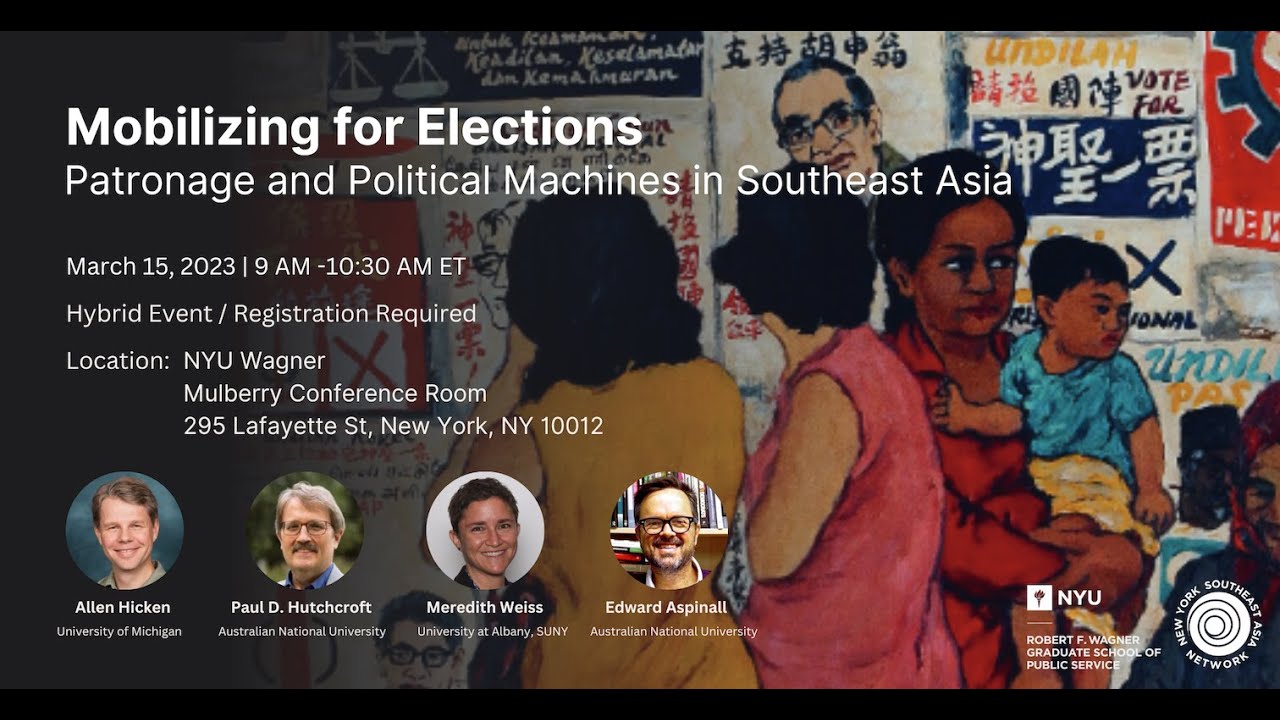
Patronage and Political Machines in Southeast Asian Elections
@NewYorkSoutheastAsiaNetwork
511 views•2023-04-05

55:41
Clientelism & Inequality in Electoral Democracies
@UniversitaetKonstanz
181 views•2024-11-14

7:33
Government Surveillance Methods: 10 Ways You May Be Watched
@BeAmazed
1.6M views•2017-04-09
10:19
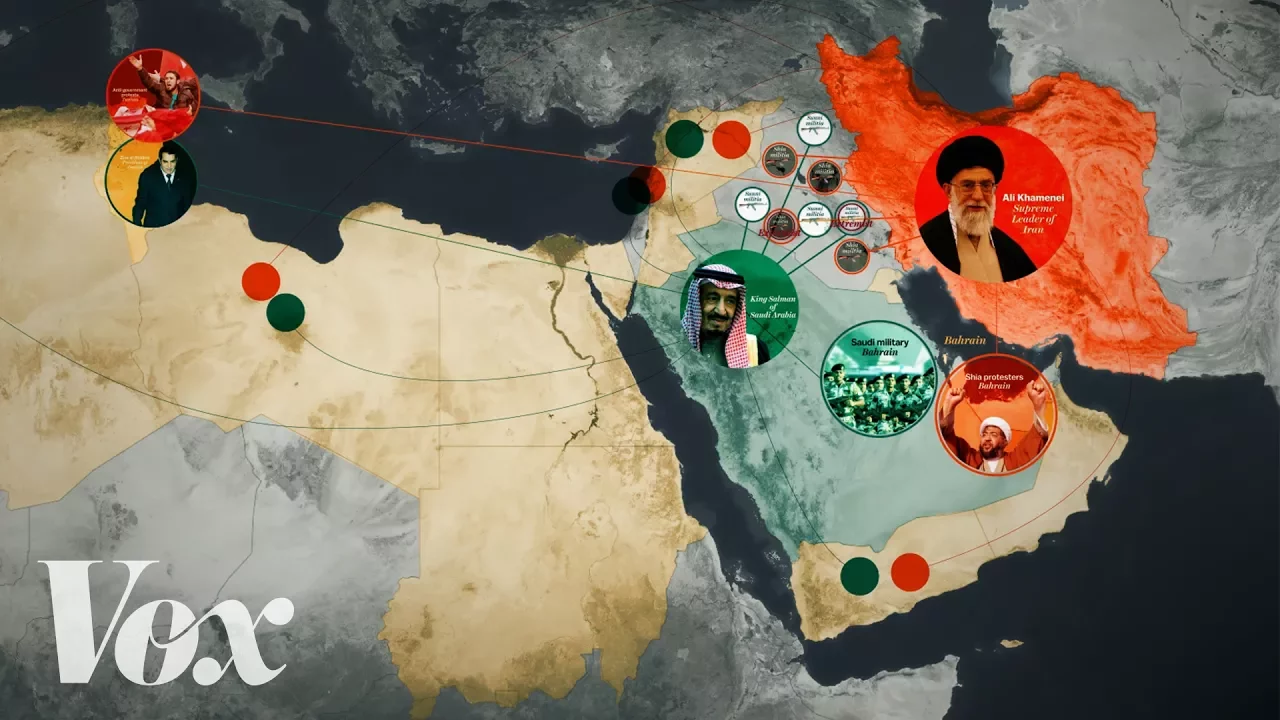
Explaining the Saudi-Iranian Proxy Conflict in the Middle East
@Vox
18.2M views•2017-07-17
Related Study Plans & Knowledge Roadmaps
Structured learning paths in Political Science
political-science
Analyzing Clientelism: Patronage & Vote-Buying
01Foundational Concepts of Clientelism
02Mechanics of Patronage and Resource Allocation
03Vote-Buying, Turnout Buying, and Ballot Secrecy
+ 2 more learning modules
12h5 modules
Explore Roadmap
political-science
Economic Statecraft: Sanctions & Chokepoints
01Foundations of Geoeconomics and Economic Statecraft
02The Mechanics of Weaponized Interdependence
03International Sanctions: Types, Implementation, and Efficacy
+ 2 more learning modules
12h5 modules
Explore Roadmap
political-science
Central Bank Independence: Politics & Policy
01Foundations of Central Banking and Monetary Policy
02The Time Inconsistency Problem & Inflation Bias
03The Delegation Model and Designing Independence
+ 2 more learning modules
12h5 modules
Explore Roadmap
political-science
Consociationalism: Power-Sharing & Stability
01Democratic Dilemmas in Divided Societies
02Introduction to Consociational Democracy
03The Four Pillars of Consociational Design
+ 2 more learning modules
12h5 modules
Explore Roadmap