





















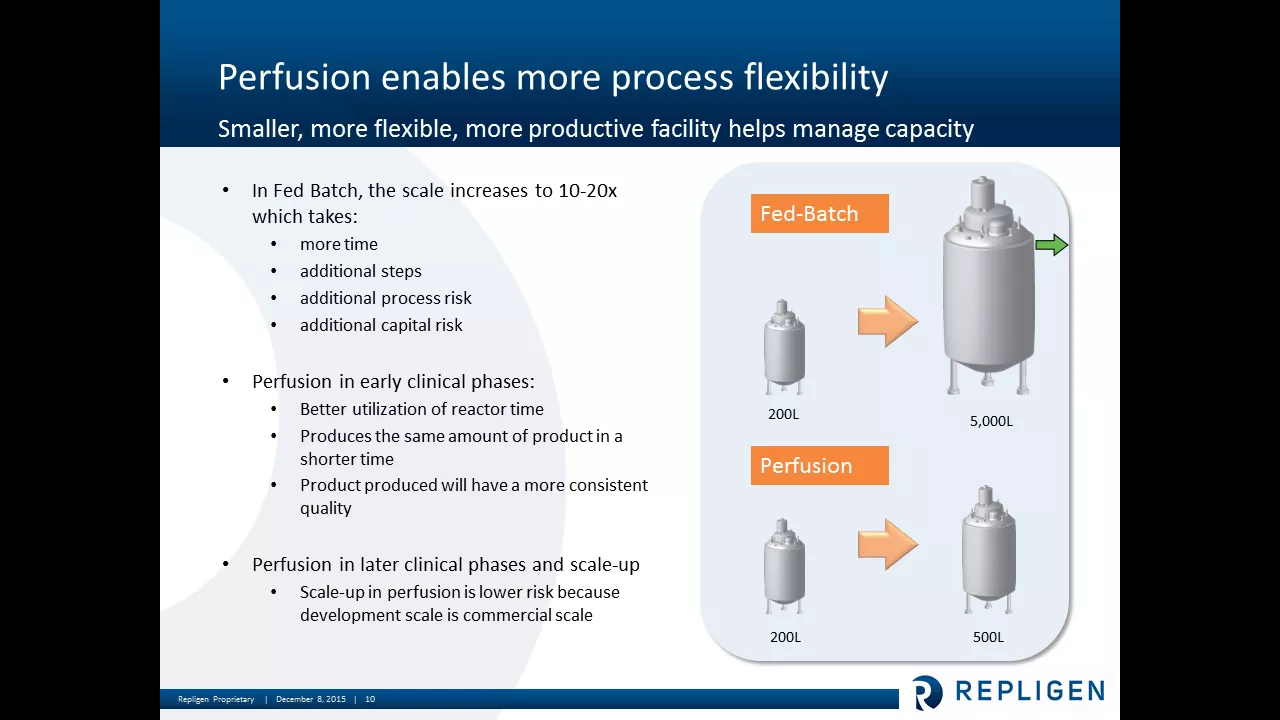


Perfusion cell culture for recombinant protein manufacturing relies on two key parameters: perfusion rate (vessel volumes per reactor volume per day) and cell-specific perfusion rate (media consumption normalized to cell density), with the bleed rate controlling cell density to maximize yield; cell retention devices including tangential flow filtration systems (ATF and TFF) are essential for maintaining stable operation by preventing cell loss while providing sufficient aeration and minimizing shear stress, with optimal performance requiring careful balancing of cell growth, bleed rate, and process productivity.
Perfusion Cell Culture for Recombinant Protein Manufacturing
Added:Fundamental differences between batch, fed-batch, and continuous cell culture operating modes.
Principles of recombinant protein expression and mammalian host cell line biology (e.g., CHO cells).
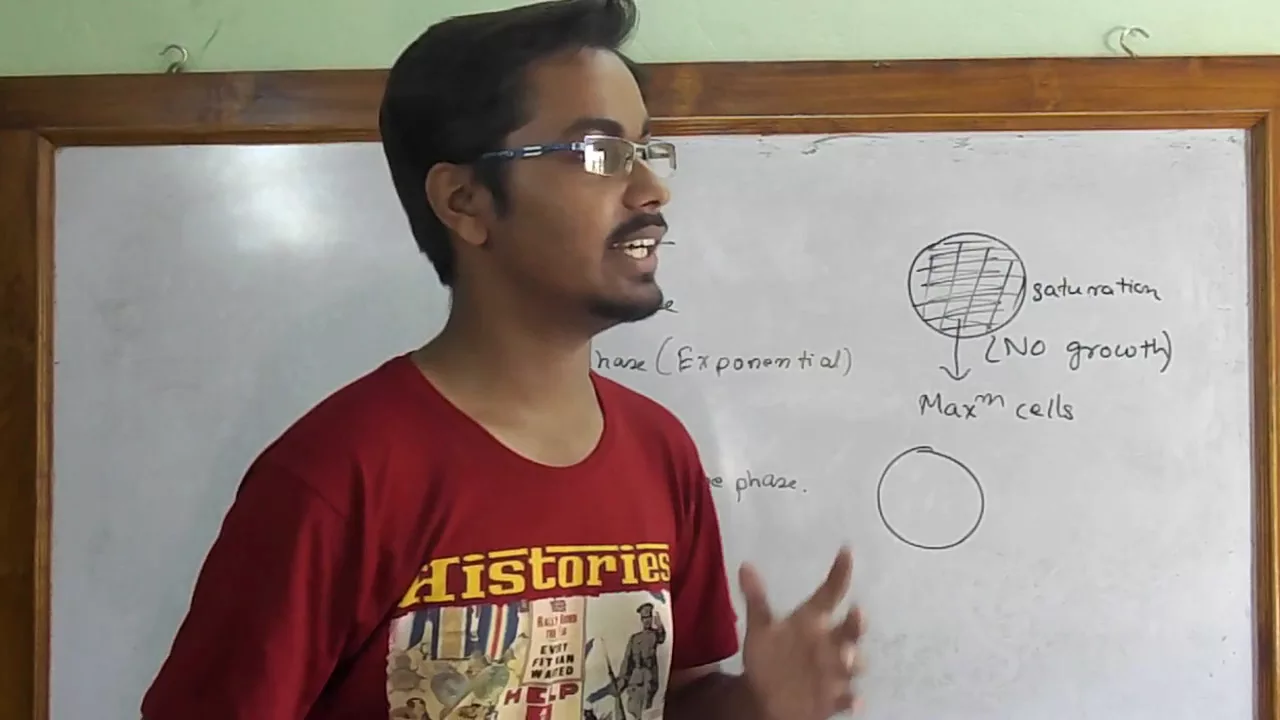
Basic cell culture kinetics, including cell growth phases, specific growth rate, and metabolic waste accumulation (such as lactate and ammonia).
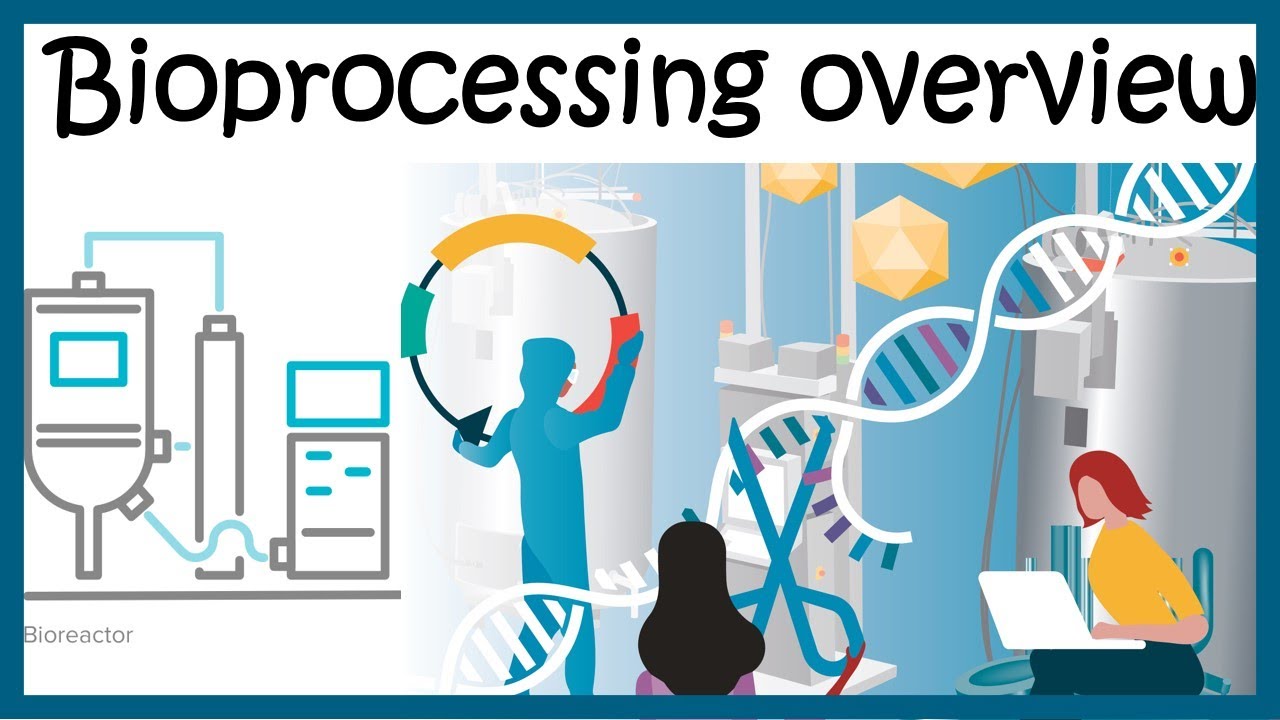
Core concepts of upstream bioprocessing, including basic bioreactor components and aseptic operation techniques.
Advanced engineering principles of cell retention devices, specifically Alternating Tangential Flow (ATF) and Tangential Flow Filtration (TFF) mechanics.
Integrated Continuous Biomanufacturing: aligning continuous upstream perfusion with continuous downstream purification processes.
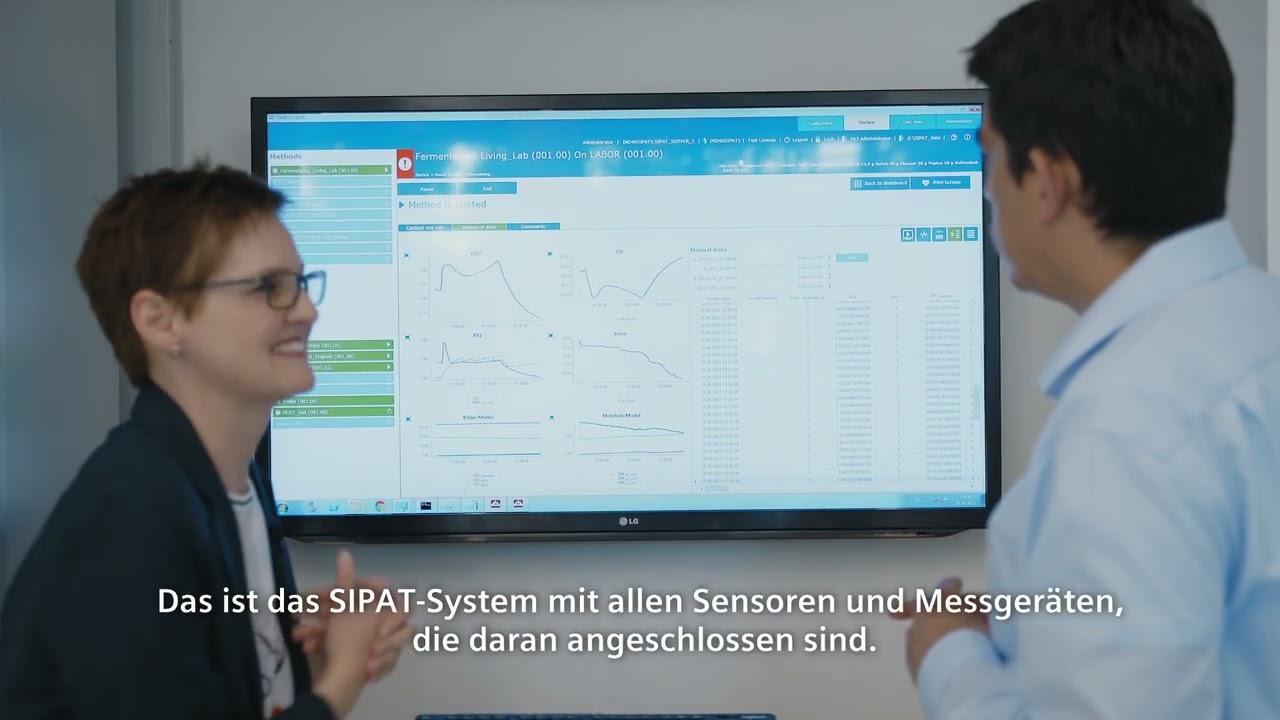
Implementation of Process Analytical Technology (PAT) and real-time sensor integration for automated perfusion control.
Techno-economic and lifecycle analysis of perfusion-based facilities compared to traditional large-scale fed-batch facilities.
127 views1likes17:14Original Release: 2020-04-18
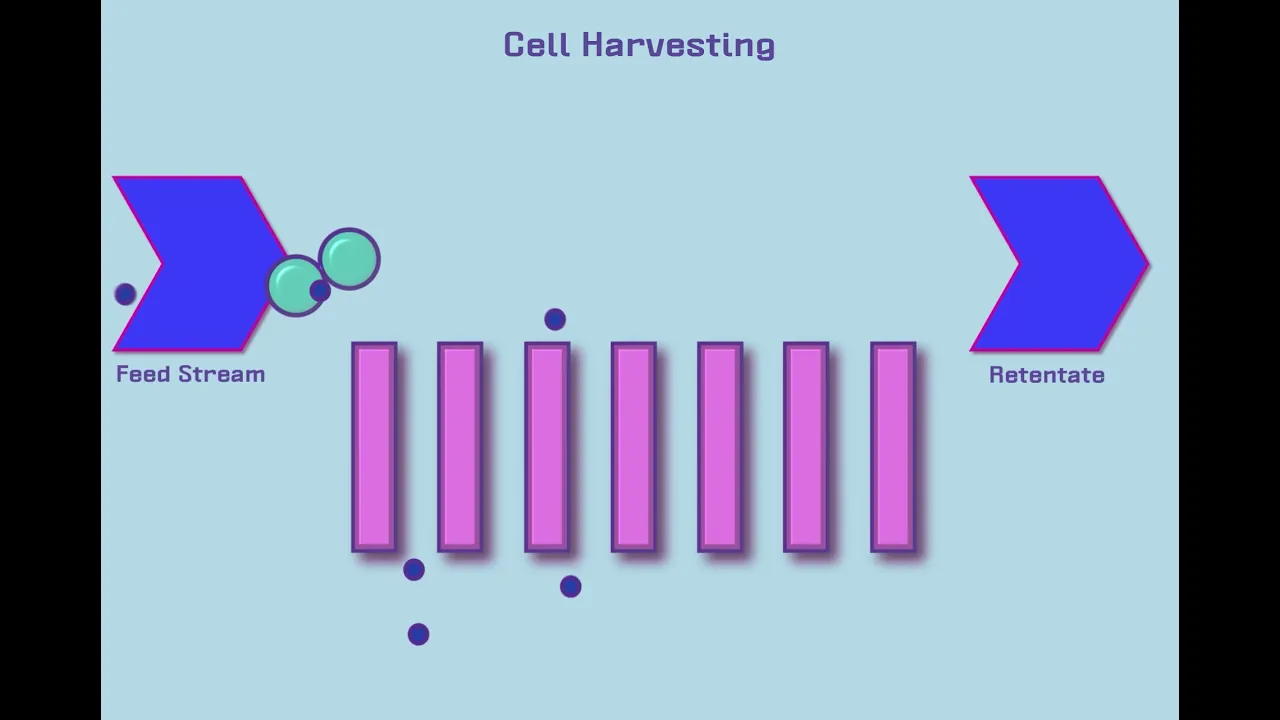
I'm going through perfusion Romanian cell culture for recombinant protein manufacturing the manufacturing so so that's how the perfusion system looks like you have a cell retention device cell free harvest and then there's a bleed so the most common cultivation not this lettuce first introduced the basic parameters that describe the operation of a perfusion process the media exchange rate can be defined either by the perfusion rate expressed in vessel volumes of media per by reactor volume per day or by sell a specific perfusion rate these are the two exchange rate that you have to consider Express and picometers per cell per day note that the perfusion rate represents the operational volume but does not give any information on the cell density while the cell is specific perfusion grade is the media consumption normalized to the cell density and therefore gives an indication about the performance of the media so another parameter there needs to be mentioned here and the bleed rate this parameter cross borne to the cell biomass removed from the bioreactor in order to maintain a constrained cell density value equals to the desired set point since the stream is wasted with no recovery of the target protein in order to maximize the process yield it it's rate should be minimized so this is just an extra X X ray stream the performance and yield of the process dependent on the different flow rates and increased perfusion rate generally enables the generation of more biomass and thus more product the faster the cell grows the larger is the bleed read and the smaller the yield stable operation should therefore be defined in the range where cell and that is large enough to achieve and economically viable productivity where it's but in a state where cell growth is controlled either by nutrient limitation or other environmental factors to minimize the bleed rate of course all these parameters highly depend on the performance of the given cell line that imposes its own consumption is specific productivity constraints perfusion rate Oh [Music] Sall rotation device for suspended mammalian cells existing cell retention devices are based on either cell size or density they include filters cross flow hollow fiber centrifuges gravity settlers of different geometry and acoustic wave separators each of them have advantages and drawbacks that are well discussed and decided reviews the retention devices that achieved the most attention today are tangential filtration systems such as alternating tangential flow and the tangential flow filtration all of fiber systems the area of benefits from a self-cleaning effect induced by the alternating flow a steady from this compares different features of the commercially available ADF and a homemade tangential flow filtration device using the same hollow fibers perfusion runs with three operating set points twenty sixty forty million cells per ml and this order were performed and repeated using both ADF and DFS a reliable retention device should not only prevent cells from leaving the reactor and the harvest stream but also satisfies some important operation requirements D's include avoid product retention operate for a reasonable range of perfusion rate values provide sufficient aeration to the self and preventing harmful shear operate across skills from process developer into manufacturing and finally guarantee a significantly long operation without failure thus avoiding for example filter fouling these aspects have been considered in various studies where different cell retention devices have been compared for example it was shown that when using an ADF instead of an and turned on the spin spin filter the maximum cell density and the maximum perfusion rate could be increased and the prediction bioreactors usually referred to as an and a stage bioreactor cell culture can rapidly reach a biomass exceeding the system capacity due to nutrient or equipment limitation where the cell viability rapidly drops to prevent as a control on the cell density can be implemented this way the biomass is kept constant during a longer production phase when considering both the N one and and faith different strategies can be adopted where badge fat bath and perfusion modes can be alternated in different ways in the following we review a non exhaustive exhaustive list of recent example where different approaches have been implemented to control and maintain a stable for a reason of a long time higher than 30 perfusion cell culture sama continuous and continuous bleeding was used based on daily cell count or online bio mass sensor monitoring respectively a daily bleed induces a discontinuous or - behavior where the cell density increases continuously between two consecutive bleeding points where it then obviously jobs this method can be used if no online monitoring and control is available as an alternative continuous bleed adjusted on a daily basis based on cell count can be used and leads to more stable reactor behavior there's a strategy differs from semi continuous approach because of the continuous cell removal but is subject to variation of the cell growth rate changes in time for whatever reason Daud it all reported five day long in stable operation estates at about 50 times changes of Roberts takes viable cells for ml using an acoustic filter and a CSP are of 0.05 - there weren't four NL cell per day reported viable sound answer deeds of 20 to 35 times turns about stick cells per ml at about 1.4 volume per volume for days using or tff using an ADF 90 to 130 times 10 to the power of a six level sales for ml using a profusion rate of this compared the performance of different processes using a static similar media in order to provide a fair comparison in their productivity and particular badge fred batch concentrated fred batch and perfusion processes were compared it was found that the specific cell productivity domains in a seminar range for all operation modes and therefore the reactor final volumetric productivity is defined by the achieved cell density for perfusion
Up Next

19:35
Bioreactor Scale-Up Practice Problems: Power & Agitator Speed
@sprabha31
341 views•2023-09-22
14:12
Quantitative Real-Time PCR (qPCR): Principle, Method & Data Analysis
@animatedbiologywitharpan
129.2K views•2023-09-06
23:33
Microbial Degradation of Plastics: Biodegradation Pathways & Sustainability
@majeedhammad
2.9K views•2021-04-11

16:04
CRISPR and Genetic Engineering: How Gene Editing Works and Why It Matters
@kurzgesagt
30.5M views•2016-08-10
Related Study Plans & Knowledge Roadmaps
Structured learning paths in Biotechnology
biotechnology
AAV Production: Transfection, Prep & qPCR
01Introduction to Gene Therapy and AAV Biology
02Mammalian Cell Culture: Suspension HEK293 Cells
03Upstream Bioprocessing: Triple-Transfection Optimization
+ 2 more learning modules
18h5 modules
Explore Roadmap
biotechnology
Building Gut-on-a-Chip: PDMS, Cells & TEER
01Foundations of Microfluidics and Gut Anatomy
02Cleanroom Fabrication & PDMS Soft Lithography
03Epithelial Cell Culture and On-Chip Seeding
+ 2 more learning modules
26h5 modules
Explore Roadmap
biotechnology
Optimizing CFPS: E. coli Extract & Yield
01Fundamentals of Molecular Biology and Translation
02Introduction to Cell-Free Protein Synthesis (CFPS)
03Preparing E. coli Crude Lysate (The Extract)
+ 2 more learning modules
19h5 modules
Explore Roadmap
biotechnology
Haematococcus PBR: Design, Stress & Astaxanthin
01Biology and Life Cycle of Haematococcus pluvialis
02Bench-Scale Photobioreactor (PBR) Design and Engineering
03Culture Media Formulation and Inoculation
+ 2 more learning modules
15h5 modules
Explore Roadmap