





![[공인모] 2022공인중개사 시험대비 부동산학개론 이영철교수님 기초이론10강](https://i.ytimg.com/vi/RLAGCD8DmMM/maxresdefault.jpg)


















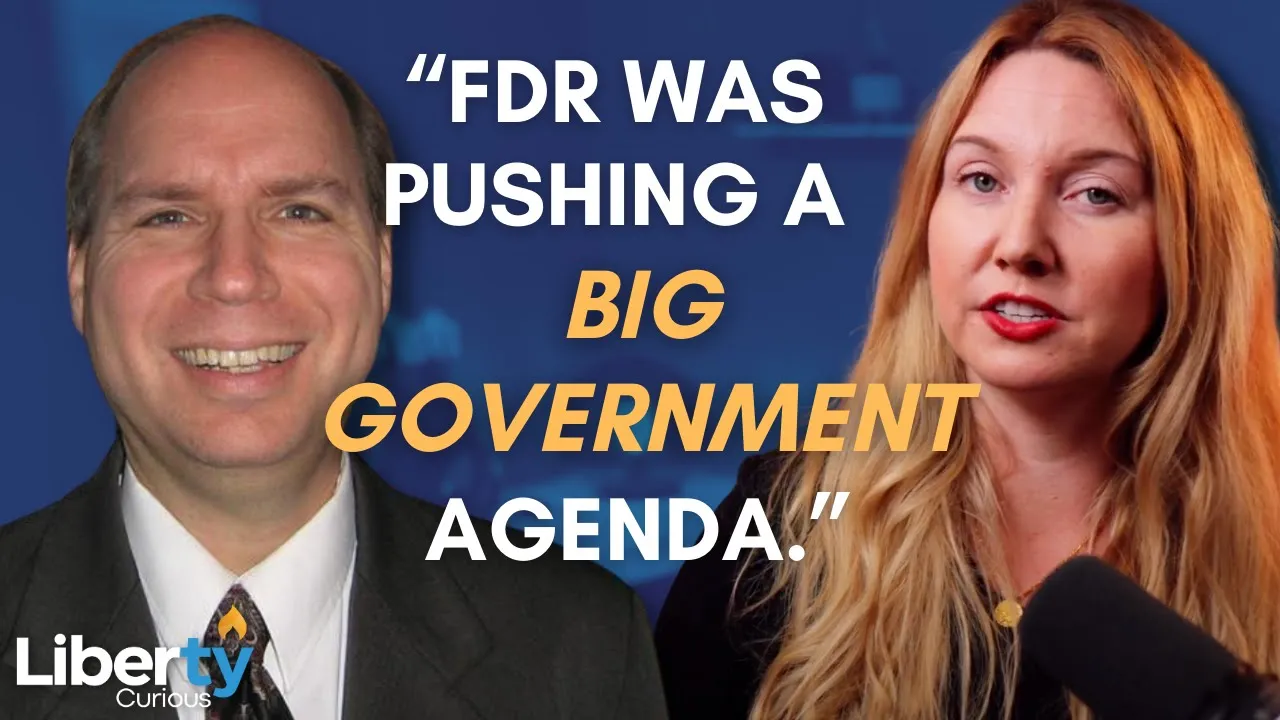
Amity Shlaes argues that the Great Society, despite its ambitious goals of curing poverty and expanding federal programs, failed due to several interconnected factors: the absence of genuine economic crisis unlike the New Deal era, the centralization of power in Washington that undermined local solutions, the unintended consequences of welfare policies that discouraged marriage and family stability, and the inherent limitations of government planning identified by Friedrich Hayek's 'knowledge problem.' She contends that the private sector, exemplified by companies like General Electric and Intel, could have addressed social problems more effectively through market mechanisms rather than federal programs.
The Great Society: A New History | Amity Shlaes
Added:Familiarity with the New Deal: Understanding Franklin D. Roosevelt's 1930s economic initiatives and how they fundamentally expanded the role of the federal government in the U.S. economy.
Overview of the Great Society: Knowing the core objectives of Lyndon B. Johnson's 1960s domestic programs aimed at eliminating poverty and racial injustice, specifically Medicare, Medicaid, and federal education funding.
Basic Principles of Public Policy and Economics: Understanding key economic concepts such as fiscal policy, national debt, inflation, and the distinction between mandatory entitlement spending and discretionary spending.
The Concept of Unintended Consequences: Understanding the sociological and economic theory that government interventions can produce unexpected, and sometimes detrimental, side effects that counter their original goals.
The Rise of Modern Conservatism: Exploring how the perceived failures and high costs of the Great Society contributed to the political realignment of the late 1970s and the rise of 'Reaganomics' in the 1980s.
Contemporary Entitlement Reform Debates: Analyzing current legislative and economic arguments surrounding the sustainability, funding, and reform of modern U.S. welfare and healthcare programs.
Empirical Welfare Economics: Studying modern, data-driven evaluations of poverty-alleviation programs to understand which policy designs successfully encourage upward mobility versus those that create welfare traps.
Comparative Economic History: Conducting a deeper, comparative analysis of 20th-century economic crises (e.g., the Stagflation of the 1970s vs. the Great Depression) to see how monetary and fiscal policies responded to welfare state expansion.
26.8K views747likes1:02:19Original Release: 2020-01-09
welcome welcome to hills of colleges Washington DC campus I'm Matthew Spalding the vice president the college back here in Washington C and also the Dean of our new Van Andel Graduate School of Government and I'm here this evening we were here this evening with a great friend of mine and a wonderful scholar Mt slays Amity was previously at The Wall Street Journal editorial board and publish a weekly column and wrote a great book in 1999 called the greedy hand where I first met her we had her head her do something for that book she's written a very important book on the New Deal The Forgotten man a new history of the Great Depression of which there's a graphic a graphic version which I have not seen I have to say and then a book which is a personal favorite only those are great works which came to my attention wonderfully titled just Coolidge which she wrote in 2013 and she's on the Calvin Coolidge Presidential Foundation Board which I'm a big fan of so we have a number of things in common but tonight we're going to talk about her new book which is the Great Society a new history which is just out and we have copies of here for all of you to buy and I have been reading it and enjoying it immensely especially given the connection between that book in your previous book on the New Deal and I'm struck as I've always been struck about how so many of the questions we deal with today health care education poverty standards of living these are issues that come out of the Great Society but you seem to be saying it's not that great indeed it might have had some problems I know and so I want to start with some general questions about about the book but also about that period because it turns out there's a lot of things we can learn from studying that period that might be extremely applicable today so start off off by what do we how should we if we're looking back in history how should we look at what is the Great Society how should we perceive that as a thing what a great society I think you might have seen this morning that one of the presidential candidates Mike Bloomberg said it was time for a war on poverty so that's that's a phrase from the Great Society I think you always start like with what I would just stop and say I'm very glad to be here I'm very impressed with Hillsdale a new graduate school and dr. Spaulding and the Van Andel lecture hall and school what an achievement this is presence that was not here before is here and very central no one and very admirable so what do we learn in school though maybe not Hillsdale but what do we generally learn in school about the Great Society in the 60s well if you the 60s are taught non logically that's the first thing to say so when you hear about the 60s it's usually sort of tries to replicate the Kaleidoscope maybe the the drug-related experience so they'll be loud music Woodstock napalm tragedy hippies Nixon looking bereaved and resentful and so it's almost hard to get a logical picture certainly it's hard to get a chronology at the period from the way it's taught and that's a separate problem to the problems of earlier periods where for whatever sins are contained in earlier tellings of earlier periods they are usually chronological and man is chronological we need that thematic is very difficult for us to retain or analyze it's or it's sort of pre analyzed so that's the problem with the history of the Great Society the biggest problem is not left-right sees me or where you are and the Vietnam War when you switched it's that it's taught more with emotion and kaleidoscope than with logic to me so I said well what is this period in the 1930s we had the New Deal and what is Great Society it sounds as ambitious as new and it was in fact more ambitious because the New Deal took place in a time of genuine economic emergency if one in four is unemployed that's a real problem and people have to come up with an answer and Franklin Roosevelt before him Herbert Hoover did and we may not like the answer and have had another that we would have liked to have applied in 1932 or 33 but there's the unavoidable fact of the national emergency this is a different story because we were actually doing pretty well in the early sixties everything seemed to be getting better in every way the 50s were a pretty good decade everything seemed to me get getting better in every way and we'll come back to this Matthew but you know that poverty went down dramatically if you want to make war on poverty in the 1950s basically because of economic growth so there were what what do you give what's the thing you give a poor person more than anything else that he wants a job right and so the fifties turned out to be a great decade with jobs even sometimes with benefits and we thought oh well given how strong we are and that were a superpower and all let's just just clean up the rest of our little problems cure poverty as Franklin Roosevelt said and I remember the writer Norman Podhoretz said we all thought poverty could be cured this was just after World War two for those who had fought in World War two a kind of mopping up action domestic because what if you can win Europe or to feech a pan of course you can help poor people and all will be better that was the very ambitious attitude in the early sixties yeah there's there's a great chart in the back of the book showing the decline even strict very small for you but showing that the decline of the rate of poverty but then it kind of flattens out after that that's right yeah so and I want to mention here John Cogan of Hoover who were at a fantastic book called the high cost good potential good intentions I think any way it's all data and it's all true so he also gets at this point we did not cure poverty even though Franklin Roosevelt hope we might and Lyndon Johnson swore we would we may have brought it down a bit at first when the Great Society started and you look at the chart you see poverty going down sort of as fast and you can look at the the points underlying the PowerPoint and decide as it did in the 1950s and then poverty by the official definition established by our government leveled off at ten percent a little more and it's still there so curing poverty didn't happen that was the promise of the Great Society and it didn't happen that's the main thing and I'm really happy to have the framers here instead of a power so so you've you've all really to the compared spend the Great Society and the New Deal but let's broaden that a bit and look at the various we're gonna call waves of liberalism in the twentieth century because the other one we have to add to that is the early progressive movement and it strikes me that it might be that the Great Society has actually more similarities to the early progressives there was a sense I mean there was a sense that somehow they could fix things and and through expertise and more government than Bureau what are you putting the Great Society in this larger motif of what modern liberalism and did over the twentieth century well we used to think that progressive social workers worked we're in this state's the lady from the state of Missouri or from the county came to your house and said whatever she had to say they might be funded by the federal government in part but it came from the state so early progressivism the kind that inspired Theodore Roosevelt was in the state of Massachusetts in the state of New York and that's where the progressives came from we never imagined we would be running the Social Work business from Washington Eve in times of prosperity most of us didn't anyhow so what happened in the early 1960s as we said forget the states the federal government needs to do this only the federal government could do it and the book opens actually with Michael Harrington who was a socialist didn't work for Moscow was just what was wrong with these Socialists was not that they were traitors it was that they were wrong about their philosophy I did more a nice man kind of an early JD Vance he focused on Hillbillies they had a problem some of that was social let's figure that out alcohol troubles you know and wrote a book called the other America and that he said you know the problem of America these deep-seated problems of families and no food sometimes are the wrong food or wrong attitudes only the federal government is capable of solving this only Washington and there there was some consensus for that even beginning under Kennedy although Kennedy didn't get the legislation and it only strengthened only Washington can do this and remember I'll just say one last thing a lot of the men who were leading our country and they were mostly men or what veterans so most of the time this is before Vietnam they had seen the federal government do something good win a war and they might have had a benefit or at one or the other when they came home they might have had GI Bill they might have had subsidy for housing that made entry and certainly education and their people in this room probably who but it was the attitude of General Patrick Moynihan I never had to pay for school because the government took care of me I I trust the government so they did trust the government the federal government even very high level of so so does the Great Society grow out of the New Deal does it grow out of his earlier roots is it something different is there a shift in liberalism it's just more does your wean it's just it's just more ambitious but so it grows it's um I mean you if you look for logic in it you can find strands of logic depending on the person right but what it was was a general consensus that we had to do something and with the print with the imagine we're having a theater in the background the bombs are going off all the time offstage that's Vietnam right offstage the battle rumbles and the tension of sending four hundred five hundred thousand people very suddenly over to Asia is there so this idea we v 't Nam is a strand the progressive impulse is a strand and another strand is Lyndon Johnson's personal ambition and lots of biographers Cairo most recently have covered that but here's a person who's the child of the New Deal he was a Roosevelt pleaser very effective congressman and it was said there's a cartoon if you if if you want something done quick in the New Deal you get Lyndon Johnson the young man who worked with youth in the state of Texas and actually had to tell the farmers they should plow over their crops and that was economic logic you plow over your crop and then you get money from the federal government and the farmers he had to convince the farmers and the farmers were kind of dubious about that and their mules were even more dubious because the mules in Texas are trained not to step on the little fledgling plants right the whole experience of a mule is not to step on plants and here they were destroying something so Lyndon Johnson did yeoman service to Franklin Roosevelt executing a sometimes nonsensical New Deal and he said when I grow up I'm gonna finish Franklin Roosevelt's agenda and I'm gonna finish Harry Truman's agenda Harry Truman wanted something like Medicare he hadn't got it through Johnson was deeply proud a proud man that he could get that through but you want to think he's ambitious so he plays to his strengths a master of the Senate and III don't even focus too much on Johnson in the book so we'll stop there because he's just part of this story but that's that's him ambition and glory perhaps even being greater than the New Deal yeah one of your chart shows it how the great site burns actually are larger than the New Deal programs at a certain point oh of course yeah and if you have a chart which we have in the back you will see that our commitments to the Great Society cost more than our commitments to New Deal programs today that is papers our lawmakers signed in the 60s committed us to spending more today than even the New Deal what's interesting is a walter Lippmann the commentator wrote a critique of the New Deal and it was called a good society and one reason walter Lippmann called it good was he was signaling we should draw back from the Superman ambition projects great but you know great is wrong good but Johnson liked great he was very proud of the phrase he introduced it at the University of Michigan in 1964 and if not great then not at all was his attitude right I think the phrase greatest I was actually used by John Dewey at one point section old progressive phrase yes used by the favorite Fabian socialist yeah so it does actually have a history to it and we will have great in England also means big right it doesn't just mean high so by Great Society actually in England they meant a society that is networked from town to town across the country because before the railroad and the telegraph towns were pretty isolated and now we had a Great Society and the newspapers began to come on the train in the morning and we could hear what was going on in London and practically real-time that was what the Fabian socialist imagined but they also imagined right away that if a society is great broad high it must have great planners you can see that in the language too and planning is a huge part of Great Society ours and the sick side that's why I mean but they did the sense of going back to the early progressives planning and expertise so the main elements the Great Society correct me from right in in LBJ's his famous speech you know healthcare health education the environment or those domain really the main areas city class some cities country classroom and all those things are why those and what was their thinking on them well we did need some environmental law or environmental habit that was clear this was the era when you couldn't drive through Gary because it smelled too bad we did but it was it wasn't had to roll up the window right you that LBJ was very concerned about he was very much of a car person you don't see him walking a lot you know I think America would be different if presidents could walk down the street because he was a vehicular president he an amphibious car right so so so he liked to beautify highways Lady Bird did along with the beginning in the environment of course Nixon did more and I include Nixon in the Great Society that one of the revisions of this book is that Nixon is really just a follow-on to Johnson the classroom Johnson was a school teacher so that appealed to him and he believed rightly I would say you would to probably that education is much of the answer to the ills poor families if they know more they can earn more money and okay so that's a one could say that's a reasonable argument for those three areas involvement how did it become the the Great Society it was this was this good intentions gone bad was this the fatal conceit of planning was this great ambition to get the federal government involved was it to build the consent would what's like well they it was a power drive we want to stay in power so we want to do more and more impressive things so people will reelect us that's the way the book ends with Nixon seeking reelection but I'm not sure what you're asking what I do say in the book what I show in the book is first they tried the war on poverty and they had weird results with that though the poverty law the Economic Opportunity Act which created the poverty office of sargent shriver was seemed a fairly harmless law but actually did quite a bit of harm what am I thinking of many in this room are concerned about federalism right what is the state in charge of and can what is a town in charge of that we had poverty in American cities the mayors all had poverty people maybe they didn't maybe they called assistance not poverty but they had poverty people many of the mayors were Democrats they helped Lyndon Johnson get elected in 1964 I'm thinking here of Richard J Daley II and so when Johnson declared war on poverty Richard J Daley put all his poverty ideas in a box big box mailed it to Washington here's what I need money for that you owe me because of what I gave you and that is not what came out of the poverties our office because of the infatuation with reform and sometimes social democratic or we would some it's called them socialist ideas what came out of that office was Sargent Shriver a nice man brother-in-law of the late president kind of noble hard to dislike veteran created the Peace Corps running this sent his own poverty people to the towns and I'm thinking some of the people in the room may have known of that been part his own poverty people and those poverty people believed in community activism by which they didn't by which they meant let's go to the town hall and protest and try to get whatever we need here it's we thought it would be jobs but it ended up being housing landlords and so on and the mayors could not believe it they had elected Lyndon Johnson and now Johnson's very own people were bothering them in their mayor office disturbing their day and helping them with their problem of poverty and in the book I tell the story of Sam your D the mayor of Los Angeles who said there will be riots in Los Angeles unless you help me President Johnson basically with my poverty programs and he got into a jurisdictional squabble with the poverty office the mayor of Los Angeles versus Sargent Shriver battement all spring and the money that was promised didn't come what's worse than no money money that was promised and duska what was worse than money that's never promised money that was promised and and that failure of your knee and it was his failure to to bring the money he said would be there to create hundreds and hundreds of jobs for the youth of watts contributed to the rage and watts along with all the other factors that are more famous such as the rough police department and so on so sometimes when you have multiple jurisdictions all you have is jurisdictional lacunae and chaos right and that often happened the other mayor's also complain daily said you know does the president know he's sending mo n ey too can't remember what equipment subversive some word like subversives did he know that he didn't we couldn't believe it that Johnson would be so naive and I think Johnson himself was kind of not really aware of what Shriver was doing and he and Shriver just wanted to get things done fast and Johnson was pressuring him so this was a great rivals one of the fools of my book because he was a nice man who did a naive thing and paid for it terribly right right so let's let's try to draw out some broader lessons here and then we'll open up for questions sure because there's a lot in your book which I found fascinating about how there was a push for a an idea wraps because of idealism perhaps it was politics but then there's often a compromise or a push back by people like Wilbur Mills or daniel patrick moynihan but they could have got get on that because it became took on a life of its own is is a lesson here be aware of idealism and government coming together is it unintended consequences is it don't compromise with idealists and zealots I mean what's the larger be where marginal increases and we know that from government a little bit because you're pointing out that so Medicare was an add-on it was it was a small add-on program that was agreed to but then it became yeah in will vermin what do we learn from that thank you today this is what we're doing well and debates writing today about what we should do he was chairman he was known as the powerful Wilbur Mills I think until I was 10 I thought his name was powerful you know the influential of the Ways and Means Committee and Wilbur Mills was a government expander but also a pragmatist and he went along with Medicare and kind of liked it because of a lot of other trades he had going in his complex business and then Medicare costs a lot more than he thought it would and he was embarrassed he had told his constituents at home it wouldn't cost this much and you know and he became wise Everett Dirksen is the same way Everett Dirksen supported Johnson on civil rights which is very important to the end of the filibuster of laws that are very important that are also in this period but when he came to some labor laws Everett Dirksen said count me out I this is too much support of organized labor labor so I think if you would pick a philosopher it would be Hayek and why Hayek if you haven't heard of him I don't know about him Hayek's folk of a thing called the knowledge problem and basically what it says is government is insulated from knowledge by the political process you only get feedback at an election every four years maybe every two years every six years right and you only talk to your friends in government whereas the small business is in the market every day and by night it knows whether it did well with its product that day and perhaps even how to adjust it so the government was so in from reality most of the time it couldn't really figure out what it was doing or what was wrong about that and Hayek of course also has Road to Serfdom and he's well and what Road to Serfdom says is we're not living in Zeno's paradox we you actually do get to surf them even if you take little steps right yeah it's not like oh we'll never get there you actually get to Serfdom because entrenched interest groups in this case the silent majority the Forgotten and once they have a benefit as Thomas auld says they don't want to let it go and when there are enough entrenched groups it's very hard to reform and I feel even silly saying this in Washington where you know this better than I let's let's open up for some questions I know that there's some microphones I believe go right there in the back thank you very much for coming to speak one of the things little may be a little s now but certainly 10 or more years ago folks who were alive either who were of the so-called Silent Generation or of the very older so-called baby boomer generation will often say if Vietnam hadn't happened the Great Society would have worked it would have been tremendous I have known myself people alive from that time period were activists or professors who told me that and said if it had just been fully funded and Vietnam hadn't happened everything would have been great I'm skeptical of that but I'm wondering how you particularly answer that question I would refer to you the chart on page 440 or maybe 439 that's the answer what people began to realize it Vietnam is the great sort of excused story and Vietnam did help to bring about some of the more expansive bits of legislation you could say the Great Society with the butter pricier than Joyce chart yeah and maybe 435 435 but what I'm saying is maybe the Great Society would have been just the good society without me because you have to have something really good at home that's the opposite to what people are arguing with you and second even in this 60s by the late 60s people saw that the butter at home the domestic programs were going to cost more than the guns that line was crossed I believe it's in early 70s 71 and even today we have this fallacy that defense cost so much when you look at the whole budget which includes mandatory spending defense does not cost so much it costs a relatively small share of our economy compared to history a period of the Korean War so so this argument isn't reality and the reason for example that we had the fiscal crisis of 1971 and the stagflation and high interest rates of the seventies is not mostly Vietnam it's the Great Society and that that's very interest you know that's they're foreigners looked at the US and said it's going kind of social-democratic that's like us which means it's growth advantage may be eroded its growth advent the US had a growth advantage it was a freer market than Europe that growth advantage that gap between Scandinavia and Michigan is narrowing in terms of social costs and therefore the US might not be so strong so there are plenty of pieces of data that refute your argument your friends argument yep yes miss Lay's isn't that the case the reason the Autopia nism of the Great Society was a most unchallenged was because there was a lack of faith in civil society and especially even in the Republican Party after Dwight Eisenhower took the party over and Robert Taft died of cancer in 1953 and in a khadeem to I mean there were just a few marginal people in 1953 Robert Nesbitt and Russell Kirk each published classics the quest for community and the conservative tradition but they were considered wackos and outside the Austrian economist - but and and the voter registration was two-and-a-half Democratic to Republicans isn't isn't this the reason why I Johnson & Johnson was a master of the legislative process that the the chance to commit the Great Society even occurred that's a very important question I used to have a debate with jonathan alter of newsweek and he would say before the New Deal amedy there was nothing and before the New Deal there was something it was just local it was the italian-american burial Society or the it was the County of X Y Z and it's little Hospital led by there was a David Beto as a beautiful book about Tocqueville in America which I always give to kids and all the little weird institutions moose heart the orphanage very right yes still there so there was a contempt for Tocqueville America it seemed quaint and old and it was a terrible contempt because Tocqueville still makes America the little town I have a chapter on the fragility of the municipality where Tocqueville writes about the fragility of the municipality can be it's like a consumptive patient it could die anytime that municipality because the big state by which Tocqueville probably meant the the county or the the state that is state of Illinois Springfield Albany it might step on it and or you know pull the cord so so when you want to think about tocqueville's America in this period I have a long description of the housing program at pruitt-igoe in st. Louis and what they did to the Tocqueville of downtown st. Louis which very proud town maybe some of you are from there with a very local strong let's support each other tradition just wrecked by urban renewal and bulldozers and I will just say one last thing for the middle class we had something of Tocqueville in our housing funding because we said we'll give middle-class people subsidized mortgages so they can settle in little communities the new suburbs right and then they can have a cul-de-sac and a car and their children can play there and that they'll build a new community and will fund that the federal government that's also love it Levitt time that's for middle class paper for poor people they can have Karl Marx and we'll build big tall really ugly buildings in the International style which we kind of admire but tends to make people feel sad and lonely and and we'll send them up in elevators and in the halls they'll be beat up by wayward children and there'll be no commerce at all around them and certainly and let's bulldoze the churches around the edge right because we're bulldozing the whole community so Muslim churches go to in all the other tocqueville institutions that happen to have been there around we're the new tall buildings go and at the end of the book I described how after all the successive waves of progressivism and non Tocqueville ISM at st. Louise pruitt-igoe they had to as in Chicago blow it up wasn't one of the to go back in the earlier point you made visit there's a certain polish cos never about you know one or the other in that in those absolute ways it's very rarely that kind of question right one of the things the great site took advantage of was a a natural American desire to try to solve some of these problems poverty to allow for growth and expansion in a national economy right so they they they drove right through that because you know there there was a as the nation grew and the economy grew and and it became larger there was a need to solve some of these problems they just thought they could perfect it by using Washington programs to do so when I was writing it yeah so the quant a Great Society we're ambitious its 1960 we're teenagers and we don't remember World War two right the boomers were at like the woke students now who say hey boomer right the boomers were the generational divide the rebellion and they said we want to do something great the only question is by what means through the public sector or the private sector well we opted for the public sector and what is the private sector it's the milk cow that funds it and you know what if you leave the private sector alone enough it usually can fund a lot of whatever you want to do with your Great Society vision so in the book when I was writing it I decided to tell the story of three companies General Electric Toyota which intervened suddenly in Detroit and the company that became Intel and these companies did social things number one they created jobs number two in Fairchild which is the predecessor to Intel for example at a factory on a Native American reservation and became the greatest private sector employer of Native Americans because the this particular Native American group worked with their hands did a lot of handy work like weaving basically or neat what we would call needlepoint and making chips involves the same skills plus a magnifying glass right so so they the private sector can do more than we think to solve social problems and that was it but we opted for the public sector of course one of the greatest spokesmen for GE was well I tell the stories a beginning the the they had an actor who worked for GE who was kind of old and not even that good a little bit corny and he was hired to propagandize for the free market and that was Reagan so Reagan there he was he was a middle-aged man now and he gave not just 50 or 100 but maybe a thousand speeches about markets to the rubber chicken circuit of the hundred plants of General Electric because General Electric was concerned that its workers didn't understand that capitalism was fragile and mmin it all was for naught I mean in Chapter 1 because GE suffered a terrible embarrassment its employees fixed prices and deals with Westinghouse it was described it's like a sports scandal for America because people respected GE as they respect baseball and it went down in the world and they fired the actor and they fired his boss LEM Boulware and they got rid of all the little propaganda mill programs and they thought what a waste we screwed up and but Reagan remembered and eventually became a convert to these ideas he came to believe in my markets a new buy background a new dealer so that that story is told so since you brought that up I Reagan in his 1982 diary famously writes the press is trying to paint me as trying to undo the New Deal I remind them I voted for FDR four times I'm trying to undo the Great Society it was LBJ's Warren party that led to our present mess very interesting I didn't I don't have so so I mean the history is he saw the Great Society as the enemy to be defeated absolute history is history but it's also characters they don't have to be presidents they can be just the next line so there was a book called best and the brightest about the foolish errors of arrogant men in the Vietnam War planning the Vietnam War in the execution the negotiation the prosecution there's a domestic best and the brightest that is a bunch of guys who were so smart they thought they could do this not just Sarge driver but also Walter Reuther and where is Reagan he's like the mayor's because he became governor of California and he had lots of things to do and the federal government kept getting in the way and there's a hilarious scene where the governor's had a kind of way of vetoing a federal project a poverty project but it wasn't a really good veto they could be overruled basically so he was going to overrule something the Nixon administration was doing which was funding public interest lawyers and the Nixon didn't want that because Nick I knew in his heart that Reagan was just as popular as he was Nixon right this is very awkward moment and you have the lawyers for Nixon and the president and the lawyers for Reagan one of them was at Mies in a room and and the scary administration led by Frank Carlucci said there's a kind of very condescending Lee to the Reagan crowd using a film metaphor because Reagan would understand it right there's an a movie where you blow this all up and we blow you up and forgive me I don't have the text here but something like that and there's a b-movie when we make a compromise and neither of us loses face on this lawyers funded by Washington thing and maybe will help you with your welfare cutbacks which is your big pride Governor Reagan and nice goes into another room and presumably phones Reagan comes back and says we take the B movie and then Reagan I think he sent Carlucci a bottle of an alcoholic substance I believe it might have been scotch so that was Reagan he the governor he he decided this it all worked out it wasn't just scorch and burn right but the welfare program became a model for welfare reform later Reagan's own and then also Clinton's right good it's got fire here oh yeah yeah I miss lays thank you for coming Christopher Harris with unhyphenated America and I said a quick question my family is originally from Detroit and you know Walter Williams has talked about how the the effect of the Great Society on the black family in particular you talk about how the poverty was decreasing had decreased dramatically proud of that and I've talked to many of my family members they say look everybody that they grew up with my father 69 years old and basically everybody they grew up with had a mother and a father and a home I mean you know there was a handful of people who did not have a mother and a father and a home and afterwards like I'm sick I'm 46 you'll see the large percentage of people in my generation did not grow up with a mother and father at home why do you think that the New Deal didn't have such a destructive effect on the like family or families in general as such as the great societies and on families in general thank you great question actually the the family separation issue the the provide what what the the most proximate thing to which you refer is to get welfare money you had to be a single parent and the welfare money and then on top of that to get subsidized housing so that was some of that was pre Great Society it was state welfare law for example which said we won't support men who earned but will support families with dependent children and no worker mom so it was a perverse outcome from a well-meaning plan and in my description of pruitt-igoe this housing project which was rather like the housing projects in Detroit the dads had to hide in the closet when the social worker came because they would lose not only the money but also the family would the apartment if the dad were discovered and where is the dad supposed to go Oh far away and get a job that was a huge factor which the Great Society through the format of its funding perpetuated and strengthened and it wasn't just black families it was white families as well I would add another factor though I really don't like her band renewal that was my note said I'm paraphrasing move says urban renewal is minority removal and when the riots happened in Detroit it was said it was the people who had been bulldoze out of old neighborhoods which were not only poor not only occasionally slums but also lively and much-loved Bulls bulldozed out of their homes to be put in sterile vertical projects and they were angry and sad they were displaced in displaced they were displaced by slavery then they were displaced when they moved north and then they were displaced again from that place where they originally lived when they moved to Detroit that's a lot of displacement for for our family so I tried to describe that in the book and I very much appreciate your raising that issue did write another character in your book is daniel patrick moynihan who of course wrote a report on the black family and then was later vilified tell us about him but the first person in my lifetime I know about who was ever canceled daniel patrick moynihan because he wrote a book trying to describe trouble in a single-parent family particularly maybe when the father who departed or is infrequently present is alcoholic that's been and by the way that's Daniel Patrick Moynihan's life he just happens to be white so his father was not there and there were other father's occasionally and and this was problematic for the Moynihan's so he tried to describe that question which you just put your finger on and pretty soon it became to seem condescending for a white person to describe something that what is supposed to be uniquely black which it isn't and he was shut out by the Democrats and so I spend a lot of time on Moynihan and his humiliation and loneliness because he was actually very insightful guy who had a lot to contribute to government and his revenge was to come back working for Richard Nixon and offer a program that sounds very familiar today which is guaranteed income for whites and blacks below a certain income level but but the cancelling of Moynihan by the world and Cambridge Massachusetts is a bitter and fiery thing to behold there's someone over here yes sir thank you very much for your talk tonight one question is so at the very beginning you talked about how the early progressives were very much more focused on the states it's very much more of a smaller level than federal and it's saying it sounds to me like later on its we were with the Great Society that you see the progressive thought take root in kind of that federal portion Woodrow Wilson talks very much in his writings about the idea of a hive mind he talks about how there's this kind of this general aggregate or everything centralizes in Washington and to provide kind of an analogy a lot of people provide how Lincoln almost acts as a fulfillment for the American Founding so in a similar way could you say that if you want to think of the progressive thought with Wilson as a as a refounding or revolution could you say almost that that fulfillment comes about in the Great Society yes would you care to elaborate but remember did you ever read a god man at Yale by William F Buckley I never read it because I wasn't interested particularly in the God part but what it's really the meat of it was they changed the way they teach economics in college gee-whiz we used to teach about individuals and I don't know the invisible hand and so on and now all of a sudden it's all about planning so that commenced this big see changing universities right after World War Two which meant 15 years worth of undergraduates hadn't had been schooled in this planning way of thinking so now the grown-ups didn't know much about free markets or care about them that they knew about planning and so those people were ready to take over around 1960 they had become the grownups and the leaders yeah well in that in that planning grows out of the philosophical roots of the early progressives who thought that progressive experts could solve all problems right and what also there's like a cumulative effect planning upon planning yields perversity oh we had that reform last year oh we haven't this is the 17th definition of child we've had in the tax code and each one contradicts the other and five are still yeah it also goes back to the fellows point here which is they always oh it didn't work because there was some factor that was not right what's right again well try it right this is like a book about it with a bunch of progressive waves with and they get bigger and bigger and the magnitudes of dollars get bigger because of the very beginning Michael Harrington hears from Sargent Shriver they're gonna get a billion dollars for welfare and and Michael Harrington says that's just nickel and dimed we need more than a billion and Sargent Shriver since I don't know about you young man but I never had a billion to spend before I think it feels pretty big but of course the numbers did go Harrington wise into the magnet even had a few zeros so so that conversation just not to be a spot but it's the very beginning of the book and she doesn't identify who the two people are until you get several pages into the conversation and it sounds eerily like a conversation you might hear today in the halls of Congress about you know very large programs very large idealistic ideas about what government ought to be doing why did we learn any of these lessons why are we doing this again this well the motto of the book which I will say I have heard chanel Coco Chanel say but also other important people what is nothing is new it is just forgotten where nothing is new it is just forgotten grammar is a little awkward but I still like it nothing is new but it has just forgotten we forgot the 70s which were the consequence well they were forgettable dedicated worried definitely forgettable so so what what is this I try to explain the seventies to myself and other people the 70s was a period when we thought our houses would be smaller than our parents and they technically were at certain points and we had two fewer bedrooms than we actually needed because the interest rate was 18% that it was it was a period where we didn't think we would ever have enough energy to heat our homes and you know I I don't even want to write the seventies because it's a little dark I have to figure out a happy 70 those of you who remember that ratcheting down of expectation the emphasis on scarcity is reminiscent of the current environmental movement I mean there was a philosopher named Paul Ehrlich who actually believed there should be a very heavy tax on diapers so that people would have fewer babies and also we should change the tax code no child credit none of that and to discourage reproduction because we wouldn't be able to feed ourselves and more importantly we were the world's model and how about introducing the vasectomy and and let's how about giving a lot of incentives for that procedure and and I find a very creepy looking back particularly their hubris and of course other countries took what we recommended via our World Bank and mr. McNamara and and did awful things with their populations through thinking of in India and the sterilizations that were virtually forced upon people there as part of our progressive ideal of population reduction it's gonna cold more questions go back there there's what appear - thank you so my question is it seems that with the Great Society there is a certain appeal to nobility there's a higher aim towards it at the eradication of poverty so that's a very idealistic sentiment but also a noble one is there a way of introducing a nobility into free-market economics that simply isn't rooted in self-interest to provide a sort of greater appeal that would move folks in my generation and a little younger than some of the people here and allow them to it move forward well reductive way I I think one thing you're talking about is the transactional nature of Silicon Valley I'll never know the counterparty in this deal I'm selling him X Y Z and I don't care about it but that's not most of Commerce most of free market is everyone you meet you will again every person you ever meet in your life will remember the encounter with you and how you handle the transaction and were you kind and did you under deliver or over deliver that's what I want always tell students you think you'll never see someone again you will always see ever everyone again and everyone will always remember what your tie what color it was or your scarf and where you polite or did you talk to someone else and did you cheat him so there is an natural morality to Commerce because when you sell something to someone they remember that if you cheated them m't life most of us avoid bad airports because bad airports lie to us they advertise a closed gate and then we find we have to walk two miles to the gate they say we have a boarding pass and then we run seated right it's a so so we know when we can to avoid bad airports which are say say low trust low trust places and we look for high trust places where the airport is even nicer than we thought and maybe it has free coffee I think they have that in in Toronto so you say I like that and that's not socialism that's good commerce right so so I think we have to think about the kindness and the morality and commerce and expose it let's think of it this way eBay when we were young people my age again we wouldn't have believed that eBay could work because you send your money off to someone in another state who nobody you know knows and he or she sends you back more or less the thing you ordered right more or less and sometimes it's a part which you haven't inspected yourself like a car part oh my gosh and it might be flawed in some way where that other person could say he technically sent you a good thing but the thing is useless to you and we might send $185 for a car part if we're building a car and yet most of the time eBay works most of the time most of us are satisfied with eBay and say well that is an incredibly wonderful economy where the people don't cheat each other there's a kind of broker ref that would be the eBay company and most of the time and the same is for Airbnb most of the time you don't get murdered most of the time even on Craigslist you don't get no most of the time on Craigslist which you don't get cheated the stories that you hear in uber they're the exception so there's a lot of evidence of a great commercial economy involving a lot of kindness and respect from fellow men and a lot of utils to put it in a lot of benefit to people that is underappreciated I was thinking of Reagan's great retort was the creative society right when Reagan is a very sad character in this book he loses its job but you don't get any good roles but he does give a good speech for Barry Goldwater yeah and then he decides you might run for governor of California and he's what am I gonna call it and he actually goes to a minister and they come up with or the minister already has an offers creative Society which is what the companies are I do you think the Intel people when they start in a word Fairchild did they think they could ever invent something that would be so useful no they also believed that everything you ever did in their area was in service of government they were stuck in the military industrial what what do you build computer parts electronics for the government only the government can have a big computer what else would use these days nobody else would use it and what they realized and I follow them and you can see it donning on them and it's like it's like it is like the Sun coming into their life is somebody might buy when I'm making who's not a government and somebody might buy enough of it that I would have money for research to invent something that wouldn't for government that's the story of Bob Noyce and Gordon Moore they have a few epiphanies one is Moore's law which is you can make smaller chips pretty soon and there's a kind of geometric acceleration there but the other is Wow big companies that make technical things in stem actually serve regular people and there's a tremendous relief at that discovery and breakin doesn't really get it the only sort it gets it but he has an intuitive appreciation for the entrepreneurial because to be an actor you have to be entrepreneurial you have a lot of humiliation a lot of highs a lot of failure a lot of failure yes sir to what extent do you credit so I right now oh wait right here hi sorry the one extent you credit because going on parallel to the the start of the Great Society is the civil rights movement to what extent do you credit the fact that the civil rights movement then now would largely be seen as a positive use of federal power over localities in order to achieve a common good of expanding civil rights throughout the the nation as a convincing the mechanism for people who might otherwise have been cautious as a society of what the federal government can do and might have had a greater trust in their localities the civil rights seems to rights movement seems to have to me too reversed the presumption that the localities were in fact trustworthy right because only 8% of people black are registered to vote in Mississippi a tragedy at the beginning of it's wrong needs fixed right therefore we must bus every kid in every city across the northern part of America is what you're describing because the federal government intervened and some of us feel rightly with the Civil Rights Act and then the Voting Rights Act which was subsequent it had to we gave it license to intervene everywhere right policy for all towns yeah of course I credit it it's a hard call because something had to happen in the south if if only 8% of a certain group are registered to vote I don't know how to fix that in the book what I say is the Voting Rights Act and the civil rights law I I don't think were negative they were positive but when we began to move as Johnson did with his 1960 well I think it's 65 speech at Howard University where he basically signed up for affirmative action and something beyond equality of opportunity moving to equality of result that was an overstep because you always disappoint people when you promise equality of result so every this is a a wonderful look I'm thoroughly enjoying it that's the people the stories that I'm gonna give you the last point to you what would you like to add or suggest that we've not talked about there's I think the thing that surprised me most in writing this book was the importance of labor unions labor unions are hard to understand they have their own language they have their own Court the NLRB you get what is most of the time most people don't understand what's going on but what happened basically in the 60s was the labor unions were the core of the Democratic Party much more so than today as many of you know because of the way our laws have changed and some restraint and because of the weakness of our labor unions and they decided what happened example there was a big student movement that started at Port Huron Michigan the Port Huron Statement is legendary and when I didn't know till I researched this book was that Port Huron meeting of Tom Hayden who became a legendary SDS person and Michael Harrington and a few others was essentially made possible by the afl-cio and the UAW not only that but Hayden was later paid by the UAW to do the little mischief he did in Newark New Jersey and what is tragic and good stories Walter Reuther the head of the United Auto Workers I regard as a kind of fool flawed hero Walter Reuther just thought well let's have a youth wing what's wrong with funding youth a lot of them are going to go to college well that's more members from my Union maybe I could have 2 million members instead 1 million in the United Auto Workers and squeeze out those Teamsters so I'm gonna put them on a long leash those students weld their while while I was wild I went to Russia you know they're wild and look the other way and hope that if I fund them and love them and be like their dad then later they'll come and be loyal to me and instead what those students did the students for a Democratic Society was wild they did ruin the Chicago Convention was hand the election of 1968 to Walter Reuther zapala it oh so bitter imagine the Passover scenes mentioned the family dinners there's a mother just couldn't believe that the youth would turn against him he who did so much for them and his Union and what's very sad about ruther was he actually died a nod of disappointment but in one of those rickety wrong early Learjets he was in a terrible plane crash going to a kind of utopian place in Black Lake Michigan that he had built a retreat for union workers but it is symbolic because his dream of a social democratic America also died at that point so that I didn't know and I if you come from the Midwest and are of a certain age you heard Walter Reuther 's name every night of your childhood along with the Vietnam War count right the casualties were and Walter Reuther said because the unions were so important so I will say I learned a lot about them they're not that complicated they were wrong they were an example of lovable people trying to help other people and doing something that does not have a positive result okay Emmett it's been great having you here thank you very much I have Hey I have so much enjoyed your work on your book on Coolidge and working Coolidge is wonderful but these two books they've forgotten around there in the New Deal if you've not read that I really recommend that's it that and now this new history the Great Society will be the contrarian but very important books on liberalism the 20th century so thank you very much thank you could you all for joining us [Applause]
Up Next
5:38
Cold War Nuclear Arms Race: A Historical Overview
@zacksstuff
69.5K views•2017-03-28

33:02
The Great Schism of 1054: Causes and Consequences
@SacredCathedrals
113.5K views•2026-02-19
91:57
The Geopolitics of the Ukraine War and the Rise of Global Autocracy
@JordanHarbingerShow
468K views•2025-04-19
17:05
Understanding the Cold War: Superpower Conflicts and the Road to Détente
@OverSimplified
46.1M views•2019-01-24
Related Study Plans & Knowledge Roadmaps
Structured learning paths in History
history
Byzantine Iconoclasm: Theology, Art & Politics
01Foundations of Byzantium and Early Christian Images
02The First Iconoclasm: Leo III and the Crisis of Images
03Empress Irene, Nicaea II, and the Second Iconoclasm
+ 2 more learning modules
9h5 modules
Explore Roadmap
history
Iranian Revolution (Causes, Events & Legacy)
01The Pahlavi Dynasty and the Roots of Discontent
02The Spark of Rebellion and the Rise of Khomeini
031979: The Fall of the Shah and the Climax of the Revolution
+ 2 more learning modules
8h5 modules
Explore Roadmap
history
Mali Empire: Mansa Musa, Trade & Timbuktu
01Foundations of the Mali Empire
02The Trans-Saharan Gold and Salt Trade
03The Reign and Pilgrimage of Mansa Musa
+ 1 more learning modules
6h4 modules
Explore Roadmap
history
1947 Partition: Politics, Borders & Legacies
01Foundations of British India and the Divide
02The Political Negotiations and the Mountbatten Plan
03Drawing the Boundary: The Radcliffe Line
+ 2 more learning modules
8h5 modules
Explore Roadmap