















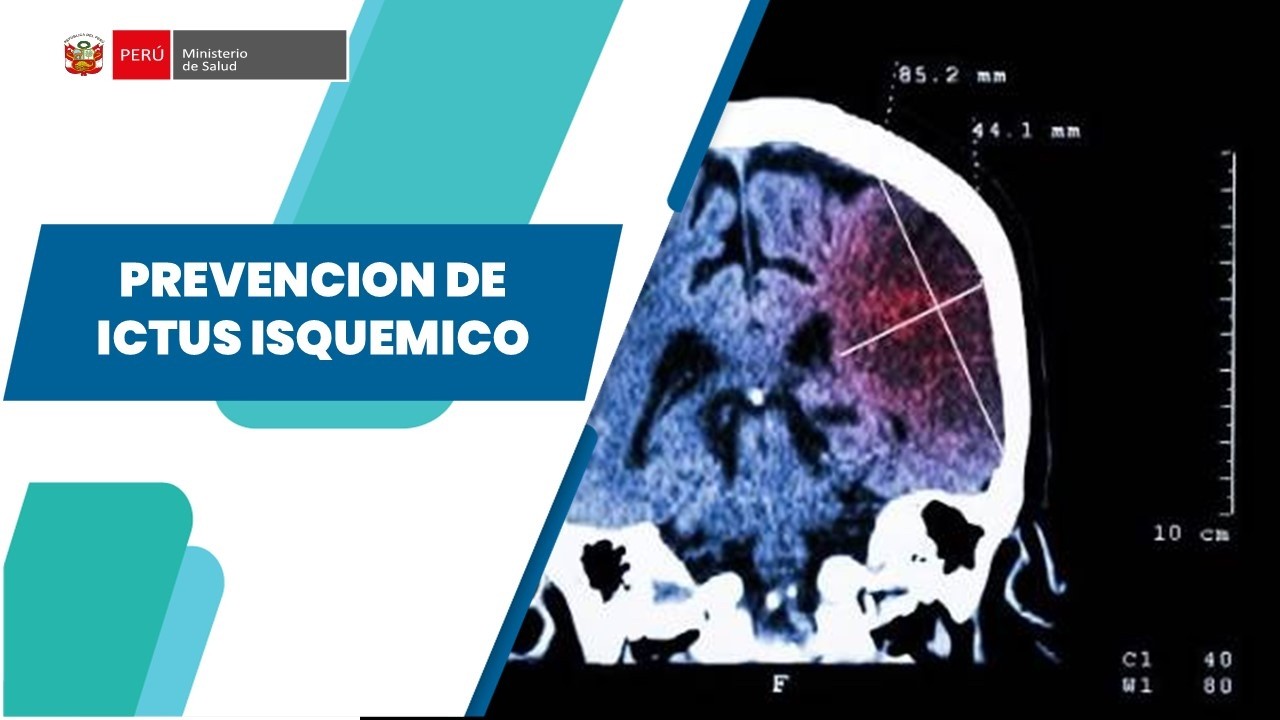

The NIH Stroke Scale is a standardized neurological assessment tool consisting of 11 components that evaluate stroke severity through systematic examination of alertness/consciousness, gaze, visual fields, facial weakness, limb strength, ataxia, sensory function, language, articulation, and neglect, with scores ranging from 0 to 4 for each item (except consciousness which ranges from 0-3), where higher scores indicate greater neurological impairment; however, these scores are considered pseudo-numbers rather than exact measurements due to inherent inter-examiner variability of approximately one point.
NIH Stroke Scale Simulation | Clinical Education for Nurses & Paramedics
Added:Basic neuroanatomy, including the function of cranial nerves, motor and sensory pathways, and the vascular supply of the brain.
The pathophysiology of stroke, specifically distinguishing between ischemic and hemorrhagic etiologies and why rapid assessment is vital.
Fundamental neurological terminology, including concepts such as aphasia, ataxia, dysarthria, hemiparesis, and hemianopia.
The general purpose and structure of the NIH Stroke Scale (NIHSS) as a standardized assessment tool in emergency and acute care.
Official NIHSS certification training to legally administer and document the scale in clinical practice.
Observing and scoring pathological stroke cases, recognizing abnormalities like hemineglect, severe aphasia, or gaze palsy compared to the normal patient baseline.
Clinical decision-making based on NIHSS scores, including indications and contraindications for thrombolytic therapy (tPA) and mechanical thrombectomy.
Understanding the limitations of the NIHSS, particularly its lower sensitivity to posterior circulation (brainstem and cerebellar) strokes.
Integration of NIHSS scoring into the broader 'Code Stroke' protocol, coordinating swift transitions from EMS arrival to CT imaging and neurology consultation.
4.8K views29likes33:11Original Release: 2012-09-19
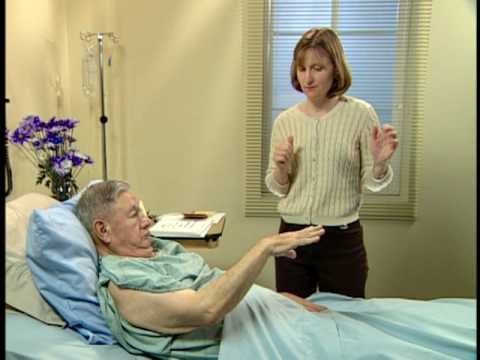
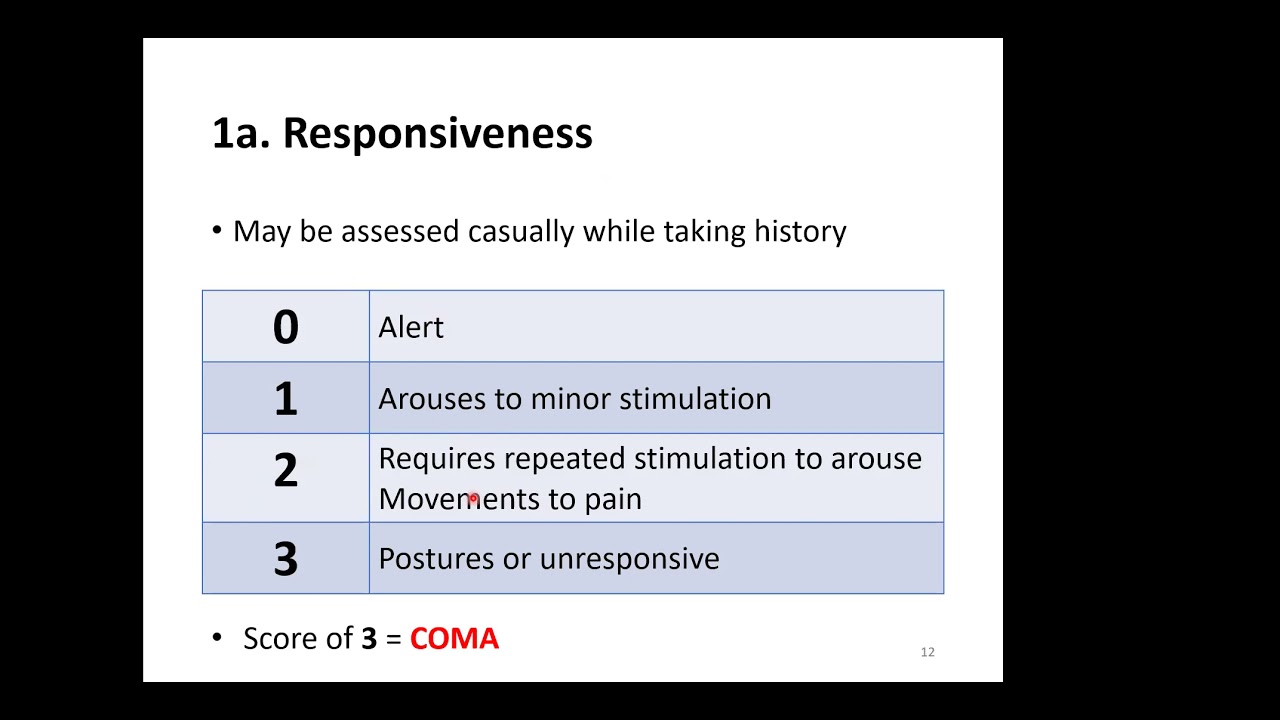
good morning so this is a simulation of the NIH Stroke Scale in a uh normal patient who is and a normal person who is playing patient today um so this is mostly meant for nurses and paramedical Personnel I'm sure that Physicians uh know everything that uh I'm going to uh be demonstrating uh this morning uh it's good to keep in mind that the NIH Stroke Scale uh is a uh generates sud sudo numbers I mean the numbers are not really Arabic numbers they are approximations and two uh evaluators could come to different conclusions varying one point or so so it's not exactly like 2 and 2 = 4 but 2 and two maybe equal to 3.5 or three sometimes or five so with that in mind uh let's go ahead now the ni Stroke Scale has 11 components the first component is concerning alertness and consciousness of the patient and there are three items into that first category the first one goes this way the examiner comes in and talks to the patient hi good morning good morning how are you feeling today good good so that is sufficient to give the patient on one a a score of zero meaning that she is totally awake she is conscious she Converses normally now where do we give a demerit points Dem points if the patient is drowsy so if the patient if left unstimulated would fall back into sleep that we would call Mild drowsiness but it is easy to wake the patient up by uh raising your voice uh or by by shaking her stimulating her physically uh it give a two if you need more intense stimulations to wake the patient up and three score a score of three is given only to patients who are comos and have no reaction to noxious stimuli except the reflex changes such as doing Ain uh pressing on the uh on the on the nerve here the superorbital nerve and then they make some kind of movement that's a reflex and a nonconscious movement so that's the uh 1 a 1 B we give the patient two questions and they should be answered and the first answer is the one that counts and if the patient gives a wrong answer and then corrects it it still has to be judged as being wrong so the two questions go uh this way what month is this February February could could you speak loudly and how old are you 53 good and both of these I judge to be correct and uh she also gets a score of zero she gets a score of one if she doesn't know the month or she doesn't know her age or if she answers by giving the date of her birth for example because that's not what we asked to do now all of these may be silly rules but if you want to maintain um regularity and uh the fact that the numbers should be comparing inter examiner that is in between examiners then you have to be a stickler to the rules the uh 1 C is the third manner in which we test Consciousness and in this particular instance and it is it's for the patient who is not verbal and we ask them to do uh two uh motor functions that are simple uh the first one is close your eyes hard and then open them and she did that so she can obey a simple order the second task is make a fist with your right hand and release and she did that and that's a zero if she gets one of those it's uh one point if she fails at both of them then it's two points uh now which first should you usually ask the patient by looking at them and see who are the weakness say if the patient has weakness on the left side you ask them to make a first with the right right hand if they are weak on the right or they are a phasic you go for the left fist the second item is the best gaze and by the way you already could have made some Judgment of what's going on here because you're observing the patient all the time and seeing and if you can see here the patient is looking to the left and to the right and she seems to have normal gaze but to again uh look at this you keep the patient's head constant could you follow my finger please and she looks this way and then and that is normal there is no need to go up and down and you can do it also easily by asking the patient look to the right and look to the left and that is just as good so you get zero as she did for a normal now if there's a partial gaze policy that is the patient is although I'm sitting standing here to her right she doesn't seem to be looking too much at me but looking at the cameraman uh then uh I know that she has a guge problem to the right and you can judge that and that will get a one point but usually with intense stimulation look over here look over here she can overcome that guge problem we give that a one point and if she's totally incapable of looking in One Direction then we give it two points okay so now we're to number three and that is one of the tests where we get into a lot of problems because I I see them you know in the various sites that we look at first of all hardly anybody ever asks the patient to close one eye and if the patient is cooperative as as as Miss Johnson is then we can ask her to cover her uh left eye and then we test the right eye uh all by itself now if the patient cannot do this then you have to have an assistant who would put a piece of paper or put his hand or her hand in front of of one of the eye cover that eye there are many tricks to do it okay so the way I'd like to do it is this now what you see in the simulation is all kinds of things some people bring in their hands and doing all kinds of gymnastics which if I'm at home or in the office and looking at the TV I don't know where her hand is and I I I don't know what's happening so here is what you should be doing you want to test the four visual fields and you do it by making a first here almost equidistant between my eyes and her eyes and ask her to look at my eye or if you want at at my nose at you at the examiner's nose now how many fingers do you see one okay so the stimulus was short you don't maintain it for a long period of time it is not too much laterally because if the patient has a long nose then she can't see that much laterally and there are some people who go like this it's impossible do you see see can see so you have to keep them here and you have to make sure that the patient is looking at your nose she is not shifting her eyes how many fingers is he two could you raise your voice so they could hear good and then we go to the upper quad here look at my nose now don't look at them and how many one five two and if she sees in all four quadrants as she did then of course we have to test the other eye and you do the same thing two two 5 one okay now if you want you can also look for number 11 you do it beforehand because you're already doing it and this time you can do it with both eyes open look at my here how many fingers you see three three two on this side one on this side she got it right so this is double simultaneous stimulation looking for neglect so you could you could do that part part of number 11 if you wish to do do so if you don't want to do so and you want to follow the exact regimen that's that's fine too okay so that is now what other other people have been doing is this and so on in a conscious patient it's easy now when does it become difficult when the patient is drowsy when the patient has to be stimulated all the time when the patient uh doesn't follow the commands when the patient doesn't respond when the patient doesn't understand the question as when the patient has a phasia then we have to resort to all kinds of tools to help us arrive at a semi quantitative number for example if the patient doesn't then by giving a stimulus a threat a visual threat stimulus coming from the left and she blinked for example meaning that she sees on that side and she blinked again here now make sure you don't poke anybody's eyes while doing this examination also make sure you don't come too close because there is a breeze of air that goes with the hand movement and that could be sensory stimulation of the face okay I hope this is uh pretty well understood then we go to number three looking at the face face weakness Now give me a big smile as you can see she has good symmetrical smile now you've been here examining the patient for the last 5 minutes and you can tell if somebody has a face tro to one side or not just by looking uh and seeing how she reacts to your comments and so on and so forth can you whistle good and she purses her lips all right so we're looking at functions of the lower face and then we go to the upper face close your eyes hard hard hard hard okay good open your eyes Okay and she the the eyebrows go up symmetrically so that will be uh uh an over response takes a zero for that what do we give one we give uh one when the patient has minor asymmetry of one side of the face usually the lower face we give it two when it is a market asymmetry and we give a so we give one for minor asymmetry uh two for a uh partial uh but more severe lower face weakness and we give a three when there is a complete face weak weakness on one side that is the upper face as well as the lower face are completely paralyzed okay then we go to so we have already started with the facial py here with the motor response and as you can see the ni Stroke Scale is heavily weighted towards the motor responses so and it's not necessarily and that that you can see that for example if I I'm a professor of Neurology and I'm a phasic totally a phasic but everything else is normal then I get a level of three which appears to be a very very minor stroke but functionally for me I can't do my job you know I can't I'm not able to talk so or moderately uh moderate aasia I can still do my job and that be a level of two so so that's why I said at the beginning that the NIH Stroke Scale is not does not yield through Arabic numbers they are pseudo numbers be that as it may we continue then we go to the uh now I usually like to start with the limb weakness and I want to go with the normal limb but in a normal patient that or when I don't know I start with the left side could you take your left arm up good extend your fingers like this good and your wrist up and keep it there for the count of 10 1 2 3 4 5 6 7 8 9 and 10 okay well done so that's a zero she kept her hand there was no drift if there was a drift and we'll give her a one that doesn't hit the bed by the count of 10 if the patient drops her head upon release from my with my help then it's um it's two or more uh it is uh it is three if she still can have some movement either at the shoulder or in the in the in the fingers and she can move them laterally uh and you know if it's against gravity we give it to if she can move but not against gravity necessarily then that's a three and four is when there's absolute complete paralysis of that extremity now notice that I went very slowly now how did I gauge this just like a basketball referee you know getting 3 seconds they don't go one to three you know that's not 3 seconds and here I shouldn't be doing 1 2 3 4 5 6 7 8 as I sometimes see in patients that are examined at other centers and I have to stop the examiner and teach them again the role of the basketball referee for the 3 seconds you know 1,001 or 1 1,000 2 1,000 3 1,000 here okay then we test the other extremity the right upper ex will you do the same thing here again one 2 3 4 5 6 7 8 9 and 10 very good okay again the same so the same kind of of uh uh ascribing a number then we look at the strength in the lower extremities we're going to expose your legs here a little bit good now could you take this leg up here keep it up there at around 35 to 40° angle with the knee straight and keep it up up there for the count of five 1 2 3 four and five good and again now again as with the hand you know 1 2 3 4 as you can see you get four for every extremity the potential Four Points so somebody who's completely paralyzed in all four is going to get 16 now let me remind you that Strokes do not usually present that way I'm not saying it doesn't ever occur but usually you know a patient in coma when you start with coma it's usually think again the diagnosis is probably not a stroke that the stroke issue is when you have a unilateral the vast majority of instances a unilateral problem with vision unilateral problem with strength unilateral problem with sensation and so on so forth uh and then the the same thing on the other side okay so we are down now to number seven seven is an issue with ATT taxia now here if the patient is paralyzed if the patient cannot move that extremity at all then there is no need to test for ATT taxia because we already gave four points for this slim being completely paralyzed now ATT taxia is specifically there to look for cerebellar strokes or Strokes affecting the input or output of the cerebellum so it is given as a one or two points or zero points uh for incoordination which is in commensurate with the amount of weakness affected by the cortical spinal tracts so if a patient is very strong as this patient is then I ask her could you kindly take this finger touch the tip of my finger than the tip of your nose back and forth right again you know you don't need to move move these I see some people giving you know extreme movements a range of movements there's no need just move your hand once or twice and see she did that and look at the way she looked she she hooked her uh her her tip of the finger to the tip of my finger and then to the tip of her nose now if the patient went this way that would be a sign of attack here and that given her strength which will be already examined and found to be very strong she can keep her hand up but she cannot touch her nose then that'll be anaia and that should be given an under and zero is when and now we test the the the other [Music] finger three times is sufficient and then the heel toin take this leg up in the air put your heel on your knee and Scoot it down your shin please good up and down good and she did that she didn't go okay now look on the other side fantastic good so that is that's that's that basically uh we give zero if there's no attack here in any of the four extremities we give one point for Axia in one extremity and we give two point for attack and two extremities and usually the two extremities are on the same side okay now that's another number eight is sensory examination now we want to do a gross sensor examination there is no need for the patient to close her eyes I want her to understand and we examine three places the face the upper extremities and the lower extremities bilaterally and we are trying to find out if there is a difference in the so do you feel this shop yes yeah you feel this here shop yes and notice that I have stimulated the patient two or three times and the patient is supposed to do an algebraic summation and give an average here because I'm not a robot and I cannot put the pin on the skin with the same Force every time so why do it several times on one side and several times on the other side and ask the patient to tell now here is the problem and you can look from the reaction you know because if the now this is an8 patient that you can reason with uh we are seeing a lot of people who have psychogenic problems and that's becoming one of the major issues and you get some people who are the sensory examination is a very subjective examination it's the hardest part of the neurological examination because you are totally dependent on what the patient tells you and if the patient is trying to seek attention they can agiz the differences so sometimes you'll say uh no they're not the same then I try to pin them down if it's 100% on one side how much is it on the other and if the patient comes back with an answer like 95 or 96 then it's the same I'm not a robot and anything that's 4% doesn't count really but if the patient says well this is 60% of the other one or 50% or 40% then we call that M and that we give it a score we give score if it's if it's normal if it's equ equal on both sides if there's a partial loss on one side by 50% then we give it a one so the sensory exam doesn't count too much into the ni Stroke Scale and the maximum you can get is a dense loss and the dense loss is defined as the patient is not aware that you even touch them that's the definition of a dense loss if I say yeah I can still feel it but it's like 20% that's not really all that dense but if the patient says am I touching you yes yeah but if the patient says no you're not touching me then that will be she's unaware that I'm even touching and the same thing could be applied you can do it here but I like to do it with a pen here you get that attention do you feel that you do do you feel that is it CH is it same same yes it's the same and then we do it on the lower extremities try to avoid the very distal extremities particularly in women because they have a lot of neuromas from uh wearing high heeled shoes for a long period of time and many of the toes could be anesthetic do you feel this yes and you feel this yes same same same so that's the extent of that examp okay now the language and that's where you need you know many of the people who Str are over the age of 40 over the age of 40 you need glasses to be able to see at a you go to a restaurant you need glasses to be able to read the menu and there are three items that are used to find out if the patient ising one of them is to show this picture picture uh I I hope that we're having the picture with the woman at the um in the kitchen okay could you tell me what's going on in this picture the woman's washing dishes and could you raise the woman's washing dishes and the water's overflowing and the kids uh climbing on the stool getting a cookie and they got ready to fall okay and she now that that could a lot of things first of all you're looking here for the use of words the vocabulary of the patient and she touched on all the important thing she saw the cookie jar up there now a patient with hemianopsia for example would ignore if it's the right hopia will will ignore totally the uh woman um washing the dishes because when they look in the at the picture as a whole they only see the the left part of it and vice vers the patient has anopia so that that's an important thing to keep in mind then the other item is to name so we're looking for an omia and could you tell me what this is glove glove and this feather good and this hammock and this chair and this's key and this one here Cactus good she got them all so she scores uh zero so far and then she's got to read these items here could you read those statements please you know how down to earth I got home from work near the table in the dining room they heard him speak on the radio last night good and with all of that she gets to zero now how much can you get for aasia uh if it's SM to moderate Aphasia she doesn't she has lot of some defects glaring defects then you get only one point she can name maybe half of it severe aasia when she cannot name anything or she can't read well you know and that is all totally subjective you give it to and when if the patient is mute entirely mute cannot say anything intelligible at all then we give a three so the most severe AAS here is a three now when she were reading the statements you could tell whether the patient is this arthic or not because this arth as the patient says shair but it she is this aric and it's not easy to understand but to get on to that first there are a list of items here that are thought to bring out problem with enunciation could you read those please mama tip toop 5050 thanks hry baseball player and she did that perfectly so she gets a zero for the dis arri which is number 10 now if it's a normal articulation she gets a zero if there's a mild to moderate slurring she gets one and if they're severe nearly unintelligible or worse but you know what she is saying because you know what she's reading then we give that into two now you please do not uh misinterpret this ARA for Aphasia and the last one here is the extinction and the extinction takes place here in Visual and tactile stimulation now the visual I saw that before now you can have you can you can have it with either now this one you can do with the eyes both eyes open look at my nose please how many fingers you see three good four five could you point to the area that's um where you see them and it's clear that she has no uh Extinction and then we do it with the uh tactile stimulation close your eyes please I'm going to touch you on one side of the body if I touch you on the left side you tell me left if I touch on the right you tell right if the patient cannot say those things then I would ask her to Point Raise a finger on the side that she's touched on or something like that you have to be resourceful in this exam you have to change your tactic to arrive at the proper answers to your questions depending on the patient's neurological condition so what did that touch you left left and it should be a mild stimulus and should not be a repetitive and that's what I see all the time they go like this where did I touch you you know I mean that defeats the purpose right left both okay now we'll do the same thing on the hands here left right and do same thing with the low exra both left right okay so that's the end of the ni Stroke Scale and here you give zero for no neglect as M Johnson did uh if it's a partial neglect that is to one mode of stimulation we give a one and if it's both Visual and tactile then we give a two okay and that's that's the end of that thank you for your attention and I hope that you found this presentation useful
Up Next

11:22
ECG Axis Tutorial: Einthoven's Triangle and Law
@Meducator01
99.4K views•2012-10-30

48:47
Graphic Medicine: Comics for Collaborative Healthcare Communication
@nationalpatientadvocate
189 views•2023-12-04

10:28
Neuroanatomy: Central and Peripheral Nervous System Divisions Explained
@AKLECTURES
136.2K views•2014-09-20
3:05
Stages of Labor and Vaginal Birth | Childbirth Animation
@nucleusmedicalmedia
52.1M views•2017-08-18
Related Study Plans & Knowledge Roadmaps
Structured learning paths in Medicine
medicine
Abnormal LFTs: Diagnostic Workup & Pathology
01Liver Anatomy and Basic Physiology
02Introduction to Liver Function Tests (LFTs)
03Hepatocellular vs. Cholestatic Patterns
+ 3 more learning modules
12h6 modules
Explore Roadmap
medicine
Analyzing Blood Smears: RBC, WBC & Platelets
01Introduction to Blood Components & Smear Preparation
02Normal Morphology of Blood Cells
03Erythrocyte Pathologies & Morphological Variants
+ 2 more learning modules
12h5 modules
Explore Roadmap
medicine
Mechanical Ventilation: Waveforms & Alarms
01Anatomy and Physiology of Breathing
02Introduction to Mechanical Ventilation & Core Modes
03Ventilator Settings and Waveform Interpretation
+ 2 more learning modules
12h5 modules
Explore Roadmap
medicine
Neuro Exam: Localization & Stroke Syndromes
01Foundations of Neuroanatomy and Vascular Supply
02The Neurological Examination: Step-by-Step
03Principles of Neurological Localization
+ 3 more learning modules
18h6 modules
Explore Roadmap