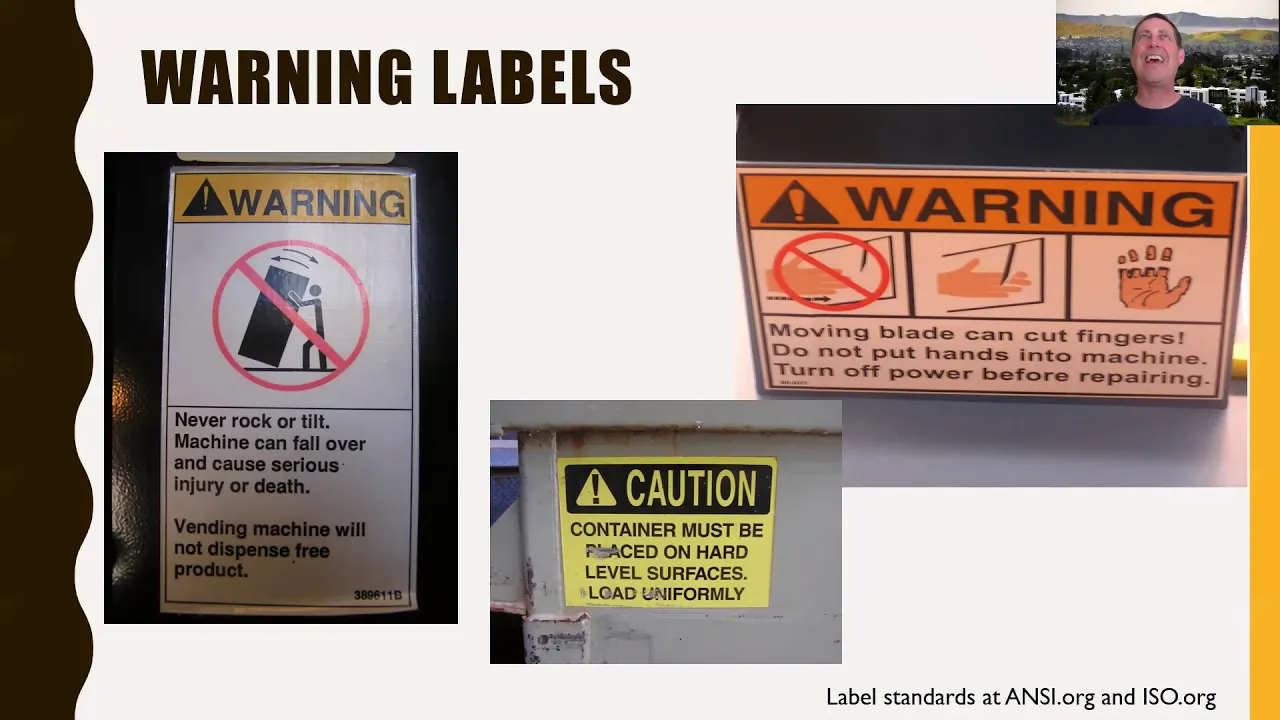



















In product liability lawsuits, warnings and failure to warn are the primary battleground, as companies must provide adequate safety information including hazard identification, consequences of contact, and avoidance methods; companies should follow ANSI Z535 standards to establish a national uniform system for hazard recognition, which carries legal weight in court and helps demonstrate corporate responsibility to juries.
Product Liability Lawsuits: The Role of Warning Labels
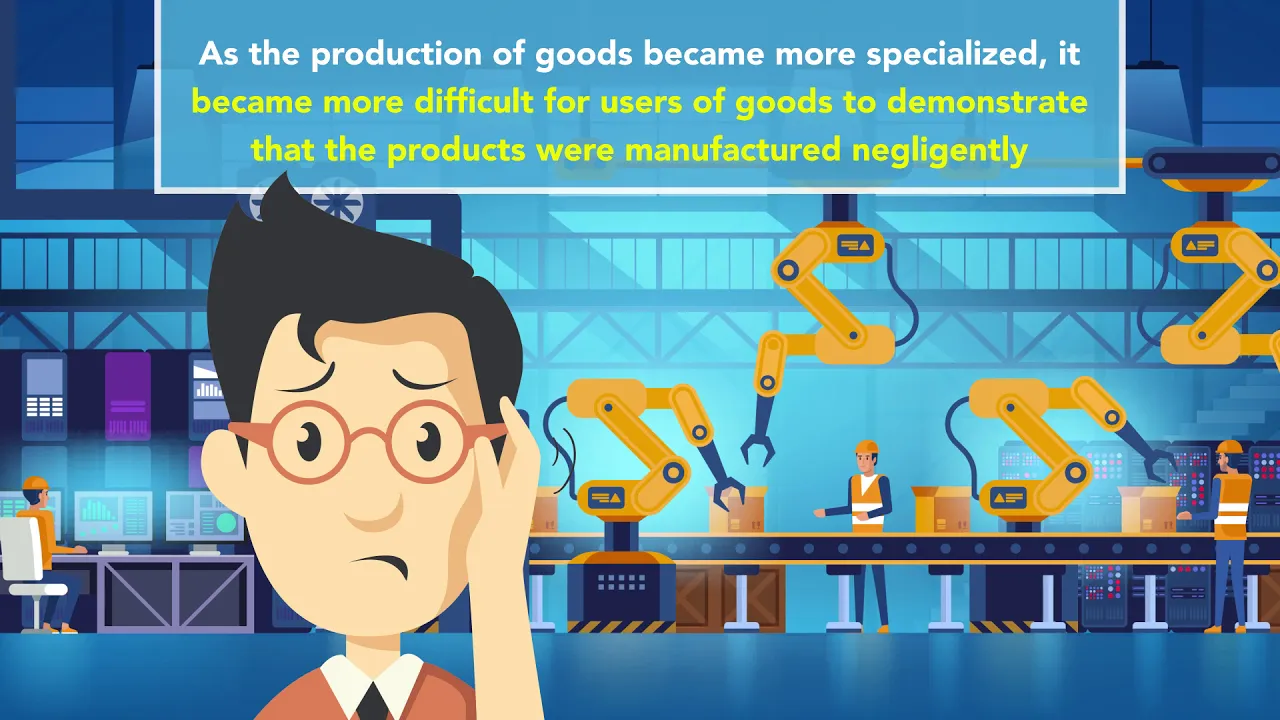
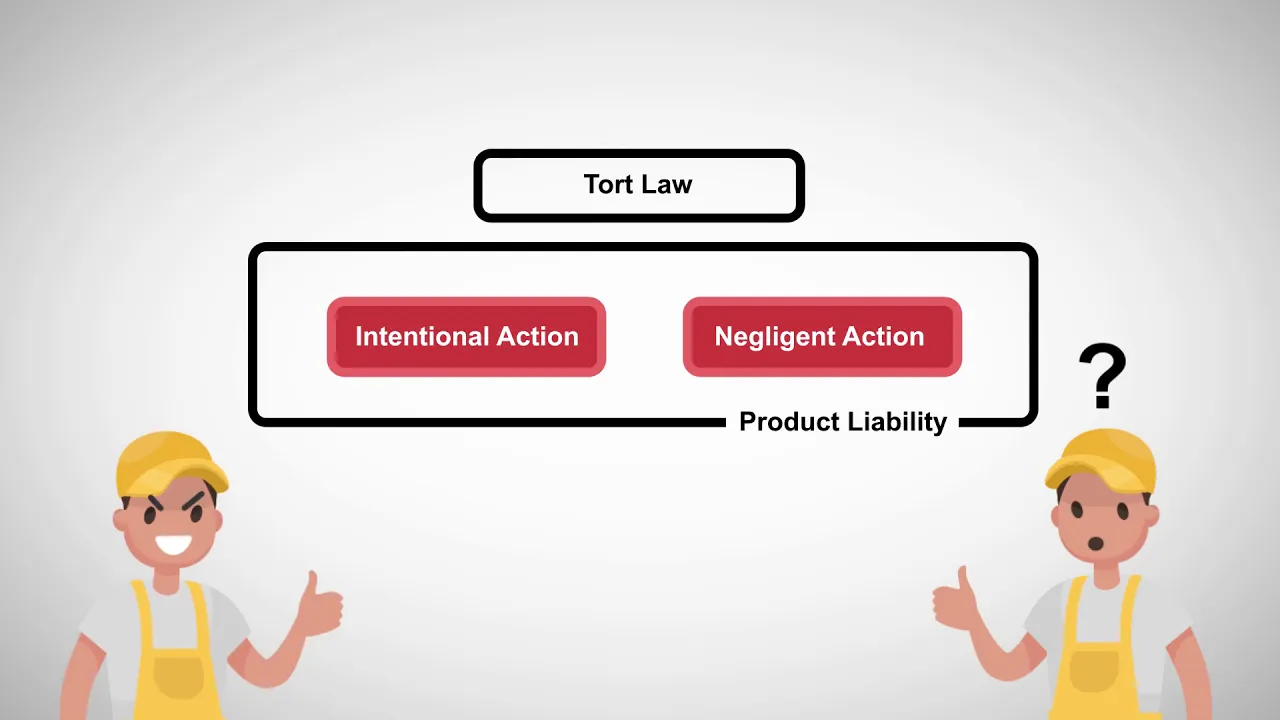
Added:The fundamentals of tort law, specifically the three categories of product defects: design defects, manufacturing defects, and failure-to-warn (marketing) defects.
The legal doctrine of 'Duty to Warn,' including when a manufacturer is legally required to provide warnings and instructions to consumers.
The concept of 'strict liability' in product liability cases, where a plaintiff does not need to prove negligence, only that the product was defective and caused injury.
The role of voluntary consensus standards and standard-setting organizations (such as ANSI) in industry regulation and legal compliance.
A detailed examination of the ANSI Z535 standard series, including specific design guidelines for safety colors, symbols, and formatting of warning labels.
The study of human factors engineering and cognitive psychology to understand how users perceive, comprehend, and physically respond to warning labels.
Analyzing real-world case law where warning adequacy was litigated, focusing on how compliance with standards influenced court rulings on 'state-of-the-art' defenses.
Comparing domestic (ANSI) and international (ISO 3864) hazard communication standards for products distributed in global markets.
17K views0likes4:49Original Release: 2012-10-25
one of the most famous product liability cases at subject of debate is the McDonald's coffee case everyone knows coffee is hot however did people realize that if you get hot coffee that's hotter than the norm on you the hazard is such that it can cause severe skin injuries so it wasn't that the hazard wasn't apparent it was the severity of the harm was not readily apparent the fact is McDonald's had hundreds of claims of very serious injuries and burns and the allegation against it was that it didn't care about the safety of people using its product you have to have a good design but that's not going to prevent accidents from happening warnings and failure to warn is the battleground in product liability losses I don't think there's been a product liability suit that's been filed where there wasn't some aspect of warnings at issue exhibit one in a products case should always be the safety brochures the warning labels that accompanied the product the company gives the user all of the information that the user needs to safely use the product one what is a hazard to what are the consequences of coming into contact of the hazard and three how to avoid the hazard the fact that someone has misused the product and caused harm then is not the fault of the company because the company provided the information necessary to safely use the product if the warnings and the labels are not adequate if they're sloppily made if they're poorly written if they're grammatically incorrect if they look like a legal document it's gonna be much more difficult for the company to win the court case if it's well done it's a huge step in resolving the case before it even gets to go to trial the first place a manufacturer should look in trying to put out an effective and adequate warning is the ANSI Z 535 standards ans I can see it stands for their American National Standards Institute now ANSI C 535 is a committee within ANSI that standardizes safety signage the overall purpose of the NCC 535 committee is to establish a national uniform system for hazard recognition so people can see a sign or label or tag or a barricade tape and automatically understand that's something to do with safety without standardization it would be all over the place the NCC 535 committee is made up of between 40 and 45 people from all different walks of life so they have the product manufacturers there you've got the government bodies there the Consumer Product Safety Commission's represented on the committee we're using human factors research we're using court opinions and we're using the experience of the committee members and practically applying these standards out in the field the ANSI Z 535 standard will carry weight in a court of law because it's been recognized as the standard that's required for manufacturers in designing warnings and instructions for their products the jury will be able to assess the fact that the company was aware of an cz 535 standards and took steps to meet them the attorney for the injured party will point to those standards and will argue that a company which fails to meet the ANSI Z 535 standards has acted in a negligent a careless or potentially even reckless manner if a company wants to successfully defend itself it has to convey to a jury that it is a responsible company and a good corporate citizen juries are very receptive to arguments of responsibility via corporate responsibility and individual responsibility many times products are complicated design has many different ramifications it can be very complex failure to warn however is something that's simple and a jury can easily understand if this person had this information they would not have done what they did which caused the accident it's a very easy scenario for a jury to understand by having an adequate warning system in place right from the beginning you avoid all of the costs associated with litigation you avoid all the harm that happens to the individuals involved in the manufacturing process you prevent this second-guessing of your product down the road and the damage to your corporate reputation
Up Next
40:18
Nintendo Joy-Con Drift Lawsuit: Legal Analysis and Consumer Implications
@HoegLaw
1.6K views•2019-07-20

6:55
Understanding Copyright and Fair Use in the Digital Age
@techquickie
144.1K views•2016-07-22

5:27
Forensic Phonetics: Speaker Identification in Legal Cases
@nptel-nociitm9240
539 views•2025-03-19

24:42
Police Interrogation Tactics: False Confessions & Legal Reform
@LastWeekTonight
7M views•2022-04-18
Related Study Plans & Knowledge Roadmaps
Structured learning paths in Law
law
Analyzing Mergers: Clayton Act & FTC Rules
01Introduction to Antitrust Law and Market Competition
02Corporate Mergers and Section 7 of the Clayton Act
03Defining Markets and Measuring Concentration (HHI)
+ 2 more learning modules
10h5 modules
Explore Roadmap
law
Self-Defense Law: Imminence & Castle Doctrine
01Foundations of Self-Defense Law
02Imminent Threat & Reasonable Belief
03The Principle of Proportionality
+ 3 more learning modules
12h6 modules
Explore Roadmap
law
Defamation Law: First Amendment & Actual Malice
01Introduction to civil torts and the First Amendment
02Elements of Defamation: Libel and Slander
03Public Figures vs. Private Individuals
+ 2 more learning modules
8h5 modules
Explore Roadmap
law
Hearsay Rule: Trial Evidence & Exceptions
01Introduction to Trial Evidence & Courtroom Basics
02Demystifying Hearsay: The Core Definition
03Non-Hearsay: Exclusions Under FRE 801(d)
+ 3 more learning modules
14h6 modules
Explore Roadmap