This video analyzes Jusepe de Ribera's 1639 painting The Martyrdom of Saint Philip, demonstrating key Baroque artistic techniques including dramatic chiaroscuro (contrast between light and dark), intense physical realism depicting muscular strain and bodily vulnerability, strategic foreshortening to create spatial depth, and the use of architectural elements to frame the composition; these techniques collectively convey the emotional intensity and spiritual drama characteristic of Baroque religious art.
Ribera's Martyrdom of Saint Philip: Baroque Realism & Caravaggio Influence
Added:Deep Dive
Understanding of Caravaggio's revolutionary use of chiaroscuro and tenebrism in early 17th-century Italian art.

Véronique Damian présente l'exposition "Caravagisme et ténébrisme en Italie au XVIIe siècle"
199
Caravaggio revolutionized 17th-century Italian art by introducing dramatic chiaroscuro (strong light-dark contrasts) that created powerful, naturalistic compositions, influencing artists throughout the century; this technique emphasized physical presence over spiritual significance, produced instantaneous photographic-like impressions, and was adapted in still life paintings, with some artists adding candles to materialize light sources and enhance temporal dimension.
Click to watch →

ARTE BARROCO. CARAVAGGIO (01)
5.2K
Caravaggio invented tenebrism (chiaroscuro), the dramatic use of light and shadow that became Baroque art's great conquest. Unlike Leonardo's sfumato (soft transitions), Caravaggio's chiaroscuro involves brusque, exaggerated transitions where light irrupts with force. His 'linterna effect' illuminates only specific areas while leaving others in absolute darkness. This technique was revolutionary because Caravaggio was accustomed to living at night, in fights, and in dark environments, which he extrapolated into his paintings. The light serves not just illumination but as a narrative and emotional device.
Click to watch →

Complément - Caravage
102.3K
Caravaggio (Michelangelo Merisi, 1573-1610) revolutionized Western art by developing a dramatic chiaroscuro technique that used stark contrasts of light and shadow to create intense emotional and spiritual impact, despite being rejected and hated by most of Rome during his lifetime for his vulgar realism and controversial lifestyle; his influence profoundly shaped 17th-century European painting, establishing a new paradigm that prioritized raw human truth and dramatic intensity over idealized beauty.
Click to watch →
CARAVAGGIO: Maestro de Tinieblas 💀 (Biografía y Análisis de Pinturas)
51.9K
Caravaggio was a spontaneous and rapid painter who always worked from life. His technique involved: (1) applying a brown base to the canvas, (2) making incisions to determine figure placement, (3) outlining and shading with black, (4) applying white and colors while the paint was still wet to make figures emerge from darkness, (5) creating subtle transitions by blending into the underlying black layer, and (6) adding thicker paint in high-contrast areas for emphasis. The black background became a hallmark of his work, later known as tenebrism, which spread throughout Europe.
Click to watch →
Caravaggio, el tenebrismo del barroco. 1ª Parte
5.3K
Caravaggio pioneered a revolutionary approach to painting by depicting human figures exactly as they are, without idealization. He painted subjects with dirt on their fingernails, grease on their skin, and dirty feet from walking barefoot, even for religious figures like Christ and the Virgin Mary. This radical realism caused controversy in his time. His extraordinary manipulation of light, called tenebrism, became a defining feature of his work. The term refers to his exceptional ability to source and position light within paintings, not to darkness or gloom. This revolutionary approach opened the door to Baroque art, as the mathematical balance of Renaissance art no longer resonated with people in a society enriched by colonial wealth and excess.
Click to watch →
Deep Dive
The historical context of the Counter-Reformation and how the Catholic Church used dramatic visual art to engage viewers emotionally.

Caravaggio, Bernini and Pozzo: Great Art Cities: Rome
154.3K
The Baroque style emerged in Rome as a direct response to the Protestant Reformation. Unlike Renaissance art which emphasized control and perfect balance, Baroque art featured dramatic flair and movement. The Catholic Church used this artistic style as a weapon against Protestantism, commissioning works that would emotionally engage laypeople and reinforce Catholic doctrine. The Counter-Reformation decreed that art should be clear, direct, emotional, and didactic—conveying religious messages accessible even to illiterate audiences. This explains why Baroque art became characterized by emotional intensity, religious ecstasy, suffering, and triumph.
Click to watch →

The Reformation: Martin Luther's 95 Theses and Legacy - Rick Steves' Europe
4.5M
By mid-1500s, the Roman Church employed the Counter-Reformation to stem the tide. The Vatican worked to reform internal corruption and reach out to alienated members, while also resorting to propaganda, intimidation, and force. Art became a propaganda tool—extravagant Counter-Reformation art dazzled with gold leaf and ornate decorations, offering glimpses of heaven for faithful. Counter-Reformation artists painted radiant, soft-focus Marys with warm colors and gentle light. This Baroque style featured large canvases, bright colors, rippling motion, wild emotions, grand themes, and holy saints, appealing to peasants and nobles alike and making heavenly visions real.
Click to watch →
이탈리아 바로크 미술 거장 카라바조 강연 안현배 미술사학자
46.2K
The Counter-Reformation encouraged elaborate religious art to inspire devotion and counter Protestant criticism. This policy led to the commissioning of grand, emotionally powerful religious paintings that would help Catholics feel chosen and connected to their faith. Baroque churches featured illusionistic ceiling paintings that created the illusion of infinite space, using perspective and light to make viewers feel as if they were looking up into heaven. The Jubilee (Holy Year) was a Catholic tradition where pilgrims could receive remission of sins by visiting Rome. Pope Clement VIII declared 1600 a Jubilee year, encouraging global Catholic pilgrims to visit Rome and bringing economic benefits to the city.
Click to watch →

Caravaggio's Taking of Christ: Great Art Explained
780K
During the Counter-Reformation, the Catholic Church commissioned hundreds of new artworks as powerful weapons of propaganda against Protestant faith. Artists were asked to produce emotionally engaging and intense works that were accessible and realistic enough to inspire the masses. This period marked a deliberate effort by the Church to reclaim religious influence through visual art that could reach ordinary people.
Click to watch →
Art II: Renaissance & Baroque 1400–1800, with Rick Steves
229.5K
The Catholic Church responded to Protestant challenges through the Counter-Reformation, using art and architecture to reaffirm Catholic doctrine and attract converts. Spain became the primary defender of Catholicism, with El Escorial palace serving as headquarters for this campaign. Baroque art served as propaganda promoting pro-status-quo values and divine monarchy. Paintings depicted angels seizing translated scriptures and burning them, condemning Protestant translations. The Counter-Reformation emphasized emotional engagement over intellectual debate, using dramatic art to communicate Catholic teachings to largely illiterate populations and reinforce loyalty to established religious authorities.
Click to watch →
Deep Dive
Basic knowledge of the Spanish Golden Age (Siglo de Oro) and the artistic exchange between Spain and Italy (specifically Naples).
Siglo de Oro español (Literatura): Historia/Características/Representantes
169.9K
The Spanish Golden Age (Siglo de Oro) was a remarkable period of cultural and literary flourishing in Spain spanning the 16th and 17th centuries, divided into two distinct phases: the Renaissance (16th century) and the Baroque (17th century). This era was characterized by the dominant influence of the Habsburg dynasty, the Catholic Church's Counter-Reformation and Inquisition, and the emergence of satire as a central literary device. The period produced masterpieces across multiple genres, including the picaresque novel exemplified by 'La Lazarillo de Tormes,' lyrical poetry by Garcilaso de la Vega and Luis de Góngora, theatrical works by Lope de Vega and Calderón de la Barca, and above all, Miguel de Cervantes' 'Don Quixote,' which established him as the greatest representative of the era and a precursor to modern novelistic techniques.
Click to watch →

"La Virgen del pez" de Rafael revive el pasado español de Nápoles
402
Spanish Renaissance artists such as Pedro Pachuca, Alonso Verruguete, Diego de Siloe, and Bartolomé Ordóñez traveled to Naples in the early 16th century to study the works of Italian masters like Leonardo da Vinci, Michelangelo, and Raphael, bringing back artistic influences that shaped Spanish art; this cultural exchange was facilitated by Naples' integration into the Spanish Crown, which transformed the city into a prosperous cultural hub where Spanish artists could absorb Renaissance techniques and artistic traditions.
Click to watch →

Caravaggio, Velázquez, Bernini: Rome brings seventeenth century artworks to light
1.9K
This exhibition at the Quirinal Palace in Rome showcases 60 masterpieces from the 17th century, featuring works by Caravaggio, Velázquez, and Bernini, which reveal the rich artistic exchange between Spain and Italy during this period when Spain, as a dominant world power, commissioned renowned painters to create masterpieces for their palaces.
Click to watch →
@cartolineparlanti di controstoria che restituisce a Napoli il suo ruolo:capitale, civiltà, visione.
190
Despite being anti-Bourbon, Benedetto Croce acknowledged the Spanish viceroyalty achieved two major objectives: protecting the kingdom from external aggression and maintaining two centuries of peace. During the devastating Thirty Years' War, while Europe suffered, Naples remained peaceful. The Spanish suppressed the 'baroni' (feudal lords) who had been the 'constitutional vice' of the kingdom. Between the 1500s and 1600s, Naples experienced a golden age of art, law, and literature, with the great Neapolitan school of law and the Neapolitan musical tradition emerging.
Click to watch →

SPANİSH GOLDEN AGE!!! #spanish #goldenage #spanishgoldenage #spanishhistory #goldenagehistory
873
The Spanish Golden Age (Siglo de Oro) was a period between the 15th and 17th centuries when Spain became one of the most powerful empires in history, marked by Christopher Columbus's discovery of America in 1492, the fall of Granada ending Muslim rule, the reign of Charles V and Philip II, the Spanish Armada's defeat in 1588, and flourishing achievements in literature (Miguel de Cervantes' Don Quixote) and art (Diego Velázquez), which established Spain as a global center of exploration, wealth, and cultural influence.
Click to watch →
Deep Dive
Familiarity with the concept of hagiography and the visual conventions used to depict Christian martyrdom.

Lecture 12 Early Christian and Byzantine Art
720
Martyrs held central importance in early Christian art because they embodied the ultimate Christ-like sacrifice, having been tortured and killed for their faith. Artists depicted martyrs as Roman senators—short-haired, clean-shaven, wearing robes indicating importance—to make their status immediately recognizable to contemporary audiences. Key iconographic elements included the cross with a long stem functioning as a staff (identifying martyrs), halos derived from Apollo imagery (representing spiritual status rather than physical power), and books symbolizing sacred scriptures. These visual conventions allowed Christians to communicate complex theological concepts about sacrifice, divine recognition, and scriptural authority through established visual languages that audiences could immediately understand.
Click to watch →

quarta meditazione avvento 2013
151
A martyr is defined as one who declares 'I am of Jesus' and is willing to die for this commitment. Unlike ancient pagan heroes who displayed strength, martyrs appear weak yet this brings them closer to the Divine. The Church has venerated martyrs since its earliest days, with 2,300 bodies in Santa Sede alone. The patron saint is Saint Stephen, the first martyr. The Church developed specific iconographic conventions: the palm represents martyrdom and victory through Christ's passion; the crown symbolizes victory and justice; the cross represents the manner of death; white vestments represent purity and resurrection; the red drape symbolizes blood sacrifice; and armor represents spiritual battle.
Click to watch →

Mulheres na Igreja da Alta Idade Média: as hagiografias | Com Profa. Clarissa Mattana
1.2K
Hagiographies are literary texts from late antiquity and the Middle Ages describing the lives of saints, including poems, hymns, lists of saints, martyrdom accounts, and vitae. They served multiple functions: read in monasteries during liturgical services to convey moral and theological messages, and sometimes as entertainment with an edificant purpose. The primary purpose was to defend sanctity and promote cults in specific localities. They educated newly converted populations about Christian faith, frequently referencing biblical texts. Additionally, they promoted specific religious institutions, monasteries, or noble families. Historically, scholars sought authentic versus fictional elements during the Counter-Reformation, but modern historians now focus on contextual analysis. Hagiographies are not biographical texts but literary works containing characteristic elements including miracles and 'topoi'—commonplace narratives derived from biblical references.
Click to watch →
ST WINEFRIDE'S WELL - A CATHOLIC SHRINE that survived the Reformation.
30.2K
Hagiography is a particular Christian literary genre that is formulaic and has a precise purpose. It is intended to present the central elements of a saint's life in a very formal way that emphasizes miracles associated with them or their holy living. The purpose of hagiography was two-fold: first, to encourage hearers or readers to emulate the saint's holy life, and second, to popularize and preserve the tradition of the saint's cult. These medieval lives of saints should not be approached as biographies but as religious texts designed to inspire devotion and maintain the saint's legacy.
Click to watch →

С миром по мiру. Серия 6. Видеопрогулки и беседы священника
4K
In ancient hagiography (lives of saints), it was a common literary convention to include direct speech from God or dialogues between divine figures. This practice originated in Byzantine literature and was considered normal at the time. The actual historical events were often brief, but over centuries, various editions and versions developed, adding elaborate dialogues and speeches. This is similar to how modern religious services include constructed dialogues, such as the canonical dialogue between the Virgin Mary and the Archangel Gabriel at the Annunciation, which was not an actual historical conversation but a literary device.
Click to watch →
Prerequisite Knowledge
- Concept 01Understanding of Caravaggio's revolutionary use of chiaroscuro and tenebrism in early 17th-century Italian art.
- Concept 02The historical context of the Counter-Reformation and how the Catholic Church used dramatic visual art to engage viewers emotionally.
- Concept 03Basic knowledge of the Spanish Golden Age (Siglo de Oro) and the artistic exchange between Spain and Italy (specifically Naples).
- Concept 04Familiarity with the concept of hagiography and the visual conventions used to depict Christian martyrdom.
Subsequent Learning
- Step 01Comparative analysis of Ribera's realism with other Spanish masters of the era, such as Diego Velázquez and Francisco de Zurbarán.
- Step 02An in-depth study of Ribera's broader oeuvre, focusing on his interest in physical deformity, aging, and psychological depth.
- Step 03Exploration of the Neapolitan School of painting and Ribera's lasting influence on local artists in southern Italy.
- Step 04Investigating how 17th-century Spanish realism influenced later 19th-century realism and artists like Édouard Manet.
Martyrdom's Body
Sacred Space
Martyrdom's Body
0:00Playing Section
- 1
Analyzes Ribera's depiction of Saint Philip's vulnerable, hollow body.
- 2
Highlights the dramatic Baroque use of chiaroscuro and muscular strain.
- 3
Discusses the composition's concavity and the saint's loss of control.
The Neo-Venetian Departure: Light and Colorism over Caravaggesque Tenebrism
While traditional analyses of Ribera's 'Martyrdom of Saint Philip' heavily emphasize Caravaggesque realism and dark chiaroscuro, art historians note that this 1639 masterpiece actually represents Ribera’s decisive shift away from dark tenebrism toward a luminous, Neo-Venetian style. Influenced by Venetian colorism, Anthony van Dyck, and the classicism of Guido Reni, Ribera utilized a bright, open-air setting, a silvery light, and a vibrant palette of blues, reds, and ochres. Rather than focusing solely on brutal, gritty naturalism, this alternative perspective highlights how the painting’s complex, dynamic geometry and soft lighting elevate the scene into a heroic, theatrical triumph rather than a simple study in physical torment.
Deep Dive
Comparative analysis of Ribera's realism with other Spanish masters of the era, such as Diego Velázquez and Francisco de Zurbarán.
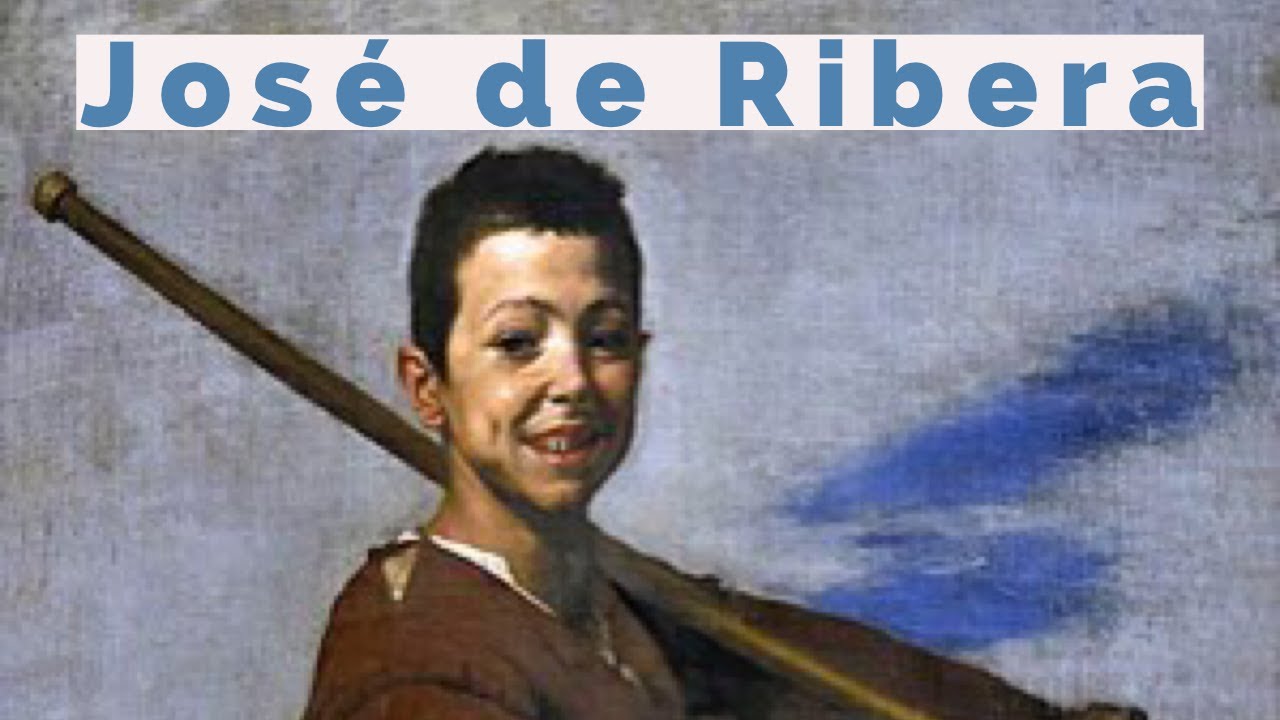
José de Ribera pintor barroco en 10 minutos
9.8K
José de Ribera (1591-1652) was a major Spanish Baroque painter from Játiva, Valencia, who trained in Italy before settling in Naples in 1616 due to financial debts. His artistic philosophy centered on extreme realism, pushing boundaries to depict subjects bordering on the unpleasant—from his series on the senses (tearful beggar with onion for olfaction) to graphic religious paintings showing torture and martyrdom. Despite this reputation, he also created delicate religious works like the 1635 Immaculate Conception and poetic landscapes. Initially using chiaroscuro, he evolved toward general illumination like Velázquez. His surviving drawings reveal meticulous anatomical studies. While Velázquez dominated Spanish Baroque, Ribera stood equal to the best European painters, possessing a distinctive style and personality that gave his works originality.
Click to watch →
Золотой век Испании: взлет и падение первой мировой империи
130K
His paintings of Toledo became models for a new European landscape tradition and influenced the work of later Dutch masters. In the first half of the 17th century, the star of such great masters as Velázquez, Zurbarán, and Ribera shone. Diego Velázquez, at the beginning of his creative life, devoted his modest paintings to the lives of poor people, craftsmen, cooks, and masters at work. Later he became a court royal painter. His portraits of the king, ministers, the Pope, and other figures, as well as landscapes and sketches, amazed with their realism and depth. Three centuries later, Diego Velázquez became an example for French Impressionist painters. Among the geniuses of the Spanish Golden Age were also such painters as Francisco de Zurbarán, Pacheco, Murillo, Cano, and Ribera. Parallel to this, Spanish literature reached worldwide significance.
Click to watch →
UGC NET Visual Arts | UGC NET Visual Art Baroque Art | By Zainab Mam
459
Spanish Baroque art produced two major masters: Diego Velázquez (1599-1660) and José de Ribera (1591-1652). Velázquez, born in Seville, served Philip IV's court and pioneered nude painting with 'The Rokeby Venus.' He created 'Las Meninas' and 'The Surrender of Breda,' using effects of light and air to create floating figures. Ribera, born near Naples, developed Naples Baroque style with tenebrism—dramatic dark lighting creating mysterious effects. Using tar for black color, his paintings glowed like sea reflections. Both combined Italian and Spanish influences, with Ribera's 'Plautian School' merging Spanish religious depth with Italian realism. Their works exemplify how Spanish Baroque balanced courtly commissions with innovative artistic techniques.
Click to watch →
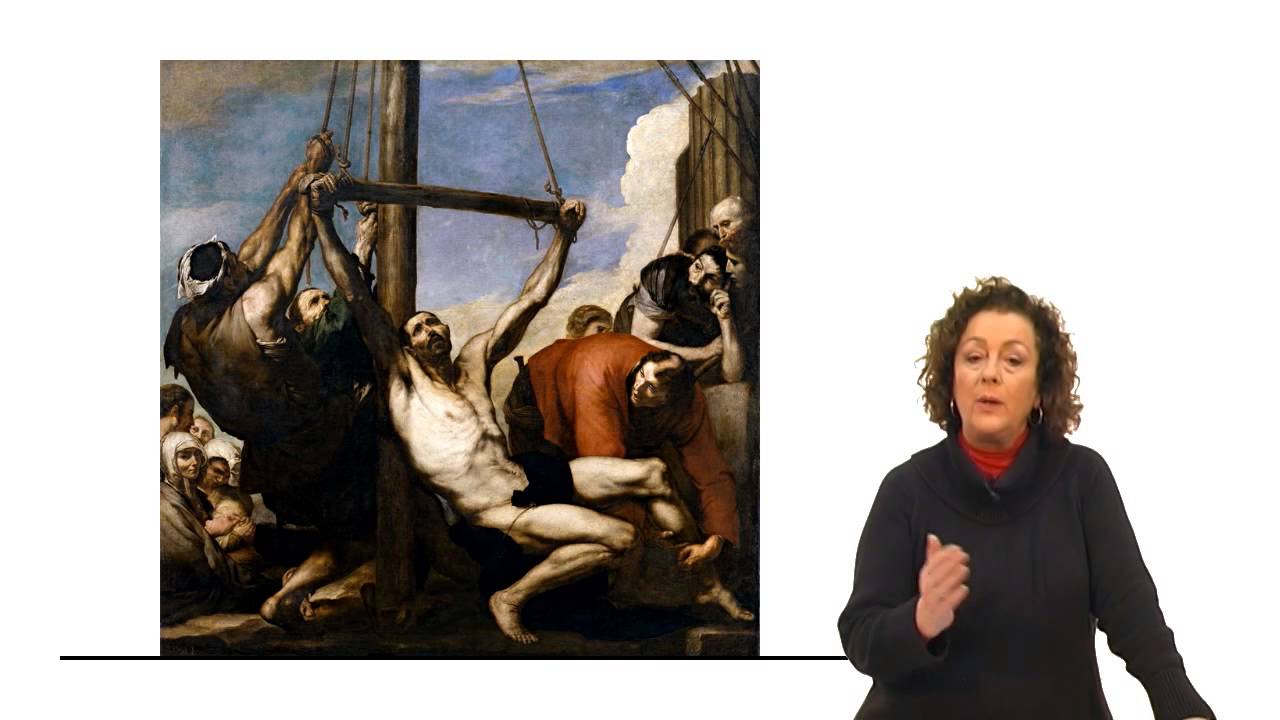
Maestros del Barroco español. Ribera y Zurbarán
679
Spanish Baroque painting, exemplified by José de Ribera and Francisco Zurbarán, employed dramatic lighting, naturalistic representation, and emotional intensity to convey religious truths and spiritual messages, with Ribera's Caravaggio-influenced works depicting popular figures and Zurbarán's geometric compositions emphasizing ascetic spirituality and transcendental realism.
Click to watch →

Эль Греко и Веласкес - золотой век испанской культуры
72.9K
José de Ribera, influenced by Caravaggio's dramatic chiaroscuro, created paintings emphasizing visceral religious suffering. His 'Martyrdom of Saint Bartholomew' shows the saint being flayed, with his skin stretched over a panel. Ribera's 'The Lame Boy' depicts a physically disabled child against a sky background in a heroic pose, finding dignity in the marginalized. This reflects Spanish art's unique humanistic tradition of finding nobility in the physically imperfect. Francisco de Zurbarán, a peasant who spent his life in the monastery of Saint Bonaventure, created art deeply connected to monastic spirituality. His 'The Crucifixion of Saint Peter' depicts the apostle crucified upside down, emphasizing spiritual freedom despite physical bondage. Spanish art was characterized by extreme austerity and restraint, particularly in portraiture, reflecting cultural values of dignity and suppression of individual expression.
Click to watch →
Deep Dive
An in-depth study of Ribera's broader oeuvre, focusing on his interest in physical deformity, aging, and psychological depth.

Artracaille du 17 déc 2024 : Jose de RIbeira "Ténèbres et lumières" au Petit Palais
268
Ribera was a virtuoso in all visual disciplines, particularly known for his revolutionary approach to painting bodies. His figures possess incredible plasticity and can take any imaginable position. He painted skin with remarkable detail, showing hair, veins, and the luster of flesh, creating truly lifelike representations. His portraits, even of beautiful subjects like the gypsy with her tambourine, contain psychological depth that can be unsettling. His eyes are particularly powerful, seeming to penetrate the viewer. His drawings and engravings feature fantastical, somewhat burlesque characters with coarse features, reflecting a Northern European artistic tradition similar to Goya's later work. His painting 'The Woman with a Beard' depicts a real historical case: Magdalena Aventura, who at age 37 grew a beard after giving birth. This work represents Ribera's Spanish tradition of depicting monsters and abnormalities, similar to Velázquez and Goya.
Click to watch →
Gabriele Finaldi analiza al pintor valenciano José de Ribera
5.3K
José de Ribera (1591-1652), known as 'El Españoleto,' was a Spanish painter who spent his entire professional career in Italy after leaving Valencia at age 15; despite being born in Spain, he never created any known works there, and his career flourished entirely in Naples under Spanish rule. Gabriele Finaldi, Director of the National Gallery of London and former Director of the Prado Museum, reveals that Ribera's true genius lay not in his famous religious paintings but in his extraordinary drawings, which constitute a completely separate and equally significant body of work. Through meticulous analysis of over 160 surviving drawings, scholars have identified distinctive characteristics—such as his unique head contours, parallel lines for anatomical emphasis, and fascination with the grotesque—that serve as fingerprints for authenticating his work. These drawings reveal a private, experimental side of Ribera that differs dramatically from his public religious paintings, showing his fascination with violence, torture, and the human form in ways that make his work feel remarkably modern. The study of these drawings has transformed our understanding of Ribera from merely a painter of saints to a complex artist whose complete oeuvre includes both his celebrated paintings and his remarkable, previously underestimated drawings.
Click to watch →

Curators in Conversation: Ribera
1.3K
Jusepe de Ribera (1591-1652), born in Valencia as son of a shoemaker, arrived in Rome in 1606 during Caravaggio's final years, spending ten formative years before moving to Naples in 1616 where he remained until death. Despite never returning to Spain, his works flooded back there, becoming extraordinarily influential. The speaker's interest began in 1984 at a Naples exhibition featuring a four-meter copper painting. Early cataloging efforts by Jonathan Brown in the 1970s identified around 60 drawings, now expanded to nearly 170. Approximately one-quarter to one-third of surviving drawings feature naked men tied to trees—a significant portion of his oeuvre. Only one female nude survives, a quick sketch with electric current-like speed. Walter Bittinger identified approximately 15 drawings in the 1630s from Rome, representing a portfolio likely from Ribera's studio. For Ribera, drawing was independent and exploratory, not merely preparatory. He documented contemporary torture methods like the strappado, showing figures hoisted and defecating from pain, yet executed these beautifully in pen and ink. The tension between aesthetic beauty and violent subject matter defines much of his work. Ribera was proud of his Valencian origins, signing himself 'Valentino.' Francisco Solis was the only 17th-century Spanish collector known to possess Ribera's drawings. His later drawings show his hand trembling, representing introspective work with light wash touches creating moving drawings.
Click to watch →

Sublime and Grotesque: Ribera and the Art of Drawing
4K
Jusepe de Ribera, a leading artist of the Spanish Golden Age, created drawings characterized by a defining tension between the beauty and sophistication of the drawing medium and the ugliness and violence of his subject matter, including grotesque heads, martyrdom scenes, tortured figures, and bound saints; this artistic approach was not driven by personal sadism but rather by his role as an acute observer of reality and his engagement with Counter-Reformation demands for emotionally powerful religious imagery that could inspire piety through visceral depictions of suffering.
Click to watch →

The Man Who Laughs: The Forgotten Universal Classic
981.3K
In The Man Who Laughs, Gwynplaine's ugliness is not merely about shock value but represents his complete psychological state—he has been stared at, pointed at, and laughed at every day of his life, leaving him with no sense of self-worth. His posture appears shrunken as if wishing the world would swallow him. Most effective is Veidt's habit of hiding his mouth, particularly from Dea, as a nervous gesture underscoring how his behavior is defined by his deformity.
Click to watch →
Deep Dive
Exploration of the Neapolitan School of painting and Ribera's lasting influence on local artists in southern Italy.

NAPOLI - Museo di Capodimonte
1.8K
The Neapolitan Gallery traces art in Naples and Southern Italy over more than 1000 years, covering Swabian, Angevin, Aragonese, Spanish, Austrian viceroys, and Bourbons. The first part displays Swabian period works and Angevin nucleus including Roberto Doderisio and Simone Martini. 15th-century rooms feature Colantonio and Matteo Di Giovanni, testifying to Aragonese Naples' participation in international artistic scene. The following century shows foreign artists like Pinturicchio, Cesare da Sesto, Polidoro da Caravaggio, Vasari, Sodoma, and Titian demonstrating spread of various Renaissance schools in southern Italy. The Flagellation of Christ by Caravaggio marks watershed in Neapolitan figurative culture at beginning of 17th century, laying foundations for local school development. The 17th century is considered the golden age of Neapolitan painting, dominated by Caravaggio's naturalism found in Battistello Caracciolo, Carlo Sellitto, and Spanish artist Jusepe Ribera, as well as classicist remodellings of Artemisia Gentileschi, Simon Vouet, and Andrea Vaccaro. The chromatic openings of Massimo Stanzione and Bernardo Cavallino heralded Baroque flourishing, evident in widespread genre painting with specialists in battles (Agnello Falcone) and still lifes (Luca Forte, Giuseppe Recco, Giovan Battista Ruoppolo).
Click to watch →

Jusepe de Ribera, lo Spagnoletto, anima e arte di Napoli
1.9K
Jusepe de Ribera (1591-1652), known as Lo Spagnoletto, was a Spanish painter who became one of the most influential Caravaggisti in 17th-century Naples, developing a distinctive style characterized by brutal realism, intense pathos, and powerful emotional expression that surpassed even Caravaggio's innovations; he arrived in Naples in 1616 and achieved unprecedented success, creating masterpieces such as the Pietà di San Martino (1616), Apollo and Marsyas (1626), and San Gennaro Leaving the Furnace (c. 1646), while mentoring future artists like Luca Giordano.
Click to watch →

The Light of Southern Italy - The Painters of Neapolitan School
1.7K
The Neapolitan School of painting, centered in Naples during the 19th century, represents a significant but historically undervalued chapter in Italian art history that has never before been exhibited in the United States; this exhibition by the Italian Cultural Institute aims to bridge this gap by showcasing the school's distinctive approach to capturing light and everyday life, featuring key artists such as Filippo Palizzi, Antonio Mancini, and Giacomo di Chirico, and demonstrating how this southern Italian artistic tradition shares thematic parallels with American 19th-century landscape painting while offering a unique perspective on regional identity and cultural heritage.
Click to watch →
![[Visite privée] Exposition "Ribera. Ténèbres et lumière" au Petit Palais](https://i.ytimg.com/vi/dzhsy4djoSU/maxresdefault.jpg)
[Visite privée] Exposition "Ribera. Ténèbres et lumière" au Petit Palais
24.9K
Ribera revolutionized religious painting by placing sacred scenes in mundane, everyday settings. In the Denial of Saint Peter, the religious episode is relegated to the extreme right while the majority shows soldiers gambling at a simple wooden table, creating a monumental effect as if the religious episode were happening in the present moment. He frequently connected sacred and profane scenes through shared characters, with the bald, wrinkled character appearing more than six times as a signature element. This technique allowed him to address diverse audiences and make religious painting more accessible. In Naples, Ribera created extraordinary portraits like the Woman with the Beard (1631), depicting Maddalena Aventura who developed an enormous beard due to hormonal irregularities, yet emphasizing her femininity through a doll-like baby, ring, and spinning wheel. Despite depicting extreme poverty and suffering, Ribera imbued his subjects with profound dignity, with figures looking directly at the viewer with commanding presence, anointed by beautiful light.
Click to watch →

barroco 1 roma BBC
10.4K
Jusepe de Ribera, a Spanish painter and Caravaggio worshiper, came to Naples to flee his creditors. Because Naples was under Spanish control, Ribera had his pick of rich Spanish clients. For most of his career, he painted in the Caravaggio manner—dark, brooding religious art that was sweaty and guilty. His Spanish roots began to show soon enough, and his taste for bearded women was legendary. Ribera was the main mover in a nasty little organization called the Cabal of Naples. He got together with two other local miscreants: a vicious Greek called Corenzio and a Neapolitan painter Caracciola. This group began beating up and murdering anyone who worked as a foreign painter taking business away from the cabal. The Cabal was particularly cruel to followers of Annibale Carracci. Domenichino came to paint a fresco, and every morning the cabal would remove what he'd done the day before and put sand in his paint. Guido Reni had an even worse time—the Cabal hired an assassin to murder him, who killed one of Reni's assistants instead. Reni fled the city never to return.
Click to watch →
Deep Dive
Investigating how 17th-century Spanish realism influenced later 19th-century realism and artists like Édouard Manet.
The Case for Realism
558.8K
Neither realism nor naturalism were new developments when they emerged in the 19th century. Gustave Courbet was influenced by Velázquez and Spanish Golden Age painters who achieved astonishingly realistic effects. He was also inspired by 17th-century Dutch painters like Rembrandt and Frans Hals, whose work contemporaries claimed looked like life itself. Earlier examples include Pieter Bruegel the Elder's paintings of everyday life, Mughal miniature paintings with moments of incredible naturalism, 18th-century Chinese scroll painting, and Italian Renaissance artists who developed linear perspective to create three-dimensional worlds on two-dimensional surfaces.
Click to watch →
How Impressionism's Most Controversial Artist Craved Notoriety | Great Artists
247.8K
By 1861, Manet received his first favorable salon response with two accepted canvases: a portrait of his parents and a picture of a Spanish singer. This represented the first of his paintings to display obvious Spanish influence at a time when romanticized views of Spanish life were popular in France. This influence continued in works like Lola de Villance (1862), a light and colorful depiction of a real Spanish dancer, and bull fighting scenes including one accepted by the 1864 salon.
Click to watch →
Édouard Manet and the Spirit of Spain
391
French painter Édouard Manet (1832-1883) was profoundly influenced by Spanish art, particularly the works of Diego Velázquez and Francisco Goya, which he encountered through copies, prints, and the Spanish ballet troupe visiting Paris in 1862; this 'Espagnolisme' enabled him to develop innovative techniques such as loose brushwork, ambiguous compositions, and bold subject matter that challenged academic conventions and established him as the premier modernist of his era.
Click to watch →
How Courbet's Realism Paved The Way For The Impressionists | Great Artists
103.2K
Courbet was particularly interested in Spanish painters of the 17th century like Velázquez, who painted with tremendous frankness and directness, and especially Rembrandt, whose approach to painting everyday life fascinated him. These artists, influenced by Caravaggio, used dramatic lighting and realism to portray reality as it was, giving their paintings a modern look that Courbet instinctively reacted to.
Click to watch →

Masters Series Lecture: Gary Tinterow
1.8K
French artists in the 19th century developed a profound appreciation for Spanish painting, particularly Velázquez's work, primarily due to the French conquest of the Iberian Peninsula during Napoleon's reign (1808-1814), which resulted in the looting of Spanish artworks from Seville and Madrid; this exposure to Spanish Baroque painting transformed French artistic taste from Renaissance idealism toward Spanish realism, inspiring artists like Manet, Delacroix, and Degas to emulate Spanish techniques and subjects, ultimately influencing the broader trajectory of modern art.
Click to watch →
Martyrdom's Body
Sacred Space
Martyrdom's Body
0:00- 1
Analyzes Ribera's depiction of Saint Philip's vulnerable, hollow body.
- 2
Highlights the dramatic Baroque use of chiaroscuro and muscular strain.
- 3
Discusses the composition's concavity and the saint's loss of control.
The Neo-Venetian Departure: Light and Colorism over Caravaggesque Tenebrism
While traditional analyses of Ribera's 'Martyrdom of Saint Philip' heavily emphasize Caravaggesque realism and dark chiaroscuro, art historians note that this 1639 masterpiece actually represents Ribera’s decisive shift away from dark tenebrism toward a luminous, Neo-Venetian style. Influenced by Venetian colorism, Anthony van Dyck, and the classicism of Guido Reni, Ribera utilized a bright, open-air setting, a silvery light, and a vibrant palette of blues, reds, and ochres. Rather than focusing solely on brutal, gritty naturalism, this alternative perspective highlights how the painting’s complex, dynamic geometry and soft lighting elevate the scene into a heroic, theatrical triumph rather than a simple study in physical torment.
Understanding of Caravaggio's revolutionary use of chiaroscuro and tenebrism in early 17th-century Italian art.
The historical context of the Counter-Reformation and how the Catholic Church used dramatic visual art to engage viewers emotionally.
Basic knowledge of the Spanish Golden Age (Siglo de Oro) and the artistic exchange between Spain and Italy (specifically Naples).
Familiarity with the concept of hagiography and the visual conventions used to depict Christian martyrdom.
Comparative analysis of Ribera's realism with other Spanish masters of the era, such as Diego Velázquez and Francisco de Zurbarán.
An in-depth study of Ribera's broader oeuvre, focusing on his interest in physical deformity, aging, and psychological depth.
Exploration of the Neapolitan School of painting and Ribera's lasting influence on local artists in southern Italy.
Investigating how 17th-century Spanish realism influenced later 19th-century realism and artists like Édouard Manet.
21.5K views93likes3:35@smarthistory-art-historyOriginal Release: 2011-07-21
(jazzy music) Male: We're in the Prado in Madrid and we're looking at a Ribera.
Female: It's The Martyrdom of Saint Philip.
It's a very disturbing image.
St. Philip is being raised up on a cross to be crucified, and so we have this moment of, actually we often have in Baroque art, for example Ruben's The Elevation of the Cross, sort of the preparation, the in motion progress of time toward the martyrdom.
Male: It allows Ruben's, or in this case, Ribera, to emphasize the physicality of the image.
That is, look at the muscles.
Look at the strain.
Look at the effort to counterbalance the weight of this man that is about to be martyred.
But then what I find so extraordinary is the handling of the body of St. Philip, this series of concavities, of shadows, that are already deforming and distorting the body, even before he's raised up.
You can feel the body's strength.
You can see the muscles of the legs, of the arms, but you can also see a kind of hollowness, especially in the torso, that makes him feel so vulnerable.
Female: Looking at his face, I see that influence of Caravaggio.
He looks very humble.
Male: A fisherman.
Female: There's nothing idealized about really any of these figures.
We have that Baroque stark contrast between light and dark.
If you look at his left arm reaching up tied to the wood of the cross, you can see that that line of mottling there is just dark shadow right against the color of his flesh that's illuminated.
Male: In fact, there's a kind of undulation which is the kind of undulation one would expect to see in Baroque architecture.
Female: I'm also noticing how, as we look at it here, that the composition is kind of a half circle on the bottom of the canvas also echoed in his harms reaching up.
Male: That's exactly what I meant when I said that it felt hollow, that it was a kind of concavity.
I think that that really, in a sense, emphasizes the vulnerability and the way in which his body is not under his own control.
In fact, the figure on the right seems to be pulling his legs out from under him so he really is about to lose his balance and is about to be at the complete mercy of his torturers.
Female: There's that thing that we always see in Baroque art, too, of intentional foreshortening of figures who move out into our space; that figure in red that you just mentioned, whose torso is foreshortened, who comes out into our space; the figures on the left who are pulling up the ropes move out into our space.
The figure of St. Philip himself is very, very close to us.
There's not a lot happening in the background.
All we've got is Classical columns that maybe signify the end of the Classical era and the beginning of a Christian era.
Male: There's also an interesting contrast between the lower part of the canvas, which is so dense with this terror, so dense with this violence, and then the sort of open, perfect, beautiful blue of the sky above, which I'm assuming is a kind of spiritual redemption.
Female: I'm also really noticing the mother and child figure in the lower left.
That somehow makes what's happening to St. Philip seem especially tragic somehow.
Something about the Baroque realism, the everyday-ness, the way that Baroque artists recreate these religious scenes in a sort of vernacular language.
(jazzy music)
Up Next

4:48
Velázquez, The Triumph of Bacchus: Art Analysis
@smarthistory-art-history
34.7K views•2010-12-18

114:18
Christian Iconography: History, Theology, and Meaning | Fr. Panayiotis Papageorgiou
@Trisagionfilms
58.8K views•2020-02-21

10:26
Redgrave's The Sempstress: Victorian Social Realism, 1846
@smarthistory-art-history
3.2K views•2011-10-22

16:34
Earliest Depictions of Jesus in Art: 10 Ancient Images Explained
@UsefulCharts
5.9M views•2022-06-03
Related Study Plans & Knowledge Roadmaps
Structured learning paths in Art History
art-history
Gothic Cathedrals: Engineering, Light & Society
01The Birth of the Gothic: Romanesque to Suger's Vision
02The Structural Triad: Pointed Arches, Ribbed Vaults, and Flying Buttresses
03Theology of Light: Lux Nova and Sacred Geometry
+ 2 more learning modules
14h5 modules
Explore Roadmap
art-history
Pre-Raphaelites: Realism, Symbolism & Critique
01The Victorian Art Establishment and Academic Formula
02The Founding of the PRB and Radical Realism
03Medieval Revivalism and Literary Symbolism
+ 1 more learning modules
8h4 modules
Explore Roadmap
art-history
Street Art: From Subways to Art Market
01Subcultural Origins in Philadelphia and New York (1970s)
02The Subway Era and Style Wars (Late 1970s - 1980s)
03The East Village Scene and Early Gallery Crossover
+ 2 more learning modules
10h5 modules
Explore Roadmap
art-history
Classic Maya Art: Iconography, Glyphs & Ritual
01Foundations of Classic Maya Visual Culture
02Deciphering Maya Hieroglyphs & Text-Image Integration
03Sacred Geography and Cosmological Architecture
+ 2 more learning modules
14h5 modules
Explore Roadmap