














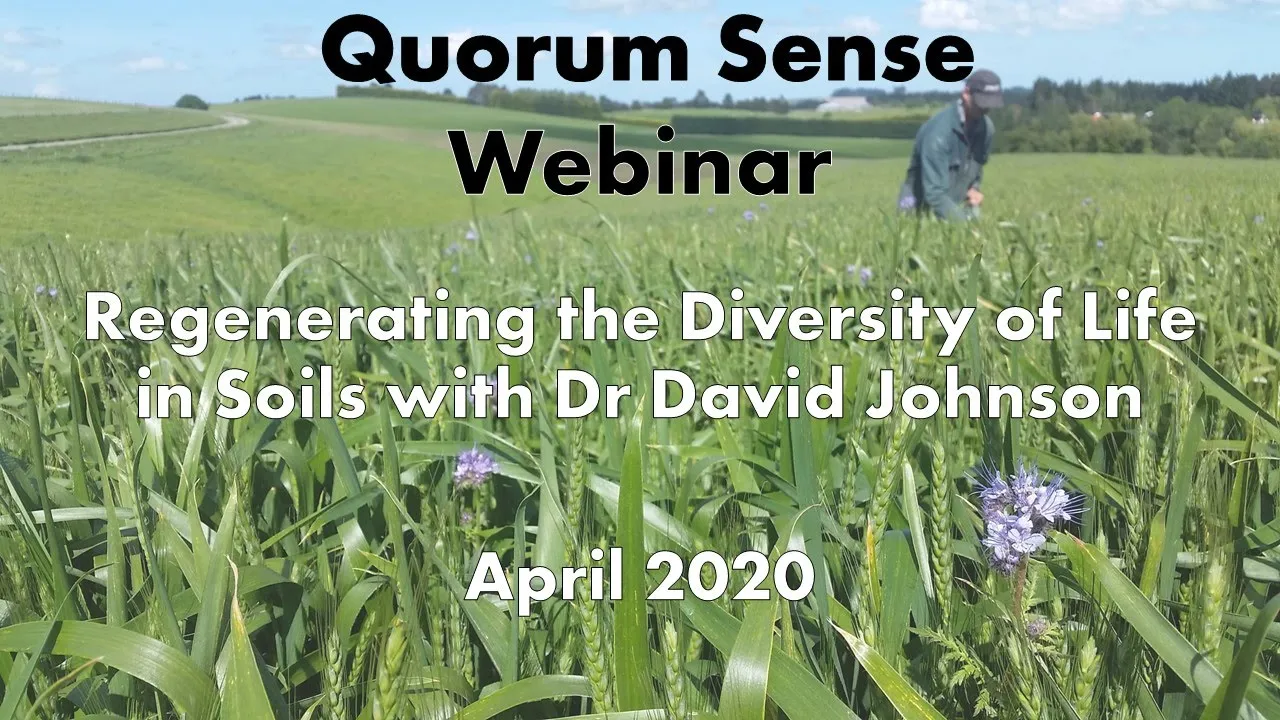
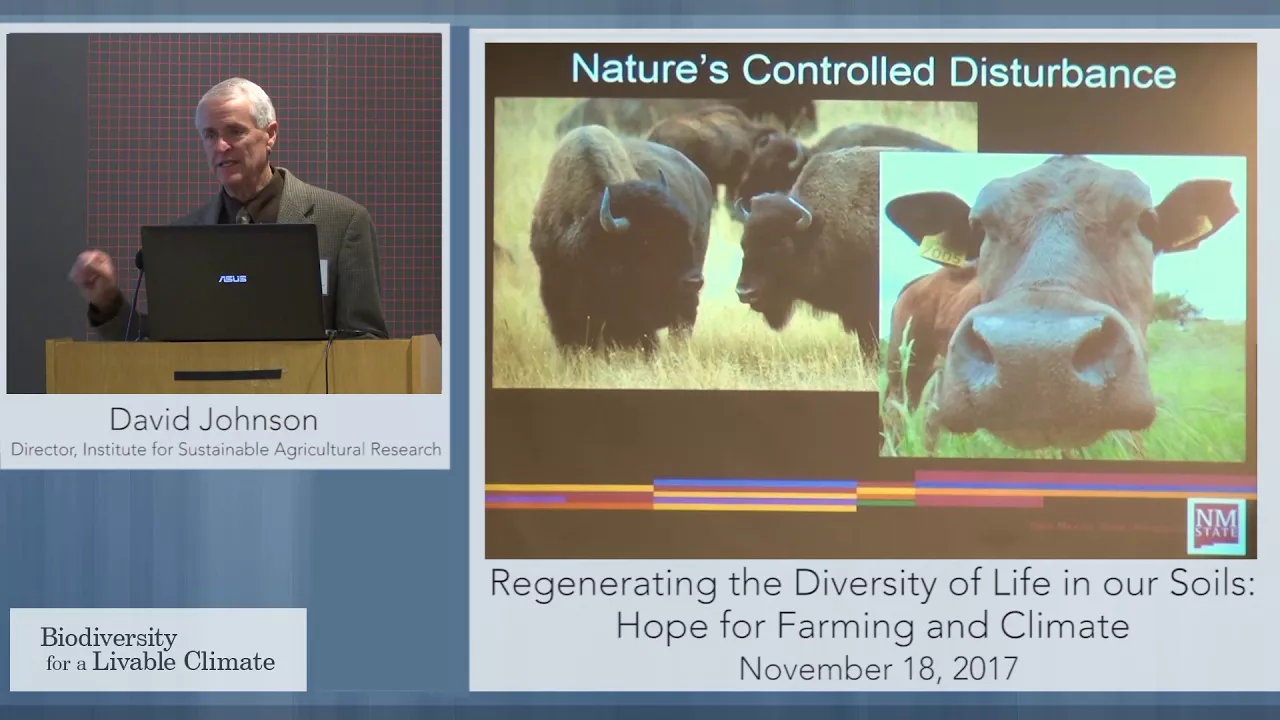









Soil health is fundamentally dependent on a balanced microbial community, particularly fungi, which facilitate nutrient cycling and communication between plants and soil; restoring this biology through fungal-dominated compost application (approximately 2 pounds per acre) can dramatically increase agricultural productivity by five times while simultaneously improving soil carbon content and reducing reliance on synthetic fertilizers.
Soil Microbiome Restoration: Dr. David Johnson Interview
Added:Basic soil science, including the physical, chemical, and biological components of soil structure.
The concept of the Soil Food Web, specifically the symbiotic relationships between plants, bacteria, and fungi.
Fundamental plant physiology, particularly how carbon exudates from roots attract and feed soil microbes.
Standard aerobic composting principles, including temperature regulation and carbon-to-nitrogen (C:N) ratios.
The design, construction, and operation of a Johnson-Su Bioreactor to produce highly fungal compost.
Implementation of Biologically Enhanced Agricultural Management (BEAM) systems to reduce synthetic fertilizer inputs.
Practical application techniques of low-rate microbial inoculation, such as liquid seed coatings and in-furrow extracts.
Advanced soil biological testing methods, including Phospholipid Fatty Acid (PLFA) analysis to measure fungal-to-bacterial ratios.
19K views571likes1:26:45Original Release: 2020-10-28
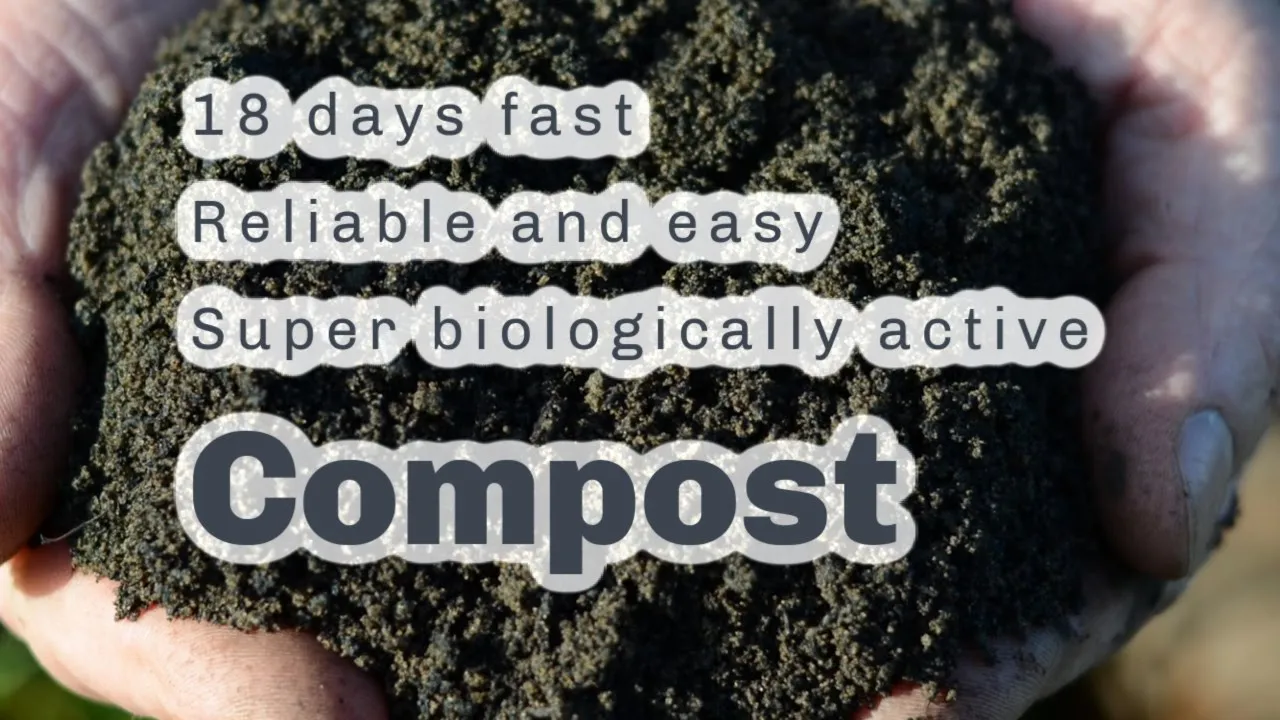
in search of soil so david i mean the first thing i really want to ask you was in all your years of dealing with microbes what has been the most fascinating thing to you is there one thing that really stands out just blew your mind when you found out well gosh there's a lot of things but i think what really started to put it together was the influence of our own stomach our microbiome in our stomach on our health and our well-being and the number of things that they do in their their relationship to our health how they're about 80 percent of our immune system and uh their ability to to turn on and off genes in our body um all of this is fascinating and it just transferred to the soil you know how we're seeing a regeneration of that soil microbiome has so much influence on the productivity of the system uh nitrogen fixation phosphorus solubilization and as we bring it back how much influence it can have i mean it's that has to be the biggest eye opener you know we woke up one morning we had to pinch each other when to make sure this wasn't a dream that it was real the potential that we saw to bringing these microbiomes back in soils what do you think agriculture's current understanding is of microbiology when it comes to soil i think we can say we know it's there we know it's more complex than we'll understand but do you think agriculture really respects how important it is and how important the balance of those microbes are at this point there's very few the the people that are out on the leading edge are seeing this they know that's it um but we're still probably back in the 60s looking at microbes as pathogens exclusively not as beneficial uh parts of the system but we're getting there i mean we see uh monsanto and embarrassed start to bring out biologicals now because they see this is the future it's it's just a matter of time i think this will be the agriculture of the future uh our understanding is still very limited on this we're just scratching the surface and it's it's such a complex system uh elegant rate complex but complex nonetheless as far as the decisions we make in agriculture how we treat the soil the all the different operations that we perform on the soil we still have a lot to learn on that but there's so much potential when it is brought back properly you know it's what we're seeing both in rangeland and and cropland if we look at rangeland or cropland where do you think the biggest misses right now in terms of biology and those soils so we're not talking chemicals or anything like that that can obviously harm that biology but in terms of the biology present in those soils are farmers not doing enough to encourage the right kind are they not doing enough to encourage any kind are there just too much of one where do you see soils right now well i think most of the practices that we've adopted over the last 150 years have been uh degrading soil microbiomes either through plowing or disking or the application of all the different biocides all of this has been a negative influence on building solar biology and as i say those farmers and rangers that are out on the leading edge they understand that that is what they're raising is a is the soil biology the bacteria are the grass of that system as far as the consumption by organisms at higher trophic levels and their understanding that if they do the right management techniques they can bring those soils back you know many of them have you know we've seen some very interesting changes in rangeland uh south of us here in the chihuahuan desert we have one rancher that's gone from 250 acres per cow to 25 acres per cow just with grazing management and and this is not an unusual story you know we see uh another rancher here in central new mexico nancy randy how she's gone from four species of grasses to 45 species of grasses in less than a decade and bringing back what you know in our area i live in the desert and it's the desert because of one reason because we overgrazed it it used to be grasslands belly high to a horse when the spaniards came through but then with our grazing techniques we grazed it into a desert and nice to know is with proper grazing you can bring it back but that seems to be the only mechanism is and as you know what developed on the great plains with the bison and how they were kept in tight herds with predators and they were moved along at regular intervals that deposit their dung in their urine and their saliva basically inoculating that that grazing land as they every time they would go over it because you know the manure would be rolled up into small balls by the dung beetles placed in the ground and composted in place it was just a great inoculation event and it it built up some impressive uh grasslands i mean soil carbon five six feet deep uh the ability to grow uh forage in even low water environments i mean the rancher alejandra carrillo southwest he gets seven inches of rain and he's brought it back from a complete desert just scrub mesquite and greasewood and he now has grasses belly high to a horse so we can do the same thing in our in our cropland as well focusing on restoring that microbiology in the system and it's a system that's what that's what we need to to look at it as it's not just bringing back fungi it's not just bringing back bacteria it's a whole system that we have to recreate in that that cycling of the carbon and cycling of the nitrogen it's an energy equation we have completely destroyed the productivity of these cells we're working with compromised photosynthetic capacity on these soils and as we bring this biology back we can increase the amount of uh photosynthesis uh the capacity of that you know certain area of land to actually capture the sun and capture the carbon and and restore that system you know there's the biology seems to be key uh it is for us and it appears to be the same for the soils when you go from four species to i think you said 40 species in that example what's changing in the soil to allow those extra x number of species to now say i can grow there it's not just all manure being deposited in other words if we just took grassland and we just put manure over the top of it or compost over the top no it's it's again it's a restoration system it's it takes a certain amount of disturbance as well i could recommend a video that peter vick put out on a rancher in texas that the name of it is herd impact you can get it on uh carboncowboys.org he has 10 short mini documentaries on how these rangelanders these grazers have changed their soil this particular one in texas it in order to restore the soils that were just barren uh it took a certain amount of impact on that soil from the hoof action it's as i say it's it's a system that that we're trying to bring back in all these different components even to the to the design of the hoof of the cow and how its impact on the soil the the saliva and and also the tearing of that grass when the cow eats it produces hormones that increase plant growth as long as you don't take it back too far in in the great plains usually only about 40 percent of that forage was actually consumed by the animal the other 60 was either trampled into the ground or or left there for a food resource for microbes so it's there's a certain amount of the carbon that has to go back into this system in order to start rebuilding these soils but if you have a reduced photosynthetic capacity on the front end which is what we're really fighting right now unless we bring that back we're not going to be able to build the carbon up in the soils the way we should be able to and the fungi we're finding in a research project again with peter bick in the southeast looking at about five pairs of ranchers doing either the adaptive multi-padded grazing and a conventional for at least a decade what i'm seeing in the research that i that i've done is it's the fungal community that we've destroyed in all these systems this it's the most fragile but the fungi function as both logistics and communication they transport uh elemental nutrients that in cooperation with the bacteria in the soil to the plant in exchange for the energy that that plant is captured to fund or energize that system and sew up for the microbes to be able to extract or fix the nutrients from the atmosphere and if we can't bring back that photosynthetic capacity we're not going to really be able to fix these soils but the nice thing is we can we've seen in this research the ability to increase productivity five times on on forage production in these systems as you bring this biology back it starts stacking on itself increased carbon into the system we're also seeing on the back end a reduced respiration rate at least a relative respiration rate the carbon that uh it stays in the soil longer it you get a bet reduce efficiency you know most of the ranchers or most of the scientists are going to look at uh this and see okay you've increased carbon uh by 14 times you've increased the cell microbial community biomass by five times according to the current perspective you're going to increase respiration but the funny thing is as you bring this fungal community back because you bring the whole system back in into operation you are going to respond a little more carbon but it levels off so relative to the amount of carbon that you have in the soil to start with that could be oxidizable or respirable by the microbes they don't respire it they put it more into more biological growth than into respiration and that increasing the the biology biology in the system increases the ability of that system to extract the nutrients from the soil apparent material and the system just starts stacking and building on each other more nutrients available more energy and carbon available in the system more plant growth at least that's what i'm observing it's not only in grazing but in in cropland as well you talk photosynthetic capacity and increasing that to to build up the below ground biology what is it above surface that's happening it's helping below surface is it just more sugars coming out of the roots more exudates coming out of the roots so the more you can grow up top more is being pumped out below i think a lot of is that you know having the microbes there to make the nutrients available for you know in photosynthesis and in nitrogen fixation they're all uh protein structures that are performing all these metabolic functions and in every protein you have metal cofactors that allow these energy conversions to occur photosynthesis depends on on magnesium you know as far as the capture of the energy from the sun but there's a whole suite of other proteins along the line in the transferring that energy that are required for a an efficient flow of energy if you don't have the microbes in the soil to extract those nutrients and make them available i'm talking more than just nitrogen phosphorus and potassium these plants use almost all of the 92 naturally occurring elements on the periodic table there's no way as farmers and ranchers that we can contemplate what we need to add to the system or what we need to make available as far as the micronutrients to make the system function properly and yet nature has over the last 45 million or 53 million years on grazing land has developed a system that's quite uh efficient at doing this if we allow it if we look at the great plains as they used to be and i know there's i think some still small sections of like the original still intact with these deep deep soils and then we have cropland that has been treated conventionally for let's say a hundred years and it's what we classify as poor soil compared to that great plain soil can you walk on it through a step-by-step process not in terms of how but in terms of as we change our management practices what would happen to that poor soil on its way to becoming that deep great plain soil what is that story there well you know i have to take you back to to what we're seeing in the human microbiome in one instance where they've done an experiment they've removed uh fiber from the diet of mice to see what happens to that their stomach microbiome they have a decrease in diversity in that system the more generations it goes through it you just get a decreased diversity all the way through you would think okay we'll bring the fiber back and just bring the carbon back in your soil but it doesn't restore that microbiome structure it doesn't bring back diversity the only way it brings it back is if you come in with an inoculation from a healthy uh microbiome and we're seeing the same thing in humans that if people suffer crohn's disease ibs uh decades some people die from it some people have resections of their intestines uh more antibiotic regimes and yet they find out that if you can bring the microbiome from a healthy individual like a fecal transplant and put it in to the person with ibs or crohn's in many cases they can be cured in 24 hours and it it seems to be that essential or important in these soils that we've broken is to bring that biology back we see it just with an inoculation of the compost in the bioreactor we did research in a project in wilcox arizona where we came in with two pounds of compost per acre as an extract that we injected into the furrow with planting in that research what we saw we compared a conventional approach with 256 pounds of nitrogen we had a intermediate uh treatment with uh 15 of that or 38 pounds of nitrogen and that two pounds of the compost and then we had another treatment just with the compost the two pounds per acre rate what we saw is we matched productivity to the conventional with the uh the beam or the the compost plus 15 productivity up 15 nitrogen that 218 bushels of corn and this was quite unexpected because we replaced probably a hundred and pounds of nitrogen in that system just with biology and in the the compost only we only suffered a 6.6 loss in productivity so there was again about 140 150 pounds of nitrogen that we we brought under that system just with the biology so it's from what we're seeing in this research is that you need to be able to bring a healthy community back into this and the compost uh process that my wife and i developed seems to give you a very robust and diverse um microbial community we see as you allow it to mature we see a four times increase in the diversity of the microbes you'll see microbes that that start out in the composting process and at the end of that year they're not dominant some of them aren't even present but they've been replaced by a whole nother suite of microorganisms that that have much more diversity and much more capability so again we're learning a lot on this it's it's uh not all known no we're we're still at the very beginning and say scratching the surface as i say nearly to you is inoculation enough meaning it has well i mean in the sense of it has there has to be food in that soil for the organisms you're putting into that soil to consume so and i know this is generalizing but do you think that most soils there's enough food there for microbes if you add microbes at least some will be able to proliferate multiply and establish themselves or do you need that inoculant plus food source for the inoculant at the same time it's again a system and the microbes won't do it by themselves this is not magic they need a living plant at all times to have that carbon flow it's uh it's kind of like banking you know you need a certain amount of money going into your savings account in order to build things up um but it's no it's a system that we're trying to restore and having a plant grow all the time either a cover crop or a commodity crop is essential to restoring the biology you know it does it won't happen without plants it's uh it's that relationship that developed between the my soil microbiome and the plants that make this planet what it is today so don't from watching some videos of presentations you've done when you've applied some of the compost to different properties it's very sparse i would say compared to what some people do imagine you took a sheet of white paper and you kind of threw a handful of seeds on it you're going to see a lot of white around those seeds and that's the rate that you're applying and you're seeing a big difference i know at least in the small scale farming world a lot of compost application is you have a white sheet of paper you put compost on you have covered that white sheet of paper and you can see zero white so on one hand your hand you have the concentrated inoculant going into the soil on the other hand you have people just piling compost on do you think that an approach of just constantly putting on compost is it's working but maybe you're working too hard or it's not really a means to an end and is there some way that people can move from this just dump it on to a more sparse application well yeah that's what we're seeing you know i started out at 400 pounds per acre which is a dusting so it's it's not a nutrient amendment the way we're developing this it's an inoculant of microbiome of the microbiome uh we're down now to two pounds per acre right so uh and having success i mean the farmer was eighty dollars an acre more profitable by using the compost from this bioreactor and that that research in wilcox so and he this was a very very poor soil that we started uh it was very compacted i mean some of the infiltration rates on it were above 10 minutes so it was a very compacted soil the cover crop we did grow a cover crop on it before we planted this first year and instead of growing into the soil the the root mass would push the soil up so when you drove over it it was like driving over a corrugated uh surface so we didn't start with a great soil on this and we did have one cover crop under our belt on it but then we came in with the biology and and we saw that dramatic uh improvement in the productivity without the use of nitrogen amines so it's again it's a system that we're bringing back and understanding that that it's it's not magic it's just biology microbiology and it depends on a constant flow of energy just like we do you know if we don't have energy we're cavemen's if we have a little more energy into the system we we start to be able to do more things we start to be able to uh procreate more you start even more energy you start to have specializations of the different organisms and a little more energy into the system eventually you'll have synergy in these systems as you bring the biology back and the energy into the system it's it's all about energy flow on this planet and it's the micro microbes that developed all the different protein structures to capture that energy and to channel it through in living organisms and this is what what we have to try to restore is that whole system that evolved on the planet and you know to our benefit as far as being able to grow the food that we need to grow you're restoring a poor soil is more better initially and i'm thinking small scale here somebody has a thousand acres they love the sound of two pounds per acre somebody who has one acre would say i could do two thousand pounds on my one acre that's not a problem for me to distribute that out is there an assumption or is there a direct correlation between took really high quality compost that is a food source and an inoculant in one and you put more of it on a poor soil initially you're going to get results that much faster yeah i can just relay what what i've done in the research um i just did an experiment looking at the influence of garden and these are still low rates at two pounds five pounds 10 pounds and 20 pounds per acre rate i saw no difference in the productivity between the many different rates but what i did notice in i had a another experiment going on beside it of a infero treatment you know all those were inferral they were sprayed in as i planted the seed but i had one where i sprayed the inoculant on top of the surface and then i watered it in immediately there was double the productivity of the injected into the furrow and planting compared to spraying it on top so it was pretty dramatic to see you know these plants doing double the productivity same amount of water same amount of sunlight and yet the productivity was so much higher when the biology was right there with the seed when it germinated so higher rates you know i don't i don't have the data in between 400 pounds and and 40 pounds you know that's that would be uh something to look at but you know as i've been looking at larger scale productivity because i know we need to make a change i see so many farmers uh hitting a brick wall as far as they destroyed the soil fertility they're making cents an acre on profitability and yet they know they can't pass this land onto their son or their daughter because it would be a burden to them and yet as you bring back the system and its functionality farming becomes fun again i've never seen happier farmers and more profitable farmers and those that are starting to look at this as a biological system they're starting to use that power of observation to see okay what do i need to do next it's it's not always it's not intuitive nature uh depends on diversity diversity not only in the community of microbes are there but also in the activity that goes on above the soil as far as you know what you plant when you plant uh how do you treat this how do you treat that there's there's a full lifetime of education in farming i know it's it's not all easy about and you know this you do it this way every year so there's there's a lot to learn but observation will be key it sounds like that's a case where you know an inch could make a big difference i'm thinking you know you're drilling in seed it's not going in that deep but you're injecting the inoculant in with the seed as you're drilling it in versus you put it on soil and then you water it in it just intuitively to me it doesn't seem like number two the water in method would leave it that far away but apparently there is enough of a difference there that that biology needs that root interaction right away to really get going like why do you think that is this yes it's just having that community available as it germinates and you know the the hagerty's in australia when they do they do a very similar injection rate you know it's two kilograms per hectare which is almost identical to two pounds per acre and you can see pictures of the seed and how much uh barely german germ do you know the goblins only about an inch long and yet the rhizosphere that's developed in that community that is impressive it's devoted a lot of energy to associating with those microbes and you know if they're not there and available that it just seems like the plant just flounders you know i i could show you a picture of what it looks like there's a dramatic difference of of where i've injected and where i you know sprayed it on top so on a honest again on a small scale for somebody farming you the the maybe the ideal way to get this going would be if you're doing a lot of transplanting of your plants would be when you're seeding these plants you're either coating that seed or you're quote inoculating that seed in the beginning in the nursery so when it goes into the field you're transporting that cube of soil that has not just roots but a community with it that goes into the soil and then it can multiply out in the soil once it's there because the plant and obviously that community are staying yeah and seed coatings work uh the hagerty's also they spray their seed with the inoculant as they feed it into their hopper i've done some experiments where i've sprayed the seed and planted it dry and sprayed the seed and planted it wet and there's a dramatic difference between dry and wet wet will outgrow the dry treated quite handily so it's it's having that living community uh available at germination that seems to make this work so well we're at this point in the episode i mean we're talking a lot about inoculant compost your specific way of making compost so i want to introduce people to the idea of the type of compost you make at its core what are the base principles around the compost that you're using the the method that we developed uh maintains several four key factors on this uh is it's aerobic it always has oxygen the way the the bioreactor is designed with the columns up the middle uh you're never more than uh six to 12 inches from ambient air so it's it's a completely aerobic process it's a process that uh operates at about 70 moisture content that's that's critical it's undisturbed you never turn it you don't need to uh as long as it's aerobic as long as you have the 70 moisture content the uh biodegradation process goes forward and it seems to increase in diversity the microbial diversity the longer that you let it go also we employ worms in it so it is a verma compost as well and the worms we only put in about 100 worms the red wigglers at uh just after it gets down past 80 degrees fahrenheit so you don't cook them and they will about 100 of those will populate that pile completely by the time it's done and it'll be full of baby worms and the ending texture is a lot like clay you know it's you can squeeze it between your fingers uh you can squish it into a ball when it's done and it's the microbiota is pretty impressive when i do metagenomics on it we see about 2700 species of bacteria we see uh probably four to five hundred species of fungi so it's it's that's another thing that's having it seventy percent moisture content having it aerobic that allows fungi to proliferate and you end up with a significant number of fungal spores because over that year you start to consume all the energy resources in that compost so what does fungi do when it runs out of food in its environment it'll sporulate so we can can live when conditions are better so we see a significant number of spores and and that's what we're putting in with the extract is we're seeing uh spores of fungi and also a lot of so it's restoring that community through that that process with a clay-like texture at the end of it i think that's different than a lot of compost you see people buy that looks more like it's like kind of mulchy it still has identifiable bits of organic matter in it it have a different hand feel more loose kind of friable what are the big differences you see in johnson sue bioreactor compost versus traditional compost if you just drive to the landscape yard near you and they sell compost what are the differences in those methods well the methodology they they're turning that compost several times in the first week so the fungal community never really gets to develop and every time they turn it the system reheats up so you don't go through that phase in in this composting method that we use you're through the thermophilic phase in that heating phase within a week and the temperature starts to go down and it depends on on what you put into it as far as how high the temperature goes the more nitrogen you put in there the higher the temperature go and the longer it will stay but normally the heating phase is four to five days after that first week you're pretty much through and the temperature will start going down and that this whole system allows that fungal community to dominate so you don't see that in turned compost because every time they turn it they destroy all the fungal hydrate i mean you can see this within 24 hours after you've filled that bioreactor in the method that we use you can go and you can start to pull the organic metal that you put in apart and you can see all these hyphen and both of the fungi and that 10 of my seeds just completely populated the pile so you know the pipes that we put in the middle i think there's there's six pipes that we put in there that after 24 hours you can pull those out i mean the hyphae from that cinema seeds and the fungi have completely threaded that pile together so you have a column once you pull those pipe out that doesn't collapse now as it matures the whole system will start to fold in on itself you'll end up with something that looks like a very rich dark chocolate cake at the end and it if you grab it and have any moisture in it you can squeeze it and it it does just meld together like clay and that's that's what we're observing in the compost process i think one of the biggest comments i've seen on the one that i built was a lot of people have suggested add this to it add that to it they're all nitrogen sources and they're all saying do this and it'll speed it up and and they're missing the point here that the goal isn't fast results the goal is right results and that just takes time so if you did try to speed this up by adding fish emulsion or whatever to it what are you trading off what are you missing that's a good question um i tried at the beginning on some other before we develop this by trying to add nitrogen to the system to to speed it up it failed and and what i see is you know a lot of the resources i use to make these piles are very low in nitrogen i mean you're talking leaves uh 50 to 60 to one or higher and i saw that the benefit is allowing the system to fix its own nitrogen with free living nitrogen fixing bacteria you start to develop those community of microbes that can do that and i saw this plenty of nitrogen in the composting process because i see a lot of free living nitrogen fixers that community develops very strongly in these compost you know i've got got the metagenomic data that i can i can show you what this group right here they're free living and they're they're a a major component of the system so i think the more you can leave it alone and let nature take its course it's like a good wine or a good cheese or good bread all of these you know it's it's a system that you kind of let nature do what she's done for millions of years and the results seem to show a much better uh compost so is this idea that you see a lot out there of 18 days to finish compost 30 days to finish compost do you think that's doing more harm than good where you're sure you're adding organic matter to the soil and that will help your soil in the long term but it's like you're only focusing on half the picture you're not seeing the whole picture i think uh from the research i've seen if you can allow nature to do it in her time frame the results are much better i mean i i don't know that they can use theirs at a two pound rate and see this type of benefit i know the hagerty's observed in australia they got their compost from one person on on the east coast of australia and they're on the west coast they had it shipped all the way across australia which is not a small country and they thought well we'll just use somebody else's compost and it failed so i think you know that's what we're we're doing an experiment right now to see how consistent these compost made all across the usa to see uh how different they are or how similar they are so that that will hopefully answer a few of those questions that we have on it as i say there's still a lot we don't know uh but what we do know is it's it's beneficial to plant growth it can be applied for a cost from 25 to 50 cents an acre if you're a large farmer it grows great tomatoes just straight if you're a regular farmer or just doing a garden at home you can't go wrong with this this stuff it really makes a difference in the way plants grow what are your thoughts on forcing air into the system injecting air into the system where you're not turning it you take that exact same setup you observe all the other base principles and you're not keeping it moist only you are blowing air into it i've read some studies on that and it seems like fungi can just increase their efficiency growth rates with more oxygen present i see okay well you are using an outside input it requires some extra parts but i don't see it changing what you're going for that much what are your thoughts on that um yeah from what i would think you would dry the pile up if you're forcing air through it this is more we we developed this basically both for third world and to be able to do it in a first world country with parallel processing you know the bioreactor is a four foot diameter five foot high um we wanted it as energy free as far as having input you know the biggest input is a gallon and a half of water a day being sprayed over the top and allowed to go through by gravity to keep the moisture content at 70 percent so that that's the only energy impact into this system i think uh we were concerned i guess more with third world when we design this just to make sure that they could do something like this and we do have those bioreactors going in uh three different countries in africa uh india pakistan uh siberia believe it or not crimea all over europe new zealand australia south america central america and many here in the u.s and canada so i think it's the the less energy input the less work you have to do with this the better off it is i don't think you'll speed it up that much by blowing there because as long as the pile is aerobic you know what more does it need it it doesn't need any more air flow as long and the research i did i found it anything more than a foot into a compost pile goes anaerobic within minutes so we're never more as i say more than six inches to a foot away from ambient air so this pile stays aerobic all the time so i don't i can't see the need to actually pump air into it okay no no fair enough and another big question i see is kind of answered it there but give me your thoughts on this is i'm doing this here in southern california nice weather year round a lot of people in temperate climates have said well how does this work in an area where i have four months of true winter you mentioned siberia if you go from a warmer climate or say a tropical climate to something you know temperate and cold do you see performance or you just need more time if you can keep it warm keep it from freezing we've had one large one done in central colorado where they had to put it into a greenhouse and they they used a different system same same principles but they did a 30 by 40 foot bioreactor with all the pipes and everything in a floor underneath it allowed the airflow and they were successful they produced a really good compost about 100 tons of it and uh the pile didn't get down to 32 degrees but when they went in and dug the worms were still active so it may take a little more time in a in a colder climate but you need to keep it from freezing it is a it's a living organism you know the the worms in there are transiting and having their impact on the biodegradation process and all the other organisms as well so if you can either keep it inside uh we had one dairy farmer and i was at manitoba that keeps it in his dairy barn and his cows keep it warm and we had another one in quebec that is looking at uh he keeps an anaerobic pile going that he can maintain air flow to to keep the temperature in that pile up he has a water loop through that and he runs that into an aquaculture that he keeps good to minus 45 so it's you know you can stack hay bales around it maybe put a heat tape underneath it um just you know innovate as far as trying to keep it from freezing put it next to a warm building and hay bale that or or inside some people are doing it inside in their shops and just keeping it you know where it won't freeze but there are tougher environments yeah we're in new mexico so that's not an issue although we've been down to -16 for three days in a row on some of my bioreactors and not above zero and they still did fine so as long as there's a warm-up period after it and the great thing about it you want to put it inside a barn or shop is there's really i haven't noticed any smell i know you claim that i can verify that there's no odors there's no flies none of that you're not watering enough to have like water drained through the bottom of it so it's a relatively quote clean system to have yeah it's it's quite unique that it doesn't smell and you know that's that's the biggest problem what shuts down composting uh operations is the smells the odors and also the uh the fluent that runs off from the process but there's no runoff from this process when it's done right and there's no smells as long as you put the pile together right you know it you won't have smells does the system scale up and down if you keep those same base principles never more than 12 inches away from oxygen so if we had enough up pipes that we eventually removed we kept it at that moisture content but i go bigger you had a 30 by 41 so obviously you can go a lot bigger did you go smaller you know one thing i've tried a lot here over the years before i even discovered yours is i've done this in trash cans where i drill holes in the side of a trash can down the center i've always put a tube in there after i saw your system initially i didn't but just put the put the two this bioreactor would never be okay i would have been turning compost by hand in a windrow sure sure so credit credit to her because i mean it makes it easy and i always left the tube in there and then i went back and watched the videos and like oh he's pulling the tubes out and i was really nervous to pull the tube out and i was no problem uh the school of hard knocks and and serendipity here right and the wife saying i'm tired of washing your clothes we're gonna do this differently so just do it do it so yeah i mean with the system can you scale up and down is there or do you need a mass we have some people scaling down um you know i can i can never have enough of this you know you put about 2 000 pounds of wet material into it in this size bioreactor and you end up with 700 pounds product so you know if you if you're a farmer you can get what 350 acres looks like if it's a really good compost you could probably get a full section off of one bioreactor so you know how much do you need well as i say you can never have enough for at least when you're doing research and people are asking you for it all that but um you know one bioreactor can cover a lot of area if if you need it to and yet you can parallel process so you know make more units start them at different times have them available at different times it's really easy to um with the finished product just open the that uh cage up and be able to access the compost the way we designed it you know it's and then you can close it back and hold it just keep it going the finished compost if you have any left over we'll make a smaller bioreactor you know about a two foot diameter about 18 inch high and we'll put the compost in there we'll throw uh you know a drip system or irrigation system on it to keep it wet and we'll put alfalfa on the top to keep the worms fed but it it can go for a long time i've had some up to four years and eventually i had to use it so i don't know past four years but it stayed good up to four years as long as you keep put some alfalfa ground up alfalfa on top to keep the worms fed and they they're doing what they do in the system one of the more popular trends in smaller scale homesteading gardening for vegetables is wood chip mulching over garden beds if you think about the base principles behind the pyro reactor we're never more than 12 inches away from oxygen we're keeping it moist it's slow what are your thoughts about let's say we didn't put the material into the bioreactor and we just laid it down on our production beds it was only 10 inches thick so even the bottom wasn't 12 inches away from ambient air watering it to keep it moist do you think you're using anything in that type of system versus having it in that cylindrical bioreactor so composting quote in situ versus creating compost in a composting device you know since you said wood chips uh the wood chips are i only use wood chips in this at the beginning because i started with dairy manure i'm now just using straight leaves or straight alfalfa to compost just something that breaks down easier the wood chips are ideal for the garden i think any type of cover that you can offer to that soil to allow that in-situ uh restoration of that microbial community i i do it on my garden i mulch my garden heavy because well number one i can't keep up with the weeds if i don't do it and it's so much more beneficial as far as i use less water uh you know and just to have the biology working there you know i don't have to haul it in uh so that's i definitely recommend mulching for if you have a garden it's just a no-brainer when it comes just to the weed issues you know they they keep a nice environment there where you have your rolling poles and they will pretty much clear cut anything that tries to sprout underneath that mulch i found that out the hard way with a crop that i cover crop that i rolled and planted cotton into uh the roly polies would come in and clear cut my cotton so you know you do have to do transplants that way unless you you know protect a seedling or a seed you know either with i'll use a quart glass jar for when i'm seeding my like my cantaloupe or my tomatoes or my chilis i'll just put a jar over it till it germinates and that keeps you know the insects from coming in and clear cutting it so yeah there's there's a lot you'll learn on this as you go through the process uh again observation is really helpful well one thing i love the idea of is is multiplying it out in the form of an extract so let's say you did one bioreactor two thousand pounds in seven thousand seven hundred pounds of finished product out now you wanna increase that and essentially turn it into more than 700 pounds how can somebody go about making extract to coat seeds with well on the seed coating uh if it's strictly a seed coating i would go with a slurry that's really simple um take about 10 pounds of compost and i'll add a cup of milk but it has about a tablespoon of molasses in it and then i'll add enough water to make a slurry like a pancake batter i'll push that to a screen to get all you know any of the large organic matter that didn't degrade you know something that would go through a cedar you know small enough and i will take one quart of that with a 50 pound bag of seed and i'll tumble that in the cement mixer for about a minute and a half to coat the seed and then plant it as as quickly as you can even damp it will still flow it'll actually flow better a little damp in your planter if it's a large system and then you've you've got that slurry coated seed uh the extract is different you know you just make an extract you know i have a youtube channel that most of this is available on as far as making the slurry and coating the seed or making the extract um so that that's another mechanism if you know if you forget what i say here you can go on on youtube and just look for me and then you'll find my channel and there's there's not great videos but uh i think enough to to help you get to get the idea of how it works yeah i mean that's that's what i use actually to build mine so i found it very oh okay long lines of extract what are your thoughts about using it as a tea put some in bubble it and then use it as a foliar spray not to provide nutrients to the plant but just to get that beneficial microbiology on the surface okay um yeah the hagerty's do that as well they'll do a seed coat an injection and they come back with a foliar after the the plant's about six to eight inches high and they see benefits when i look at making a tea as you're saying you're brewing it you're putting in food resources to boost the microbial community i've done some analysis on the community of these systems and as you brew it you start to bias the population you see you start to lose the diversity where the microbes that can utilize the nutrients that you put in there will increase in population to others that don't that are maybe secondary or third down the line on the different byproducts of other organisms they will fade away so i i saw a loss in the diversity of the system as you brew it just because of um how you the nutrients that you add to the system do you think you could maintain that diversity yet get the benefit by doing something like this i add some number five cups of it to a bucket i fill that five gallon bucket with water i just stir it around enough to agitate it and kind of cleanse the material organic matter of anything that's on the surface and i've mixed it up now i use that straight so i just stir it and go right out that's that's basically an extract i just recirculate i have a system with a agricultural pump and i recirculate it to a 55 gallon drum uh and i keep washing the compost with that that water that's recycling so that's you know the extractor's on online as well but it's you're right it's just knocking the microbes off the organic matter and what we're seeing i did some analysis on this we were seeing about 83 million bacteria per square foot put into the field and that field in wilcox and a little over 10 million fungal spores at that two-pound rate so per square foot that's a pretty significant number of microbes especially as you when you bring that diversity back to you you seen any correlation in any of your studies between the amount of quote weeds in the soil and the progression of that soil from something that's more bacterial dominant to something that's closer to imbalance fungal the bacterial you know only what i've heard from australia uh where they where they saw about about year eight into the system they start to exhaust that weed seed bank having you know having the cover on the soil uh rolling those covers is very helpful in keeping weeds down we saw that in wilcox and we have an aerial event and we were looking at where they've applied the conventional synthetic fertilizers the weed pressure was much heavier in that treatment than it was in either the beam with the 15 or the beam only the beam is biologically enhanced agricultural management it's just using uh restoring biology into the system but we we noticed from an aerial significant weed pressure from the use of the synthetic fertilizers you you kind of shoot yourself on the foot because as you apply the fertilizers it makes it a soil more um amenable to weed growing in it the weeds are they serve a purpose they're there trying to restore that soil and you can watch the different sequences as you improve the soil that you'll move from one weed to another like here in the desert if you go out and scarify the soil you'll have tumbleweeds for three years and after that another weed will come in to help restore that soil but those seeds are out in the desert and yet that desert if it's undisturbed they don't germinate and yet when you come in and disturb that system you see that the the tunnel weeds will germinate and they're they're voracious and growing i mean it's amazing what a tumbleweed could do in a shorter time but it's um as you keep the covers on the soil you keep you have a complete community of microarthropods in there eating those weed seeds up that's another thing you know the different parts of this system the micro arthropods in their function the beneficial insects and their function in the system as you bring all these back into this system it starts to function properly we've come in and we've cut it off here or cut it off there create a problem um so this is where the observation comes in like we were talking to some cotton farmers in turkey and they were having a red mite problem well they're also having thrips well there's thrips that feed on the red mite population and the eggs that they're in my display so you have to start developing that that beneficial insect community as well in this system it's just it's it's an elegant system it's really neat to study and see how things work when they work properly but we need need to allow that to move forward and and to promote that as much as we can in our agriculture a lot of people listening to this are growing annual vegetables in a system where have a crop go in and you're rotating it out the next crop goes in is this crop rotation if you're pretty in on in terms of your timing where one crop comes out next crop goes in is that enough quote permanent cover or do you think you could go even further for vegetable farmers like having a perennial cover crop growing in addition to the vegetables or is the rotation of vegetables sequentially enough to get the above ground part working to feed all that below ground microbiology well we see singing frog farms in uh california they do six seven different uh successive crops on their their land and they they're seeing that they they come in with sets but they're they'll cut the the other vegetable previous vegetable off at the surface leave the root in the soil and just plant the the next vegetable crop into that soil and they're being very successful at it and it's it's enough to pump them out of carbon into the soil for those organisms to survive it looks like they were having to apply compost before but i think they've moved away from that and it's they've completely restored that that system in that community for now it's pretty much uh self-supporting as far as the carbon flow the energy flow as long as you have something growing what have you seen with your research with beam of just that do you think you can get to the point where you can get off compost or if not can you get down to that two pounds per acre level can you get the system where it just grows itself and you are never making compost again to improve it you might make compost because you have the center around something oh i i think if you're just using it for commodity crops you will have to inject every time now when i put it down at 400 pounds per acre and i kept a crop growing i never had to add again and i kept seeing year after year after year of successive increase in growth up we saw a five times increase after the first year and we saw another five times increase at from that year to year six so if you put it on heavy and keep it covered keep something growing i don't think you'd ever have to apply again but if you're using it in a commodity crop where you have row cropping and you're putting it in at such low amounts i think you would have to keep doing that uh until you could build your soils up and that would involve you know having covers in between or breeding grazing in um but if you're putting it that light i think you would have to do it every time that's that's research that we want to do but it's it hasn't we haven't got the funding to do that yet we're working on some other projects right now do you have any thoughts on soil mineralization of let's say annual crops where you are you're exporting biomass from one property somewhere else and if you're not reapplying some sort of biomass to reintroduce minerals are you exporting minerals from your soil enough to detrimentally harm the soil or do you think that there's enough minerals in the soil the more biologically active the soil is it can mine it from the bedrock all the little bits of rock and things like that in the soil so this idea of remineralization maybe isn't as important as some people might emphasize as long as you have the biology and how long those elements are there in that soil apparent material they can be extracted by the microbes it's that's how this plant is developed we take such small amounts out you know what 96 of it uh that we pull off of a field is either carbon hydrogen oxygen or nitrogen all of those have been gasses at one time and you're pulling them in as a gas they're in the atmosphere they're freely available um the other elements you know you are pulling some out but it's such a small amount and you know like phosphorus we have probably over 40 years supply of phosphorus that we've dumped in the soils that's inaccessible to a plant because there's not the right biology there to make it available due to soil physical chemistry the phosphorus gets locked up and the plant can't access it unless it has the right micro and we saw 15 species of phosphorus solubilizers in this compost or we developed in soils where we had applied the compost so pretty much if the element is there it can be extracted by uh by the microbes we even see that one microbe can extract coat from soils and if it can do gold possibly the most impervious to break down metal thing to go they can do pretty much anything right now i qualify this as long as you have the nutrients there there in some cases uh like i saw we're working within on one research project they don't have selenium and they don't have molecular molybdenum is very important in nitrogen fixation it's a cofactor in the enzyme for for fixing nitrogen we also see selenium is it very important for uh immune systems in plants in in how they react to other organisms trying to attack them even viruses so if it's there i believe that the microbes could mine it if it's not there you may have to supplement and i usually will do a total elemental analysis on the soils that i start to work with just to see if there's any underlying issues of one element missing so critical like molybdenum i mean if you don't have that that bullet hamstring your ability to fix nitrogen you know that's that's key in this system is having those organisms function properly you know when nitrogen's fixed it's expensive in terms of carbon and maybe it's like 10 to one i forget the exact ratio 12 to 1 12 12 units of carbon for one unit of nitrogen does that give some credence to this idea of growing a nitrogen fixing plant with another type of plant if you think of this three sisters example beans grown with corn with squash beans are fixing nitrogen the nitrogen fixation process requires a lot of carbon to make that happen maybe the bean can't produce enough itself so now you have another plant corn and or squash which is pumping out its own source of carbon into the soil around those beans does it make sense to have a nitrogen fixer and a non-nitrogen fixer paired together to make sure there's enough carbon in the soil or is the biology just going to do that i think i've i've always gone with mixed species multi-species covers uh just to try to do to take advantage of that synergy that develops between plants is really interesting uh research done in canada and they compared multi-species coverage to a single species triticale and you can see in the tree they didn't get a lot of rain and the triticale didn't get but calf high and yet in the multi-species mix same amount of water when the fields were right next to each other you had a cover crop that was above your knees so how these plants work in synergy together is another great thing that we need to to explore you know they they help each other in many ways in in the flow of that energy so and the utilization of water you're seeing a increase in above-ground biomass with the beam approach does quality of product move linearly with that so sometimes you know a big blueberry looks good but it doesn't necessarily taste as good as a smaller blueberry do you see plants growing big and expressing their genetic potential how they should or are they growing big at the expense of say whatever commercial goals we might have for that plant yeah yeah it's uh well there's no comparison on tomatoes you know we did 62 pounds of tomatoes on one tomato plant in this stuff just playing around uh and the taste of course commercial tomatoes have no taste we're looking in starting to look into the nutrient availability and the tests are very expensive so it's something that we're working towards now we have some some things going but uh that it would be the next step you know if you're growing more biomass is it is it does it have more nutrients in it is it more nutrient dense and and that's a great question well i can't answer that one yet um all i know is that we have much higher sugar content in these plants and i know that the cows when they see these plants they will make a beeline towards them as compared to you know your regular pastures but they're cows are pretty smart very selective they'll they'll test all the different available plants in a in a field before they'll go graze so they they know higher sugar means more efficient rate of photosynthesis and or more photosynthesis yes it's directly correlated to photosynthetic glass because here you're making sugars everything on this planet is made from sugar that's the original uh building block for everything on this planet every protein every fat uh it's it's interesting it all comes from sugar so if you have an above ground portion of a plant that is struggling what's happening below ground that's potentially causing that let's assume it's not under insect attack there's no herbicide or anything like that let's just say it's it's poor biology at the root soil interface what are some things that might happen below ground that would negatively affect what's happening above ground oh just just not having a complete community uh there to do what needs to be done kind of like a a factory if you if you're manufacturing cars and a few of your workers don't show up it stops the whole process it's having all the the organisms there that to function in what job they do and nature won't always pick the same because a lot of these organs have have uh multiple capabilities a lot of your pseudomonas they have you know several capabilities in in carbon cycling and orbit nitrogen cycling phyto hormone production um there's just it just having the community there that can do the job very essentially you know if there's no other issue if there's nothing wrong with the chemical or the elemental component of the soils if it's just the biology then it's probably just not having the right microbes there because i think a lot of people miss this i think they think the root goes down and it just sucks up whatever it needs out of the soil but it needs something in the soil to present to the root and then there's an exchange there so is that is that what's probably potentially missing yeah and you know our own perception of us you know we don't realize that we're cell count were 90 microbial as a human and gene count we're less than a tenth of a percent human it's predominantly microbes is what makes us up and what makes us operate well it's the same thing for the plant the plant i i think the plant is our artificial experiment one for microbes you know artificial intelligence and it wasn't mobile enough so it tried us we're we're number two and kind of went awry somewhere on us if you think humans a lot of people in studies have now shown that there's a direct link between health and the amount of gut flora that you have and the diversity of god flora have you seen enough in terms of observation and data to say that plants grown in the healthier soils in your trials are more resistant to pest pressure and or disease yeah and other people their research that they've done the higher bricks actually insects don't like a higher brix plant or higher sugar contents that they'll avoid usually insects are attacking the distressed plants those that that are having trouble and um but yeah there's there's research that i've seen that pretty much demonstrates you know the healthier the soil is the healthier plant is the less uh impact that you'll have from insects same thing with uh fungal diseases blight and things like that and tomatoes where maybe they're very susceptible at a certain time of year in the poor soil but this could increase the result what i i noticed in when i was first starting doing this we were in a greenhouse with a one another researcher that was studying so fungal phytophthora on chile and we noticed that an extract to this did as well as any of the fungicides that they were offering on the market so what you're doing is you're bringing back what i see as a competitive innovation you're bringing back a healthy community that can uh repel any particular organisms from being dominant like photopra we've we've heard of them also if you'll dip seed potatoes in this or you dip a tree that you're going to to transplant you get a better transplant or you get a reduction in in the attack by different fungi in the system so it's it's like us we we depend on that diversity in our microbiome for our health and the soils are the same way for the health of that plant it depends on that diversity and it's as i say it's competitive inhibition everybody keeps each other in check instead of having a niche that gets destroyed like you put a an insecticide in there and it kills a certain niche of microbes and causes a problem because other organisms will move into that niche if it be they pathogens then you've got a problem but if you have a whole community of uh interacting microbes that keep each other in check but beneficially work together and it's a system that seems more amenable to profit in farming at least what are your thoughts on the importance of mycorrhizal fungi and putting those into a system when you plant seeds and they require living roots to survive so you can't multiply those out or create them in a compost pile do you think using them in parallel with type of compost in your system or another high quality compost makes sense is it is it beneficial or is it kind of like just a you might see results you might not you know you know the the spores the microsoft fungi are they're floating in the air they're in the soils what i noticed is you bring that a balanced uh diverse microbial community back to the system i saw 23 species of mycorrhizae uh develop in a soil so i think it's it's more having the environment having all the players there that can really uh bring the mycorrhizal community up you can you can try a test area and see if it helps i always recommend that to farmers you know try it small test area and and see if you get any benefits from it for the most part i think they're there they just don't have the right environment to survive in you know they need the helper microbes you know just just like all of us depend on somebody else in this society for production of a good or uh to buy what we do so it's it's the same thing in the soil it's it's a biological barter so to speak in in having all the organisms there you start to some of them can start to thrive that couldn't before so that would be your mycorrhizae try in a small area see if it works are there any ways for people to kind of see where their soils are at now if say they think they have good results now and they think oh like my vegetables are growing great i have great tomatoes i have great lettuce in the field and they're wondering okay could it be better is the best thing to do you gotta try it or is there some sort of test can you see this under a microscope can you send a sample soil somewhere to say okay what does my community look like i from what i've observed as a molecular biologist i don't see a good test yet i see a lot of you know looking at fungal to bacterial ratio through microscopy you can get such a varied results that you can't really make heads or tails of what's going on i mean if it's blatantly obvious yeah but um i've sent compost samples the same compost sample in and had it analyzed three times and i got three different results going from bacterial dominant to fungal dominant so that that scares me away from you know it's it is helpful um phospholipid fatty acid analysis the originators of that test to look at the microbial makeup of that system so do not use it for a fungal bacterial ratio so you can use it for change over time but not as a good comparison because they depend on phospholipid fatty acids and that we've put certain groups of phospho like like fatty acids into one group saying they're fungi fungal base and some bacterial base but there's bacteria that produce the fungal phospholipid fatty acids and there's fungi that produce the bacterial so it's it's not a great test for doing fungal bacterial ratio and i think we're the science is still weak in that area i know my wife puts it this way that there's not one single test that lets us know if we're healthy as a human being we have to go through a series of analyses in order to really maybe even then figure out what's wrong with us i think we're we know more about humans than we do about soils so we're way far behind as far as being able to diagnose the health of the soil you think it's worth the average person armor to get a microscope oh yeah look at their yes just just the realization looking at the life in that soil realizing it's a living organism that kind of puts the perspective into that well you know maybe i need to treat this different you know seen that much life and that much activity going on excuse me in the soil it's eye-opening for a lot of people to see all that activity another thing that i think a lot of people maybe judge their soil quality on if you send it in for a soil test the number that comes back is there's an organic matter percentage on there and a lot of people hang their hat on i have oh yeah is that potentially misleading a second part of that would be is there a percentage of organic matter that's too much so if you have too much organic matter biology isn't consuming it fast enough and that might say okay well there's a bad problem you're just dumping organic matter onto something that just can't eat it quick enough what are your thoughts around percentage of organic matter in relation to soil health and is there an upper limit where there could just be too much yeah it's not that simple but what i've seen as far as silk carbon now a lot of farmers uh just anecdotal evidence seeing how their soils and how their plants respond they're seeing it a change at three percent so organic carbon that's organic matter excuse me that'd be about about 1.72 soil carbon they see the dynamics change in in how a plant grows and i did a greenhouse experiment looking at you know changing soil carbon and change from bacterial dominant to fungal dominant and i saw the maximum productivity the maximum photosynthetic capacity occur at three percent soil organic matter same place that farmers saw it so i think there's some truth to you you do need a certain certain threshold of carbon in that system for it to function properly you know it's an energy vehicle it's an energy resource it's um even it's it's the biology as well but you know i don't know that too much we see you know gabe brown hitting eight ten percent up to twelve percent in some of his soils i've not seen a problem you know he had five inches of rain each year for the last three years on his pastures and yet we went to visit him in july and he had grasses up over the hood of his forebod with five inches of rain now he's completely changed the dynamics that sold brought the carbon back brought the soul biology back and to have a system that efficient that it used five inches and produced that much forage not on a pasture is amazing you know most people struggle with getting forage grown but his with the grazing management that he uses and how he treats the land he has some impressive uh results for as good as his soil is do you think he his soil could benefit from some of the extracts that you talked about or applying this fungi i'm trying to [Laughter] since he has the grazing that you don't need this if you have grades i'm just trying to emulate what nature did and what he's doing what will harris is doing alejandro creole all of them can outperform me with the animals but we can do pretty well we can definitely restore and regenerate these soils and agriculture with this system so where it might be useful in a grazing context is if you are some of the earlier examples you had you're starting with a poor pasture or a limited species pasture and you're trying to move that along quicker in addition to your rotational grazing you could introduce some of this compost to help get that inoculate going get the flywheel moving in the system but once it's going yeah uh as i say that the cattle the grazing is makes everything go forward it will help maybe we're starting to look at some uh inoculations in in grazing management but it's that the jury is still out on it as to what the impact is putting this all together for people watching along with this at home i think the big takeaways for me are one slow down on your composting maybe change your process to get more diverse compost that maybe errors on the fungally dominated side because i'm gathering a lot of soils are probably maybe more bacterial dominated oh yeah we're very bacterial dominated this is the problem we we don't have the function which is i think a big misnomer i think a lot of people have this assumption that trees tree crops need fungi and herbaceous plants need a bacterial dominated soil and maybe that's true for some herbaceous plants but not the ones we typically bro normally uh from what lane ingram has shown it's about a one-to-one fungal bacterial ratio and and we're sitting in ours at 0.03 so we are very bacterial dominant in our agricultural soils here i mean it's it's practically no fungi in the system so get some fungi back into the system restore that biology and then keep some sort of living cover on surface to keep bringing nutrients and exudates and sugars down into that system and then just kind of watch it go step back resist don't try to do anything try to just observe and and uh maybe you can help it but most often if you just observe you'll figure out what you need to do next if you found that that's a curse and maybe you have that too of we want to try and do too much the human wants to try and move it along i mean you pick up any agricultural catalog and the amount of soil amendments and things you can pour under your soil is insane where yes we need to maybe steward or kick start this along to undo a lot of what we started but it really is just at some point it's just time and good stewardship it's hard to resist trying to do something great hey you want to build a bioreactor a johnson sue bioreactor they can look up your video find plans of that online where can people go to learn more about the work that you're doing yeah i suggest uh california state university chico they have a center for regenerative ag and resilient systems and they have a lot of good uh speakers on there a lot of good videos uh all the process for building this there's a lot of people that registered on that site i definitely suggest the center for regenerative ag and resilient systems at chico california perfect well thanks for taking the time to chat today david well thank you as well i i wish everybody the best on this i hope it works for them um happy composting hi everybody thanks for watching subscribe here to get the latest from the show also be sure to check out some of the great clips and watch the full interviews right here on in search of
Up Next
20:17
Hydroponic Nutrients Guide: EC, pH & Fertilizer Mixing
@ZipGrowInc
878.9K views•2016-09-22

15:54
Life in Biosphere 2: Sustainable Ecosystems & Human Survival
@TED
334.9K views•2009-06-16
14:30
Microplastics Everywhere: How Plastic Impacts Our Lives
@TEDx
100.9K views•2018-05-08

10:28
Ice Stupa Artificial Glaciers: Solving Ladakh's Water Crisis
@SonamWangchuk66
3.2M views•2015-05-03
Related Study Plans & Knowledge Roadmaps
Structured learning paths in Environmental Science
environmental-science
Ocean Noise: Cetacean Impacts & Mitigation
01Fundamentals of Underwater Acoustics
02Marine Mammal Bioacoustics
03Anthropogenic Noise: Shipping & Seismic Surveying
+ 2 more learning modules
16h5 modules
Explore Roadmap
environmental-science
Road Ecology: Corridors, Overpasses & Fencing
01Foundations of Habitat Fragmentation and Carnivore Ecology
02The Road Barrier: Ecological Impacts of Transport Infrastructure
03Principles of Ecological Corridors and Connectivity Mapping
+ 3 more learning modules
14h6 modules
Explore Roadmap
environmental-science
Ocean Acidification: Kelp Buffering & Shellfish
01Fundamentals of Ocean Chemistry & pH
02Chemical Pathways of Coastal Acidification
03Bivalve Physiology & Calcification Under Stress
+ 2 more learning modules
18h5 modules
Explore Roadmap
environmental-science
Ice Stupas: Glacial Retreat & Water Security
01Foundations of Glaciology & Mountain Hydrology
02Climate Change and Glacial Retreat Dynamics
03The Science of Ice Stupas & Artificial Glaciers
+ 2 more learning modules
14h5 modules
Explore Roadmap