



![[2/20] 生物 〜細胞と分子②〜細胞のくわしい仕組み!細胞骨格や免疫系もちゃんとやる](https://i.ytimg.com/vi/P1ICXfqqQ5U/hqdefault.jpg)






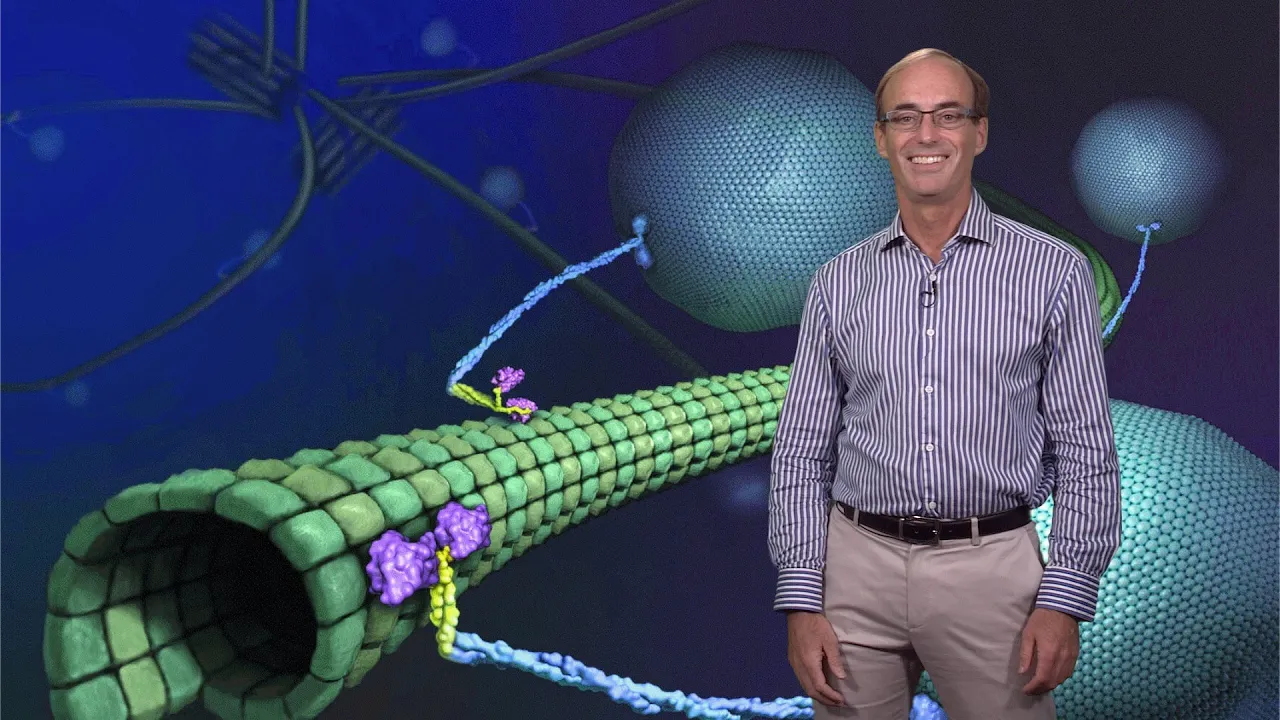
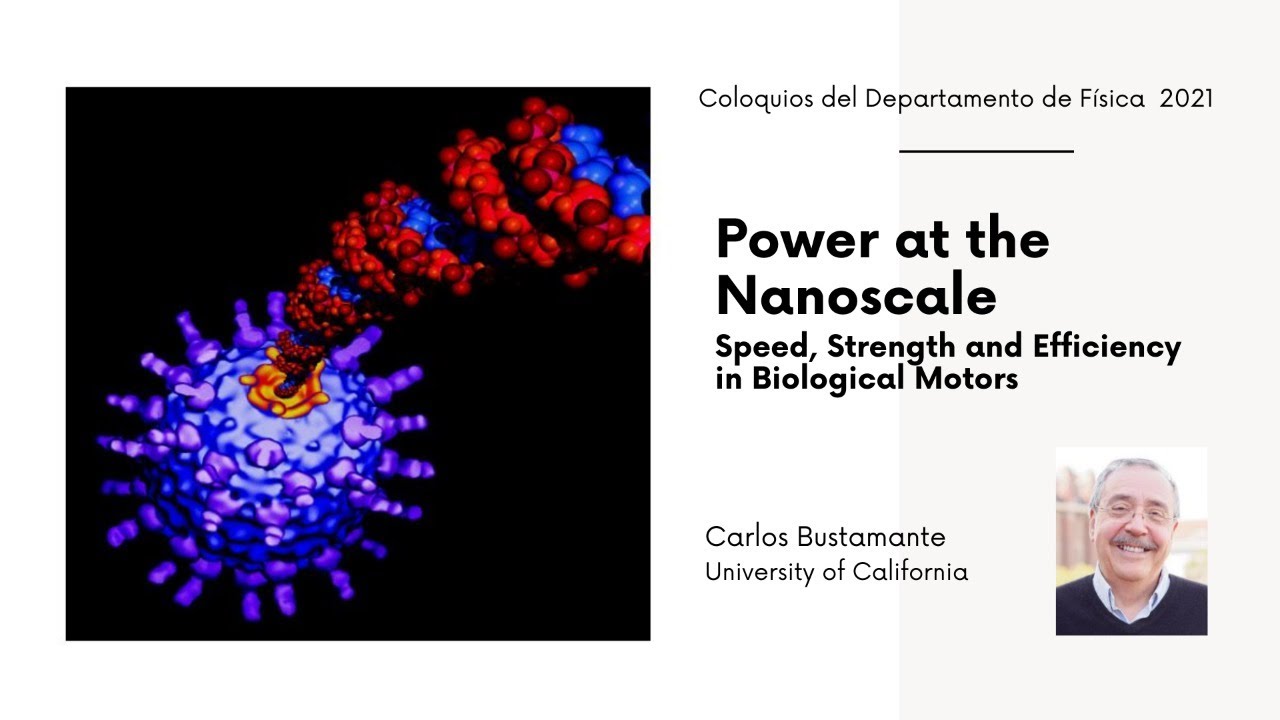








Motor proteins are molecular machines that convert chemical energy from ATP hydrolysis into mechanical work to transport cargo within cells, moving along cellular tracks like actin filaments and microtubules through mechanisms such as the hand-over-hand or inchworm models, with step sizes ranging from 8 nanometers (kinesin) to 37 nanometers (myosin 5), and their function is regulated primarily through phosphorylation, a key mechanism in cellular signaling and disease processes including cancer.
Motor Proteins and ATP: Physics of Cellular Transport | Lecture 17
Added:Basic thermodynamics of ATP hydrolysis, including Gibbs free energy and how chemical energy is converted into mechanical work.
The structural components of the eukaryotic cytoskeleton, specifically microtubules and actin filaments, which serve as transport tracks.
Introductory biophysics concepts at the micro-scale, such as Brownian motion, low Reynolds number environments, and viscous drag.
Fundamentals of optics and fluorescence, including light absorption, emission, and the basic operation of fluorescence microscopes.
Single-molecule biophysical manipulation techniques, such as optical tweezers and magnetic tweezers, used to measure the force generation of individual motors.
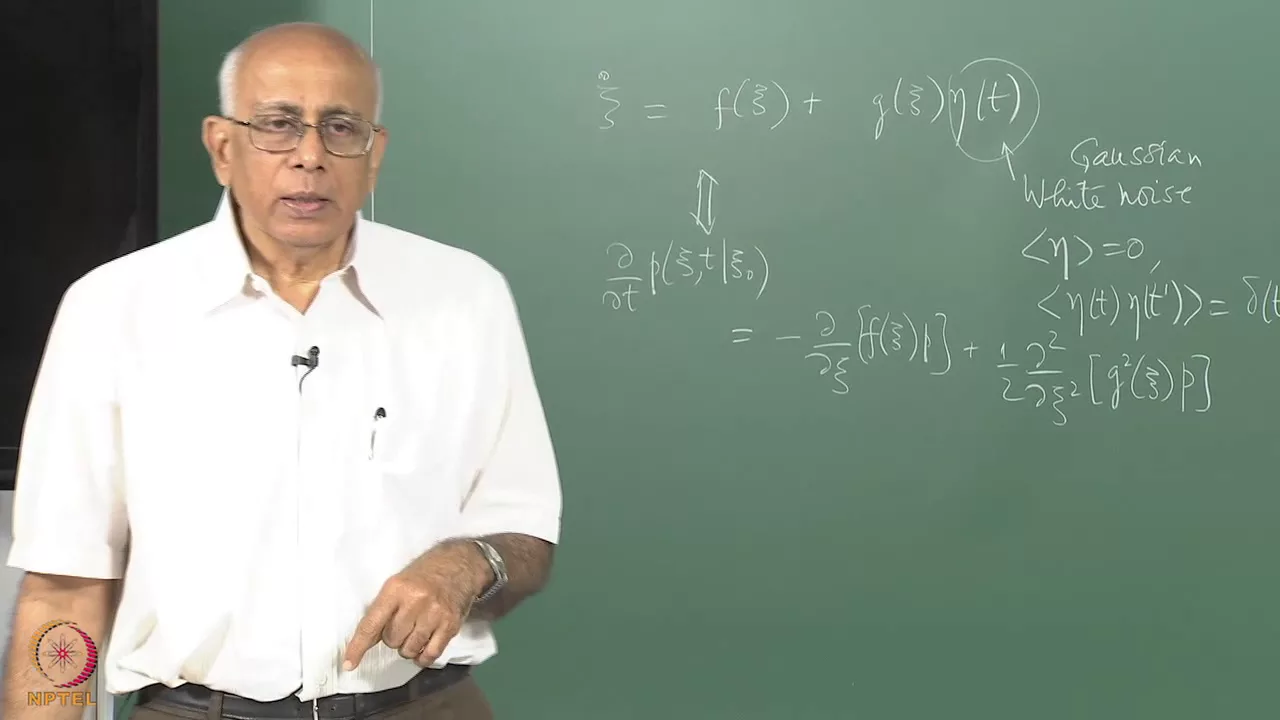
Mathematical and physical modeling of molecular transport, specifically thermal ratchet models (Feynman ratchets) and the Fokker-Planck equation.
Clinical and pathological implications of motor protein dysfunction, particularly in neurodegenerative diseases like ALS, Alzheimer's, and Charcot-Marie-Tooth disease.
The field of biomimetic nanotechnology, focusing on the design of synthetic molecular motors and nanodevices inspired by biological transport systems.
577 views7likes1:21:33Original Release: 2013-10-25
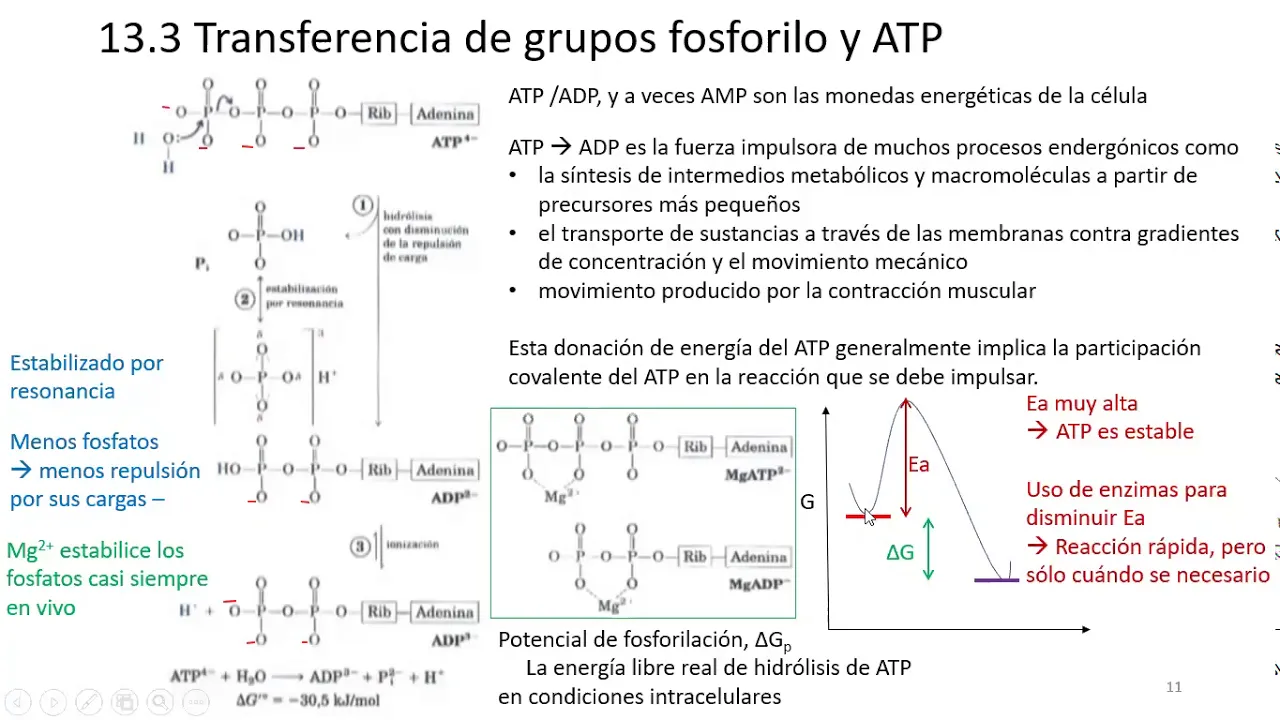
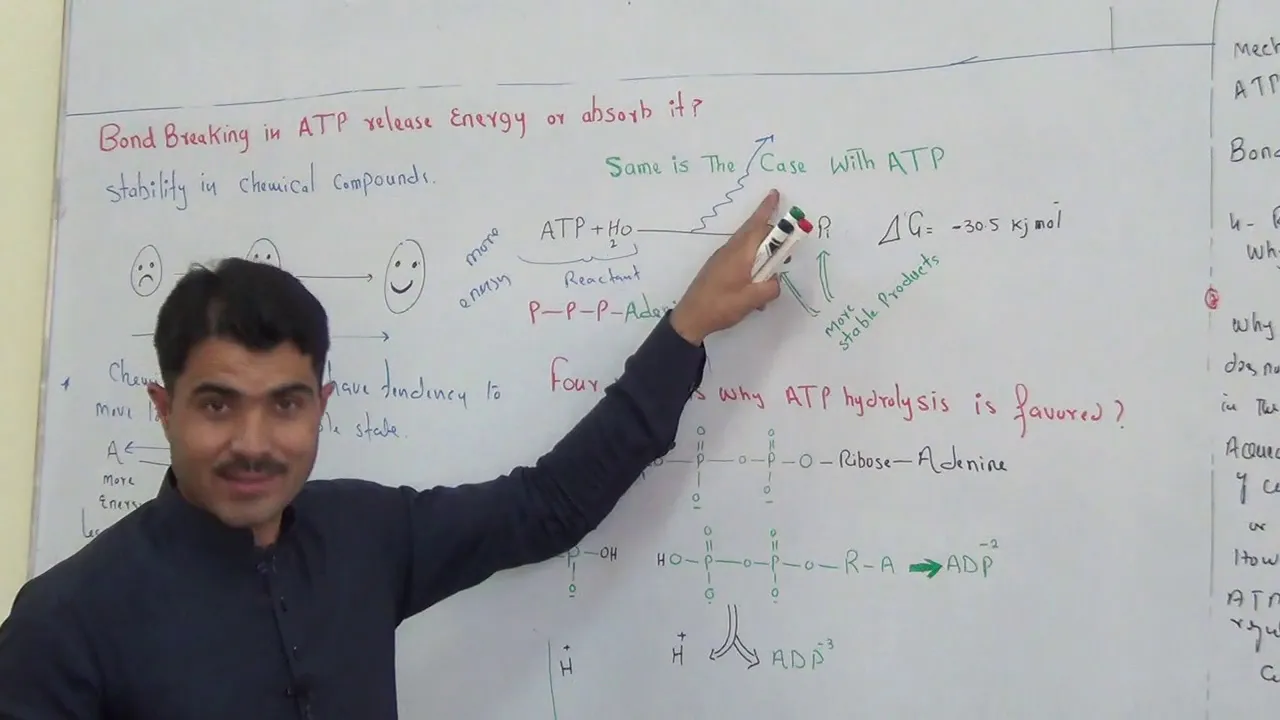
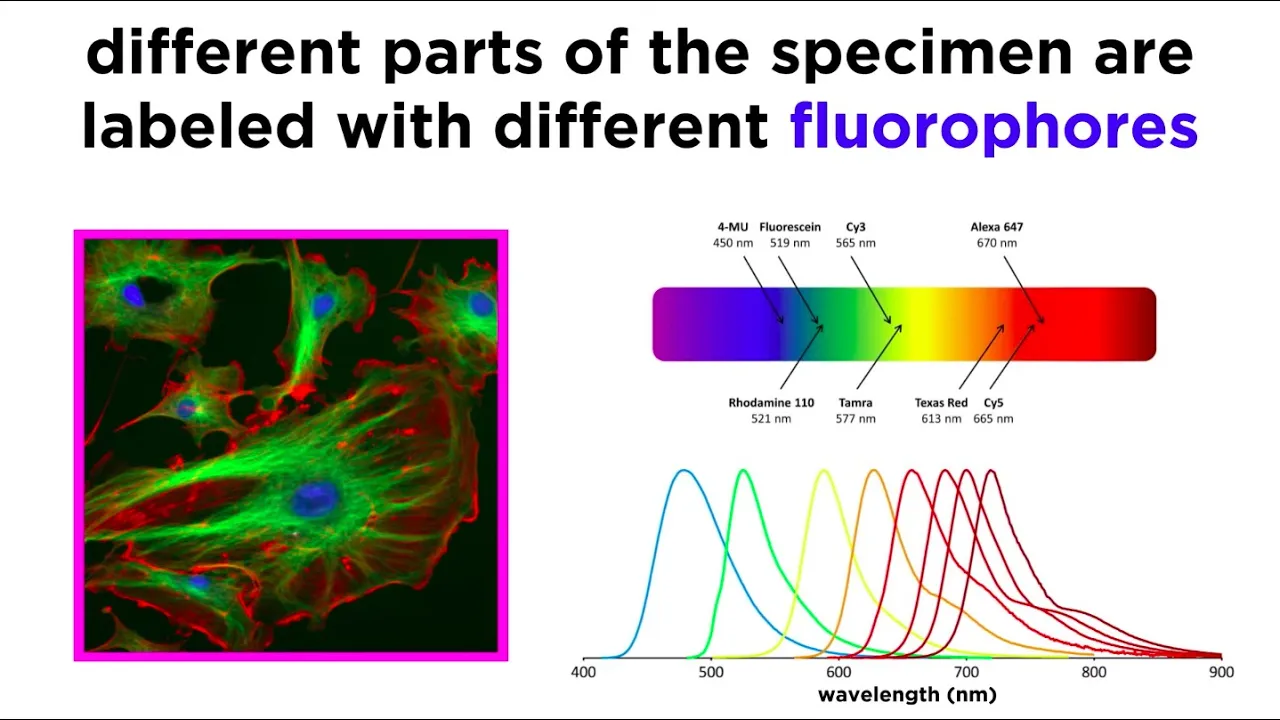
foreign and then uh what happens is that you're not you convert that into this ADP and then you make three phosphate okay and usually uh people use Pi Pi to the free phosphate there so that is the process and this anesthetic reaction is called ATP hydrolysis you know why it's called that hydrogen comes out for instance added actually what exactly so you need to have water so if you do if you do bookkeeping of all the atoms before and after you actually you you're missing one uh oxygen and two two Health atoms so what happens is that in fact you know basically you're adding a piece to it here that's that's why it's called the ATP analysis in the process energy is released the energy released is about 20 KT 20 times performance now because you know that KT is about 4 Pics in a nanometer you cannot convert it into uh equivalent to 80 so what this means is that energy believes from consuming one ATP molecule can be used to pull an object at the force of ADP continent or one nanometer distance or any any other combination and that is the absolute best you can do you know how many APK molecules you make every day I'm staggeringly incredible number about your body weight Professor about the evaluate so if you if you multiply that number by the way of a based on an ATP that will be your body mass so it's very busy all right so let me uh move on to uh the main topic today the motor proteins because motor proteins use ATP most of them Segway into that and also this is like to study things that move right the garden they are going to study planetary emotion you know plants moving in one day around the Sun and some of you guys maybe condensed metaphysics you study electrons you know happy between you know Islands by certain devices whatever molecules inside the cells or test tubes or cells moving inside the body and and we want to bring physical tools to add a precision and accuracy that you normally expect from a highly quantitative Sciences so that's the motor protein part I also want to go into and discuss uh start the discussion about fluorescence let me uh just motivate you by showing you some pictures so that is uh I think a couple of Japanese girls in fingers at a clock that's probably about you know 24-hour cycle of our body right like what kind of molecules are responsible for keeping the clock and then you travel to New York how does your body adjust to that and here's another illustration where some soldiers are fighting against DNA whatever and okay another metaphor and here you have one one eyed monster actually I don't know what the master is doing it says Tales of energy balance usually when you have a paper accepted for publication in this kind of Journal you have a chance to propose a couple illustrations when you pay with somebody two thousand dollars to make up before you and then you will you usually lose right this is a way to support the local economy anyway so the reason why I bring it up is because cell is actually uh like the best known magazine that published biological research papers and and but if you open a magazine and you look at the figure it's actually you know this step actually there are two kinds of data mostly that contributing one is based on General Medical assisted separating uh different molecule based on their size and other properties so that's a very classical tool used by uh biology lab support you know for many many decades in fact I think it's so commonplace that there was not even Nobel Prize for this because probably you know it was 19 minutes One One Time by many people at different times and the other type of data that you see uh fluorescence data so fluorescence is actually not something even with with kids in regular physics courses right uh the exactly the context of quantum mechanics and very responsible and so on but in biology this is really a major tool that your Human Genome Human Genome will see Constitution Provost the older data obtained are interested and many of the Tigers tools that people in hospital face influences so um so I think it's good if you are interested in how actually fundamentalism and practical issues so I'm just browse browse them foreign okay water proteins there are two kinds of motion in biology and one is diffusion and diffusion is driven by a thermal fluctuations infected from Mr Brown discovered Brian version by looking at the you know flower what is it uh Holland Poland yeah uh in anybody using a microscope and uh and division is actually very rapid on a short length scale but but on the long length scale it's actually quite uh quite slow so physics 101 he also we asked the students to do some calculation so if you have an oxygen at a molecule in the air at room temperature then you can calculate the brain uh average in the identity and the effect with the speed of that air molecule it turns out to about 500 meters per second but but it's diffusing in in the womb so that it doesn't go very far before it hits another molecule and Scatter in a random direction that is the reason it has to really see that diffusion so for oxymorphic diffuse over long distance it will take a long time because the kitchen is slow on a long long length scale many many years ago I remember that that when I was a student at Berkeley not me but someone else took a qualifying exam where two professors really you know on the front of the board some Physics questions but oftentimes professors are busy so they don't actually have any problem right when they're coming right and then then one day at next door someone was smoking and so smoke a king through the door crack and then one of the professors of gun inspired okay how long does it take for their smoke party to diffuse from your door credit to to you okay and then it takes many many days not years because again on a short next scale can be very best but on a meter type length scale because it's really really useful except that when you can smell the smoke very easily very quickly that's because you have convection and it increases that constant so that actually yeah but if you have to be Reliant if it's normally this can be really really slow so the other type of motion is you can call it directive motion it has a direction and it's driven by molecular Motors or motor proteins that consume free energy mostly in the form of ATP hydrolysis to uh convert that chemical energy into mechanical energy so in Pilots if you see actually uh continuous Motion in One Direction yet yeah creating a symmetry again there must be a fair energy consumption otherwise you'll be violating second law of thermodynamics and more things are not very fast on the short length scale and typically you know it takes 10 milliseconds to move uh 10 10 nanometers whereas you know in terms of diffusion they can be you know moving much faster the same length scale of 10 000 times faster I told you that oxygen molecule in the air is speed will be in 500 meters per second so that's so this is much more slower than that but because it's directional it can go uh you know quite a long distance or a relative short time so in the cloud certain continuous due to neurons and how the electricity is used to send signals from one cells to another from one part of the body to another part of the body and if you're on the electrical signal it's more like you know using your phone or Internet so you can communicate very easily very very almost instantaneously and that's very important also for the working of your body but sometimes we actually have to transfer objects right if you want to order um I don't know your new iPhone from Amazon it's not enough to get a receipt you have to wait until the object is delivered same in biology you have to actually have you have to deliver a certain protection so RNA one side to another physically and you cannot just you know send that information and ask somebody else to reassemble that Stream So that requires actual transport and that's why these monitor models are very important questions here's a an image of several cells and and fluorescence image so as you see are two uh structures shown in green and orange the green is What's called the actin filament actin is a protein and it assembles into a filament to basically form a cellular highway on which motor proteins can move orange is microtubules a different kind of filament made of a floating called chivalin again forming an assembled structure of microtubules so if you want you can think of them as you know yeah highways and then you have railroad okay so you have two different kinds of uh tracks in the cell so just like Cars Moving on the highway using gasoline as the fuel this model person can move on different cellular tracks using ATP as a viewer so kinesin is a molecule uh that uses a TV to move on the microtubu track there and step size is eight nanometer each time it uses ATP the center of mass moves by eight nanometers in that direction myosin 5 is another motor protein that uses ATP the step size is much larger 3700 in fact this is the largest step size no among the Nature's molecular Motors it looks like the magazines do not undergo thermal diffusion they they all have a dress Maybe start with them all we didn't start with the most these ones diffused over here yeah yeah stationary point that's right that's why I did three copies and myosin 5 moves on a different kind of feel like acting filament so if this can be you know interstate highway and this can be there very well and another enzyme called helicase uh this is an enzyme that unlines the DNA make sense because it is an enzyme that destroys A's Helix in a double helix to make single stranded DNA out of that with your DNA and this also uses ATP to move on to DNA and then also unwind the DNA questions so it's because every kind of track only for a single kind of monitor no no just like in a highway you can have different kind of cars going there right so there are actually many different types of Motors moving moving on on there so connection is one type and there's another class called dining and they actually go in opposite directions and same same here in fact with the myosin 5 is a motorpoint that moves on a lot for a long distance but there's a protein called myosin too that actually is functions in your muscle myosin2 is a motor protein that actually generates your muscle contraction yeah distance so I'm giving it a bit more details about about the tracks highways I told you about micro triple okay and microtubule is made of a protein called Timberland and uh forms a nice cylindrical filament going on like this and the Canadian moves on my contribute and the diameter of the filament is 24 9 that kind of makes sense because each one is just a few nanometers and then when you have several in the 20 down and the repeat uh every uh the repeat length is a plane nanometers and what right here is it was called the pinch and there's a ratio between the the repeating unit you know how far do you have to go along this direction to make one one turn divide by the by the diameter of the filament and they have actually many different kinds of History this one actually uh moves up very very quickly and this one you know lines about it takes many many times to go the same distance and so on strings of acne molecules forming this interwoman filament that's the DNA as a track and field also forms two strands winding around each other but the physical size is actually much smaller this is not the correct size these two are more or less reasonable but this one actually it's only two nanometers physically this is much smaller than this so can you guess that which filament will be most difficult to then if you like try to bend the Cuban you can't do it that sounds pretty straightforward for to answer right and that is you know they have a current rotation there but one point I want to make is that actually when by when you're talking about virus or molecules you basically do not need to think about you know you know individual molecule properties because anything it is inside that yourself they have about the same density and same material properties slightly above water maybe Waters densities one gram per milliliter right and for protein sleep 1.3 grams per liter but that must serve on water so all of the materials in the DNA protein they hit they have about the same same time then less density and they basically mechanical they're very very similar so if you just put more around it then thank you questions I think I showed this movie before and one way of using the motors is the following so you put this railroad you know radiating away from the cell center from here to the outside like this right and then uh then you have dark organelles that uh black observed light so and when this organized spread over the entire cell body then that cell appears dark if that's it is part of the skin of a fish then appears black there but if the fish wants to change its appearance so it's complexion on demand or everything the only thing that the fish needs to do is to to send a signal to motor proteins to uh to change the distribution in this case tell the motor Prince to to grab the cargo in this case and move them to the cell center and that you can do because you know they move in One Direction if the filaments is really in the center with the same polarity you can achieve that yeah it's always very impressed and then I see this movie so that's one function of motor proteins of course there are there are also other Motors that will move them outward okay so on the same track uh you have multiplication that move in One Direction versus uh the other direction so in that case you also have another regulation but in this case it's not regulation of gene expression it's a regulation of motor proteins function so you know just like you know you know that you don't want you have your car running around without you you want to make sure that you can turn it off and you don't want to use your car same here you want to have a control or regulation of where and when you activate these motor proteins and that's very important that's actually there's a signal that the cell sends the molecules to achieve this um and the most important chemical switch inside the cell is called phospherdination is a testament of phosphate to a specific set of protein so you can actually you know make a water protein inactive by simply adding a phosphate group particular to the side under the protein or vice versa and so Nature has learned to do this and the reason why you use a phosphate as a chemical switch is because actually this this is an abundant energy source inside itself so that there's a direct link between food being used to make ATP and then that first pay we actually used to add phosphate to proteins that you want to control the function of so what happens here is that if you want to control the function of foreign you mix it with ATP and then then save the phosphate on a defined site and then you make EDP and potatoes can be different between molecules but but here you know for example this case may be active as a model but then once you pause photo like it attach the phosphate to the Kinesis molecule then so that is the idea so this is the most common way of regulating proteins function instead of cell turning on or off the function by attaching or removing the phosphate but details can be different some some proteins can be activated by removing a phosphate or vice versa now can be circles continuously yes it can but it's very slow so you need to have a catalyst that makes the process faster and then a catalyst uh is also enzyme it's called kylase and I have no idea why it's called penis but it is destroyed according to my explanation how the enzymes are named but but the field is a little bit like very long names because you know kinase is named after um so condition kinase will be a kinase that phosphotylase connection but then there is also you know an enzyme name kinase why because this kinase then for small layers pennies and kindness because you know you also want to regulate the function of a kinase okay and then there's a main enzyme name amazing kindness kindness kindness okay so it's really uh fascinating face you know to to make the cell function you have to regulate so many different things or without you know like outside ink and this is all all done by this you know complex set of enzymes and their Network actually what I said here is a a light there is no enzyme called connecting kind of is kinase but there are a ton of enzymes that mechanism is a different word okay I just don't remember what that is but a destination is key interesting questions so in our body there are many kinases and some are very uh bad cancers arise due to mutations in other candidates because the kinase actually can regulate many different proteins if the kinase of dysfunctions then you know you can really screw up your regulation of cell growth and so on so there is a very famous example as a cancer drug called playback anyone has I love it among the blood cancers leukemia there's a subtype that is found maybe a 15 of the leukemia patients and it's caused by actually a mutation in kinase the people discovered a small molecules more chemical drug they named Gleevec that can bind to the kinase to inactivate and then uh amazing thing is that if you take the pill then in two weeks the cancer just smash away because it's gone so usually to treat cancer you have to do very invasive a treatment like radiation or you know or drugs that can cure all kinds of cells Without You Know Much discrimination but to cure the cancer cells but this one you know targets just one one enzyme mutant enzyme and then disables the cancer for cancer symptoms like to basically you know yeah hsql it's gone two weeks so I heard a talk by Charles Sawyer who was really strongly involved in the development and then also dissemination of this type of treatment and he just won the Alaska price Alaska price and we heard of wolf price the Israeli government gives out food prices every four years physics chemistry Agriculture and several other fields but Ultra prices considered a premium of their price so if you win the price in physics or chemistry then I think you have like almost a 50 chance of getting the Google price but biomedical Sciences Alaska is the price so if you win it then 50 chance that you actually get to that price so you want the last price for believe it and he was really inspiring he said that you see what can be more important than you development treatment and then yeah for the suffering cancer patients they recover and it has a really good people so I was very very impressive so there are many many drugs targeting kinases you know it's not without a problem I mean there's no side effect but some of the patients actually uh get the cancer again because irritational arises on the kindness that actually is a binding of the trunk and then another company developed another drug that targets the same kindness and but differently so ideally what you want to do is to to treat the patients with the two drugs at the same time but that actually is a big problem because different companies they don't want to collaborate because it's about you know the bottom line right it's a blockbuster uh drugs that can bring in several billion dollars a year on the money monetization of the Technologies anyway oh by the way people who discovered uh they also won the Alaska price last year so they may be you know waiting for the phone call from Stockholm foreign protein to be useful as a transporter to transport objects from one uh one place to another it has to be processive and processive means that once it binds to the thread it uh it takes more than one step okay if it binds and take one step only and then dissociate it's not going to be very good as a transporting device so so uh the processive motors uh you know obviously required for a transport and there are two uh possible mechanisms on how they function one is called the instrument mechanism so let's imagine that you have a periodic lattice you know put in filament from serving as a track and then you have a motor protein that has two feet okay blue and orange and I drew them in different colors to you know indicate that they are actually not the same the same ones and in the inter mechanism somehow The Next Step the engine expands and then you can cause this expansion by removing ATP for example it may bind some in the middle and then when HD is gone the glue is gone it can expand okay and then the next time a next cycle eight divides again the uh the instrument compresses contracts and binding it in the middle but then uh if you make sure that during the compression you hold the front unit stability to the track and vice rather than the end result is that we have movement Track by a single step and then uh and then we can do this one more time and we can move forward processarily on the track and trick here is that in at any moment in the cycle at least one uh unit is bound to the track so that it doesn't fully dissociate and in in nature there are actually 13 that are known to function this way and one well known example is a class of enzymes called Hindi cases and in this case you have two uh domains that function as these two is actually gives the combined and compressed contract and expand the other model is called the hand overhand mechanism so in this case you have two or two units that are symmetric I just use different colors to denote uh separately in the next cycle now the orange one is taking the front spot and then the next cycle the blue is at the front and so on so that's it's like a human walking on the street two two two legs if you want the instrument it's more like baby crawling on the floor okay and there was some uh some you know debates as to you know which one is correct for kinesin and myosin 5 is a molecular Motors that function on actin filaments and like tumors but now debate is actually more or less settled and the most important paper in in setting this debate was published from this department by the level core setting that paper is uh actually the topic of your first homework you know from my section of the class and in in that paper uh what they did was to image a single motor protein using a camera and then uh follow the position of the model as a function of time in a more advanced uh experiment that I want to discuss here is done by a group in Vermont you can actually put uh you know let's say this is a single mode of protein and you can put put a green and red uh fluorescent objects here and here and then when when the motor takes a step to go forward to put the rear leg to the front then uh when when that happens the position of the red uh that will change but not the green one and then the next step the green one will move and not the red one so if you clap the position of the red and green dots as a function and you can see that when a green takes a step where it is stationary and then next red takes a step and so on this really shows that two uh two units are really equivalent they take turns to move forward foreign let me also talk about the Stone Force why is this important to know how like um actually uh I don't have a very good answer but that is a really uh good question let me put it this way so uh when uh when we publisher like very big paper in a big journal and some oftentimes we we do an interview with news news reporter and I'm very excited I tell them you know okay why we did it what we discovered and so on and the interview interview I would look at me and then oh yeah that's interesting and so on but always has at the very last minute then as a final question is that okay now for the general audience why should I care okay okay why is it important and and that is actually quite a different uh different question because um of you know to make to to make people click on the news story on the website you have to mention cancer right or something that people really are very well aware of and and so that is really not not easy uh so in fact when poor saving gave a talk in the colloquium Series in 2003 just before the king paper came out there was a beautiful talk but one colleague asked okay so what okay what why do you care and this is actually a good question if you go beyond uh the fundamental basic science and if you go beyond you know a lot of physicists of biologists who actually really care about the detailed mechanism then you know does it actually matter in terms of treatment of disease and I don't know right does it change the way you diagnose diseases cause or mutations in in these molecules maybe maybe not but it was a good point but there is a there's a lot of interest in kinesi mechanisms because mutations in communism cause defects in many brain functions because the neurons are very wrong so they need to transport Cargoes over long distances so for them Kinesis is even more important than in other regular cells right so if you have defects and kinesi molecules then you get uh diseases that are available to you a quality functions and so on so there's a reason why there's a lot of investment in understanding how these molecules work but it is a very good question so what question right so let me uh take a detour here to talk about soil Force measurements I I took this figure from a paper published by a group from Penn State University and they study flying insects what measurements do they do okay so they uh they catch a flight in San I think you start from something easier as you catch a dragonfly and then you attach a weight under the dragonfly and see whether a dragonfly can take off if the flight can take off then you increase the weight keep doing this until the flight cannot fly anymore the way that uh that the pavement that stops it from flying is called the story Force okay so they measure this for many different kind of flying insects shown here and they went down to very small small appliances like fruit flies and so on and then plotted basically uh the maximum uh Force output the store Force especially the mass of the muscle and the flying set in fact for flying sex that's most of the mass because most of the mass in the flying inside we actually in the motor are muscle so anyway so you see a beautiful power dependency in this long long plan right so and then and then so that's done by a grad student then and the undergrad there pre-med student who went to Americas eventually then she should not be correctly extended to other flying objects so she analyzed data from bats Birds and then then she even went to running animals suing animals and all the way to the Jets they all fell on the stage same same slope quite amazing until I heard the talk actually I thought only only the biophysics measures the soil Force but people what people have done is the following so you have a penis in walking in this this direction you can actually grab my uh neck right and apply an opposing Force and I usually you know one people need them no problem I just keep walking right but at some point I cannot walk anymore I stop so that is the storyboard spokenesin it's about 70 colleges you can actually calculate the maximum surface from from this kindness and take one step or eight nanometer using 180p okay so then maximum what we can generate is 80 Kika for 10 or 8 by the step the maximum force that it can be spent times the walking forward is 10 picnic does that make sense so the Maximus Workforce mechanism is 10 people new just from the University of argument extra storage for the 17th it's pretty close to the maximum now what can you say about the Maximus purpose of -5 is a step size of 40 nanometers what what are the maximum surface two two peak conditions and the actual number is about about one piconductor so there is a penalty that you have to pay by having a large step size it's not as robust you know you cannot carry uh as big a cargo because bigger cargo will cause physical strength providing you with the opposing Force so in a sense the myosin 5 has a very good fuel efficiency right okay why is it mile per gallon this is actually much better right but then maybe you know you need anything if you want to go off-road so it's more like SUV and this is more like a bicycle all right so let's take a five minute break and then we'll continue um thank you foreign thank you foreign foreign okay all right so uh let me talk about another another Nobel Prize so this was a chemistry price in 1997.
and it was about half the price was given to the combination of these two guys and it was for the elucidation of the enzymatic mechanism underlying the ATP uh production how ATP is amazing inside the cell was really discovered by to a gentleman shown here actually Google price is interesting it can only have up to three Prize winners per year per category sometimes they split the money equally among the three people the price is about 1.5 2 million dollars so you can get 400 000 per person but in this case they they split the price into two halves and then one half Was Won by this person you got six hundred thousand dollars and then these two guys got this 300 miles but I'm quite fair but in fact my uh my former advisor he had to split the their own in he wanted a about a quarter because he gave one half to the government tax and then and then remaining I will have he had to give one give one half to his ex-wife because for he got the price they got divorced and they're here too sign and leave a location okay five minutes I believe so anyway so they won the prize for uh for discovering how ATP is made in fact uh there is actually a Machinery protein complex since inside the cell that is used to make ATP and the proposed was that that machine actually rotates instead of moving on the track it rotates in one place so it's a watering world and of course the prediction is that if you have a lot of uh ADP and then some other kind of energy source a proton variant then you can make in TP by retaining in One Direction but if you have a lot of ATP and then no acrylic ingredient the motor will uh an opinion The Outpost intervention we use ATP so in that case it'll be a good ATP age because it's using ATP to perform the rotary emotion so Japanese scientists kinosida and his colleagues publish a paper in nature also at the same year 1997.
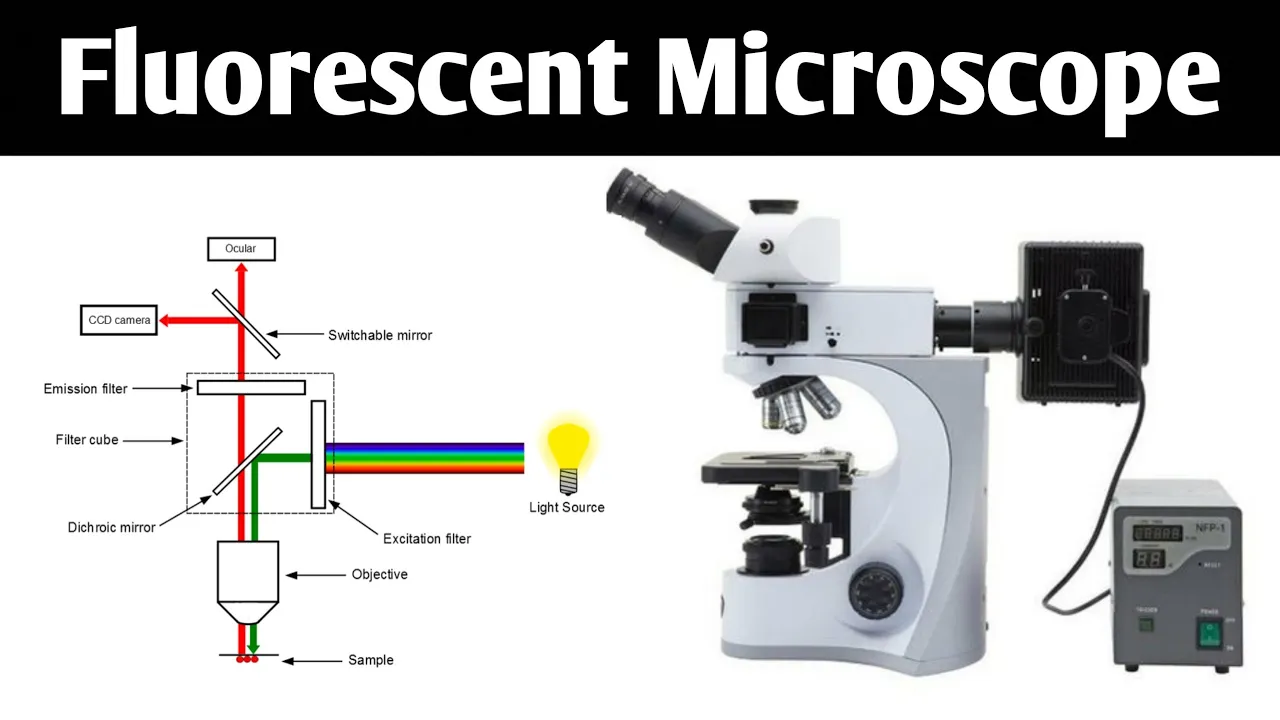
single molecule measurement to show that f480pas is indeed a rotary model and so I I didn't go that year but uh 47 told me that he went to the biophysical Society annual meeting that yeah where before publication Japanese scientists gave a talk showing this movie that this actually rotated and then people actually are in the middle of the talk they stood up they gave a spending occasion to to the speaker so that's actually something that I have never seen in my life that that finding is so striking and it's so profound that people just voluntarily you know stand up and then Applause and that's a very special moment because if the same person gives the same thought you know a month later it will not give understand your vision right so it has to be really the Earth shattering and then it has been the first time that is presenting problem and so there's a very special moment so what they did was to immobilize this enzyme that would take on a glass cover slip and then on this rotating part they uh they attached an actin filament acting filament is actually used as a track for device and type and so on but because it forms a nice filament you can just attach it and then stain that equipment fluores molecules the visualizes are under the microscope and then they can see that animating cheap files you can see this program is a routine in a directional manner and if you lower the 185 concentration it slows down and so on and you can actually see that when you have a larger active filament it rotates more slowly compared to the case where you have a smaller fill up because of the viscose track based on that calculation you can estimate the efficiency of energy conversion from ATP to Mechanical work and that'll be also part of the core problems the second second from my section questions how did they attach it oh so I believe they use a trick called biotin evidence and biotin is a small small molecule it's a vitamin analog and you can actually attach the vitamin to to this guy that is rotating and also to deck and then there's a critical evidence that has four binding pockets for biops buy it and everything interaction is actually a non-covalent there's no chemical bond between iot and fighting and every molecule but among the non-provalent interactions this is the most stable interaction that you didn't know so it's really a very specific very stable so it's very widely used for biophysical studies it actually is more like having a very reliable Lego building block you know one component the Lego box that works every time you use and so that's how they attach this guy to something else in nature they are never test each other in the lab you can do that using well-known points two sets are available let's just so people believe that they got the Nobel Prize equals of this paper their prediction was really fulfilled right okay so let me move on to uh fluorescence my lecture note has a lot more details about the motor proteins and their different properties but uh but I leave this up to you for your own reading so now I told you fluores is very important and fluorescence is you know it's responsible for for lighting in this room too except that excitation here is not done by laser it's done by electrons electrons are accelerated in the tube they hit we have neon here okay I don't know what you had about the electrons hit the uh whatever this is not Amazon instead oh anyway so but it's but but you you excite the molecules the atoms inside the tube using a excited electrons and then when these atoms come down to the grounds that they didn't like that's what you see here and in fluorescence you know that we normally use for by physical studies you don't use electrons to excite them you use a light to excite them so if you have a laser light coming in and that's uh like you know one structure of one type of fluorescent molecule and and what happens is that when the laser hits the molecule and then photon is taken up by the molecule then he separates is an electron hole in the uh especially uh separated you know electron goes there and then they then go actually oscillate back and forth along the lens of the molecule and then if you have an oscillating charge classically speaking there can be radiation right that's the variation happens in the form of fluorescence water and that's the important coming out now if you have a smaller molecular this is a bigger molec you can see that in the middle of the structure there's additional double bond here so this molecules are somewhat bigger and in quantum mechanics if you have a particle that box problem in the particle box becomes larger and larger the energy space in the two different levels become small and smaller it's just just like that then this will respond to uh laser light of a longer wavelengths small energy and also the resulting in life is also a red shifted or lower acid generally basically if the model is smaller and larger then the color is more more red so that's that's actually a general rule here so when you attach these fluorescent molecules to the biomolecular interest for measuring the activities you know for example attaching the first molecule to a kinesin then uh one thing that you want to worry about is that whether by attaching a molecule to something that you want to study you may be perturbing the system right so that you want to minimize so ideally you want to use a smaller die not a bigger one because smaller one have you know generally less perturbation and you can make it even smaller if you if you cut it in half and then there are also fluent about this size but as you can imagine when you make this smaller partly in a box smaller box energy is larger okay that means excitation emission will be Bluer in fact you require UV lasers to excite and then when you do that then you suffer from a lot of other issues because UV laser exciting glass or cover sleeve or lens can generate a lot of background fluorescence and and and and for other and there are also other reasons why it's not very deserved so there's a happy medium somewhere the individual life that this molecule is really a function the best for virus because that is questions so here you use laser yeah does it mean you need let's use some color linear polarized light here you don't have to but there's additional information in in the polarization okay so let's say your molecule is uh standing here and then uh when you uh when you excite this molecule using a laser light polarized in this direction and then the molecules actually has dipole orientation in this direction then there's no that product is zero so extension becomes zero whereas if you come in with the laser polarized along this direction then you get you know maximum extension then if you actually rotate the laser pollution like that then you will actually see a modulation that scares with cosine squared angle between the two so if you I mean just to give you a Refresh on physics monitor level refresh of light this is what I do you know when I when I teach this place right so you have a electromagnet anyway propagate in this direction and the photon travel in this direction if I have my electric field that is oscillating all right and the main field is oscillating they're both perpendicular to the direction of the K vector and then one is maximum when the other is maximum right they go like this right and then you walk at the same time so that's how uh you know light works especially the you know polarized light so for when I do this that's that means that the direction of the electrical oscillation is the direction of laser polarization so if you actually have a regular laser most of the lasers that you buy commercially you mount them on your laser table and they are usually they usually give you a horizontal so they say linear portal is like and they are usually made so that the direction of polarization is vertical paper okay so there are exceptions about this is general rules they Define and again this will be a topic of a second second homework any any other question now I don't know if you record this but you know in in your in your radio antenna right so maybe you your cell phone has an attack well I guess you don't anymore but uh okay so it says antenna and then what what is antenna in terms of radiation it uh you know in the TV station they they just have an AC oscillating current jostling no it's electrons are just doing this right so when electrons are accelerating there is radiation and in this case the radiation uh goes only in the direction perpendicular to the direction of our acceleration so radiation is actually going in this direction you know all over all surrounding these directions right and then rate the light that comes out is polarized along the direction of oscillation the emission of the license is also polarized Allah interaction because when you have a TV that receives the signal although like I said I don't have a TV that receives the signal anymore but what happens is that EM wave is coming in from space to you know oscillate the electrons on your antenna and then this is picked up by your TV too as electrical signal and vice versa so why it is one reason why this is actually useful let's say um you want to know how quickly the molecule is tumbling in solution then what you do is that you shine laser light you know with this polarization and you measure emission in this direction and if the the molecule is not rotating at all then you'll get zero but the molecule is free to rotate then depending on the time you may lose that the original excitation information in terms of orientation and then get signal so that that is actually very popular acne to measure biology interactions based on influencies polarization all right what's next okay so uh a couple of foremost will be the first couple books will be on single molecule fluorescence detection and and normally this is a crystal structure of a protein and the colors are all artificial you know just to denote different uh parts of the protein you know your typical protein would not give you any Optical signal that you can detect at the single molecule level because there's not much signal so if you want to study the motion of kinesin in the lab frame and so on then you can attach first molecule this is called the rollerman to a known site and now there are many tools available that allow you to to achieve this and it's so standard that even a physics class student can learn and to do it within a couple of days okay I don't know how to do it but because you know before so the present then becomes how to test in the fluorescent molecules up there so what you need is first you have to have a dilute sample dilute enough so that in your Imaging volume your resolution element of your microscope you know you have to have less and more molecule on average otherwise because we cannot collect a signal from one molecule if you have very dense sample that's one a second uh requirement is that your signal has to be larger than background sounds very trivial in fact modern Technologies allow you to collect the signal from one molecule and a lot of photons are actually defined usually the difficulty is to reduce the background okay and the fluorescence is actually really great here for the following reason okay first of all uh to uh to uh can you see what let's stop here okay so is uh is he he was my second student in Urbana so he's working on a microscope is it a laser light and so on yeah at the bottom is you have to work uh in a dark room okay because otherwise there is too much background photo so like single Imaging single molecules on a microscope is like looking at the stars in the night sky you cannot see a star is really at night and so we end in you know when the Sun is up so you have to wait until it become and in many ways uh what you measure are actually very much looking at the nice guys sometimes you see super dope and so on so you have to turn up the light and uh and this is a very important uh chart so I'm drawing the electronic levels of fluorescent molecule so I have one electron metal at code s0 that's the ground state and this is S1 that's the maybe you can turn the light on that's the excited state so these are spins a single stage and transition between the two is allowed from conservation and so on so when you uh when you excite the molecule using a laser light you normally start from the ground state and then and then when you're excited you don't have to go to the bottom of the exercise because there are many other kinds of energy levels the molecule can have a vibrational level you have a dietary molecule it can vibrate that gives additional energy levels it can also rotate so you have many many additional levels up there so you can actually go go up to any of the many many states here and then within about it relaxes down to the bottom of the excited state then stays here for about one nanosecond or so and then comes down the meaning of fluorescence Photon or also you can also come down to many any of the many levels up here into vibrations and patient and then then it comes down to the ground state within a lot of people second and they can recycle many many times and what this means is that there is energy difference between the laser light and then the fluency so color is different emission is actually more resided that allows you to detect that donation selectively even in the presence of Miller time stronger later life in system that's really really key color difference allows you to shoot this and this color difference is called the stock shape by the way okay one last thing I want to mention before I finish there's a stakeholder triplet estate and what happens is that you do this about like 1000 times and then you know take technically you should never go to the triplet stay because it's not allowed actually here screen is nothing so but it actually it happens with a small probability like 0.1 percent because of the skin spin popular coupling because of that this can actually happen but once it comes to the triplets day instead of coming down after one nanosecond you can stay there for milliseconds microseconds or minutes depending on the materials you have you have and then eventually it comes down and then you can continue the cycle when the lifetime of the tripler set becomes seconds or minutes the light comes out actually you can testify to find in a low low sticks that backpack glow sticks but there's some stones that glow in the dark t-shirts and so on so but especially light from the room now is stored there in the form of Triplex day and then I return to life fluorescence that you see influence but uh let's finish here and then Thursday by the way the homework uh is due next Thursday but my homework number one
Up Next
14:42
Proton Movement in ATP Synthase Mechanism
@AKLECTURES
145.6K views•2015-06-11
50:12
Bacterial Communication: Quorum Sensing and Biofilm Formation Explained
@JHUAAP
12.6K views•2011-06-28

5:35
Enteric Nervous System Explained: The Gut's Brain | Neurobiology Lecture
@alumniu6029
438 views•2018-09-12

7:08
Bacteriophages: Earth's Deadliest Killers and Future Antibiotics
@kurzgesagt
34.6M views•2018-05-13
Related Study Plans & Knowledge Roadmaps
Structured learning paths in Biology
biology
RNAi: Biogenesis, RISC & Gene Silencing
01Molecular Biology Foundations: DNA to Protein
02Introduction to RNA Interference (RNAi)
03Molecular Biogenesis of miRNA and siRNA
+ 2 more learning modules
10h5 modules
Explore Roadmap
biology
Mycorrhizae: Signaling, Biophysics & Ecology
01Foundations of Mycorrhizal Symbiosis
02Molecular Signaling and Root Colonization
03Biophysics and Bioenergetics of Nutrient Exchange
+ 1 more learning modules
11h4 modules
Explore Roadmap
biology
Circadian Clocks: TTFL, SCN & Periphery
01Foundations of Molecular Biology & Gene Expression
02Introduction to Chronobiology and Actograms
03The Core TTFL: Molecular Architecture of the Clock
+ 3 more learning modules
14h6 modules
Explore Roadmap
biology
Population Genetics: Math, Drift & Selection
01Genetic & Probability Foundations
02The Hardy-Weinberg Principle and Baseline Models
03Mathematical Modeling of Natural Selection
+ 3 more learning modules
18h6 modules
Explore Roadmap