




![[26수능-수특] 교과서개념 p.43 (절대음감,평균율)](https://i.ytimg.com/vi/t_3DZ4azRDA/maxresdefault.jpg)






![[Music Theory in 5m #3] Temperaments, how we tune our instruments (VOSTFR)](https://i.ytimg.com/vi_webp/x4lGnQf4KCY/maxresdefault.webp)









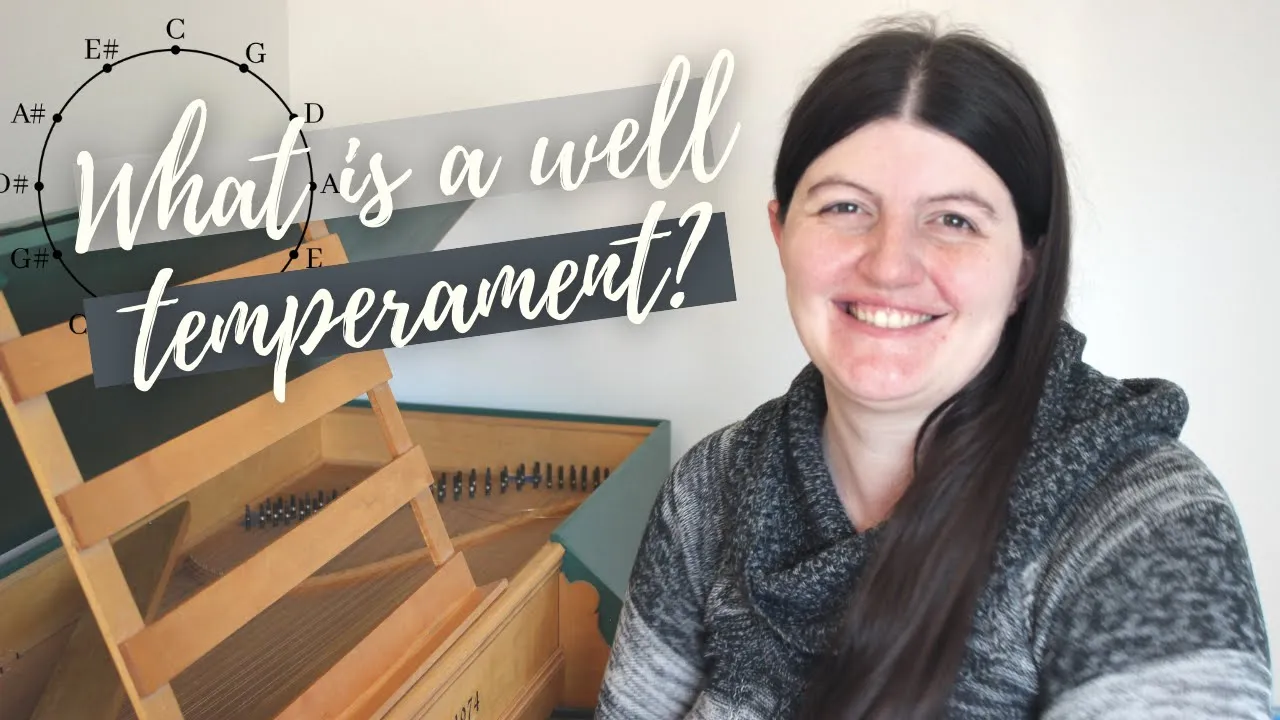
Wolf intervals are dissonant fourths or fifths that occur naturally in just intonation tuning systems due to the mathematical incompatibility between different prime ratios (such as 3-limit and 5-limit tunings), making certain chords like the major 9th chord with a major 6th interval impossible to tune purely; however, these intervals can be creatively utilized rather than avoided, as demonstrated by historical temperaments like quarter-comma mean tone and modern equal temperaments (31-EDO, 53-EDO) that approximate various intervals while maintaining musical coherence.
Wolf Intervals: The Chord That Cannot Be Tuned
Added:The physics of sound, specifically the harmonic series and how overtones create natural musical intervals.
Basic music theory of chord construction, including major triads, seventh chords, and ninth chords.
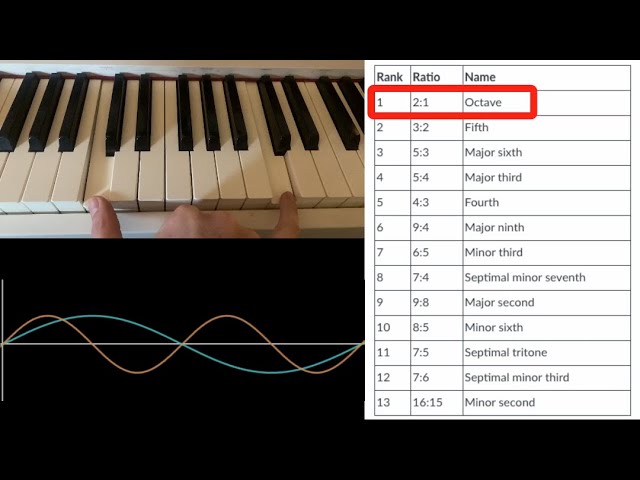
The concept of musical intervals expressed as mathematical frequency ratios, such as 2:1 for an octave and 3:2 for a perfect fifth.
The fundamental difference between Just Intonation (tuning based on pure mathematical ratios) and Equal Temperament (the standard modern tuning system).
The historical evolution of temperaments, such as Pythagorean tuning, Mean-tone temperament, and Well-temperaments used in the Baroque era.
Microtonal music theory and alternative tuning systems (xenharmonics) that utilize more or fewer than 12 pitches per octave.
Dynamic tuning techniques used by modern synthesizers and Digital Audio Workstations (DAWs) to achieve pure intervals in real-time.
Practical application in choral and orchestral arrangement, analyzing how acoustic performers naturally adjust intonation to avoid dissonant wolf intervals.
1.5K views62likes19:10Original Release: 2024-08-08
hello today I want to talk about wolf intervals and a chord that is impossible to tune it's not so uncommon to hear musicians dismiss just intonation and unequal temperaments precisely because they create wolf intervals so what are wolf intervals and how do they create impossible [Music] cords this is the wolf interval no not that a wolf interval is a fourth or a fifth that is either sharp or flat of pure tuning this can also include nins and seconds since they are related by fourth so in just intonation we have the Lesser whole tone the smaller whole tone 10 over 9 which as we'll see is one of the major culprits of why there are wolf intervals in just intonation now I know what you're thinking these intervals don't sound very nice and it's not very fair to call them wolf intervals I mean wolves are beautiful creatures and I'm sure musically they sing really well and don't sound anything like these totally out of tune intervals anyway what a lot of people don't realize about wolf intervals is that they are a feature of the Sonic and tonal World their property of nature of the overtone series is ultimately rooted in the irregularity of the Prime series of primeness in general and primeness creates qualitative diversity in the tonal space it also has a unique patterning of its movement the movements diverge and interfere they cause what is called harmonic entropy but each unique note interval pattern of sound vibrational relation has a unique qualitative feel to it so how does prime Divergence cause a sort of harmonic impass whereby we cannot a void wolf intervals well that's where the impossible chord comes in what is The Impossible chord it's uh N9 major 9 with a six with a six major six here it is an equal temperament so why is this tuning impossible this sounds totally possible to me I'm hearing it well it's not in tune here's how that works well when we tune the nine chord in just intonation we can get it completely in tune by stacking fifths and pure thirs that gives us a tuning lattice in the following way going on this axis we have the major third and on this axis we have the fifth 3 over two and we can move in that what the hell is going on stacking fifths in this direction stacking fifths in that direction cool and from the major third we can move we can move up and down a fifth from the third is that saying on the axis of the fifth here okay why are you just saying there's two chains of fifths offset by Major third so we can form the chord with the following intervals a major third [Music] fifth the seven major seven the nine and six the major sixth there it is an octav reduced form octave reduced got it now what is wrong with this chord well it involves a wolf interval and you might not hear it at first but when I isolate it it is much more obvious is between the 9 over 8 and the major 6 interval 5 over3 we can also see here that the edges of the stus have diverged in their tonal space so that the 9 over 8 is formed through this stacking of fifths while the 5 over three is found by going up a major third and then down a fifth so that gives us two perfectly tuned intervals that are out of tune with each other so what is this interval well just so happens to be 40 over 27 the inversion of this interval 27 over 20 is found in the harmonic series between the 2 7th and the 20th the 20 is of course reducible to five so the major 3D while the 27 is 3 * 3 so 9 * 3 so what can we do we have this in tune second or nine chord and that is based on the whole number ratios 8 9 10 12 15 or in the higher position 8 10 12 15 18 we can of course put a 27 in in an attempt to remedy the relation between the second and the sixth by making it a pure fifth only to have the inversion of this very same interval pop up now between the 3D and the 6th well only one option remains which is to drop our second down to be a fifth below the pure sixth of five over three I think this might be my favorite version of the chord [Music] yet I think it kind of holds the distance in the middle and balance that wolf interval placed in that whole context [Music] well let's be a little scientific and compare them I'll keep doing exactly what I just did starting with the wolf interval and then having the context come in [Music] so in the end it's really how do you want to hide your dissonances and we can think about this almost in terms of voicing although it is another dimension of voicing itself and we will imagine that each of these places where we put the dmic comma where we put this syonic comma where we adjust the interval that is always going to have unique voicings to the chord that accentuate the consonances and dissonances so when we move the wolf interval from one spot in the cord to another spot in the cord and enhance certain of the harmonics and increase certain amount of dissonance as well but in different places and emphasizing different notes in the chord in some sense musical Harmony always involves some element of hiding the dissonances within consonances weaving together consonant and dissonance contrasting them and building on the difference and contrast that comes out and also comes back to something consonant and stable and one last wolf interval I just want to mention before ending is the 21st harmonic I've made videos about this interval it is a severely flat forth 30 cents flat and I find it when IAL I find it lovely I think that there is ways to use a severely wolf flatted forth if we think about [Music] the wolf interval that arises between five limit and three limit that we've been talking about for the majority of this video the stretching is to diminish the fifth which in inversely means extending the fourth so it's a sharp fourth in everything we were looking at before this is the opposite this is a very flat fourth so that means that it corresponds to a very sharp Fifth and they have a different character to the five limit wolf intervals they are softer less intense they're still very dissonant sounding [Music] and if we use this interval with the 9 over8 whole tone we get this septol minor chord so this will give chord very unique flavor much more mournful and that's the way that this interval is voiced in the harmonic series and so this voicing is gives a certain flavor to the interval and we can place this interval in other places within tonal [Music] space when we make it a note that we move through in the scale its dissonance accentuates that movement and really there are an infinite number of ways to revoice to recontextualize these intervals and that will have a different emotional effect in that context I don't think the wolf interval is a problem it is an opportunity to create a different kind of sound in medieval and Renaissance European music tonal diversity was commonplace up until even the 1800s mean tone was an early attempt to you know give three limit tuning the middle finger and to introduce a bunch of wolf intervals in order to preserve the pure thirds now these are very small micro wolf intervals quarter commom tone uses a quarter of a Centon comma which would be 5 cents instead of 20 cents and you know using unequal tunings we figure out the character of each key as musicians and we can see what sort of distortions there are within the scale and figure out musically a sort of perspective and feeling and a character unique to it you know some keys have wide fifths and wide thirds and another key key is extremely stable and has very precise thirds so if you move back and forth between these Keys it can have a profound effect on the music and we know that people like chopan for instance wrote with this in mind you know going back and forth between a cord that's shading is more tense because it's using wolf intervals at the right moment and in the perfect way can be a huge factor in a classical composer's thinking about a certain passage of a song the right voicing and the right context basically any interval even the most dissonant can sound good so the Wolves win and the 12-tone Gang heads home but wait a minute what about other equal temperaments well 31 closely approximates the septol comma and allows for us to easily modulate and access septol intervals including the septol wolf fourth although it's not a great approximation at 7 cents flat 21st harmonic like so kind of but mostly no and 53 equal temperament gives us the availability to modulate between all of these syonic commas to move freely between the wolf and the pure fourth and fifths now when we are confronted with the question of the major 9 at 13 chord we can again switch between all of the permutations which we looked at um but we cannot do all of them at once and we can never avoid the wolf interval mean tone temperament it gives you a circle of mean tone fif but you never run into the more problematic wolf intervals of the extra wide fifth that is left over when you stack several small [Music] ones now here too we can approximate some septal intervals they're not quite on they're about 10 cents off sharp but that lets us do our little fourth so long live wolf intervals let's embrace them and figure out how to weave them into more emotionally Rich music because they are emotionally Rich intervals well I'm going to leave you now with shopen E minor Prelude in quarter comma mean tone or actually this a six comma mean tone but it still shows the character of certain chords as being more dissonant and others have being more consonant so listening close [Music] [Music] [Music] wo I mean really listen to that second to last chord and then that last chord one is all wobbly and the next one is totally locked in oh
Up Next

9:12
Exploring Microtonal Guitar in 22 EDO: Intervals and Demonstration
@BrendanByrnesMusic
40.6K views•2014-01-11

10:20
Mozart's Musical Dice Game Explained: History, Rules, & Fun
@webpianoacademy
5K views•2023-03-13

18:12
The Perfect Semitone: 5- and 7-Limit Just Intonation Explained
@SocraticSwansongs
1.8K views•2024-07-03
10:49
Understanding John Coltrane's Giant Steps: A Music Theory Analysis
@Vox
10.4M views•2018-11-12
Related Study Plans & Knowledge Roadmaps
Structured learning paths in Music Theory
music-theory
Composing Galant Music: Partimento & Schemata
01Foundations of Figured Bass and Keyboard Harmony
02The Rule of the Octave (Regola dell'Ottava)
03Galant Schemata: The Building Blocks of Form
+ 2 more learning modules
30h5 modules
Explore Roadmap
music-theory
Decoding Overtone Series: Tuning & Drone Music
01Acoustic Foundations: The Physics of the Overtone Series
02Tuning Systems: Equal Temperament vs. Just Intonation
03Microtonality and Spectralism: Beyond Standard Pitches
+ 2 more learning modules
24h5 modules
Explore Roadmap
music-theory
Impressionist Harmony: Scales, Planing & RPGs
01Foundational Music Theory: Keys, Intervals, and Seventh Chords
02Impressionist Color: Chord Planing and Parallel Harmony
03Whimsical Textures: Pentatonic Cascades and Whole-Tone Scales
+ 1 more learning modules
14h4 modules
Explore Roadmap
music-theory
Negative Harmony: Axis Reflection in Indie Pop
01Music Theory Foundations: Scales, Intervals, and Triads
02Functional Harmony and the Circle of Fifths
03Demystifying the Negative Harmony Axis Reflection
+ 2 more learning modules
16h5 modules
Explore Roadmap