Deadly force is legally justified when a person reasonably believes their life or physical safety, or that of another, is in imminent jeopardy; however, if the person initiated the confrontation (such as by tackling or threatening someone), they cannot escalate to deadly force even if the other party pulls a weapon.
Deadly Force Laws: Legal Justification for Self-Defense
Added:Deep Dive
Basic principles of criminal liability, including the concepts of actus reus (guilty act) and mens rea (guilty mind).

Introduction to Indian Penal code 1860
352.3K
In criminal law, for a person to be held criminally liable, both actus reus (guilty act) and mens rea (guilty mind) must be present simultaneously. This principle, expressed as 'actus non facit reum nisi mens sit rea' (an act does not make a person guilty unless the mind is guilty), means that the physical act and the mental intention must coincide at the same time for criminal liability to be established.
Click to watch →
"THERE WAS NO CRIMINAL INTENT" - INVESTIGATING THEIR OWN
16.1K
Criminal liability requires proof of both actus reus (the guilty act) and mens rea (the guilty mind). Even when physical contact occurs, criminal charges depend on demonstrating criminal intent. This principle applies across all criminal offenses, including those involving police conduct. Without establishing both elements, criminal prosecution cannot proceed.
Click to watch →

Elements of a crime - Actus reus & mens rea.
29.9K
A crime requires both actus reus (a voluntary guilty act or omission that produces a prohibited result) and mens rea (a guilty mind), with actus reus comprising voluntary conduct and causation, while mens rea includes intention, knowledge, recklessness, and negligence depending on the offense.
Click to watch →

Criminal Law in Two Hours
63.2K
Criminal liability requires two essential elements working together: actus reus (the physical conduct element) and mens rea (the mental state element). For example, two drivers both drove away without paying for fuel—their conduct was identical, but their mental states differed: one intended theft, the other was absent-minded. Voluntariness requires actions to be undertaken voluntarily; automatism (sleepwalking, concussion) creates involuntary conduct, but voluntary intoxication does not. Three mental states establish criminal liability: intention (most serious), recklessness (knowing harm was probable), and negligence (failing to meet a duty of care). Strict liability and absolute liability offenses create exceptions where mens rea is not required, but these are reserved for minor offenses to avoid punishing innocent people.
Click to watch →

Criminal Law - part 1
92.3K
Criminal liability requires proof of both actus reus (physical act) and mens rea (mental intention). Actus reus requires three components: prohibited consequence, actual act by accused, and causal link between act and consequence. Attempting an offense is punishable under Section 511 IPC. Three mental elements establish culpability: (1) Intention - deliberate desire for prohibited consequence; (2) Knowledge - awareness that act will produce prohibited result; (3) Recklessness/Negligence - disregard for consequences without due care. Punishment severity varies accordingly, with intentional crimes receiving harsher penalties than negligent ones.
Click to watch →
Deep Dive
The legal definition of self-defense as an affirmative defense in criminal law.

Uncivil Reacts | @LegalEagle Explains Rittenhouse
30.8K
Self-defense is an affirmative defense in criminal law, meaning the defendant bears the burden of producing some evidence from which a jury can find that self-defense applied. Once the defense presents this minimal burden, the burden of proof returns to the prosecution, which must disprove self-defense beyond a reasonable doubt—the highest standard in all of law. This differs from ordinary criminal defenses where the prosecution bears the burden throughout.
Click to watch →

Destiny Discovers Cenk's Rittenhouse Stance Before Their Debate...
287.5K
In criminal law, self-defense can function as an affirmative defense, meaning the defendant must prove their case rather than the prosecution disproving it. In Wisconsin, self-defense is an affirmative defense, which means the defendant must prove they acted in self-defense beyond a reasonable doubt. This is different from jurisdictions where self-defense is a negative defense, where the prosecution must disprove self-defense beyond a reasonable doubt. The distinction affects who bears the burden of proof in court.
Click to watch →

Destiny vs BLM on Kyle Rittenhouse, ft. Crazy Racist Black Woman
192.5K
Self-defense is an affirmative defense that must be proved beyond a reasonable doubt by the person claiming it. It is a fact-bound inquiry that depends on specific circumstances including provocation standards and duty to retreat requirements. The legal standard for self-defense varies by jurisdiction and requires careful analysis of the specific facts of each case.
Click to watch →
JUDGE MANNING vs Sovereign King ~ SovCit Fails in the Courtroom
13.4K
Self-defense functions as an affirmative defense in criminal law, meaning the defendant must affirmatively prove that their actions were justified. Even if the defendant did not commit the physical act that caused harm, they may argue that their response was a legitimate self-defense reaction to being touched or threatened first. The burden of proof for self-defense typically rests on the defendant, who must demonstrate that their actions were reasonable and necessary under the circumstances.
Click to watch →

The Karmelo Anthony Trial. Day 4
24.7K
Self-defense is an affirmative defense, which differs from general defenses. In general defenses, the burden of proof remains entirely with the prosecution. In affirmative defenses, the defendant acknowledges the act but claims legal justification. For self-defense, the defendant must prove by preponderance of evidence (more likely than not) that self-defense was justified. If the defense proves this, the burden shifts to the prosecution to disprove self-defense beyond a reasonable doubt.
Click to watch →
Deep Dive
The 'reasonable person' standard used in tort and criminal law to evaluate behavior.

American Spirits #22 - The Common Law
942
Holmes constructs a standard for liability based on what a reasonably reasonable person would think and do in a given situation. This is not an ideal of a perfectly reasonable person but of an average of the community. What would a normal average reasonable person think and do in a given situation? This standard is used in both criminal law and civil law (torts) to determine liability. The court imagines this abstract person and uses that construct to determine what the ruling should be. The reasonable person standard is what is used in contemporary negligence law. If you do an act, the court will decide whether that act was negligent or not based on whether a reasonable person in your position would have done that act or failed to do that act. This calls upon the court to imagine what an idealized median person would behave under those circumstances and then decide whether you came up to that standard.
Click to watch →
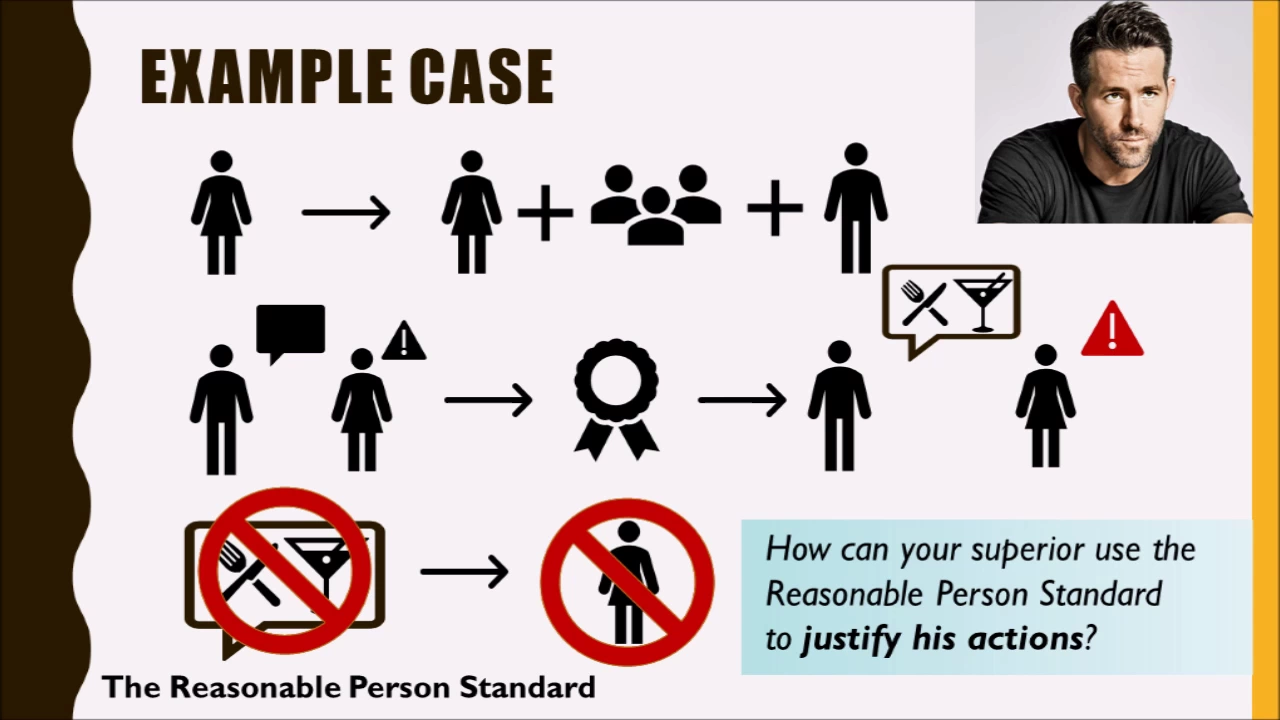
The Reasonable Person Standard
6.6K
The reasonable person standard is a hypothetical legal concept used in tort and criminal law to determine liability by comparing an individual's actions against an imaginary person who exercises the average amount of care, judgment, and skill expected of someone in their society; originally called 'the man on the Clapham omnibus' from UK legal history, this standard can be ethically problematic when attorneys subjectively manipulate it to justify questionable behavior, as demonstrated through sexual harassment cases where the line between reasonable and unethical actions becomes blurred.
Click to watch →

Bus Stop Live 6.2.26 - Extreme TBDS | Witness Intimidation | Adam Dietch | Hockey Brawl
14.3K
The reasonable person standard is used to determine whether a defendant should have known that their conduct could cause harm. If no reasonable person would believe that the conduct could stop a trial, then the defendant cannot be found to have reckless disregard for that risk. This standard protects speech that no reasonable person would think could interfere with legal proceedings.
Click to watch →

The Reasonable Person Standard
187.7K
Tort law generally applies an objective reasonable person standard when determining whether contact was harmful or offensive. Courts ask what a reasonable person would find offensive, not what the plaintiff subjectively felt. For example, a tap on the shoulder to ask directions would not be considered offensive by a reasonable person, so no liability exists even if the plaintiff was hypersensitive.
Click to watch →

Kim Potter found guilty in Daunte Wright’s killing | full coverage
200.9K
The reasonable person standard is a legal concept used to determine whether a defendant's conduct fell below what a hypothetical reasonable person would have done under similar circumstances. In criminal negligence cases, courts evaluate whether a reasonable person would have foreseen the risk of harm from the defendant's actions. This standard helps distinguish between ordinary negligence and criminal negligence.
Click to watch →
Deep Dive
The fundamental difference between deadly force and non-deadly force under the law.

Clavicular Crashes Cyber Truck Into A Stream Sniper & Gets Banned On Kick!
90.3K
Self-defense law categorizes force into two buckets: non-deadly force (force not likely to cause death or serious bodily injury) and deadly force (force that can cause death or serious bodily injury). Deadly force includes actions like using a knife, gun, or running someone over with a car. The law does not care what specific weapon or method is used, but rather whether the conditions for deadly force have been met. A maiming injury or broken bone qualifies as deadly force even if the victim would not have died from it.
Click to watch →

PROSECUTOR REACTS Nailgun Self Defense! CRITICAL Deadly vs Non-Deadly Force
64.4K
Deadly force is defined as force that will foreseeably and reasonably create the likelihood of death or causing serious bodily harm (also known as great bodily harm), which includes injuries involving substantial risk of death, protracted disfigurement, protracted loss of physical function, or protracted loss of consciousness such as gunshot wounds, stabbings with deep penetration, broken bones, severe burns, and loss of limbs. Understanding this distinction is critical because misapplying deadly force when only non-deadly force was justified can result in serious criminal liability, as many individuals mistakenly believe their actions are less than lethal when they could foreseeably cause great bodily harm.
Click to watch →

Minneapolis ICE Shooting ERUPTS Into Full Blown Political War! LAWYER REACTS!
22.4K
Proportionality requires matching defensive force to the threat level. Deadly force includes any force reasonably capable of causing death or serious bodily injury (broken bones, loss of bodily function, or death). Non-deadly force cannot readily cause such harm. The law requires proportional responses: non-deadly force against non-deadly threats, deadly force only against deadly threats. Vehicles can constitute deadly weapons when used to inflict death or serious bodily injury. The burden of proof rests on the state to disprove self-defense elements beyond reasonable doubt, not on the defendant to prove self-defense.
Click to watch →
Podcast #265: The Law of Self-Defense | The Art of Manliness
2.7K
Deadly force is any force that can cause death or grave bodily injury. Non-deadly force is anything less. You can only use deadly force in response to a deadly force threat. A sustained beating that could cause grave bodily injury qualifies as a deadly force threat. People commonly get into trouble when they use deadly force against a non-deadly threat, such as using a gun against someone merely threatening to shove them. Statistics show you are five times more likely to be the victim of a non-deadly force attack than a deadly force attack. If your only self-defense tool is a gun, you may be forced to use deadly force against a non-deadly threat, making your use of force disproportionate and unlawful. Martial artists must understand that techniques causing grave bodily harm constitute deadly force, regardless of whether weapons are used.
Click to watch →

Criminal Law Video Presentation 13 - Defenses
23.1K
Self-defense is divided into non-deadly and deadly force. Non-deadly force requires the actor to reasonably believe force is necessary to protect against imminent unlawful force, with no duty to retreat. Deadly force requires: (1) a threat of actual or apparent deadly force that is unlawful and imminent, (2) reasonable belief of imminent peril of death or serious bodily harm, and (3) reasonable belief that the response is necessary. The aggressor rule prevents those who incite violence from claiming self-defense, though they can regain rights by withdrawing. The majority rule allows standing ground, while the minority requires retreat if safe. The castle doctrine exempts retreat from one's home. The Model Penal Code uses a subjective belief test and imposes a duty to retreat except in one's home.
Click to watch →
Prerequisite Knowledge
- Concept 01Basic principles of criminal liability, including the concepts of actus reus (guilty act) and mens rea (guilty mind).
- Concept 02The legal definition of self-defense as an affirmative defense in criminal law.
- Concept 03The 'reasonable person' standard used in tort and criminal law to evaluate behavior.
- Concept 04The fundamental difference between deadly force and non-deadly force under the law.
Subsequent Learning
- Step 01The application of the 'Castle Doctrine' and 'Stand Your Ground' laws across different jurisdictions.
- Step 02The legal duty to retreat and how it varies by state and scenario.
- Step 03Analysis of landmark self-defense legal cases (e.g., cases involving law enforcement or civilian self-defense).
- Step 04The concept of 'imperfect self-defense' and its impact on mitigating criminal charges.
Deadly Force Law
Deadly Force Law
0:00Playing Section
- 1
Deadly force requires reasonable belief of imminent threat to life or safety.
- 2
Police shooting justification hinges on perceived weapon threat at the moment.
- 3
Escalation to lethal force is barred if the initial situation was provoked.
The Duty to Retreat and Critique of the 'Reasonable Belief' Standard
While traditional deadly force laws emphasize the 'reasonable belief' of imminent harm to justify lethal self-defense, critics and alternative legal frameworks advocate for a strict 'duty to retreat' and mandatory de-escalation. Opponents of broad self-defense doctrines, such as 'Stand Your Ground' laws, argue that they lower the threshold for lethal violence, escalate confrontations, and increase homicide rates. Furthermore, legal scholars point out that the 'reasonable belief' standard is highly vulnerable to implicit racial and social biases, which can distort subjective threat assessment and lead to systemic inequities in who is deemed a 'justified' defender. This counterpoint argues that the legal system should prioritize the preservation of life by requiring individuals to safely withdraw from conflict when possible, framing deadly force as an absolute last resort rather than a readily available option.
Deep Dive
The application of the 'Castle Doctrine' and 'Stand Your Ground' laws across different jurisdictions.

101 Dumb American Laws That Feel Like a Prank
522
Castle doctrine is real. Your home is your castle. If someone breaks in, you can defend it. Stand your ground laws extend this principle. But what you can actually do legally, in which rooms, under which threat assessment, in which state is so variably defined that the same defensive action is justified in one jurisdiction and a felony in the one next to it. Approximately 30 states have stand your ground laws as of 2024 allowing force without retreat in any location where you have a legal right to be. The remaining states impose a duty to retreat in some circumstances, meaning the same perceived threat in Florida and Connecticut produces different legal obligations. Colorado's Make My Day Law, one of the earliest castle doctrine statutes passed in 1985, has been interpreted narrowly by some courts as applying only inside the physical dwelling, not attached garages or surrounding property in certain rulings. Even in states with strong castle doctrine protections, civil liability from the intruder's estate remains possible since a civil wrongful death suit requires only a preponderance of evidence rather than proof beyond reasonable doubt.
Click to watch →

The Home Invasion (Self-Defence & Defence of Property) Bill, 2025 - Senate 02.12.2025
1.7K
Stand Your Ground laws represent an extension of the Castle Doctrine from a person's home to any place where they have a right to be. While the Castle Doctrine applies only within the physical boundaries of one's home, Stand Your Ground laws in jurisdictions like Florida have expanded to include businesses, shops, restaurants, inside vehicles, streets, parks, and parking lots. These laws allow individuals to use any force, including deadly force, based on a reasonable perception of threat to defend themselves against imminent threat, with absolutely no obligation to attempt to de-escalate or escape. This represents a significant expansion of self-defense rights beyond the traditional home-based Castle Doctrine.
Click to watch →

The BLACK MAN'S GUIDE To The "Stand Your Ground" Law!
26.7K
Castle Doctrine states that individuals have the right to defend themselves only within their home or property (their 'castle'). In contrast, Stand Your Ground law allows individuals to defend themselves anywhere they are, even in public spaces. New York State follows Castle Doctrine, requiring individuals to flee rather than defend themselves when attacked on the street, while Florida follows Stand Your Ground law, allowing individuals to stand their ground and use deadly force when threatened.
Click to watch →

Breaking the Lies on STAND YOUR GROUND Laws with Massad Ayoob and Clayton Cramer
102.9K
Castle doctrine laws create a legal presumption that if a stranger forces entry into one's home, they intend to kill or cause great bodily injury, giving homeowners a strong legal advantage in self-defense cases. Stand your ground laws eliminate the duty to retreat before using deadly force in public places. Both types of laws substantially reduce prosecutorial discretion in self-defense cases. About 24 states have enacted stand your ground provisions, while many others have castle doctrine laws. Critics call these 'shoot first ask questions later' policies, while defenders argue they protect innocent gun owners from overzealous prosecutors.
Click to watch →

미국의 정당방위 기준 설명 드립니다. 정당방위라고 생각했다가 인생 망치는 경우
14.1K
Castle Doctrine allows individuals to use lethal force against intruders in their homes without first attempting to retreat. Stand Your Ground laws extend this principle beyond the home, allowing individuals to use lethal force if they reasonably believe they are in imminent danger, even outside their property. These laws have been adopted by different numbers of states, with 36 states implementing Stand Your Ground provisions. Castle Doctrine laws vary significantly across states—some allow lethal force against any intruder who enters the home regardless of threat level, while others require that the intruder pose an actual threat before lethal force can be justified.
Click to watch →
Deep Dive
The legal duty to retreat and how it varies by state and scenario.

What's The REAL Difference Between Duty To Retreat and Stand Your Ground?
16.2K
Eleven states impose a duty to retreat when one can do so with absolute safety: Connecticut, Delaware, Hawaii, Maine, Maryland, Massachusetts, Minnesota, Nebraska, New Jersey, New York, and Rhode Island. New York does not require retreat when threatened with robbery, burglary, kidnapping, or sexual assault. Washington D.C. and Wisconsin have middle ground approaches. In D.C., courts may consider whether the defendant could have safely retreated when determining if deadly force was necessary. In Wisconsin, whether the opportunity to retreat was available goes to whether the defendant reasonably believed force was necessary. Both approaches acknowledge that retreat isn't always possible. In every state imposing a duty to retreat, this requirement does NOT apply in the home. Some states extend this exception to places of business—for example, Connecticut, Delaware, Hawaii, and Nebraska do not require retreat from workplace threats. In Wisconsin, the duty doesn't apply in vehicles or workplaces if the defender is the owner or operator. The key principle is that if you cannot retreat in safety, you don't have the duty to do so.
Click to watch →

Legal Analysis of Self-Defense: Carmelo Anthony Case with Attorney Andrew Branca
6.4K
There are two main approaches to self-defense regarding retreat. In duty to retreat states (11 states), before a person can kill someone in self-defense, they must retreat if there is a perfectly safe avenue of retreat. If they fail to retreat when they could have, they lose self-defense and may be guilty of murder. In stand your ground states (39 states), there is no legal duty to retreat as long as the other elements of self-defense are met. Stand your ground laws come in two flavors: soft stand your ground states allow prosecutors to argue that a reasonable person would have retreated, while hard stand your ground states like Texas actually prohibit the jury from even considering any possibility of retreat.
Click to watch →

Attorney Explains Constitutional Right To Self Defense In Real World 2A Case!!!
48.6K
States have different self-defense laws including duty to retreat, castle doctrine, and stand your ground laws. Sixteen states have a duty to retreat law, requiring individuals to retreat if possible rather than use lethal force. The castle doctrine establishes that individuals do not have to retreat when in their own home, meaning even if one could escape their home or move to a different area within the home, they are not legally obligated to do so under the castle doctrine.
Click to watch →
Updated Long Version - 5 Things Every Gun Owner Ought to Know - Attorney Marc J. Victor
17K
In Arizona, you have a right to stand your ground and no legal duty to retreat. In other states like Hawaii, you have a legal duty to retreat if you can do so in complete safety. Regardless of the legal duty, the smart option is always to avoid situations requiring self-defense by retreating safely if possible.
Click to watch →

The Dirty Truth About Trade School Versus Law School | The Way I Heard It with Mike Rowe
87.3K
New York State follows a 'duty to retreat' legal doctrine, which differs from states with Stand Your Ground laws. Under this doctrine, when someone faces a threat of bodily harm, they cannot immediately engage in self-defense if there is an opportunity to safely leave the scene, seek help from authorities, or otherwise remove themselves from danger before confronting the aggressor.
Click to watch →
Deep Dive
Analysis of landmark self-defense legal cases (e.g., cases involving law enforcement or civilian self-defense).

LANDMARK Self-Defense Victory: We Have The Right To Survive!
56.6K
The Massachusetts Supreme Judicial Court ruled in Commonwealth v. Santana-Rodriguez that lawful self-defense can excuse the tragic death of an innocent bystander when a person reasonably and in good faith defends themselves from an armed attacker, even if they unintentionally kill someone nearby. This landmark ruling establishes that self-defense is not an all-or-nothing proposition—while the shooter is not guilty of murder, they may still face charges of involuntary manslaughter if their actions were reckless or showed disregard for others' safety. The court emphasized that juries should consider the infirmity of human impulses and passions when evaluating split-second defensive decisions, and that the law must balance the individual's right to protect their life against society's duty to protect innocent bystanders from reckless acts.
Click to watch →

Kyle Rittenhouse Case Analysis: Self-Defense vs. Murder
852.5K
In self-defense cases, the key question is whether the individual was being attacked or threatened at the moment they used force, rather than whether they provoked the situation or entered a prohibited area; the presence of weapons and prior aggressive behavior by attackers can still constitute legitimate self-defense even when the person was not invited to the location.
Click to watch →

【切り抜き】炎上したYouTuberたちまとめ【たっくーTV/作業用】
41.9K
Seven case studies demonstrate self-defense principles: (1) Home invasion with domestic violence history - recognized; (2) Killing based on fear without imminent threat - not recognized; (3) Pursuing after attack ended - not recognized; (4) Premeditated killing - not recognized; (5) Single punch to violent victim - recognized; (6) Property infringement - recognized; (7) Mistaken belief in threat - 'mistaken belief in self-defense' recognized. Key factors: imminence, proportionality, and defensive intent.
Click to watch →

The Goetz & Arbery Files: Self-Defense or Excessive?
1.1K
The Bernhard Goetz case (1984) illustrates the legal boundaries of self-defense. Goetz shot four men on a NYC subway after they approached him for money, claiming they were trying to rob him. He was acquitted of attempted murder but convicted of possessing an unlicensed weapon. In a subsequent civil trial, he lost because the court determined he went beyond self-defense into excessive force, particularly when he shot a man who was already on the ground. The case demonstrates that self-defense claims must be evaluated based on what a reasonable person would do, and that force must be proportional to the threat faced.
Click to watch →
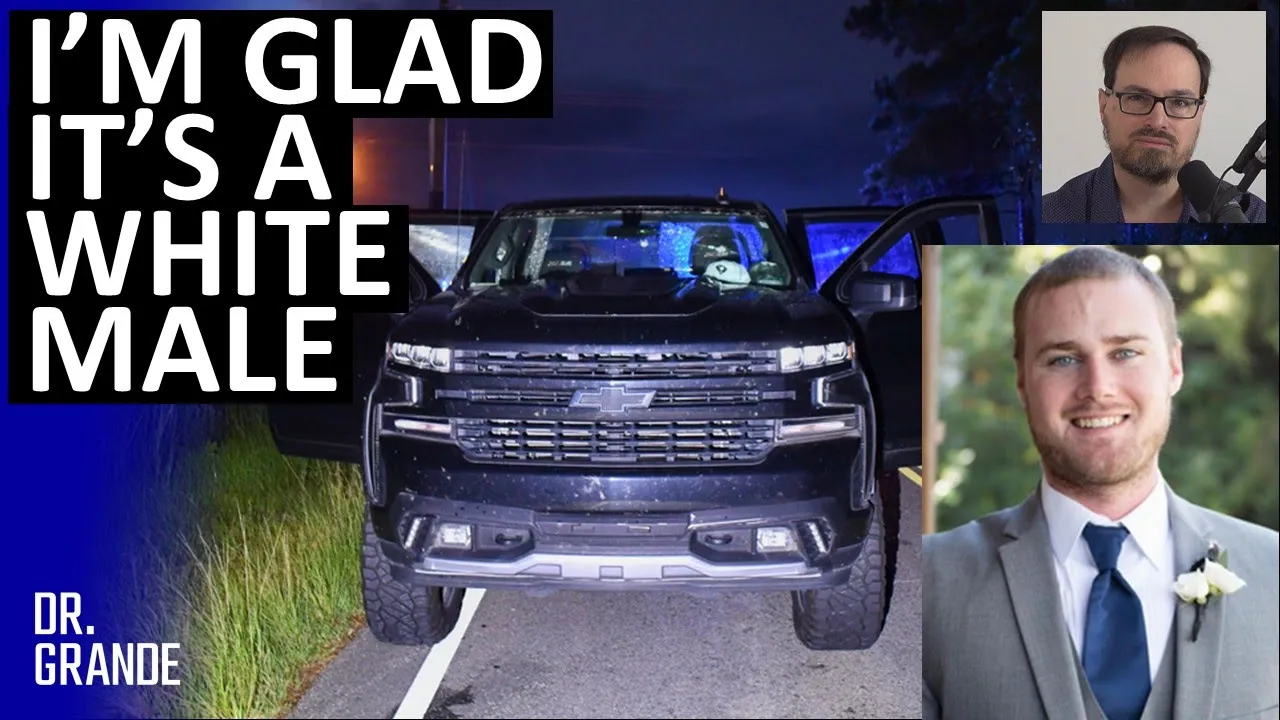
High-Ranking 'Cover-Up' Cop Celebrates Road Rage Fatality Was Not Black | Scott Spivey Case Analysis
316.8K
On April 18, 2024, the Attorney General's office determined no charges would be filed against Weldon or Bradley. The conclusion was that Scott brandished a firearm and Weldon and Bradley had the right to be on Camp Swamp Road, making this a case of self-defense. This demonstrates how legal standards for self-defense require establishing both provocation and the right to be in the location where the confrontation occurred.
Click to watch →
Deep Dive
The concept of 'imperfect self-defense' and its impact on mitigating criminal charges.
Legal Analysis of Self-Defense: Carmelo Anthony Case with Attorney Andrew Branca
6.4K
Self-defense requires that the person be an innocent victim, the threat be imminent, and they be acting reasonably. Imperfect self-defense is a legal concept where a person's use of force was almost perfect but had a small defect, such as an unreasonable perception of the threat or use of excessive force. While this does not result in acquittal (because it's not perfect self-defense), it can mitigate what would have been a murder conviction to a manslaughter conviction. This serves as a backdoor way of reducing the severity of the charge when the defendant's actions were nearly justified but not quite.
Click to watch →

Sunday Recap | Karmelo Anthony, Ethan Klein, & Legos
2.3K
Perfect self-defense completely absolves the defendant when all elements are met: innocence, imminence, proportionality, and reasonableness. Imperfect self-defense, while not a complete defense, mitigates the charge. If a defendant uses lethal force in response to non-lethal force, they may have imperfect self-defense. In Texas, this can reduce a murder charge to manslaughter during the sentencing phase. The jury can then determine a sentence anywhere from 5 to 99 years, with imperfect self-defense serving as a mitigating factor. The burden of proof is on the state to prove beyond a reasonable doubt that self-defense did not apply.
Click to watch →

The Police Shooting of Jason Kloepfer
13.8K
Imperfect self-defense is a legal doctrine that reduces a murder charge to voluntary manslaughter when a defendant genuinely but unreasonably believes they faced a deadly force threat. Under North Carolina law, imperfect self-defense requires that the defendant believed it was necessary to kill to save themselves from death or great bodily harm, and this belief must have been reasonable in the circumstances as they appeared to the defendant at the time. However, unlike perfect self-defense which excuses the killing entirely, imperfect self-defense only mitigates the charge rather than providing complete acquittal.
Click to watch →

MASSIVE KARMELO UPDATE: Defense IMPLODES and BURNS!
128
Imperfect self-defense is a doctrine that can mitigate a murder conviction to manslaughter. It applies when a defendant has a genuine but unreasonable belief in the need to use deadly force, or when the force used was excessive. The defendant must still have a genuine belief in the need to act in self-defense, but that belief may not be objectively reasonable.
Click to watch →

Romeca Meek’s case Something isn’t adding up #romecameeks #carlossmith #quadajahjohnson
418
Imperfect self-defense is a legal concept where a person honestly believes they are in immediate danger and need to use force to defend themselves, but that belief is objectively unreasonable; unlike perfect self-defense which provides complete acquittal, imperfect self-defense does not excuse the act but may reduce murder charges to voluntary manslaughter, and premeditation (such as obtaining a protection order and concealed carry license before the incident) can undermine self-defense claims.
Click to watch →
Deadly Force Law
Deadly Force Law
0:00- 1
Deadly force requires reasonable belief of imminent threat to life or safety.
- 2
Police shooting justification hinges on perceived weapon threat at the moment.
- 3
Escalation to lethal force is barred if the initial situation was provoked.
The Duty to Retreat and Critique of the 'Reasonable Belief' Standard
While traditional deadly force laws emphasize the 'reasonable belief' of imminent harm to justify lethal self-defense, critics and alternative legal frameworks advocate for a strict 'duty to retreat' and mandatory de-escalation. Opponents of broad self-defense doctrines, such as 'Stand Your Ground' laws, argue that they lower the threshold for lethal violence, escalate confrontations, and increase homicide rates. Furthermore, legal scholars point out that the 'reasonable belief' standard is highly vulnerable to implicit racial and social biases, which can distort subjective threat assessment and lead to systemic inequities in who is deemed a 'justified' defender. This counterpoint argues that the legal system should prioritize the preservation of life by requiring individuals to safely withdraw from conflict when possible, framing deadly force as an absolute last resort rather than a readily available option.
Basic principles of criminal liability, including the concepts of actus reus (guilty act) and mens rea (guilty mind).
The legal definition of self-defense as an affirmative defense in criminal law.
The 'reasonable person' standard used in tort and criminal law to evaluate behavior.
The fundamental difference between deadly force and non-deadly force under the law.
The application of the 'Castle Doctrine' and 'Stand Your Ground' laws across different jurisdictions.
The legal duty to retreat and how it varies by state and scenario.
Analysis of landmark self-defense legal cases (e.g., cases involving law enforcement or civilian self-defense).
The concept of 'imperfect self-defense' and its impact on mitigating criminal charges.
1.4K views24likes1:11@TheYankeeMarshalOriginal Release: 2026-01-27
What are the laws of of like use of deadly force? Like the excuse of the use of deadly force when like concealed carrying? Like for you or me, right? Like what are what are the prerequisites that unlocks that as a as a self-defense and more?
>> You have to reasonably believe that your safety or your life, your physical safety or your life are in jeopardy.
Yes, or that of another. Yeah. Do you think that at the moment that those police officers were shooting the guy on the ground that they reasonably believed that he was reaching for a weapon on his waist? Well, they actually might be. I don't know, but I don't see any evidence of that. But, here's the thing. If I tackle someone, hold them to the ground, or I'm threatening them and they pull a knife, I then cannot use escalation to deadly force because I initiated the situation.
That's true.
If a gun wasn't in his hand, either.
That's the other thing. No, there's no evidence that he ever brandished a gun, so. Well, and and the the the point of of asking that isn't like saying like, "Oh, well, cuz he did this and did that." But, if the the officers reasonably believed that their life or their lives around them were in threat at the time that they pulled the trigger, then it is excused in court.
>> How would they believe that?
Up Next

2:17
Proportionality in Self-Defense: Legal Force Standards
@uslawshield
5.9K views•2022-02-03

4:27
US Secondary Sanctions Impact on EU Businesses and Blocking Legislation
@Bureauvandijk
1.6K views•2019-03-20

5:27
Forensic Phonetics: Speaker Identification in Legal Cases
@nptel-nociitm9240
539 views•2025-03-19

24:42
Police Interrogation Tactics: False Confessions & Legal Reform
@LastWeekTonight
7M views•2022-04-18
Related Study Plans & Knowledge Roadmaps
Structured learning paths in Law
law
Self-Defense Law: Imminence & Castle Doctrine
01Foundations of Self-Defense Law
02Imminent Threat & Reasonable Belief
03The Principle of Proportionality
+ 3 more learning modules
12h6 modules
Explore Roadmap
law
Defamation Law: First Amendment & Actual Malice
01Introduction to civil torts and the First Amendment
02Elements of Defamation: Libel and Slander
03Public Figures vs. Private Individuals
+ 2 more learning modules
8h5 modules
Explore Roadmap
law
Hearsay Rule: Trial Evidence & Exceptions
01Introduction to Trial Evidence & Courtroom Basics
02Demystifying Hearsay: The Core Definition
03Non-Hearsay: Exclusions Under FRE 801(d)
+ 3 more learning modules
14h6 modules
Explore Roadmap
law
Medical Malpractice: Law, Liability & Care
01Foundations of Tort Law and Civil Liability
02The Four Elements of Medical Malpractice
03Defining and Proving the Standard of Care
+ 2 more learning modules
12h5 modules
Explore Roadmap