Proportionality in self-defense law requires that individuals use only the minimum amount of force necessary to stop an unlawful threat, meaning one must act with as little force as possible to prevent harm, typically described as responding with 'just a featherweight more than what that person did to you.'
Proportionality in Self-Defense: Legal Force Standards
Added:Deep Dive
The foundational definition of self-defense as an affirmative defense in criminal law.

Uncivil Reacts | @LegalEagle Explains Rittenhouse
30.8K
Self-defense is an affirmative defense in criminal law, meaning the defendant bears the burden of producing some evidence from which a jury can find that self-defense applied. Once the defense presents this minimal burden, the burden of proof returns to the prosecution, which must disprove self-defense beyond a reasonable doubt—the highest standard in all of law. This differs from ordinary criminal defenses where the prosecution bears the burden throughout.
Click to watch →
Self-Defense Law: Justification, Use of Force, and Key Cases
1.5K
Self-defense functions as an affirmative defense in criminal law, allowing defendants who committed crimes to argue they should not be punished because their actions were legally justified. Unlike justifications (claiming lawful conduct) or excuses (admitting wrongdoing but arguing no punishment), self-defense shifts the burden to the prosecution to disprove it beyond a reasonable doubt. The core requirements include: (1) Imminence - threats must occur at that moment; (2) Necessity - force cannot be used when safer alternatives exist; (3) Reasonableness - beliefs must match what a reasonable person would hold; (4) Proportionality - responses must match threat levels. Deadly force generally responds only to deadly threats like gun violence, while non-deadly force responds to non-deadly threats.
Click to watch →

Destiny vs BLM on Kyle Rittenhouse, ft. Crazy Racist Black Woman
192.5K
Self-defense is an affirmative defense that must be proved beyond a reasonable doubt by the person claiming it. It is a fact-bound inquiry that depends on specific circumstances including provocation standards and duty to retreat requirements. The legal standard for self-defense varies by jurisdiction and requires careful analysis of the specific facts of each case.
Click to watch →

EP4 FREEDOM ON TRIAL: The 3 Most Dangerous Words in Self-Defense Law | Legal Analysis
116
Self-defense is an affirmative defense that requires the defendant to admit to committing the underlying criminal act, shifting the legal question from 'Did you do it?' to 'Why did you do it?' and requiring proof of imminent threat, reasonable fear, proportional force, and that the threat had ended.
Click to watch →

Third-Party Defense Case in Dallas Being Charged As a Murder
44.3K
Self-defense is an affirmative defense, meaning the defendant must prove they acted in self-defense rather than simply denying the crime. This is different from other crimes where the defendant can simply claim they didn't do it. Most states do not have a bar to arrest for self-defense, meaning police can still arrest individuals who claim self-defense, and the burden of proof falls on the defendant to demonstrate their actions were justified. This creates a challenging legal burden for self-defenders.
Click to watch →
Deep Dive
The distinction between deadly force and non-deadly force under the law.

PROSECUTOR REACTS Nailgun Self Defense! CRITICAL Deadly vs Non-Deadly Force
64.4K
Deadly force is defined as force that will foreseeably and reasonably create the likelihood of death or causing serious bodily harm (also known as great bodily harm), which includes injuries involving substantial risk of death, protracted disfigurement, protracted loss of physical function, or protracted loss of consciousness such as gunshot wounds, stabbings with deep penetration, broken bones, severe burns, and loss of limbs. Understanding this distinction is critical because misapplying deadly force when only non-deadly force was justified can result in serious criminal liability, as many individuals mistakenly believe their actions are less than lethal when they could foreseeably cause great bodily harm.
Click to watch →

Criminal Law Video Presentation 13 - Defenses
23.1K
Self-defense is divided into non-deadly and deadly force. Non-deadly force requires the actor to reasonably believe force is necessary to protect against imminent unlawful force, with no duty to retreat. Deadly force requires: (1) a threat of actual or apparent deadly force that is unlawful and imminent, (2) reasonable belief of imminent peril of death or serious bodily harm, and (3) reasonable belief that the response is necessary. The aggressor rule prevents those who incite violence from claiming self-defense, though they can regain rights by withdrawing. The majority rule allows standing ground, while the minority requires retreat if safe. The castle doctrine exempts retreat from one's home. The Model Penal Code uses a subjective belief test and imposes a duty to retreat except in one's home.
Click to watch →
Podcast #265: The Law of Self-Defense | The Art of Manliness
2.7K
Deadly force is any force that can cause death or grave bodily injury. Non-deadly force is anything less. You can only use deadly force in response to a deadly force threat. A sustained beating that could cause grave bodily injury qualifies as a deadly force threat. People commonly get into trouble when they use deadly force against a non-deadly threat, such as using a gun against someone merely threatening to shove them. Statistics show you are five times more likely to be the victim of a non-deadly force attack than a deadly force attack. If your only self-defense tool is a gun, you may be forced to use deadly force against a non-deadly threat, making your use of force disproportionate and unlawful. Martial artists must understand that techniques causing grave bodily harm constitute deadly force, regardless of whether weapons are used.
Click to watch →

Minneapolis ICE Shooting ERUPTS Into Full Blown Political War! LAWYER REACTS!
22.4K
Proportionality requires matching defensive force to the threat level. Deadly force includes any force reasonably capable of causing death or serious bodily injury (broken bones, loss of bodily function, or death). Non-deadly force cannot readily cause such harm. The law requires proportional responses: non-deadly force against non-deadly threats, deadly force only against deadly threats. Vehicles can constitute deadly weapons when used to inflict death or serious bodily injury. The burden of proof rests on the state to disprove self-defense elements beyond reasonable doubt, not on the defendant to prove self-defense.
Click to watch →
Uncivil Reacts | @LegalEagle Explains Rittenhouse
30.8K
Deadly force can only be used in response to imminent deadly force or great bodily harm. Non-deadly force (such as fists, feet, or a skateboard) does not automatically justify deadly force. However, the law recognizes that non-deadly force can create a reasonable belief of imminent deadly harm, particularly when combined with other factors like threats or the nature of the confrontation. Head trauma is considered classic grievous bodily harm because it has a tendency to cause permanent or serious injury. Unarmed people can exercise deadly force in self-defense if they reasonably believe they face imminent death or great bodily harm. Self-defense claims must be evaluated from each person's individual perspective. What is reasonable from one person's viewpoint may not be reasonable from another's. The law recognizes that different people have different knowledge, perceptions, and circumstances. This means that multiple parties can simultaneously have valid self-defense claims, and the law evaluates each claim separately based on what each person reasonably believed.
Click to watch →
Deep Dive
The legal concept of 'imminence' and how it dictates when a threat justifies a response.
Podcast #265: The Law of Self-Defense | The Art of Manliness
2.7K
Imminence means the threat is about to happen right now. The A-O-J framework evaluates imminence: (1) Ability - does the attacker have the physical ability to cause harm? (2) Opportunity - are they close enough to bring that ability to bear? (3) Jeopardy - are they acting in a way that would lead a reasonable person to believe they are about to attack? All three must be present for a threat to be imminent. Words alone are never sufficient; there must be some physical action. Future threats, such as someone saying 'I'm going to get my friends and come back here and beat you up,' do not justify immediate self-defense. The law expects you to leave the area or call the police rather than fight over a future threat.
Click to watch →

CAUSAS DE JUSTIFICACION 1 LEGITIMA DEFENSA Y EDO DE NECESIDAD
76.5K
Imminence (inminencia) means the aggression is inevitable and unavoidable through any other means. The only way to prevent the damage to the legal interest (life, physical integrity, or property) is by repelling the aggression. If no other method exists to avoid the imminent harm, legitimate defense becomes the necessary and justified response. This requirement ensures that defensive force is only used when absolutely necessary.
Click to watch →

مقياس القانون الجنائي العام السنة ثانية حقوق السداسي الاول (مفيد للمسابقات )
57.7K
The attack must be imminent for defense to be justifiable. The video explains that the attack must be occurring or about to occur, leaving no time to seek help from authorities. If the attack is in the future or not imminent, defense is not justifiable. This requirement ensures that defense is only used when truly necessary for self-protection.
Click to watch →

Argument Shows Proper Time to Escalate as a Self-Defender | Active Self Protection
656.7K
The imminence of a threat is a critical factor in determining the appropriate level of force response. When a threat is no longer imminent (such as when a gun is put away and the individual is no longer displaying aggressive intent), the justification for using deadly force ceases. At this point, less lethal alternatives like OC spray become appropriate tools for addressing the situation.
Click to watch →
Minneapolis ICE Shooting ERUPTS Into Full Blown Political War! LAWYER REACTS!
22.4K
The imminence element requires that the threat being defended against must be occurring in the present moment or immediately about to occur. The person must be getting shot, punched, or facing an imminent attack such as someone pulling back a fist or stepping on the gas to race toward them. The threat cannot be speculative about the future (such as someone saying they will come back later) nor can it be a past threat. For example, if someone tried to run you over yesterday and you see them again today, they are no longer presenting an imminent threat.
Click to watch →
Deep Dive
The 'reasonable person' standard and how courts objectively evaluate a defendant's belief of danger.

POV Footage Of Fatal ICE Shooting In Minneapolis FLASHES Online
86.1K
The reasonable person standard is used to determine whether a person's belief that they faced imminent danger was objectively reasonable. This standard considers what a hypothetical reasonable person would perceive in the same circumstances, not what the actual person believed. The analysis involves examining whether the circumstances would lead a reasonable person to believe they faced imminent death or serious bodily harm.
Click to watch →

‘He was a known ICE agitator’: Megyn Kelly analyses recent ICE altercation
30.3K
The reasonable person standard is a legal test used to determine whether an individual's belief that they were in danger was objectively reasonable. The speaker explains that courts will examine whether a reasonable person in the same circumstances would have feared for their own or others' bodily safety. This standard considers the totality of the circumstances and whether the individual's perception of danger was justified under the circumstances, even if it ultimately proves incorrect.
Click to watch →

No. 102 People v Jairo Castillo
410
The subjective reasonableness standard requires that a defendant genuinely believed they faced imminent deadly force at the moment they acted. This belief must be reasonable under the circumstances, even if the belief was ultimately mistaken. Courts must consider the totality of the circumstances, including the aggressor's words, actions, and the immediate environment. The defendant's perception of danger is what matters, not whether the danger actually existed, as long as that perception was reasonable given what a prudent person would have perceived.
Click to watch →

Destiny Reacts to Minnesota ICE Shooting + Asmongold commentary + Hasan Wants to Debate Asmongold?
50.9K
Self-defense analysis uses an objective reasonable person standard, not just a subjective test. This means courts analyze whether a reasonable person would have believed their life was in danger, regardless of what the actual person believed. The standard considers what a reasonable person would have thought about the threat level at each point in time.
Click to watch →
Reasonableness: What It Means In A Self-Defense Case
3.1K
The objective reasonable person standard measures what a hypothetical reasonable person would do under similar circumstances. This person adopts the defendant's reasonable characteristics (age, physical stature, known conditions) but not unreasonable beliefs. For example, a 90-year-old woman would be measured against what a reasonable 90-year-old woman would do, but not against extreme beliefs like thinking all blonde-haired people are dangerous.
Click to watch →
Prerequisite Knowledge
- Concept 01The foundational definition of self-defense as an affirmative defense in criminal law.
- Concept 02The distinction between deadly force and non-deadly force under the law.
- Concept 03The legal concept of 'imminence' and how it dictates when a threat justifies a response.
- Concept 04The 'reasonable person' standard and how courts objectively evaluate a defendant's belief of danger.
Subsequent Learning
- Step 01The legal doctrines of 'Duty to Retreat' versus 'Stand Your Ground' and their interaction with the proportionality of force.
- Step 02The concept of 'Imperfect Self-Defense' and how disproportionate but honest reactions mitigate criminal charges.
- Step 03The application of proportionality standards to the defense of others and the defense of property (including the Castle Doctrine).
- Step 04Analyses of landmark criminal cases to observe how juries evaluate the reasonableness and proportionality of force in real-world trials.
Proportionality
Self-Defense
Proportionality
0:00Playing Section
- 1
Act with minimal force matching the threat level.
- 2
Disparity exists between non-lethal and deadly force.
- 3
Legal standards often lump force into broad categories.
Stand Your Ground and the Castle Doctrine
While traditional self-defense standards emphasize proportionality and a duty to retreat, 'Stand Your Ground' laws and the 'Castle Doctrine' offer a significant legal counterpoint. These frameworks relax the requirement for a proportional response by eliminating the duty to retreat when a person is in their home or a place they have a legal right to be. Proponents of these doctrines argue that expecting a victim to precisely calibrate their force during a sudden, high-stress attack is unrealistic and places an unfair burden on the innocent party. Under these laws, the force used is judged more on the subjective necessity of stopping a perceived threat to one's safety or property, rather than an objective 'force-for-force' equivalence. This perspective prioritizes the defender's absolute right to personal autonomy and security over the requirement of proportional escalation, justifying lethal force against unlawful intruders even if the threat level is ambiguous.
Deep Dive
The legal doctrines of 'Duty to Retreat' versus 'Stand Your Ground' and their interaction with the proportionality of force.

Stand Your Ground Laws – A Law Prof Explains
3.6K
Stand your ground laws permit individuals to defend themselves without retreating when faced with unlawful force, but they still require that force used must be both necessary and proportional to the threat; these laws specifically remove the common law duty to retreat before using deadly force outside one's home, while maintaining that no duty to retreat exists for non-deadly force or within one's home under the castle doctrine.
Click to watch →

Stand your ground and castle doctrine
1.4M
The duty to retreat is the opposite of stand your ground. In duty to retreat states, a person legally has an obligation to try to escape if there is a path of escape available when facing a threat of serious bodily harm or death. If a jury determines the person could have safely retreated, they may face felony charges including murder. This creates significant legal risk for individuals who cannot or will not flee from attackers.
Click to watch →

What's The REAL Difference Between Duty To Retreat and Stand Your Ground?
16.2K
Stand your ground laws eliminate the legal duty to retreat from an attacker in any place where one is lawfully present, while duty to retreat states require individuals to attempt safe escape before using force; however, in practice, the difference is minimal because the duty to retreat only applies when one can actually do so in complete safety, meaning both legal frameworks essentially protect individuals facing imminent threats by removing the obligation to flee when retreat would not be safe.
Click to watch →

Legal Analysis of Self-Defense: Carmelo Anthony Case with Attorney Andrew Branca
6.4K
There are two main approaches to self-defense regarding retreat. In duty to retreat states (11 states), before a person can kill someone in self-defense, they must retreat if there is a perfectly safe avenue of retreat. If they fail to retreat when they could have, they lose self-defense and may be guilty of murder. In stand your ground states (39 states), there is no legal duty to retreat as long as the other elements of self-defense are met. Stand your ground laws come in two flavors: soft stand your ground states allow prosecutors to argue that a reasonable person would have retreated, while hard stand your ground states like Texas actually prohibit the jury from even considering any possibility of retreat.
Click to watch →

Ashley Benefield: The Black Swan
437K
The duty to retreat is a legal principle that requires individuals to attempt to avoid confrontation before using deadly force in self-defense. Before Florida's Stand Your Ground law was enacted in 2005, individuals could not use deadly force in self-defense without first making every reasonable effort to retreat from danger. The Stand Your Ground law abolished this general duty to retreat, meaning individuals in Florida can use deadly force without having to prove they attempted to leave or get away first.
Click to watch →
Deep Dive
The concept of 'Imperfect Self-Defense' and how disproportionate but honest reactions mitigate criminal charges.

Sunday Recap | Karmelo Anthony, Ethan Klein, & Legos
2.3K
Perfect self-defense completely absolves the defendant when all elements are met: innocence, imminence, proportionality, and reasonableness. Imperfect self-defense, while not a complete defense, mitigates the charge. If a defendant uses lethal force in response to non-lethal force, they may have imperfect self-defense. In Texas, this can reduce a murder charge to manslaughter during the sentencing phase. The jury can then determine a sentence anywhere from 5 to 99 years, with imperfect self-defense serving as a mitigating factor. The burden of proof is on the state to prove beyond a reasonable doubt that self-defense did not apply.
Click to watch →

Full Michael Drejka sentencing
1M
Imperfect self-defense occurs when defendants genuinely believe in self-defense but lack legal justification. Defendants should face lesser charges like manslaughter rather than intentional homicide. The Dallas police officer case (10-year sentence) demonstrates similar treatment. Treating imperfect self-defense as premeditated murder violates proportionality. Concealed weapon permit holders should not be held to law enforcement standards; expecting civilians to match specialized training creates unrealistic expectations. Drake's taped admission he would repeat the act under identical circumstances demonstrates lack of genuine remorse.
Click to watch →

Minnesota Court DESTROYS Right To Self Defense
424.7K
The video argues that the court's ruling creates a situation where a person who was unambiguously being victimized and threatened with murder is sentenced to 39 months in prison with no mitigating circumstances, as if they were the one who initiated the assault. Furthermore, because Blevens responded to three attackers, he is considered worse than the person who pulled out the knife, even though he had three attackers. The video criticizes this as a 'horrible ruling' where the person defending themselves is punished more severely than the person who initiated the violence.
Click to watch →

Czy prawo pozwala, żebyś się bronił kiedy zaatakują cię bandyci?
28.2K
A 2020 case illustrates the problem: a man defended his home against an intruder who attacked his wife with a knife. Despite the intruder's dangerous weapon and the defender's defensive actions, the court ruled this was 'flagrant excess' and sentenced the defender to 4 years in prison. Meanwhile, the intruder received only 2 years of restricted freedom and 30 hours of community service monthly. The defender spent nearly 2 years in detention awaiting trial.
Click to watch →

Menendez Brothers Resentencing: New Evidence Explained | 48 Hours Review
502.9K
Imperfect self-defense is a legal doctrine that applies when a defendant honestly believes they need to use force to protect themselves but their belief is unreasonable. Under this doctrine, if the belief is honest but not rational, the defendant can be convicted of manslaughter rather than murder. This distinction is crucial because it represents a lesser charge with potentially shorter sentences, reflecting the defendant's diminished culpability due to their psychological state at the time of the crime.
Click to watch →
Deep Dive
The application of proportionality standards to the defense of others and the defense of property (including the Castle Doctrine).

Reviewing DJ Akademiks VS Myron Debate
2.8K
Self-defense requires proportionality. A single punch to the face does not constitute imminent danger justifying deadly force. Castle doctrine gives the right to shoot anyone in your house, but if someone is retreating out of your house, you cannot shoot them. Deadly force is generally not justified solely to protect property. If someone tries to break into a house and runs away, shooting them in the back is not justified under self-defense laws.
Click to watch →

5 PREMI NOBEL parlano di ATTUALITÀ con @ilMasseo - @justrohn - @JTaz - @oDeluxx - @Dreadd
201.6K
When defending property, the proportionality principle still applies. If someone breaks into your home with a weapon, you may use force to defend yourself, but the force must be proportionate to the threat. Simply locking someone in a room is generally acceptable, but using lethal force against someone who is merely trespassing without weapons would likely be considered excessive. The key factor is the nature of the threat - if someone is armed and dangerous, more force may be justified, but if they are unarmed and merely trespassing, lethal force would likely be excessive.
Click to watch →

Live with Restream
14K
Self-defense is a legal justification for using force against imminent threats of death or serious bodily harm. The force must be proportional to the threat faced. The castle doctrine protects individuals defending their homes against intruders, but does not protect those who entered another's home to commit a crime. Victims have the right to defend themselves and their property, and their actions are evaluated based on what a reasonable person would do in similar circumstances.
Click to watch →

Underage Carry Laws - Debate w/ Riley Roshong
107.2K
The castle doctrine extends special rights to people to defend their homes, property, and businesses. This is a different moral consideration than someone walking down the street or in a crowd of people at a protest. People have special rights to defend their property and businesses, which could extend to situations where someone is defending their property from rioters or attackers. This creates a different moral analysis than simply someone defending themselves in public.
Click to watch →

Jennifer Pratt & Daniel Silver ESQ. Stand Your Ground, Prenuptial Agreements, Q&A, and MORE!
35.9K
Self-defense requires proportionality between the threat and force used. Chasing fleeing intruders and shooting at them is generally not justified once the threat has ended. Castle Doctrine cannot be used against children or grandchildren, or anyone under lawful guardianship. The burden of proof for Stand Your Ground immunity is on the state, which must prove by clear and convincing evidence that the defendant should not be granted immunity. Courts apply a reasonable person standard to evaluate whether the force used was appropriate.
Click to watch →
Deep Dive
Analyses of landmark criminal cases to observe how juries evaluate the reasonableness and proportionality of force in real-world trials.
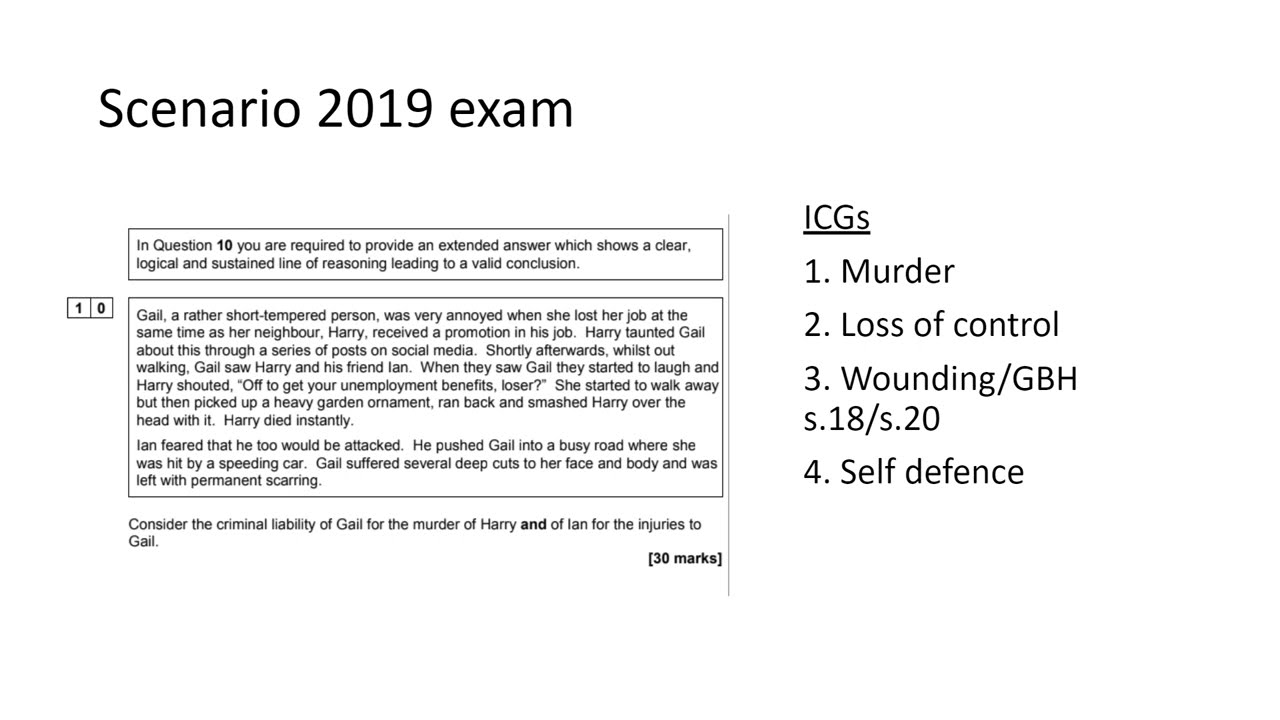
Paper 1 Self defence
3K
The amount of force must be reasonable (Section 76(3)), using a mixed test: objectively reasonable force judged on circumstances as defendant believed them. This incorporates subjective belief but requires objective reasonableness. The jury assesses reasonableness from defendant's perspective. Section 76(7) and Palmer confirm you cannot precisely measure necessary force - honest instinctive action is strong evidence of reasonableness. Hussein case: excessive force (cricket bats causing brain damage) was unreasonable. Martin case: lethal force against fleeing intruder was disproportionate, leading to loss of control defense changes.
Click to watch →

Rayshard Brooks ATL DA considers criminal charges
2.9K
There are two schools of thought regarding use of force cases: (1) Prosecutors can charge and allow juries to determine whether the officer acted reasonably, whether there was immediate fear of death, and whether the force was proportionate; (2) Prosecutors can take the matter out of the jury's hands and make their own determination. The debate centers on whether reasonable minds can differ and whether juries should determine responsibility, which would honor citizens' rights to evaluate whether deadly force was proper under the circumstances.
Click to watch →

Secret Barrister Reacts: The Colston Four
3.7K
Value judgments about how much force is reasonable, whether a person has an honest belief in something, whether a statue is indecent or offensive, and whether a criminal conviction is proportionate to the alleged wrong are quintessentially jury issues. These arise in all sorts of criminal cases. Jurors are explicitly asked to pull their experience and values and apply them to the questions the law asks them to decide. This is not an assault on the rule of law but the criminal law in action.
Click to watch →

Self-Defence in Criminal Law
36K
The reasonableness of force is determined objectively through an analysis of nature and degree. Nature refers to the type of weapons used, while degree refers to how much force was actually applied. In Crown v Lindsay (2005), a homeowner killed an intruder with a sword after discovering burglars in his home. Although the nature of force (sword against armed intruders) suggested reasonableness, the court held that killing an intruder for home intrusion was not reasonable force, resulting in an 8-year sentence. Justice Jeffreys LJ emphasized that courts apply a broad standard rather than precise measurements, recognizing that defenders may use whatever means are immediately available. Courts must weigh weapon equivalence against the proportionality of lethal force, acknowledging that what seems reasonable to one person may not meet legal standards.
Click to watch →

Woman Kills Unarmed Man & Claims Stand Your Ground | No Charges Filed
90.3K
Self-defense analysis requires examining imminence, proportionality, and reasonableness. Imminence requires the threat to be happening now, not future - prosecution argues the man was too far to attack, defense argues his continued approach created imminent threat. Proportionality requires force to match the threat - prosecution argues she brought a gun to a shouting match against an unarmed man, defense argues she was a woman alone in a parking lot being approached by an angry man who blocked her spot, and the gun was an equalizer against a physically stronger male. Reasonableness requires both subjective belief and objective reasonableness - Florida courts have shown strong protection of self-defense rights, as demonstrated in the Andrew Coffee case where a felon in possession of an illegal gun who shot at police during a lawful drug raid was found not guilty of murder based on self-defense.
Click to watch →
Proportionality
Self-Defense
Proportionality
0:00- 1
Act with minimal force matching the threat level.
- 2
Disparity exists between non-lethal and deadly force.
- 3
Legal standards often lump force into broad categories.
Stand Your Ground and the Castle Doctrine
While traditional self-defense standards emphasize proportionality and a duty to retreat, 'Stand Your Ground' laws and the 'Castle Doctrine' offer a significant legal counterpoint. These frameworks relax the requirement for a proportional response by eliminating the duty to retreat when a person is in their home or a place they have a legal right to be. Proponents of these doctrines argue that expecting a victim to precisely calibrate their force during a sudden, high-stress attack is unrealistic and places an unfair burden on the innocent party. Under these laws, the force used is judged more on the subjective necessity of stopping a perceived threat to one's safety or property, rather than an objective 'force-for-force' equivalence. This perspective prioritizes the defender's absolute right to personal autonomy and security over the requirement of proportional escalation, justifying lethal force against unlawful intruders even if the threat level is ambiguous.
The foundational definition of self-defense as an affirmative defense in criminal law.
The distinction between deadly force and non-deadly force under the law.
The legal concept of 'imminence' and how it dictates when a threat justifies a response.
The 'reasonable person' standard and how courts objectively evaluate a defendant's belief of danger.
The legal doctrines of 'Duty to Retreat' versus 'Stand Your Ground' and their interaction with the proportionality of force.
The concept of 'Imperfect Self-Defense' and how disproportionate but honest reactions mitigate criminal charges.
The application of proportionality standards to the defense of others and the defense of property (including the Castle Doctrine).
Analyses of landmark criminal cases to observe how juries evaluate the reasonableness and proportionality of force in real-world trials.
5.9K views460likes2:17@uslawshieldOriginal Release: 2022-02-03
proportionality good right i mean that's something that comes up in every state in virtually every situation which is you must be acting in proportion to the unlawful force or unlawful deadly force that you are encountering yeah and we see this a lot too i mean think about situations where um you know someone comes up to you and they shove you if you unholster your gun and you shoot them right that is probably and i say probably there are exceptions to every situation that's why lawyers exist right but that is probably not proportional so even though it's immediate even though it's unlawful force you are likely not going to be found to abuse reasonable self-defense because you didn't act with proportion and yeah and i'll ask you if you have some a different take on this but my general definition of proportionality at least when i try to explain it to people is you have to act with as little force as possible to stop the person from doing what they did and oftentimes i like to think of it as just just a featherweight more than what that person did to you do you have something different you tell people no i i really i think that's the a good explanation that you and i see that in my practice too using the least amount of force necessary to stop the threat is going to serve you well if you find yourself in a self-defense situation the only thing that i wanted to add was you know we see this spectrum of force and our law doesn't do a good job i think of breaking force down when it comes to proportionality or different building blocks because we have everything from you know assertive verbal commands to you know discharging a firearm intentionally at a person and everything in between you know mays fists you know knives clubs you know they and it builds up this this this spectrum and what we see in our law over and over again is it tries to simplify it and kind of put these things into buckets you know in most states it's either going to be force you know maybe this end of the spectrum's down here and deadly force it's going to put everything in a different bucket up here and some states have an intermediate standard but that makes it real tough because it seems like such an all or nothing proposition if you're forced to defend yourself wouldn't you say oh yeah absolutely [Music] you
Up Next

7:05
Self-Defense Claim in College Athlete Murder Trial | Legal Analysis
@AETV
259.9K views•2022-03-09

4:27
US Secondary Sanctions Impact on EU Businesses and Blocking Legislation
@Bureauvandijk
1.6K views•2019-03-20

5:27
Forensic Phonetics: Speaker Identification in Legal Cases
@nptel-nociitm9240
539 views•2025-03-19

24:42
Police Interrogation Tactics: False Confessions & Legal Reform
@LastWeekTonight
7M views•2022-04-18
Related Study Plans & Knowledge Roadmaps
Structured learning paths in Law
law
Self-Defense Law: Imminence & Castle Doctrine
01Foundations of Self-Defense Law
02Imminent Threat & Reasonable Belief
03The Principle of Proportionality
+ 3 more learning modules
12h6 modules
Explore Roadmap
law
Defamation Law: First Amendment & Actual Malice
01Introduction to civil torts and the First Amendment
02Elements of Defamation: Libel and Slander
03Public Figures vs. Private Individuals
+ 2 more learning modules
8h5 modules
Explore Roadmap
law
Hearsay Rule: Trial Evidence & Exceptions
01Introduction to Trial Evidence & Courtroom Basics
02Demystifying Hearsay: The Core Definition
03Non-Hearsay: Exclusions Under FRE 801(d)
+ 3 more learning modules
14h6 modules
Explore Roadmap
law
Medical Malpractice: Law, Liability & Care
01Foundations of Tort Law and Civil Liability
02The Four Elements of Medical Malpractice
03Defining and Proving the Standard of Care
+ 2 more learning modules
12h5 modules
Explore Roadmap