

![LING 324 [5-1] Composition and Syntax of F1](https://i.ytimg.com/vi/unQbhhBYhbM/hqdefault.jpg?sqp=-oaymwEmCOADEOgC8quKqQMa8AEB-AH-CYAC0AWKAgwIABABGGUgZShlMA8=&rs=AOn4CLBtt1yuxGc9l8iXIWyax0b8h6dbwQ)


![EL MÉTODO CIENTÍFICO (Documental Completo) - ¿Qué es la FILOSOFÍA de la CIENCIA? [EP.1]](https://i.ytimg.com/vi/KKlKY3tDYvs/maxresdefault.jpg)






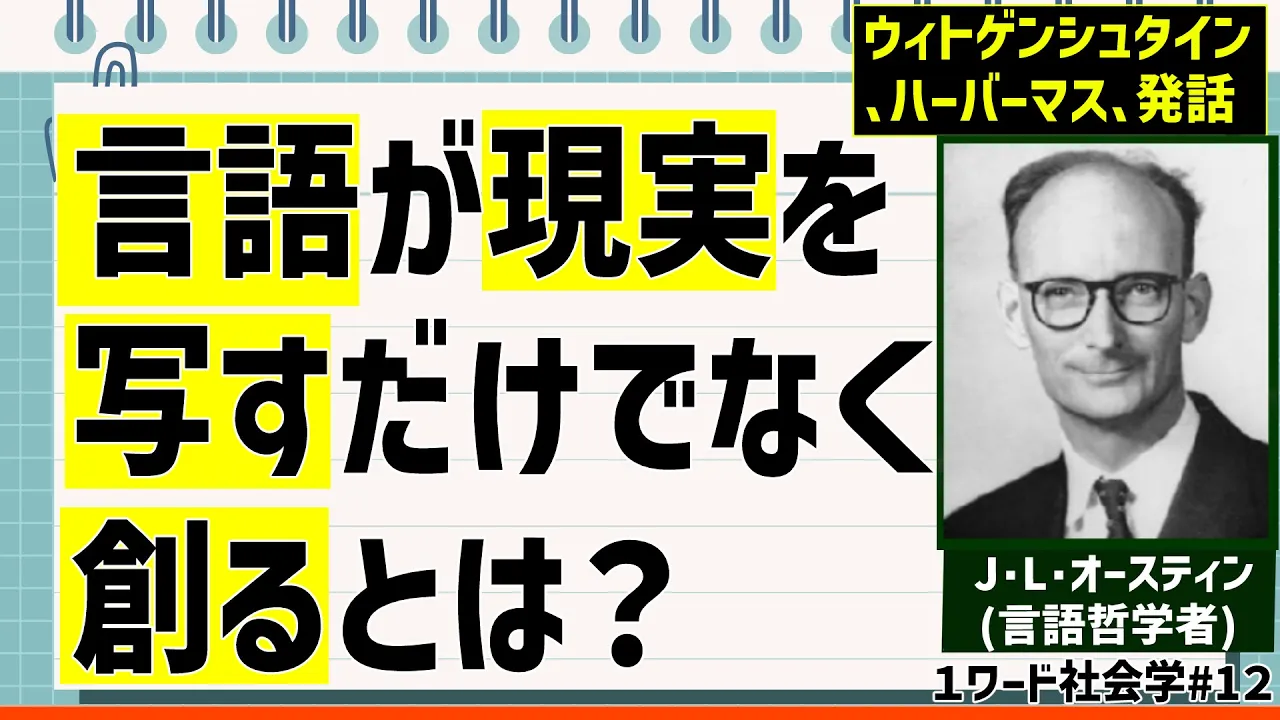
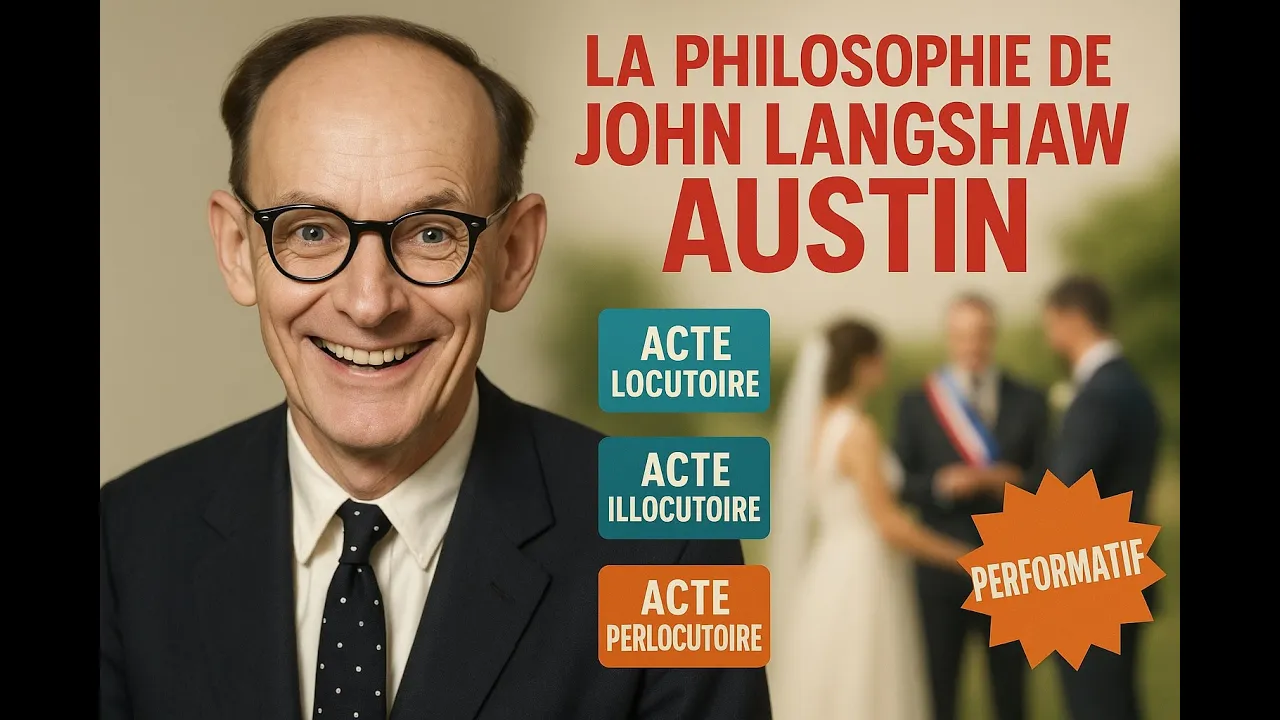


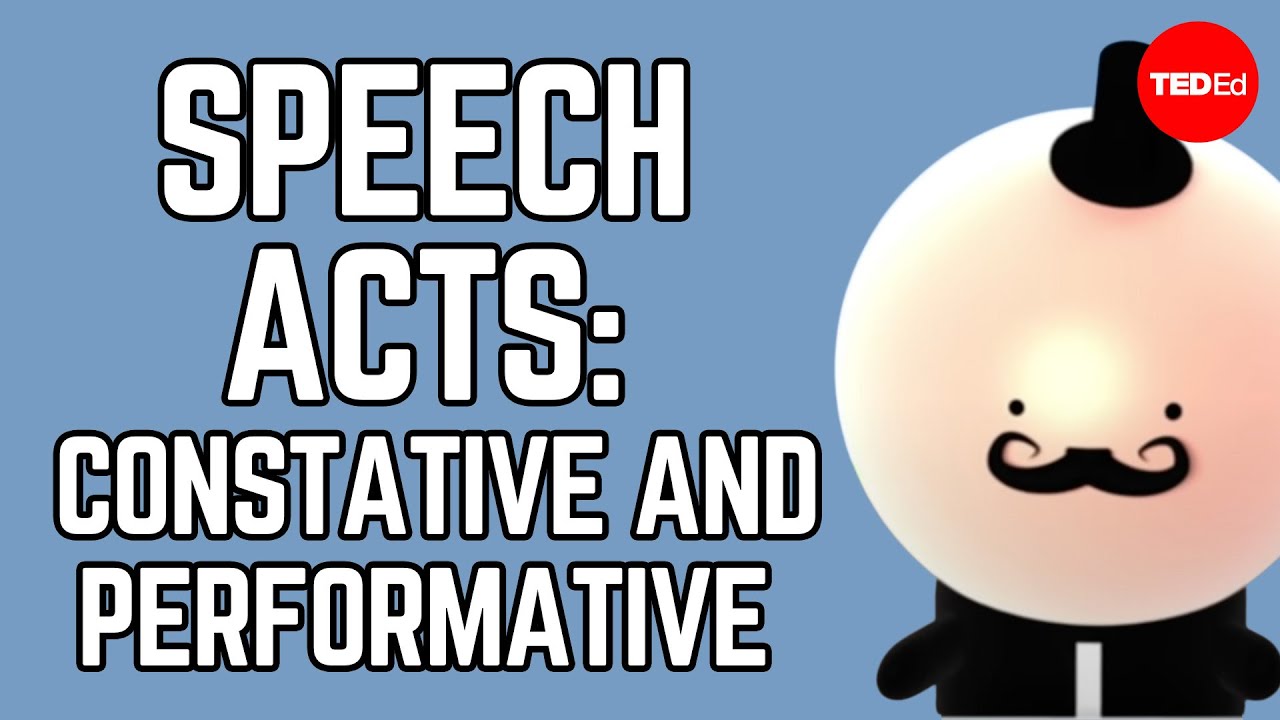
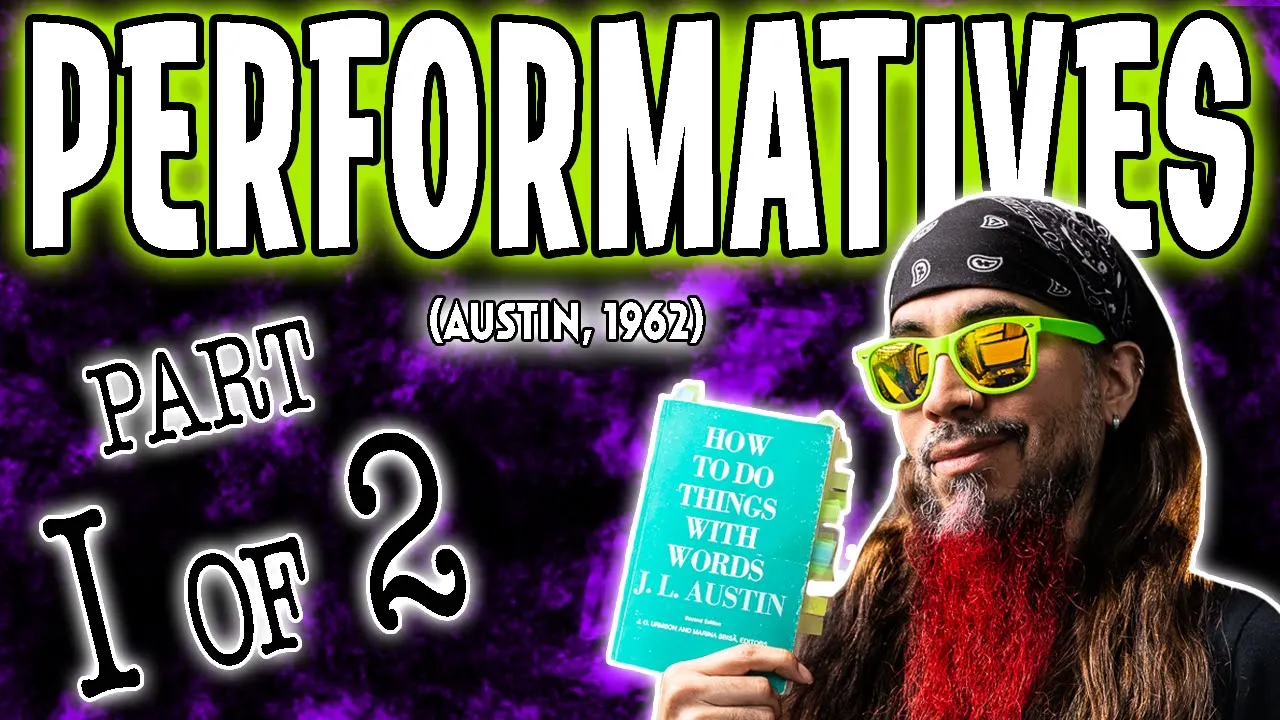



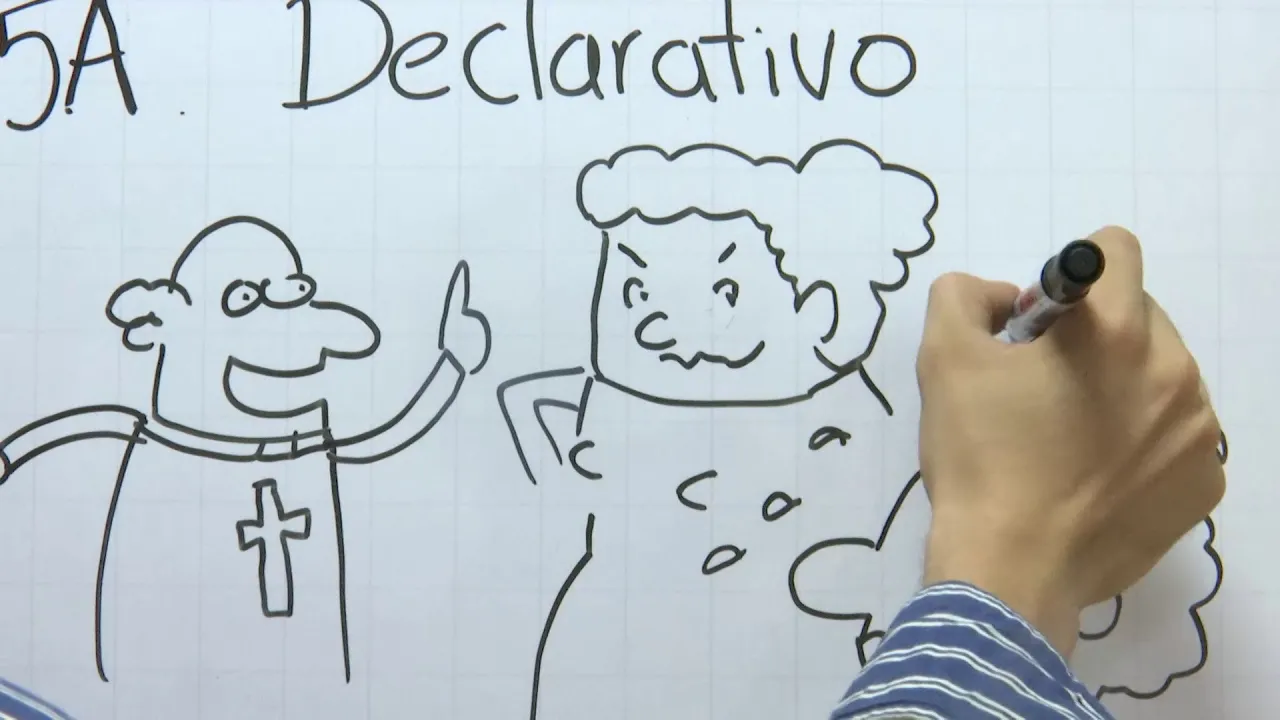


J.L. Austin distinguishes between constatives (statements that report facts and can be true or false, like 'Austin was a crabby Oxford don') and performatives (speech acts that do things rather than merely describe things, such as 'I hereby name this ship Beauty' or 'I declare you man and wife'), which have the remarkable property that saying them can make it so—creating new facts or states of affairs—but only when performed by individuals with appropriate social standing in proper circumstances.
Speech Acts Theory: Austin on Performatives and Constatives
Added:Traditional truth-conditional semantics (the view that the primary function of language is to make true or false statements about the world).
The concept of 'truth-value' in philosophy and logic, specifically how sentences are evaluated as true or false.
The historical context of Logical Positivism and Verificationism, which heavily influenced early 20th-century philosophy of language.
The foundational distinction between semantics (the literal meaning of words) and pragmatics (the study of language in use and context).
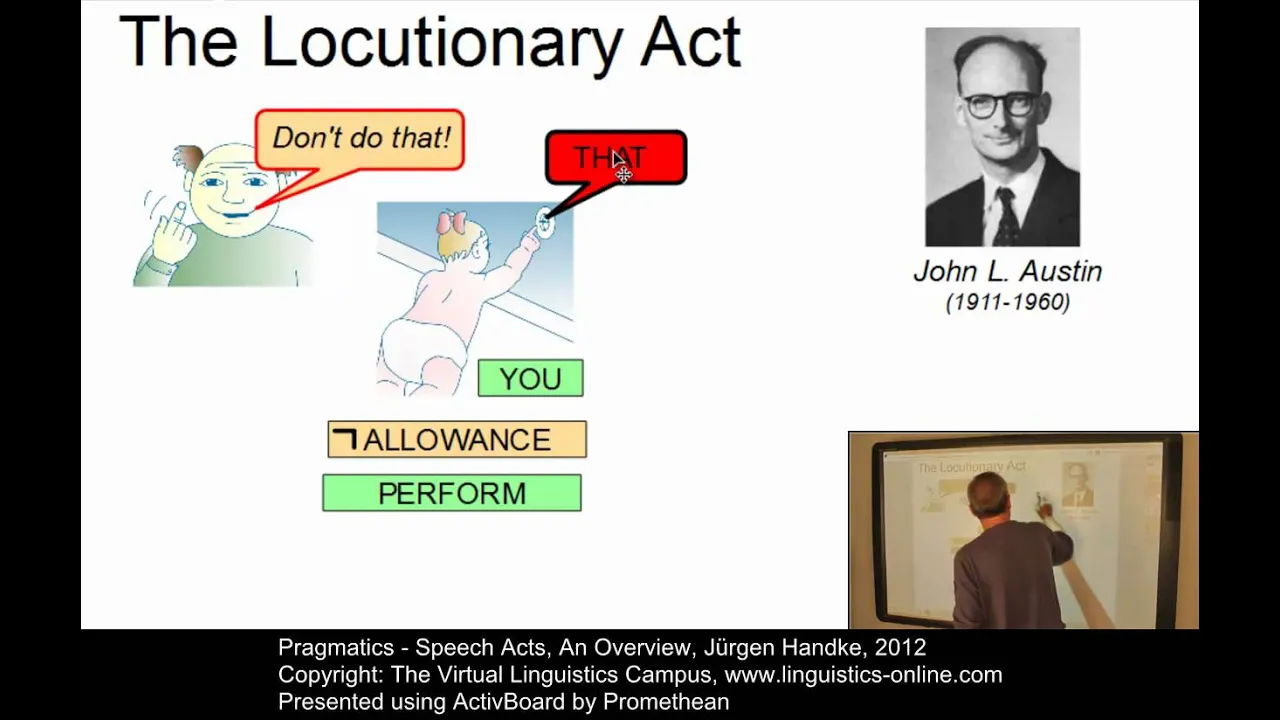
Austin's tripartite division of speech acts into locutionary, illocutionary, and perlocutionary forces.
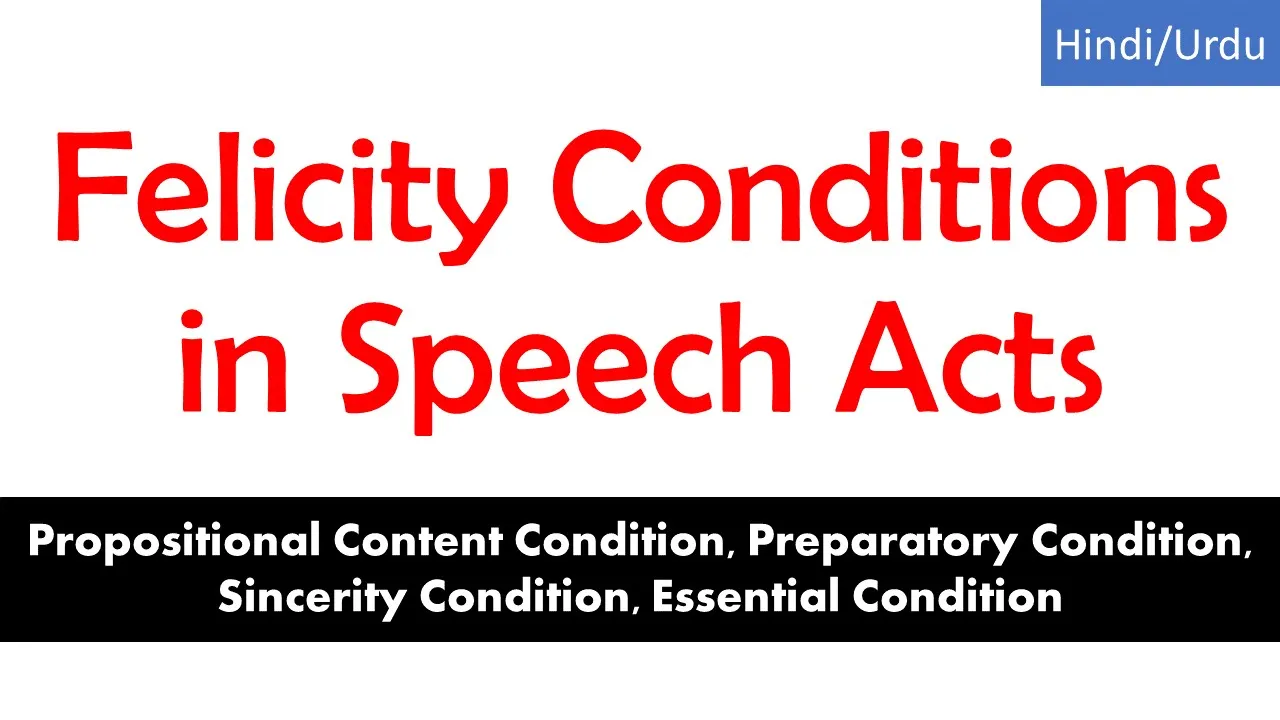
The concept of 'Felicity Conditions', which outlines the rules and contexts required for a performative speech act to be successful rather than 'unhappy'.
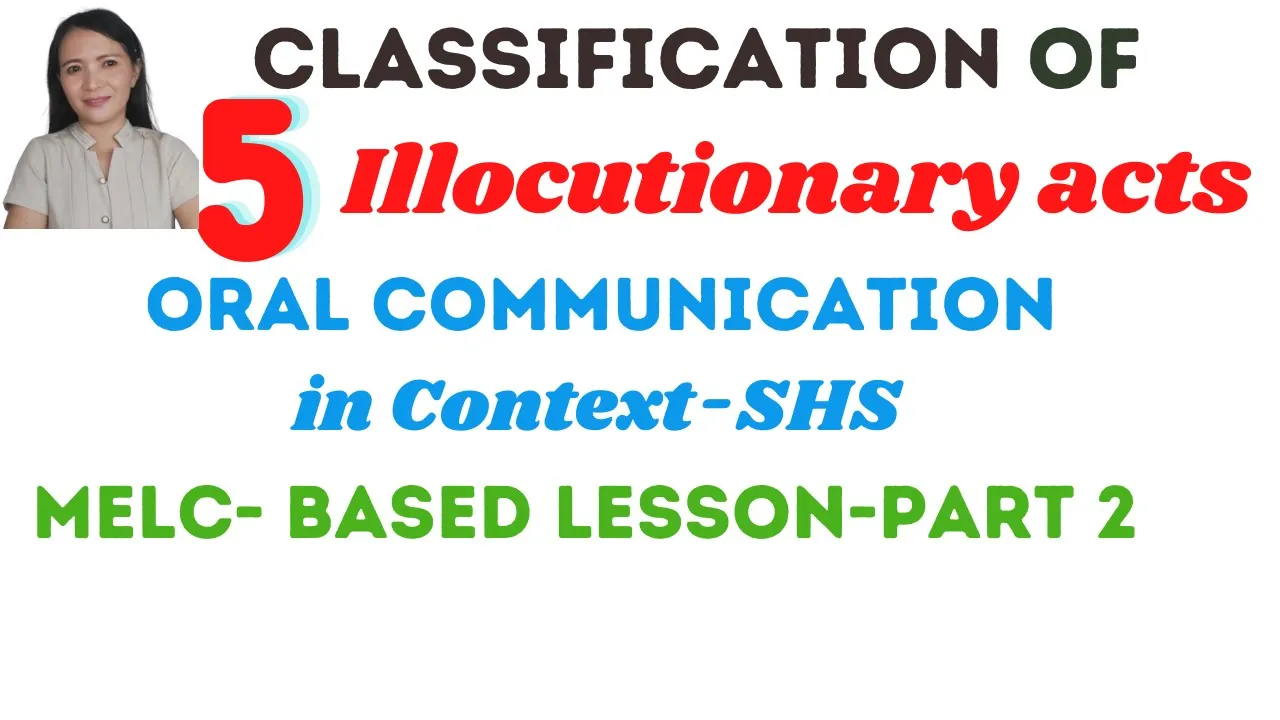
John Searle's taxonomy of speech acts, which systematized Austin's theory into distinct categories like directives, commissives, and declarations.
The application of Speech Act Theory to legal philosophy, gender studies (e.g., Judith Butler's gender performativity), and modern Natural Language Processing (NLP) in computer science.
3.7K views87likes16:08Original Release: 2021-04-11
we're going to be talking a lot about performatives in this lecture indeed the the definition of a performative is going to be something we talk about a lot in a few videos time but in this video we're going to introduce the concept of a performative just by thinking about particular examples and saying some general things about the distinction between performatives on the one hand and what austin calls constantives on the other hand so to see the distinction let's just compare some sentences so for the first sentence we'll put something like austin was a crappy oxford dom and then for the second sentence let's say something like i hereby name this ship uh i'll say beauty with both face you're wondering about the strange name there's there's a story behind this google it and look it up so let's think about a difference between what happens at least some of the time when people say these sentences so when i'm saying sentence one i'm reporting what i take to be a fact i'm saying something about the world in particular something about jl austin that former inhabitant of the world but i'm saying he was a crabiox for don so in this claim i'm making a statement i'm saying something that's the that is or isn't the case i'm making a claim which can be true or false the thing austin wanted to point out was that when we think about sentence two it's not clear that sentence two really works that way in fact it seems to do something pretty different at least some of the time because think about a naming ceremony ceremony where the ship is actually being named and the person says i hereby name this ship body my boat face and then they smash the bottle of champagne on the ship or whatever it is people do when they name ships even though superficially these sentences look sort of similar in certain ways something very different seems to be happening in the second case because what's happening in the second case is that well after the person says this after they say i hereby name this ship voting macbook face it then becomes actually as a matter of fact true that that is the name of the ship so something that's kind of interesting about this case is you might put it saying it makes it so or at least in certain cases saying it makes it so the ship comes to have the name body macbook face precisely because somebody says this sentence austin gives one more example so you know i hereby declare you man and wife so suppose somebody says that in the course of a marriage ceremony well after they say this sentence it becomes true or it becomes so if the right person says i hereby defy declare you man and wife then the two people that they're talking to become married this is part of the this is part of what it takes to be married so again we see something similar where in a certain kind of case saying this kind of sentence makes it so saying that somebody saying declaring that two people are married is exactly what makes them married in the first place so that's a really interesting sort of distinction we have between two and three and one because one doesn't seem to do that it may or may or may not be true that austin was a krabby x or don but my saying that has nothing to do with whether it's a fact or not it's a fact independently of whether anybody ever said that not so with these two in certain cases saying these things suffice to make it so and maybe in certain cases it's also necessary like in the marriage case maybe it's necessary to say that maybe two people don't become married until somebody of the right status says that so this is a really big difference between these things which we're going to call the constantines constitutives and these two which we'll call the performatives so that's going to be our rough characterization for now what a performative is it's a kind of state it's a kind of speech act a kind of thing you might say where somehow saying it makes it so saying it makes it the case and with performatives it looks like the main aim is not to state a fact like when i say i hear by name the buddy mcboatface or i hereby declare a man and wife austin thinks we're not trying to state facts about the world we're trying to do things we're trying to name a ship or we're trying to we're trying to marry people in general there's some sort of charac there's some sort of contrast between making an assertion or saying something saying that something is the case and doing something with their particular sentence now that can't be all that there is to the difference between constitutives and performatives just that you're doing something with a sentence because there are plenty of other sentences that seem to do things so take we've been focusing on what have been called declarative sentences but there are lots and in fact we've been talking mostly about declaratives through the entire class but it's important to remember there are lots of other kinds of sentences in english like take a command close the door again if i say close the door i'm clearly not trying to state a fact about the world that's not that's just not what these sentences which we'll call imperatives that's not what imperatives do they don't state facts and also it doesn't look like we want to say that close the door isn't is a is a performative even though it's doing something closing saying close the door doesn't necessarily make it so in the same sense that saying this sentence makes it so or can make it so and saying this sentence can make it so so while the idea of a performative at least partly includes this idea of like doing something apart from making a statement about the world that by itself can't be just all there is to a performative because as we can see imperatives do that too so the other thing that seems to be distinguishing in addition to the idea that they don't make statements they rather they're used to do something is that they're sort of of the form of other sentences that usually are used to make statements because we can let me put the earlier example up again austin was a krabby old oxford don clearly in their grammatical form sentences two and three look a lot more like one than they do like two two is grammatically as we said an imperative it's a thing that expresses commands but two and three they're not imperatives they don't have this kind of order form of the verb rather the verb appears in the normal way that it does in normal declarative sentences so it seems like performatives are used to do things but the thing that's interesting about them is that they're grammatically they look like sentences that aren't used to do things they look grammatically like sentences that are used to report things so that's another very curious thing about performatives now as we said performatives seem to kind of make the thing that they're talking about so let me just give you one more example with this kind of thing it's it's good to have as many examples as possible so let's say sentence four is i declare you guilty and imagine that being said by a judge or something like that when the judge says this well then that that then the subject becomes recognized as guilty so again we see this idea that performatives seem to make it so in some sense but if you think about it this is kind of quite a strange thing or at least it's not something that's in general true we can't in general make things true just by saying them i can't you know for instance i might say something like i hereby stand on my head in that case clearly saying it is not going to make it so no matter how much i say it i'm not going to become standing on my head just because i say i am i can't talk myself into a headstand in the way that i in certain cases can talk myself into naming a ship and talk myself into into marrying people if i have the right sort of credentials so again this is a very kind of surprising property in certain cases that we're able to do something by just saying it because there's clearly a lot of things clearly probably most things we can't do by just saying it for instance i can't become rich just by saying i hereby become very rich or i hereby declare myself rich so there's something special about the cases where performances work that distinguishes them from cases where clearly they can't work and we'd like to know a bit what a bit what that is that's one kind of limitation that comes with performatives there's only certain kinds of things that you can perform by saying that so things like naming chips or declaring people married or maybe declaring people guilty things like that that you can do by saying them and not things like standing in your head or becoming rich but the other thing that's important is that as you maybe have popped onto already not everybody can do these things by saying it so some people can name ships by saying it some people can marry people by saying it some people can declare people guilty by saying it but clearly not everybody so for instance take an extreme example if i just picked two random students in this class and i said i hereby declare you married of course you're not married i can't do that i can't make you married by saying it and i wouldn't even try of course likewise i can't just say i pronounce you guilty making you thereby guilty and the reason why i can't i in particular can't do either of those things is because i don't seem to have the right status to declare people married you have to have a certain status and law the same with declaring people guilty to name a ship you have to have to have a certain kind of relationship to the step to the ship you have to have a certain kind of stake in it or something like that so while you can perform actions by saying these things not just anybody can do it it's only people with the right kind of social situation the right kind of social standing to do it so let's write let's just write down what we know about performance so far they're used to do things like naming or marrying grammatically they look like statements that is they look different from imperatives questions and things like that there's this idea that what's going on in the performative is that saying it makes it so we also saw there are limits one limit is that only certain things can be performed with a performative so the limit on the kind of actions and then importantly there's also a limit on who can do it only certain people can use words in a certain way to perform actions so it requires a certain kind of social standing as we said i'm going to add one more property to this that austin thinks that performatives has this is probably the most controversial one he says in in the in the selections we've read but austin wants to say that performative statements or performatives performative speech acts are neither true nor false and if true this is supposed to be especially surprising since grammatically they look like statements they look like things which say true or false things and yet austin wants to say well actually they don't they are not things that are true or false what's the argument for this well there's basically two kinds of ideas here so one thing austin says is well if you think about a performance of a particular case where somebody makes a performance utterance it sounds kind of weird to say that they said something true or false so suppose that i named the ship i say like i named the show buddy make both face and then somebody turns around to you and asks oh is what david said true or is it false austin's feeling is that's kind of a strange thing to do is this kind of a strange question to even ask in that situation because i wasn't really making a statement in the in the first place it wasn't like i was like telling somebody what the ship was named i was just trying to make it named that and so for that reason it seems kind of weird to ask the question is it is what i said true or false there's a related kind of argument which i'm not sure if austin actually gives it but i think it might it's sort of in the area so it's worth mentioning as we said in the case like this where i say i hear by name the ship building my bug face i'm not trying to say that something is true i'm not asserting a proposition rather i'm doing something else i'm naming a ship and you might think that well naming ships or marrying people or declaring people guilty that's not just just not the right kind of thing to be true or false in the first place like asserting making an assertion maybe that's something that can be true or false or believing something a belief can be true or false but marrying and naming and declaring guilty these are not things that can be true or false it's just the wrong kind of thing to be true or false so that is kind of the gist of the idea why you might think that performative speech acts or performative utterances are not true or false because they're doing something the thing they're they're not in the business of making claims about the world in the first place that was kind of i think the general thought that austin had this is something we'll kind of come back to the idea that performances aren't true or false it's worth thinking yourselves whether you agree with that and in particular does the fact that it's kind of strange to ask the question does that immediately set does that immediately tell against the idea if they're being true or false or could it be that they really are true or false even though the question is kind of strange this is a kind of theme that we'll come back to over the next few weeks so that's our first video on performatives what we did was we looked at a few examples of performatives and we drew up some kind of rough distinctions between performatives and constitutes so we said performatives are used to do things like it's when you say a sentence to do something like naming or marrying or declaring people guilty things like that grammatically they look like what we might call statements they look like things like austin was a crabby oxford dom but importantly in some sense with performatives saying the performative making the performative utterance can make it the case saying that you're naming the ship building the cloak face is what makes the ship have that vein but there are limits only certain things can be performed you can't perform a headstand by saying that you're performing a headstand it's only things like naming marrying etc and you require some social standing not just anybody can go around marrying people or naming ships or whatever thankfully and finally as we said the most controversial aspect of austin's view is that performatives are neither true nor false they're just not in the business of making claims in the first place so that's the idea of a performative
Up Next
47:34
Wittgenstein's Twin Philosophies Explained by Bryan Magee & Anthony Quinton
@ManufacturingIntellect
31.9K views•2017-09-17

164:01
John of Damascus on Holy Images: A Theological Defense
@BannedBooks
139 views•2026-04-25

68:32
Should We Destroy the Machines? Big Tech Surveillance Critique
@TheStoriesWeTell303
167.9K views•2025-11-30
4:57
The Myth of Sisyphus: A Greek Legend of Eternal Punishment
@TEDEd
8.6M views•2018-11-13
Related Study Plans & Knowledge Roadmaps
Structured learning paths in Philosophy
philosophy
Frankfurt School: Critical Theory & Culture
01Foundations of the Frankfurt School and Critical Theory
02Horkheimer & Adorno: The Critique of Instrumental Reason
03The Culture Industry and Mass Deception
+ 2 more learning modules
12h5 modules
Explore Roadmap
philosophy
Philosophy of Language: From Frege to Austin
01The Linguistic Turn: An Introduction to Language in Philosophy
02Gottlob Frege: Sense and Reference
03Early Wittgenstein: The Picture Theory of Meaning
+ 3 more learning modules
15h6 modules
Explore Roadmap
philosophy
Feminist Epistemology: Standpoint & Injustice
01Introduction to Epistemology and Feminist Critiques
02Sandra Harding and Standpoint Theory
03Donna Haraway and Situated Knowledges
+ 2 more learning modules
12h5 modules
Explore Roadmap
philosophy
Environmental Philosophy: Ethics & Deep Ecology
01Foundations of Environmental Ethics & Anthropocentrism
02Biocentric Individualism and Animal Liberation
03Ecocentric Holism and Deep Ecology
+ 1 more learning modules
10h4 modules
Explore Roadmap