





















In horror movies, sound designers create suspense by using subtle, ambiguous sounds (like faint wind chimes, barely audible footsteps, or mysterious whooshes) that suggest unseen threats without revealing their presence, combined with strategic moments of silence and accent sounds that heighten tension and manipulate audience perception to build fear.
The Role of Sound Design in Horror Film Suspense
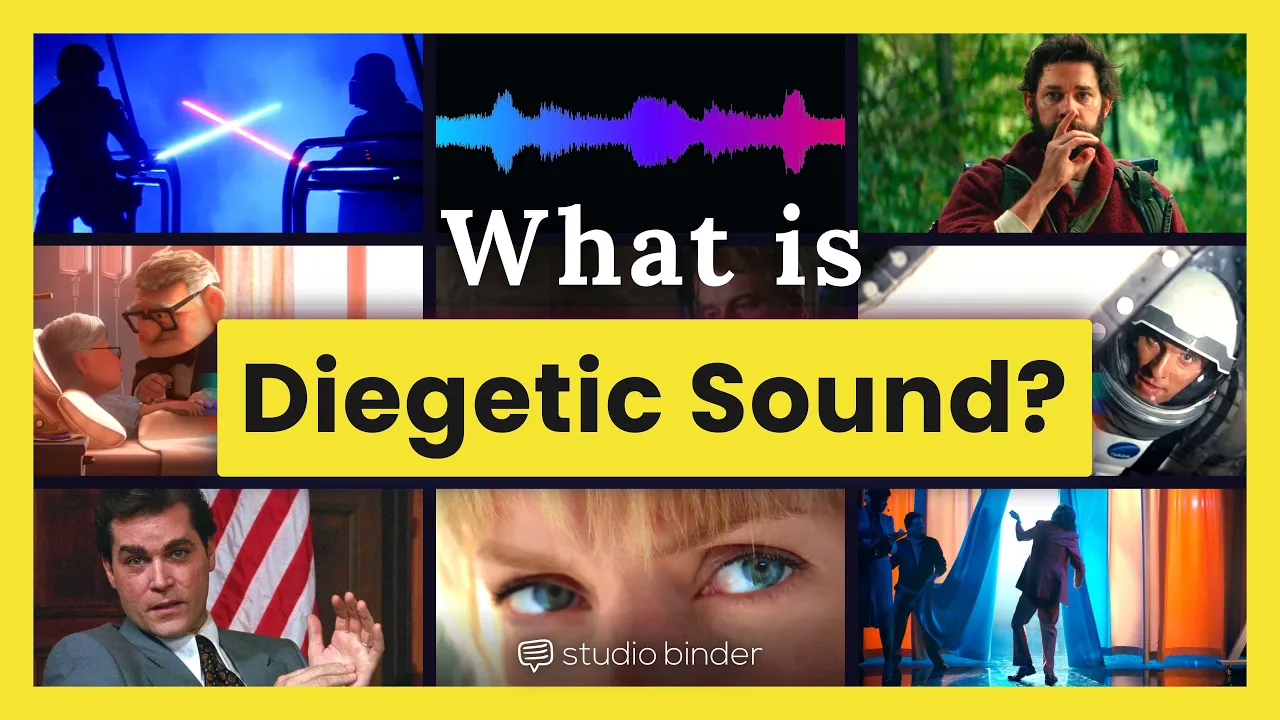
Added:Understanding the distinction between diegetic and non-diegetic sound in cinema.
Basic knowledge of what Foley artistry is and its historical role in film post-production.
Elementary psychological concepts of fear and suspense, including how anticipation affects human physiology.
A foundational grasp of audio properties such as pitch, frequency, and volume, and how they convey emotion.
Advanced psychoacoustics, specifically how infrasound and dissonant chords are used to trigger biological fear responses.
The study of spatial audio, surround sound, and Dolby Atmos mixing techniques to create 3D auditory dread.
Practical Foley creation, involving hands-on sound synthesis and recording techniques for horror-specific effects.
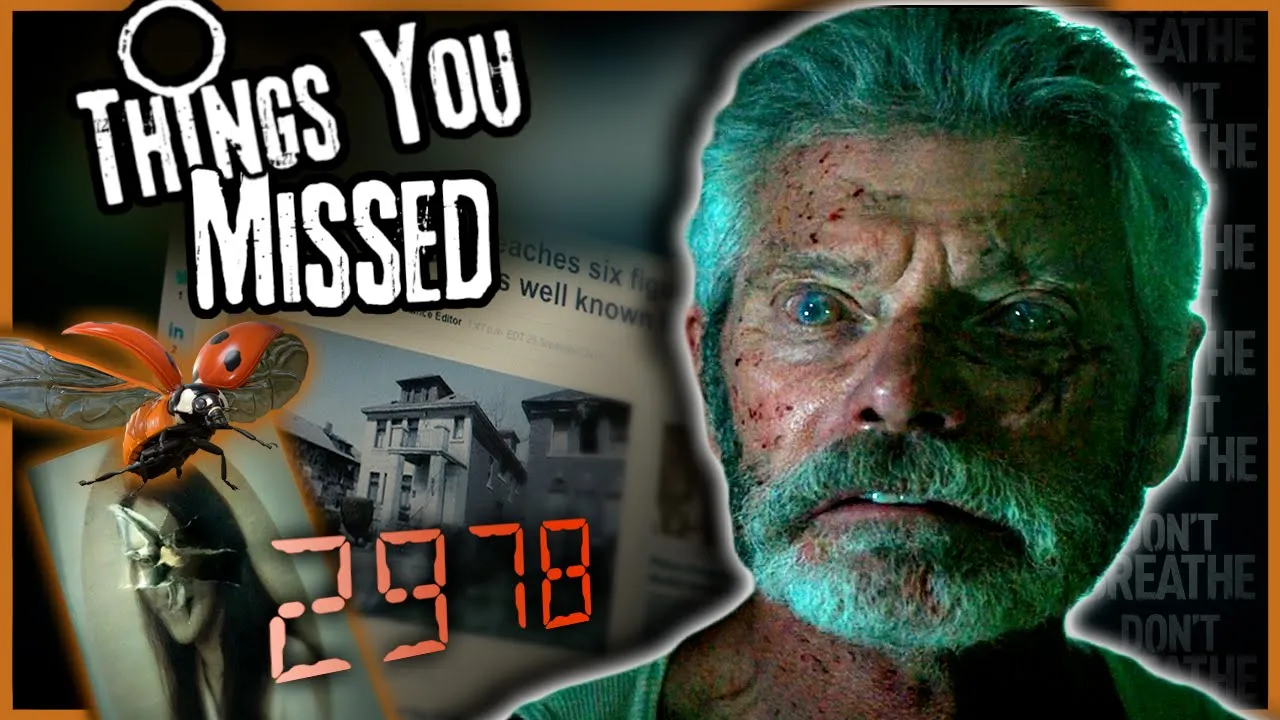
Comparative analysis of silence versus noise in minimalist horror cinema (e.g., 'A Quiet Place' or 'Don't Breathe').
1.6M views40.1Klikes10:34Original Release: 2021-06-17
Narrator: Listen as Elisabeth Moss turns off the sink in this scene.
[water running] [handle squeaks] [silence] Now listen to it with a completely different sound design.
[water running] [handle squeaks] [water drains] In the first version, all sound cuts out.
But that's a whole lot scarier.
Sound has been an important element in film for a long time.
But in horror movies, it plays an even bigger role.
Leslie Bloome: When it comes to horror films, you don't want to give away the ghost.
You don't want to give away the monster or the moment.
Narrator: That's Leslie Bloome, cofounder of Alchemy Post Sound.
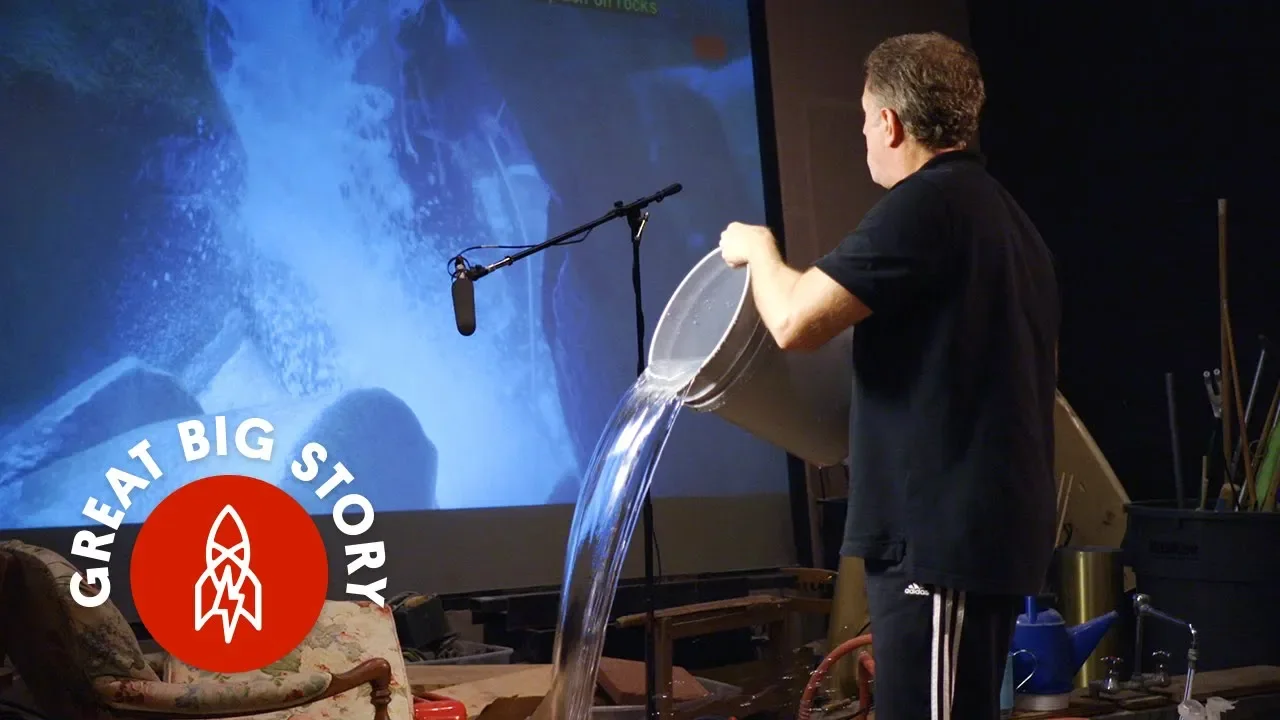
And he just described the key difference between regular Foley sound and what he does as a Foley artist for horror movies, like "The Invisible Man."
Normally, Foley focuses on sounds made by characters you see.
But in horror, it's about the sounds of the unseen character, someone or something that may be there without the audience knowing for sure that it is.
That's what ratchets up the suspense and primes the audience for a truly terrifying reveal.
And maybe no film does this better than the one with an invisible villain.
Take the simple sound of wind, a staple of horror-movie sound design, whether it's curtains reacting to a rush of air... [fabric rustles] or a flock of birds flapping against the breeze.
[gloves slapping] In a regular movie, you might hear wind when characters open a window or walk outside.
But in horror movies, often the source of the sound won't be clear.
For this next part, you might want to grab your headphones.
This scene signals the Invisible Man's presence with mysterious whooshing sounds, created by flapping an old shirt.
[fabric rustles] You can't actually see where this wind sound is coming from, but as Elisabeth Moss' character, Cecilia, approaches the sink, the whooshes build in intensity.
[whooshing] And build... [whooshing grows louder] until each one sounds more like a rumble.
[water running] [whooshing intensifies] Still, the window is closed, and the curtains look pretty still.
So the sound suggests something's moving inside the room.
Exactly where, we don't know.
There's another sound in this scene that confuses our senses even more.
[whooshing] [wind chimes dinging] Hear those wind chimes?
[whooshing] [wind chimes dinging] They're subtle, but disorienting.
Especially because the sound isn't coming from something you can point to in the outside world.
See, Leslie uses different kinds of wind chimes to accentuate tense moments in horror scenes.
[wind chimes dinging] Even if there aren't any chimes in the shot.
It could be that moment that, you know, somebody hears a ringing in their ears.
Narrator: That ringing in the ears is called a subjective sound -- something the character's hearing in their mind.
In horror movies, subjective sound helps place you inside the protagonist's head, so you identify with their fear.
Leslie: Then we have the one that was actually used in "The Invisible Man."
Narrator: It's how the Foley artist handles the chimes that makes the sound creepy.
This is what Leslie calls a "demented wind chime," [ding echoes] a sound Alchemy made for "The Night House."
[ringing] They created it by putting an old telephone bell on a rope and swinging it around.
The slower you swing it, the creepier it gets.
Even the most common sounds require special treatment in horror movies, like footsteps.
Alchemy has a huge shoe collection for this purpose.
I know how each one of these shoes reacts to every one of these floor surfaces.
Narrator: In a non-horror movie, you'll likely know exactly where footstep sounds are coming from and how close they are to the central character.
But in horror movies, sometimes the most effective footsteps are barely audible, so you really have to strain to hear them, just as the protagonist is doing.
To soften the footsteps of the Invisible Man and match the sound of his neoprene suit, Leslie walked around with rubber gloves over his feet, adding a yoga mat to mute the sounds even more.
[quiet footsteps] The result?
You might not even be sure you heard anything at all.
That uncertainty is the bread and butter of suspense in horror movies.
Barely perceptible sounds can make you doubt your own senses, just like the character is doubting theirs.
And that makes the viewing experience that much scarier.
What places you even further into the protagonist's shoes, literally, is the sound of their footsteps.
She is, like, nervously shaking.
I'm going to try to portray that in her movements, in her footsteps.
[wood creaking] Narrator: To play this up, the artists at Alchemy don't use just any regular floor.
I need old, crappy wood, I need a really bad subfloor, and I need really crappy nails that are going to move within the wood.
Narrator: Leslie made a custom one that met all those requirements, partly using 65-year-old wood.
Each corner makes slightly different kinds of creaky sounds, which emphasize the sense of unsteadiness.
Like you're -- again, literally -- on shaky ground.
To cap it all off, there's this.
[handle squeaks] The accent sound.
That's a sharp, pronounced sound that stands out against the subtler, more ambient ones we've been hearing, indicating to the audience that something is off.
Leslie used an old sink to create this unsettling squeak.
[handle squeaks] But that came out sounding like too big a piece of metal, so he used a towel to dampen the sound.
[handle squeaks] But what really makes this [handle squeaks] [silence] scarier than this [handle squeaks] [water drains] is the way everything else goes quiet after the sink squeaks.
It's not realistic for all the sounds to suddenly stop right when the faucet does, but sound in horror movies isn't always about realism.
Often it's about creating a heightened reality.
It doesn't have to be wall-to-wall sound all the time.
Having that brief moment of just silence and then, "Wham!"
To me, that's powerful.
Narrator: Here, the few moments of absolute quiet put the audience on edge right before the moment of attack.
And when that moment does come, the contrast is that much stronger.
[thud] [Cecilia choking] Leslie: I'd like to make this grab just a little bit larger than life.
[thud] Let's get a grab on more skin.
We'll layer the two of those together.
[smack] And I want to throw in, like, a little bit of creak, just when she's getting lifted up.
[smack] [rubber squeaking] That's a hit and a grab and the whole nine yards, so, you know, she's in trouble.
Narrator: Now let's watch another scene and see how these suspense sounds play out together.
The accent sound comes earlier in this scene in the form of a jarring phone ring.
[phone buzzes] The phone has an unnaturally loud echo against the wood.
[phone buzzes] And it's startling because of its contrast with the otherwise quiet attic.
But that's sort of a fake-out, because afterwards we return to quiet, which can give the audience a sense of false calm.
Cecilia's shaky, creaky footsteps are actually crawling sounds in this scene, which put the viewer right there with her as she moves across the attic.
[gentle thudding] Leslie accentuated the sound of the creaking floorboards using his custom-made "creak box."
[wood creaking] Earlier we saw how subtle footsteps and whooshes signaled the bad guy's presence.
Here, it's the faint rattle of a ladder in the distance.
She hears something, and it jars her.
[faint rattle] Now, we don't need climbing up the ladder, because that would be just -- we've given away the farm.
Not too loud, not too big.
He's trying to sneak up on her, too.
[ladder rattles] Narrator: Since all we hear is that rattle, we don't know exactly where the bad guy is, throwing our senses off yet again.
That's crucial because it's priming us for this jump scare.
Part of why that reveal is so terrifying is because of the proximity of the Invisible Man.
By giving us minimal hints as to his whereabouts, the sound design tricked us into thinking he was farther away.
Leslie: When he gets splashed with paint, [rattling] at that point, the cat's out of the bag.
Narrator: The big moment here called for some bigger and messier sounds.
[sheepskin splats] Leslie: We don't want to dump paint everywhere, but we need it to sound thick and gooey.
Narrator: The best tool for that are these scraps of sheepskin, which Leslie says are "nastier" than your usual towel or rag.
Leslie: But it holds a ton of water in it, which gives it a very, you know, very gooey, visceral kind of sound to it.
[splashing] Narrator: To maximize moments like this, horror movies have to walk a fine line, figuring out how to hide a character while revealing them at the same time.
They accomplish this with subtle Foley and sound design that goes beyond realism to create a heightened reality where your ears and mind are playing tricks on you.
[footsteps] [creaking] [TV clicks off] Man: Don't let him haunt you.
Cecilia: Hello?
[heavy breathing]
Up Next

10:02
Fundamentals of Cinematic Sound Design: A Practical Guide
@PowerOfSoundFX
4.7K views•2023-09-09

26:22
Walking in the City: Urban Rituals and the Flâneur in Contemporary India
@PSBTIndia
1.9K views•2016-08-02

9:48
The 12-Minute Action Sequence in Extraction: A BTS Filmmaking Breakdown
@Insider
8M views•2020-05-14

1:42
Game of Thrones Opening Credits: A Cinematic Analysis
@gameofthrones
46.3M views•2011-04-18
Related Study Plans & Knowledge Roadmaps
Structured learning paths in General & Interdisciplinary Studies
general-studies
Artificial Light: History, Tech & Human Impact
01The Pre-Electric Era: Fire, Oil, and Gas Lighting
02The Incandescent Revolution and Grid Electrification
03Gas Discharge and Fluorescent Illumination
+ 3 more learning modules
14h6 modules
Explore Roadmap
general-studies
Elevator Engineering: History, Physics & Cities
01From Hoists to Safety Brakes: The Dawn of Vertical Lift
02Hydraulic vs. Traction: The Engineering Physics of Elevators
03Modern Speed, Safety, and Algorithms
+ 2 more learning modules
12h5 modules
Explore Roadmap
general-studies
Rubber: Material Science, History & Geopolitics
01Origins of Natural Rubber & Mesoamerican History
02The Chemistry of Natural Rubber & Vulcanization
03The Geopolitics of the Rubber Boom & Colonization
+ 2 more learning modules
12h5 modules
Explore Roadmap
general-studies
Containerization: Evolution, Logistics & Trade
01Ancient Trade & Bulk Cargo: Amphorae to Barrels
02The Industrial Revolution & Cardboard Packaging
03The Containerization Revolution: Malcom McLean
+ 2 more learning modules
12h5 modules
Explore Roadmap