







![20th Century Music Theory [20세기 음악이론] Polytonality and Bitonality](https://i.ytimg.com/vi/rB3808PDLZ8/maxresdefault.jpg)







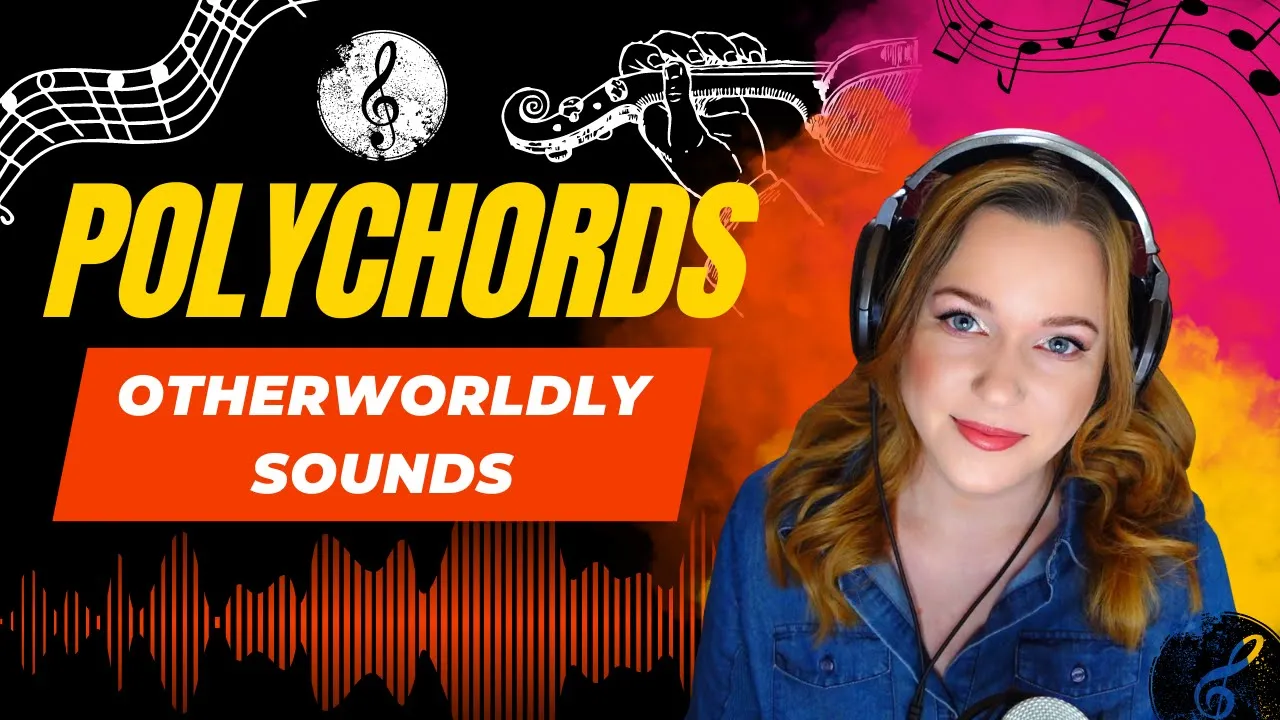


Thomas Newman's 'TURTLE' chord from Finding Nemo is a six-voice polychord combining B-flat major triad in second inversion over B major triad in second inversion, creating a balance between consonant triads and dissonant intervals that produces a sense of dizziness and disorientation; this chord can be practiced through three voice-leading exercises: the plagal cycle (clockwise circle of fifths), the authentic cycle (counterclockwise circle of fifths), and the ascending augmented cycle (moving through all 12 pitch centers using augmented fourths).
The Turtle Lope Chord: Thomas Newman's Polychord in Finding Nemo
Added:Understanding of basic chord construction, including triads, seventh chords, and chord extensions.
Familiarity with the concepts of musical intervals, consonance, and dissonance.
Basic knowledge of chord voicing and how notes are distributed across different registers or instruments.
An introductory understanding of how film composers use music to support narrative and emotion.
Exploration of bitonality and polytonality in 20th-century classical and cinematic music.
In-depth analysis of Thomas Newman's signature compositional style, including his unique orchestration and harmonic language.
Advanced orchestration techniques for effectively balancing and blending multi-voice chords across an orchestra.
Practical application of polychords in original music composition to create atmospheric, suspended, or tension-filled cues.
1.3K views31likes6:08Original Release: 2023-04-25
here's the opening of the queue the turtle lope from Finding Nemo by Thomas Newman [Music] and it's the court of the week Keith horns [Music] 2003's Finding Nemo is a fantastic score by the prolific and oft imitated Thomas Newman this was the first Pixar film scored by someone other than Randy Newman who is Thomas's first cousin can I call you cuz everybody okay with cuz this is the part of the story where Nemo has just narrowly escaped being caught in the filter of the fish tank and we fade out of that scene and into the next scene where his dad Marlon is regaining Consciousness after he was stung in the jellyfish Forest here's a clip of that scene [Music] and what Newman writes is a six-part poly chord with B-flat major and second inversion over B major also in second inversion the two Triads are a major seventh apart [Music] foreign I love how this chord combines the consonants of Triads with the dissonance of combining and displacing them at the same time it's that balance between Order and Chaos that I love about this chord voicing me too I love watching it I love playing it up I love all of it the chord then planes up a half step and back down again and coupled with the chromatic flute line it gives this sense of dizziness and disorientation to the scene making me dizzy I'm gonna take a nap so let's run this chord through some exercises [Music] so at the risk of making ourselves dizzy here's the first exercise taking the cord and planing it exactly as it is through the plagal cycle which is the circle of fifths clockwise like this thank you foreign [Music] is to use voice leading and move it counterclockwise in the circle of fifths through the authentic cycle and let's start and see that'll sound like this B over c e over F A over B flat D over E flat G over a flat C over d flat F over F sharp [Music] and finally the last exercise is to run this through the ascending augmented cycle which is another way to get through all 12 pitch centers or all 12 key centers and that cycle is this C augmented F augmented a fourth higher a fourth higher again from B flat augmented and E flat augmented so again that's this [Music] and that's another way to get through all 12 keys or all 12 key centers check out my video on root Cycles if you want to have if you want to try out some more ways to get through all 12 Keys link so with voice leading I'm going to start with middle C at the top here of the left hand and our B chord will be there so we'll go from C to e to a flat f a d flat and so on and the right hand we'll do the exact same thing but a Major Seventh higher at the same time so that sounds like this B over C E flat over e g over E flat E over f G sharp over a D over d flat A over B flat C sharp over d F over F sharp and the last one is D over E flat F sharp over G and B flat over B which is the chord from the film well there we are ah congratulations well done so that's a few exercises you can do with this chord from Finding Nemo I am a sucker for Rich adventurous Harmony like this and I'm always excited and delighted when I hear it in such a mainstream context complex Harmony can add a ton of nuance to a narrative it can reflect the complexities of characters the intersection of disparate storylines it can add a sense of disorientation and confusion to the perspective of the character that's what this chord does in Finding Nemo having said that I I don't necessarily believe that complex chords are any better than simple ones as composers I think it's important for us to use the full spectrum of the language from the Simplicity of a single note to the chaos of a complex cluster that's solid alliteration right there it gets into the debate of what makes good art and the relationship between the sophistication of the artist's techniques and whether or not that equals higher quality or not even heard alert a nerd alert but I'll save that for another video in the meantime thanks for watching thanks for listening and happy practicing
Up Next

6:54
Stravinsky Rite of Spring Chord Analysis: Augurs of Spring Guitar Lesson
@CliffordMartinOnline
1.1K views•2025-05-21

10:20
Mozart's Musical Dice Game Explained: History, Rules, & Fun
@webpianoacademy
5K views•2023-03-13

47:36
Understanding Diatonic 7th Chords in Major Keys | Music Theory Tutorial
@GracieTerzian
54.7K views•2022-03-02
10:49
Understanding John Coltrane's Giant Steps: A Music Theory Analysis
@Vox
10.4M views•2018-11-12
Related Study Plans & Knowledge Roadmaps
Structured learning paths in Music Theory
music-theory
Composing Galant Music: Partimento & Schemata
01Foundations of Figured Bass and Keyboard Harmony
02The Rule of the Octave (Regola dell'Ottava)
03Galant Schemata: The Building Blocks of Form
+ 2 more learning modules
30h5 modules
Explore Roadmap
music-theory
Decoding Overtone Series: Tuning & Drone Music
01Acoustic Foundations: The Physics of the Overtone Series
02Tuning Systems: Equal Temperament vs. Just Intonation
03Microtonality and Spectralism: Beyond Standard Pitches
+ 2 more learning modules
24h5 modules
Explore Roadmap
music-theory
Impressionist Harmony: Scales, Planing & RPGs
01Foundational Music Theory: Keys, Intervals, and Seventh Chords
02Impressionist Color: Chord Planing and Parallel Harmony
03Whimsical Textures: Pentatonic Cascades and Whole-Tone Scales
+ 1 more learning modules
14h4 modules
Explore Roadmap
music-theory
Negative Harmony: Axis Reflection in Indie Pop
01Music Theory Foundations: Scales, Intervals, and Triads
02Functional Harmony and the Circle of Fifths
03Demystifying the Negative Harmony Axis Reflection
+ 2 more learning modules
16h5 modules
Explore Roadmap