

![Music theory basics[Part 2 of 2]](https://i.ytimg.com/vi/LRLP9OjYDlE/maxresdefault.jpg)






![Master Class with Jacob Collier [FULL VIDEO] at Berklee College of Music Learning Center](https://i.ytimg.com/vi_webp/RSPXgdeKLTs/maxresdefault.webp)




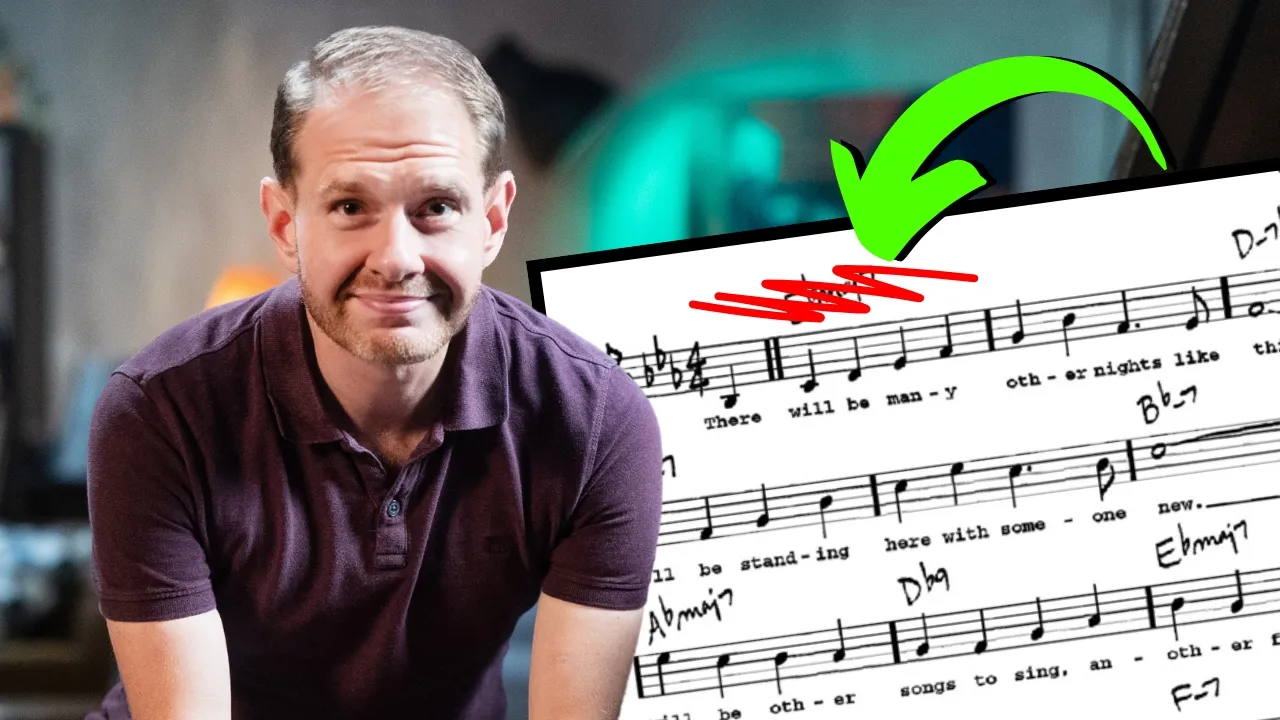
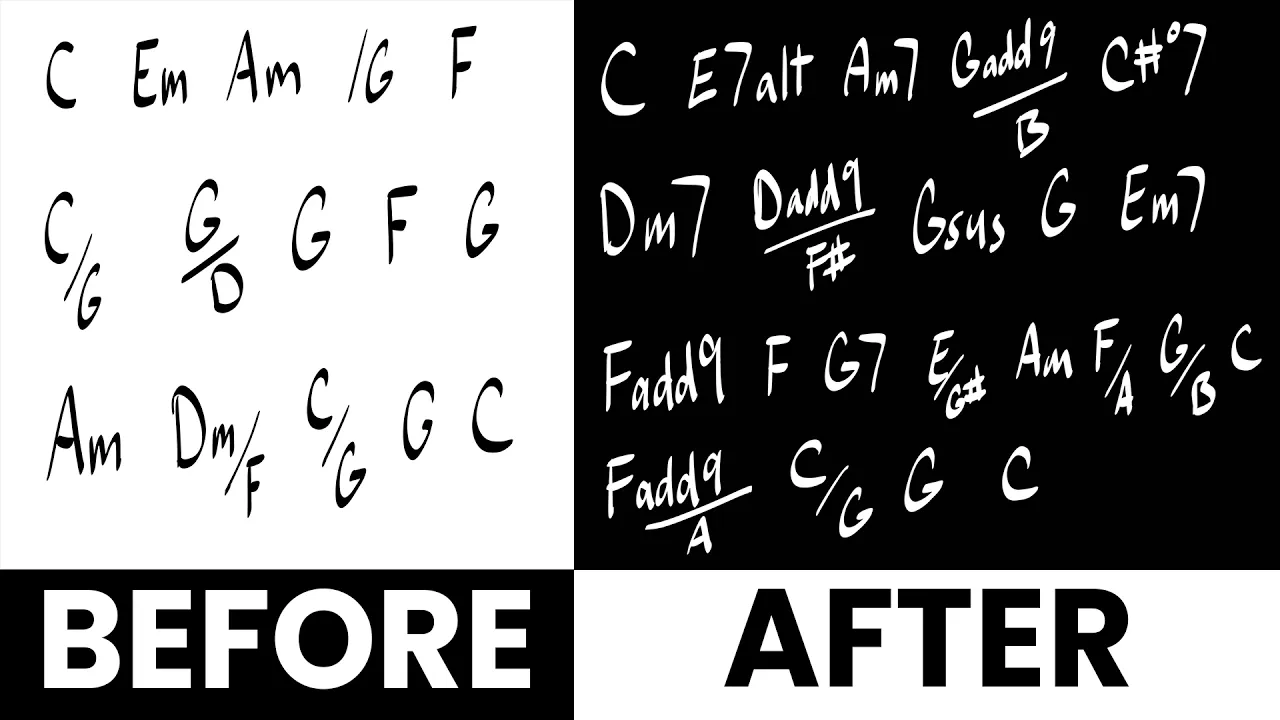
When writing harmony, focus on three key tools: register (which octave you play notes in, affecting density and clarity), chord function (how chords act within the key context rather than just their quality), and voice leading (treating each chord note as an independent voice with melodic logic). Understanding these big-picture concepts helps create more interesting chord progressions than focusing solely on individual voicings.
Writing Harmony at the Piano: Register, Function, and Voice Leading
Added:Basic music theory foundation, including major/minor scales, intervals, and key signatures.
Triad and seventh chord construction, including root position and basic inversions.
Introductory Roman numeral analysis and understanding of basic diatonic chord functions (Tonic, Subdominant, and Dominant).
Familiarity with the piano keyboard layout and standard grand staff notation.
Advanced voice-leading techniques, such as chromatic voice leading, voice exchange, and modulation.
Application of harmonic concepts to diverse piano textures, such as arpeggiation, stride, and open-voicing accompaniment patterns.
Integration of extended chords (9ths, 11ths, 13ths) and altered dominants into keyboard harmony.
Practical song arranging and reharmonization of existing melodies using register and voice-leading principles.
22.4K views1.6Klikes14:48Original Release: 2024-03-05
This video is for you.
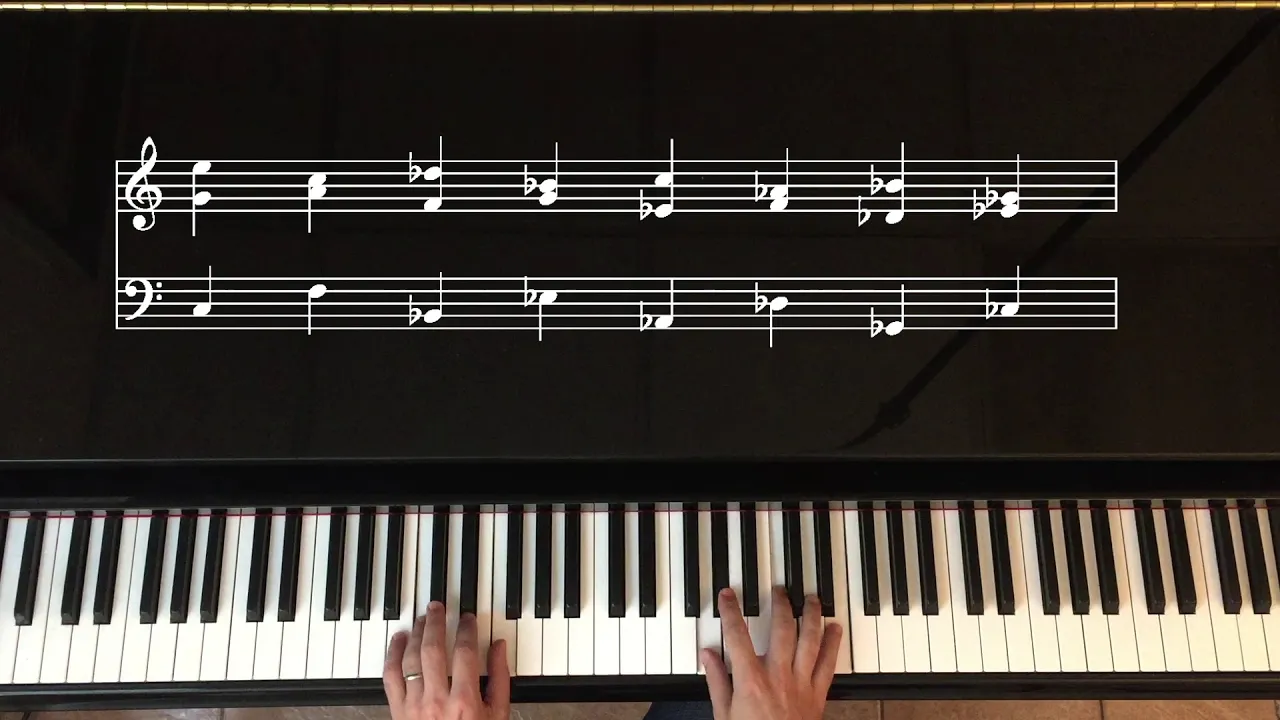
If you feel stuck writing simple chord progressions that sound like this because the styles of music that you like use more complex harmony like this.
A lot of folks come to me who are interested in writing harmony, like that Second example.
And they're framing things in terms of voicings.
So I released a video last week on the topic of juicy voicings, taking a single chord like this one and making it even richer and denser and more complex.
But I also pointed out that just thinking about voicings is like thinking the way to make a powerful argument is to use one really great vocabulary word.
And that's not what we care about.
We care about the entirety of how someone is communicating.
So ask yourself, do you want to know one juicy voicing or do you want to understand how to write more interesting harmony?
If you want the latter.
My goal today is to help you ask better questions about harmony.
Move beyond just thinking about individual chord voicings and start thinking about the more important big picture questions that make a chord progression sound the way that it does.
We'll look at three tools register chord function and voice leading.
First, let's talk about register and register refers to which octave you're playing a note in like all of these tools.
This matters not just if you're playing the piano.
You know, this applies to every instrument.
You can always play an E here or play it here.
And you especially have to think about this if you're trying to fit a lot of instruments together or in an arrangement or production.
So to demonstrate the power of register, listen to how differently I might play this example chord progression depending on which octave I'm in on the piano keyboard, you might have picked up on the difference.
Basically, things are getting denser as I move up the keyboard and to really understand how powerful this is, listen to how it sounds.
If I play the highest octaves voicings in the lowest octave, that's pretty gnarly, right?
And I didn't change anything about those voicings from when I played them up here.
I just moved them down a few octaves and they go from sounding kind of crystal in and lovely to sounding totally cluttered and muddy.
Register trumps everything else when it comes to how a chord voicing is going to sound.
And I see this all the time with students where they'll know some sort of chord voicing and they'll think that it doesn't matter where they play that on the piano keyboard, when in reality it can totally change the way that you might want to arrange a chord if you move things by just an octave.
Now, the reason behind this is actually based in the physics of a vibrating string.
There's something called the overtone series, and it comes into play.
Any time we hear a note played by an acoustic instrument like the piano.
When I played this note, we're actually not only hearing this lowest frequency, we're hearing a bunch of other notes contained within that note.
We're hearing the note one octave higher, the note an octave and a fifth higher, two octaves higher.
And so on.
And as we go up in the overtone series, the notes actually stop conforming to equal temperament tuning, which is definitely a topic for another video.
I love the overtone series and I think it's fascinating.
It can be a lot to wrap your head around when you're just trying to understand how to make good chord voicings.
So you could start with a basic rule of thumb that is taught in a lot of classic orchestration textbooks, but applies to every genre of music and ends up playing out in pop music as well.
It even plays out in the things that mixers and mastering engineers are thinking about.
The basic rule of thumb is to imagine your low note, your fundamental living somewhere around here, maybe somewhere two octaves below Middle C, and then to imagine the spacing of the overtone series going up from there.
Right?
What this means in practice is if you're in the bass register, if you're playing a bass instrument or you're really low down, you want to space things out by either a fifth or an octave.
As you move closer to middle C, you can space things out more in thirds and in fourths.
And as you move up the piano keyboard, you can get away with putting things really close together and they'll sound a lot more beautiful and less muddy and clutter than they would sound lower on the instrument.
You can always break this rule if you want to.
If you like the way this chord sounds, go ahead and put it in your piece of music.
You know, just because something sounds cluttered or muddy doesn't mean it isn't the right thing for a piece of art.
Sometimes what you want in a piece of art is for something to sound cluttered and muddy.
So remember, this is just a rule of thumb, and it can be a helpful starting point to kind of open up your ears to how things are changing as you move chord voicings around on the piano.
One last note while we're on the topic of register, if you're arranging something around a lead vocal, it's really helpful to know what register the lead vocal is in.
A lot of male singers will mostly live in this octave right below middle C, whereas female singers are often more in this octave right above middle C or maybe from this A to this A is a typical like alto range.
And especially with male voices, it's really common to think that you're singing a note here when actually that note I just sing is here an octave lower.
This was a revelation to me when I first started checking out the way things are arranged in classic studio orchestra recordings of Nat King Cole's music.
His voice is pretty low, so it would often be in this register right below Middle C.
So there are many times where you'll find this big gap in the orchestration, say, of the strings, where the celli and the bases might be below him.
Say His note is here, their note might be down here, and then the high strings won't come in again until up here.
So there's this big hole in this middle.
In the middle there's this big space where his vocal melody can go because the arranger wasn't just thinking about how the strings were fitting together.
They were thinking about the entire sound of the piece where his vocal was going to set in amongst everything else.
So if you're working with a vocal melody and you're trying to accompany it, you don't always have to leave a whole for it like that.
But it's good just to know where it is and it might help inform your arranging decisions.
Our second tool is chord function.
Now the function of a chord is how it's acting within the context of the key of a song.
And typically we think of chord functions by numbering the chords based on the scale of the song.
So if this song is in the key of C, we're starting on the two chord, then we play three as a dominant chord and six to as a dominant chord to some sort of five sets back to one.
I would argue that chord function matters more than chord quality.
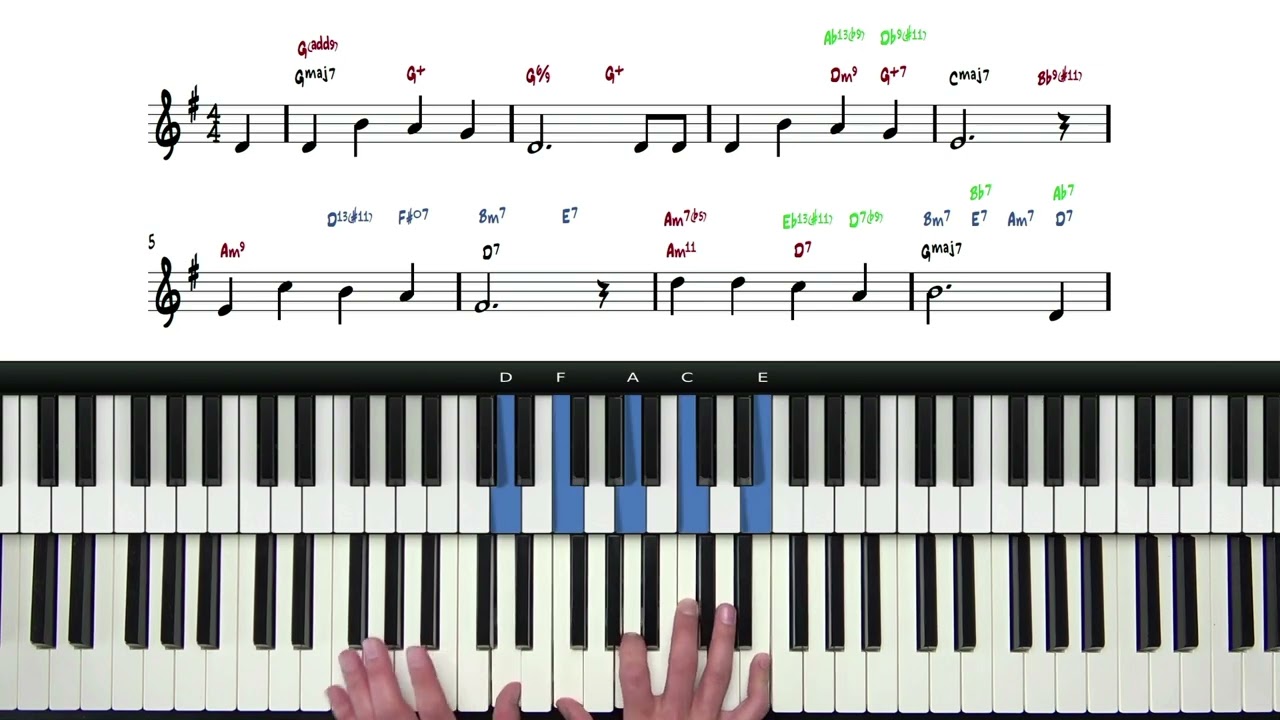
So for example, that second chord there is an E dominant seven chord.
I think it matters more to our ears that this is the three chord in our home.
Key played as a dominant chord than the fact that it's a dominant seven chord.
If we were in the key of a major, that E7 chord would sound totally different and it would sound like we belong in a different style, right?
E Dominant seven resolving to a major and the key of a major makes it sound like it could be written by Beethoven.
But if we have if we had this E seven in the context of this example chord progression I'm using, it sounds more like it.
This could be maybe a neo soul chord progression.
And that's because in this case it's acting as a secondary dominant, going to the sixth chord rather than just acting as the dominant in the home key of the song.
So if you want to get beyond very basic sounding chord progressions using the most commonly used chord functions for the key of a song, the first place to start is investigate other commonly used chord functions that don't belong in the key, especially ones that are commonly used in styles of music that you like.
I'd say a really great place to start is secondary dominance, and in practical terms, you can start exploring secondary dominance just by turning the minor chords that belong in any major key into major chords.
Let me show you what I mean In the key of C D minor, E minor and a minor belong in the key.
Try turning them into major chords or dominant chords.
And there are lots of examples of pop songs in different genres that use these chord functions.
A lot of times they act as secondary dominance, which means they'll resolve down a fifth, you know, D Major will resolve to a G chord, E major will resolve to in a minor chord.
A major will resolve to a D minor chord.
But there are also exceptions to that too.
Two dominant often resolves to four, and it really depends on the style of music.
This also plays out in the importance of chord extensions.
You know, you could look at this E7 chord and say, yeah, that's a really juicy sounding chord because it's a sharp nine flat 13 chord.
But big picture, it's more that the reason I'm using a flat sharp nine and a flat 13 are that they belong.
Those notes belong in the home key of the song.
And so they make sense against this dominant chord in a way they might not in another circumstance.
So start by thinking about the chord functions of the chords are playing in the key of the song, and then you can move from there to adding in chord extensions.
That sound beautiful.
And our last topic is voice leading.
I often tell my students think voices, not voicings.
What does this mean?
Well, you can look at a chord and imagine that you have four different singers singing each of these notes as you move from one chord to the next.
Each of those singers needs to have a melody that will make sense.
And so this can lead you to make very different decisions than you would make otherwise.
You might also be surprised by what you can get away with in terms of just looking at single chord voicings.
If each voice has some sort of internal logic to it, then check this out.
I'm just going to give an assignment to the top voice in these chord voicings as I play through this example chord progression, this top voice.
It's job is just to go up and I'm actually going to have it mostly go up in half steps and listen to how this sounds.
That really sounds like it makes sense, but check it out.
This was one of the voicings I ended up using that is really dissonant.
That's about as dissonant as it gets because it includes this interval, a minor ninth, which I believe is the most dissonant interval in music.
And if you just sat down at the piano and started doing this, your audience is going to say, okay, that's very dissonant, you know, And they might be curious what's going to happen next.
But putting it in the context of one line that has this consistent logic to what's what it's doing, our ears will accept all sorts of things as not sounding particularly dissonant.
You can't ignore good voice leading and still write really great sounding chord progressions. A lot of guitarists kind of write this way.
There's just a chord shape that they'll move around.
And so you have kind of parallel, parallel parallel movement of all the voices and it can sound great, but, you know, in traditional part writing, this idea of good voice leading and each individual voice in a chord, having a good melody, moving from one chord to the next, this was a really, really important idea traditionally for composers and arrangers.
So if you're ever in a circumstance where you're writing for multiple instruments or if you just want to open up your MIDI roll and look at what's happening to each of the notes in your chords, you might find that this thinking of voices rather than voicings leads you to better sounding chord progressions.
And if you're not looking at a MIDI role or sheet music, it can be a little overwhelming to try and keep track of individual voices when you first get started.
So my suggestion is just see if you can restrict yourself to using the same number of notes in every chord.
That's a good starting place.
If you just say, Okay, every single chord that I play needs to have four notes in it, and that makes this thought experiment work that it's like we have four singers who are all continuing to sing throughout, and by doing that, I force myself to track where each of those voices was going as I moved through the chord progression.
So take your time with that, because that concept is definitely the hardest to put into action.
If you're an improvising musician who's not writing down what you're doing.
Okay, that's a quick overview of these three concepts.
And as I said, my goal with this video is to help you ask better questions about harmony, to move beyond just thinking about individual voicings and to look more big picture in terms of how you're writing harmony of your instrument.
I may do a deeper dive on some or all of these concepts in the future, so if you're curious about that, subscribe to my channel.
I'm Ted with Piano Fluency.
Thanks for joining me.
Up Next
22:06
Music Theory: Chord Voicing and Voice Leading for Four-Part Harmonies
@SignalsMusicStudio
1.4M views•2022-02-14

10:20
Mozart's Musical Dice Game Explained: History, Rules, & Fun
@webpianoacademy
5K views•2023-03-13

47:36
Understanding Diatonic 7th Chords in Major Keys | Music Theory Tutorial
@GracieTerzian
54.7K views•2022-03-02
10:49
Understanding John Coltrane's Giant Steps: A Music Theory Analysis
@Vox
10.4M views•2018-11-12
Related Study Plans & Knowledge Roadmaps
Structured learning paths in Music Theory
music-theory
Composing Galant Music: Partimento & Schemata
01Foundations of Figured Bass and Keyboard Harmony
02The Rule of the Octave (Regola dell'Ottava)
03Galant Schemata: The Building Blocks of Form
+ 2 more learning modules
30h5 modules
Explore Roadmap
music-theory
Decoding Overtone Series: Tuning & Drone Music
01Acoustic Foundations: The Physics of the Overtone Series
02Tuning Systems: Equal Temperament vs. Just Intonation
03Microtonality and Spectralism: Beyond Standard Pitches
+ 2 more learning modules
24h5 modules
Explore Roadmap
music-theory
Impressionist Harmony: Scales, Planing & RPGs
01Foundational Music Theory: Keys, Intervals, and Seventh Chords
02Impressionist Color: Chord Planing and Parallel Harmony
03Whimsical Textures: Pentatonic Cascades and Whole-Tone Scales
+ 1 more learning modules
14h4 modules
Explore Roadmap
music-theory
Negative Harmony: Axis Reflection in Indie Pop
01Music Theory Foundations: Scales, Intervals, and Triads
02Functional Harmony and the Circle of Fifths
03Demystifying the Negative Harmony Axis Reflection
+ 2 more learning modules
16h5 modules
Explore Roadmap