















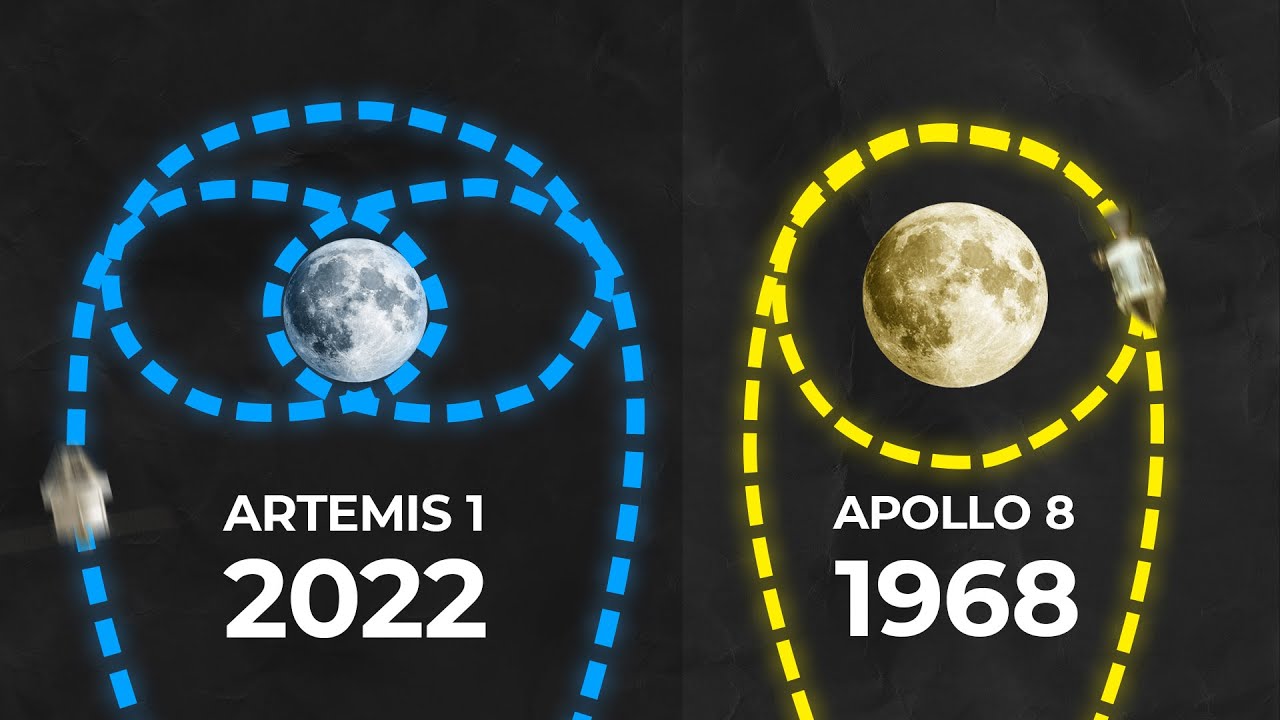

![KSP - Tutorial - Kerbin Space Academy - #08 Swing-By und Oberth Effect ( deutsch/german ) [1.0.5]](https://i.ytimg.com/vi/vJdYdSOe7zM/maxresdefault.jpg)










A gravity assist maneuver allows a spacecraft to increase its speed by flying by a moving planet, where the spacecraft gains velocity equal to twice the planet's velocity (VS2 = VS1 + 2*VP1) while the planet's velocity decreases by a negligible amount due to the spacecraft's much smaller mass.
Gravity Assist Speed Calculation: Physics Explained
Added:Law of Conservation of Linear Momentum and elastic collision theory
Conservation of Mechanical Energy (Kinetic and Gravitational Potential Energy)
Galilean Relativity and reference frame transformations (planet-centric vs. heliocentric frames)
Newton's Law of Universal Gravitation and gravitational field basics
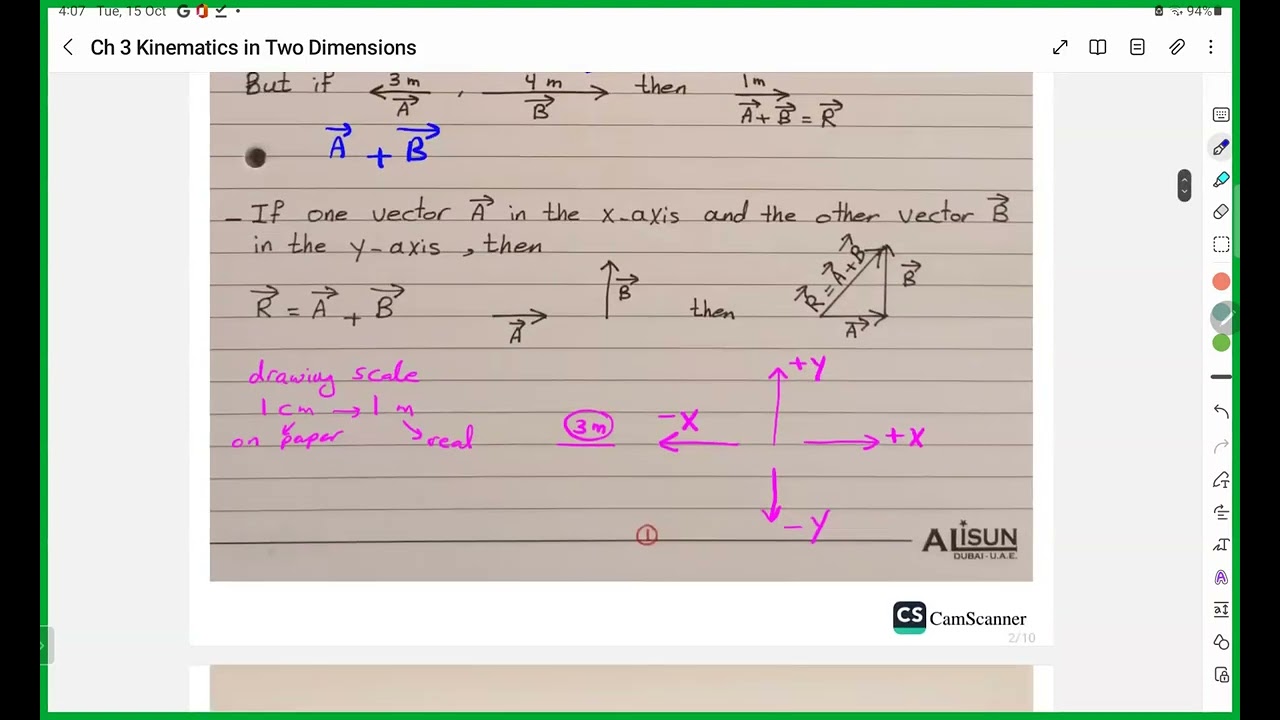
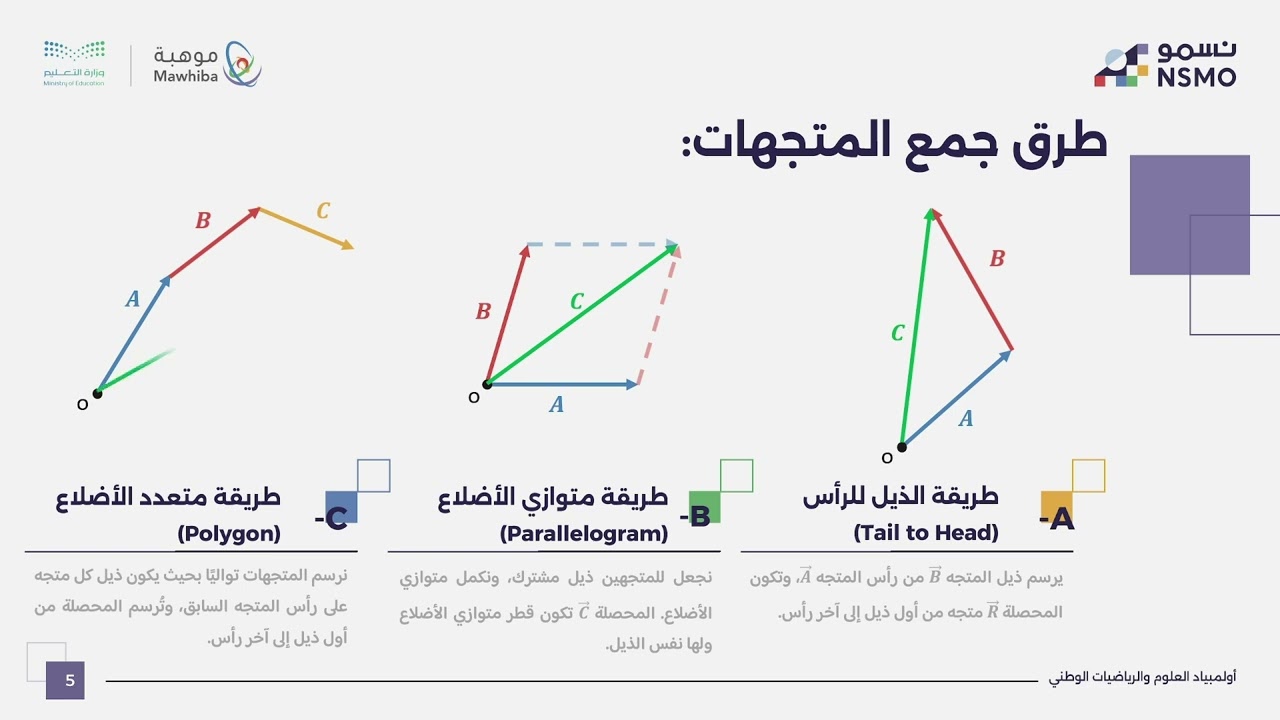
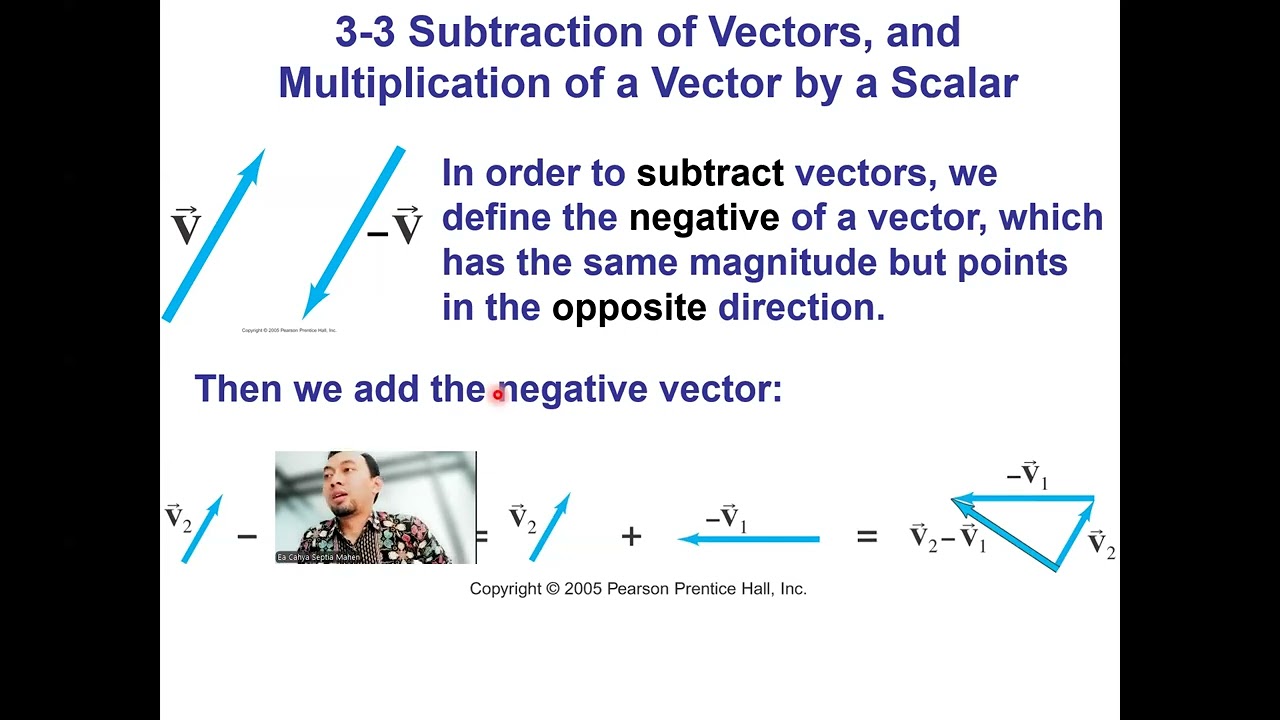
Vector addition and kinematics in two dimensions
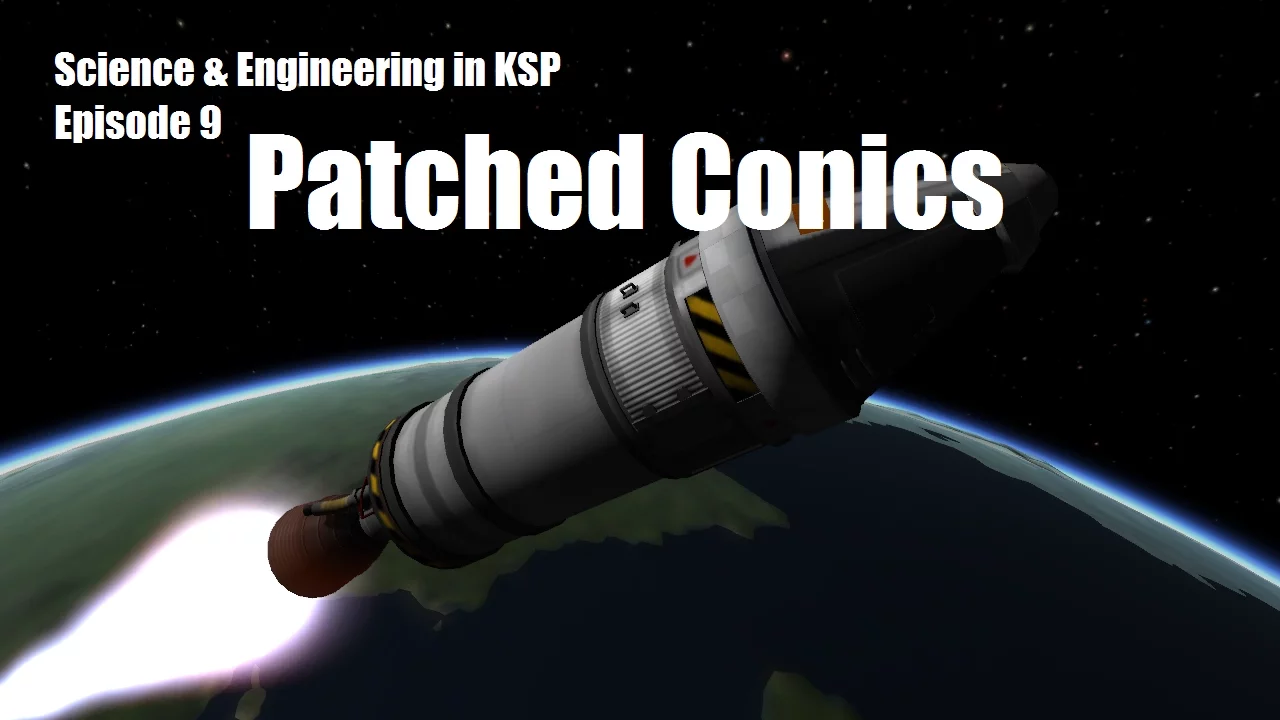
Hyperbolic trajectories and orbital mechanics (patched conics approximation)
The Oberth Effect and powered gravity assists for maximizing spacecraft efficiency
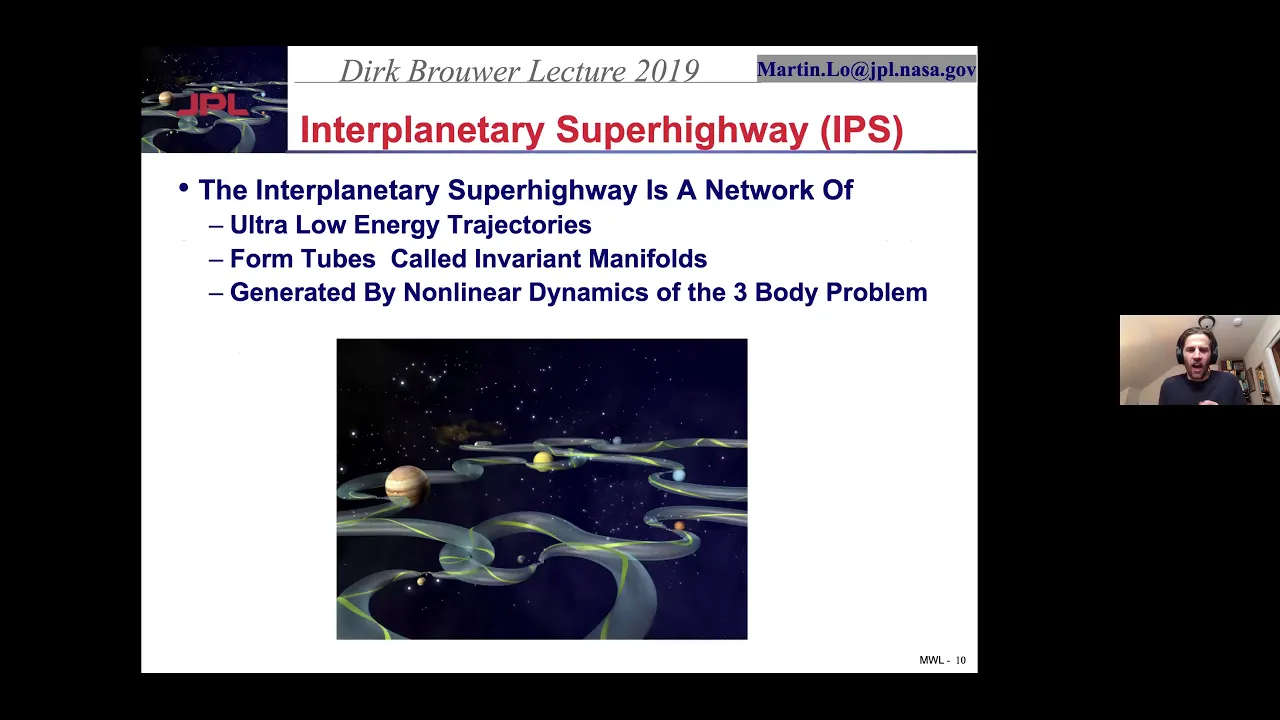
Mission design analysis of historic spaceflights (e.g., Voyager, Cassini, Parker Solar Probe)
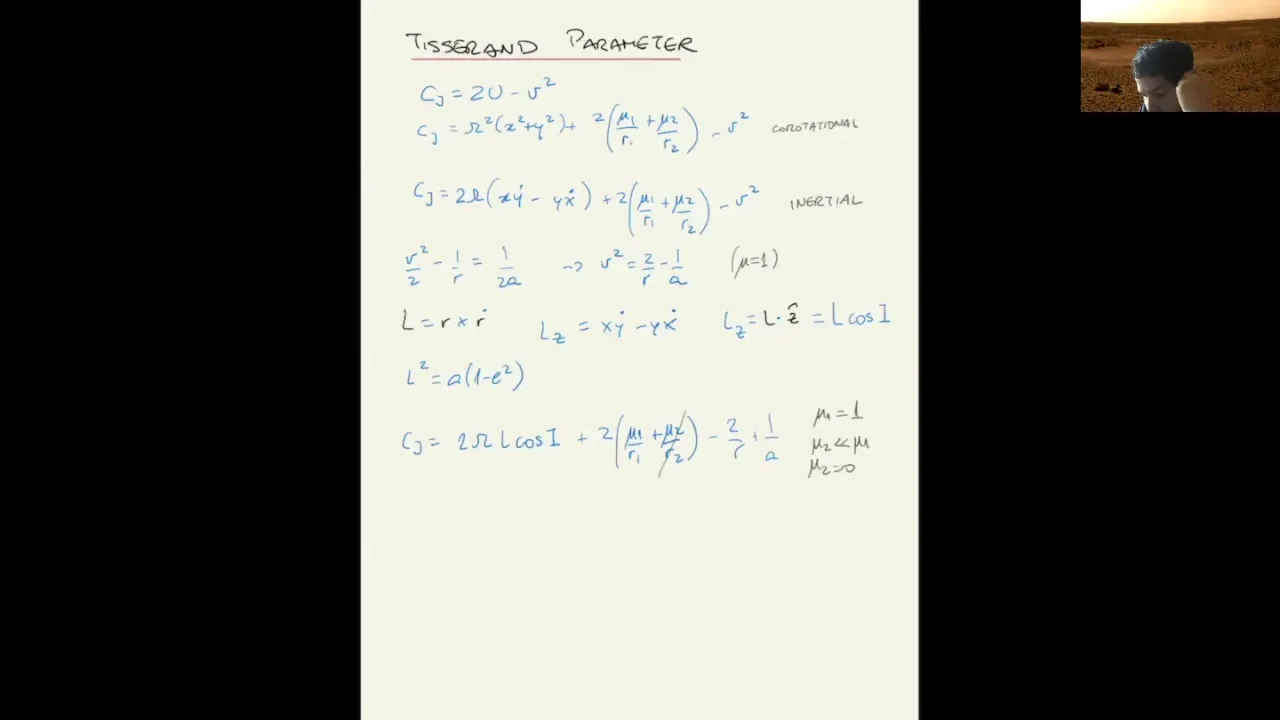
Tisserand's Parameter and its use in identifying gravity assist opportunities
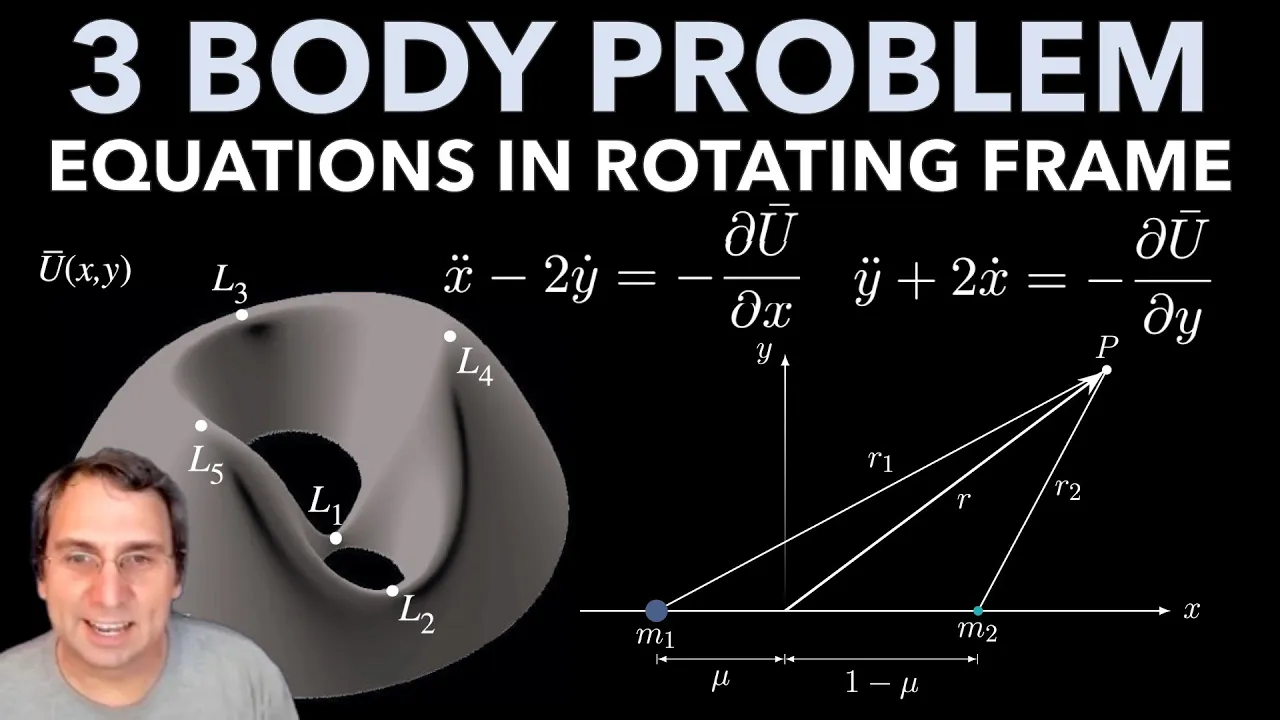
The Three-Body Problem and chaotic dynamics in gravitational systems
621 views16likes5:09Original Release: 2025-06-09
Gravity assist. It is a flyby maneuver around a moving planet to gain an increase in the speed of the spacecraft.
In this video, we will calculate how much speed the spacecraft can actually get. Here is the setup of the problem.
The positive direction of the coordinate system is going right. At T1, the spacecraft has a velocity of VS1 and it is going left. Its mass is MS. Also at T1, the planet has a velocity of VP1 and a mass of MP. At T2, the spacecraft completes the flyby and it has a velocity of VS2. Its mass does not change and it is still MS. The planet at T2 has a velocity of VP2. Its mass does not change and it is still MP. To calculate the speed of the spacecraft and the speed of the planet at t2, we need to write out the governing equations. Classical physics tells us that the energy between the spacecraft and the planet should be conserved. So we have the equation of the conservation of energy. We can also write out the equation of the conservation of momentum. Now we have two equations and two unknowns which are v2 and vp2.
Theoretically, we can calculate their values, but it's not quite straightforward. We need to use some tricks. Let's rearrange equation 1.1 and remove the 1/2 on both sides of the equation. Then do factoring operations to get equation 1.3, which is the key of the trick. Now, let's work on equation 2.1 and do a simple rearrangement to get equation 2.2. Then factor out the mass to get equation 2.3.
Now, if you compare equations 1.3 and 2.3, you will notice that they have two terms in common. By simply dividing equation 1.3 by 2.3, we get equation 1.4. Then we want to multiply equation 1.4 with the mass of the planet to get equation 1.5. Then by subtracting 2.2 from 1.5, we can eliminate VP2 and get equation 1.6.
In this equation, the only unknown is V S2, which means we have solved VS2. Now, let's just rearrange the equation to only have VS2 on the left side of the equation. This is the speed of the spacecraft at T2. Everything else on the right side of the equation is known. We will discuss this equation a bit more later. But before doing that, let's calculate the speed of the planet as well. The calculation is similar. We just need to start from equation 1.4. The difference here is to multiply equation 1.4 with MS and we get equation 1.5 prime. Then we can add equation 1.5 prime with 2.2 to get equation 1.6 prime. In this equation, the only unknown is VP2, which means we have solved VP2. Let's just rearrange the equation to have VP2 on the left side of the equation only. Everything else on the right side of the equation is known.
Now we have solved both the speed of the spacecraft and the speed of the planet.
But the equations look complicated.
Let's see whether we can simplify them.
We know that the mass of the spacecraft is much much smaller than the mass of a planet. If you divide MS by MP, it is almost zero. We rewrite the equation like this. Here we simply divide both the denominator and numerator by MP. We know MP / MP is 1 and MS / MP is 0. We rewrite the equation and get the final version of the equation for the speed of the spacecraft. We can also simplify the equation for the speed of the planet.
The trick is the same, dividing both the denominator and numerator by MP. Then we get our final version of the equation for the speed of the planet.
Looking at the simplified equations, it tells us that the speed of the spacecraft increases. It's the sum of its initial speed and twice the speed of the planet. While the speed of the planet virtually does not change, its speed actually decreases by a tiny tiny bit. If you look at the right side of the full equation for the speed of the planet, there is a negative term which is very very close to zero, but not exactly zero. This means the planet loses a tiny bit of its energy. This energy is transferred to the spacecraft.
So basically by flying by the planet, the spacecraft interacts with the gravitational field of the planet and extracts energy from it. Now let's bring back the images and look at the animation again. This flyby maneuver increases the speed of the spacecraft.
But what if the planet is moving in the other direction? Well, we can simply add the negative sign in the equation for the speed of the spacecraft. This new equation tells us that by flying by the planet this time the spacecraft will have its speed decreased. Now you have it. These are the two simple cases of gravity assist maneuver.
Up Next
25:13
Rotating Frame Equations in the CR3BP: Derivation | Topic 3
@ProfessorRoss
5.5K views•2022-06-15

12:53
21cm Hyperfine Transition in Neutral Hydrogen: Radio Astronomy Basics
@AaronRobertParsons
12.4K views•2011-10-13

32:32
NMR Spin Physics I: Zeeman Effect, Resonance Condition & Larmor Frequency
@nptel-indianinstituteofsci8064
2.3K views•2024-01-17

27:14
Entropy and the Second Law of Thermodynamics Explained
@veritasium
27.5M views•2023-07-01
Related Study Plans & Knowledge Roadmaps
Structured learning paths in Physics
physics
Nuclear Physics (Decay, Fission & Reactors)
01Atomic Structure and the Binding Force
02Radioactive Decay and Half-Life
03Nuclear Fission Mechanics and Chain Reactions
+ 2 more learning modules
12h5 modules
Explore Roadmap
physics
Soft Matter (Polymers, Colloids & Rheology)
01Foundations of Soft Matter & Thermal Forces
02Polymer Physics and Macromolecules
03Colloids, Surfactants, and Self-Assembly
+ 2 more learning modules
38h5 modules
Explore Roadmap
physics
Analytical Mechanics: Lagrangian & Hamiltonian
01Mathematical Foundations: Calculus of Variations
02From Newtonian Mechanics to Constraint Dynamics
03The Principle of Least Action & Lagrangian Mechanics
+ 3 more learning modules
28h6 modules
Explore Roadmap
physics
General Relativity (Spacetime & Cosmology)
01Foundations of Relativity: Special Relativity
02The Geometry of Spacetime: Equivalence Principle & Curvature
03Einstein's Field Equations: The Mathematics of Gravity
+ 2 more learning modules
55h5 modules
Explore Roadmap