
















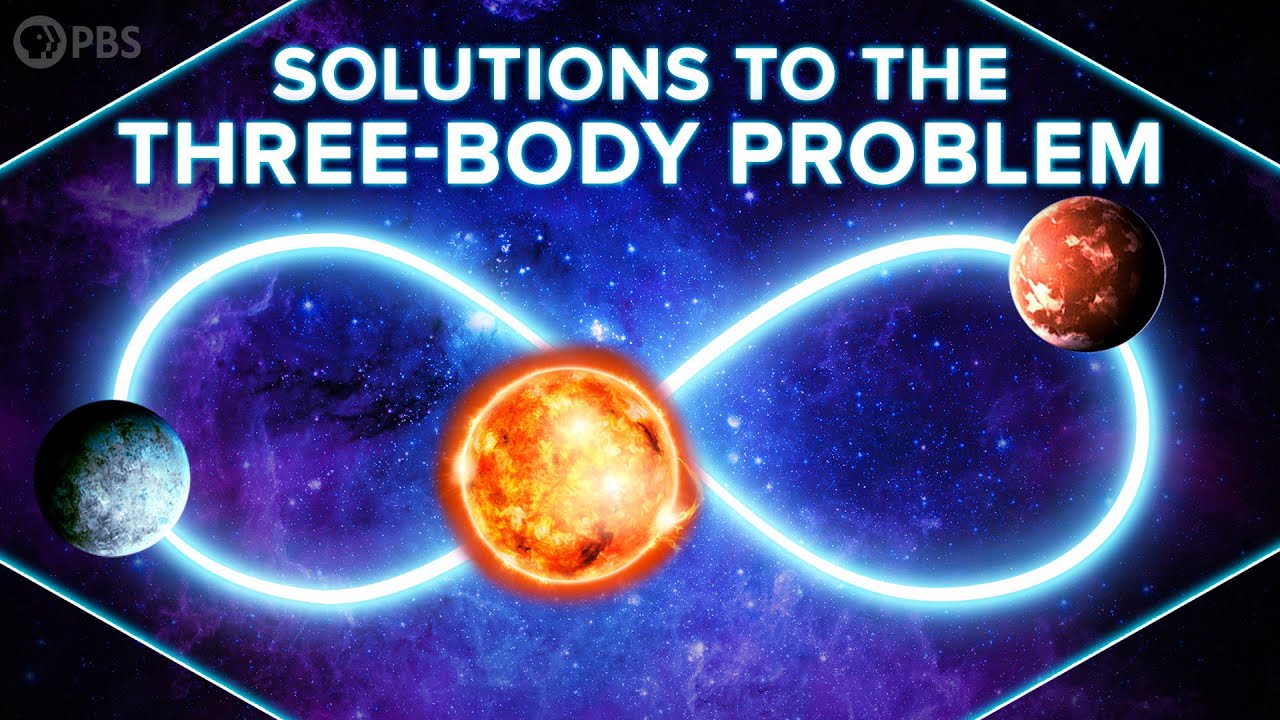
The patched conic approximation is a simplified method for calculating spacecraft trajectories between celestial bodies by dividing space into regions of influence around each body, where within each region the spacecraft is treated as being under the gravitational influence of only that body; this involves calculating the transfer orbit from the initial orbit, determining the patch point where the spacecraft enters the moon's sphere of influence, transforming velocities between reference frames, and computing the resulting hyperbolic trajectory around the moon, which typically results in an unbounded orbit requiring a correction burn to achieve a stable lunar orbit.
Patched Conic Approximation for Mun Trajectories | Orbital Mechanics KSP
Added:Understanding of Kepler's Laws of Planetary Motion, particularly how conic sections (ellipses, parabolas, and hyperbolas) describe orbital paths.
Familiarity with the concept of a Sphere of Influence (SOI) and how gravitational dominance shifts between celestial bodies.
Basic knowledge of the Vis-Viva equation and how it relates orbital speed, distance, and semi-major axis.
An understanding of basic Hohmann transfer maneuvers and how phase angles align for orbital rendezvous.
Design of gravity assist (slingshot) trajectories using patched conic approximations for interplanetary missions.
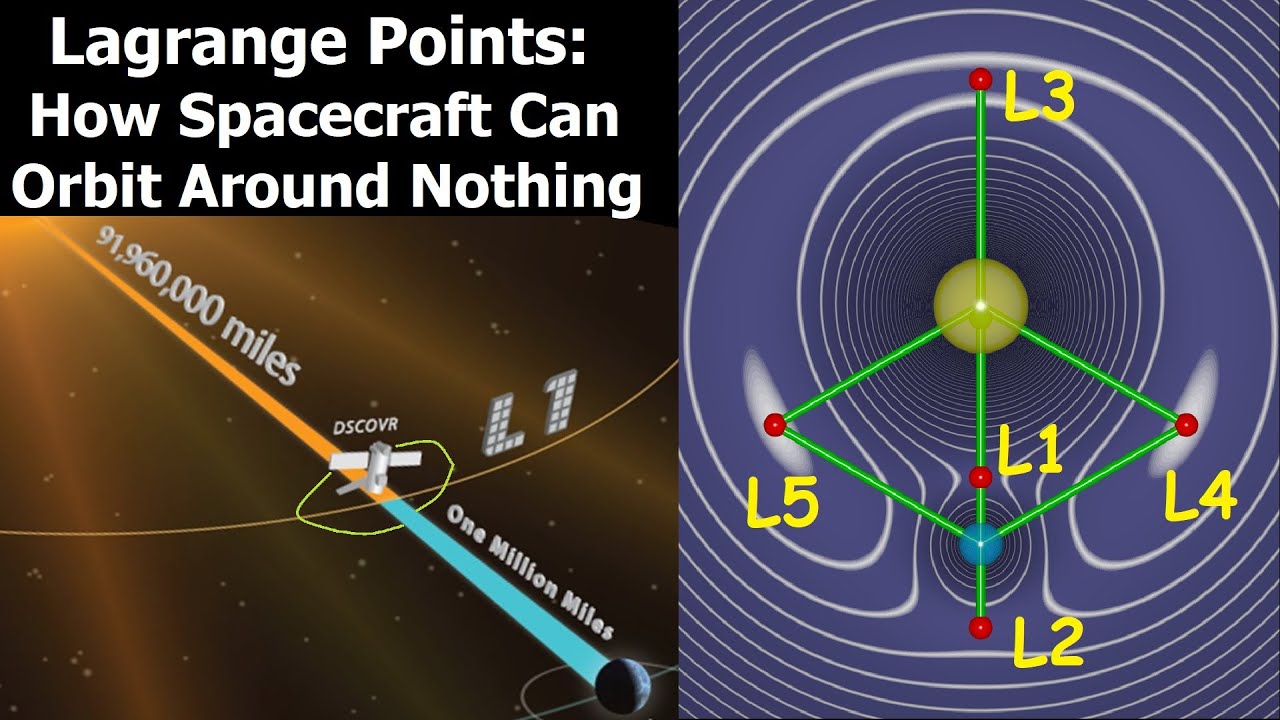
Transitioning from simplified two-body patched conics to the Circular Restricted Three-Body Problem (CR3BP) to understand Lagrange points.
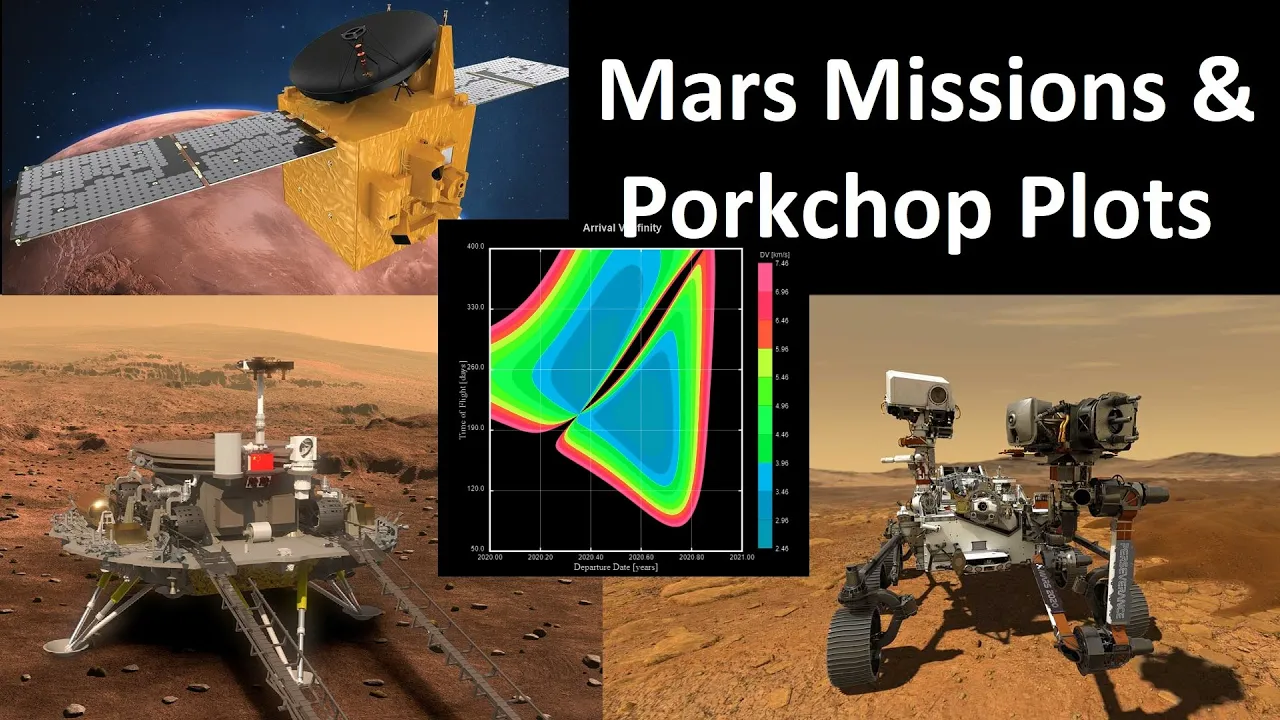
Calculation of interplanetary launch windows and trajectory optimization using porkchop plots.
Introduction to numerical orbit propagation and n-body simulations, which replace analytical patched conics in real-world space agency mission planning.
4.5K views87likes23:17Original Release: 2017-03-12
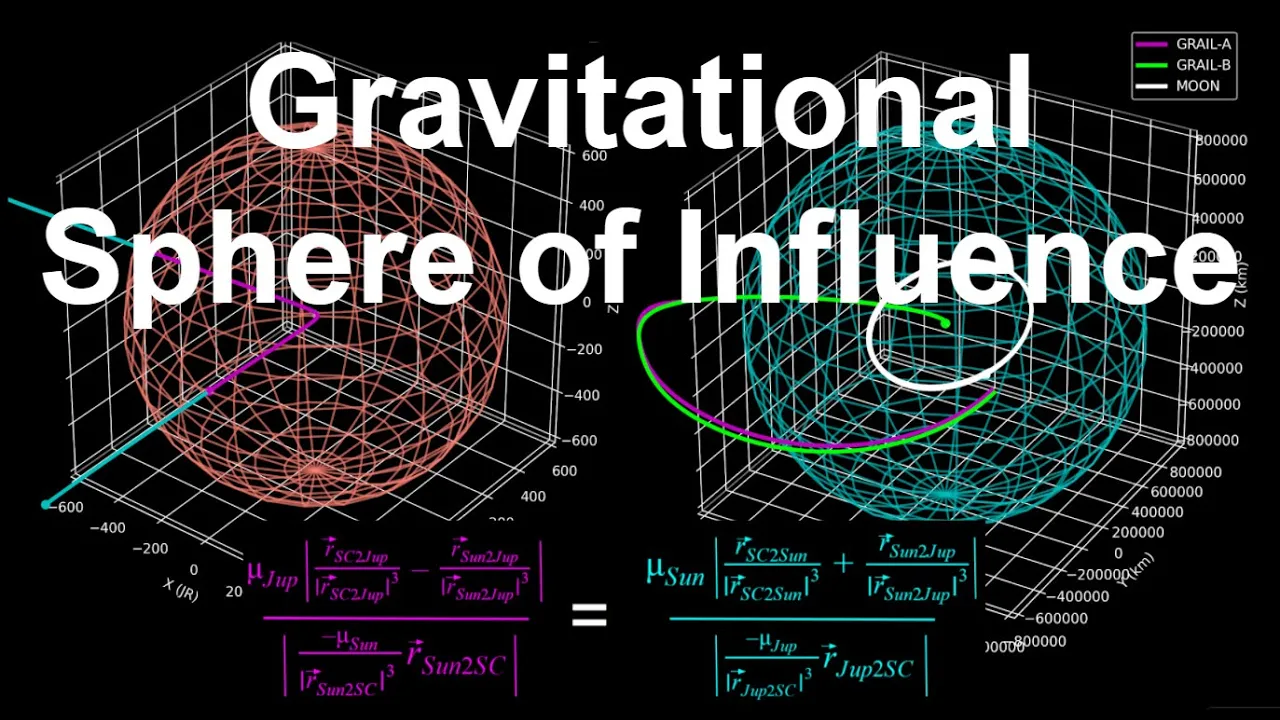
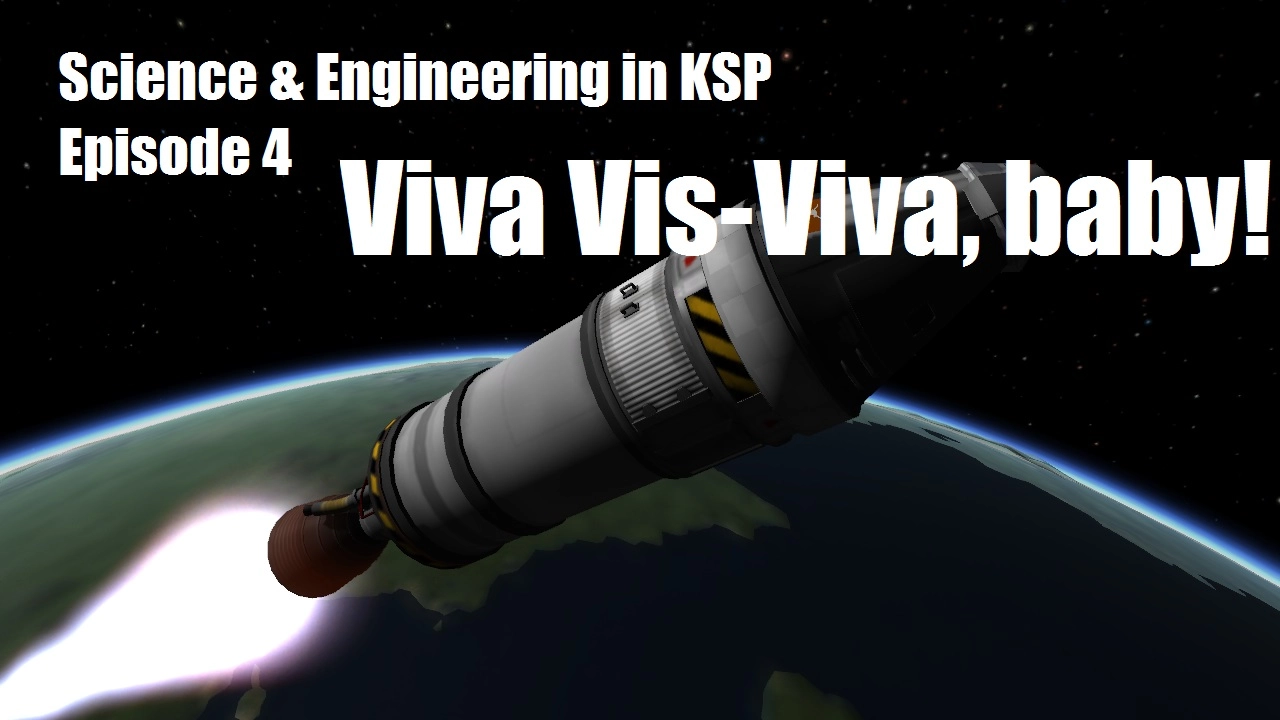
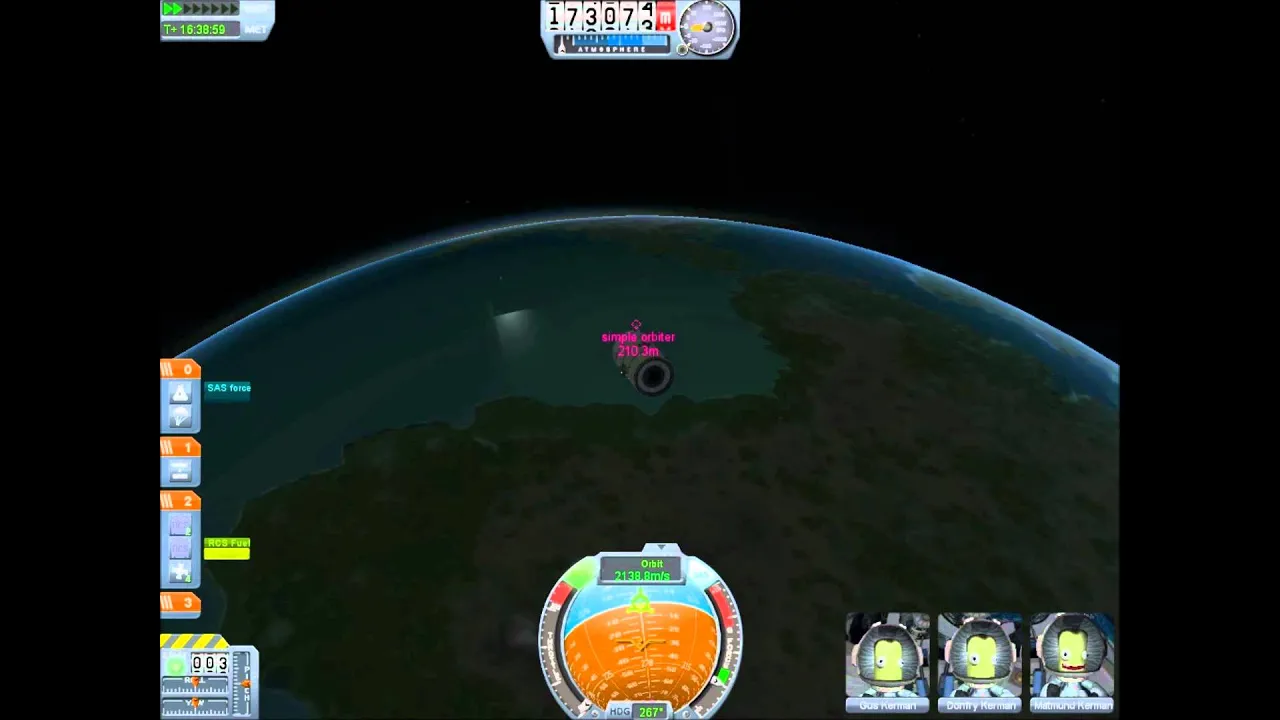
hey y'all welcome to science and engineering at KSP I'm your host Andy Leonard and today we're gonna talk about the patched conic approximation and we're gonna use it to finally break out of kerbin orbit and get us to the moon so the first thing we're gonna talk about is the sphere of influence and the sphere of influence is going to be pretty helpful in figuring out patch conics the sphere of influence is basically this imaginary region in space around a planet or a moon pretend that's kerbin right there where a spacecraft is only being acted upon by the planet in terms of gravitational forces now we've talked a little bit about perturbations and stuff like that but when you talk about things in terms of sphere of influence you basically sidestep the whole problem of perturbations and you just assume that any spacecraft in any orbit in this boundary is only going to be acted on by kerbin so here we have the moon and the moon has a smaller sphere of influence as we'll find out the sphere of influence is proportional to mass and so what patched conics is all about is basically taking an orbit from one sphere of influence to another and then once you cross this boundary here from this sphere of influence into this one your orbits gonna change somehow the geometry is going to change and you're gonna have a different type of orbit because of the different gravitational parameter and considerations like that so how do we find the sphere of influence well the radius of the sphere of influence is given by this equation we take the semi-major axis and we multiply it by the mass of the planet or moon and divide it by the mass of the Sun or the planet the moon is orbiting and we take that and we raise it to the 2/5 power so for kerbin and that's going to give us a spirit of influence radius of 84 million one hundred fifty nine thousand one hundred and seven meters the radius of the sphere of influence of the moon is 2 million four hundred twenty nine thousand five hundred seventy one meters so when we're within about two thousand kilometers of the moon we're gonna switch over into the moon sphere of influence alright so for beginning a patched conic analysis we need to draw a little schematic of kerbin and the moon and we need to design a trajectory that will get us from our initial orbit around kerbin and bring us out and cross the moon's sphere of influence so with our initial radius and initial velocity we can and our initial flight path angle but for the example we'll do we'll assume a flight path angle of zero meaning will be burning at Perry apse and so with that information we can figure out our radius from kerbin to the patch condition here and we need this little angle lambda 1 here which is the angle between the line joining carbon in the moon and the point where we enter and if we zoom in and take a closer look at the patch condition we can see how our velocity is going to change so this VM here is the velocity of the moon as it as it's orbiting kerbin and then if we come into the patch condition with this initial velocity v1 what we do as soon as we cross that boundary is we subtract the moon's velocity so we end up with our velocity vector pointing this way and this angle epsilon 2 here is the angle that were pointing at with respect to the moon so an epsilon 2 of 0 we would we would be pointing directly at the moon and aiming straight for it I know a lot of this seems arbitrary right now like you know what is this feat what do we do with this v1 this gamma 1 this V 1 minus gamma 1 so let's just jump straight into an example ok so first things first we need to find out what our transfer orbit is going to look like we're gonna start off in about a hundred kilometer altitude circular orbit so that means our radius is going to be 700 kilometers and what we want to do is we want to raise our app Oh apps and bring it out to about the orbital path of the moon here so we want our transfer orbit to look something like this with the Apple apps out here but let's not use the semi-major axis of the moon as our Apple apps let's add in 240 kilometers so we'll have an apple apps distance of 12,000 240 kilometers now I added in 200 kilometers because that's the radius of the Moon and I had it in 40 kilometers because we don't want to hit the surface and we won't end up hitting the surface with this but it's just kind of a random number you have you have a considerable bit of leeway when you're choosing your Apple apps distance four-patch conic trajectory so anyway that means that our semi-major axis is going to be equal to 12 thousand 240 kilometers plus seven hundred kilometers over two and that gives us a semi-major axis of 6 million 470 thousand meters now our velocity at Perry apps after we've created this transfer orbit is going to be given by mu times 2 over R naught and we'll call or not the 700 kilometer distance here minus 1 over a and that's going to be equal to three thousand eighty nine point four meters per second and now what we want to do is we want to find some of the other parameters of this transfer orbit like the specific mechanical energy and the specific angular momentum so for the energy we find the energy is equal to perry Epps philosophy squared over two minus mu over the initial radius and we find that we have an energy of negative two hundred and seventy two thousand nine hundred and forty six point six seven seven joules per kilogram and for our angular momentum since we don't have a flight path angle here where we're burning at perry apse our angular momentum is going to be given by our v and that is going to be two billion one hundred sixty two million fifty eight thousand five hundred and eighty thousand sorry meters squared per second so now that we have this information let's redraw the schematic we saw a minute ago just to remind ourselves with what's going on here we have this this is the distance between carbon in the moon and we have the sphere of influence here and we have our new radius that's going to be created by our transfer orbit r1 so we have to pick this value of lambda one here that's going to be something that we're free to choose and we'll just pick lambda 1 equals forty degrees then we can find r1 using the law of cosines where r1 is equal to d squared plus the sphere of influence around the moon squared minus 2 times D times the sphere of influence radius times the cosine of lambda one and we take the square root of all of that and when we do that we find that our radius with respect to kerbin when we're about to enter the moon sphere of influence is ten million two hundred fifty eight thousand four hundred and ten meters and then we can find the velocity by taking the square root of two times the energy of the orbit plus the gravitational parameter of kerbin over the radius we just found and when we do that we find that our velocity there at at the entrance to the sphere of influence is three hundred and seventy seven point six seven meters per second now let's find the flight path angle as we're entering the sphere of influence and the flight path angle is given by the arc cosine of the angular momentum over the radius and velocity and when we do that we find that this angle is going to be fifty six point zero seven degrees now let's figure out that angle gamma 1 gamma 1 is just the arc sine of the sphere of influence radius of the moon over the radius that we have when we're entering the sphere of influence times the sine of that angle lambda 1 and doing all that we get that we have eight point seven five six degrees and let's go ahead and let's convert this to radians real quick because we'll need it in radians in a second this is going to be zero point one five to eight radians now we need our true anomalies for this orbit about kerbin so we can say that our initial true anomaly was zero right because we're firing at Apple apps we fired it Apple apps and raised our Perry apps directly above us but for our true anomaly at arrival to the sphere of influence we find that by taking the arc cosine of the semi lattice rectum minus r1 over r1 e now let me check here I don't think we did the semi lattice rectum or the eccentricities that's okay we can do it right here the semi lattice rectum is going to be equal to the specific angular momentum squared over mu and that's P and that equals 1 million three hundred and twenty four thousand meters and the eccentricity here is going to be given to us by one minus P over ei we'll take the square root of that and that'll give us an eccentricities of zero point eight nine one eight so now that we know our semi lattice rectum and our eccentricity we plug them into this equation here and this is not FINA there are theta naught this is theta one and theta one is going to be 167 point five seven degrees or two point nine two four six radians what this means is that starting here if we fire here when we create our parry apps with respect to kerbin we'll be kind of out here writing so not quite 180 degrees around from where we started but pretty close and now we need to know the time of flight because we need to know when to perform the burn to create the transfer orbit and get us out there because it doesn't matter how on target we are as far as the Apple apps is concerned if it's not in the right position right so in order to talk about this we need to introduce this new parameter called the eccentric anomaly and it is represented by the letter capital e and the capital e is equal to the arc cosine of the eccentricity plus cosine of the true anomaly over 1 plus X centricity cosine true anomaly now if we have a true anomaly of zero this all kind of cancels out and this is zero but four so e zero is zero e one if we plug in this value of true anomaly here we get that our eccentric anomaly is equal to 131 point zero four degrees or two point two eight seven radians and then we can get our time of flight by taking the square root of a cubed over mu of kerbin and multiplying it by eccentric anomaly minus e sine eccentric anomaly - the initial eccentric anomaly - II signed initial eccentric anomaly and of course we didn't really need this second term here because this all cancels out and when we when we do this math we find that our time of flight is going to be fourteen thousand one hundred and thirty-seven point four three seconds and what are we going to do with this information well we have to multiply it by the angular speed of the moon and we find the angular speed of the moon by taking the period which is equal to one hundred thirty eight thousand nine hundred and eighty four seconds and dividing it into two pi so we basically do two PI over T equals the angular velocity of the moon which is equal to four point five two zero eight times ten to the negative five radians per second and now finally we're ready to compute the phase angle that we need on departure so that's gamma naught and that's going to be equal to theta 1 minus theta naught minus gamma 1 minus Omega n times time of light remembering to keep everything in radians when we do all that we get a angle of two point one three two six seven radians and that is equal to 122 point 19 degrees so that's going to be the angle that we're behind the moon by when we fire our engines and kick up our Apple apps and intercept the moon now let's move on and talk about some conditions at the patch condition again using the law of cosines we find that our velocity with respect to the moon v2 from that schematic we had earlier is going to be equal to v1 plus the velocity of the moon both squared minus 2 times v1 times VM times the cosine of that weird angle that v1 minus gamma 1 and we take the square root of all of that business and when we do that we get that our v2 oh uh by the way ya VM if we do 2 pi D over T we get that the velocity of the moon is 542 point five meters per second so plugging that all in we get that our velocity just after crossing over into the moon sphere of influence is going to be equal to three hundred and ninety-eight point nine meters per second and we can find that angle epsilon two by taking the arc sine of the moon velocity over velocity just after entry times the cosine of that angle lambda one and we subtract the geocentric velocity over the moon entry velocity and we multiply that by the cosine of lambda one plus gamma 1 minus V one and doing all that we get that our entry angle here is going to be seven point two eight degrees and now we're finally ready to move on and talk about the parameters of our final orbit about the moon we can find the specific mechanical energy associated with the orbit by taking v2 squared over 2 minus the gravitational parameter of the moon over r2 which is just going to be the sphere of influence radius and the gravitational parameter of the moon mu sub M is six point five one three eight four times ten to the 10 and plugging that all in we find that our specific mechanical energy is fifty two thousand seven hundred and forty-nine point nine joules per kilogram and that should look weird to you we've never seen that before we've never seen a positive value of the specific mechanical energy so there's going to be something screwy with this orbit and we find the angular momentum by the radius times velocity times sine of that epsilon - angle it's a weird-looking epsilon but we'll take it and the specific angular momentum is 122 million eight hundred and nine thousand eight hundred forty six point nine and we find the semi lattice rectum by taking by squaring that and dividing it by the gravitational parameter and we find that the semi lattice rectum is 2030 1541 meters and finally we're going to get the eccentricities and the eccentricities is the square root of one plus two times energy times H squared over mu squared and when we do all that we get an eccentricity of one point one seven two six so we know that the orbit is no longer an ellipse and that's what the positive value for the specific mechanical energy translates into and along with this value for the eccentricities know that we don't have a closed orbit around the moon no we have an open orbit so unless we we apply some Delta V to close the orbit we're just going to shoot out and break outside of the sphere of influence once again and we'll be in kerbin influence and finally we find our perry apse radius by dividing the semi lattice rectum by 1 plus e and we find something kind of funny our perry apse radius is one hundred and six thousand five hundred and seventy three meters and remember when i said that the radius of the moon was two hundred kilometers so yeah we're about halfway in between the center of the moon and the surface of the moon so we're going to definitely crash into the moon unless we apply some Delta V and raise our parry abs but you know that's pretty trivial to do as long as you're far away from the moon you can just get away with applying very minimal Delta V fur to perform corrections and there you have it that is the patch conic approximation for a lunar approach trajectory let's switch over to KSP and see how we did all right so here's jeb in his 100 kilometer circular orbit and we are going to try and get out here to the moon without planning a maneuver we've set the moon as our target so we can get our phase angle information we've killed just about all of our relative inclination we know we need to burn until this says three thousand eighty nine point four meters per second and we we want a phase angle of 120 two point one nine degrees but we're gonna want to burn a little bit earlier so that means we're gonna burn at about a hundred and twenty-five degrees all right so we're coming up on it we're set to burn pro-grade just waiting for the magic number here and that's close enough let's do it we're very close so we're just gonna bump up our velocity just a tiny bit and we're there so let's see how we did let's go over to map view and yeah that looks like an impact trajectory right there so we're gonna focus our view on the moon and yeah we will our our peri apps is well below the surface of the Moon so if we will impact it don't worry we're not gonna let Jeb hit the surface but what we are going to do is we're gonna warp ahead to the patch point here and we're gonna see how the numbers check out compared to what we calculated so yeah we're almost at the patch point and our velocity is a little bit higher than we predicted it's four hundred and thirteen point eight meters per second and that's not too too bad the remember the value we calculated was three hundred and seventy seven point six seven meters per second so I mean it's a little bit off and we just switched over there and let's take a look our velocity here is 425 meters per second and our velocity just after the patch condition was three hundred ninety eight point nine meters per second so a little bit higher in both cases probably due to slight phase angle errors and very small Delta V differences but we we got pretty close and we just showed that the patch conic approximation is a pretty good way to plan your missions and obviously there's more to it than what we've gone over we need to apply it for return trajectories and later on we'll get into interplanetary trajectories but that's for another episode make sure you tune in next week we are going to be doing a bit of a special episode we're gonna tie everything together and we are going to math our way through an entire moon mission from designing the rocket to the trajectory to planning our maneuvers and everything and I'm pretty pretty excited to to and then celebrate 10 episodes well I think that's it for this week thank you for watching I hope you had fun watching it I had fun making it see you next week you
Up Next
72:36
Sphere of Influence & Lunar Orbit | Orbital Mechanics Lecture 14a
@MatthewPeet
2.6K views•2020-04-15

12:53
21cm Hyperfine Transition in Neutral Hydrogen: Radio Astronomy Basics
@AaronRobertParsons
12.4K views•2011-10-13

32:32
NMR Spin Physics I: Zeeman Effect, Resonance Condition & Larmor Frequency
@nptel-indianinstituteofsci8064
2.3K views•2024-01-17

27:14
Entropy and the Second Law of Thermodynamics Explained
@veritasium
27.5M views•2023-07-01
Related Study Plans & Knowledge Roadmaps
Structured learning paths in Physics
physics
Nuclear Physics (Decay, Fission & Reactors)
01Atomic Structure and the Binding Force
02Radioactive Decay and Half-Life
03Nuclear Fission Mechanics and Chain Reactions
+ 2 more learning modules
12h5 modules
Explore Roadmap
physics
Soft Matter (Polymers, Colloids & Rheology)
01Foundations of Soft Matter & Thermal Forces
02Polymer Physics and Macromolecules
03Colloids, Surfactants, and Self-Assembly
+ 2 more learning modules
38h5 modules
Explore Roadmap
physics
Analytical Mechanics: Lagrangian & Hamiltonian
01Mathematical Foundations: Calculus of Variations
02From Newtonian Mechanics to Constraint Dynamics
03The Principle of Least Action & Lagrangian Mechanics
+ 3 more learning modules
28h6 modules
Explore Roadmap
physics
General Relativity (Spacetime & Cosmology)
01Foundations of Relativity: Special Relativity
02The Geometry of Spacetime: Equivalence Principle & Curvature
03Einstein's Field Equations: The Mathematics of Gravity
+ 2 more learning modules
55h5 modules
Explore Roadmap