


















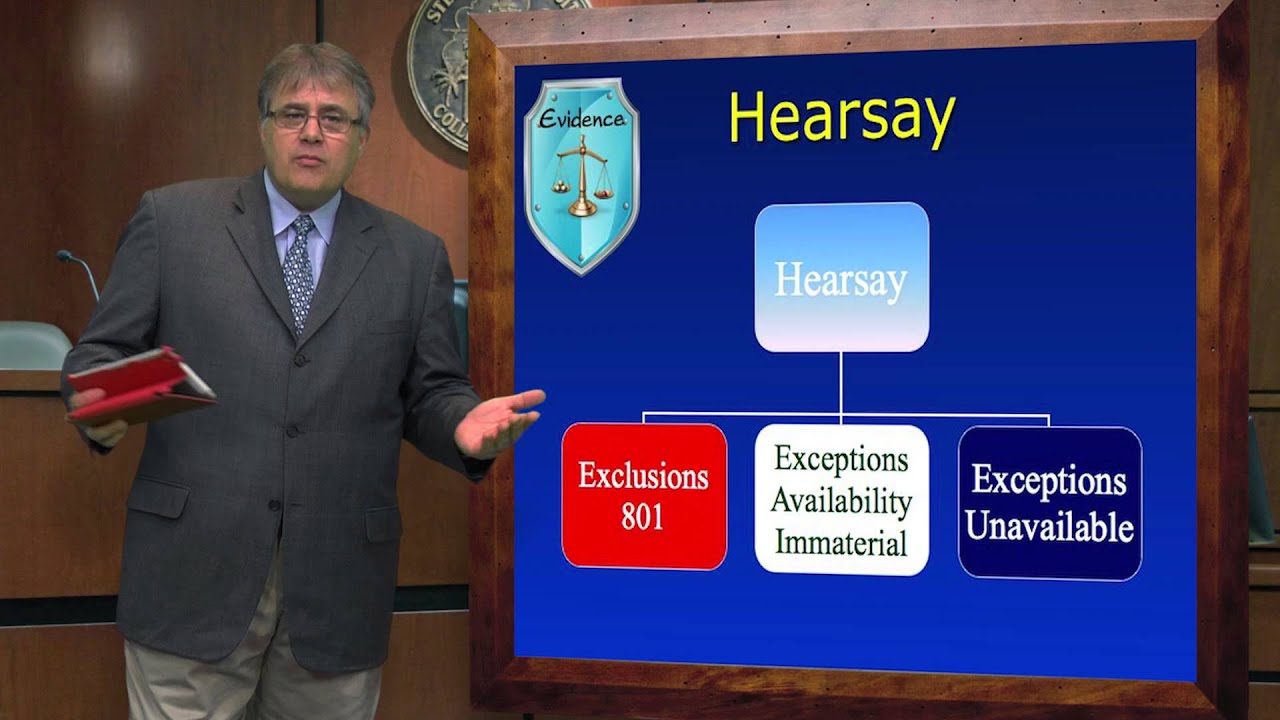

The business records exception to the hearsay rule allows documents prepared in the regular course of business to be admitted as evidence without violating the hearsay rule, provided they record an act, condition, or event and meet trustworthiness requirements; however, documents containing opinion evidence (such as therapist notes with professional assessments) do not qualify as business records even if created in the regular course of business, and practitioners must demonstrate trustworthiness through detailed witness testimony about how, when, and why the document was created rather than simply checking off statutory requirements.
Business Records Exception to Hearsay: Legal Standards & Trustworthiness
Added:The legal definition of hearsay, including what constitutes an out-of-court statement and the concept of 'offered to prove the truth of the matter asserted'.
The general rule of hearsay inadmissibility and the underlying legal rationale regarding the lack of cross-examination and reliability concerns.
A basic understanding of the Federal Rules of Evidence (FRE) or general evidentiary procedures in a court of law.
The concept of 'hearsay within hearsay' (double hearsay) and how to evaluate records containing statements from third parties.
The interaction between hearsay exceptions and the Sixth Amendment's Confrontation Clause, particularly regarding testimonial versus non-testimonial evidence.
Practical courtroom application, including how to lay a foundation for business records using a custodian of records or self-authentication certifications.
Comparing the Business Records exception with related exceptions, such as Public Records (FRE 803(8)) and Recorded Recollections (FRE 803(5)).
6.3K views101likes7:26Original Release: 2020-01-10
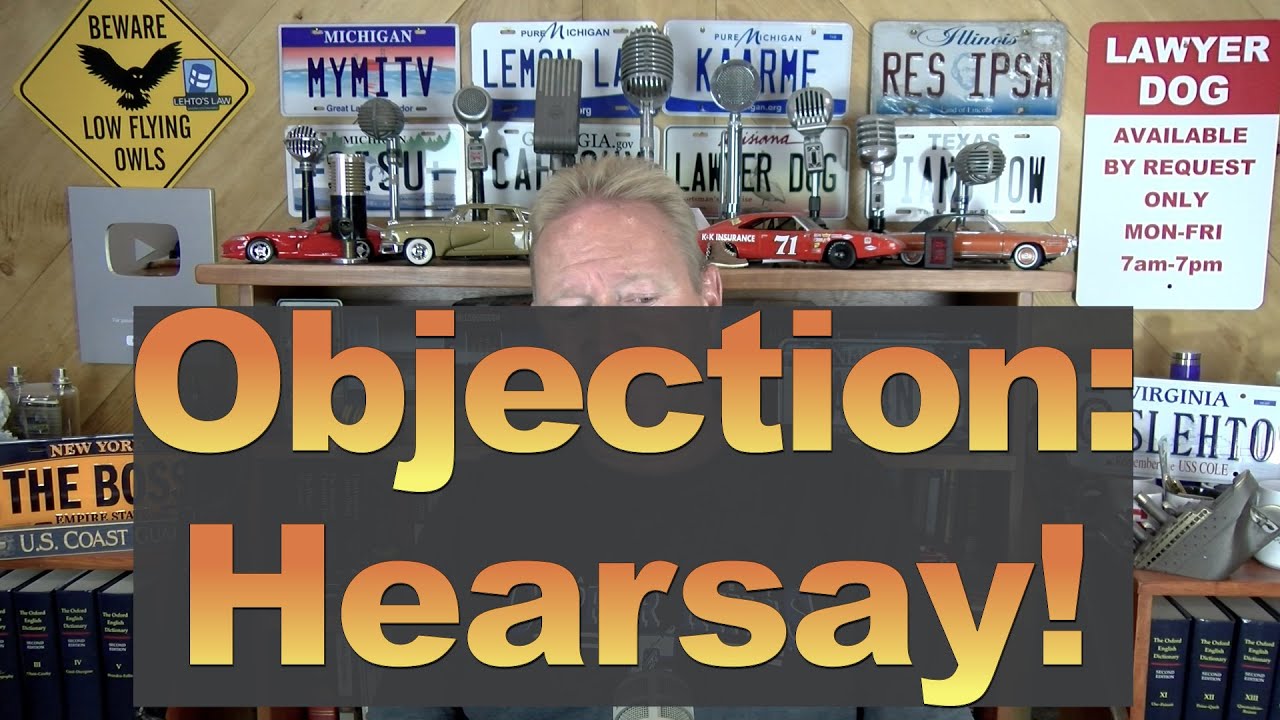
hi everybody Dave sudden today we are going to talk about the business records exception to the hearsay rule and so we start as we always do looking at our analytical framework for every evidence question that comes our way we're talking about hearsay today and specifically we're talking about one of the key exceptions to the hearsay rule that business litigators need to know and in Prior videos we also talked about a way to recognize objectionable hearsay and rather than just memorizing the language of the statute that can often not necessarily foreshadow objectionable hearsay so we talked about a working rule for hearsay is considering it as evidence where the probative value of the evidence turns on the credibility of someone who cannot be cross-examined so if we can't cross-examine this person and the evidence matters we may have a objectionable hearsay issue and then also in Prior videos we've talked about how do we quickly recognized exceptions to the hearsay rule and very briefly the way to look at hearsay objections is to consider whether or not the hearsay we want to get admitted is it trustworthy and is it necessary to our case and if there's a combination of these two things there's likely an exception and we want to know with that frame in mind consider the business records exception because what can often happen in trials is people will just assume that some document that was prepared by a business must therefore be a business record and therefore must qualify as a business record exception to the hearsay rule but again what we want to do is not just assume that because it's a business record it's in but rather look at the actual language of the statute to see what's required and this goes both when we want to affirmatively get such business records into evidence or challenge business records on their lack of being a admissible business record and so again we talk about having these working rules and let's do that now looking at the business records exception to the hearsay rule and so for example in California we will look at California evidence Code section 12 71 72 is the absence of a business record and in the Federal Rules we will look at Federal Rule of Evidence 803 six and seven is the absence of the business record rule and the first we want to look at is what kind of business records are allowed and under Section 12 71 it limits business records - records that record an act condition or event this is important language because oftentimes business records people will want to get business records into evidence that go beyond describing an act condition or event for example look at the case of people versus raised in that case the one of the parties wanted to admit into evidence a number of therapy records where the criminal defendant had been meeting with a therapist and the therapist wasn't available and so they wanted to get into evidence all of the therapists notes which included the therapists opinions as to the defendant and so yes all of these notes were made in the regular course of business they were met at the time the therapist met with this patient and they were made in real time so the identity and mode of the preparation was all legitimate the problem is that the records offered opinion evidence and what the court said was we don't know the qualifications of this therapist we don't know if he or she's opinions were valid whether there was a appropriate foundation for them so there are not business records they're not admitted so we always want to consider first whether or not these business records record an act condition or event in the Federal Rules opinions and diagnosis are permitted but remember just because they may be permitted as a business record doesn't necessarily mean the opinions are admissible and you'll want to go to issues related to the opinion testimonies admissible 'ti in trial once we've determined whether or not there's a record of an act condition or event well then want to look at these pieces that are all identified in the statute and what we see so often in depositions as well as during trial as what we see is lawyers essentially treating these requirements as checklists to simply ask and get a very rote response and so you may get a leading question from the proponent of the document saying well was this made in the regular course of business yes okay was it made at or near the time of the event yes and there's a lost opportunity here because again as the proponent of the evidence not just it misses getting the document admitted into evidence but you also want to establish as a matter of persuasion the trustworthiness of the document and so you want the witness to describe how in the regular course of business this document was created and why was it created and when specifically was it created in relation to the Act condition or event that was recorded and then also you'll want to talk about how was this document created how much time it took what were the source materials what was the method because all of these things have to go to the trustworthiness requirement both in California and the federal rules there has to be a showing that the document is trustworthy before it gets admitted into evidence and so these are the elements of the statute you want to hit and as a matter of persuasion you want to make sure these witnesses are prepared to explain that this happened and why these documents are trustworthy so that is the business records exception to the hearsay rule if you like this I would encourage you to check out evidence at trial comm and look at live events we have upcoming as well as our online classes thank you again for joining our community
Up Next
137:05
Murdaugh Trial Testimony: Housekeeper Details Missing Clothes Evidence
@News19WLTX
5.1M views•2023-02-10

4:27
US Secondary Sanctions Impact on EU Businesses and Blocking Legislation
@Bureauvandijk
1.6K views•2019-03-20
5:27
Forensic Phonetics: Speaker Identification in Legal Cases
@nptel-nociitm9240
539 views•2025-03-19

24:42
Police Interrogation Tactics: False Confessions & Legal Reform
@LastWeekTonight
7M views•2022-04-18
Related Study Plans & Knowledge Roadmaps
Structured learning paths in Law
law
Self-Defense Law: Imminence & Castle Doctrine
01Foundations of Self-Defense Law
02Imminent Threat & Reasonable Belief
03The Principle of Proportionality
+ 3 more learning modules
12h6 modules
Explore Roadmap
law
Defamation Law: First Amendment & Actual Malice
01Introduction to civil torts and the First Amendment
02Elements of Defamation: Libel and Slander
03Public Figures vs. Private Individuals
+ 2 more learning modules
8h5 modules
Explore Roadmap
law
Hearsay Rule: Trial Evidence & Exceptions
01Introduction to Trial Evidence & Courtroom Basics
02Demystifying Hearsay: The Core Definition
03Non-Hearsay: Exclusions Under FRE 801(d)
+ 3 more learning modules
14h6 modules
Explore Roadmap
law
Medical Malpractice: Law, Liability & Care
01Foundations of Tort Law and Civil Liability
02The Four Elements of Medical Malpractice
03Defining and Proving the Standard of Care
+ 2 more learning modules
12h5 modules
Explore Roadmap