![1) Adi Diferansiyel Denklemler : Dif. Denklem Tanımı ve Örnekleri [Ordinary Differntial Equations]](https://i.ytimg.com/vi_webp/BkVCADUC2wQ/maxresdefault.webp)


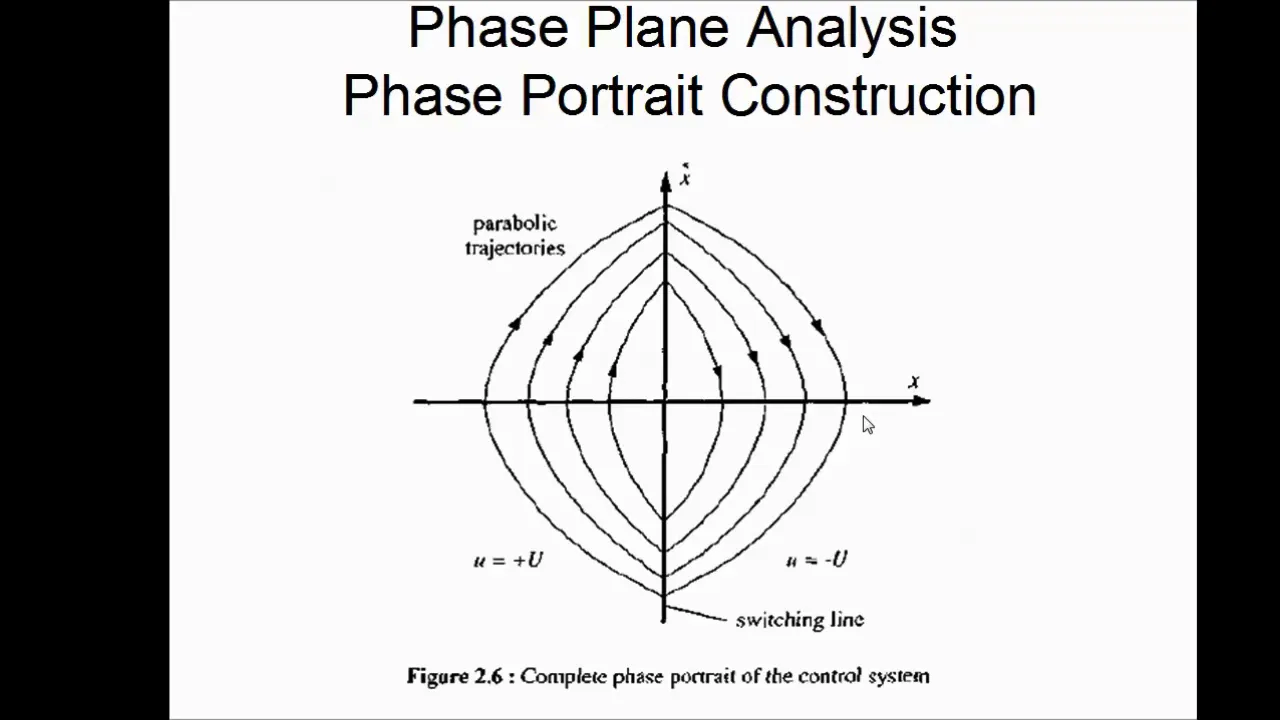






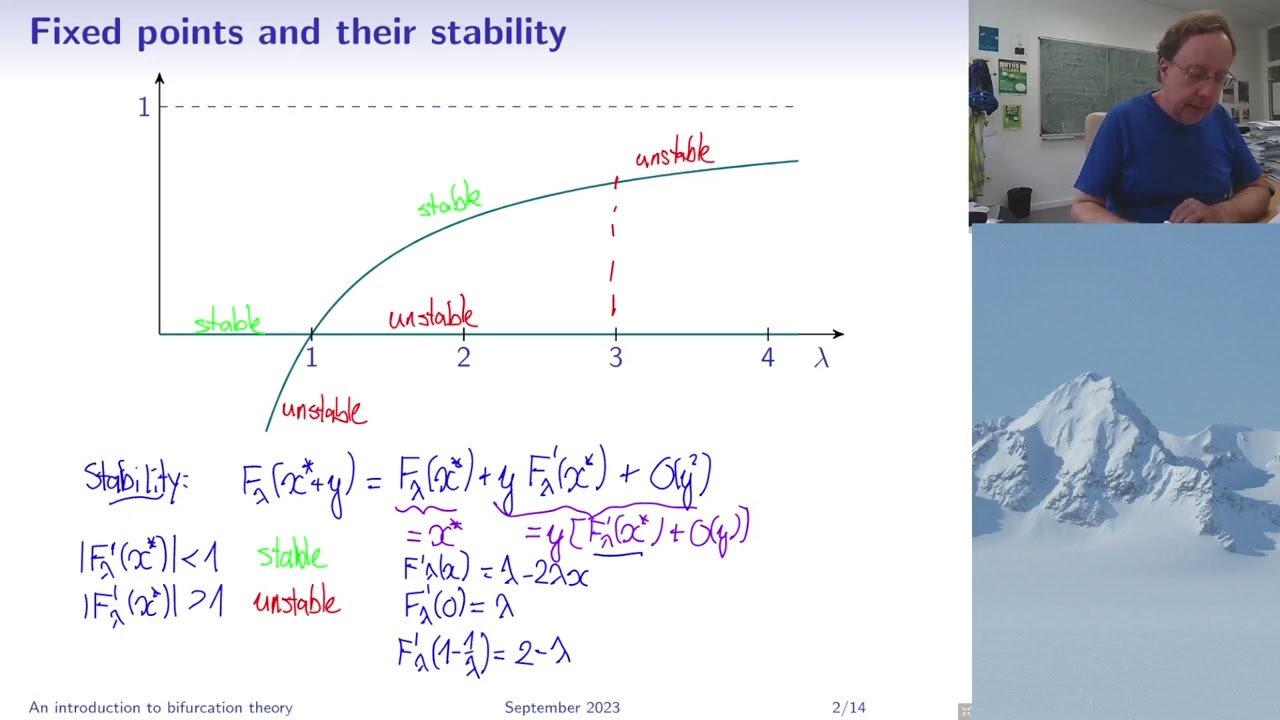















A limit cycle is an isolated periodic solution in the phase plane of a nonlinear dynamical system, where trajectories starting near the cycle either converge to it (stable limit cycle) or diverge from it (unstable limit cycle); the van der Pol equation demonstrates this phenomenon through a Hopf bifurcation, where changing the parameter μ transforms the origin from a stable focus (μ < 0) to an unstable focus (μ > 0), thereby guaranteeing the existence of a stable limit cycle when μ > 0.
Limit Cycles & Bifurcations | Van der Pol Equation Explained
Added:Ordinary Differential Equations (ODEs): Familiarity with solving first- and second-order differential equations.
Phase Plane Dynamics of Linear Systems: Understanding state space, trajectories, vector fields, and classifying equilibrium points (e.g., nodes, saddles, spirals).
Linearization and Jacobian Matrices: The ability to linearize a nonlinear system around its fixed points to determine local stability.
Classification of Bifurcations: Exploring saddle-node, transcritical, pitchfork, and specifically Hopf bifurcations in multi-dimensional systems.
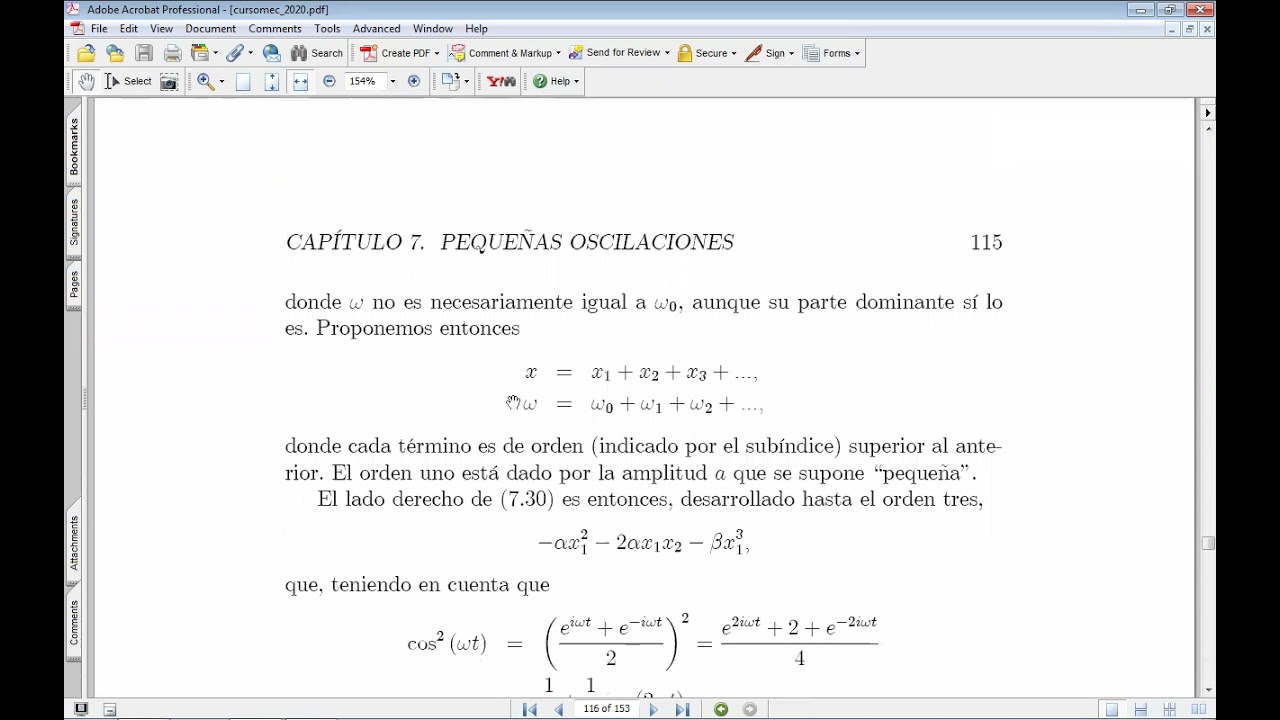
Perturbation Methods and Weakly Nonlinear Oscillators: Utilizing analytical methods like averaging and multiple-scale analysis to approximate limit cycle behavior.
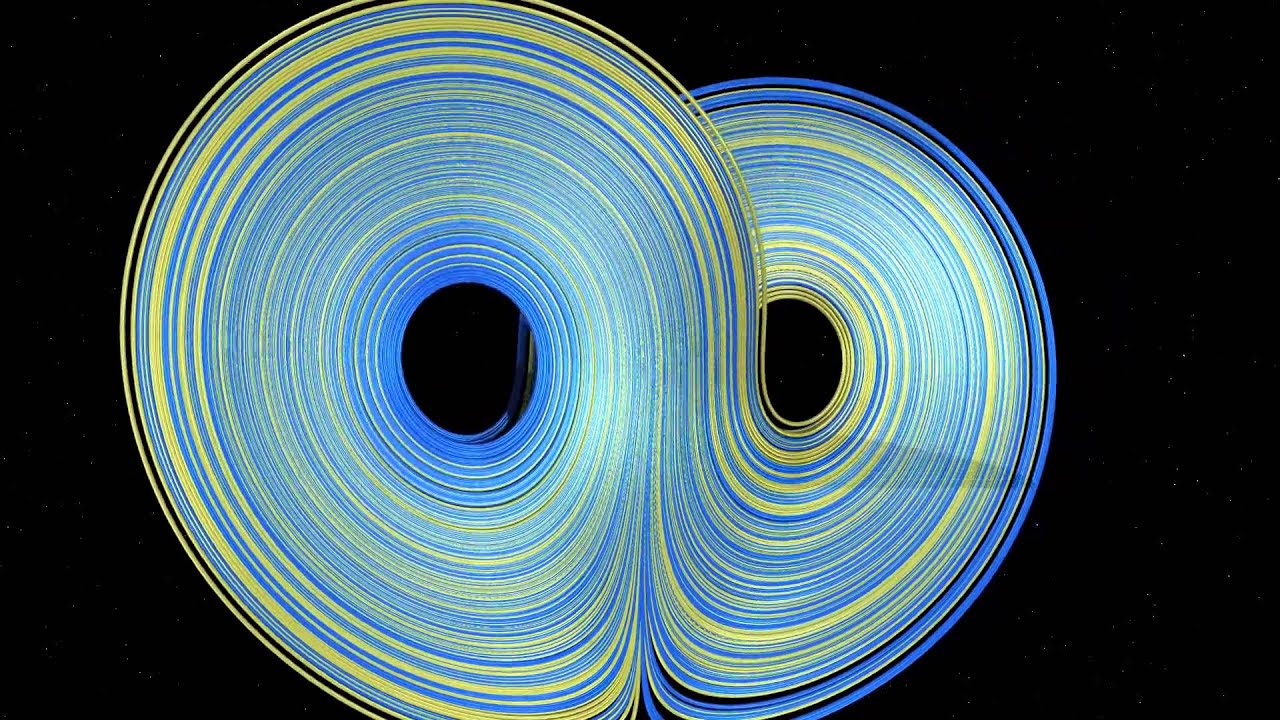
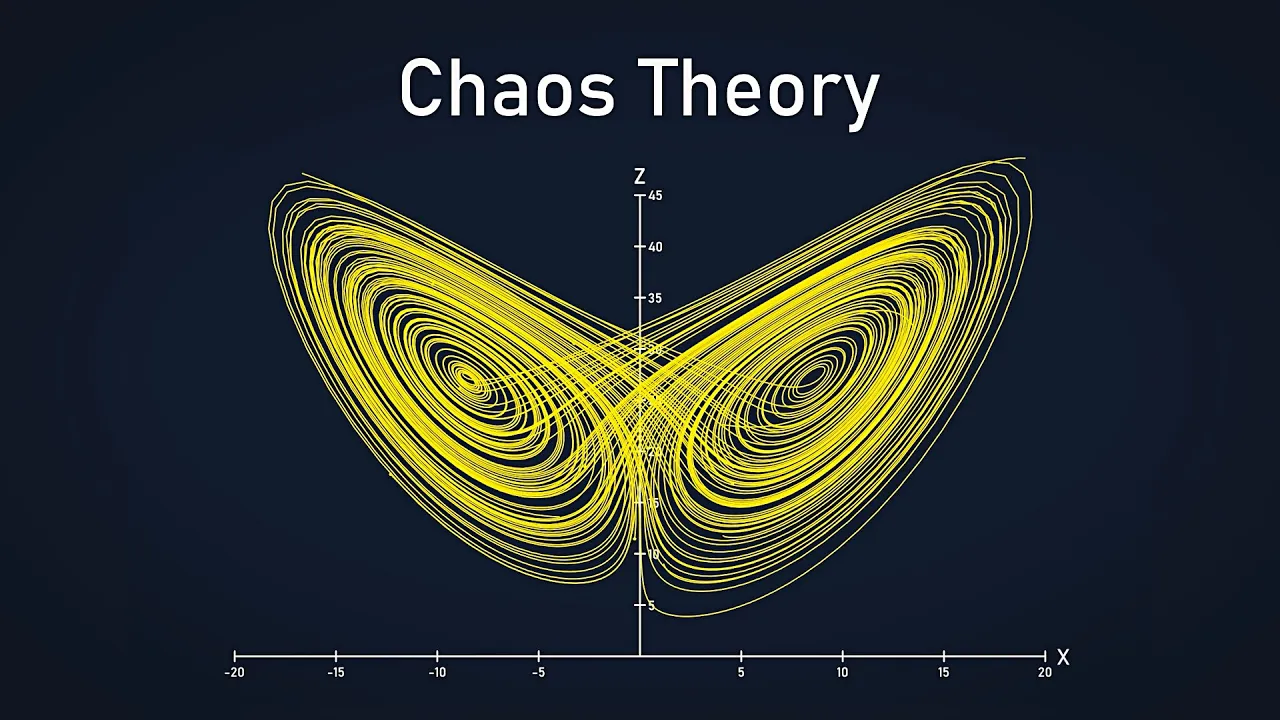
Chaos and Strange Attractors: Investigating deterministic chaos in higher-dimensional (3D+) continuous dynamical systems, such as the Lorenz attractor.
Biological and Physical Applications: Applying these mathematical models to real-world phenomena like the FitzHugh-Nagumo model for neural action potentials or cardiac rhythms.
30.1K views412likes10:52Original Release: 2019-04-09
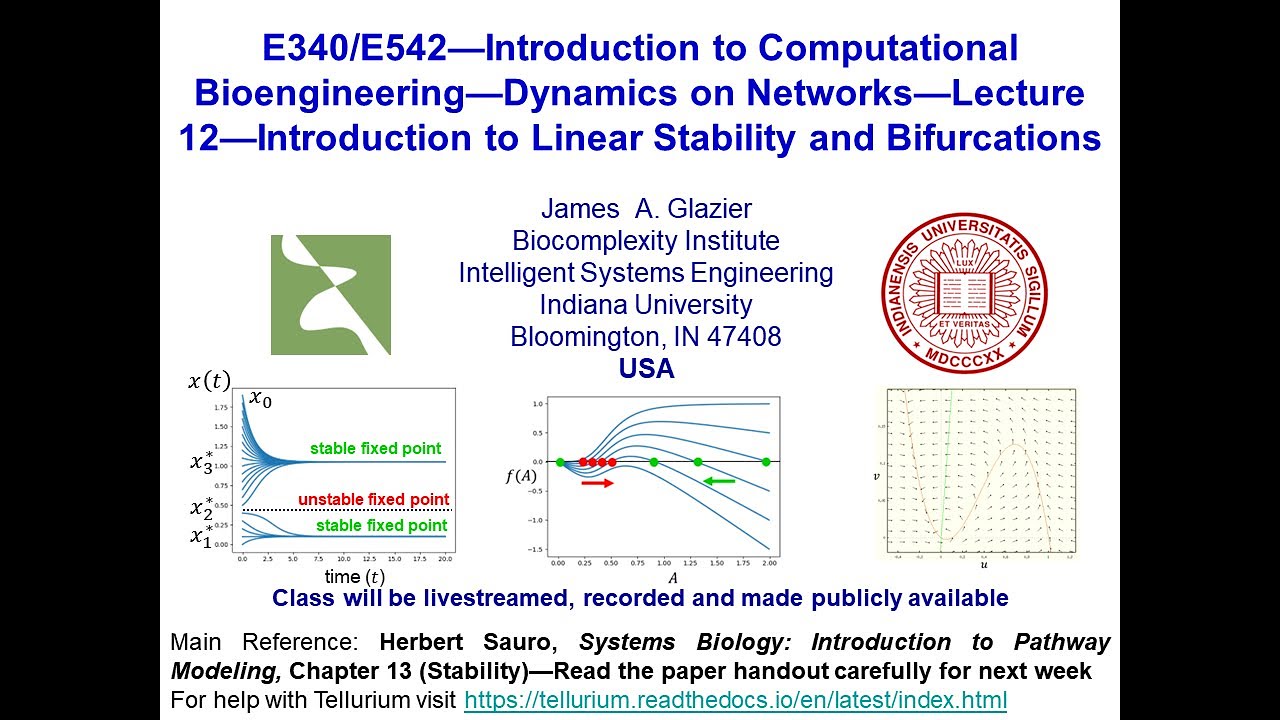
in describing the qualitative behavior of linear dynamical systems we need to introduce one more type of feature that can be seen on the phase plane portrait and that governs its dynamics and that is a limit cycle and this is a purely nonlinear phenomenon and it is the presence of an isolated periodic solution in the phase plane and so a periodic solution just means that there's a period capital T for which the state returns back to its original its state every T amounts of time and so what this is saying is that X the state at a time at time T is equal to the state of the time T plus this period and so that would happen after one period after two periods and so on and that is essentially just the amount of time it takes to loop around this structure and and so typically in general the limit cycle is is isolated which means that if you're slightly off of the limit cycle that that is no longer a periodic solution that's no longer part of a periodic solution and so it means that there's going to be some behavior inside and some behavior outside and so what we're gonna do next is really try to talk about leveraging a couple different observations some new as well as some that stem from the idea that these streamlines can't cross and so that restricts the the behavior so something that starts on a trajectory like this essentially has to stay inside if there's this periodic orbit you might be tempted to compare this two centers of linear systems but the thing that they don't satisfy is that they're not isolated so here arbitrarily close to another periodic orbit is another periodic orbit that loops right around doesn't touch that should be a perfect circle and and so there's another one so you can find any any arbitrary distance away from one of the others so you can find another periodic orbit so that does not satisfy the criterion of a limit cycle to see how a limit cycle can be used to quantify the dynamics of a differential equation we can take a look at the van der Pol equation so the van der Pol equation is this one equation that's a generalization of the simple harmonic oscillator such that this term introduces a nonlinear term where the derivative plays a part as well as the variable X as well as this this parameter mu and so if mu is equal to zero that just gives us right back to the simple harmonic oscillator with note without damping but this van der Pol equation has some very interesting characteristics including a limit cycle and so I'll leave it you to check that if we if we do the state space expansion which means taking this second-order differential equation and converting into a system of differential equations that we get this form so again I pause the video and try your hand at that if that's not clear to you and then what we're gonna be interested in doing is quantifying what the equilibria are of this system and so again go ahead and pause the video to convince yourself that the only place for X dot to be 0 is just when X is equal to 0 so x1 and x2 are both 0 and so around that particular equilibria we find the Jacobian we take the derivative so we we can find the general Jacobian so the general Jacobian is going to be the derivative of the first function with respect to 2 X 1 which is 0 during the with respect to X 2 which is 1 the derivative of this thing with respect to x1 gets a little messy but we have for example minus 1 and then you're going to have two terms one with this x1 squared so that's going to give you a minus 2 mu X - x1 and then you're going to get so let me move this over that's one and then the derivative respect to x2 gives you this term mu times 1 minus x1 squared so that's the general Jacobian and then we simplify that when x1 and x2 are both the 0 and so that gives us this this Jacobian at the origin and then we're interested in quantifying what the the eigenvalues are and so if we solve for those again using the determinant of a minus lambda I and setting that equal to 0 we find that lambda has to be these values and so what's important here and what we're going to explore is the fact that this mu is going to play a role this coefficient mu is going to play a role in to what kind of dynamics we see around this linearized equilibrium so we said these are the eigenvalues of this van der Pol dynamic system and so they're going to depend on the value mu and so we can do is we can look at what Mew does to the eigenvalues so if mu is equal to 0 then the real part is 0 and then gives us Center actually because mu makes this discriminant negative and so in that case we have the center and so the linearization looks like that if mu is positive in particular it's between 0 and 1 then that means that this discriminant inside is still going to be negative because we're gonna get 1/2 squared minus 1 and we're gonna get our real value out here so that means it's going to be unstable because mu is going to be positive so it's a positive real part with a and it's going to be a complex valued so it means it's going to be a spiral or a focus and it's also going to be unstable before that if we look at negative mu similarly we're going to again this discriminant is going to be negative so that's gonna make it complex valued but in this case mu is going to be negative which makes the real part negative and so that's gonna be a stable focus and so again there's a lot of depth here in nonlinear systems analysis and so this is just one kind of what's called a bifurcation and a bifurcation refers to essentially how the dynamics of the shape of this this linearization and especially the stability changes as you change a parameter of the equation and so if this linearization moves from something that is a sink so something a sink means that things are going into the origin so that's a that's the stable focus into a source and it does that it crosses that that line as it crosses through the center then what ends up happening is that you can show them that there must be a periodic solution in the overall dynamics of the van der Pol equation so the nonlinear equation when you take a look at it it's been a phase portrait there will be a periodic solution so around the origin just around the origin this went from a stable focus into an unstable focus and by doing that it crossed through the the notion of being a center what that tells us is that somewhere in some we're not necessarily at the origin but somewhere there is a periodic solution this limit cycle and and so and so that's what it tells us so beyond that we can we can look at what the van der Pol equation does and it says that it has this stable limbo limit cycle which means that trajectories emanate from the origin and go up out here to the limit cycle and then from outside the limit cycle they converge to it but once they actually reach the limit cycle then they stay on that cycle inner period so that's what happens when mu is in this range so the this bifurcation period doesn't actually tell us the rest of this but the opposite is true when u is negative which is the fact that it's an unstable limit cycle which means that if you deviate slightly off of this trajectory then you start going into this spiral stable spiral in or that if you leave slightly off than it does this spiral and heads heads out networks so looking at what the van der Pol dynamics actually looks like in the in the complex plane looks like this so again the origin is right here and so that remember the linearizations we were talking about are just around this local neighborhood but because as the parameter changes we get this different we get this specific changing of the linearizations we can say that somewhere in this in this phase plane there is a periodic orbit and so what i've done is i've plotted a number of trajectories one say started here and moves in along along this way one that starts here one that starts here and moves in and what this is showing is that this cycle which is a long change my color here which is along this this bean shaped structure here these are all these points are on the limit cycle and all of these other trajectories converge to it and that all the trajectories inside also converge outward to reach that limit cycle so it's a stable limit cycle so this is for when mu is between zero and one
Up Next

11:24
Introduction to Differential Equations | Calculus-Free Basics
@PhilipBrocoum
625.5K views•2009-01-11

4:43
Elliptic Curve Cryptography Explained: ECC, ECDSA, ECDH
@PracticalNetworking
28.5K views•2024-10-21
10:44
Fourier Series Introduction: The Big Idea Explained
@DrTrefor
387K views•2021-05-03

6:00
The Mathematical Impossibility of Accurate World Maps
@Vox
23.3M views•2016-12-02
Related Study Plans & Knowledge Roadmaps
Structured learning paths in Mathematics
mathematics
Tensor Calculus: Vectors to Riemann Curvature
01Mathematical Foundations: Linear Algebra & Calculus
02Covectors, Dual Spaces, and Tensor Basics
03The Metric Tensor and Index Gymnastics
+ 2 more learning modules
40h5 modules
Explore Roadmap
mathematics
Gödel's Incompleteness: Logic, Proofs & Limits
01Introduction to Formal Systems & Hilbert's Dream
02Set Theory, Cardinality, and Cantor's Diagonal Argument
03Arithmetization and Gödel Numbering
+ 2 more learning modules
14h5 modules
Explore Roadmap
mathematics
Galois Theory: Fields, Groups & Solvability
01Foundations of Abstract Algebra: Groups & Fields
02Polynomials & Field Extensions
03Splitting Fields & Symmetries
+ 2 more learning modules
24h5 modules
Explore Roadmap
mathematics
Non-Euclidean Geometry: Models & Geodesics
01Euclid's Fifth Postulate and the Birth of New Geometries
02Hyperbolic Space and the Poincaré Disk Model
03Geodesics: Defining Straight Lines in Curved Spaces
+ 2 more learning modules
15h5 modules
Explore Roadmap