



![[5급행정] 김성현 정치학 예비순환 #공개강의 #기본개념 #비교정치 #정치과정 #국제정치 #2차대비](https://i.ytimg.com/vi/JIjTdvuDUZE/maxresdefault.jpg)



















Soft power, as defined by political scientist Joseph Nye in 1990, is the ability of a state to attract and co-opt rather than coerce or use force or money to achieve its objectives in international politics. Unlike hard power, which relies on military and economic capabilities to compel other states, soft power operates through attraction and persuasion, making it more effective when combined with hard power in what Nye termed 'smart power.' The lecture illustrates this concept through examples of American soft power (democracy, Hollywood, cuisine, technology) and Indian soft power (Buddhism, non-violence, yoga, Bollywood), while also addressing criticisms that soft power is ineffective without hard power backing and may be used to justify aggressive policies.
Soft Power in International Relations: Concepts, Theories, and Examples
Added:and today is I introduce you to a team which is called soft part in international politics and you must have heard this concept of soft power the software noise in the way is understood in international politics and the way it is defined what the features of soft power why people call it soft power when there is already hard bar what are the differences between hard part and software what are the theories on soft power and what are the what are the uses of soft power for international politics are in the making of the foreign policy of the state so I thought you know is important for you as an undergraduate or postgraduate student to understand the various dimensions of soft power in international politics when when you talk of power is important to understand how do you define power power can be defined as the ability of an individual or ability of the state to get things done by the other state or for individual get things done by the individual so your ability to get thing done is the basic basic ingredient or basic defining face basic core of any power the way you define power so similarly you know this the power in international politics can be can be divided into two parts one is the hard part and other is a very soft power the way we understand soft white it is always understood in terms of in comparison with the hard power because you need to distinguish the soft power with the hard path so that contest and the end and then they got to me or the distinction between hardware and software is important to understand and I will start with this concept of hardware first because you need to understand what is hard only then you can understand the concept of soft soft power in international politics so I think you know this pretty clear and you must be knowing that the certain basic components of a hard power hard part of any state can be understood as and this military and the difference capability of of a state you know that you know the power of a country the way we define or the way the scholars of international politics define power in international politics when they use power mostly they use in the context of hardball and when they referred to hardball the basically referred to some of the basic things are the basic features of this basic features with Auto some of the core elements are power one is military and defense as I told you so military is very important because you know by military you say that some country is very powerful and the other country is not so powerful and the second feature is the economic power that in when you in when we explain or when you say that that there is a country for instance Japan or Germany they are powerful than the other states so you they are powerful because of the economic resources or the economic development that that have taken place in those states so militant defense is one economic power is second the size of territory that is also important constituent of the power of any country the size of a size of state is very small that a state is likely to be not so powerful you have a country like Fiji for instance you have continued like why now you can't alight Maldives your countries like vote on now which are which are very small in size there are small in size as a result the resources are very limited as a result the the population is very less so they cannot play a very powerful loan or very influence and only in international politics so size also matters as the population matters matters apart from all these you know one other constituent of soft hard bar would be the stability stability of the government because you know you need some kind of policy continuity if if the country is not having stable politics if the country is going through a turmoil or the country is passing through a difficult phase of destabilized distribution so in that case is very very difficult for the country to exert power in the international system so stability of political stability is important for the consistency of the policy policy making in of the state so as a reason these are the broader features of hard part what we call the bar broadly is used many times just as a bar but you know since we are distinguishing between the hard part of the sort why it's important to understand the exclusive elements of hard part and then we'll come back to the concept of soft part and the important element of aspects of software so military if I have to explain you today if I if I need to tell you the hierarchy the way this and the the way the international system is structured in terms of military power so the first important country is the United States as you know that United States is the most important most important country in terms of military power in the u.s. is the more America is the most powerful country in terms of its military in terms of military spending in terms of the technology that it uses in terms of is the presence of its military in various parts of the world also in terms of the alliances military alliances that it has created in in in collaboration with the local states in the form of NATO so that makes the United States the the superpower what we call it superpower in the early time Soviet Union was the superpower and Soviet Union there is always a contest of in anticipation of the Soviet Union and United States in terms of balance of power that you know each country was trying to balance the other country but after the decline of the Soviet Union in 1991 this America remained the sole superpower in the international system and if you take the military spending as one of the correct and one of the features of the power of a country so u.s. is spending nearly nearly nearly 650 billion dollars for military and that 650 billion dollar is equal to the military spending of all the countries put together the second country in terms of military spending in today's time is would be China China is spending nearly 130 odd I know and 130 billion dollars in for the military India is spending quite a lot and India is also spending nearly 40 billion dollars now more than thirty-five billion dollars actually so in terms of military spending but a lot of military spending what is also important is the the presence of military that you have in the various parts of the world and today America is the worldly country which has its bases are in various parts of the world it has its basin in Europe it has NATO force is that it has base in Japan and that also this the Japanese security is controlled by United States it has his base in Indian Indian Ocean and it might be you might be knowing this this what is known as the island Diogo Garcia Diego Garcia is an island while there is an American base and India you know at some times India has said that the Indian and the American base would not be in the diabo Garcia so America has a military presence all over the world and it has it has the capability to a strike it has capability to strike any country from because its base its bases are spread all over the world so in terms of military as I told you USA and in terms of economy also a u.s. is the most important country us is the superpower China is number two in terms of military then you have Russia Raza is the military technology is very very developed in Russia I Russia is the only country which can counter United States in terms of office in terms of military equipments are the nuclear technology that it has is in terms of technology is much ahead of China and in fact China and India the two countries which are importing most of the weapons and the defence system from Russia and so in terms of military spending China is second but in terms of in terms of technology Russia would be second because the rest it is a Russian military technology is very very advanced after that you know you have countries like India which is spending quite a lot but in India the technology is not indigenous as you know that you know India is the biggest importer of arms in tho in the world today and India is importing from countries like Russia that is the main supplier of arms and weapons to India and and apart from Russia there are other countries like now France Israel United States has become as the biggest exporter in the last year so these are the contribution exported the weapons or the fighter aircrafts and other tanks and all to India so India is also very important now getting important in terms of military power then you have countries which are economic powerhouses like you know German in Japan Germany and Japan you know they have this they have this very powerful economy but they do not have independent military' since the world war ii period so and that mean that the security is even now controlled by the united states so as a result their economic power but they do not have the military power so now the important thing to understand that heartburn has two important elements what is the it has the capability to cause if the United State is not if the United States for instance you know wants to get thing done from another state and even if the other state is not willing it can actually attack it intervenes in the policy of the state and that has that through that you know is a very cursing method of getting things done the way the United States did in Iraq the way it did in a forest on the way it is the kind of role is playing in Libya Syria at the moment so it's a very coercive method of you know exerting the the heart bar in for getting things done or to do bringing that a state in bring the policy of the state in favor of his own in his own policy apart on coercion there is another element through which these these countries the exercise bar the second is through payment so it's a kind of you know it's a kind of buying the other country buying buying the other state by making some payment for instance you know the Pakistan in the case of Pakistan you always know you always hear that United States is paying some aid or grants to to Pakistan so that you know Pakistani military does not attack the establishment in Afghanistan and will attest an American military establishment Afghanistan it also pays this page Pakistan the Pakistani military also its provide technology and the other kind of aides to to Pakistani state and the military basically so that you know the Pakistani army or the state does not support Taliban so these are other methods of you know making the policy of the other state favorable to his own state or federal to the policy of the state so Coulson is one method as in the case of Iraq and Afghanistan Syria and payment is another method method of aligning the policy of the other state with with the own state so that's these are the two methods of used for for aligning the policy over the state by the by the powerful state now and now what is the soft part we understood the soft part and who understood the hard one but now we need to contrast that with the soft part the concept of soft part was given by the howard professor political scientist and joseph now in 1990 and he defined it as the ability of the state to attract and co-opt rather than coerce or use of force or money to achieve power so in in in the hard part the coercive as he was important element the the forcing or the coercion or the pink paying them paying money to get things done so that was the method used in the hard part but here is the ability to attract and co-opt so you basically you know you have certain features or you have certain elements which are attractive and that becomes persuasive for the other state to follow you so it's not the coercion here in a soft part of the course it is you don't use military or you do not use the the financial power to get things done is the ability to influence the behavior without threat or payment many of its components are actually the many of the components of short power are actually outside the domain of the government a hard part is controlled by laws by the government but many of the components of certain mental components of soft power are actually outside the domain of the government they are not decided and they're not decided by the government they are not controlled by the government it shapes the social environment environment for policy and it has enabling and disabling effect so it will you know it will persuade the state to follow certain certain norms or certain values certain rules and it also you know it will deter the state from from having a policy which is aggressive or following or having a policy which is which goes against the basic value of the other state so it has enabling and disabling effect so the the difference between the hard part and the software is that how hard part is all about coerce and hard part is all about to know pressurizing the other state to get things done soft part here would be something at all which because there are certain elements which become attracted to the other state so and that is the basic difference between the hard part and the soft part and in 2003 Joseph Joseph Joseph Nye gave a new concept called a smart power so it's not just it's not just the hard part it's not the hard part what the state needs in the making of his phone policy or in the making of his policy to us at the state when the state needs according to according to Joseph Nye is the smart power smart part is basically the basically the combination or the aggregation of a hard part as well as a software so it has the elements of course and in payment but it also has an element of attraction so what what a smart part tells you that no your hard part is not enough you have to have the software but your soft part is also not enough because in the in the absence of in the absence of hard bar soft part would be taken as a sign of weakness so then with this shake a gave this concept of what what is known in the in the literature of international politics other sort smart power soft part is more effective than course and best argument given by Joseph Nye and values like democracy human rights individual rights and they are much more seductive than the than the than the imposition of democracy by the by the powerful state what it tells you that no there are certain features of like certain features like certain features which can be attractive to the other state and other states followed not because of any pressure not because of the next turn persuasion of pressure because the other state feels that no these are the value which are good for their own state so it becomes very attractive and seductive for the states like the values of democracy the value of individual rights the values of relative human rights these are the these are the elements which are very attractive to other states software is not software is not it's not it's not about idealism or it's not about liberalism it is simply the fall bar for getting the outcome so also please understand that when the real is defined that other international qualities our international system is all about the struggle of power so the person I know when you when you talk of the software software is not about the you know the liberalism or idealism it's actually the component of hardware that's the wood that's the way Joseph Nye has defined it so that is component of the bar and part understood differently by in terms of you know so in terms of some tangent or the the the in terms of normative structure that is there in the international system or the normative values which are which become attractive to the other state software is descriptive rather than normative concept software can be used also please understand that it's not the soft part is as a harmless kind of concept a soft part can be used for nefarious purposes for instance you know but all the all the dictator dictators like Hitler Stalin or Mao they all possess sort for the the state during that period they also promoted software and they also possessed software it was it's not higher than the than the hard bar or it's not you cannot say that software is better than the other bar it only tells you that know there are certain cultural or the or the value system or there are certain policies which are adopted by willingness you know the the voluntarily the state's voluntary adopt those features because they find that though these values are useful for their own state so that is the beauty that is the seductive part of the the the software or the values of the software now what are the when because you know a software concept emerged in the context of United States where Joseph Nye was Joseph Nikon said basically know it and try to explain the software of United States and he argued that how the Americans thought par was declining and you know when is giving the theory in 1990 when the people argued many of the people argued that you know American saw America was in decline so but he argued that American American soft bar is is in decline that's what is in decline but the American the American Bar as a whole continued to dominate the world system not just because the hard part but also because the software that it has for instance you know the American system of democracy the the freedom and the rule of law which is promoted by America which is followed by America and it is also followed by that the state the Republican and the Democratic form of the government which is there in u.s.
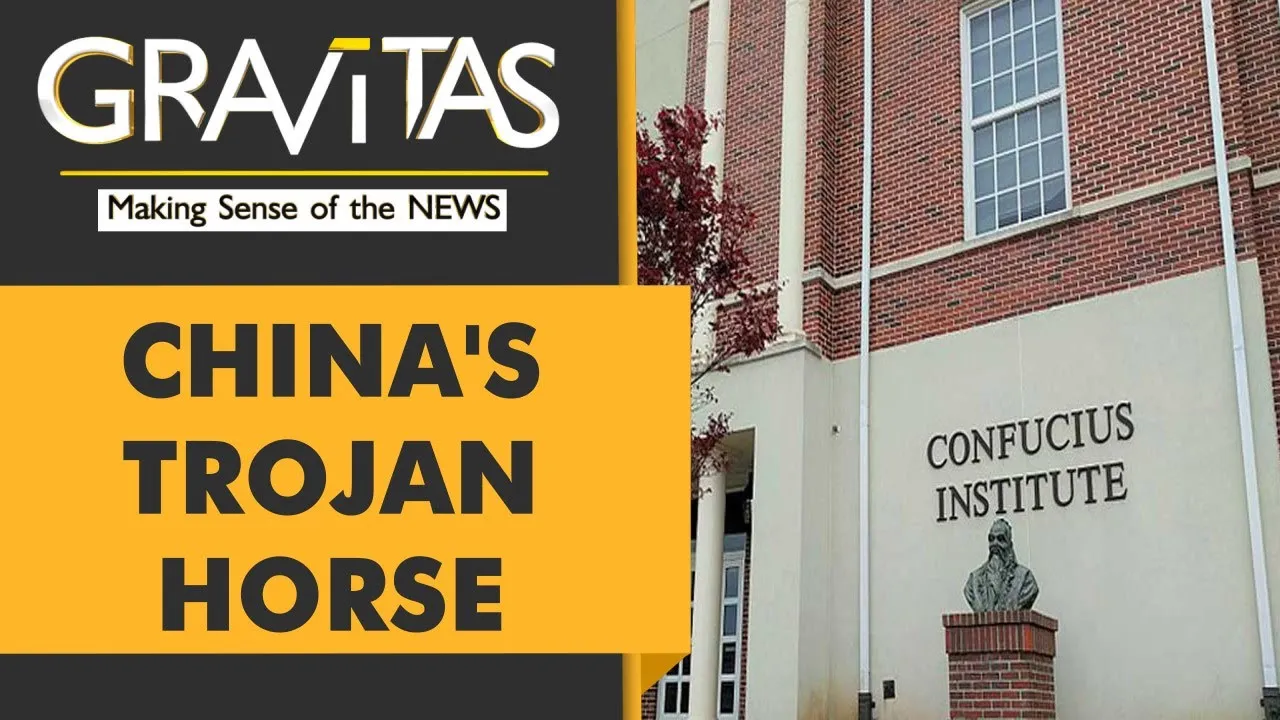
and which is followed by the States and its openness to immigrants of all races and regions so it is open to American system although you know this is the argument given as Oh some lie but it's not open to all the immigrants of all the races it has the visa regime which is quite restrictive but still you know because it allows many of the migrants to come and settle down there so that again is one of the attractions of the United States and when the Indians also for instance at all and there are nearly 3 million Indians who live there so they find that the state to get to very attractive in terms of employment in terms of the the culture that it has so that is the seductive part of the sort path that is the reason why people would like to go and settle in that state and that is the uniqueness of America which is more like in terms of societal rule as it tells it it's more like a melting pot that you know where people from all the cultures and all the all the nationalities they come and live together they melt together and they become the part of this American exceptionalism the part of American culture and they shared the dream of what is known as the American dream to to rise with the company with the hard work and competition and the the fact that you know America is the most important countries today's international system that is also very attractive to two other states so and as a result you know the other states and the people of other state they find America very attractive so these are some of the features of American uniqueness our American exceptional exceptionalism but that the the the idea of exceptionalism or the product parameter of exceptionalism can be used for any state every state is unique in one way or the other so it's nothing the particular the very there is nothing exceptional about American exceptionalism every state is exceptional in one way or the other every state has certain cultures or certain features which are different from the other state so that the the idea of exceptionalism can can be applied to to other states as well now what are the examples of this American soft power Boeing and Intel for instance hello they're all American all the flights that you see most of the most of the flights at the Boeing GE and most of the computers there the the manufacturing initially in the initial years it was done by the engine then if you talk of McDonnell and KFC the in the eating joints they're American and now they are there in every part of the world every most every important city of the world then you have the Apple iPad phone which is very popular throughout the world and you have MTV and Hollywood movies Hollywood movie is popular throughout the world whether you go to Russia or they go to even the event in the places where where you know the Hollywood is not like even in the places where people are extremely critical of Hollywood movies because of the violence excessive violence because of the excessive sex even in those states the software and this the American Hollywood movies are very popular in fact they say that just before the 9/11 attack the the attackers or the militants they actually actually had the food in McDonald's they had burgers there and then they went for this this attack of this hijacking the plane and then going to the time so then you have the CNN and The Voice of America Voice of America is the radio news broadcaster Italian broadcast by the American American the state then you have the CNN which is CNN the Fox News and there are other new channels which are the American news channels which are popular throughout the world because they have the resources they have the the international reach and they they have the satellite satellites through which they can telecast these programs so CNN is very popular throughout the world and as a result you know they they decide the agenda of the news they decide control the content of the so through that no even CNN is not controlled by the state but CNN follows some of the basic devices of the state so the basic the broader broader framework is again it follows the some of the that's what a saw the some of the agendas of the state so software emerges as these examples tell you the Boeing intern all these are private companies including CNN is a private company so the soft part emerges without government so they have them established the broader that they established the huge soft power for the American state in other parts of the world so and they are not they're not done by the state deliberately or directly but you know they they they indirectly play a role in creating the image of America in the other parts of the world and but at times you know the state also promotes soft power for instance and all even the state of America they'll have the scholarships for for the foreign citizens of the students of the other country for instance you have the full greater scholarship they have the cultural excellence program of with various universities where they promote the exchange of ideas exchange of scholars from one country to their own country so these are also the there are some of the elements of soft power our state control but some of the some of the elements of state power so the elements of soft power also control and actually they are nor the control by the state they are their operations because of the other players which are known as state players whether it can be NGOs it can be a multinational companies or it can be some of the private companies like new channels and Hollywood movies now it's because you know we live in India it's also important to understand what are the what are the elements of soft power for India and and we should not be narrow in defining the soft power here and in turn the broader inclusive if you see the soft part of India traditionally and historically India harder and in they had a very huge the the capital of soft power and starting from the historical period if I take you the Indian civilization the way the spread in various parts of the world so that that is again the that is again the one of the elements of thought power when Buddhism I started traveling from India to other parts of the world and I'm talking about the period of Ashoka when he started sending you know the Buddhist monks are his SFA's daughter and the other people to various parts of sri lanka to to South southern part of India to Tibet and to and then he traveled later to Southeast Asian estates also so Buddhism started traveling to other parts of the other parts of the world and later on it went to China it went up till Japan so so the Buddhism was Buddhism I know Buddhism as a religion or Buddhism as a as a philosophy they didn't it was not because of the state but I didn't go to Sri Lanka or other parts of this because the steeper the Buddhist monks were not a powerful people they are not like military military Crusaders who were trying to convert people basically they were trying to promote some of the ideas of Buddhism and they were trying to promote and the basic philosophy of Buddhism and which was attractive to other people because they found some kind of a now defined they found this religion to be very rational they found this religion to be very attractive as a result you know the many of the the people which were either pregnant or the tribal people in Sri Lanka or Southeast Asia or China or Tibet so they converted to Buddhism they like the philosophy of Buddhism so the actual the soft part in India if I see that started from and the Buddhist period and after that after that know the if I start from that historical period - if I come to the - the period of Gandhi so the elements that we have learnt from that sought power and then you know the the the notion of tolerance the non-violence and the struggle against injustice so these are the some of the basic things you know which were promoted right from Buddhist period till till till the play until till gone this time so the tolerance non-violence that became that became that came to be associated with Buddhism Gandhi and that also became an integral part of India so as it isn't when you go and travel outside so you'll find that no India is identified by a culture of tolerance a culture of non-violence a culture Indians are supposed to various spiritual the many of the people you know very identically believe that Indians will not be fighting because they are nonviolent people to believe that if you go outside and if you travel to one of the countries in Europe they believe that many most of the Indians will be doing and this is their various spiritual most of the Indians would be practicing yoga so these are some of the way the image of India is there the way you know we the way Indians understood India as a culture as a nation the way is there in the imagination of people in other parts of the world so these and so that is the historical part of this the Indian software but don't during the colonial struggle as you know that Gandhi was Gandhi was the most important leader of the anti-colonial movement so Gandhi promoted this idea of the mobilization of people through nonviolent methods so basically was trying to trying to fight against the British sense but this is what the hard power and Gandhi was using and the soft part of mobilizing people through non-violence mobilizing people on the on the concept of Subterra it's at agra so i know through that you know you can see the color contest between the hard part and the soft one the British were very repressive with this were using the military methods to control any kind of population or any kind of protest by Gandhi and his people so and Gandhi was using the software the Gandhi was promoting the idea of obliging the people against a very powerful military military state against a very powerful military force through the soft power soft part of non-violence soft part of satyagraha soft power of Gandhi so these were the elements of Gandhi sorta so that is how you see that you know the way the Indian soft part is emerging and understand that this soft part the struggle for Gandhi Gandhi struggle against colonialism that has a huge huge impact toward the world especially in the colonial countries where you know with a talk of nakooma in in ghana and many parts of the south africa and in other parts of the world in yugoslavia and other parts they adopted this nonviolent method of protest and in Southeast Asia states Southeast Asian states also so where God is idea of mobilizing through nonviolent method that was a software that was adopted that was adopted by many of the other states against their colonial rulers so what we see is that no Dada India in India is very rich in terms of and the the element and the component or or the or the other what we call software in international politics in there in fact in the colonial period or the after the struggle of the conical and period in there was one of the champions of software and that software India was accepted as yeah when the leaders of one of the more one of the leaders who when the country was propounded some ethics and morality in international politics it stood for you know the non-militarization of the state it also in the initial years it also asked other states the nucleus states to denuclearize to non-proliferation it supported they're not called the idea of non-proliferation a non testing of the nuclear weapons although it was not accepted by most of the states but the fact that no India assumed the leadership of the third world countries so that was that is also the the sort that was contributed or that happened because of the soft part of India where Hindu is accepted as the leader of the toggle countries so that's how you understand the the the importance of soft part Indian software in international politics Indian democracy the fact that know that India remained democracy while most of the post-colonial states whether his Africa states or even countries like Pakistan or Indonesia so those who the countries which emerged from the colonies they very soon they became the dictatorial states they could not remain moxy but India very strangely or ironically though it was predicted by many other philosophers that India will Ottoman and in that will not survive as a nation or India will not remain democratic India demand and a democracy and that's the beauty of this Indian sorta or that the notion that you know India India's a democracy and despite all the all the weaknesses despite all the although all the poverty or the unemployment or other social problems that we have it here in there remain plural in the remained secular and India remained démocratique so that is the soft soft soft ingredients of India's power so that is that is these are the and these are the components of India softwa so diversity diversity pluralism autonomy these are some of the features political features of India software now coming to the to the non political features of sabha so one is and yoga yoga is very popular throughout the world Yoga is equated with India and as I told you that if you travel to you 200 open estates don't be thinking the moment they see India they the kind of image that they have that one number one that Indian would be very spiritual second they might be thinking that you know Indian as an Indian you must be practicing yoga and the third they'll think that you might be a software engineer software they're also soft cups but although it does not include it does not come into the software but and the notion that India has the image that an Indian carries because you know you I mean when in when an Indian travels to other part of other parts of the world the image that it carries is that of a software engineer or this the yoga teacher or various spiritual so or very religious sometimes people think that you know the Indians are very religious also so that is the kind of image that in there has about or in their heads and one Indian in our when Indians travel they also carry that image with them so yoga is again very popular and yoga now and yoga now is popular in the Western countries and they realize that Yoga Yoga is very important for the unity of thought and mind or India body and the mind so for that you know you guys baptized by many of the European people also now and then various forms of yoga and now some of the forms of yoga is so distinct that no it's very difficult to actually identify with the traditional yoga yoga that you have and yes and there are certainly well Indians only continue where you have University for yoga in Bihar does a place called Miguel where there's University for yoga and very recently the the modey modey government and what the government in elected one one minister would be yoga minister so that is the way India is promoting this soft power or India is promoting the notion of yoga when Prime Minister Modi gave the speech in the General Assembly and during his September visit to United States so he said that he requested the other states to celebrate one day as the yoga day and and that actually metal materialized and now I think it's 21st June one of the one of the days is liberated as the yoga day by the United Nations and toured the world and annexed which is very important for for this song for Indian software that is the Bollywood you probably only imagine the impact the Bollywood has in in throughout the world now bollywood bollywood is not just popular among the Dysport are nice for Indian diaspora who are living in the United States United Kingdom Australia on other parts of the world Indian films Indian movies in their songs they are very popular in many parts of the world and they're popular also among the non - very population in those countries in fact if you travel to Turkey countries like Turkey Syria Egypt so these Indian actors for instance Shahrukh Khan I'm Tom Watson there with Salman Khan they are very popular and since you know Indian films or Indian soap operas they promote family value they promote the value of marriage they they promote the value of loyalty and commitment to to your family to your wife so they are very much liked by the other people in these countries especially in the Islamic State of Iraq Syria Pakistan Afghanistan and these kind of distant and this this collective value system is very is is liked by these people so the actors you know the actors are very popular in these states and Bollywood is having a huge business outside outside and in the other countries so Bollywood is again has become one of the important constituents of India soft power then in the software you also have the cuisine and the the Indian food forest as you know Indian cuisine then like the chicken curry so the curry the curry the concept of curries identified that Indian there is it is said that no the chicken tikka curry actually you know the chicken tikka curry is the one of the restaurant and in the UK they used to serve chicken tikka but no when one white went to that restaurant he asked he asked that he wanted to have the curry because you know he always thought of India with the curry so he said that you know in the chicken tikka cannot be curry but what it is that you know he put some sauce in that and then becomes chicken curry so so the you know I've heard I don't know the the real origin of that but so see through has coated and when the other people have quoted that the chicken tikka masala actually originated in Britain but it has this Indian kuratas of Indian origin so what I'm trying to tell you that many of the Indian foods are are very popular in other parts of the world and the curry the concept of curry is curry and various spices and various kind of force there now there now if you even if go to smaller countries like Estonia Finland and other places they are there there's a number of Indian restaurants which are carrying the Indian cuisine in the parts of the wall so that is again one of the elements of Indian software then then you have the culture and the culture you know the Hindu culture or the Buddhist culture or the the composite culture which in their health the secular culture that it has so those are also the elements of India's aqua and now you have the agency of ICSS our eyes Indian Council of cultural Isis here which promotes the the Indian culture and other parts of the world so these are all the elements of Kunduz soft power in international politics and the diversity and the composite culture have with that we have that is again very interesting to other people in the world there's a time just before this the BJP is government there's a time when the Prime Minister was the sick the president was a Muslim Prime Minister Manmohan Singh was a sick the president Abdul Kalam was a Muslim and the leader of the the ruling party leader of the ruling party what was Sonia Gandhi was a Catholic Christian in a country which is where the majority of the people are Hindu so that is the beauty and that is the diversity of India and that diversity is very attractive to other people in the world so the kind of composite culture that is emerged in India the kind of second a composite culture that has emerged in India so that is again an important element that is very seductive to many other parts of the world the component despite the ethnic and linguistic divisions and the religious religious diversity that we have the fact that India survived as a successful country so that is the software and that is very seductive and attractive to the people throughout the world NATO also promoted an non-alignment movement which can be taken as the sum of the elements can be taken as software the concept of bunchy shield for instance that that could be taken as an element of sabha then Entente colonial solidarity so that which is established and I do so all of that is tamest in the soft part in the enduring the narrow period and that promoted the role and the image of India in the other parts of the world India's cricket diplomacy then the was base Lahore was diplomacy then the parameter Modi's linking with the Diaspora then the neighborhood first policy these ours on the broader elements of India soft power so so they're sort of varies from you know the political culture to to the to the real culture and to the to the food culture which can be biryani or the chicken curry so these are some of the elements of India so religious tolerance and these days tolerance is again one the important aspects of India's Akbar and the fact that known now so the unfortunate thing is that's all the so the minority institutions who are attacked by by by by the fringes of of a particular culture so that is kind of kind of damaging the soft part of India in Islamic world that is also damaging the soft part of India in the in the Christian world now what are the important elements of the primacy Modi so far what is their connecting with the diaspora especially the persons of Indian origin then he also talks up and on the promotion of democracy and all and the he talks of history and culture so in the historical aspect and the cultural aspect so they are also the important part of India's Indian software the knee he promoted yoga as I told you that he appointed a minister and June 21 is now celebrated as the International Day of yoga and he and so these are the things which are being promoted by the Modi's government to soft power now briefly I'll also tell you that you know every country promises software and every country has a certain and/or seductive or attractive element so yes its way in the case of China Chinese culture is now like his is having us impact in various parts of the world and Southeast Asia it hasn't impacted it has impacted his ta I talking to also has impact now in Africa so the Chinese also very strongly promoting software in other parts of the world is from Confucianism to egalitarianism so Chinese community China is promoting and that kind of soft part we have Institute's which are confusing Institute which are established in various parts of the world so there these are the elements of Chinese soft power Buddhism I know now coming back to in the Buddhism as a soft part of India so it was the first wrestler and reformist religion and which was non-violent region so that is that was the first expression of X and that was the first expansion of the culture and civilization and then then there's this very tolerant it was the middle path and it and the concept of enlightenment and they were the very attractive Mallen the university was found much before there was any university in the in the world in the Hindi India Europe and in the Europe so that was the kind of the soft part that we had in the ancient times the so called Dharma that was the software that India had what these people in Southeast Asia and East Asia so they promoting this offer in the short part in international politics or they promote the elements of Sao Paulo Mendes which which promoted the idea of India in the international system there are certain but now coming back to the title aspect again that the certain weaknesses of soft power soft power part is credible only when it is backed by the hard part if soft part is not supported by the hard part the the other content will take it as a sign of weakness if the software is backed by the hard part as this is done by the countries like United States or France or Germany or United Kingdom so they are backed by the real hard part in terms of economic part and the military power so is soft part is not an alternative to the hard power so it's the combination which matters and they help each other in promoting in the promoting software would promote the idea of hardcore and hard part would also promote the idea of short power so they have a very difficult kind of relationship and that plays a role in creating the world what Joseph now I would call the smart power and the constant super boss in them as we say that you know in desi cultures over bar but constant super bars are not enough to win the war and as you know that you know in Derrida and I had a huge this huge capital of short power even in 1950s and 60s but that did not help India win the war against China so you have to have the hard part in support of the soft part because you cannot completely Bank just on the soft power so these are some of the weaknesses and that one has to when making the policy when a state has to take into this account and what are the threats to Indian software because we discussed over the end of soft power but the certain threats which are damaging the image of India in the international system what is the growing religious intolerance as I told you that some of the minority institutions will attract so any attack on minority is taken as a as a sign of it all the weakness of soft power and that is criticized and that is challenged by the other states so any attack on Islam and India would be taken as an attack on on who do wicked says in the Islamic state similarly any attack on Greece and Christianity would be criticized by by the Christian countries in the West rising majoritarianism where the the minorities are discriminated so that again is something which is not liked by which is which is damaging the image of India and the international system now and then there are certain social divisions for instance you know the Indian society is is divided on the cost lines and there is an Indian society is also where you have a certain group of people who are very rich but there are people who are completely left out from the system so there is a poverty there's a huge unemployment so that is not giving a very positive image of India if you see the film like you know the Slumdog Millionaire which could have otherwise promoted thus the Indian culture or which could have promoted the image of India in the in the West or United States but you know what did what did projects is that that you know and there's a there's a poverty and there is a kind of fellow the there is a filth and poverty in India which is spread in most of the parts of India so that that gives a very negative image of India and the disparity that we have the poverty that we have in fact poverty has become the poverty of India has become the selling point for for the Western for the Western media and also for the western movies Western Hollywood films many of the many of the many the the many of the films of the Hollywood Department day in in the initial years they they projected India as the the country of the snake charmers or the country of the elephant you have the if you have seen the Indiana Jones series of the Hollywood movies Indiana Jones so they projected India as the country of the snake charmer or the country of the of the king a king and of the country where the elephants are there the country where the cows and the Bulls are working on the street so that is giving a very negative image of India in the in the Western countries so that you know that Alice Antonia also developed in terms of or India kind of bridges the gap which is there but with the people who were left out from the main esteem so that gives a very bad image of India as in orderly the growing religious intolerance and the discrimination of any group for this social minorities or the linguistic minority so that creates a very negative image of India in the outside world so sick now in the recent years the secular plural and Democratic culture of India has also been come under criticism because they argue that no the secular fabric of India is now being challenged because of because of the rope the growing role of religion in Indian politics growing role of the caste in Indian politics so that is again giving a very negative of an image of India in the eyes of in the eyes of the eyes offer and the Westerner scholars or the Western people but there are certain certain criticisms against the soul power and when the people have argued that the that is not this soft part in itself is not very effective with effective element of power because you know but what finally matters is hard power so you know the people argue with the scholars argue that one should focus on the hard part other than that rather than the soft power so one of the criticism is that you know this software is not very effective the second is that you know second the second kind of critics and which has come is that no a significant to distinguish between the hard part the software because you know if one is so embedded with the other when it's so linked to the other and it's very difficult to distinguish what is the hard part and what is software for instance you know the the trade and Magdalene and the expansion of a multinational companies there are sometimes explained as element of hard power but you know they are also promoting the software so the distinction that the distinction a uniqueness of a soft part cannot be explained very easily and how they influence the foreign policy that again is questioned by the scholars that that the countries which are promoting higher power by whether by design or by by by you know inverted Li they're also promoting the software so the distinguishing that hard power of the software that is another difficulty which is faced by the scholars in international politics now again some of the people and the criticism this criticism has come primarily from this liberal is called primarily from the moxie scholars that you know they argue that software is associated with globalization and its associated with the neoliberal forms of international system well in the neoliberal system what you're promoting is basically the idea of capital so what you promote is capitalism where the third one the third world countries are the emerging the developing countries they are seen as the market for the developed States and they supply they supply are this the program the finished product to these tabular states and through that note they they capture the market and they capture the they captured the resources from of the poorest states and the poor states you know behave like periphery and then the core states which are the major beneficiary of the hard part of the software and people have also criticized that no hard part is basically software is basically complementing the concept of the concept of hard core and many times you know the scholars have used the notion of software to basically substantiate or they use it has an alibi or justification for the photo for the for the hard part they give you the given example of the US role for instance in the role of United States in countries like Iraq and Afghanistan where the u.s. used the justification of promotional democracy so promotion of democracy basically no they argue that no US wanted to control the oil and gas from Iraq so as Italy they attacked Iraq and they they they they sold the idea they sold the notion of soft power that you know they are trying to promote democracy in these states but the basic idea the basic notion the reason they promoted this software was to capture the resources of Iraq and they wanted to basically it was an idea it was it was it was basically intended to to capture the resources of the state for the benefit of the American state as a result which is which finally you know and that that captioning for that to justify that as an alibi they argue that there's basically they were trying to promote the democracy now as you can see that Iraq is neither a democracy nor a stable stable state what has happened what has happened in Iraq is basically Iraq has become now it's an under the influence of is is as you know and that is a very powerful powerful fundamentalist Islamic force and that is taken control of many parts of the parts of Iraq and Iraq is a very distant destabilized state now so there is no chance of democracy coming to that state in some near future similarly in Afghanistan you know date they try to they try to control or they argue that they would convert the United States and the NATO forces they argued that will convert Afghanistan into a democracy but finally what we see in Afghanistan is a completely destabilized state where Taliban's are even now telephones are very powerful and Taliban's are being supported by a country like Pakistan and Pakistan is getting aid or getting aid or the financial support from country like United States so there is a very recent kind of Nexus which is there between the American hard part and what they call the soft power but the but the ID I know my purpose to explain you this concept of soft power is just too too familiar to make you familiar with the idea of soft power then you can develop your own critique that whether you like the notion of soft power or not please understand the soft part is not completely detached from the hard power and because many of the elements that you see there and many of the elements of soft power there basically some kind of extensions of soft power but the certain value system certain for instance you know the idea of democracy the idea of say some of the philosophy culture cuisine the film's so these are the broader elements of southpaw which cannot be explained just if you explain just the elements of hard power so when explaining of one political country you can you can you can I can actually think of the the two distinctions that you have hard phone and the soft power that might help you and understand the the
Up Next

Royal Diplomacy: Soft Power and State Visits Explained
@SkyNews
145.3K views•2025-09-18

BRICS Pay and de-dollarization: A New Financial Order Emerges? | 55 chars
@DannyHaiphongYT
164.6K views•2024-10-22
Government Surveillance Methods: 10 Ways You May Be Watched
@BeAmazed
1.6M views•2017-04-09
Explaining the Saudi-Iranian Proxy Conflict in the Middle East
@Vox
18.2M views•2017-07-17
Related Study Plans & Knowledge Roadmaps
Structured learning paths in Political Science