










![[김어준의 다스뵈이다] 310회 뜨거운 사랑에 찬물을 끼얹는, 쿠팡 해병대, 춘추전국시대](https://i.ytimg.com/vi/TqQtLsvLyuM/maxresdefault.jpg)






When non-state armed groups govern occupied territories in ways that promote civilian welfare during civil conflicts, field commanders from these groups become more likely to remain locally embedded in rebel-ruled communities after military integration, which paradoxically hinders postwar state consolidation by creating regionally entrenched strongmen who resist centralized authority.
Why Rebel Governance Hinders State-Building After Civil War
Added:The concept of 'state-building' and what constitutes state consolidation, including Max Weber's definition of the state's monopoly on the legitimate use of physical force.
The definition and forms of 'rebel governance', specifically how non-state armed groups establish taxation, security, and judicial systems during civil wars.
The fundamentals of post-conflict transition processes, particularly Disarmament, Demobilization, and Reintegration (DDR) frameworks.
Basic collective action problems and principal-agent dynamics within military command structures during wartime.
Analyzing institutional design strategies, such as power-sharing agreements and federalism, used to co-opt or neutralize powerful wartime commanders.
Case studies of post-conflict state-building challenges, such as in Côte d'Ivoire, South Sudan, or Tajikistan, to see these dynamics in practice.
The phenomenon of 'warlord democrats' and the challenges of transitioning rebel groups into formal political parties.
The role of international peacekeeping operations and external aid in overcoming local resistance to state consolidation.
881 views17likes1:32:35Original Release: 2023-10-05
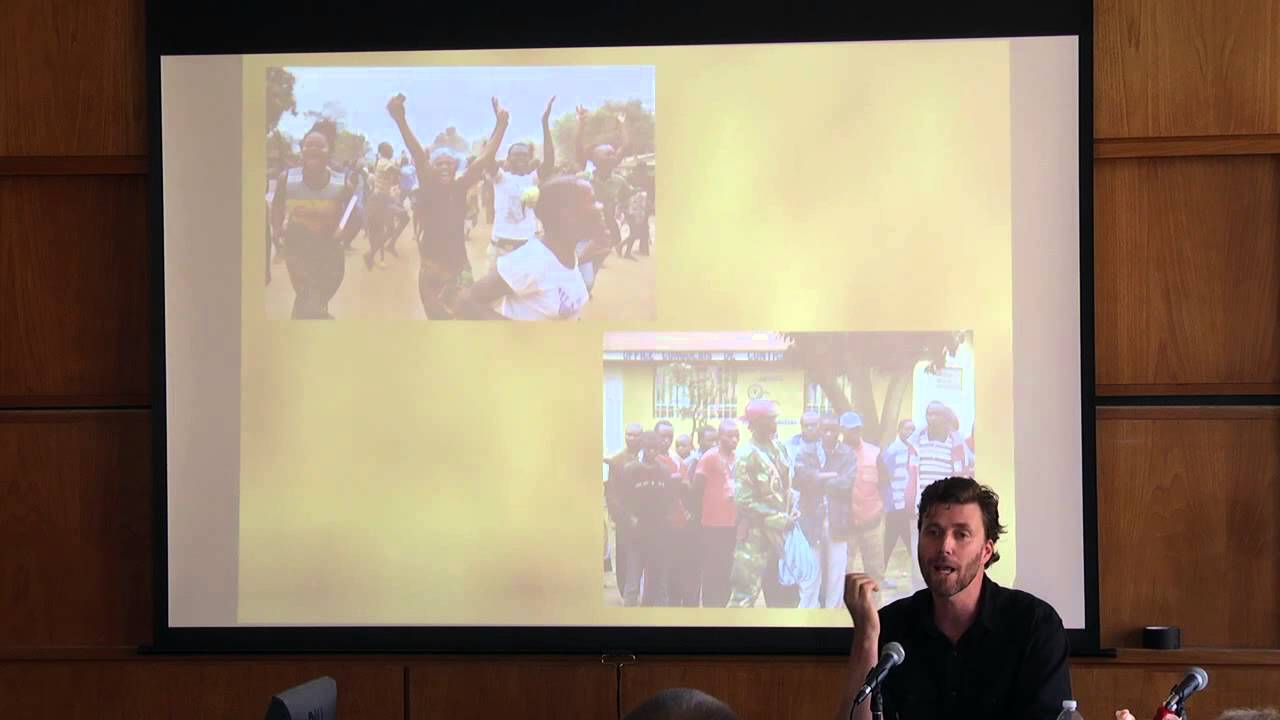
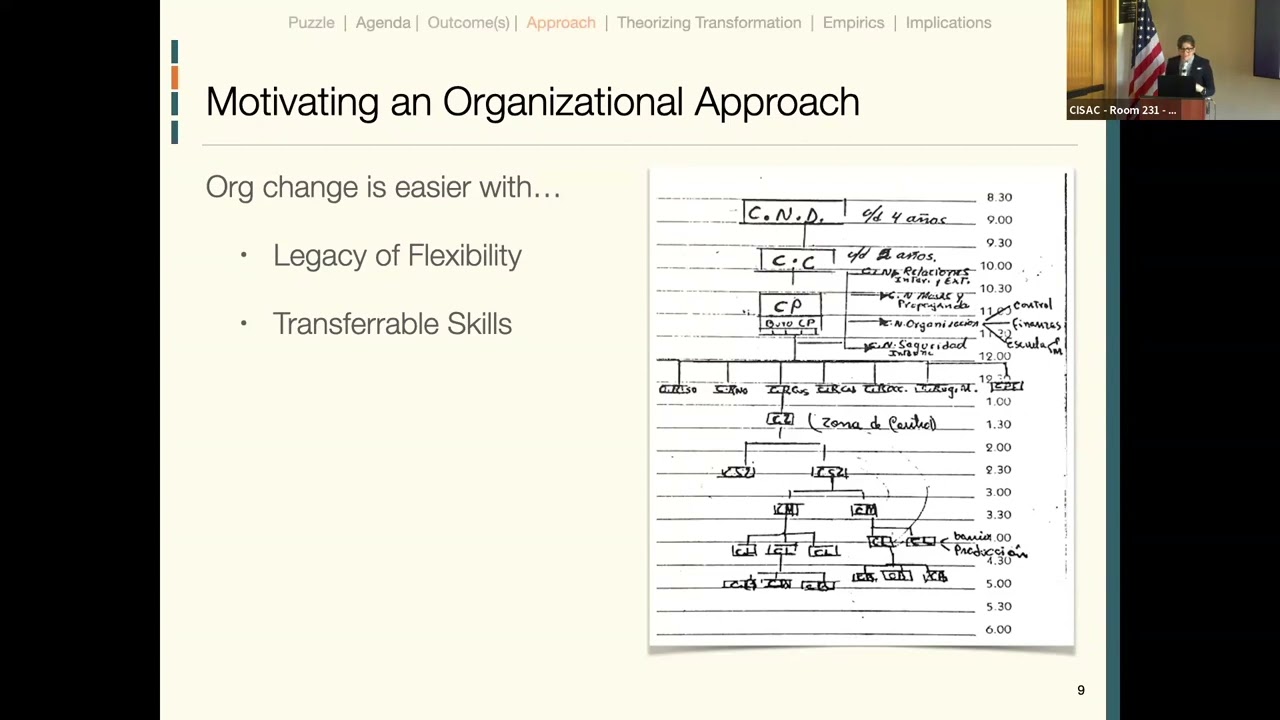
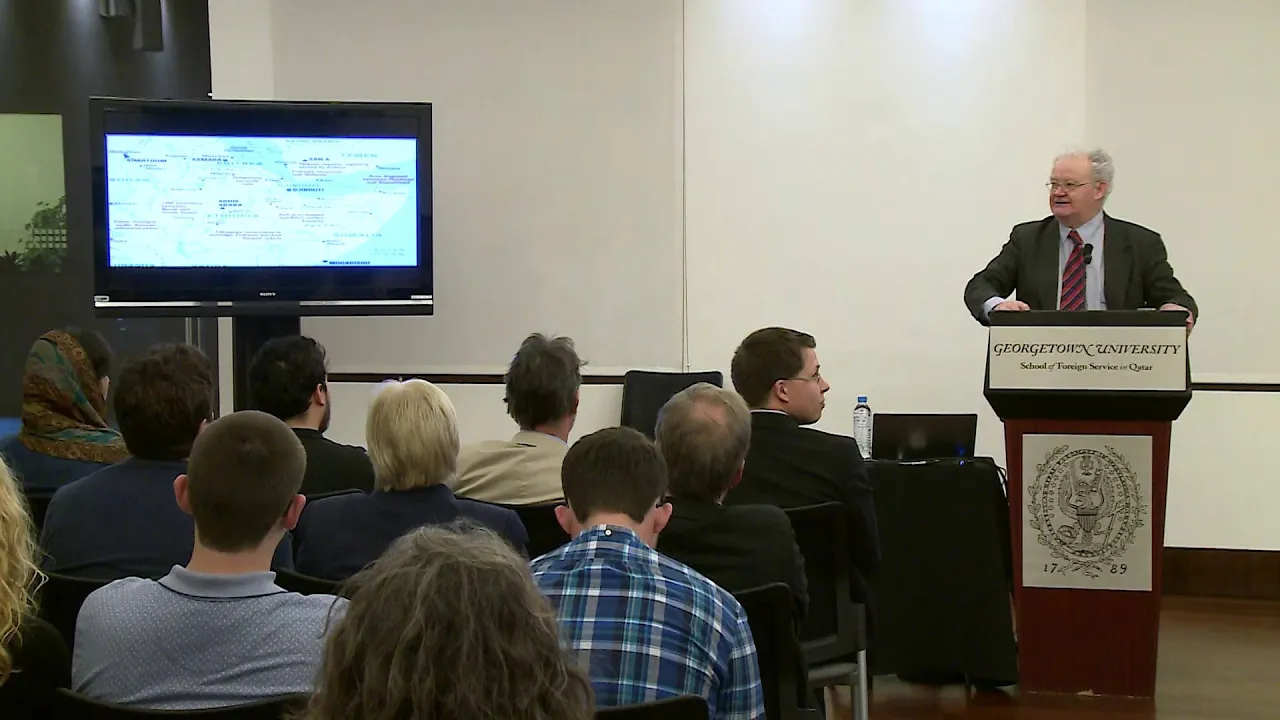
foreign there's peace building and African politics it's been published in International Security comparative political studies comparative politics Journal of Peace research African Affairs and I'm proud to say studies in comparative International Development which happens to be an article that we collaborated on together very pleased Phil Phil is a is also a former student of mine along with Roger and fatini and it's great to have him back and I know he's a great alumnus of the SSP program in 2020 Phil was awarded the Harry Frank Guggenheim distinguished scholar award for research on armed groups and peace building for his work in cotivoire you see Fulbright support sciences and Humanities research Council of Canada Belfor Center support and from the usaid and he got his PhD here at MIT in 2019 and it's really just terrific to see him again and to welcome him back and he's going to talk to us today about about some of that research embedded commanders Rebel governance military integration and State Building after civil conflict and I know that he is struggling to get our next paper done in time because he's got a book contract which um which we're very excited about for him so give him a pass on that but it's great to have you here Phil [Music] I remember when I was a graduate student here at MIT you know I would come to these SSP seminars every week you know partly for the engaging speakers partly for the free food and you know at that time you know I was I was the nervous graduate student sitting in the back row thinking you know if you were if you were ever invited as a speaker to the SSP series at MIT you'd know you that you really made it so uh I'm I'm sorry that Roger Peterson couldn't be here but thank you so much for that kind introduction Evan it's great to reconnect with folks here so I'm going to talk about my book project which began as a dissertation inside these walls and this book is about two things first it's about the role that local field commanders play in Civil Wars the roles that these commanders play in governance of Civilian communities as well as post-war military integration processes field commanders are these critical political actors in conflict-affected societies they're the ones that control the means of organized violence on the ground often they control large parts of the economy and yet we actually know very little about these commanders about their behaviors and why they sometimes contribute to the project of post-war State Building and stabilization and why they sometimes resist that at a more abstract level this book is also about the emergence of political order in Weak and conflict-affected states in particular my project highlights the tension between local institution building that can be welfare enhancing for local civilians on the one hand and the emergence of centralized rule on the other my argument connects the type of Rebel governance that emerges in Rebel occupied communities in Civil War to the resources that commanders carry into the post-war transition and their incentives to resist the Central State building project of post-war Elites and my argument challenges the conventional wisdom out there that wartime institution building is good for post-war State Building actually the opposite can be true Rebel governance that creates embedded popular and legitimate commanders can actually result in military actors that are very difficult for the Central State to control in the aftermath of conflict so this is the agenda for my talk today I'll start by talking a little bit about the basic puzzle of Commander resistance in the aftermath of Rebel military integration processes what are the major research questions and the motivations for them in this book then I'll give a bird's eye view of the major argument of the book which is about how the type of wartime governance that emerges in occupied communities shapes whether or not local field commanders remain embedded in those communities through the post-war transition or not and then ultimately how that affects their capacity and motivations to resist the Central State building project in the post-war period they don't give a few highlights of some of the sub-national evidence in the book from kotivoire which is the major case study there's cross-national and sub-national evidence in the book but I'm going to highlight three pieces of evidence just to give you a taste of some of the analyzes in the book number one I'll talk about the relationship between patterns of wartime Rebel Rule and the relationship that commanders are able to sustain with formerly occupied communities second I'll talk about the relationship between wartime governance and mutinies and protests against the Central State in the post-war period and finally I'll mention some evidence about the link between wartime governance and Citizen Police relations in the post-war period and then depending on time we'll wrap up maybe with a few thoughts on where I'd like to take some of this research from here all right so let me start with the basic motivating question that inspired this project why couldn't ivorian Rebels build a loyal Army here's Cote d'Ivoire country in West Africa that was divided by a civil war from 2002 to 2011 and you had a basic territorial partition where the northern half of the country was controlled by an Insurgent group called The Force nouvelle or the FN who was fighting on behalf of excluded marginalized ethnic groups in the north they were also largely a breakaway faction of the ivorian military after about nine years of stalemate in this war there was an election crisis that some of you may recall in 2011 where the sitting president of Cote d'Ivoire Lauren bagbo refused to accept the results of the elections which something that maybe we know something about in the United States as well in this case this triggered a resumption of the war the rebel Army swept down from the north deposed Lauren bagbo and installed a new president Alison watara who remains in power as the president of Cote d'Ivoire today as reward for this military Victory watara dissolved the Old National Army of Cote d'Ivoire and resurrected it as the forest Republican Dakota and this new National Army was largely staffed and commanded by the force nouvelle the former commanders of the force nouvell became the leading commanders of the ivorian army took up the most uh prestigious and sensitive posts in the State security apparatus in the picture here you see two of these commanders isiakawatara and Sheriff Usman who were powerful Zone commanders of the FN Army in the North during the Civil War and they both took turns as head of the Republican guard in the post-war period but despite this apparent you know Victory and success loyalty did not last long in the ivorian case these former armed group commanders that integrated into the ivorian military resisted implementing a lot of the government's plans for security sector reform and disarmament of these former wartime networks instead they sustained ties to large networks of ex-combatants throughout the country and periodically would mobilize these armed networks against the government to get what they wanted in 2017 while I was doing field research in Cote d'Ivoire there was a massive outbreak of mutinies across the country where former Rebel soldiers who were inside the army came out of the barracks and took control of police stations and gendered arms stations around the country they kidnapped the defense minister briefly and this was a show of force against the watara government they wanted bonus promotions and payouts after a little bit of you know crisis negotiation they'll watch our government basically gave in and caved gave these concessions to these Mutiny soldiers and temporarily resolved the crisis now what's puzzling about that kind of event is that it contrasts with outcomes that we see in other cases of Rebel military integration in cases like Zimbabwe after the Civil War or the zenu PF defeated the white apartheid state in the 1970s or the Rwandan patriotic front which became the Rwandan patriotic Army in Rwanda deeper cases where integrating field commanders remained highly loyal to the political Elites that they installed into power in fact these cases inspired a lot of scholarship uh you know basically making the argument that Rebel Victory is good for stability Rebel military integration can be a successful folding because you're basically soothing former belligerence security concerns by giving them a position inside the army but if we look across nationally we see a tremendous amount of variation in outcomes in the aftermath of Rebel military integration by my count since 1946 there's been about 60 cases of this as the primary means of Civil War termination to major civil conflicts so criteria for inclusion here is a there was a civil war where an armed group challenged a sitting government and B that armed group succeeded in integrating its military forces into the existing state Army right so if there was just some agreement on paper that promised military power sharing but then it was never implemented I'm not counting that as a case of Rebel military integration so the countries in pink here just show you the cases that are included in this sample right so where this has occurred since 1946 and of these cases by my coding over half have experienced a major episode of defection by an integrating field commander a commander that belonged to the armed group during the Civil War integrated into the military and then turned their guns on the political leaders that they installed into Power either through organizing a mutiny as in Cote d'Ivoire or in more extreme cases of joining an open Rebellion or launching a coup and in many cases these instances of Commander defection have led to the collapse of state regimes and Civil War recurrence in addition to this cross-national variation there's a lot of sub-national variation inside cases as well right so just think about the case of Cote d'Ivoire in 2017 a lot of commanders were mobilizing their armed networks against the government but not all of them some commanders remained loyal some remained you know steadfastly in support of the state building project of the elites that they installed into power ex-rebel commanders are not a homogeneous block often they're following their own strategies right and so I'm interested in explaining this variation both cross-nationally and sub-nationally across individual Commanders so this leads to the major research questions of the book number one why does Rebel military integration sometimes produce obedient militaries that permit the consolidation of centralized State Authority but in other cases does not and what explains individual level variation across commanders why do some resist the Central State building project of Elites in the capital city why do they resist demobilizing their irregular wartime armed networks why do they launch mutinies or coups or rebellions While others don't do those things While others remain loyal so we can turn to the existing literature for you know some ideas that have been brought to bear about these problems there's a long tradition in the Civil War termination literature focused on the role of third-party intervention and the problem of Anarchy and the problem here that you know Scholars Like Walter and others have pointed out is that in the aftermath of Civil Wars State institutions are weak you don't have a credible you know enforcer to make sure that commitments are abided by and as a result there's serious commitment problems that crop up in post-war States right so military actors in particular they don't want to get rid of their military power that they can use to defend themselves they don't want to commit to some uncertain or potentially risky new institution building or state building project that would involve them giving up even momentarily their own power and their own ability to defend themselves and so Scholars have made the argument that the only way out of this problem really is third party enforcement you need some external power that's going to come in that's going to say okay you know here's the timeline for rebuilding the new military you're going to temporarily take away you know your arms and networks and then you'll integrate and there'll be some external peacekeeping force that will sort of bridge that security Gap so I agree that commitment problems and the problem of Anarchy are very Central to understanding the behavior of these ex-rebel commanders through the military integration process I'm less convinced that third-party interventions actually resolve this problem adequately if we look empirically it's not that hard to find prominent cases where well-resourced and long lasting third-party interventions have failed miserably to Shepherd through a successful military reconstruction effort South Sudan Iraq Afghanistan I mean you can think of many cases here and largely you know or in part I should say this is because the state building project that third party enforcers often want is at odds with what local military actors want and what they view as being in their own best interests thank you so a second group of scholarship from the Civil War termination uh Camp has put the emphasis Less on third party intervention and more on the terms of settlement right so maybe the way that the civil war ends will shape post-conflict outcomes one of you know one of the through lines of this literature has been that military victories right where there's a clear Victor that emerges they can monopolize power that's what you want coming out of a civil war that's what's going to facilitate successful institution building because that Victor can monopolize power they can you know keep Challengers at Bay the issue here is that if we actually look empirically there doesn't seem to be an association between Rebel Victory and reduced incidence of Commander defection whether we're looking at cases of military integration through a power sharing Arrangement or through Rebel Victory there's practically there's practically no difference there even Victorious Rebel coalitions like in Cote d'Ivoire face these problems of trying to transform a wartime organization into an incumbent military that comes with a lot of tricky problems other Scholars have talked about ideology potentially being important you know maybe if the armed group is inspired by revolutionary beliefs like Marxist leninist beliefs or islamist ideologies that these sort of revolutionary ideas and belief systems could Inspire more loyalty on the part of military commanders to their political leaders and help them build you know more organizational discipline but ideology Cuts both ways right the same ideology that could Inspire loyalty on the part of commanders could also Inspire grievances right if they think that the political Elites are not living up to those revolutionary ideals they might actually you know launch a coup or Rebellion to replace them with more effective leaders and that's something that we've seen quite frequently finally coming out of the literature on civil military relations and coercive institutions there's been a lot of work emphasizing the role of ethnic ties and ethnic cleavages if military commanders and political Elites are part of the same ethnic group they'll be embedded in the same social networks it's easier for them to develop trust and share information and this might be important for understanding why commanders remain loyal or you know resist those regime Elites so I think there's a lot to these arguments and we actually do see pretty compelling evidence in the record of Rebel military integration that when you have co-ethnic ties between regime leaders and commanders that is a force for stability but ethnic ethnicity is too crude of a variable to account for all variation here especially when we're looking at that sub-national variation across individual commanders it's a less useful explanatory framework in the case of Cote d'Ivoire for example almost all of these extra Rebel commanders from the force Novell were ethnic Northerners they shared the same ethnic group as president watra that they put into power and yet there was a lot of striking variation in their behavior so building on this work and taking it as you know a Point of Departure what my argument is going to suggest is that we need to understand the local political resources that these commanders build up during the wartime period and how those resources shape their available bargaining power we need to understand whether these commanders have the local mobilization capacity and legitimacy in the communities that they formerly controlled in order to understand their political calculus in the post-war okay so in Broad strokes this is the summary of the argument of the book I'm going to walk through it um you know going from the top in the wartime period to the ultimate dependent variable Commander resistance or loyalty at the bottom we can get some of the nuances that I'm going to gloss over here in the Q a but essentially the argument goes like this during Civil Wars Rebel groups have to acquire obedience and compliance from the civilian populations that they control to do that they could rely purely on coercion but that's costly and inefficient in the long run and so they're likely to turn to some set of governance institutions to solicit that civilian obedience there's been a lot of literature on these variations in Wartime governance types and institutional Arrangements uh you know work by Zach manpilli and our hona you know Weinstein Megan Stewart a lot of Scholars have been thinking about how do these wartime institutions vary what I'm going to do is take that theorizing as a Point of Departure to study the legacies of these different forms of wartime governance for commanders behaviors in the post-war period so let's start on the left hand side and let's walk through two stylized theoretical scenarios so if Rebel rule in the wartime period is predatory that is there is limited goods provisioned for civilians there's limited effort to restrain abuses of civilians by occupying Rebel soldiers and there's no mechanism for power sharing or participation among the population that is a form of wartime governance that is likely to result in non-embedded commanders commanders who have weak ties to the population weak ties to local Elites and once they leave these communities in the post-war period once the commander integrates into the army and goes somewhere else it's going to be very difficult for them to sustain legitimacy sustain access to local social networks in those areas as a result these commanders are going to have limited mobilization capacity and low bargaining power vis-a-vis the Central State in the post-war period right they're basically dependent on political Elites in the capital to you know give them a position inside the post-war military and they don't have external autonomous sources of mobilization capacity that they can turn to because of this these commanders you know wind up with little choice but to go along with the Central State Building plan of regime Elites and they don't have a lot of incentive to resist it in part because they have limited mobilization capacity but also just because Central centralized State Building is not so threatening to them they don't have that much to lose they don't have very strong political or economic networks inside peripheral areas of the country anyway so it's better to get on board with the State Building program that Elites in the capital city want to implement okay on the right hand side we have a different story in areas where collaborative Rebel rule emerges that is where there is widespread Goods provision for civilians there are efforts to restrain abuses there are mechanisms for power sharing and participation in local decision making that's the sort of responsive and Welfare enhancing governance that is likely to produce embedded commanders commanders who have strong and enduring ties to these communities where they have a lot of social support moral recognition and legitimacy among the population as legitimate sources of governance and Authority embedded commanders negotiate with the Central State from a fundamentally different position for these commanders they have a lot of bargaining power if they don't want to do something that the president wants them to do they have a lot of Leverage at their disposal they can make life very uncomfortable for Elites in the capital city they also are likely to be more threatened by the centralized State Building mission of Elites in the capital city they are not interested in institutions from the capital being redeployed into their areas that might threaten their hold on local commercial or economic networks or threaten their ability to you know maintain their political support base so for these reasons embedded commanders tend to have both more capacity and stronger motivations to resist Central Elites in the capital now my argument is mainly concerned with whether or not we see Commander loyalty or Commander resistance we can talk about the degree of Commander resistance right there's a big difference between you know resisting a demobilization program and launching a coup to depose the President part of that has to do with what the regime Elites are going to do in response and whether they are successfully deterred or whether they try to purge the commander so that's sort of a secondary Dynamic that we can you know talk more about but primarily in this talk I'm going to be concerned with this basic distinction between whether we see loyalty or any resistance okay so here's a empirical overview of the different components of the book where I'm marshaling evidence both sub-nationally and cross-nationally to try to explore this argument the heart of the book is a series of chapters on the Civil War in Cote d'Ivoire where I conducted field research did a lot of interviews with former combatants with government officials with individuals in former Rebel occupied communities I've been building an original data set on Rebel occupied localities in Cote d'Ivoire that tracks the type of Rebel governance that emerged the nature of post-war Commander Community ties in those communities and whether or not we observed mutinies or other forms of resistance by former Rebel actors against the state in addition there's a chapter looking at qualitative comparisons from a couple of a couple of towns in northern Cote d'Ivoire that I selected on the basis of a matching technique and then zooming out from the ivorian case I have an analysis of 60 cases of Rebel military integration since the Second World War so what I'm going to talk about now is just a couple pieces of evidence focused on the sub-national component here and if you're interested we could talk a little bit about the cross-national component in the Q a all right so here's Cote d'Ivoire and as a refresher and you know reminder to those who may not have studied this particular country in much depth the Civil War that Afflicted Cote d'Ivoire in you know the mid-2000s was essentially an ethno nationalist Civil War driven by the political exclusion of ethnic Northerners in the country the regime of Lauren bagbo had an ethnically exclusionary ideology they were taking steps to purge Northerners from the military this triggered a rebellion and defection by uh ethnic Northerners inside the ivorian military in 2002 who wound up in control of the northern half of the country so here are the zones of control under the FN during the ivorian Civil War and you can see that they divided up this territory which is you know about twice the size of Austria into 10 different administrative zones each of these zones was controlled by these people that called themselves Zone commanders and below that you had smaller sector commanders who controlled smaller areas and you know below that you had sort of platoon-sized units my analysis is mainly going to focus on these Zone and sector commanders as the key power holders and the key agents of governance in the North during the Civil War all right so the first major data collection effort in this book is just to document the forms of wartime governance that emerged in the rebel occupied north of Cote d'Ivoire during the Civil War so what I'm showing you on the map here is the distribution of sub prefectures in Northern Cote d'Ivoire and how I've coded them in terms of the nature of Rebel rule that emerged there so the darker it shaded the more collaborative rule was in this area and the areas that are shaded lighter had more coercive or more predatory rule so how am I coming up with this coding scheme and categorization in 2017 I implemented a survey of community informants in 93 different sub prefectures and localities across Cote d'Ivoire these were essentially extended day-long interviews with traditional leaders Civil Society leaders teachers other people who had a wealth of local knowledge about the histories of these localities what happened during the Civil War what kinds of goods provisioned by the rebels there were and what was the relationship between different figures in the community and these Commanders on the basis of those Community informant interviews I code this measure of collaborative rule that ranges from negative one to positive two and the indicators here this scale is based on four indicators right whether there was widespread Goods Goods provision whether there was restraint on civilian abuse whether there was mechanisms for power sharing and mechanisms for civilian participation so the darker it's shaded the more of those things that this community had during the war now I'm happy to talk uh you know maybe in in the Q a about um the reasons for this variation right which is an interesting question in itself right why did some areas witness much higher quality governance than others and there are a couple of variables that you might think would be very important that turn out to not have so much explanatory power so ethnic demography for one right maybe it's just the areas that were you know populated by ethnic Northerners who already liked the rebels in the first place so they had better relations and you know you wind up with more collaborative governance actually we don't see any correlation at all between the nature of ethnic demography pre-war political support for watara and these measures of collaborative rule a lot of areas in the west actually that have collaborative governance these are very diverse places that are not just you know popular related by ethnic Northerners vote shares for watra are much lower here actually than other areas of the Rebel occupied North and so we can't account for this distribution of Rebel rule in terms of pre-war port for the Rebellion okay so the second major component of data collection here this is the first major dependent variable of the book is Commander embeddedness right weather commanders were able to sustain ties with these communities in the post-war period so here again I'm drawing on the community informant survey to measure things like did the commander come back to this community after integrating into the military for private visits right did they come for funerals for marriages things like that did they offer material support to former combatants or youth in the community sometimes they would give you know pocket money sometimes you know bags of rice or sugar things like that is there evidence of an ongoing material relationship between commanders and the community a measured weather continued to provide order and security to the community in an informal capacity remember this was not their job description right these were Military Officers who integrated into the military and had a role in usually in the land army or the presidential guard of the post-war military it's not their job to be going back to these places and fixing problems of local banditry but in many cases they did right they were solicited by the community to come back and you know provide governance functions and finally I measured whether or not commanders had a formal political position in the community right whether they were elected as mayor or you know a member of parliament uh or a regional counselor or something like that okay so the next lot I'm going to show you is taking these four indicators combining them into a four-point pendant variable and then we're going to explain that variable in terms of the quality of wartime governance that was in that locality during the war and a number of control variables and we see as expected by the argument there is a positive and significant relationship between the quality of wartime rule in these localities during the ivorian Civil War and the strength of commander embeddedness in the post-war period notably you know whether or not a liability had Northern ethnic composition does not seem to be a significant predictor of whether it maintained ties to a commander in fact the only other variable that mattered a lot was population size which makes sense because the larger more populated places were tended to be areas where the rebels could invest in governance to increase their ability to tax and recruit okay so this is the major the first major finding of the book wartime Rebel rule seems to be associated with post-war commander embeddedness in these communities even after they have integrated into the army all right so the second key analysis in the book is looking at the relationship between Rebel rule in the wartime period and the occurrence of mutinies and protests by former Rebel soldiers against the state in the post-war period so a collected a new data set on mutinies and demobilized rebel protests so Mutiny is against the government by ex-rebel soldiers who are inside the Army that's mutinies and protests against the government by ex-rebel soldiers who are not integrated into the army that's demobilized Rebel protests in both cases these are indicators of Commander's power and capacity to organize Collective resistance against the central government and what we see is that there does seem to be you know much stronger or higher average rates of collaborative rule in the localities that also saw mutinies similarly in localities that had demobilized Rebel protests on average they have higher scores on the wartime governance Index right so again consistent with the idea that in areas where the force new vowel governed in welfare enhancing ways commanders sustained ties to local armed networks and were able to mobilize those networks against the state as a tool of course of bargaining and this is just showing you know how the predicted number of mutinies in a given locality year changes as you go from the most predatory form of wartime governance to the most collaborative form showing a positive relationship you know overall these numbers are a pretty small right the the odds that any given locality sees a mutiny in a specific year is is pretty low overall but when you aggregate this up over time you wind up with pretty significant figures okay so this is the last piece of quantitative evidence that I'm going to show you your brain's probably starting to get a little bit fried but I think that this one's really really interesting so I wanted to talk about it what I'm showing you here is a figure that depicts the relationship between the quality of wartime governance in Rebel occupied communities and the choices that citizens make in the post-war period about who they view as a legitimate source of governance and Security in the post-war period right it's important to consider whether Rebel governance creating embedded commanders actually disrupts the relationship between citizens and redeploy redeployed police forces in the post-war period so this is based on a survey of 1200 ivorians in conflict-affected areas of the country that I carried out in 2018.
and one of the questions we asked on this survey is asking people a hypothetical you know if you were a victim of a crime who would you turn to for conflict resolution or for support for that crime right this is a question that criminologists like to ask to kind of weigh relations between citizens and police in different environments and so they have different options that they could choose from right they could turn to an NGO a family member local politician an ex-combatant former Commander a traditional or a religious leader or the police and gender Harms and what we see is that if we increase the quality of wartime Rebel governance in a locality from its minimum to its maximum citizens become more likely to turn to commanders they also become more likely to turn to traditional or religious leaders and consequently they are less likely to turn to the official police right the red police forces in the community who are supposed to be right in theory this is these are the folks who you know they they should be turning to but these informal sources of security and governance persist into the post-war period so I think this is a really interesting additional pathway by which wartime governance seems to get in the way of or hinder a centralized State building project okay so let me briefly walk you through two qualitative cases to wrap things up so here's one case study that I take a look at at in the book this guy is fofie kwaku Martin who's no relationship to me and he was the commander of korogo one of the largest cities in Northern Cote d'Ivoire during the Civil War now fofia is a very interesting character he cultivated this reputation as being this very strong Ally of the community he would hold regular meetings with civilians he would partner with local hunting associations to you know prevent crime in the community sort of seen as a guy with you know a firm hand but was fair and because of his effective governance capacities during the war faucier sustained a lot of popularity and a lot of legitimacy in core hogo into the post-war period he maintained a very very large private Army and a lot of mobilization capacity throughout the city so he had a series of arms caches that he hid around uh that he hit around core hogo he maintained ties to demobilized excombatant networks in the city he maintained ties to local traditional Elites in corogo he was basically when I you know did research here in 2017 still a very Central political figure in the city despite the fact that he had no official role there right he was integrated into the military and he was supposed to be in the capital in Abidjan one U.N group of experts reports uh in 2015 actually estimated that he alone had more Firepower than the rest of the ivorian military just by himself in 2017 tensions boiled over between fophier and president watara they'd been sort of in a deteriorating relationship for years where they were trying to relocate him out of the country at one point they tried to fire him but they had to back down from that one of his lieutenants that I interviewed in core hogo you know he explained the mutinies that happened in 2017 by saying you know we're the ones who put water in power and and we can take him out again right he's got to listen to our demands and you know we won't be pushed around by this by this president in the capital city you know the water government and the U.N Mission while it was in Cote d'Ivoire tried to push back on this guy uh tried to relocate him one you an official that I talked to said you know we tried to cut his branches but but the Roots Run Deep ultimately they weren't willing to rock the boat and risk that might escalate things even further okay so a very different story happens uh in another community in Western Cote d'Ivoire called mahaplu which was governed by a another former military officer this guy command Ando and unlike in Couture Ando is not a popular character in mahapla governance by the FN in this locality was very abusive and coercive throughout throughout the armed conflict there was basically no mechanism for communication or participation of the population in local decision making and very limited Goods provision as a result of this he's not welcome there today one local Elder that I you know interviewed said you know look if that guy came you know basically we would run him out of town I mean we put up with them when we had to but now we don't want to see this guy again so he lost his ties to the community he's not in touch with the xcombatant live in this community today in 2017 there was very little that happened in mahapla most of the excombatants that I interviewed there you know they said we we didn't participate in these mutinies we're not really involved in that anymore right they don't see themselves as connected to uh you know to the politics going on between commanders uh and president watara um you know for me the fight is over this is what one of them said and Ando himself you know he he basically sat it out he remained loyal to the president um you know he didn't come out against the mutinies he also didn't support them in any way all right let me wrap up with a couple implications my project is underscoring the fact that Rebel military integration is not a Panacea for rebuilding successful States or consolidating centralized Authority in the aftermath of Civil Wars the literature has made the case that you know Victorious Rebel coalitions ought to be successful State builders that integrating former Rebels into the military should soothe security concerns and create representative military forces but we need to pay attention to the social roots and the political resources that these commanders carry in to the post-war position because this has a lot to do with their political calculus and behaviors my book is also highlighting unintended consequences of wartime institutions institutions governance practices that are welfare enhancing for civilians in the short run during Civil Wars can later come to haunt the central government in the post-war period because they permit military actors to remain autonomous locally embedded powerful and with strong incentives to resist the centralizing project coming out from the capital city finally for those of you who might be interested in issues of civil military relations coup proofing course of Institutions we have a lot of work in that literature looking at um you know these different strategies of coup proofing that leaders you know sometimes turn to to try to mitigate the risks of anti- regime Collective action by the military one Co you know one implication of my analysis is that coup proofing tactics including in Cote d'Ivoire are often implemented in direct response to this problem of embedded military actors who have autonomous mobilization power and Who present a direct threat to the interests of the state Elite and so I think this is you know one potential explanatory variable that should be given some more attention in the literature on course of institutions okay so just briefly a couple you know a couple extensions of where I want to you know take things from here I have one project ongoing that's looking at regime strategies to manage these ex-rebel commanders right the the state itself is not a passive actor there are different strategies that the president in the capital city can employ they could try to undercut these embedded commanders and destroy their networks they could try to co-opt them into the state and make use of them right so we we see different strategies in different cases and then more broadly I have some other work looking at the longer term legacies of wartime rule for broader issues of post-war order and democracy you know asking questions like you know how does arm mobilization during Civil War actually impact citizens willingness to make claims on the state right so I have some evidence about police citizen relationships what about broader issues of State legitimacy and willingness to you know engage in formal electoral politics and I'm also interested in the question of why X combatants choose to Rally behind former armed group group leaders or not even when there's not much of a prospect of material support from those leaders Okay so I think I'll leave things there thanks so much for coming really looking forward to taking some questions [Applause] for this presentation my name is a muscle of the ideology explanation so I understand kind of the argument that ideology should make people loyal if they're all kind of on the same page but that's not necessarily true I'm curious about what I would see is a pattern whereby some ideologies kind of come with organizational blueprints to use so you mentioned Marxist leninism that often comes with this kind of very specific party mobilization structure that I would think enables the civilians to kind of build out a system that is better able to monitor their commanders so I was curious about how ideology and specifically the institutions that different ideologies might lead to plays into this story great yeah thanks uh for the question it was uh right that was the name great uh well thanks so much for coming and thanks for the question um you know I I think that ideology is a potentially important explanatory variable under certain conditions right and those conditions um might include things like fighting a very intense civil war against the incumbent government where in order to survive at all the armed group is going to have to um you know rely a lot on inspirational beliefs and probably have a motivating ideology to keep it together under you know the pressures of warfare and under those conditions uh we do see some ideological groups some you know Marxist leninist groups that have relied on those ideological belief systems and they've persisted into the post-war period and at least appear to be responsible for some degree of stability right so one one case there that I might think of would be Zimbabwe and zenu PF and it did have you know a motivating revolutionary ideology behind it and if you talk to you know military commanders in Zimbabwe today of course they did end up turning on Mugabe eventually but but prior to that they would have said like look we were we were taught when you know back in the Revolutionary days we were taught that you know the party follows the gun and this is the structure that we put in place and we select cadres who are going to be behind that mission um I think the the issue there is that it is confounded by uh by the nature of War fighting itself and the fact that Zen and PF fought a very bloody intense Civil War and that might have been responsible for the types of organizational structures that it created rather than the ideology itself right you you see other armed groups that proclaim a Marxist leninist ideology that you know more exists on paper than in practice right so sometimes it can be the Strategic dynamics of the Civil War that perhaps matter more than the formal ideology that a group aspires to but you know I think that this is a complex phenomenon that has multiple answers to it right probably multiple variables that matter and so I don't want to dismiss ideology and say that it doesn't matter I just think that there's variation that it can't explain and that I hope that my argument can you know explain some of that outstanding variation yeah chat thanks yeah me too so two like really minor things but just throw them out there and you can integrate them or not but the first is I'm very old friends with multiple logic because it's Houston growing Behavior models and you may want to see if it has this assumption about the independence of irrelevant Alternatives built into it it's required you may want to rerun that analysis of just having a dichotomous of police versus seeking out the military commander not so much for this crowd but I think in other crowds you might get that question also a small comment I really wanted to see your central argument a little bit earlier in the present that was fantastic stuff but the the beginning part was a little harder to follow because we didn't have the organizing um so the question is on the international campus and whether you wanted to say anything about that since you didn't have a chance to sorry about the yeah that's about all the all the other things across Nationals yeah sure so we can maybe I can you know give a give a flavor of it and if folks want to follow up on any on any of this Ken um so this shop initially of 60 cases of rabble military integration right so that's cases where an armed group challenged sitting government and actually carried out some degree of integration right so I'm not including cases where there's just some power sharing agreement on paper I'm coding defection so the dependent variable is whether or not within a 10-year window any of those integrating commanders from the arm group defected from the post-war regime so that could be participating in a mutiny anti- regime coup or Rebellion see if this still operates perhaps not okay well in any case um and what what I find there is that I did have an extra slide with some of the cross-national results what I find is that if we take an indicator of wartime Rebel Goods provision and here I'm using Megan Stewart's data set on Insurgent governance and Reiko huang's data set on Rebel Goods provisioned during Civil War and we just create a dichotomous variable about whether there was inclusive Goods provision by that arm group during the Civil War there are reasons why I think that that's one of the only valid indicators that we can actually measure across time but if we just look at whether the arm group included provided Goods on an inclusive basis during the Civil War then we see that there's a significant positive relationship between that and the occurrence of defection within this 10-year window revolutionary ideology not significant uh you know GDP per capita not significant military Victory versus negotiated settlement uh not significant the only thing that is very significant and it has just as much explanatory power power as wartime governance is ethnic cleavages so if the integrating military commanders came from a different ethnic group than the sitting head of state than the risk of defection is higher right and and that's very consistent with what we know from the existing literature Barry Eric Eric and this woman here collect some more names after that so I'm wondering whether the surface any information or understanding of how these local Commanders dealt with the transition from War to peace in other words how they read the emerging peace settlement or the emerging Constitutional Convention after Victory or whatever because it seems to me that you're you're leaders who participated in local governments should have a lot more confidence in their ability to keep getting their way in some sort of actual political system so the terms of the settlement won't be a winner take all moment for them whereas for the commanders who were basically you know thugs purely extractive this is the last moment they had any power to anything so once they're divorced from the area that they've gone their resources from coercively and had their units that did it they're completely dependent so for the reasons that you say they don't Rebel later they should be very problematical during the transition whereas for the reasons that those are problematical later during the transition they can afford to take a more relaxed attitude I'm just blue sky here inductively but I'm just wondering do you see any patterns in that in the moment okay no it's a it's a really good question and it's making me it's making me consider whether there is a separate discussion of this point that is worth integrating in uh in here about this because the basic logic would be that there's some window of opportunity here where the commander sees their own dependence on the Central State coming and so now is the time to maximize extortion right in order to seize the moment on on this activity and in fact I believe that that is precisely what you saw across much of the capital city in Abidjan when it was newly conquered by the force nouvelle in 2011. they had been focused on fighting the war right so most of these commanders were mobilized away from the communities that they controlled for the march on abhijan they defeated the Army's loyal to Lauren bagbo and once bagbo was arrested they were newly you know in charge of the big you know the big pot which was controlling the capital city of Abidjan right because that's where the most lucrative opportunities for extortion were and exactly some of these commanders who had predatory and coercive you know histories in their past I'm thinking of Sharif whose man who is in control of the of the city of quake he became enormously powerful in many suburbs of abhijan in this sort of uh transitional period in 2011 2012 2013 and that was a period where I was not in Cote d'Ivoire then but my interviewees related to me that this was this was a terrible period this was worse than the Civil War period in in during that initial phase of post-war transition because these commanders were setting up shop in a new Zone and sort of establishing um these these extractive networks and a lot of that has now been dismantled by now because it was sort of ephemeral and short term as you said so it didn't it wasn't a permanent security problem in the way that the embedded commanders became a permanent security problem but it was a short-term spike in insecurity in certain zones of the country where these predatory commanders found themselves at the moment of the war-ending settlement so so I guess I would just say that I think that's a really interesting Dynamic to unpack and this may be something that could be you know that would be worth thinking about and researching a bit further right it sounds like I have no good Solutions because during war that the solution that will be safe down the road is to allow credit managers which might not be the ideal strategy for preventative characters right but then maybe these things that might be useful during conflict to have collaborative and attention relationships are threatened to be once you discussed so what have I to do if I want to be a good you know you know post-war meter because even the policy recommendations that you have for immigration like undercutting uh the networks that these speakers have potentially in a drive you know further yeah great yeah thanks so much Eric and it's nice to see you again um and thanks for the question so so this is exactly uh the the puzzle that I'm currently working through with a couple colleagues of mine Jeremy Spate and Julia piccolino we're trying to build a typology of regime strategies to manage these former armed group leaders in the aftermath of Rebel military integration because there are uh a menu of strategies that they can select from all of which have some some downsides and disadvantages to them and some are riskier gambles than others in general what have we seen in Cote d'Ivoire I think we've seen a general evolution of The Stance of the central government from early on in the post-war transition where it took quite a hands-off approach I think it's fair to say that they were deterred by the power of these embedded commanders from pushing too aggressively the security sector reform the police reconstruction the reform of security institutions that you know the U.N Mission kept harping on them about like you gotta you gotta implement this right the the nobody's been demobilized the DDR programs defunct like why isn't this going anywhere there's no political will there's very clear reason for that it's because you know they they don't have the bargaining power to push that through down the throat so these commanders who don't want it over time that stance of you know kind of Live and Let Live and will will grant these commanders their sphere of influence and not intrude on it too much that has slowly changed over time and you do see a more aggressive posture by the water of government over time in part I think that that actually reflects um the consolidation of a one-party autocratic state in Cote d'Ivoire since the end of the Civil War and the fact that you know the water government was in a more precarious political position in the early years of the transition and so they could not pursue uh strategies that would involve purging or undercutting the networks of Commanders into threatening of a manner but once they'd consolidated you know a stronger electoral support base and particularly when some of the other opposition parties sort of have been in real trouble and are falling apart I think the government has felt more emboldened to actually push through some of these programs despite potential objections and this came this came to a real head in 2019 uh when the Watford government did actually demobilize and forcibly retire essentially a bunch of former FN soldiers and officers there was grumbling about it the former leader of the FN guillem sorrow you know basically said that this was this was turning into a dictator he actually tried to call on some of his comrades to overthrow watara but it didn't work out for him and Sorrows exiled in Paris now he's sort of like living abroad and doesn't have much uh much influence yet but maybe he'll make a comeback so I think we've seen a an evolution of the strategy of the government over time from sort of spheres of influence approach where we're going to accept that we are blackmailed and cannot do much to getting a little bit more aggressive over time both as the Electoral and political support base of the president has independently grown and perhaps as some of these Commander Community ties have decayed over time right I mean the Civil War recedes into the background eventually and you know so these relationships of um moral recognition and legitimacy between commanders in these communities they don't necessarily last forever right it's been 12 years now since the end of the war and so my expectation would be that we'll probably see more and more aggressive tactics by the regime to get rid of some of these guys I mean fofia is still around he's still um the commander of one of the major regional components of the land forces in Cote d'Ivoire um but but you know I wouldn't be surprised if he was sent abroad and kind of exiled into some defense attache role to kind of permanently get him out of the picture that's not something that the government would have gambled on maybe five years ago but I think in future they might they might try to do that there's more to say about that question but I'll leave the comment there thanks Eric great so I wanted to ask uh thank you by the way um I want to ask a little bit about the context of the code for case which I'm not familiar at all um so you know you're really framing you have integration as a Rebels for the barn some of the other cases that I am familiar with Isha who actually have sort of it just establishment of the military and it's partial reintegration with the rebels so it's certainly almost the opposite so you've spoken a little bit to the balance in this case say a little bit more I was also curious again sort of in terms of context uh as far as disloyalty you sort of said I mean Mutiny is is the operative word I didn't never heard the word you know coup or rebellions I'm sort of curious why it takes the form of communities and what that really was like in practice and then finally just really quickly I guess I would follow-up on or any support rights comment about ideology and their issues about Unity there eventually goes beyond that certainly engaging cases that I've looked at I mean ideology can Define sort of the legitimate roles in the military Society afterwards and obviously the degree of sort of desensis on that point between government and military communities thanks um well you know I guess just to quickly hit on that point about ideology again I I suppose I don't disagree with that I would just say that we do observe dramatic instances of Commander resistance and Military defections even within Marxist limited regimes right and I mean that pattern's well documented by Pearl mutter and others and so so the ideology argument needs to explain that somehow right why is it that you would still see so much defection in civil military Strife inside and what should be some ideologically cohesive regime right so I'm not saying that it doesn't matter but again I think there are other bargaining dynamics that uh that are probably part of that story um on on mutinies versus coups and rebellions I'm conceptualizing all of those actions as existing on a spectrum of resistance against Central State Authority right so you can imagine the most incremental form of resistance that a commander could make is just you know the order comes down that hey there's going to be a disarmament demobilization program the UN is funding it would you please send you know your thousand guys that are under your control to show up on this date enter this Cantonment Camp turn over their arms they'll all go and get you know re you know integrated into civilian life or perhaps be you know retrained and given some other position in the military so the commander can slow walk that and say oh I didn't get the memo sorry or they can send half the number of people that were you know intended to go or they can send the wrong people and just send people that they know and friends and stuff and leave their actual networks of armed supporters with their weapons right so that's a sort of the lowest level of resistance that you could conceptualize right because they're not supporting the state building project that the state is wanting to go through with but they're not trying to depose the central government either right mutinies are a step higher on the wrong of resistance right they're still not trying to depose the government but they are saying look we do have the power to get rid of you if you don't give us what you want we can destabilize things we can scare off Foreign investors we can make life a big headache for you right and so would you please hand over you know those promotions and payments that were that were promised um or you know or or give us some set of share of State rents at the most extreme form of resistance you do have efforts to actually get rid of the president the coup's rebellions I think those most extreme examples typically happen when the state ruler says I do not accept being blackmailed by these commanders I will try to purge them or otherwise get rid of them that triggers you know basically a spiral of conflict between commanders uh and the state rulers and there's preventive coups or a preventive strike against uh against the leader and Phil rossler's model of preventive coups you know says a lot about that Dynamic so I think that we can we can think about disloyalty and resistance kind of existing on a spectrum like that and just because you'd have a regime that manages to stay in power right through you know being blackmailed or successfully paying off its commanders that doesn't mean that there's not uh resistance happening there it just means that the leader has calculated and play their hands in such a way that they've managed to stay in power despite that resistance yeah well I don't know I don't think that he will he did play his hand very well I don't know okay I'm a postdoctoral research fellow here at SSP thank you for this very interesting talk I'm a Civ middle schooler so I'm fascinated about every everything of this my question is about you arguing because the way I understood it is an argument about capability those who can resist resist those who can't are happy to be integrated and don't resist the government but from some of the evidence that you presented it seems like there also appears some theme of motivation why they resist and also what kind of policies there is the embedded commanders resist with higher likelihoods versus lower likelihoods so is there an interesting variation within this embedded Commander subgroup that can help us learn more about why they're doing in terms of motivation but not the capability yeah thanks thanks Paulina um yeah so the question of motivation is an interesting one if we start with the basic model of exiting War to peace under conditions of Anarchy in a sort of you know Phil Rossler or Jesse Driscoll or fertini Christian model right that everything's Anarchy and the War ending settlement is basically an agreement among armed power holders who divide up the pie in some way but because of there's Anarchy everybody has some set of motivations for resistance right at least they have some set of motivations to maintain their own private mobilization power and capabilities because they don't know what the future is uncertain and you want to be able to make sure that you can protect your own interests so from that basic model all of these commanders have some incentive to resist right because they face that problem of Anarchy but that's that's defensively oriented motivations right perhaps there are also let's call them for lack of better term offensive motivations right where they want to acquire more they want to enlarge their share of the pie they want to you know gain more from the War ending settlement than than they initially agreed to there too I think that capability and motivations are actually very closely interconnected in this story so what do I mean by that embedded commanders who have strong ties to these communities in the post-war period are likely to have a lot more to lose from the centralized State building project of Elites in the capital city right if the police are redeployed if former Rebel networks are demobilized they lose a lot of power they lose a lot of potentially economic Revenue their standing goes down quite a bit so because of their initial high capacity they also have stronger incentive and motivation to resist what the Elites in the capital are trying to do now that might be accelerated and become even worse if because they are embedded the president identifies them as a Target as a threat and tries to purge them right so now they have both strong offensive and defensive motivations as well as the capacity to act on those motivations so that's why my argument essentially is primarily about capabilities but but I also expect that those capabilities affect how motivations play out at the same time and at the end of the day you get to the same expectation right that embedded commanders are more likely to have both capability and the motive to resist yeah sure I just think I mean come back my own hobby horses the only generated by yourself but they're you know in terms of your division between defense and offense so if you get the capital you get access to all kinds of international goodies you get access to extractions from the entire state so that's why I kind of ask the question so you have one set of people who are Thugs and you describe it what happens when they get into the capital city if they pick a neighbor in there and go behave like folks there because that's what they know and that's all the things but if you have these sort of pseudo state-like leaders these people who engage in politics development you know portion extraction you know the the usual state story they're looking at the capital and going okay I could lose in this game I could win right they get to play and compete in a bigger sandbox there's more to gain even the control of the country maybe there I mean I I what I know about African politics because it's a symbol by this big resolution that Moyes chambe was in in the katanga he was a rebel but didn't he end up at one time there's five minutes or okay ridiculous there was some period where he got elevated but I I digress the point is that I'm just wondering if I'm riffing on your description of the skills and capabilities they have and wondering you know do they have more complicated motivations in your suggesting I mean I like a straightforward capabilities kind of analysis but these guys have a kind of portfolio capabilities and others don't it's an interesting possibility I guess to consider that I'll that I'll have to keep thinking about whether there's an element of motivations here that is yeah perhaps more complicated than than just you know the defensive response of wanting to protect their interest vis-a-vis the central leader and their incentive to sort of protect their fiefdom that they control because maybe there are these additional sources of you know Revenue that they also have an interest in gaining some control over but I think that that's very plausible that's likely true but these territories and peripherally governed areas of the country they are the primary power base for these commanders right that is what makes them unique from just powerful businessmen in Cote d'Ivoire right who maybe control a lot of stuff in the capital and who have wealth but they are not the same security threat and they're not the same political players the commanders are who have a Wellspring of popular support in areas of the country that the Central State just does not have very much power and control over and that that does make them uniquely political positioned I guess in this post-war context um you know compared to just people who operate extortion rackets in the capital city or or who you know make some money off of you know off of what's going on in the capital so something that I want to think more about um so thanks for thanks for the comments yeah an assistant professor at Brandeis University um yeah so I was uh I was wondering if you could say a little more maybe and maybe this this came out particularly in your in your qualitative work um about who these embedded commanders are actually mobilizing right so you're you're the story is about mobilizing from the community um but I was curious if you could say a little more about who they're actually mobilizing and and what is the relationship between how these commanders governed and how they LED their own soldiers because in the two case studies that you gave us with the qualitative vignettes one of the kind of striking things that came out was actually the the former combatants who had served under these commanders seem to have very different levels of sort of willingness potentially to to remobilize under their under their former Commander right the predatory Commander the soldiers like were out um the the embedded Commander there seemed to be a willingness to sort of more cohesion more morale more willingness to fight and so I'm kind of wondering is this you know is this mobilization story a story about being able to reactivate your former fighting networks or is it a story about being able to activate new ones drawing on these communities because of these ties or or both factors in play and maybe that came out in the qualitative work that you did yeah yeah thanks so much for Nana so so I love this question and the answer is it is both right it is both former combatants who were with the commander during the wartime occupation and who remain embedded themselves in those communities right I mean typically there's some number of foot soldiers who are going to integrate into the army but I mean you know at its height the FN had like 60 000 troops and the ivorian Army has you know maybe 6 000 you know at that level and so most did not get that most of the low-level foot soldiers remained in these communities where um you know where they were stationed during the war and so that provides the first primary mobilization Network the commanders are going to you know potentially be able to access then you have a secondary milia or layer of those who maybe had an arms length relationship to the Rebellion during the Civil War I'm thinking of you know people who belong to the the dosaton the local hunting associations in Northern Cote d'Ivoire who allied with Rebel commanders in some cases like in corogo right fovier actually gave these local dosaton Hunters like trucks and Fuel and stuff and said you know you'll be in my eyes and ears and you'll kind of work on behalf of us but they weren't integrated they weren't ex-combatants or they wouldn't call themselves excombatants today right that's not how they would see themselves but they do have a relationship with these commanders right they do have a relationship with other local Elites in those communities who sustain strong alliances with those commanders so the answer is you know who are they mobilizing first they're mobilizing that core of former combatants who have a sort of formal relationship with them and it's much easier for them to remain in touch with those combatants if they are you know if they have legitimacy and social support in the community and then there's that broader network of potential armed supporters right people who could pick up weapons and go join in a protest if they were incentivized to do so and those people especially it's critical for the commander to have moral recognition and legitimacy in the community otherwise there's very little incentive for those people to to mobilize with the commander yeah I think it's time for one more question yeah um here I just have a question regarding the embeddedness and the bargaining folder of those commenders and I was wondering if it was linked to the person or if it was somehow transferable to other people in the network or whether getting rid of one person could be the solution for the state and then at the time that they bring in this Mission but I couldn't explain it was good because it could also predict a kind of behavior by Central States right so so is is embeddedness uh highly personalized in the person of the commander or is that Inspire some popularity of the organization as a whole right my evidence the evidence that I have would suggest that it is both like there's both a specific individualized moral recognition like folkier is indispensable in the case of core hogo right people also have positive views about the FN in general because it was actually viewed as a time of better governance than what the state provided before or after and so you know so there's a more General I guess halo effect that the Commander's effective governance is also providing for the armed group um but it's not a hundred percent transferable to any other individual right I think there's a real sense of you know wartime credentials and you know he was here with us through the worst of it and he saw us through and other places were doing poorly and that that is um that it does seem to me individualized to some extent um but but I guess I don't have the I don't have the evidence I wish I did to say which of those factors is relatively more important right because I'm I'm only measuring both of them in in the post-war period And so it's hard to necessarily pull them apart tend to be intercorrelated but it but it's an interesting interesting question to think about more maybe they can hunt you down in a few minutes before we take you for lunch but Phil terrific to be refreshed in all this you've put a whole new patina on it it's terrific looking forward to the book and I'm sure everyone will join me in thanking you for the presentation thanks so much thanks so much for the great questions yeah
Up Next

28:57
How India Forged Its Own Democracy: Dr. Shashi Tharoor on Empire's False Gift
@DDIndia
3.6K views•2025-11-29

24:30
BRICS Pay and de-dollarization: A New Financial Order Emerges? | 55 chars
@DannyHaiphongYT
164.6K views•2024-10-22
86:28
Dr. Erica De Bruin: Preventing Coups d'Etat | Security Studies
@mitsecuritystudiesprogram5272
1K views•2022-01-19
10:19
Explaining the Saudi-Iranian Proxy Conflict in the Middle East
@Vox
18.2M views•2017-07-17
Related Study Plans & Knowledge Roadmaps
Structured learning paths in Political Science
political-science
Economic Statecraft: Sanctions & Chokepoints
01Foundations of Geoeconomics and Economic Statecraft
02The Mechanics of Weaponized Interdependence
03International Sanctions: Types, Implementation, and Efficacy
+ 2 more learning modules
12h5 modules
Explore Roadmap
political-science
Central Bank Independence: Politics & Policy
01Foundations of Central Banking and Monetary Policy
02The Time Inconsistency Problem & Inflation Bias
03The Delegation Model and Designing Independence
+ 2 more learning modules
12h5 modules
Explore Roadmap
political-science
Consociationalism: Power-Sharing & Stability
01Democratic Dilemmas in Divided Societies
02Introduction to Consociational Democracy
03The Four Pillars of Consociational Design
+ 2 more learning modules
12h5 modules
Explore Roadmap
political-science
Rebel Governance: Legitimacy, Economy & State
01Foundations of Rebel Governance and Statehood
02Establishing Political Legitimacy and the Rebel Social Contract
03Wartime Economies and Rebel Resource Management
+ 2 more learning modules
14h5 modules
Explore Roadmap