










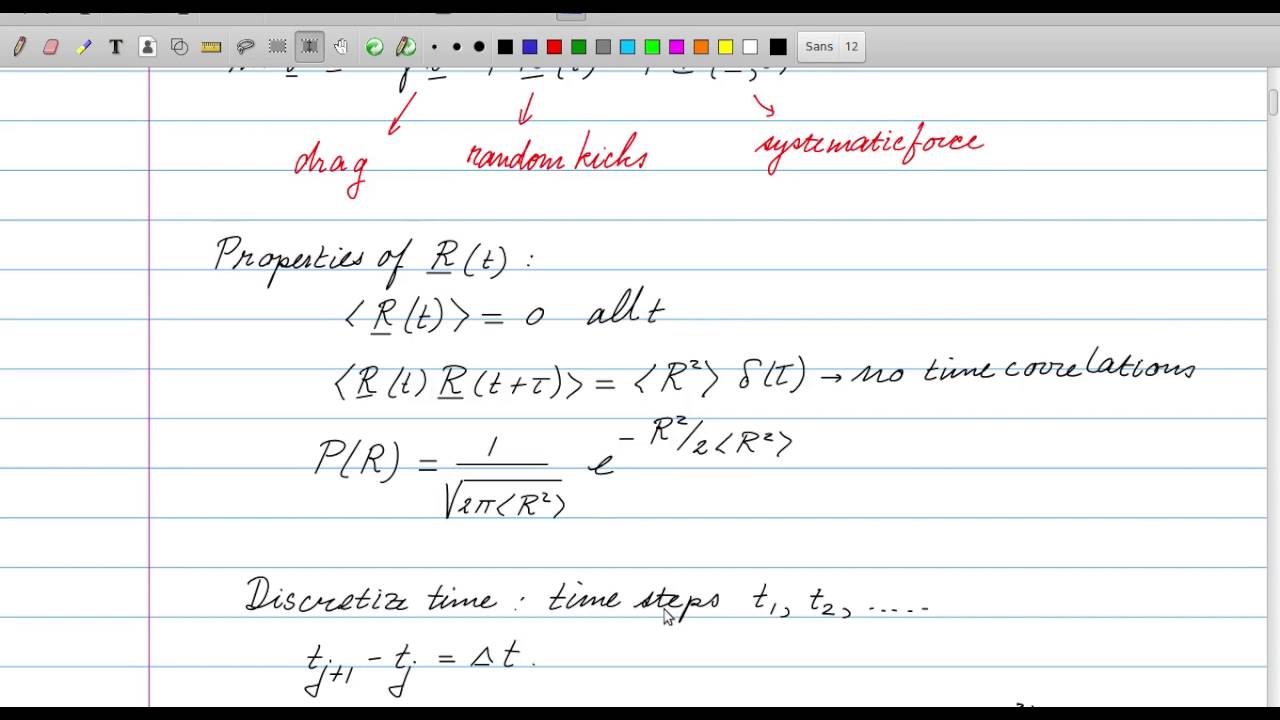
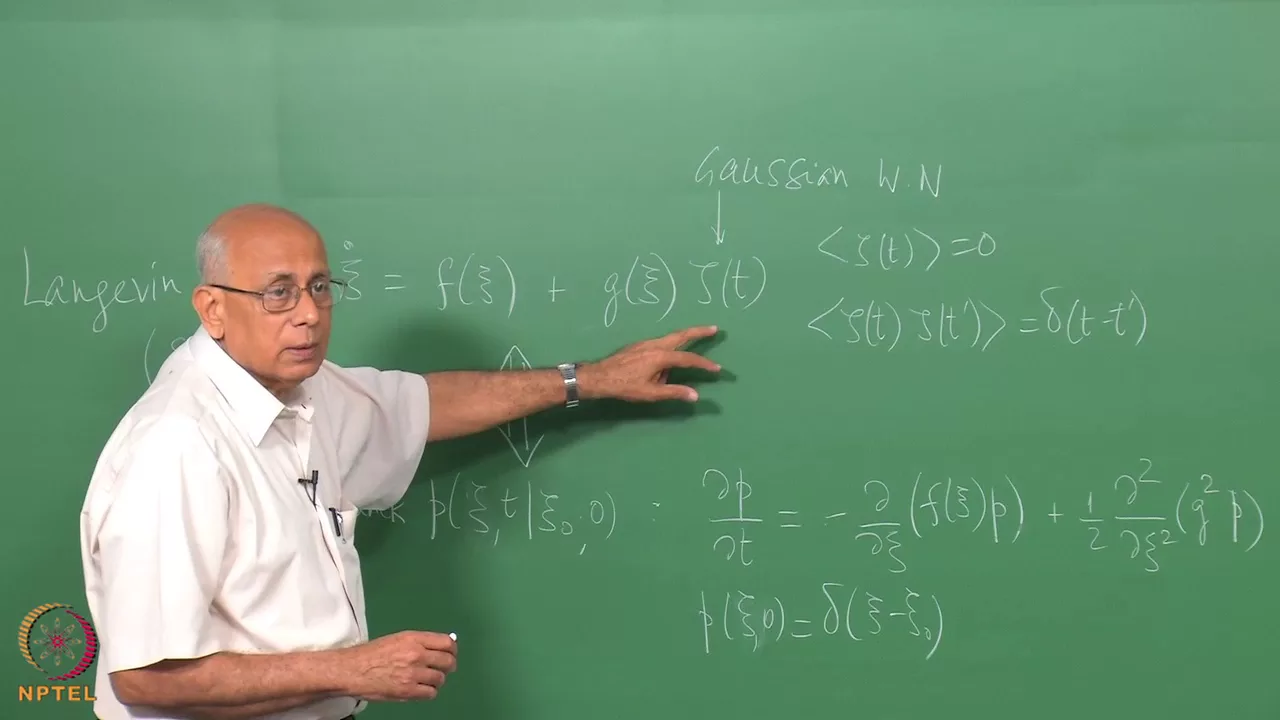


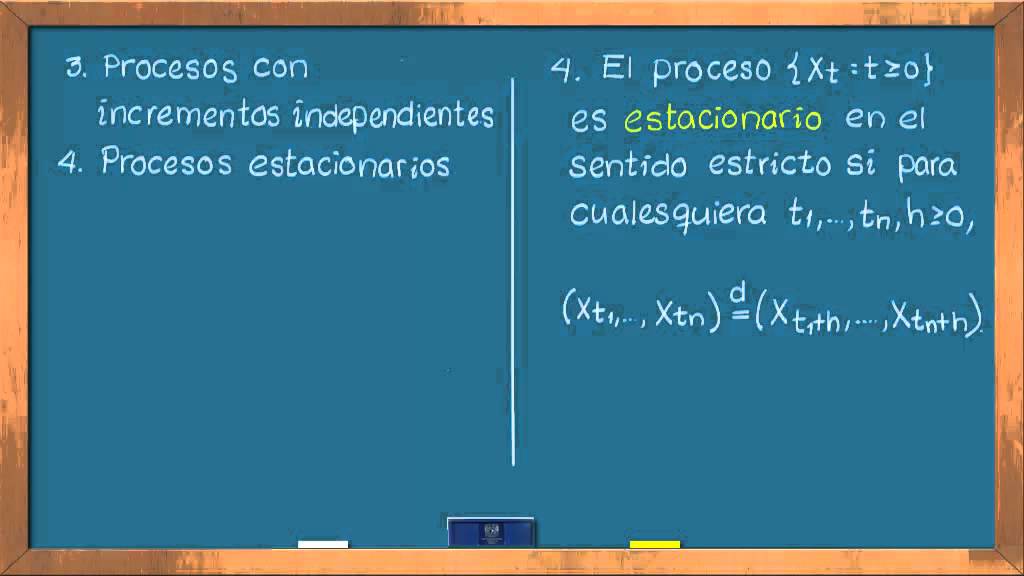


Standard Brownian motion (W_t) is a continuous-time stochastic process characterized by: (1) W_0 = 0, (2) normally distributed increments with mean 0 and variance equal to the time difference, (3) stationary and independent increments, (4) covariance Cov(W_s, W_t) = min(s, t), (5) Markov property, (6) martingale property, (7) continuity everywhere, and (8) differentiability nowhere (fractal nature).
Brownian Motion Explained: Key Properties & Applications
Added:Basic Probability Theory: Mastery of random variables, expectation, variance, and the Normal (Gaussian) distribution.
Introduction to Stochastic Processes: Familiarity with random walks, Markov chains, and index/parameter spaces (discrete vs. continuous time).
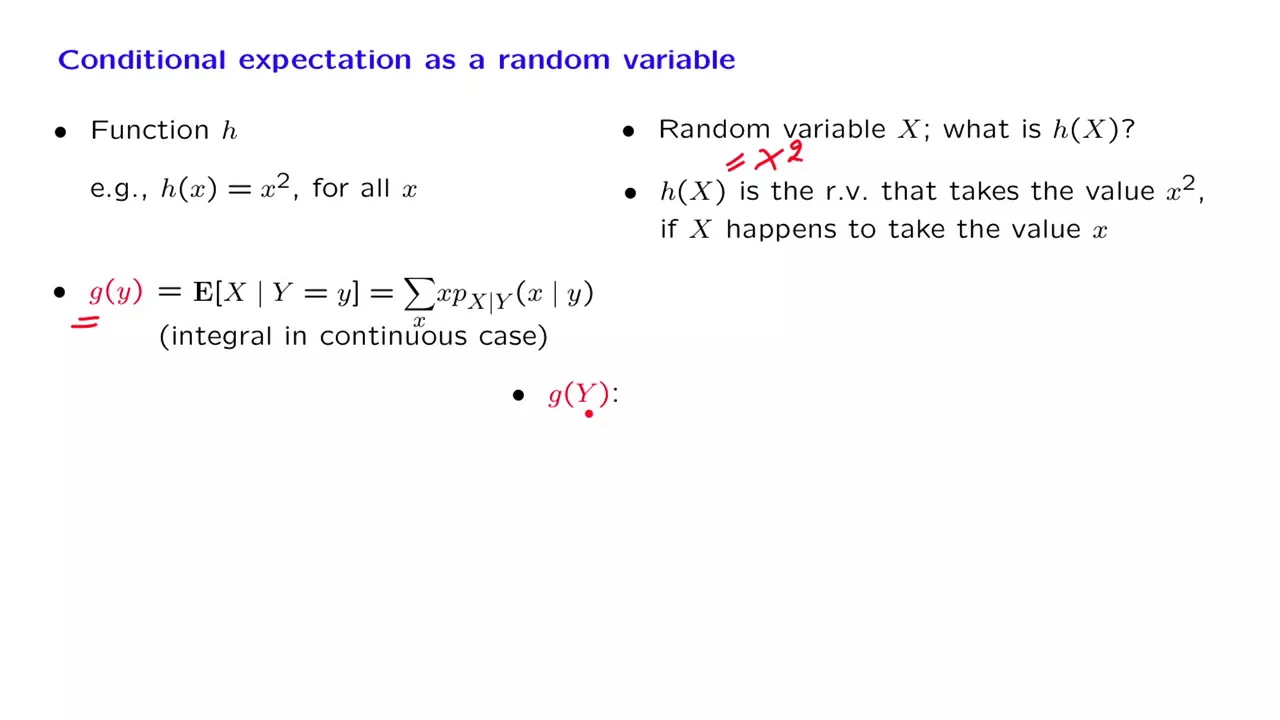
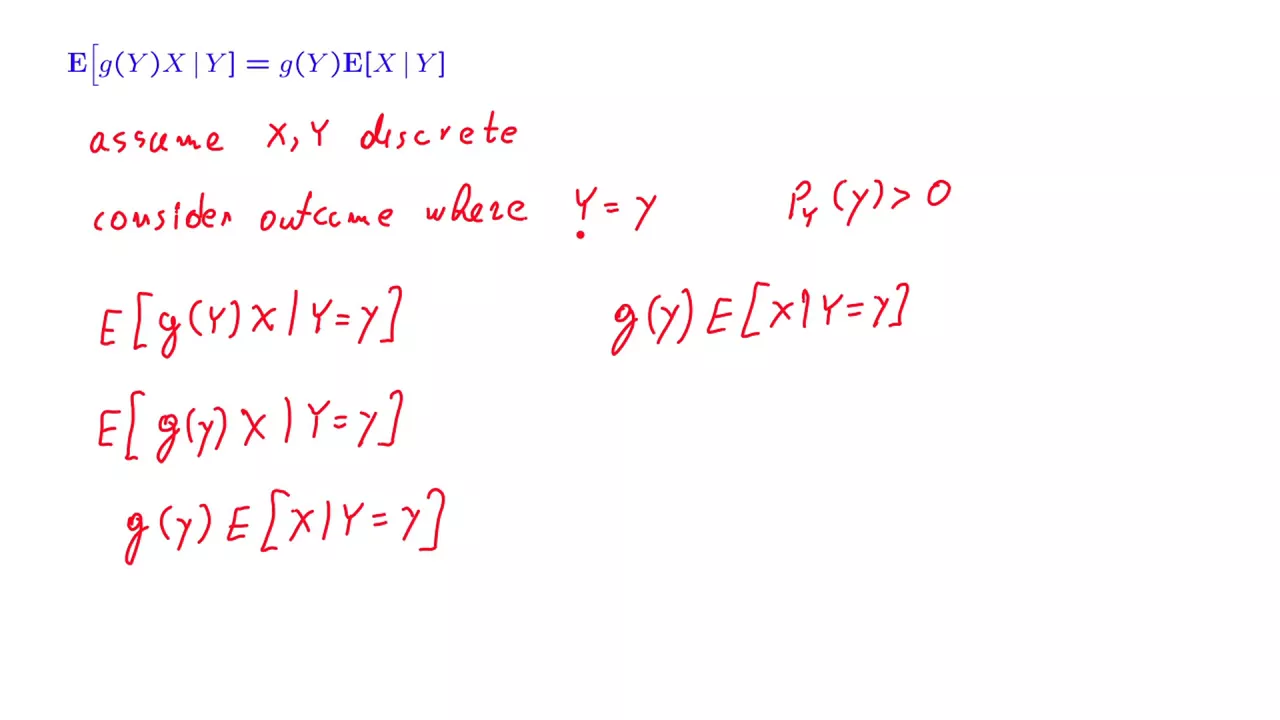
Conditional Expectation: A strong grasp of conditional probability and expectation, which is vital for understanding martingale properties.
Mathematical Analysis (Calculus): Understanding of limits, continuity, and the rigorous definition of functions of a real variable.
Stochastic Calculus (Itô Calculus): Learning about stochastic integrals, Itô's Lemma, and solving Stochastic Differential Equations (SDEs).
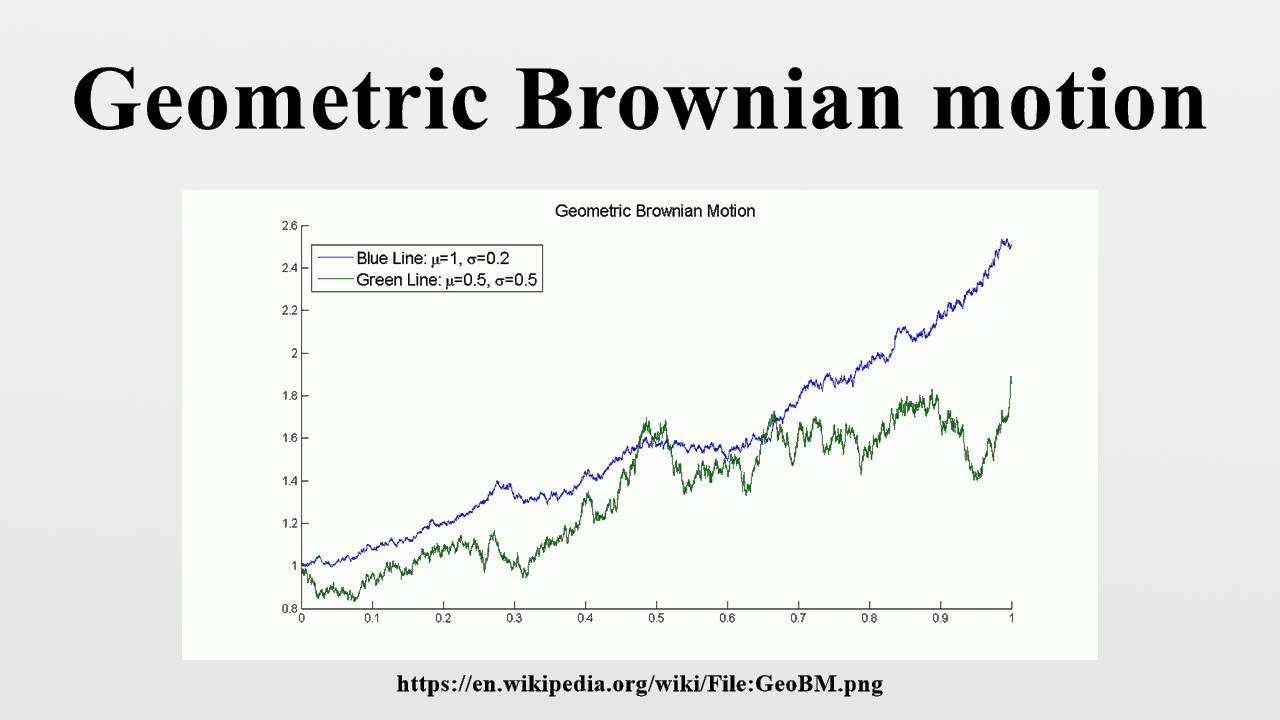
Geometric Brownian Motion and Quantitative Finance: Applying Brownian motion to asset price modeling, culminating in the Black-Scholes-Merton option pricing model.
Physical Diffusion and the Langevin Equation: Exploring how Brownian motion models physical phenomena like particle suspension, thermal noise, and statistical mechanics.
Advanced Stochastic Properties: Studying quadratic variation, path properties (such as non-differentiability), and the reflection principle of Brownian motion.
208.2K views2.9Klikes11:33Original Release: 2011-03-20
okay the purpose of today's video is to introduce you to the concept of standard Brum motion okay so let's start with the basic properties of standard bronia motion standard bronia motion here denoted as W indexed with time so w at time 0 equals 0 what this means is that our bronier motion at time equals 0 takes the value of zero and this is best explained looking at the graph here I've got here a realization of my bronier motion path the Bron motion decided to take this path and this is just one realization of of bronier motion okay but one thing that all realizations of Bron motion will have is that and they will take a value of zero at time equal Z so let's denote w at time 0 equals z okay so here on this axis we've got time on the x axis we've got time and on the Y axis we've got W which is the values of our Browner motion now clearly this property was pretty much self-explanatory let's have a look at the other properties property number two brown motion is normally distributed with mean zero and variance D and brown motion increment W small T minus W small s is also normally distributed with uh mean zero and V Varian T minus s okay so what does it mean that the bronier motion is normally distributed with mean zero and variance D so say I'm standing here at time equals z and I want to know what my Browner motion is or will be at time say time equals T = 2 okay so I see here that this single real ization of BR your motion happened to take a value of 0.4 okay but this is just one real realization on the other realization Brown motion can end up here here there there there it can pretty much end up all over the shop I.E it it can take a range of values the good news however is that I will know what the expected value okay so this is the distribution of Brum motion at time equal two okay but the good news I will know what the center of the distribution is I.E what what the expected value of this distribution is um and this will be expected value of w at time 2 equals zero okay it will always be zero whether I look at Browner motion here here or or here the expectation of Browner motion at all these points is zero so not only the mean or our expected value that the value of the Browner motion at any time will be zero but also we are told that it will will be normally distributed that's why here I graphed like a normal distribution okay the peak of this distribution is centered at zero meaning that my Browner motion will be distributed as a normal variable with expected value zero and variance T okay now crucially it says T here what does it mean well if I look at the distribution of my Browner motion say at this point here then I will see that this distribution is also centered at zero but the variance of this distribution say at time equals T = 1 is one okay now the variance of this distribution Brown motion at this point will be two okay so my variance will basically so if I have here just draw another graph my my variance will increase propor ially to time so this is variance I will denote here Sigma squar is proportional is of order T okay I think I already spent too much time with this to illustrate such a simple concept I only spoke about WT but uh there is a related concept I.E the Broner motion increment which is the difference between uh two Broner motions okay at uh one at time T the other one at Time s and it turns out that the difference between the two Bron motion is also normally distributed and the variance of the brown motion increments I.E the difference between two brown motion is just T minus s t stands for time and S stands for time it's just the difference in time between the two BR between the measurements of our Browner motions okay so what this means if if I look at my Browner motion somewhere at this point here and somewhere at this point here so the expected increment uh so this is time T this is Time s the expectation of the difference of these two Bron motion VT minus vs equals zero and the variance of this difference equals D minus s yet again it's proportional variance is proportional to time yeah we will show these properties more formally later on um one by one but let's let's continue let's discuss other properties of Browner motion uh the process WT has stationary and independent increment okay so what does it mean that the Browner motion has stationary increments well if I look at my brown motion at time zero and say my brownan motion at time one and then I looked at my displaced bronier motion I moved the Broner motion increment further in time by a constant a okay so this is going be to w0 Plus + a and W1 + a and what this means is that the distribution of this increment here okay will be exactly the same as the distribution of this increment here IE will both be normal with expected value of zero and variance of T1 minus t 0 so it doesn't matter where you look at a brono motion it will always have the same properties okay it's expectation so we're talking here about increments the the incremental expectation will be always zero and the variance will be just the difference difference in time so to sum up independently where you look at the Browner motion whether you look at Browner motion here in this time interval or here it will always have the same property in probabilistic sense okay we always have an expectation of zero and variance will be proportional to time another property is that increments say W1 less w0 and W1 + a less w0 + a what Independence says is that whatever however I moved in this time interval will have absolutely no bearing on how I'm going to move in this time interval okay I'm going to clear this graph let's see some other properties of run motion we'll briefly enumerate them without actually proving them at the at this stage Co variance of uh two brownan motion paths is the minimum of Time s or t so say I look I look at my brown motion at Time s and I look at my brown motion at time T and if I try to find Co variance of these two terms I will find that the covariance will be the minimum of s and t when here it's clear that s is before T therefore the covariance of these two terms will be S property number five says Bron motion is the mark of process okay so what does it mean Mark of process all it means is that past is irrelevant for where I'm going to be in the future I.E say we are here uh so I'm here at this point it's irrelevant what I've done in the past it's irrelevant how I moved in the past for where I'm going to be in the future so past has absolutely no bearing on my future Evolution next property Brer motion and marting Gale okay so this says expected value of Brownian motion which moved by Time s so I'm at time T and it moved by time n conditional or all the information conditional fil filtration I.E all the information I have available at time T is just where I am at the moment so again the smle properly can be Illustrated imagine that I'm standing here at time WD I ask myself a question where I'm going to be at the time WT plus s well according to the marale property of bra motion expectation of where I'm going to be at Time dt+ s conditional on all the information I have how I moved in the past okay here I moved up down up and down several times condition on the all the information I have what I've done in the past which is denoted by F capital t is nothing else but WT okay so what this means is that I don't expect to have moved at all I expect to stay at the same level I.E somewhere here so negative okay I expect to be at the same point at time t plus S as when I was at time WT finally Broner motion is continuous everywhere this is proper property number seven and differentiable nowhere what this means is that you can probably see it here it's continuous everywhere because there are no jumps there are no discontinuities in this Bron motion and you cannot differentiate it anywhere okay so let me erase one more time the chart hold on you may ask well surely this for instance let's have a look at this bit here surely you can find the derivative of this well my depiction of prum motion is a bit inaccurate here because if you actually zoomed into this you would see that it does like this all the time yeah so my brownan otion goes up and down up and down up and down but actually I can't really find a derivative at any point simply because it's just too rough okay it's got spikes everywhere so for instance if I if I tell you to find a deriv derivative this point you you won't be able to find it because it can be you know is it this is it this it's just it's just impossible to find derivative and in fact if you zoom if you were to zoom on this bronier motion path you would see that it just it's con constantly moving it's impossible to find a derivative at any point we'll prove this more formally uh later on and that's what um property number eight is saying bronia motion is fractal I.E too irregular and rough in structure in the next videos we'll be showing all these properties in more detail actually proving them one by one
Up Next
23:02
Riemann-Stieltjes Integral: Integrating x with respect to x²
@PapaFlammy69
89.7K views•2024-07-20

4:43
Elliptic Curve Cryptography Explained: ECC, ECDSA, ECDH
@PracticalNetworking
28.5K views•2024-10-21
10:44
Fourier Series Introduction: The Big Idea Explained
@DrTrefor
387K views•2021-05-03
6:00
The Mathematical Impossibility of Accurate World Maps
@Vox
23.3M views•2016-12-02
Related Study Plans & Knowledge Roadmaps
Structured learning paths in Mathematics
mathematics
Tensor Calculus: Vectors to Riemann Curvature
01Mathematical Foundations: Linear Algebra & Calculus
02Covectors, Dual Spaces, and Tensor Basics
03The Metric Tensor and Index Gymnastics
+ 2 more learning modules
40h5 modules
Explore Roadmap
mathematics
Gödel's Incompleteness: Logic, Proofs & Limits
01Introduction to Formal Systems & Hilbert's Dream
02Set Theory, Cardinality, and Cantor's Diagonal Argument
03Arithmetization and Gödel Numbering
+ 2 more learning modules
14h5 modules
Explore Roadmap
mathematics
Galois Theory: Fields, Groups & Solvability
01Foundations of Abstract Algebra: Groups & Fields
02Polynomials & Field Extensions
03Splitting Fields & Symmetries
+ 2 more learning modules
24h5 modules
Explore Roadmap
mathematics
Non-Euclidean Geometry: Models & Geodesics
01Euclid's Fifth Postulate and the Birth of New Geometries
02Hyperbolic Space and the Poincaré Disk Model
03Geodesics: Defining Straight Lines in Curved Spaces
+ 2 more learning modules
15h5 modules
Explore Roadmap