






















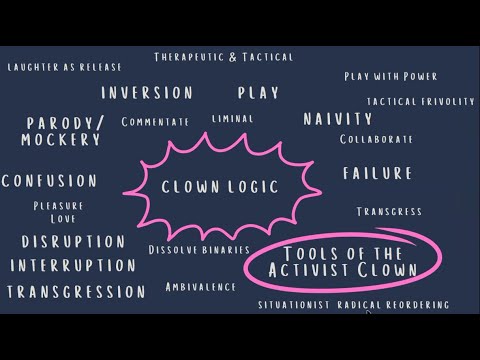


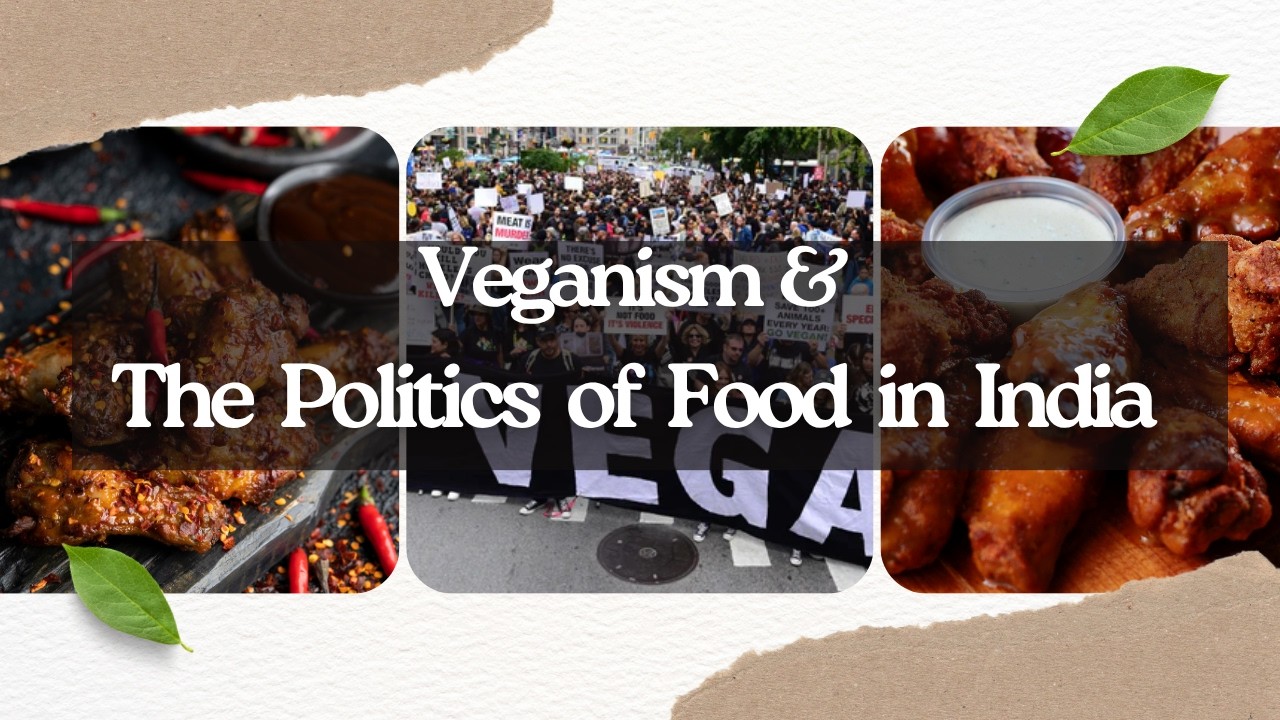



Capitalist systems destroy radical social movements by co-opting their symbols and slogans, transforming them from demands for fundamental change into harmless cultural artifacts that preserve the status quo; this process, called 'recuperation' by Guy Debord and related to Antonio Gramsci's concept of hegemony, works by manufacturing consent through cultural institutions and media, ultimately creating 'capitalist realism' where capitalism becomes perceived as the only viable system and alternatives seem impossible to imagine.
How Capitalism Co-opts and Neutralizes Radical Movements
Added:Antonio Gramsci's theory of Cultural Hegemony and how dominant social classes maintain power through ideological consent rather than force.
The core tenets of Marxist critical theory, particularly the commodification of social relations and the 'culture industry' concept developed by the Frankfurt School.
The basic history and goals of modern radical social movements, such as Black Lives Matter (BLM) and historical civil rights organizations.
The distinction between reformist political agendas (working within existing systems) and radical/revolutionary agendas (seeking systemic overhaul).
The phenomenon of 'Commodity Activism' and how corporations employ progressive messaging (e.g., woke advertising) to maximize profit and neutralize systemic critiques.
The 'NGO-ization' of social movements, studying how grassroots activism becomes professionalized, funded, and ultimately pacified by institutional structures.
The concept of 'détournement' and other subversion tactics developed by the Situationist International to resist recuperation.
The structural analysis of how neoliberalism converts collective political demands into individualized lifestyle choices and consumer identities.
799K views49Klikes19:36Original Release: 2022-01-28
This episode and others like it are made possible by the generous support of my patrons on patreon.
We just did a major overhaul of our patrons-only Discord server, so if you’d like to join our growing community and get early access to every video, consider becoming a patron at patreon.com/secondthought.
Remember when these videos started with rhetorical “if” statements?
Me neither.
Anyway, if you ever looked at a screen during 2020 you probably saw this image.
It’s the Black Lives Matter mural in D.C. and, like many other things I start my videos with, I'll probably be talking about something else in like 30 seconds.
For now though, I want to talk about this mural because it’s one of the most obvious political stunts in recent years.
Commissioned in June of 2020 by Washington D.C. mayor Muriel Bowser, the Black Lives Matter mural accomplished two things: it made apple maps briefly relevant again, and it set me up to write a 20-ish minute video about political recuperation and Gramscian hegemony two years later.
Other than that… not so much.
Well, sorry, it did do one more thing.
For Mayor Bowser, the mural was a very effective way to co-opt and neutralize BLM without hearing any of the movement's demands and actually giving herself the freedom to move in the complete opposite direction.
I can’t believe I almost forgot to mention that!
Because at around the same time the mural came up, Bowser’s proposals for 2021 included increasing police budgets and doubling the size of the cadet program, that is, when she wasn’t busy spending time on TV proposing her, let’s say “creative,” interpretation of what “defund the police” really means.
You’re gonna laugh, but I clearly misunderstood what “defund the police'' meant the first time around.
Oh man, I’m embarrassed.
Of course, the DC wing of BLM was quick to point out Bowser’s hypocrisy and call the mural out for what it is, a pointless stunt.
And they’re right.
But it’s also a lot more than that.
This mural fits into the more general topic of political recuperation and the idea of governing through consent.
Let’s make a video about that.
Because the truth is that symbols like the mural, and more generally “culture,” matter a lot in politics.
Even though I had a lot of fun being a cheeky little guy and saying the mural didn’t achieve anything I only said that because, well, I wanted you to like me… and because I meant that it didn’t help achieve the goals of the BLM movement in any way.
In fact, it actively hid the betrayal of the movement's demands entirely.
But it still mattered a lot as a cultural symbol because, ultimately, it was an integral part of the liberal co-optation of the BLM movement and its watering down to a vague demand for “recognition.” It allowed Democrats like Bowser to remain as legitimate political figures in the public eye without actually representing the more radical will of their electorate or carrying out its demands.
In that sense, the mural did actually achieve quite a lot.
In politics, this kind of co-opting and watering down of radical ideas is sometimes called “recuperation.” Ok, really it’s only called that by this guy, Guy Debord, badass smoker, and french philosopher of the mid-20th century.
Who is this nerd?
Well, he wrote a book.
So now here we are.
In his book, the Society of the Spectacle, and in the manifesto for the Situationist International which he also wrote, Guy launches what academics call an attack and what everybody else calls a couple paragraphs of words on what he considers the new era of capitalism.
Capitalism 2: Consumerist Boogaloo.
Following WW2, Guy became concerned with how his native France adopted consumerist culture, a society in which the solution to all of the ills of modern life are channeled through the acquiring of mass produced commodities.
Guy described how, in the search for ever growing markets, a society in which basic needs were generally met for most people turned to the consumption of not-really-necessary-stuff.
Buying not-really-necessary-stuff became a new fundamental economic need but also a basic human need.
In a consumerist world, market actors and advertisements are no longer trying to convince you to want the hip new FM radio, they are telling you that you need it in the same way you need food on the table.
In fewer words, ads create new needs.
Beyond this incredibly simplistic description of what advertising tries to do, however, Guy explains that it’s not an actual belief in the need to own the latest piece of tech that motivates us to buy it, it’s a need for the way these commodities make us look.
In other words, appearances become essential to consumption, and by extension, to all of social life.
It’s all about appearances.
Everything becomes about the spectacle.
You need stuff not because you actually need it to live nor do you need it because you’re tricked into thinking you need it to live, but because you need to keep up appearances.
It looks good to have stuff and the specific stuff you have says something about you that you want others to know.
Big deal!
So far we haven’t really gone any further than your boomer dad talking about how dumb ripped jeans are.
But for Guy, ripped jeans really do matter because not only are they, like other consumer products, capable of making us feel really bad, reduced to our appearances, and alienated from ourselves, but the philosophy of appearances that this image-based consumption cultivates ends up becoming a huge part of our society and therefore of our politics.
For Guy then, politics become dominated by how appearances are manipulated without substance ever really needing to support them.
Today, the classic example of this is Trump and how he convinced some 60 million people that a billionaire real-estate mogul wasn’t somehow part of “the elite.” He played on his appearance as an outsider to hide the reality of another political elite who would spend his time in office growing the power of his wealthy cohort with things like tax cuts for the rich.
But even if he is the most egregious example of what Guy calls “the spectacle” in politics, the same framework of analysis applies to Hillary Clinton and Joe Biden, who both challenged Trump mainly by cultivating their own image, that of responsible, level-headed politicians, instead of any meaningful contradiction with his policies, many of which still haven’t been reversed since he left office.
Same goes for every other politician, even the ones you like, and same goes for every late night show host who spent every minute of a four-year term on how dumb Trump’s hair looked, or his daily outrageous tweet, more often than on the policies he carried through congress.
This is what Guy calls the society of spectacle, in which appearances take on this disproportionate influence and can come to replace the substance of material reality in many cases.
But believe it or not, we haven’t even gotten to the good part yet.
We haven’t talked about revolution.
Because there’s more to politics than politicians trying to get you to vote for them, there’s also a whole number of people in power who benefit from the society of spectacle and use it to make sure their power doesn’t get wrestled away from them.
When dominant classes are confronted with radical, subversive, or revolutionary opposition, movements like Black Lives Matter for example, using this power that appearances have comes in really, really handy.
That is “recuperation.” The ability for members of the dominant classes to twist and appropriate revolutionary appearances for their own benefit, absorbing revolutionary sentiments into their fold and ensuring their survival as the dominant class doesn’t get challenged because they’ve neutered the radical content that those images used to communicate.
In Guy’s own words “the ruling ideology sees to it that subversive discoveries are trivialized and sterilized, after which they can be safely spectacularized.” In the case of DC mayor Muriel Bowser, her appropriation of the Black Lives Matter, or “Defund the Police” slogans does exactly this and helps her achieve two things.
One, it sterilizes the message.
“Defund the Police” is no longer about actually defunding the police, silly, it’s about reform, more training, and more money.
Black Lives Matter is no longer about actually ensuring the value of black lives is respected by distributing wealth more equally, abolishing the violent carceral state and the militarized police, or ensuring that the institutions that guarantee a decent life to people are properly funded everywhere.
Black lives matter is just about saying that black lives matter and that’s it.
It’s literally just about the spectacle.
But that’s not all.
The second thing this appropriation does is it provides a safeguard to her power and the power she defends, that of a white supremacist nation that can only function with a heavily racialized distribution of poverty.
Now that the radicality of the words “Black Lives Matter” and “Defund the Police” have been completely neutralized, Bowser can use them all she wants.
And because she said the words, painted them on the street and paid lip service to the movement, Bowser can somewhat credibly position herself on the side of revolutionaries while firmly maintaining the oppressive status quo they are revolting against, in a way, killing the subversive moment.
It’s nothing more than a rhetorical trick.
Guy Debord would say “Black Lives Matter” has been recuperated.
This whole approach to government isn’t entirely new.
Already decades before Guy was born, another political theorist had figured out that culture was a major part of the ways governments and dominant classes self-preserve and govern.
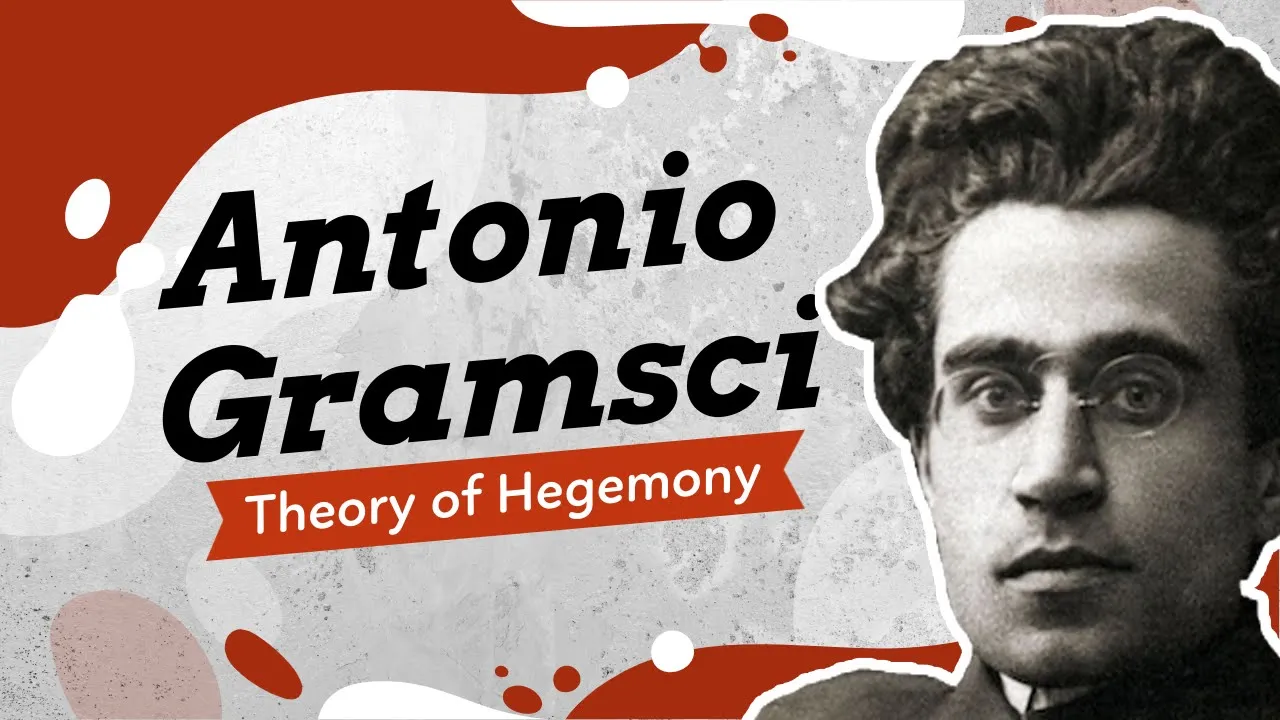
That guy is Antonio Gramsci and he had an idea he called hegemony.
For Gramsci, a leftist Italian revolutionary imprisoned under Mussolini, governments and dominant groups maintain their status in two big ways.
There is the obvious one, the way governments have always run the show, violent coercion.
It’s your armed forces, your police officers, your prisons, and all the laws and regulations that establish and enforce the rules of the government above you.
That’s the obvious way that those in power stay in power, nothing very surprising there.
Gramsci’s innovation, which has honestly lost a lot of flair after like 90 years, is that that violent kind of coercion is only being used to discipline people who don’t consent to the way society is organized and to the rule of the powerful.
The problem, for those in power, is that if too many people don’t consent, and your only solution is beating up those people, you run the risk of starting a revolution, and then there are gonna be way too many people to beat up and you might lose your beatin’ stick.
So, dominant classes don’t just repress those who don’t consent, they also use the domain of culture, what Gramsci calls “civil society,” to manufacture consent in the general population and suppress more subtly the kinds of thinking that may upset their interests.
Media and political institutions, the vast majority of which are less accountable to the general population than to the financial interests that fund them, can serve as the ground from which this consent is manufactured.
It’s not usually going to be done with outright lies, but with more subtle biases that frame stories a certain, at times dishonest, way.
Or focus on one issue while ignoring another.
Or transform the debate, or change the language with which it is understood, or make it about something else, or platform some people and not others.
Ultimately, however that consent is manufactured, the main goal will be to present one narrative as dominant and most easily agreed with, and its contradiction, which could threaten established power, as disagreeable.
The upshot, if you’re one of these people in power, is that the more people speak in your terms and agree with the basic premises that keep you in power, the less you’ll have to repress them with guns and barred windows.
To be clear, all forms of media will have bias.
There is no such thing as absolute neutrality in media, as I constantly tell people in the comments.
The difference with manufacturing consent is that the assumptions that communicate bias aren’t framed explicitly as such, they’re presented as if they were common sense, or they’re never explicitly challenged.
The result is that that kind of bias can become almost imperceptible to a general audience when these unchallenged, mostly hidden biases are repeated across the wide breadth of the media we consume, and in civil society more generally.
This is cultural hegemony.
The absolute, and incredibly subtle, domination of culture by one group.
Guy called this “the rigged arena of official culture” and Gramsci’s analysis uncovered its relevance and maintenance by the upper class, the state, and their institutions.
Nowadays, it’s not hard to see the constant debate on the phrase “defund the police,” three words which could not be more easy to understand, participating in this muddying of the water and pacification of a more radical idea.
This form of government, that operates through cultural institutions, sanctioned political debates, and the recuperation of subversive politics, can have incredibly powerful consequences.
Not only does it maintain the kinds of oppressive power structures that we all know and love from your classic capitalist society in the short term, it can create what another nerd calls “capitalist realism.” This is the last geek of the video, I promise.
According to Mark Fisher, yet another political theorist, capitalist realism is “the widespread sense that not only is capitalism the only viable political and economic system, but also that it is now impossible even to imagine a coherent alternative to it.” Capitalism becomes common sense.
Here again according to Fisher, the interests of businesses, which are usually framed as the interests of “the economy,” are so dominant in our culture that we come to accept truly horrible realities as inevitable and uniquely real.
While the neoliberal era has produced endless suffering across the world, the possibility of global human annihilation by climate change, and countless wars and conflicts for profit, billions of people still justify the integrity of the global capitalist economy because it has become incredibly difficult to imagine an alternative to it.
It might be horrible, but it’s the best we’ve got, at least that’s how we’ve come to rationalize it.
And for that, we have to thank, at least in part, the persistent efforts of recuperation that have hollowed out even the most revolutionary of movements and made them agreeable to the persistence of a capitalist economy.
In the neoliberal present, the only solutions that are considered valid and enter the public debate are those which merely mitigate what capitalist societies portray as “externalities” of economic production.
The problems of a capitalist society aren’t really problems with capitalism itself, you see, just its execution.
They’re externalities, unintended consequences, nothing more.
We’re led to believe we can really fix these issues without challenging the overall economic order.
But some of these issues are so intimately tied to the pillars that uphold capitalism that they won’t disappear without those pillars crumbling too.
Under the logic of capitalist realism, there is no abolishing capitalism or even considering that as an option when trying to solve its problems.
The only legitimate way to “solve” climate change, for example, is staying squarely within market logic, buying eco-friendly things, or watching your individual carbon footprint, or creating new carbon markets to try and game-ify pollution.
It’s not that an economy that needs to grow endlessly, forever, and constantly deliver at least 3% gains to shareholders will inevitably extract more from the earth to produce more to sell more.
It’s just that you’re not buying enough paper straws.
Save the turtles, you selfish jerk.
Under the logic of capitalist realism, entire alternative economic models are cast aside as utopian, as jokes, as impossible.
You’ll hear things like: How can you really defend communism?
Don’t you know every time someone tried it it failed?
But don’t pay attention to all its successes or the ways capitalist societies are failing you right now, those we can actually fix, this economic model is different, it can actually achieve all that utopian stuff, the fact that it’s dominated the global economy for centuries and these issues have only gotten worse doesn’t mean anything, trust me.
Part of the tremendous power of capitalist realism is that it can exist side by side with the empty symbols that promote its abolition.
Endlessly co-opted movements for liberation become watered down until they’re just prefixes, or qualifiers for various parts of the capitalist economy, the way you’ll often hear about green capitalism, rainbow capitalism, or black capitalism.
TV shows like Squid Game, or Parasite, or Don’t Look Up become that week’s water-cooler talk.
Movements and phrases like “Black Lives Matter” may have become a fixture of our modern society, but in many ways it's because they’ve lost a lot of their radicality, not because they’ve been truly accepted or achieved all of their goals, but because they’ve successfully been defanged by an advanced system of recuperation to not really matter nor be perceived as an actual threat to the social order they challenged.
I recognize that this video, like most of the videos on this channel, is kind of doing the same thing.
My job is taking some pretty radical ideas and turning them into entertainment for you, turning them into something you can pretty passively consume.
Sadly, these videos are, just like most everything else, part of the spectacle too.
We’ve never met, we’re not actually communicating, and even if I think I’m doing a pretty good job – which I do, I’m full of myself, trust me – even if I think I’m doing a good job, I am still mostly talking ideas at you, not with you, and without an immediate or a concrete plan in mind.
As essential as I think what I’m doing is, I’m just one guy on the internet and hope that you’ll fill the gaps and carry what you learn in these videos into the real world to actually improve things.
Fight for change and make it reality.
Otherwise, what’s the point?
Let’s give it a shot.
I mentioned at the beginning of this video that this kind of content is made possible by my patrons on patreon.
As you can probably imagine, when I made the switch to producing political content, I started getting demonetized way more often and most of my sponsors bailed.
It’s understandable, but because of this, I’m having to rely more heavily on viewers like you to maintain my channel.
If you like the kind of videos I’m producing, and you’re able to chip in even a dollar a month, I would greatly appreciate the support.
As a little show of that appreciation, every patron, regardless of donation amount, gets early access to every video, plus access to our patrons-only discord server.
We actually just dropped a major update to the Discord, and there are some really cool new features.
We have everything from a recommended reading list, to a book club, to special channels for our neurodivergent and lgbt comrades.
We also have fun medal roles for people who complete the server challenges.
We’ve built a great little community, we’d love for you to be a part of it.
So, if you’d like to help support my channel, join the Discord, and get early access to every video, consider becoming a patron at patreon.com/secondthought.
If you enjoyed this video, consider dropping a like.
If you hated it, a thumbs down.
You can check out my previous videos by clicking the links on your screen.
Thanks for watching, and I’ll see you next week.
Up Next
54:28
Understanding Cannibal Capitalism and Its Crises | Nancy Fraser
@TheMajorityReport
13.7K views•2023-01-15

164:01
John of Damascus on Holy Images: A Theological Defense
@BannedBooks
139 views•2026-04-25

68:32
Should We Destroy the Machines? Big Tech Surveillance Critique
@TheStoriesWeTell303
167.9K views•2025-11-30
4:57
The Myth of Sisyphus: A Greek Legend of Eternal Punishment
@TEDEd
8.6M views•2018-11-13
Related Study Plans & Knowledge Roadmaps
Structured learning paths in Philosophy
philosophy
Frankfurt School: Critical Theory & Culture
01Foundations of the Frankfurt School and Critical Theory
02Horkheimer & Adorno: The Critique of Instrumental Reason
03The Culture Industry and Mass Deception
+ 2 more learning modules
12h5 modules
Explore Roadmap
philosophy
Philosophy of Language: From Frege to Austin
01The Linguistic Turn: An Introduction to Language in Philosophy
02Gottlob Frege: Sense and Reference
03Early Wittgenstein: The Picture Theory of Meaning
+ 3 more learning modules
15h6 modules
Explore Roadmap
philosophy
Feminist Epistemology: Standpoint & Injustice
01Introduction to Epistemology and Feminist Critiques
02Sandra Harding and Standpoint Theory
03Donna Haraway and Situated Knowledges
+ 2 more learning modules
12h5 modules
Explore Roadmap
philosophy
Environmental Philosophy: Ethics & Deep Ecology
01Foundations of Environmental Ethics & Anthropocentrism
02Biocentric Individualism and Animal Liberation
03Ecocentric Holism and Deep Ecology
+ 1 more learning modules
10h4 modules
Explore Roadmap