The United States has blocked the appointment of new judges to the World Trade Organization's appellate panel, leaving only one of seven judges remaining and preventing the organization from issuing rulings on trade disputes; this paralysis threatens to return world trade to a 'law of the jungle' system where powerful nations like the US can unilaterally impose tariffs without international oversight, potentially triggering a rise in trade conflicts and protectionism globally.
US Blocks WTO Appellate Body Appointments: Trade Crisis Explained
Added:Deep Dive
The core structure and mandate of the World Trade Organization (WTO) as the global body governing the rules of trade between nations.
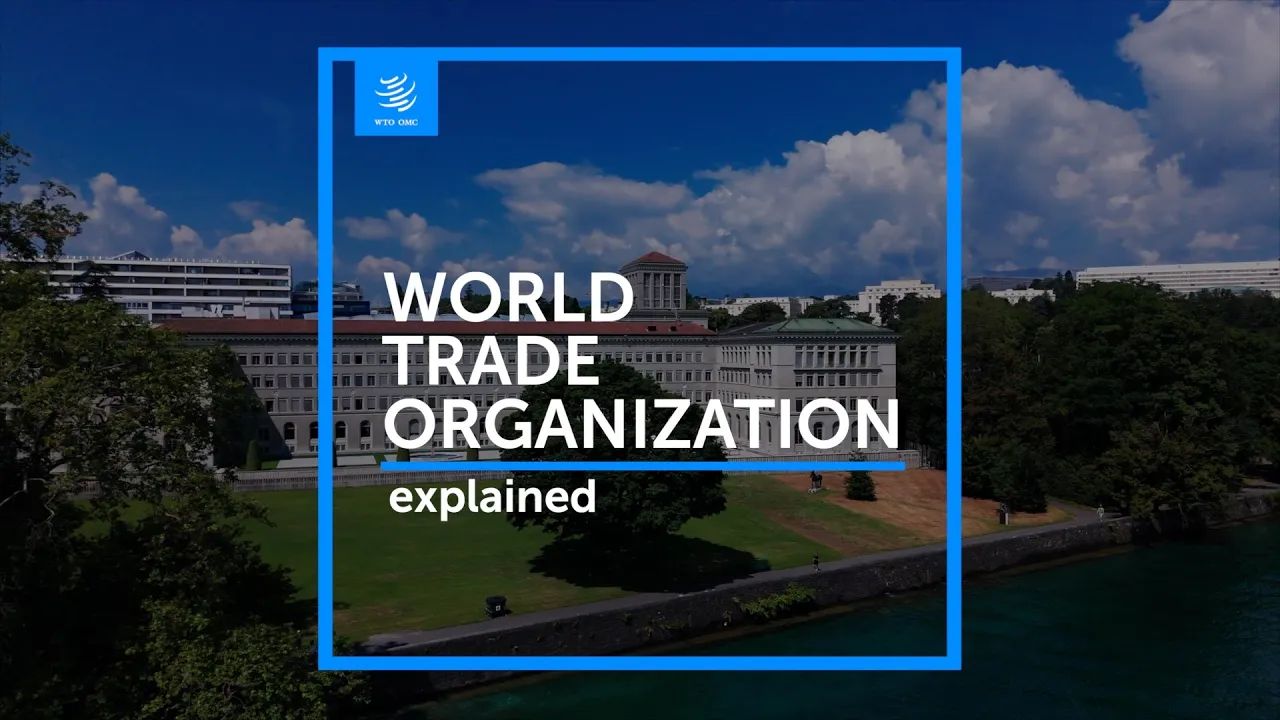
Understanding the WTO: Functions, Rules, and Impact Explained
69.2K
The World Trade Organization (WTO), established in 1995, is an international organization comprising over 160 member governments that establishes rules for global trade to create a fairer, more open, and more predictable trading system; its core principle of non-discrimination ensures that trade privileges granted to one member must extend to all, while the organization supports sustainable development, helps developing countries integrate into global markets through special provisions and technical assistance, and addresses modern challenges including digital trade, green technology, and food security through multilateral negotiations and dispute resolution mechanisms.
Click to watch →

वैश्वीकरण और भारतीय अर्थव्यवस्था नोट्स |vaishvikaran aur bhartiya arthvyavastha notes in Hindi
166.2K
The World Trade Organization (WTO) is an international organization established to promote global trade liberalization. It sets rules for international trade, facilitates trade negotiations, and resolves trade disputes between member countries. The WTO has approximately 160 member countries, representing the vast majority of the world's trading nations. The organization aims to ensure that trade flows as smoothly, predictably, and freely as possible. The WTO provides a framework for negotiating trade agreements and for settling disputes that arise from trade conflicts.
Click to watch →
अन्तराष्ट्रिय संघ/संस्था | International Organization | Santosh Khadka Sir | Ambition Guru
62.2K
The World Trade Organization (WTO) is an international organization that regulates international trade and was established to oversee the implementation of GATT. The headquarters of the WTO is located in Geneva, Switzerland. The WTO Ministerial Conference is the highest decision-making body, bringing together representatives from all member states. The Director-General is appointed for a term of four years. The WTO has 124 founding member countries that signed the Marrakesh Agreement. Afghanistan is the only South Asian country not a member of the WTO. Mexico became a member in 1998. Nepal became the 47th member on April 23, 2004. More than 90% of global trade activities are conducted through the WTO, making it the primary governing body for international trade and commerce.
Click to watch →

REET Mains Level 2nd SST Exam 2025 | Economics | विश्व व्यापार संगठन | Dr.Mukesh Pancholi
20.8K
The World Trade Organization (WTO) is an international organization established on January 1, 1995, that governs international trade between nations. It was created to ensure trade flows as smoothly, predictably, and freely as possible, replacing the General Agreement on Tariffs and Trade (GATT). The WTO operates on key principles including Most-Favored-Nation treatment (non-discriminatory trade policies) and National Treatment (equal treatment of imported and domestic goods). Its structure includes the Ministerial Conference (highest decision-making body), General Council, specialized councils (Goods, Services, TRIPS), and Secretariat. The organization has 166 member countries and its headquarters is in Geneva, Switzerland.
Click to watch →
28 May 2020 Most Expected Question for UPSC Prelims 2020, EPFO 2020, PSC, SSC in Hindi by Veer
10.6K
The World Trade Organization (WTO), established in 1995, is the only global international convention that deals with rules of trade between nations, having replaced the General Agreement on Tariffs and Trade (GATT) and currently comprising 164 member countries to facilitate international trade and reduce trade barriers.
Click to watch →
Deep Dive
The design of the WTO's Dispute Settlement Mechanism, including how panels are formed and the specific role of the Appellate Body as a 'supreme court' for trade.

Free Crash Course: Target Prelims 2022 | Indian Economy Current Affairs - IV | UPSC CSE Prelims
64.7K
The WTO dispute settlement mechanism involves: Ministerial Conference (highest decision-making body), General Council (dispute settlement body), Dispute Settlement Body (DSB), and Appellate Body (7 members, 4-year terms). When disputes arise, parties attempt consultation first. If unsuccessful, DSB appoints a panel of three members to investigate. Panel reports can be appealed to the Appellate Body. Appellate Body decisions are final and binding. The DSB can reject findings only with consensus. This mechanism ensures trade disputes are resolved through multilateral negotiation rather than unilateral action.
Click to watch →
【半導体 対中輸出規制】『米国 中国 WTO』
89.3K
The WTO Appellate Body, functioning as the highest court for trade disputes, has been non-functional since 2019 because major powers like the US and Europe refused to appoint new judges. This means even if panels rule against the US, appeals cannot be heard. This systemic dysfunction means the US can ignore WTO rulings without consequence. The video argues this represents the collapse of the post-WWII multilateral trade governance system that many countries, including Japan, relied upon.
Click to watch →
Business Newspaper Roundup for UPSC CSE | Dec 9-22, 2019
31K
The World Trade Organization follows a structured dispute resolution process: first consultations between parties, then a panel investigation submitting reports, followed by appellate review. The Appellate Body, intended as the supreme court of WTO with seven judges serving four-year terms, has become defunct because the US blocked appointments, leaving only one judge. This crisis undermines WTO's ability to resolve trade disputes, potentially enabling stronger nations to pressure weaker trading partners without accountability mechanisms.
Click to watch →
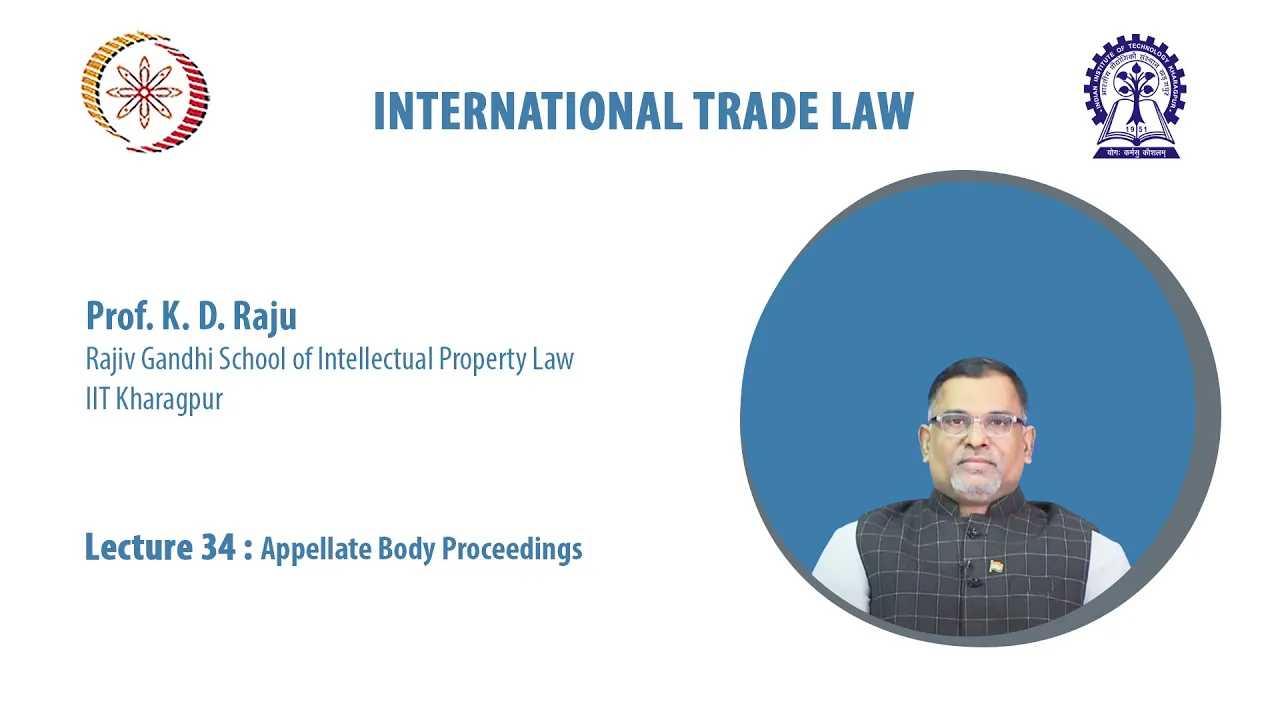
Lecture 34: Appellate Body Proceedings
1.2K
The Appellate Body is a permanent seven-member body within the WTO dispute settlement system that reviews panel reports on questions of law and legal interpretation, with the power to uphold, reverse, or modify panel findings; however, since November 2020, the Appellate Body has been non-functional due to the United States blocking member appointments, creating a significant gap in the international trade dispute resolution system.
Click to watch →
PDN 331 - DEMANDA NARCOPOLÍTICOS A MAS DE 50 POLÍTICOS MEXICANOS
25.9K
The WTO's Appellate Body, the highest court in the global trading system, has been technically non-functional since December 2019 because the United States, under both Trump and Biden administrations, blocked the appointment of new judges. Without a second level of appeal, disputes remain at the initial panel level. This means the fourth pillar of the global trading system—the dispute settlement mechanism—has been closed for over six years. The pressure on the WTO system began before the second Trump administration.
Click to watch →
Deep Dive
The principle of consensus decision-making in international organizations, which grants individual member states the power to veto appointments and procedural rules.
হঠাৎ করেই ঐতিহাসিক পদক্ষেপ। নতুন যুগের শুরু
69.9K
The UN Security Council requires 12 out of 15 votes for resolutions, with no veto from permanent members. Bahrain proposed military action against Iran to open the Strait of Hormuz, but China and Russia vetoed it. France, traditionally Western-aligned, also vetoed, stating military action would worsen the situation. Russia has used veto 130 times, USA 90 times, UK 29 times, China 19 times, and France 18 times. France's last veto was in 1989 regarding Panama. This demonstrates how veto power can block international consensus and how even allied nations may prioritize diplomatic solutions over military action.
Click to watch →
Veto power explained in Hindi | Russia-Ukraine War | Duniyadari E544
116.3K
Veto power is a constitutional mechanism that allows certain nations to unilaterally block decisions in international bodies; in the United Nations Security Council, the five permanent members (USA, UK, France, Russia, and China) each hold veto power, enabling them to prevent any resolution from passing even with overwhelming majority support, which has been criticized for allowing powerful nations to avoid accountability while simultaneously, in democratic systems like the United States, the president possesses veto authority over congressional legislation, though override is possible through supermajority votes in both chambers.
Click to watch →

ХАМЕНЕИ ПОГИБ. ПУТИН И ТОКАЕВ НАПУГАНЫ. ЗЕЛЕНСКИЙ СОГЛАСИЛСЯ НА МИР. 15 МАРТА МИТИНГИ — ШАЛ КЕТ!
166.9K
International organizations like the UN Security Council have mechanisms that can prevent collective action against violators. The five permanent members (China, France, Russia, UK, US) each possess veto power, meaning any one can block resolutions. Russia and China, as allies of Iran, would use their veto power to block resolutions condemning Iran's actions, effectively paralyzing the organization's ability to respond to violations of international law.
Click to watch →

Trójmorze ze wsparciem USA?, kolejna porażka Żurka - Stanisław Michalkiewicz
35.2K
This segment explains how international organizations like the EU operate through coalition building and veto power. A minority of countries formed a blocking coalition that prevented the transfer of frozen assets to Ukraine, demonstrating how even a small number of dissenting members can block decisions in organizations requiring unanimity. The segment also discusses how international credit can be structured with conditional repayment terms based on geopolitical outcomes, with the EU planning to borrow 90 billion euros for Ukraine with repayment contingent on Russia paying war reparations. This illustrates how international governance involves complex negotiations where national interests often override collective decisions.
Click to watch →

المغرب يزلزل الجزائر بقرار ثقيل بعد فرض التأشيرة على المغاربة ، و عطاف يخلق تحالفا لانفصال الصحراء
47.8K
Veto power is the ability of a permanent Security Council member to unilaterally block any substantive resolution. This power allows a single nation to prevent decisions that it opposes, regardless of the support such decisions may have from other nations. The video explains that this system was designed to ensure that major powers would not be forced into actions they fundamentally opposed, but it also means that decisions can be blocked by a single nation even when there is broad international consensus.
Click to watch →
Deep Dive
The fundamental differences between multilateralism, unilateral trade measures, and bilateral trade agreements.

Geography Class 12 Chapter 9 Subjective Question Answer |अन्तर्राष्ट्रीय व्यापार Subjective Question
42.4K
Multilateral trade agreement (बहुपक्षीय व्यापार समझौता) occurs when one country engages in trade with multiple other countries simultaneously. Bilateral trade agreement (एक पक्षीय व्यापार) involves trade between just two countries. Multilateral agreements are often facilitated through international organizations to enable smoother trade across many nations.
Click to watch →

Difference between Bilateral Trade and Multilateral Trade
695
Bilateral trade involves exactly two countries with simpler, less complex agreements and less formal dispute resolution mechanisms. Multilateral trade involves three or more countries, creating more complex agreements with formal dispute resolution processes. Bilateral agreements are more flexible and require less negotiation time, while multilateral agreements are less flexible but offer broader economic integration. Bilateral trade promotes cooperation between two nations, while multilateral trade promotes globalization among all participating countries.
Click to watch →

Inaugural Lecture by Yves Daudet (English simultaneous interpretation)
618
Multilateralism should be contrasted with unilateralism and bilateralism. Compared to unilateralism, multilateralism is positively disposed toward a consensus society and society of agreement. Compared to bilateralism, it shows both quantitative differences in terms of the number of stakeholders involved and more importantly qualitative differences in terms of the types of interactions it encourages. Diplomats know perfectly well the difference between bilateral and multilateral approaches, often perceiving them as two different lines of business—one being an ambassador posted to a country, the other being a special representative to an international organization.
Click to watch →
Dr Ankit Shah! Central Bank vs Trump vs Judiciary! Modi's Saudi + 3 Nations Visit| Harvard Penniless
110.7K
Bilateral free trade agreements provide more flexibility than multilateral trade agreements, as they require negotiation with only one party at a time. This flexibility makes bilateral agreements more attractive during periods of global uncertainty when multilateral cooperation becomes difficult. Countries with established bilateral trade agreements are better positioned to maintain economic stability during periods of global disruption.
Click to watch →

Who has the upper hand in China-US relations? | The Bottom Line
83.5K
The difference between bilateral and multilateral trade agreements lies in their structure and objectives. Bilateral agreements involve direct negotiations between two countries, such as the US negotiating tariff reductions with individual nations like Australia, Thailand, Cambodia, Malaysia, and South Korea (which pledged $350 billion in investments). Multilateral agreements, like the original Trans-Pacific Partnership (TPP), involve multiple countries agreeing to common rules about trade, investment, and digital commerce simultaneously. The TPP approach was designed to create peer pressure on outliers like China to adopt better trade policies. Trump's withdrawal from TPP and subsequent bilateral deals represents a shift toward pre-WTO era approaches focused primarily on tariff relief rather than establishing common regulatory frameworks.
Click to watch →
Prerequisite Knowledge
- Concept 01The core structure and mandate of the World Trade Organization (WTO) as the global body governing the rules of trade between nations.
- Concept 02The design of the WTO's Dispute Settlement Mechanism, including how panels are formed and the specific role of the Appellate Body as a 'supreme court' for trade.
- Concept 03The principle of consensus decision-making in international organizations, which grants individual member states the power to veto appointments and procedural rules.
- Concept 04The fundamental differences between multilateralism, unilateral trade measures, and bilateral trade agreements.
Subsequent Learning
- Step 01The specific legal and political grievances held by the United States regarding the Appellate Body's alleged 'judicial overreach' and procedural delays.
- Step 02The Multi-Party Interim Appeal Arbitration Arrangement (MPIA) and other alternative mechanisms created by member states to bypass the paralyzed court.
- Step 03The impact of the Appellate Body crisis on the rise of protectionist policies, unilateral tariff actions, and trade retaliations without legal oversight.
- Step 04Current institutional proposals for WTO reform, focusing on balancing member sovereignty with effective dispute enforcement.
WTO Crisis
Trade Fallout
WTO Crisis
0:00Playing Section
- 1
US blocks judge appointments, crippling WTO appeals court.
- 2
Trade disputes lack arbitration, risking rule by the strongest.
- 3
Director calls for reform amidst systemic deadlock.
WTO Judicial Overreach and the Case for Systemic Reform
While critics view the US blockade of WTO Appellate Body appointments as unilateral obstructionism, an alternative perspective argues that the blockade is a necessary reaction to persistent "judicial overreach." Proponents of this view, spanning multiple US administrations, contend that the Appellate Body routinely exceeded its mandate by engaging in judicial lawmaking—effectively writing new trade rules and imposing obligations on member states that were never negotiated or agreed upon. Critics of the court point to procedural violations, such as ignoring the mandatory 90-day deadline for rulings and allowing retired judges to continue serving on cases without member consent. From this viewpoint, the WTO dispute settlement mechanism had drifted far from its original design as a member-driven forum. Consequently, blocking appointments is seen not as an attempt to destroy global trade order, but as a crucial lever to force fundamental, structural reforms that restore national sovereignty and ensure the judiciary respects the negotiated limits of its power.
Deep Dive
The specific legal and political grievances held by the United States regarding the Appellate Body's alleged 'judicial overreach' and procedural delays.
The WTO: Looking Forward
2.5K
The US has six major concerns about the WTO Appellate Body: adding obligations outside original agreements, issuing advisory opinions on unrelated matters, engaging in fact-finding when panels should handle this, failing to meet 90-day decision deadlines since mid-2014, allowing members to continue working after term expiration via Rule 15, and claiming decisions should be precedent absent cogent reasons. The US objects to filling vacancies, reducing the body to two members by next year. Reform proceeds incrementally on separate tracks: notifications first, then differentiation, while continuing appellate body engagement. The US views the appellate body as a dispute resolution mechanism, not an international court, fundamentally disagreeing with the EU's approach of providing more resources and longer terms.
Click to watch →
STL Public Lecture: The Future of Dispute Resolution in International Trade in a Post-WTO World
264
The United States became extremely dissatisfied with the Appellate Body's work, beginning under President Obama in 2016 and continuing through Presidents Trump and Biden. The U.S. refused to reappoint or appoint new members to replace retiring Appellate Body members. All members serve four-year terms, and since the U.S. would not replace departing members, the number of members fell below the required quorum of three by December 2019, effectively paralyzing the Appellate Body. The U.S. accused the Appellate Body of judicial activism—the interpretation of WTO agreements to create new rights and obligations not explicitly stated in the original texts. This concept became central to U.S. opposition, as the U.S. believed it had no authority to create new legal obligations outside the original WTO framework.
Click to watch →
Managing Agricultural Trade in an Increasingly Chaotic World: Dialogue One
434
The Appellate Body, established to provide automatic adoption of panel reports and ensure consistent application of WTO rules, became non-functional when the US refused to appoint new members, rendering the body dormant since December 2019. The US dissatisfaction with the appellate body is colored by domestic trade remedy law preferences and opposition to rulings against US actions. Concerns exist about potential judicial overreach where appellate decisions may exceed what some members believe is authorized by the agreements. Proposed reforms include compressing timelines and restricting appellate scope, but fundamental reform risks undermining the entire dispute settlement mechanism. The fundamental principle is that while improvements can be made, the independence and legitimacy of the appellate body must be preserved, as throwing out the current system would undermine the entire dispute settlement mechanism that has served industries well.
Click to watch →

The Crisis at the WTO: Where Do We Go From Here? By WITA (Part 2)
160
The United States was the primary driver behind creating the WTO binding dispute settlement system because negotiators were frustrated with GATT procedures where key issues were blocked. The United States has been a complainant in 124 cases and a respondent in 155 cases, having been more frequently targeted than initiating complaints. The United States has achieved a 91% success rate as a complainant but has lost 89% of cases as a respondent. The United States' position is that it will not engage in discussions about fixing the Appellate Body until it has an answer to why the Appellate Body felt entitled to depart from the rules. The United States argues that even if there is an explanation for why cases couldn't be completed in 90 days, this does not change the fact that the system needs to be fixed.
Click to watch →
Two Decades of China in the WTO: The View from the US
359
The international rule of law applies equality before the law to nation-state relations, requiring independent and impartial judges. The Appellate Body faces existential crisis due to US opposition to its independence. Critics claim overreach, but the body has mandatory jurisdiction—it cannot decline cases or avoid addressing claims. It must clarify obligations using customary international law interpretation rules. The fundamental problem is US political resistance to losing cases, not judicial excess. Restoring the appellate body requires accepting that losing parties must accept rulings without destroying the court—a test of genuine commitment to the rule of law.
Click to watch →
Deep Dive
The Multi-Party Interim Appeal Arbitration Arrangement (MPIA) and other alternative mechanisms created by member states to bypass the paralyzed court.

EU klem tussen VS en China, in het oog van de handelsstorm
117
The Multiparty Interim Appeal Arbitration Arrangement (MPIA) represents a significant alternative to the paralyzed WTO dispute resolution system. This arrangement includes 57 WTO members representing approximately 58% of world trade, including the EU, UK, Brazil, Canada, Mexico, Norway, Philippines, Switzerland, and China. Notably, the US is the only major trading nation not participating. The European Commission described this as a 'mini WTO' that could maintain the multilateral trading system without the US. This arrangement was created because the US blocked the appointment of new WTO judges, effectively paralyzing the appellate process. The MPIA allows countries to appeal WTO rulings through an interim mechanism, preserving the ability to enforce trade disputes even without the full WTO system.
Click to watch →

The Trade War That Broke the World Order
135
In direct response to the judicial collapse, the European Union and about 15 other WTO members created the MPIA in March 2020. This is essentially an alternative appeals mechanism—a group of countries that have agreed amongst themselves to use arbitration following procedures based on old WTO rules to settle appeals between members of the group. It's an attempt to salvage at least a fragment of the judicial system. However, as of 2023, only 27 out of the WTO's 164 members had joined, highlighting the deepening divide.
Click to watch →

The WTO dispute settlement mechanism & the future of world & agricultural trade | LIVE STREAM
1.8K
The MPIA is an alternative appeal mechanism using Article 25 of the DSU to replace the defunct appellate body. It evolved from bilateral EU proposals into a plurilateral arrangement with 24 parties (EU counted as one) effective July 31, 2020. The arrangement establishes procedures for arbitration appeals, though it lacks formal adoption mechanisms. Key parties like Japan, Korea, India, Russia, and Turkey are not members, limiting coverage to only about 4 of 44 ongoing panels. The standing pool of 10 arbitrators includes experienced WTO practitioners who may address U.S. concerns about factual reconsideration and judicial overreach.
Click to watch →
WTO dispute Settlement: where do we stand? (S1)
1.1K
In response to the Appellate Body paralysis, Canada and 23 other WTO members established the Multi-Party Interim Appeal Arbitration Arrangement (MPIA) as an interim measure to preserve the core features of the DSU. The EU supports preserving the two-stage system but advocates for meaningful reform that strengthens effectiveness and legitimacy without undermining core principles. The US has criticized the AB for repeatedly failing to comply with WTO rules and has proposed alternatives including a single-stage dispute process similar to commercial arbitration. Mexico has advocated for restoring the AB through constructive dialogue. China emphasizes that returning to a one-tier system would remove the 'teeth' from the dispute settlement mechanism, jeopardizing both dispute resolution and the negotiation function of the WTO.
Click to watch →

WTO②
156
The Multi-Party Interim Appeal Arbitration Arrangement (MPIA) was established to address the paralysis of the WTO Appellate Body, which had become non-functional due to the US blocking appointments. The MPIA allows WTO members to continue using the appeal process through a temporary arrangement. This arrangement was joined by major economies including Canada, EU, and China, but Japan and the US initially did not participate, reflecting the broader tensions in the WTO dispute settlement system.
Click to watch →
Deep Dive
The impact of the Appellate Body crisis on the rise of protectionist policies, unilateral tariff actions, and trade retaliations without legal oversight.

Jennifer Hillman: WTO Dispute Settlement Crisis? @nzuscouncil Panel
139
The WTO Appellate Body faces a crisis threatening the collapse of the rules-based international trade system. As of December 11th, it will not function, meaning any country can block panel decisions by filing a notice of appeal. When the U.S. joined the WTO in 1995, it gave up unilateral tariff rights for a binding dispute settlement system. The U.S. narrative claims the Appellate Body broke this bargain, justifying unilateral actions like 25% tariffs on Chinese products. However, the U.S. has been the biggest winner in WTO disputes, winning 85% of cases when on the offensive, though it largely loses when challenged on trade remedies.
Click to watch →

ISILL Talk16 "Kebijakan Indonesia Dalam Merespon Reciprocal Tariff Donald Trump"
8.9K
The US has multiple trade instruments: Section 232 (steel/aluminum national security), Section 301 (China trade disputes), and Section 201 (other remedies). The current reciprocal tariffs use national emergency grounds and apply uniformly. Under WTO rules, countries have bound tariffs in their schedules (US average 3.3-3.4%) that cannot be exceeded without justification. The reciprocal tariff policy applies 10% to most countries, likely violating these commitments. In the 2018 steel/aluminum case, nine countries challenged US tariffs at the WTO, and the US lost because it violated GATT Article 2 by raising tariffs from 3.4% to 10-25% without proper justification. Currently, the US has blocked Appellate Body appointments, causing a crisis where nearly half of 33 cases involve the US. Without operational Appellate Body, dispute resolution is paralyzed. Different countries have adopted different responses: China implemented unilateral countermeasures, the EU applied its own 25% tariffs, and some pursue WTO dispute settlement. The video explores whether reciprocal tariffs could be classified as 'safeguard measures' to enable retaliation without Appellate Body authorization.
Click to watch →
Mercado brasileiro deve se aproximar da Ásia e se afastar dos EUA, diz professor da FGV
21.8K
The United States rejected a proposed agreement to reform the WTO Appellate Body, preventing the formation of a new judicial group and eliminating the necessary quorum for judgments. The Appellate Body, the most important WTO mechanism, regulates international trade by punishing countries that offer excessive subsidies or increase tariffs. Without it, the international trade system reverts to a 'law of the jungle' where powerful countries like the US dictate policies without restrictions. This benefits strong nations while harming smaller countries. The most likely outcome is increased protectionism, particularly led by the US, with other countries responding by raising their own tariffs. International institutions depend on support from powerful states, and without US backing, global organizations cannot survive.
Click to watch →

The Tariff Shockwave: How the US Replaced Trade Rules with Dictation
156
The US trade policy violates core WTO rules including the Most Favored Nation principle (requiring equal treatment among all members) and tariff binding commitments (requiring consultations and compensation before raising tariffs). The Appellate Body, the WTO's top Supreme Court for trade disputes, has been paralyzed because the US has blocked appointments of judges for several years. Without it, disputes sit unresolved indefinitely, countries cannot legally authorize retaliation, and multinational companies face massive uncertainty when planning investments years in advance.
Click to watch →
【半導体 対中輸出規制】『米国 中国 WTO』
89.3K
The WTO Appellate Body, functioning as the highest court for trade disputes, has been non-functional since 2019 because major powers like the US and Europe refused to appoint new judges. This means even if panels rule against the US, appeals cannot be heard. This systemic dysfunction means the US can ignore WTO rulings without consequence. The video argues this represents the collapse of the post-WWII multilateral trade governance system that many countries, including Japan, relied upon.
Click to watch →
Deep Dive
Current institutional proposals for WTO reform, focusing on balancing member sovereignty with effective dispute enforcement.
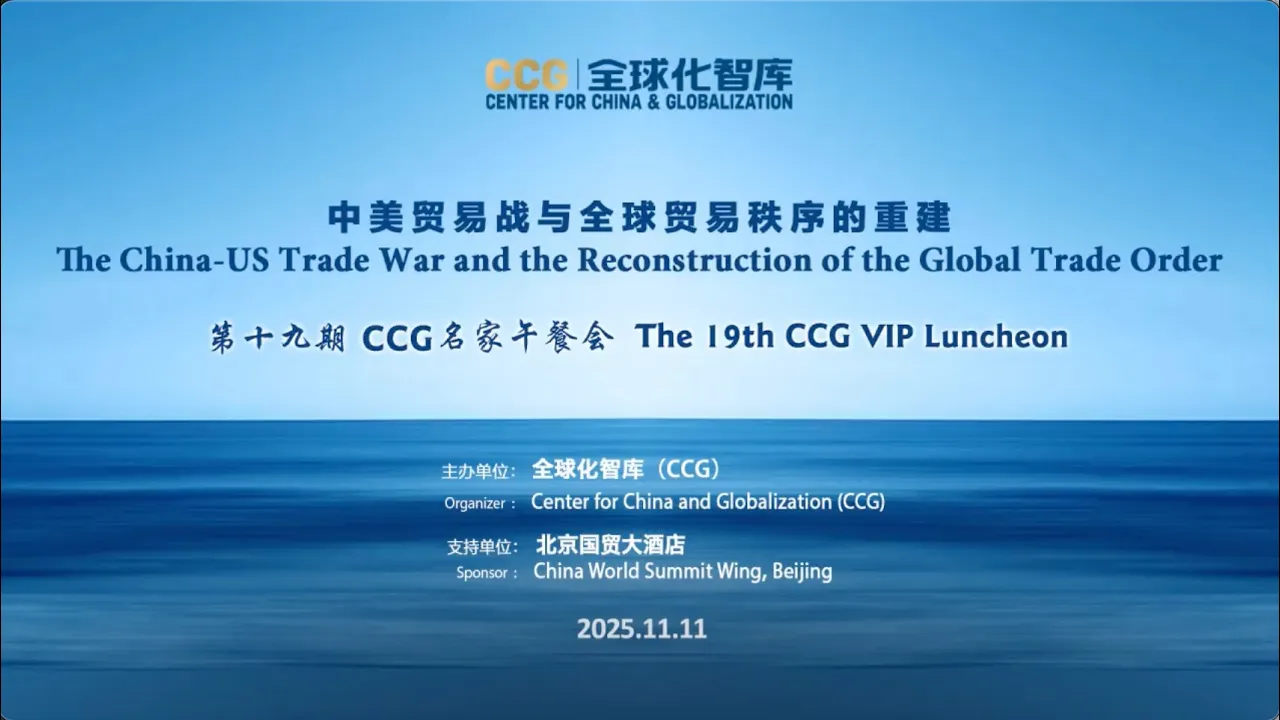
CCG VIP Luncheon on the the China–US Trade War and the Reconstruction of the Global Trade Order
124
WTO reform requires two things: (1) Updating the rule book in areas like trade-environment nexus, digital trade, and reforming the dispute settlement system. The dispute settlement system that was put in place without the US (MPIA) is working well, so this is not urgent. (2) Modernizing the organization itself by reviewing the balance between authority given to member states and authority given to the secretariat. The WTO procedures are outdated, and allowing the secretariat to table proposals could reduce negotiation time from 5-7 years to 1 year. The WTO is not dead but is a sleeping beauty that needs to be awakened.
Click to watch →
An Era of Possibility: President Tharman at the IMF Per Jacobsson Foundation Lecture 2025
24.9K
WTO members should use the present crisis to move forward on issues bedeviling the system. Most urgent is reforming the WTO's consensus decision-making process. Several proposals exist: Singapore has proposed 'responsible consensus' giving room for members to pursue national interests while supporting systemic interests. China has proposed 'partial consensus' where members exercise restraint in blocking consensus where a decision enjoys substantial majority support without making any member worse off. Other proposals include shift to qualified majorities or double majorities. All should be considered seriously because we cannot leave decision-making paralyzed.
Click to watch →

Strive 365 | Complete 1 Year International Relations Current Affairs | Class 4 | UPSC 2026🔥
169
Proposals for WTO reform include: giving developing countries greater voice in decision-making processes; strengthening monitoring and notification systems for non-tariff barriers to improve transparency; establishing clear rules to prevent fragmentation of the multilateral trading system; creating alternate interim dispute resolution mechanisms since the Appellate Body remains non-functional; and implementing common but differentiated responsibilities where developed countries face stricter timelines for implementing reforms while developing countries receive longer transition periods. For example, fisheries subsidy phase-out timelines might require developed countries to act within 5 years while developing countries have 20-25 years to adapt.
Click to watch →

World Leaders Forum: Ngozi Okonjo-Iweala, Director-General, World Trade Organization
284
The WTO reform agenda consists of three interconnected elements. First, preserve and strengthen working parts of the system, including rules ensuring openness and predictability. The TRIPS Agreement generates over $500 billion annually in royalty payments, with US companies receiving $144 billion last year. Second, fix non-working parts by tackling unfair trading practices, subsidy rules, and incorporating new areas like green subsidies. Third, embrace emerging opportunities in services trade (growing 4% annually), digitally delivered trade ($5 trillion), and green trade ($2 trillion). Reform requires balancing consensus-based decision-making with agility through plurilateral agreements and modernizing the dispute settlement system.
Click to watch →

Armeechef Benedikt Roos zieht eine erste Bilanz
630
Proposed WTO reforms include making it more difficult for countries to block decisions by requiring stronger justification for objections. Another proposal involves plurilateral agreements where willing members can negotiate rules that apply only to them but remain part of the WTO framework. These reforms aim to overcome the consensus requirement that has stalled meaningful progress.
Click to watch →
WTO Crisis
Trade Fallout
WTO Crisis
0:00- 1
US blocks judge appointments, crippling WTO appeals court.
- 2
Trade disputes lack arbitration, risking rule by the strongest.
- 3
Director calls for reform amidst systemic deadlock.
WTO Judicial Overreach and the Case for Systemic Reform
While critics view the US blockade of WTO Appellate Body appointments as unilateral obstructionism, an alternative perspective argues that the blockade is a necessary reaction to persistent "judicial overreach." Proponents of this view, spanning multiple US administrations, contend that the Appellate Body routinely exceeded its mandate by engaging in judicial lawmaking—effectively writing new trade rules and imposing obligations on member states that were never negotiated or agreed upon. Critics of the court point to procedural violations, such as ignoring the mandatory 90-day deadline for rulings and allowing retired judges to continue serving on cases without member consent. From this viewpoint, the WTO dispute settlement mechanism had drifted far from its original design as a member-driven forum. Consequently, blocking appointments is seen not as an attempt to destroy global trade order, but as a crucial lever to force fundamental, structural reforms that restore national sovereignty and ensure the judiciary respects the negotiated limits of its power.
The core structure and mandate of the World Trade Organization (WTO) as the global body governing the rules of trade between nations.
The design of the WTO's Dispute Settlement Mechanism, including how panels are formed and the specific role of the Appellate Body as a 'supreme court' for trade.
The principle of consensus decision-making in international organizations, which grants individual member states the power to veto appointments and procedural rules.
The fundamental differences between multilateralism, unilateral trade measures, and bilateral trade agreements.
The specific legal and political grievances held by the United States regarding the Appellate Body's alleged 'judicial overreach' and procedural delays.
The Multi-Party Interim Appeal Arbitration Arrangement (MPIA) and other alternative mechanisms created by member states to bypass the paralyzed court.
The impact of the Appellate Body crisis on the rise of protectionist policies, unilateral tariff actions, and trade retaliations without legal oversight.
Current institutional proposals for WTO reform, focusing on balancing member sovereignty with effective dispute enforcement.
33.9K views459likes3:31@dwnewsOriginal Release: 2019-12-11
it's move over WTO and let the big and powerful in particular the United States decide how global trade should be handled and that is basically what licensed or now for the World Trade Organization after successive US administrations have blocked the appointment of new judges to the body's appeals court critics fear world trade is now facing the law of the jungle the World Trade Organization is facing its biggest crisis since it was founded a quarter century ago director-general Roberto Acevedo had hoped to resolve the impasse but instead the organization can no longer deliver rulings on trade disputes because Washington has blocked the appointment of new judges to its appellate panel the panel was made up of seven judges for whose terms have expired have not been replaced because the United States has blocked the naming of their replacements two of the remaining three are due to leave on Wednesday with only one member remaining the court will no longer be able to issue rulings as a result there will no longer be an independent body to intervene in trade conflicts the stronger side will probably prevail Roberto Acevedo wants to turn the crisis into an opportunity on Tuesday he insisted the WTO had to be reformed without this sense of crisis there would probably be an accommodation and members would not be so very inclined to change things and to change the system make the system more responsive to the changes that we see out there now one example is the treatment of China which is given preferential status as a developing country many analysts not just the US say that's wrong the dealings between the WTO and China are sometimes still affected by rules that came into place a while ago when China was a smaller country the u.s.
basically wants China to play by different rules now international trade has to cope with even more uncertainty instead of the WTO playing the role of Empire Washington will be able to get its way all right back to Chelsey Delaney at the Frankfurt Stock Exchange Chelsea what's a paralyzed WTO appeals court to mean for tariffs well the fear is that this is going to lead to an increase in tariffs and in sanctions between countries if there isn't a moderator at the ER at the at that at the international level that this could really turn into an every man for himself situation with countries just responding to any sort of protectionism or trade threats with tariffs because there's no real legal penalty for doing that there are also a lot of cases still pending in front of this appellate court including cases by the by the EU and against them the Trump aluminum and steel tariffs so there's a lot of questions about what's going to what's what's going to happen at those as well all right two interesting times ahead there for global trade no doubt Chelsea jelenia Frankfurt thank you so much
Up Next
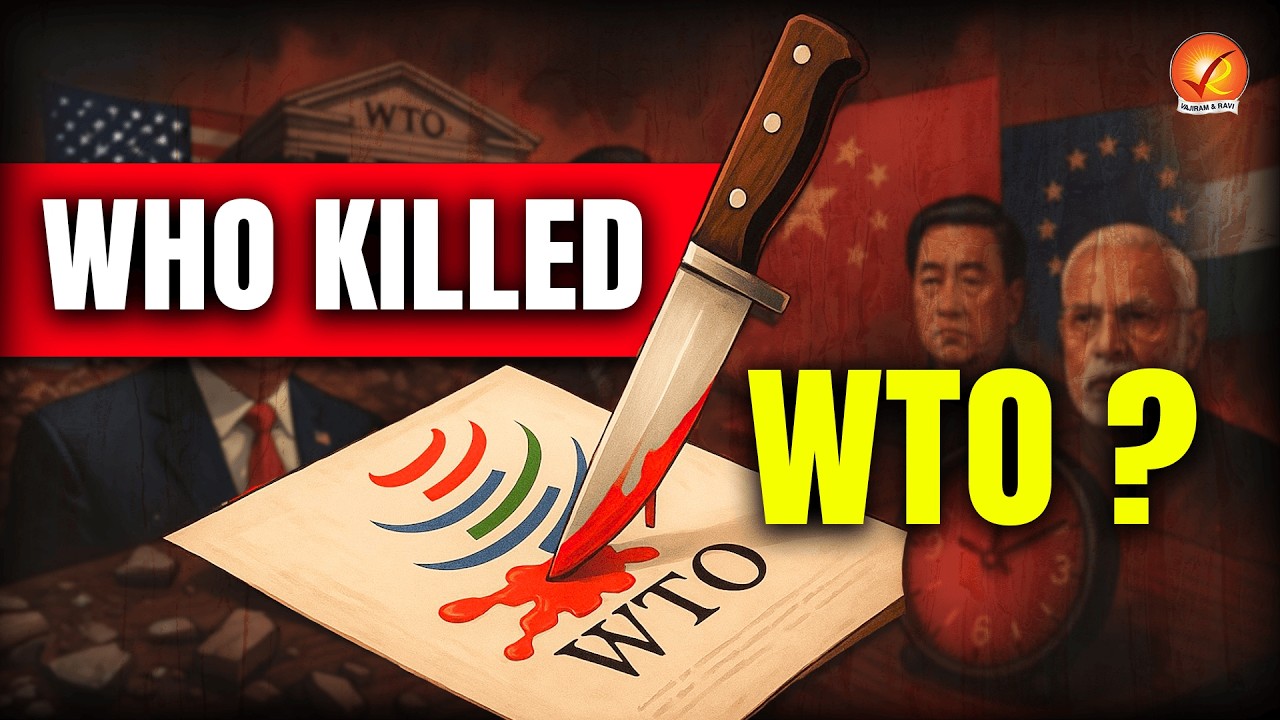
12:54
WTO Crisis Explained: India's Role in Global Trade Reform
@VajiramandRaviOfficial
10K views•2025-08-02

24:30
BRICS Pay and de-dollarization: A New Financial Order Emerges? | 55 chars
@DannyHaiphongYT
164.6K views•2024-10-22
3:22
German Coalition Talks: CDU-SPD Begin Exploratory Negotiations
@dwnews
40.9K views•2025-02-28
10:19
Explaining the Saudi-Iranian Proxy Conflict in the Middle East
@Vox
18.2M views•2017-07-17
Related Study Plans & Knowledge Roadmaps
Structured learning paths in Political Science
political-science
Economic Statecraft: Sanctions & Chokepoints
01Foundations of Geoeconomics and Economic Statecraft
02The Mechanics of Weaponized Interdependence
03International Sanctions: Types, Implementation, and Efficacy
+ 2 more learning modules
12h5 modules
Explore Roadmap
political-science
Central Bank Independence: Politics & Policy
01Foundations of Central Banking and Monetary Policy
02The Time Inconsistency Problem & Inflation Bias
03The Delegation Model and Designing Independence
+ 2 more learning modules
12h5 modules
Explore Roadmap
political-science
Consociationalism: Power-Sharing & Stability
01Democratic Dilemmas in Divided Societies
02Introduction to Consociational Democracy
03The Four Pillars of Consociational Design
+ 2 more learning modules
12h5 modules
Explore Roadmap
political-science
Rebel Governance: Legitimacy, Economy & State
01Foundations of Rebel Governance and Statehood
02Establishing Political Legitimacy and the Rebel Social Contract
03Wartime Economies and Rebel Resource Management
+ 2 more learning modules
14h5 modules
Explore Roadmap