



















The prefrontal cortex regulates learned fear and avoidance through distinct neural circuits: the prelimbic cortex controls fear expression by projecting to the basolateral amygdala, while the infralimbic cortex mediates fear extinction by projecting to intercalated neurons in the amygdala; additionally, the prefrontal cortex projects to the paraventricular thalamus, which coordinates fear responses with other behaviors like feeding, and the rostral prefrontal cortex generates avoidance responses through projections to the ventral striatum, with brain-derived neurotrophic factor (BDNF) from the ventral hippocampus being essential for consolidating extinction memory.
Neural Circuits of Fear and Avoidance | Prefrontal Control | Webinar
Added:Basic neuroanatomy of the limbic system, particularly the structure and primary functions of the amygdala and the prefrontal cortex.
The fundamental principles of classical (Pavlovian) conditioning, including threat acquisition (fear conditioning) and extinction.
Basic concepts of synaptic plasticity and neurotransmission, specifically how neural circuits adapt to learning and environmental stimuli.
The physiological and psychological distinction between adaptive fear responses and maladaptive anxiety.
Clinical translational applications, such as exposure therapy protocols and Cognitive Behavioral Therapy (CBT) designed to enhance prefrontal cortical control.
Advanced neurotechnological methods for circuit manipulation, including optogenetics, chemogenetics (DREADDs), and in vivo calcium imaging in animal models.
The pathophysiology of Post-Traumatic Stress Disorder (PTSD) and obsessive-compulsive behaviors as manifestations of impaired prefrontal-amygdala regulation.
Targeted pharmacological and neuromodulatory interventions, such as Transcranial Magnetic Stimulation (TMS) and Deep Brain Stimulation (DBS) for treatment-resistant anxiety disorders.
1.1K views16likes51:37Original Release: 2017-03-24
hello we're glad you joined us for today's webinar prefrontal control of learned fear and avoidance I am Christina maholic of labroots and I'll be moderating this session today's educational web seminar is presented by laby the the leading scientific social networking website and provider of virtual events and webinars advancing scientific collaboration and learning to learn more visit lab roots.com let's get started you can post questions to the speaker during the presentation while they're fresh in your mind to do so simply type them in the Q&A box which will open when you click on the green Q&A button found at the lower left of the presentation window questions will be answered after the presentation to enlarge the slide window click on the screen icon in the lower right hand corner of the slide window If you experience technical problems seeing or hearing a presentation just click on the support button found at the top right of the presentation window or report the problem by clicking on the green Q&A button at the lower left of the screen this is an educational webinar and thus offers free continuing education credits after the webinar is over please click on the C button load located in the bottom left hand corner of your web page and follow the process of obtaining your credits I now present today's speaker Gregory Quirk PhD Adjunct professor University of Puerto Rico raised in southern Connecticut clerk went to Northwestern University in Evanston Illinois for his graduate under for his undergraduate training one of the first in students to major in Neuroscience he worked in the laboratory of Dr Ari Rottenberg studying dentate granule cells in the hippocampus and memory he then pursued a PhD in neural and Behavioral Science at Sunni down state in Brooklyn New York working with doors Robert U Mueller Mentor John L Kuby and James B rank studying play cells in the hippocampus and ininal cortex this was followed by a full bright Fellowship to establish the first Neuroscience research laboratory in Honduras at un Ted Gala focused on Mal nutrition and developing CNS following a p postdoctoral fellowship at NYU in the laboratory of Dr Joseph Leo studying cortico amydala circuits in acquisition and Extinction of conditioned fear cork then returned to Latin America in 1997 to establish his own research laboratory at H's School of medicin now HS Health Sciences University in Puerto Rico in 2007 he moved his lab to the University of Puerto Rico School of Medicine in San Juan over the past 20 years Cork's research program on fear learning has brought competitive research grants high profile Publications and first class training opportunities for undergraduate and doctoral students living in PTO Rico Dr Pork will now begin his presentation the floor is all yours okay uh thank you Christina uh I am Gregory Quirk and I'm happy to be here at lab Roots um uh lecture on prefontal control of learn fear and avoidance I'm starting with a beautiful picture of Puerto Rico where I am that's not my office unfortunately I wish it was it's a small island off the coast of Puerto Rico called Kyo Santiago which is a research uh MAAC research facility that uh For Recess mcacs uh and we do some research there okay I'd like to start with this uh quote from Marie C that the first woman Nobel laurate Nothing in life is to be feared it's only to be understood that's very uh very encouraging um but it also in a way is is an in a an introduction for cortical regulation of fear or cognitive therapy in a sense can we think down our fears can we control them with our thoughts so what makes us afraid uh some fears are thought to be in eight like snakes for example or the fear of heights this is the uh the CN Tower in Toronto where you're supposed to walk across a glass floor and it really is terrifying um I went to do it myself and had real trouble getting across that floor because my amydala is saying I'm I'm going to die but my prefrontal cortex is saying saying no uh they don't kill tourists and you're probably going to be fine so I did make it across but most fears are learned through conditioning or instruction so how do we respond to to Danger stimuli and you can respond either passively such as freezing or startling or actively um such as avoidance or or fight or flight now these conditioned fear responses that occur with the trauma can later trigger um anxiety and fear and this is a feature of all the anxiety disorders so post-traumatic stress um phobias panic disorder and even obsessive compulsive disorder so the questions of our lab are what regulates the retrieval and expression of these learned fear responses and how do the fear responses compete with repetitive drives so let's start with these passive uh your responses of freezing so this video shows rats here in Puerto Rico they're pressing a bar for food and they're receiving a pellet in a tray and they've they're waiting for the tone okay there that that light that just turned on indicates the tone and the tone means nothing to them so they it don't they don't stop eating now in the conditioning phase the tone is on it will terminate with a mild shock okay there it is you do that a few times and the next day this is their first presentation of the tone and that's freezing in a sense we've inserted the memory of tone shock in the animal's brain and you can see the rat on the lower right is trying to break through his fear to get closer to the food which is typical of anxiety uh disorders that they prevent us from achieving goals so we can measure this freezing with uh with video programs it increases uh during the conditioning phase then we give the tone without the shock and the freezing decreases it extinguishes and then the next day you can see there's a memory for fear Extinction for the animals that had the extinguished memory now the extinction doesn't erase the original learning um if you just wait a matter of time you can see that the the extinguished freezing comes back in this case to its full original value over a number of days this is called spontaneous recovery so this suggests that the the fear memories are regulated so what are the circuits that regulate the expression and Extinction of these of these fear memers so obviously the Nel is the key structure here it gets inputs from the thalamus and the cortex gets tone and shock information that's integrated in the amydala the lateral and basal nuclei and it's really the central nucleus that's the output of the Amiga to mediate the various aspects of condition fear to the hypothalamus and midbrain now the prefrontal cortex has reciprocal connections with the amigdala and really can control um the output of the IGA and we're going to focus on these two two subdivisions of the prefilter cortex and the rat the prelimbic and the infralimbic areas and we can ask what do these areas do by infusing a the Gaba receptor Agonist mol to inactivate these areas so when we do that in the prelic cortex the animals have trouble expressing or showing their condition fear so uh but they have no trouble extinguishing as you can see if we inactivate the INF cortex in contrast the expression of the condition fear is normal but they have trouble extinguishing they extinguish much more slowly and the next day they show no memory of the extinction so the we think this prelic area is important for the retrieval or the expression of the condition F whereas this infralimbic area is important for the extinction now the pl and I areas project to different different parts of the amigdala the prelic to the basil nucleus mostly and the infralimbic to these intercalated neurons that inhibit nucular output and this has led to circuits such as this that are thought to be involved in the expression and Extinction of condition fear from prelic cortex to Basil amigdala or from the inic cortex to the inter interl cells to turn off new now we've been recently revisiting these circuits with optogenetic techniqu so here in optogenetics we can use either Channel adoption Express Channel adoption or Halo adoption which is activated by laser light to allow the the flow of either sodium or chloride ions to activate or inhibit neurons and the use a cam kise 2 promoter so these are the neurons that Express these ropin are going to be most likely projection cells or excitatory Neons so for example the prelic projects to the basolateral migula as I said but it also projects to the thalamus the midline thalamus the M dorsal and paraventricular area and then that projects to the central nucleus of the migdala so this is an indirect circuit in which the prefrontal cortex can control expression of here this shows the anade label in the central nucleus with injections in the paraventricular th so to address these these indect projections uh we used optogenetics fabrio Delonte a A postto in the lab uh used optogenetic techniques to express in this case um uh haloid dosin in the prelic cortex so you can see the prelic um region expression of the of the yellow F FES protein that indicates Hopsin there and when we shine the laser yellow laser light the action potentials are reduced now we the beauty of optogenetics is you can also activate just the terminals or or inhibit just the terminals here so we could express the hel adoption of the prelimbic cortex and shine a light in the terminals in the thalamus that receive the inputs from the prelic cortex paraventricular THS in this case we're recording from the paraventricular neurons and we shine a light in in inhibit the prelic inputs we get inhibition as you see on the left or on the right we get excitation suggesting that there's some sort of feed forward inhibition of this uh of this pathway so now the question is what do these pathways are these Pathways necessary for the retrieval of the fear what role do they play so to address this uh for vco the lab use Halo dosin in rat at two different time points after conditioning with six hours or seven days and he noticed that when he inhibited the prelim cortex freezing was reduced at both time points however when he inactivated the projections to the amigdala freezing was reduced only at the early time point six hours but not at the 7day time point when he activated the projections from prelic to the paraventricular thalamus he saw the opposite result the freezing was reduced only at the long time point but not the short then when he activated the projections from the paraph chus to the igula he got the same pattern a reduction of freezing at the long time point but not the short and looking the next day you can see here that the the freezing is still reduced even in the absence of the U of the laser light suggesting that activation of these Pathways may be important for maintaining the fear memory but it certainly seems like there's a a a a shift from the projections to the basil lateral igula to the projections to the fness A Time dependent shift in the circuits that that mediate the retrieval of fear now some implications of these findings are that it changes the way we think about the current models of fear regulation which are based mostly on these 24-hour time points that the memories are changing or evolving the time and postraumatic stress is uh usually involves older memories so it ask is is this time dependent shifting uh of retrieval circuits involved and could it be could it be used clinically and what are the mechanisms of this recruitment of this thalamic area and what are the advantages so the paraventricular thalamus receives inputs from a number of different areas throughout the pral cortex the hippocampus and the midbrain and the uh the Amiga and it return turns projections back to many of these structures so it has a unique connectivity and it could be doing all of these things that have been suggested by by various auths it could coordinate the fear memory with other responses such as arousal and anxiety chronic stress or food seeking and reward via its projections to the nucleus acumin and this is the the the um the hypothesis that we're following up on now so here we modified the task so that the animal can press a bar for food it only gets the food if a light is turned on so we condition the animals to press only when the Q light is on and not when the light is off then on day four we either give the the food again to the light as normal or we omit the food so they don't get the food that they expected now we can activate with chanod dosin the paraventricular neurons and we do that we see that it reduces the uh pressing for food both when the food is available and when the food is emitted as you can see here on day four and day five I think we have a video of that here so you'll see a rat the laser is off in these trials the ride is waiting for the light to turn on and then it starts pressing the bar for food now the Hopsin light is going to be turned on the laser be turned on when the light is turned on only in the in the left hand r the right is a control and you can see that with this act with this uh pathway activated with Chino ad dosin the animal is not pressing for food on the left where it is on the right so this pathway turns off the food seeking Behavior now we can do the reverse we can in inhibit or silence this pathway by expressing Halo adoption in the paraventricular nucleus and a Shining Light in the nucleus laser yellow laser in the nucleus ofs and we do that we get a very interesting pattern of results when the food is available we get no effect of inactivating this pathline however when the food is omitted the the Press rate increases only when the food is omitted so that suggests that under normal conditions this pathway is recruited under the conditions where the animal doesn't get something that it wanted or these what we think are may be somewhat aversive conditions so for example you think that this car ventriculus could come online to coordinate food seeking with aversive events so for example if a if a cat which is a predator forat appears then the prelic cortex can activate paric neurons that then project to the central nucleus and Trigger these fear responses but at the same time it can activate parri neurons that project to the nucleus of Comon shell and decrease food seeking so the animal can decrease food seeking and Orient towards the predator and uh Escape now let's take a shift and talk about the active fear responses of or avoidance avoidance can be thought of something as positive because it's really can be considered a coping strategy that reduces the likelihood of danger but it also can be seen as something negative it's excessive in anxiety disorders and it uh interferes with with goals and reduces the opportunities for naturally occurring extinction obviously if the if this the patient is avoiding the stimulus associated with the trauma it will not learn that that stimulus is now Sav so we've modified our our few conditioning task by inserting a barrier at the opposite end of the cage where the animal can jump on and avoid the shock they call this platform mediated avoidance this type of avoidance has a cost because uh it competes with the food when the animal sitting on the platform it can't reach the the bar so we think this is similar to clinical avoidance and unlike fleeing this is really a decision that the animal has to make it's going to be based on multiple factors such as the food timing and fear so it's going to be more complex than than fear conditioning which is a more reflexive response and therefore they have a more complex circuitry than P condition however we position now that we know so much about the circuitry of of fear condition to use it to understand avoidance even though avoidance is a long history of research uh now we the time we can really return to understanding the circuits of avoidance this Clarity okay here is a a video of rats that have been trained in this avoidance task they pressing the bar for food and the light will come on the tone will come on in the moment there's the [Music] tone now they know the shock occurs at the end of the tone but they don't waste much time getting on that platform and waiting out the tone now look at the rats in the in the lower lower half you see they're trying to get close to the bar you can see that that tension that conflict okay now the tone is off and they can um head back to the bar and continue pressing for food okay so this is the work of Christian Bravo rera when he was a graduate student in the lab and basically this shows that we train the rats over nine or 10 days in this task the Blue Line shows increase of in avoidance and the red line shows the decrease in freezing to the tone as so this typical avoidance task is the animal learns to avoidance to to to that it has control it no longer is afraid of the tone and the green line shows the rate of pressing during the intertrial interval which was depressed initially but then comes back to normal levels so here at the end after 10 days uh the animal looks quite normal as long as it can do its avoidance the question then is what are the structures that are necessary for expression of as avoidance so we started with memol in either of these three structures the prelit cortex the vetal strium or the Bas lateral igula and to our surprise inactivating any of these areas or all these areas incre a decreased avoidance but not in the same way if you look at freezing inactivating the basolateral migdala also reduce freezing whereas in inactivating the prelic and the strium did not reduce freezing so we think that the inactivation of bla reduced or eliminated the tone shock Association and that's why avoidance was was lost whereas these areas loss of uh inactivation produced the loss of the avoidance response the animal reverts to freezing so I think it's really this projection that is mediating the avoidance option of the avoidance response under these conditions of danger so on the left you have the circuits of fear conditioning the preit can activate the IND to dry freezing but on the right we think that the the during avoidance the prelic activates the ventral stum to generate the avoidance response and we think this is a direct projection here we can combine seos which is an activity marker with retrograde tracers retrograde labeling injected in need vental strium or the basal mum so you can see uh here the the cells that are labeled labeled in green are neurons that are expressing Foss and animals that are expressing Theo you can see in the prelit cortex and these the same area tends to be labeled with cells that project to the vental strium but not so much cells that project to the uh basil lateral migula so indeed shown on the far right you can see that the there the cells that are activated by f are tend to project to the vental St rather then to the m so again we can use optogenetics um to investigate this and this is the work of Maria deal a postto in the lab what she did was Express Hal actually arod dosin in the prelic cortex to inhibit or silence the prelic neurons so she can inhibit or silence the response of these cells is shown here and mze animals but then in Behavior sh he expresses the arrod dosin in the either in the prelic cortex both the rostal prelic and the Cal PR but in both cases inactivating the cells had no effect and you can see here in um on the on day 11 when the tone is is on there is no effect uh there's no reduction in the time spent on the platform The Animals still are still avoiding both in the rostal prelic and in the Cal pric so this is a puzzle because our mimal data suggested that there was an effect was a reduction in the W so uh why is there a disagreement between the mol silencing or inhibiting and the urops and so to address this we thought well let's let's look and see what the prelic neurons are actually doing do they signal the avoidance so to do this Maria planted animals and recorded from pic neurons in the animals as they they hear the tone and then start the avoidance and she recorded across a large range of rostral and Cal prelim cortex and you can see on the bottom that you saw both excitatory and inhibitory responses cells that either excited to the tone or inhibited to the tone but when you look at the percentage of animals that that showed this the percentage of of of cells that showed these responses it's about uh equivalent levels Show excitation versus inhibition and rats that had that were training avoidance but in naive RS that were never trained they're in the chamber with the platform and a bar but they're not conditioned at all you get the same percentage of of excitation but very little or no avoidance no inhibition so that suggest that the it's really the inhibitory responses that are correlated with avoidance not the excitatory responses and you can see that and furthermore the majority of these inhibitory these cells that were inhibited are located in the rostral prelim cortex not the Cal so how could we block this inhibitory response to find out is it necessary for avoidance so we used optogenetics again we can use Channel adops and to to stimulate these neurons now the neurons that are showing the inhibition are sh on the left as blue dots in a uh against a background of previous data from our laboratory looking at Spike width and basil firing rats so the small gray triangles indicate projection putative projection neurons with with long Spike wids and uh and slow firing RS whereas these aik R cells are putative inhibitory in neurons which have the high firing rates and low Spike so it looks like these cells showing inhibition are indeed projection on and on the right you can see the average inhibitor response it lasts about 10 seconds or a little bit more and it drops the firing rate from an average of six Herz to about two Hertz so sh here cells firing about six Herz the tone comes on it drops its rate to two Hertz but we can use Channel adoption to stimulate the neurons at the tone onset at four Hertz which can bring the rate back up to six Herz in a sense maintaining the basil firing rate throughout the tone then we asked if this would affect avoidance okay and what you're seeing here is the same rat without the laser on the left and with the laser on the right there's the tone with at this very slow four Herz stimulation so you see the animal with the laser it's it's not pressing the bar for food so it's it's not like there's no fear it knows there a problem but it's not using the platform then the tongue goes off and it goes back to depressive so looking at the data here the group data indeed you can see that there was a there was a inhibition of the avoidance response with this for her stimulation of the cells in the rostal prelic cortex but not in the Cal prelic cortex in agreement with the location of the inhibitory neurons inhibited neurons were in the Ral PR cortis furthermore um stimulation at two Herz had no effect so it's specific to the frequency of 4 Herz so it seems that an inhibitory signal is important in the rostral prelit cortex it gets tone inflammation from the amydala there it there's convergence with other inputs to produce inhibition and then this then perhaps disinhibits strial neurons that are involved in avoidance um perhaps the uh like other cortical areas the rostal pric cortex can end on Fast spiking inter neurons in the vental strion which can then inhibit medium spiny neurons okay what about Extinction of avoidance well um we showed some years ago that the infralimbic cortex is involved again with mol if they activate the infralimbic cortex just prior to Extinction the animals extinguish their avoidance but the next day they show no evidence of the of the extinction memory in other words they're unable to consolidate or retain that memory interestingly on day 12 even though they have excess avoidance they do not have excess freezing so they're not more afraid of the of the tone they just uh do can't stop doing the avoidance now more uh recent work done by Luis roses Vidal MD PhD student in the laboratory um has looked at the role of brain derive neurotrophic factor in in infralimbic cortex so when we inhibit or use an antibody to bdnf and we inhibit bdnf IM Li the cortex it also impairs avoidance Extinction memory as you can see here the animals uh responding as if they not had Extinction furthermore what he did was to combine imuno chemistry for bdnf protein together with retrograde tracers injected into the uh infl cortex so here's the hippocampus hippocampal neurons are shown uh here red are hippocampal neurons that projected the infid cortex and those that are yellow are those neurons that they also Express brain der neurotropic factor and indeed after Extinction training those double Lael neurons increased suggesting that the input from the hippocampus is the one that's bringing this bdnf input that's important for extinction and in agreement with that uh we using the crisper cast 9 system to block the production of prob BNF in the ventral of the campus and indeed when that's done we get the same effect that the animals can extinguish but again their memory for the extinction is is blocked suggesting that the um again the bdnf and the ventral camp input is important for avoidance Extinction and it's important to remember that brain derived neurotropic factor is implicated in in PTSD and OCD the levels are are reduced so this could be uh part of the mechanism for these accelerated avoidance in these now some other directions in this aoid Tech we've been using is to maximize the food fear conflict in the in the videos I've shown you so far the animals know that uh when the tone comes on they're on the platform they can't press for food but they know that when the tone goes off they can go back to the bar and and press in the intertone interval so we modified the Tas so that they could only press they could only retrieve food during the tone so this is the work of of Hector bar Riva graduate student in the lab what he's did was first condition the animals in the avoidance task so that they're avoiding quite a bit and they're showing very little bar pressing uh to the uh to the to very little bar pressing during the tone then after that conditioning he then conditions the animals to do the light reward conditioning so in this case they when the light turns on that's when the the the bar is armed they're able to get food so they learn to increase their press uh in the presence of light then he gives both the tone and the light at the same time that's the conflict so the animal has can only press for food during the tone what do they do so the animals show an interesting most of the animals show this interesting property where they tend to slowly decrease the amount of voidance and increase the amount of pressing remember the the shock does come at the end of the tone so they can basically time out the interval and increase the amount of food that they're receiving till at the end they're they're uh avoiding about the same amount as they're pressing and there's a video of that shown below here so the light is off tone is off and now they turn on together the tone and the light so he's pressing very fast he has a he has a short time now to retrieve as much food as he can and that's it now he's on the platform again waiting for the end of the tone even though he's a bit conflicted there all right tone is off and now he can go back to the bar now the majority of these animals do this this we call this timing Behavior but a small percentage about 10% of the animals uh show a different a different kind of response they actually press avoid less and press more so as if they they're not concerned about the uh the shock so we call these food preferring animals and another subgroup here um avoids almost entirely and uh and and presses not at all so these are platform preferring animals so these two subgroups uh basically there are three different subgroups of responses in this conflict task and interestingly um this this conflict induces some change in their responses and we're using now uh seos and then later optogenetics to modulate these different subtypes we Al we've also been using this task to model obsessive compulsive uh compulsions many OCD compulsions represent can be thought of as representing avoidance of perceived threats so for example handwashing repetitive handwashing to avoid infection or disease now there's a treatment for OCD that is called exposure with response prevention or Erp the person is taken and exposed to their stimulus in this case if it's infection or or U germs and maybe they touch a toilet seat and then they're prevented from washing their hands for a period of time the thought here is to actually extinguish this compulsive Behavior so we could modify our task to to address this so we have we can condition the animals to go on the platform then we can extinguish over a number of days but by putting in a barrier a plexiglass barrier so the animal cannot go on the platform one it can see it but it can't go on then we remove the barrier and then ask do they go on the platform or not even though they've extinguished their their fear responses so we call this Extinction with response prevention so again they get the conditioning then three days of Extinction training with the barrier present and then we remove the barrier and what you see here is that the majority of the animals uh shown in green here do not go on the platform in other words they stay by the food bar when the tone is on and they've learned their Extinction but a small percentage about 25% still go on the platform despite the extinction we look at those animals that shown in pink here and during the extinction with uh phase they actually show elevated freezing levels so they seem to be more afraid um in the presence of the barrier in other words more more afraid of the fact that they can't Mount the the platform now we can we can reverse this persistent avoidance uh with two different manipulations one is an activation of the lateral orbital frontal cortex here's mol in the lateral orbital uh area and in animals that showed the ANS that showed the persistence avoidance they now uh do no longer show the syst of on similarly deep brain stimulation high frequency stimulation of the internal capsule or the nucleus thatum internal capsule area in the in the rad again during the extinction training they extinguish normally uh but it removes or eliminates the persistent avoidance shown a test now interestingly the the condition freezing did not change in these animals so these manipulations don't reduce fear they just reduce the avoidance and it suggest that the lateral orbital input to the rostal prelic cortex may be important in gaing or modulating avoidance after Extinction and after this this situation another way to think about it is that these inputs may help to devalue the uh the platform after Extinction and this may be a problem in CD is that that the platform is not devalued on extinction another uh experiment with this task has been done by another postor live Freddy Martinez Rivera um he's asked if the amount of conditioning the extent of conditioning training affects the persistent avoidance so he has two groups one that's trained at eight days and one that's trained at 20 days a very prolonged conditioning both groups learn the avoidance task and uh reduce their freezing but then they're put into the extinction of response prevention um and then given a test and we notice is something very interesting that across the four days of Extinction training the uh 20-day group they start off the same but they have trouble extinguishing their condition freezing responses like the eight day group does so in other words they seem to maintain an elevated fear response uh uh during Extinction and then when they're tested without the barrier they do show increased avoidance but not increased fear because presumably this avoidance they're doing is is removing the the fear that they have so again this may be related to obsessive compulsive disorder in the sense that um this prolonged or habitual expression of the of the compulsions can then um uh exacerbate um this kind of dependence on the on the compulsion to reduce F so we're now using optogenetics to manipulate these circuits to to move uh the rats from one group to another so summarizing um the extinction the expression of of of the avoidance the the igula gives tone information to the rostopic cortex ropic then projects to vum which then projects to substantial reticulada to mediate these avoidance responses now in extinction the inflamed cortex can inhibit either at the level of the amula OR at the level of the strium we believe uh to reduce the avoidance it depends on inputs from vent the campus to both prelimbic and infralimbic using this brain derived neurotrophic Factor and we think the lateral orbital input to rostro prelic is important in gaing the value uh after Extinction of thees and we're particularly interested now in studying these uh the interaction of these different inputs using optogenetic techniques to study how do these inputs interact in the rostal prelic cortex to mediate control avoidance okay the human homologues of of rodent prelic and inic cortex u based on fear conditioning the the prelim cortex is thought to be the dorsal anterior singular cortex and the infomic is thought to be homologous to the ventral medial prefrontal cortex this is based on years of data in fear conditioning and Extinction now human studies of avoidance are are rare uh and they're just beginning to to be done this is work from Daniela Schiller looking at um a shuttle avoid this task where the subject is asked to keep moving that Green Dot from one side to another or they have to learn that they they're not told they have to learn that they keep shuttling it back and forth they'll they'll prevent a shock if they don't they will get a shock to their fingers now she scans these people in the MRI and shows that that the when they're doing this avoidance response there is an increase in activity in the in the striatum in addition uh when they're doing the avoidance task there is an increase or correlated activity between the um most rostal part of the of the prefontal cortex and the CATE nucleus and a slightly more codal part of this anos singulate and the igula so we think it is this this it's interesting this rostal area is U is is coordinating with the stum in avoidance and recent work from Muhammad mad's group has shown in human subjects with with PE with postotic stress disorder uh using the pet fdg to look at resting activity he finds that it's really this most rostal area that's correlated with the avoidant symptoms in these patients so again in both of these studies are indicating there's something uh very important about this more rashal anterior singulate area in mediating or modulating avoidance okay that's that's the that's the talk here's the great people that I work with in Puerto Rico the uh graduate students and posts that I've already pointed out in the talk but in particular I'd like to just point out again a postdoc Fabo Delonte who really started op the genetics in Puerto Rico and is now uh setting up his own Lab at the uh University of Texas in Houston uh our work is important by funding from the National Institutes of mental health um and the National Science Foundation and also the uh our University of Puerto Rico and I'd like to make a plug for a new exciting Journal that I'm an associate editor at uh called the science of learning this is part of the nature of partner journals to try and integrate what we know about learning and memory with education in other words the field of Education what does Neuroscience have to say to education and and vice versa so this is a a good time to to submit to this journal and uh it's a it's a unique has a unique Mission and thanks very much for your attention thank you Dr Quirk for your informative presentation a quick reminder for our audience on how to submit questions simply type in in the Q&A box found by clicking on the green Q&A button at the lower left of the presentation window Dr cork will answer as many questions as time permits and with that let's hop into of the questions Dr cork the first question of the day asks do the same pvt neurons project to both the nucleus acubens and amydala or are they separate ventricul neurons can turn on fear um and uh can turn on fear or or turn off the the feeding um we have done some double labeling experiments and seen that in fact the the majority of the projections that we're seeing there are many more projections to the acumin than to the uh igula which consistent with uh with the the published anatomical data there are some double Lael neurons so there are some neurons that projected both targets but very very few and uh those might be important in terms of both uh you know manipulating at the same time turning off the the uh turning on the fear by projections to Mig at the same time as turning off the pressing through the projections to the cumb uh but mostly they are they are not by bidirectionally projected thank you for your answer next question uh B dnf is also involved in both extension Extinction of fear and Extinction of avoidance are there any differences between the two another good question um yeah that it's it's a good question I think that the the there are some differences we're interested in the differences and one of the key ones is that we've looked at bdnf in the extinction of a fear again it's important it's necessary in the inmic cortex but it's not important and it's not necessary in the prelic cortex in avoidance um it's it's it's different it's necessary in both structures both the infal liic and the prelic so we think that the prelim cortex is so critical for the expression of the avoidance that it can be manipulated or modul ated by BF bfic inputs unlike fear conditioning which does not depend on the prelim cortex for the expression of of the F okay next thank you for your answer um our last question of the day asks in the conflict conflict task you show different subtypes of rats based on their reaction to food fear conflict do these subtypes show any differences during the early phases of avoidance training um actually uh they show very few differences so so I think I think the question is uh they in the conflict they show these different subtypes some that prefer the platform some that prefer the avoidance prefer the the food um we've looked during the conditioning phase and during the conditioning training we don't see any differences between these groups earlier in the training so it suggests the interesting possibility that this difference between the subgroups develops or arises at the moment of the conflict uh we can't we're not able to predict which rats uh which rats will go into which subtype prior to conflict training so it's it's a it's a novel way of handling the conflict they have different approaches to handling the conflict I would like to once again thank Dr cork for his presentation do you have any final comments you'd like to leave The Bu today thank you again for the opportunity and happen to I'm happy to um to answer any other questions or comments through email um my email address is on the last slide and feel free to email any questions about the work or comments and I'm happy to to uh to answer them thanks again it's been our pleasure I'd like to thank the audience for joining us today and thank lab roots for today's educational webcast this webcast can be viewed on demand through June 2017 lab Roots will alert you via email when it's available for replay we encourage you to share that with uh your colleagues who may have missed today's live event this is CHR C maholic with lards and we'll see you here next time goodbye
Up Next

19:18
Neuroscience of Fear and PTSD: Rewiring the Brain's Amygdala
@TEDx
136.6K views•2012-11-13
21:56
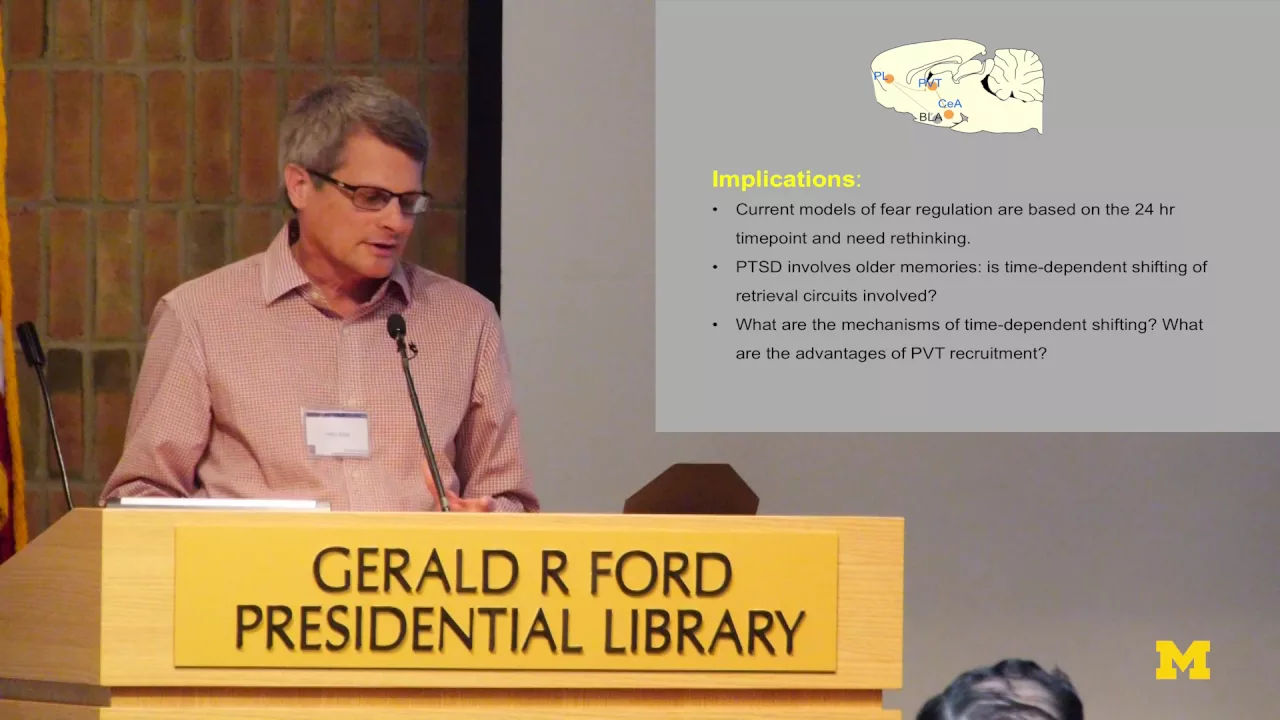
Investigating Circuits of Conditioned Fear | Greg Quirk
@MichiganEngineering
1.9K views•2016-06-20
66:42
Cracking Neural Circuits: High-Res Physiology & Connectomics
@Labroots
236 views•2020-03-31
13:03
How Exercise Benefits Your Brain: Science Explained
@TED
11.4M views•2018-03-21
Related Study Plans & Knowledge Roadmaps
Structured learning paths in Neuroscience
neuroscience
Fear Circuits: Amygdala, Context & Extinction
01Introduction to Brain Anatomy & Neurobiology
02Fundamentals of Fear Conditioning & the Amygdala
03Microcircuits of Threat Processing and Defense Responses
+ 2 more learning modules
12h5 modules
Explore Roadmap
neuroscience
Appetite Regulation: Brain Circuits & Hormones
01Foundations of Endocrinology and Brain Anatomy
02Introduction to Energy Homeostasis
03Peripheral Signals: Leptin, Ghrelin, and Insulin
+ 2 more learning modules
14h5 modules
Explore Roadmap
neuroscience
Neuroeconomics: Value, Risk & Brain Mechanisms
01Foundations of Neuroscience and Brain Anatomy
02Introduction to Neuroeconomics and Subjective Value
03Dopaminergic Prediction Errors & Reinforcement Learning
+ 3 more learning modules
18h6 modules
Explore Roadmap
neuroscience
Spatial Navigation: Cells, Grids & Brain Maps
01Foundations of Brain Anatomy and Memory
02Place Cells and Head-Direction Cells
03Grid Cells: The Brain's Coordinate System
+ 2 more learning modules
12h5 modules
Explore Roadmap