






















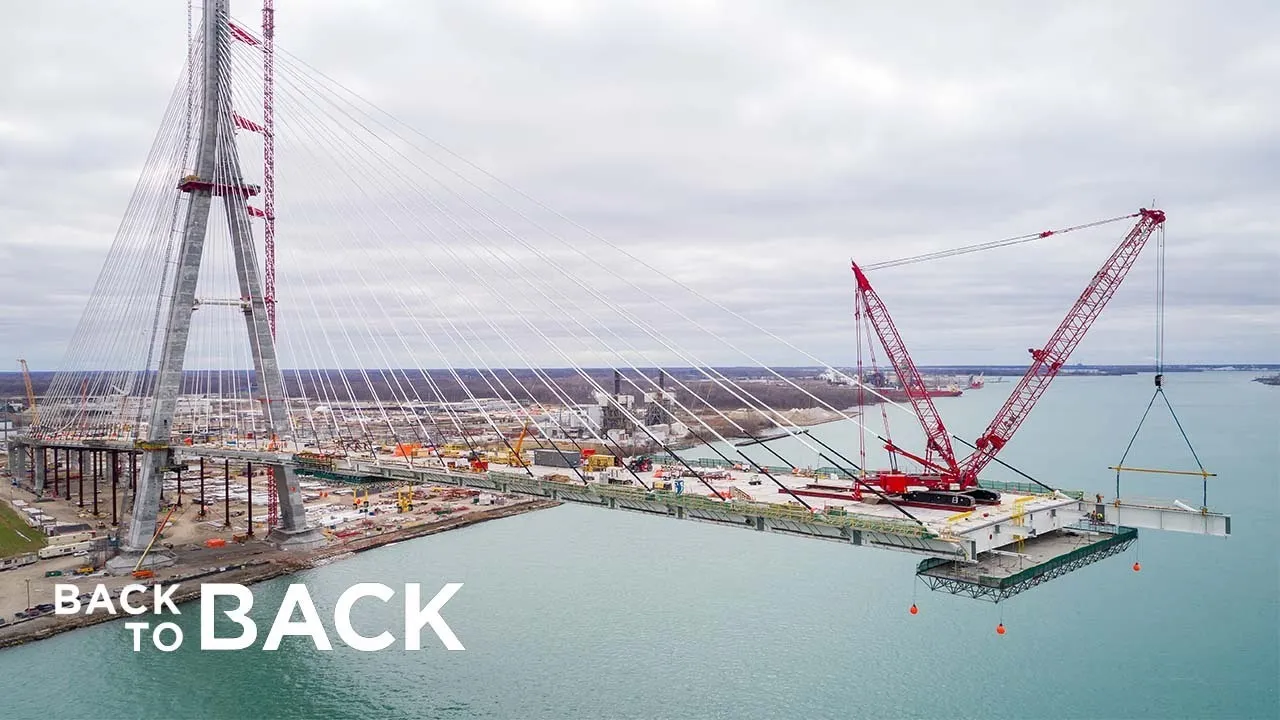

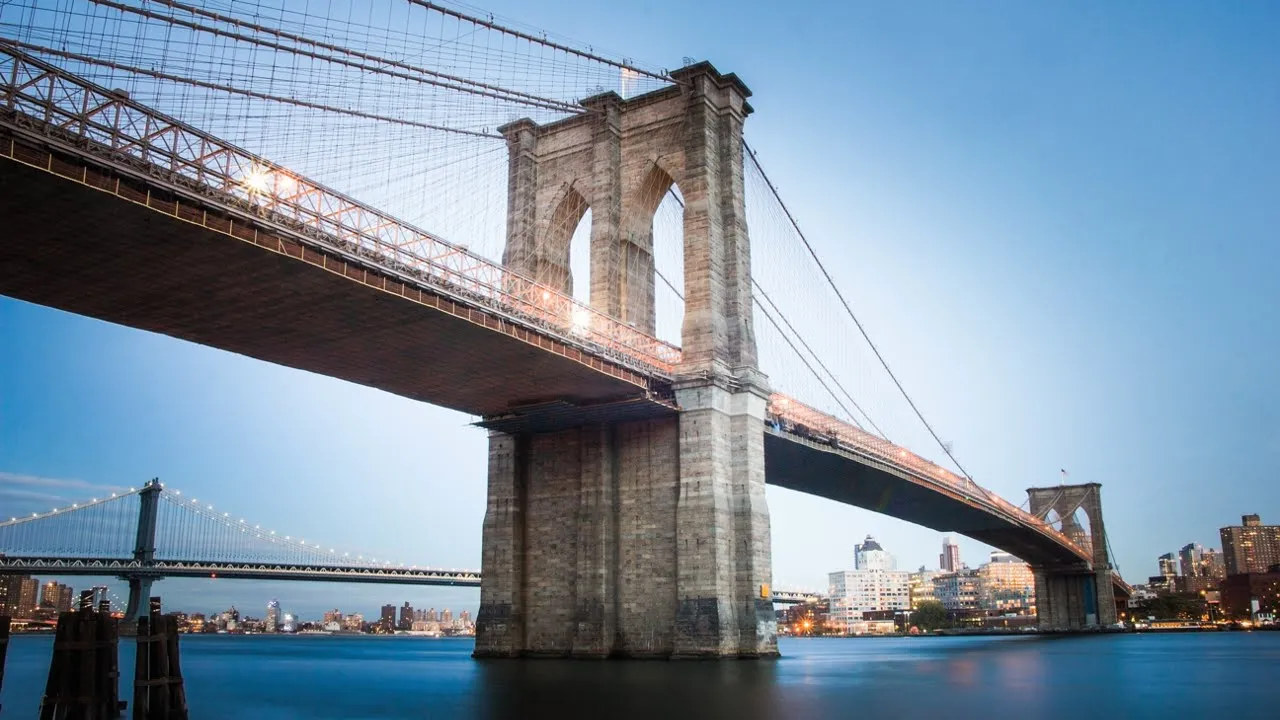

The Brooklyn Bridge, completed in 1883, was a revolutionary suspension bridge that connected Brooklyn and Manhattan, overcoming the East River's challenging conditions through innovative engineering by John Roebling and his son Washington, who led the construction after John's death from tetanus, with Emily Roebling playing a crucial role in managing the project during Washington's illness from caisson disease.
Engineering the Brooklyn Bridge: A Documentary Case Study
Added:Basic principles of structural engineering, specifically the concepts of tension, compression, and load distribution.
An understanding of basic bridge typologies, focusing on how suspension bridges differ from arch and beam designs.
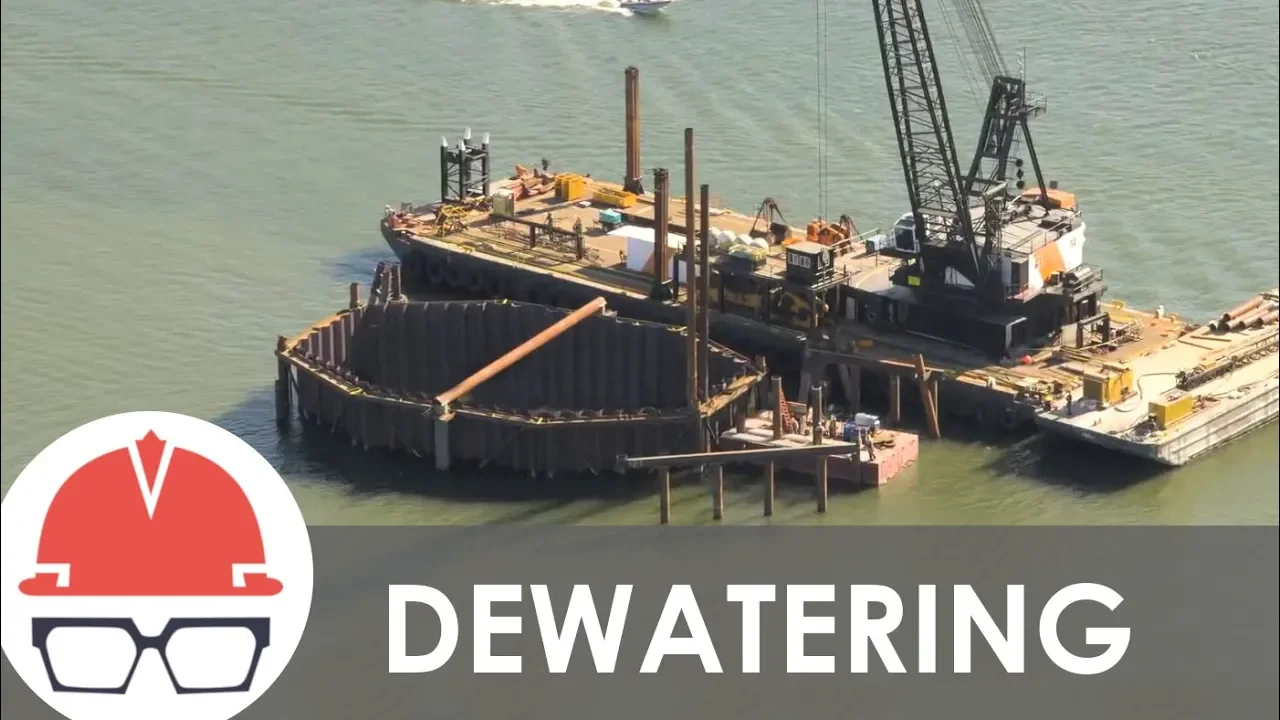
The physics of hydrostatic pressure and the concept of pneumatic caissons used for underwater foundations.
The historical context of the Industrial Revolution, particularly the transition from cast/wrought iron to steel as a primary structural material.
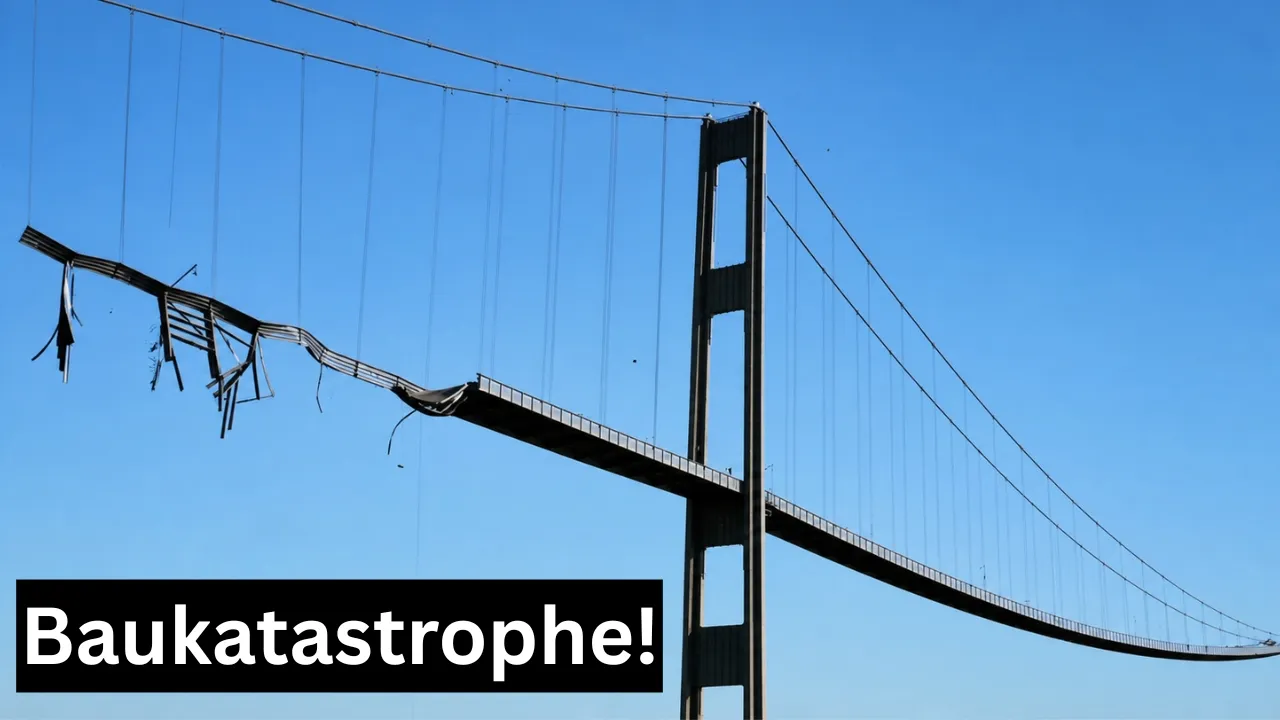
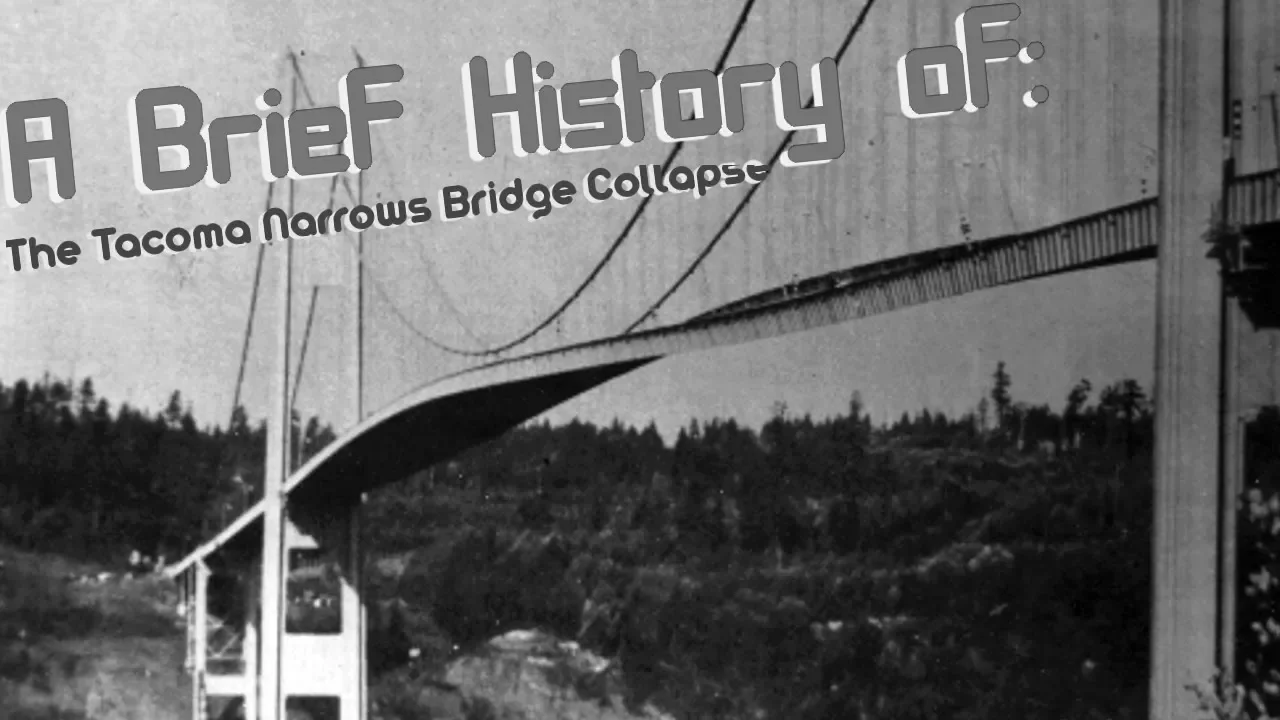
The evolution of suspension bridge design and aerodynamic stability, including case studies like the Tacoma Narrows Bridge failure.
Advanced deep-water foundation techniques in modern marine civil engineering.
The physiological impact of high-pressure environments on workers, specifically the history of decompression sickness (caisson disease) and early occupational medicine.
The history of project management and the role of women in 19th-century engineering, focusing on Emily Warren Roebling's leadership.
634.6K views5.4Klikes46:00Original Release: 2023-01-14
foreign [Music] on May 24 1983 the Brooklyn Bridge was closed to traffic all day New York City was holding a three million dollar birthday party to celebrate the Centennial of its oldest most famous bridge yet even that display couldn't match the Triumph of May 24 1883 when the bridge first opened linking the then independent cities of Brooklyn and New York the schools in the shops were closed because mayor Seth Lowe who later became the first mayor of New York City combined declared it a holiday it was a city holiday and Brooklyn was very very proud of this bridge by overcoming the geographical separation between Brooklyn and Manhattan the Brooklyn Bridge led to the 1898 merger that created greater New York before the bridge Brooklyn had been a rural community even though it had the third largest population in the country cheap housing LED people to settle there but all the jobs were across the East River in the thriving Business Center of New York by 1868 there were over 50 million commuters a year there has to be a demand for the service of a bridge at that time New York and Brooklyn were growing very rapidly but the only way he could get across was by ferry which was not a very reliable system with the river froze over or there's storms and things since the early 1800s Brooklyn had wanted safer more reliable transportation to New York but the physical obstacle seemed insurmountable a bridge across the East River would be over a mile long more than twice as long as any existing Bridge it would have to be exceptionally strong because the East River is actually a turbulent saltwater Channel rising and falling with the tides of the Atlantic Ocean finally the bridge would have to be high enough to permit ocean-going vessels to pass underneath such a bridge seemed unbuildable but not to John Roebling during the winter of 1852 Roebling a civil engineer was stranded aboard an ice-clogged Ferry on the East River that experience ignited his determination to build a bridge across the river 45 years earlier John Roebling had been born in mulhausen Germany possessing a brilliant analytical mind he went to the Polytechnic Institute in Berlin where he studied mathematics architecture and hydraulics at 25 John Roebling sailed to Pennsylvania to found a community of German immigrants he married Johanna hereding another colonist Roebling called his town Saxonburg and saw it as a kind of Utopia he also saw himself as a kind of farmer but his skills as a scholar and scientists were unsuited to Agriculture and the farming went poorly in 1837 Roebling became an American citizen but remained personally and professionally unfulfilled a Visionary who had not yet found his one true calling he returned to engineering and became a builder of River locks and a student of metals in Western Pennsylvania where the nation's Iron and Steel Industries were beginning to exist there he studied the Portage railroad a system for hauling Canal boats over the Allegheny Mountains Roebling was dissatisfied with the hemp cables used to tow boats on the Portage Railroad the ropes wore out rapidly or snapped sometimes with fatal results Roebling set to work on a solution his laboratory was the meadow behind the church in Saxonburg there he spent the summer of 1841 splicing and winding iron wire into a 600 foot long cable roebling's iron Cable became a gold mine orders flowed in from Canal systems makers of dredging equipment and pile drivers coal mines all the evolving technologies that would reshape and redefine America in 1844 Roebling won his first real commission as an engineer nine months later he delivered the world's first suspension Aqueduct over Pittsburgh's Allegheny River the aqueduct supported 2 000 tons of water on which floated A procession of canal barges by 1850 Roebling had built six suspended structures each depended on roebling's wire rope now produced by his own Factory in Trenton New Jersey from 1851 to 1855 Roebling was immersed in building a railway suspension bridge over the daunting Niagara Gorge this bridge proved that a light suspension structure could support the heavy weight of a railroad Roebling became the greatest bridge builder of his time his passion for the suspension structure led to its preeminence in America today there are more suspension bridges in the United States than in all the rest of the world the appeal of suspension bridges lies in their ability to span great distances without intermediate peers they also require less material than other Bridges prior to Roebling suspension bridges were out of favor because so many had collapsed but roebling's Bridges never fell due to his scrupulous attention to detail he was successful at building the bridges because he was he was a a great innovator but he did it very carefully he uh did dramatic things but he did them meticulously he did not jump off onto something that he did not think out thoroughly and carefully after Niagara Roebling designed the Cincinnati Covington Bridge which became the world's longest bridge when completed under the supervision of John roebling's son Washington in 1867.
by then John Roebling was struggling with severe depression a reaction to Abraham Lincoln's assassination and the death of his own wife Johanna his chief Comforts were the seances at which he summoned johanna's Spirit along with those of other departed family members the one bright Ray to penetrate roebling's Gloom was his plan for an East River Bridge he claimed it would be the greatest engineering work of the continent and the age Roebling envisioned a bridge with one Central span held Aloft by four cables strung from Two Towers the cables were secured to masonry anchorages seven stories high and as large as a city block one Anchorage on each Shore the bridge would be dominated by 268-foot high Twin Towers each would contain two glorious Gothic arches over 100 feet high shaped like elongated Cathedral windows the structure has a very sacred feeling to it a sacred Dimension to it essentially because it was built in a very Gothic style that was influenced by I believe the structure of churches Roebling designed a two-level bridge the lower level was for vehicles the top level was for pedestrians even today no other bridge in the world has anything like it in this case no one asked Roebling to build a bridge he wanted to build that bridge he felt it was needed there and his type of bridge would be the most practical maybe the only practical way to do it and so he actually came to New York and promoted the bridge responding to roebling's passion the state government in Albany chartered the New York Bridge Company in December 1867 appointed chief engineer John rotling but his project was immediately stalled by objections roebling's most challenged Innovation was his plan to use steel rather than iron cables Roebling felt steel would provide stronger support but no Bridge had ever been made of steel and Roebling for all his Fame and Brilliance was bitterly derided at 63 John Roebling was fed up with opposition the Union Pacific was completing a railroad to connect towns and cities from coast to coast Roebling saw his new bridge as the final Link in the same transcontinental chain Stern Outpost of manifest destiny in Granite and steel it was galling that the biggest challenge to roebling's vision of America came from its own Congress Roebling had to meet Federal requirements or the work that should rightfully be his noblest or most exalted contribution to the thriving Industrial Age would be doomed the most strident critics of the Brooklyn Bridge were leveled by John Roebling with one brilliant stroke Roebling the Bridge's designer LED his adversaries on a triumphant tour of his previous triumphs the critics caved in on June 21st 1869 Congress granted Roebling the right to build the Brooklyn Bridge roebling's Plan called for five phases of construction first two massive empty boxes known as caissons would be sunk to the bottom of the East River and filled with concrete the caissons would become the foundations for the second stage erecting the Bridge's Twin Towers in the third phase two Limestone and concrete anchorages would be built on Shore one in Brooklyn the other in New York the fourth stage of suspension bridge construction was the spinning of cables from one Anchorage across the tops of the towers to the Anchorage on the other Shore finally the cables would support a framework on which would rest the Bridge's roadway while he designed the bridge robling's closest confidante was his son Washington his partner in the Bridge Project Washington's training as an engineer began at 17 when his domineering father packed him off to Rensselaer Polytechnic Institute in Troy New York Washington was working at the family wire Mill in Trenton when the Civil War broke out next morning he enlisted that wartime experience gave him confidence in his ability to lead he became a colonel on the staff of General G.K Warren he fell in love with Warren's sister Emily and grew a beard to please her to Washington's surprise his difficult father liked Emily and appreciated her intelligence and devotion qualities that would prove essential in the battle to complete the Brooklyn Bridge Washington and Emily were married in January 1865 after Washington resigned from the Army their only child John was born in 1868.
if Washington lacked his father's genius he was just as much a perfectionist as an engineer both roeblings began work on the bridge three days after they received the go-ahead from Congress they went to the Fulton Ferry slip to survey the site of the Brooklyn Tower John Roebling marched about bellowing calculations when he reached the edge of the fairy slip he stumbled into some debris and imprisoned his right foot just then a ferry smashed against the slip crushing roebling's trap toes he continued shouting orders until he passed out ironically iron John Roebling became a victim of the fairies he was trying to eliminate Washington rushed his father to a doctor who amputated the toes without anesthetic By roebling's Request Roebling then fired the doctor and stubbornly treated his foot with water only believing water was Nature's Own remedy he had a very dangerous situation with his toes he had to have amputated he was going to bathe them in hot water and that would cure the toes gangrene said in and tetanus eventually sat in Roebling had committed a typically headstrong act this time it was a hideous mistake had Roebling obeyed the doctor's orders he would have lived instead he died of tetanus three weeks after the accident following the biggest funeral in Trenton history John Roebling was buried near the wire Empire he founded [Music] Flags flew at half-mast all over Brooklyn how would the bridge be built without John Roebling its guiding genius only one man was equipped for the challenge but he would be taking on a gargantuan task that would nearly kill him too a month after John roebling's death his 32 year old son Washington was made chief engineer except for some bridges he built for the Union Army Washington had never been in charge alone now he would be trusted to implement every untested step of his father's vision he was bound to make mistakes because the Brooklyn Bridge design was so revolutionary there were no precedents to follow without his perseverance Washington would have been lost but it was his willingness to work side by side with his men that would prove essential in the first stage of the construction process the sinking of the pneumatic caissons the danger of this work could not be underestimated Washington had studied caissons but never used them it would take three years and as many as a dozen deaths before the caissons were securely in place on May 3rd 1870 the Brooklyn caisson was towed to its site it cost over a hundred thousand dollars and weighed three thousand tons or one thousand tons more than the biggest clipper ship of the era designed to serve as the foundation for the Bridge's massive Towers the caissons were enormous iron reinforced wooden boxes open at the bottom first the caissons would be sunk to the muddy riverbed but in order to support the tremendous load of the towers the caissons would need to descend further beneath the riverbed all the way down to the Bedrock of the river bottom the back-breaking work of Excavating the mud and rock was laid upon hundreds of low-paid laborers workers entered the case on through an airlock built into its roof from there they descended by elevator and Ladder into the pressurized working chamber at the bottom of the caisson along the rim of the caisson's open base was a cutting edge The Cutting Edge was designed to pierce the mud through which the caisson descended as mud seeped into the working Chambers the men shoveled it into wheelbarrows the more mud they excavated and shoveled the deeper the caisson would sink the men placed the excavated material in pits at the base of two watershafts the material was hauled up and out by dredge buckets dropped down from above this process of digging would continue until the caisson reached the Bedrock of the river bottom life in the caisson was brutal men had to perform hard labor in unbearable heat anywhere from 80 to 100 degrees Fahrenheit they could barely see what they were digging because any light except the dim calcium lamps would have been too flammable to most laborers the working Chambers with their Deep Shadows and confusing noises resembled Dante's Inferno the job grew even harder when the caisson encountered Boulders at 20 feet below sea level The Boulders were so thick the caisson seemed and trapped Washington knew there was only one solution blast The Boulders despite the risk to the caisson's pressurized air after extensive tests Washington discovered blasting could be done safely with rifle powder excavation speeded up but the work grew more unnerving worst of all were blowouts loud terrifying explosions caused by changes in air pressure [Music] the so-called great blowout occurred one Sunday when an explosion shot mud and rocks 50 feet into the air miraculously there were no injuries because Washington let his men take Sundays off no one had been inside the caisson the men escaped This Disaster but still feared being suffocated crushed and drowned it took 264 workers to man the case on shifts yet the work was so dreaded that 100 men quit each week the workers Irish German and Italian immigrants were quickly replaced by other immigrants more willing to endure the Terrors of the caisson for a steady salary of two dollars a day yet the biggest threat to health was the mysterious Melody known as caisson disease or the bends symptoms included vomiting excruciating cramps and paralysis as scuba divers and astronauts who breathed pressurized air are taught today the bends are caused by excessively rapid decompression this releases nitrogen blockages into the bloodstream preventing oxygen from reaching body tissue tragically no one in the 1870s knew what caused the bends as many as one-third of the caisson workers were severely stricken by this affliction the more quickly a man emerged from prolonged stays at Great depth the greater the risk which made Washington Roebling who always worked alongside his men a prime candidate for the disease Washington suffered his first attack of the bends the night of September 28 1869.
fire erupted in the caisson it was detected only after it burned through the roof Washington arrived right away but by 5 a.m the next morning the fire seemed over moments later after 20 hours in the caisson Washington collapsed and was rushed through the airlock reaching the surface he doubled over in agony he was rushed home and recovered for now when fire was discovered again at 8 A.M Washington took no chances and ordered the Brooklyn caisson flooded for two days repairs set the project back three months but by mid-march 1871 after a 10-month dissent the Brooklyn caisson finally reached bedrock at 45 feet the New York caisson was launched on May 8 1871.
it encountered no Boulders instead Washington faced a new problem endless sand how long would it be before this caisson reached bedlock by late April almost a year after launching the caisson was 70 feet below sea level and still descending at this great depth most of the men suffered severely from the bends Washington reduced the eight-hour work shift to five hours but it did no good three men died of the disease the following week these were only the recorded deaths caisson workers believed there were more on May 8 1872 the entire caisson Force went on strike yet three days later most men returned already feeling the pinch of poverty and lured by a raise to 2.75 cents a day attacks of the Benz increased Washington Roebling now feared it would take another year another million dollars and another hundred lives before the New York caisson reached bedrock on May 18th three more men died of the bends that same day Washington ordered the digging to stop the New York caisson would rest Forever at a depth of 78 and one-half feet on a bed of sand the decision was less of a gamble than many believed the sand here was crusted solid hard enough to batter iron tools a few nights later after inspecting the concrete poured into the caisson Washington collapsed again from the bends for several days he lay near death but he survived by sheer will and went back to work where he endured new attacks every week until the caisson was finally finished Washington never regained his health he withdrew to the Roebling home base in Trenton a permanent invalid he suffered Savage headaches and pains his eyesight was too dim for him to read or write hounded by visions of his own death he would not return to the bridge during its construction meanwhile work on the bridge continued a trusted Guardian Angel kept the project moving according to Washington's plans a guardian angel named Emily robling it took four years to build each of the strong massive towers of the Brooklyn Bridge beginning in 1871 Granite blocks from 20 quarries arrived by boat at the tower docks [Music] steam-powered Derricks hoisted the blocks onto land and pulleys hauled them into their final position vertical wooden tracks along the sides of the towers supported each Stone as it made its ascent the huge Towers were 59 feet wide and 140 feet long by June 1st 1872 when the Brooklyn Tower was 100 feet high it was still far broader than it was tall yet it dwarfed every building in sight the sheer height of the towers made the work hazardous four men died from being crushed by Falling Stone five others were killed in falls from the towers the biggest problem of workers on top of the towers was signaling to the men below who ran the hoisting engines it was too windy for shouting fog made flag signals impossible and Signal Bells often broke down men looking over the edge struggled not to be thrown off balance by sudden gusts of wind despite the absence of the chief engineer the Brooklyn Tower was finished in June 1875. the New York tower was ready in July 1876.
standing 276 and one-half feet high more than eight feet taller than John robling had projected the Twin Towers dominated the skyline their Glory could only be imagined by Washington Roebling on his sick bed in Trenton not all his symptoms were caused by the bends his nervous system had been Shattered by overwork and anxiety unable to read write or tolerate visitors he was still in constant touch with his assistants thanks to the vigilance of his wife Emily from 1873 to 1883 all of Washington's letters charts and Designs were written by Emily she must have had a strong role in the work that was the way the work was being done and uh she was a very important part of getting the bridge built it's uh unlikely that if after watching Roebling was incapacitated that that bridge that he could have finished that bridge without her with Emily's help Washington in Trenton oversaw the construction of the bridges anchorages the anchorages looked like Stumpy towers with the same Derricks and pulleys on top deep in their interior were four iron plates each weighing 23 tons attached to the plates were a series of iron bars curving upward through the masonry ready to Anchor the ends of the Bridge's four main cables with the towers and anchorages complete in 1876.
Workman prepared the first traveler rope a 6 800 foot long Loop of Steel no thicker than a man's thumb The Traveler would extend over the towers and be secured at each Anchorage its purpose was to haul the cable wires and spinning equipment back and forth at 3 30 PM August 14 1876.
6 000 people watched and cheered as the traveler was hung New York and Brooklyn were finally physically connected by a single Loop of Steel the Brooklyn Eagle ran the ecstatic headline wedded the New York Herald playing hard to get said it was only an engagement as yet a telegram announcing the Traveler's success was sent from the bridge to Washington Roebling in Trenton the sender was Frank Farrington Farrington was the master mechanic and in 1876 they decided that he was going to cross the bridge and become the first person really to go from one Tower to the other on August 25th Farrington was strapped into a boson's chair looped to The Traveler which was shunted from Brooklyn to New York by steam-powered pulleys halfway through his 22-minute ride the 60-year-old Farrington made a gallant gesture he took this safety rope away and stood up on the swing and waved to people with his head and then he sat down again and I don't think he put his safety belt on uh but he sat down again and blew kisses to the crowds down below the main reason for farrington's ride was to demonstrate the safety of the traveler to untrained workmen unable to find experienced Bridge Builders Farrington had hired Sailors who were at least used to working at Great Heights one of their first tasks was to construct a 48 inch wide temporary Footbridge that hung between both Towers the flimsy Footbridge was intended for the workmen but it became a huge tourist attraction thousands of ordinary visitors got passes to cross the river by Footbridge some founded a harrowing experience but amazingly no one was hurt if tourists were thrilled to be part of the bridge Washington Roebling was tormented to be in Trenton now that his dream was becoming a reality throughout four years of agonizing pain he had not once seen the bridge he lost his health to create but now the cable spinning was about to begin cabling the work he liked best would make this a real bridge at last and Washington Roebling could no longer stay away in October 1876 Washington and Emily Roebling returned to Brooklyn by boat Washington was too frail to go to the site his view of the bridge was limited to the range of his binoculars as he peered from the window of his new house a half mile from the Brooklyn Bridge although housebound Washington continued to manage the building of the bridge thanks to his direct link to the construction process Emily [Music] once uh Washington was incapacitated and unable to personally go to oversee the construction of the Brooklyn Bridge she would go to the bridge for him and he would simply watch the construction from his window which I believe was situated somewhere over here in Brooklyn Heights where he lived and she would go actually to the site and bring his orders to the workers so that the bridge could be completed with Emily at his side Washington supervised the spinning of the Bridge's cables the process was called spinning because a wheel as in spinning wheel carried the wire back and forth across the river it looks as if it's being spun there's a wheel that carries the the wires across and the wheel turns but the wires are straight they're all parallel wires and they they picked up at one end brought over to the other end taken off and put on the anchors a compressed bundle of 282 parallel wires was called a strand there were 19 strands or 3 500 miles of wire in each of the bridges four cables fastening the strands to the Anchor bars was the most dangerous part of cabling because of the 75-ton strain on each strand on June 14 1878 Frank Farrington and four others were attaching a strand at the New York Anchorage when a steel rope holding the Strand snapped it killed one man instantly and flung another who later died 80 feet into the yard newspapers blamed Washington because the Rope was a Roebling product but the Rope was not effective however defective metal was used on the bridge it was supplied by a Brooklyn wire maker J Lloyd Haye who manufactured all of the seven million pounds of wire in the strands in July 1878 Washington announced that hay had bribed inspectors and replaced goodwire with bad fortunately the bridge was designed to be six times stronger than needed Washington felt it was still safe but he insisted that hay Supply goodwire to make up for the bad wires already in place Haye agreed and was never penalized for this fraud Washington had to accept that his one-man rule had ended in 1874 when the bridge was redefined as a public work run by a Board of Trustees construction costs were paid by the city of Brooklyn and not paid by the city of New York which by mid-1877 owed half a million dollars to the bridge claiming the bridge was unsafe New York Shrugged and said so sue us the bridge trustees had no choice in the fall of 1878 they ran out of money and filed suit the courts forced New York to pay up in May the following year meanwhile building continued but moved slowly due to bureaucratic delays in 1879 steel suspenders were hung from the cables it would be another two years before the 8 000 pound steel floor beams were all in place so little work had remained yet it had taken so much time deliveries of supplies were way overdue perhaps because payments were too it took all of Emily robling's tax to keep the project moving possibly her greatest skill was able to uh calm people's emotions Whenever there was some turmoil coming in she would go over and talk to them make them feel good that sort of diplomacy years later Emily told her son John I have more brains common sense and know-how generally than any two Engineers civil or uncivil that I have ever met and but for me the Brooklyn Bridge would never have had the name Roebling in any way connected with it Emily's high visibility led to gossip that her husband was a bit crazy unable to speak and had lost his grip this was untrue Washington was very much in his right mind as always that mind was on the bridge in late 1881 Washington asked the trustees for another thousand tons of steel to stiffen the roadway an uproar ensued the bridge had cost 13 million five hundred thousand dollars more than twice the original estimate Washington's request seemed outrageous even to engineers in fact well into the 20th century Engineers were still trying to economize on steel and were building unstable Bridges this was Illustrated in 1940 when a 45 mile an hour wind lifted the Tacoma Narrows Bridge in Washington state to its dramatic destruction [Music] history proved Washington right without more steel the bridges roadway would not have been stiff enough to carry the automotive traffic that arrived in the next century but in 1881 additional costs were intolerable to trustees who had no loyalty to Washington Roebling half the board had never seen him none had seen him in the past eight years his sanity was viciously attacked Washington roebling's job was in Jeopardy never before had so many powerful people including the mayors of New York and Brooklyn sought his exit from the project [Music] by 1882 Washington roebling's 13-year battle to build his Bridge had wrecked his health sapped his energy slandered his reputation made him a recluse and the Brooklyn Bridge still wasn't finished but the roadway was in place and in June the state legislature ordered New York and Brooklyn to pay whatever it cost to complete the bridge as Washington requested but the political candidates On The Board of Trustees wanted to win votes by having the Bridge open before the upcoming election they required Washington to appear before them to be admonished he refused he wrote the trustees that the bridge wouldn't be ready until 1883. then he and Emily left town for their first vacation in five years they went to Newport Rhode Island Seth Lowe the mayor of Brooklyn was outraged if Washington Roebling couldn't or wouldn't open the bridge this year why not get rid of him in July 1882 Seth Lowe arrived at Washington's home in Newport unexpected unwelcome and certainly uninvited [Music] with no Authority except his own ambition Lowe demanded Washington's resignation as chief engineer Washington said the trustees would have to fire him Seth Lowe said they'd try New York mayor William Grace supported mayor Lowe's resolution to replace Washington for once the mayors of New York and Brooklyn agreed on a matter concerning the bridge had the trustees voted then Washington would have lost but they waited Emily anxiously sought allies to spread the word that no one on Washington's loyal staff would agree to replace him Washington Roebling didn't care about allies he told a reporter the trustees would say anything to serve their political careers in September by a vote of 10 to 7 Washington Roebling wasn't fired Seth Lowe immediately shifted gears and said he'd hoped Washington would win not surprisingly Seth Lowe had a long political career driven by carriage in 1883 Washington felt well enough to be driven to the half-finished Brooklyn Terminal in person he made his observations from The Carriage window and stayed inside the vehicle by early May Washington was ready to test the effect of a Trotting Horse on the roadway Washington gave Emily that honor as people cheered Emily and her Coachman became the first people to cross the Brooklyn Bridge inside the carriage Emily held a rooster as a symbol of Victory but she was the one who deserved to Crow it had taken more than 14 years nearly 40 lives and over 15 million dollars but the Brooklyn Bridge opened at last on May 24 1883. it was decreed the people's day the entire city celebrated Mankind's capacity for invention embodied in this wondrous Bridge leading from the limitations of the past to the infinite possibilities of the future the day began with a parade of seven thousand dignitaries headed by the guest of honor president Chester A Arthur they called him the Apollo of America here good looking man in terms of that particular time and everybody turned out to see him the other interesting person was there was the governor of New York Grover Cleveland who became a later president and then it came down to this Manhattan end of the bridge here where the president got out and walked across the bridge to meet mayor Seth Lowell of Brooklyn afterward over a hundred and fifty thousand people from every Walk of Life were welcome to stroll across the bridge for the price of a penny a piece the only person of consequence who stayed away from the bridge was Washington Roebling he watched the events from the window of his home but Emily insisted that Washington receive his proper reclaim that afternoon she hosted a private reception President Arthur Governor Cleveland and a thousand other guests came to the Roebling home to honor the Bridge's founding family through struggle suffering and sacrifice Washington and Emily Roebling breathed life into the child born of John robling's genius then clothed it in steel and granite to fulfill its Destiny as the greatest engineering work of its age on May 25th 1883 Washington and Emily left for Newport within six weeks Washington resigned as chief engineer he'd invested a full third of his life in building the Brooklyn Bridge he never wanted to build another instead he built Emily the Mansion of her dreams in Trenton she fulfilled another dream when she became a lawyer a few years before her death at the age of 55 in 1903.
Washington outlived her by more than 20 years at 84 he took over the Roebling wire Empire making it the biggest most prosperous in the world he stayed on the job until his death five years later in 1926.
the bridge that now honors the roebling's achievements stood on its own but it didn't stand alone for long after the turn of the century there were three more bridges to Brooklyn and eventually over a dozen tunnels yet only the Brooklyn Bridge seems to reach out and communicate a uniquely American message born of the toil struggle and soaring Vision spawned into every wire of its web of Steel the Brooklyn Bridge was a handmade Bridge which to me is incredible considering its size and and it's Beauty I think it's just classic because of the gothic look of the bridge itself it's so much a part of New York and so much apart certainly of Brooklyn and so much a part of America's greatness it took 14 years to deliver the Brooklyn Bridge years that coincide with America's emergence as an industrial leader and a Beacon of Hope a miracle of timing had the bridge been completed seven years before on schedule it would have lacked the later technology that prepared it for the long cycle of service ahead had the bridge been abandoned until the next Century it could not have become a soaring symbol of faith to welcome the Great Wave of immigrants who came to America in the 1880s and 90s in its superb timing as in all its proportions the Brooklyn Bridge forever entwines the solid fulfillment of Technology with the Eternal yearning of the spirit [Music] thank you
Up Next

24:21
The Evolution of Brooklyn's Map: Urban History Explained
@DanielsimsSteiner
772K views•2024-11-03

33:02
The Great Schism of 1054: Causes and Consequences
@SacredCathedrals
113.5K views•2026-02-19
1:19
How the Safety Elevator Enabled Skyscrapers and Social Mobility
@Historyn60seconds
611 views•2026-01-02

17:05
Understanding the Cold War: Superpower Conflicts and the Road to Détente
@OverSimplified
46.1M views•2019-01-24
Related Study Plans & Knowledge Roadmaps
Structured learning paths in History
history
Byzantine Iconoclasm: Theology, Art & Politics
01Foundations of Byzantium and Early Christian Images
02The First Iconoclasm: Leo III and the Crisis of Images
03Empress Irene, Nicaea II, and the Second Iconoclasm
+ 2 more learning modules
9h5 modules
Explore Roadmap
history
Iranian Revolution (Causes, Events & Legacy)
01The Pahlavi Dynasty and the Roots of Discontent
02The Spark of Rebellion and the Rise of Khomeini
031979: The Fall of the Shah and the Climax of the Revolution
+ 2 more learning modules
8h5 modules
Explore Roadmap
history
Mali Empire: Mansa Musa, Trade & Timbuktu
01Foundations of the Mali Empire
02The Trans-Saharan Gold and Salt Trade
03The Reign and Pilgrimage of Mansa Musa
+ 1 more learning modules
6h4 modules
Explore Roadmap
history
1947 Partition: Politics, Borders & Legacies
01Foundations of British India and the Divide
02The Political Negotiations and the Mountbatten Plan
03Drawing the Boundary: The Radcliffe Line
+ 2 more learning modules
8h5 modules
Explore Roadmap