Artemisia Gentileschi's 1620-21 painting Judith and Holofernes exemplifies Baroque art through its dramatic tenebrism, radical foreshortening, and vivid physicality, depicting the biblical heroine Judith beheading Assyrian general Holofernes with such graphic realism that it challenges viewers to confront the violence of female empowerment; the painting uses contrasting scales (two women against one man), diagonal arm movements converging toward the violent act, and stark light-shadow contrasts to create a visceral, emotionally charged narrative that differs significantly from Caravaggio's more restrained interpretation of the same subject.
Gentileschi, Judith and Holofernes: Baroque Art Analysis
Added:Deep Dive
Core characteristics of the Baroque art movement, including the use of high-contrast lighting (chiaroscuro and tenebrism).
Cultural Transformation In Early Europe-2 || Lesson -4 || Sem-4 || Du Sol | Ncweb | IGNOU | Regular
4.5K
Baroque art features religious and mythological themes, dynamic movement and action, highly detailed realistic execution, dramatic scenes with intense emotions, and the use of chiaroscuro and tenebrism techniques. Chiaroscuro uses light and shadow contrasts, while tenebrism creates extreme darkness with only the main subject illuminated. The art is based on realism and naturalism, depicting actual events with natural human emotions.
Click to watch →

17th C Baroque Art Caravaggio cc
1.2K
Chiaroscuro is an Italian term meaning 'light-dark' that refers to high contrast in shading in Baroque art. Light moves predictably across curved objects, creating highlights, transitional tones, core shadows, reflected light, and cast shadows. Tenebrism (tenebroso) is a spotlighting effect that creates dramatic visual interest. These techniques, combined with asymmetrical compositions, create volume and tension. Caravaggio pioneered these methods, establishing the foundation for all subsequent Baroque artists.
Click to watch →

Características gerais do Barroco - Português - HORA DO ENEM
351
Baroque art is defined by five core characteristics: (1) Doubt and uncertainty, reflecting individuals struggling between Renaissance ideals and Church doctrine; (2) Dramatic contrasts, particularly the interplay of light and shadow (chiaroscuro) in painting and antitheses in literature; (3) Exaggeration and ornamental excess; (4) Intense emotion and instability; (5) Theocentrism, where God occupies the central position in human thought. Caravaggio exemplifies these traits through his masterful chiaroscuro, illuminating religious figures while surrounding areas remain in shadow, reinforcing the Counter-Reformation's emphasis on emotional engagement with faith.
Click to watch →

Artemisia Gentileschi - Bully Magnets - Historia Documental
77K
Tenebrism is the Baroque art style that was primarily cultivated by Caravaggio. It is characterized by intense contrasts of light and shadow, which are employed to tacitly highlight certain compositional elements of the work. This intentional contrast gives tenebrist paintings enormous drama. The style was characterized by realistic paintings with strong brushstrokes, creating a dramatic and intense visual effect.
Click to watch →

A EXPLORAÇÃO DOS CONTRASTES ENTRE O CLARO E O ESCURO É PRÓPRIA (...) | O DRAMA E A FÉ
1.6K
Baroque art is characterized by dramatic contrasts between light and shadow (chiaroscuro), religious dualism (heaven/hell, light/darkness), and emotional exaggeration. Caravaggio, known as 'the painter of light,' strategically directs viewer attention through strategic illumination. This technique creates dreamlike atmospheres while maintaining religious intensity. The Baroque period emerged during the Catholic Counter-Reformation as a tool to emotionally engage believers and reclaim them from Protestantism. Artworks combine realism with theatrical staging, using dramatic expressions and vivid details to create powerful emotional responses.
Click to watch →
Deep Dive
The biblical story of Judith and Holofernes from the Book of Judith, providing the narrative context for the artwork.
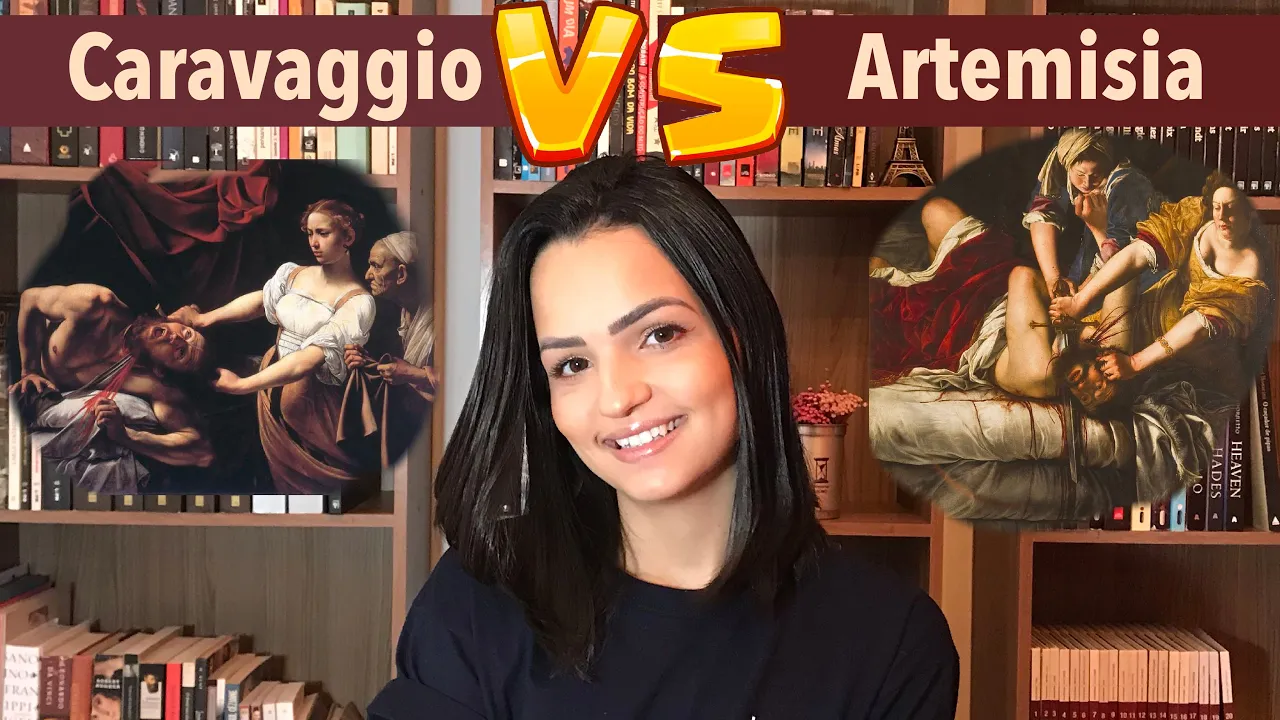
Analisando: “Judite e Holofernes” de Artemisia Gentileschi e Caravaggio | Plein Air
3.5K
The story of Judith and Holofernes is one of the most frequently depicted narratives in art history, appearing in works by artists like Klimt, Michelangelo, Caravaggio, and Botticelli. The Book of Judith is classified as deuterocanonical in Catholic theology, meaning it was written by communities before Christ was recognized and thus not included in the first phase of canonical texts. The narrative describes how Judith, a Jewish woman, seduces the Assyrian general Holofernes during a siege of Bethulia, then beheads him while he sleeps to save her people. This story has been interpreted in multiple ways: as a tale of female heroism, as a representation of Eve and female sin, and as a symbol of nationalism where the weak defeat the strong through intelligence. The repeated artistic depiction of this story reflects both religious significance and cultural symbolism.
Click to watch →

Лекция №1 - История искусств (часть 3)
59K
The biblical story of Judith originates from the Book of Judith in the Old Testament, set approximately eight centuries before Christ during the Assyrian conquest of Israel under King Nebuchadnezzar. The narrative follows the siege of a Galilean city by Assyrian forces led by General Holofernes. A young woman named Judith, demonstrating extraordinary courage, infiltrates the enemy camp at dusk, seduces the commander Holofernes, and subsequently decapitates him while he sleeps. She then carries his head back to her city, which leads to the liberation of her people. This story became a significant subject for Renaissance artists due to its themes of female heroism and sacrifice for national salvation.
Click to watch →

The Story of Judith and Holofernes by Gustav Klimt
16K
The story of Judith and Holofernes appears in Catholic and Orthodox Bibles but was excluded from Protestant Bibles. Judith, a young widow from Bethulia, saves her besieged city from Assyrian forces led by General Holofernes. Rather than surrender, she exploits his attraction to her beauty through strategic deception: she dresses in finery, uses expensive perfumes, and promises to betray her city. After three nights of prayer, she enters his tent during a banquet, finds him drunk and asleep, cuts off his head, and returns with her servant to rescue her people.
Click to watch →
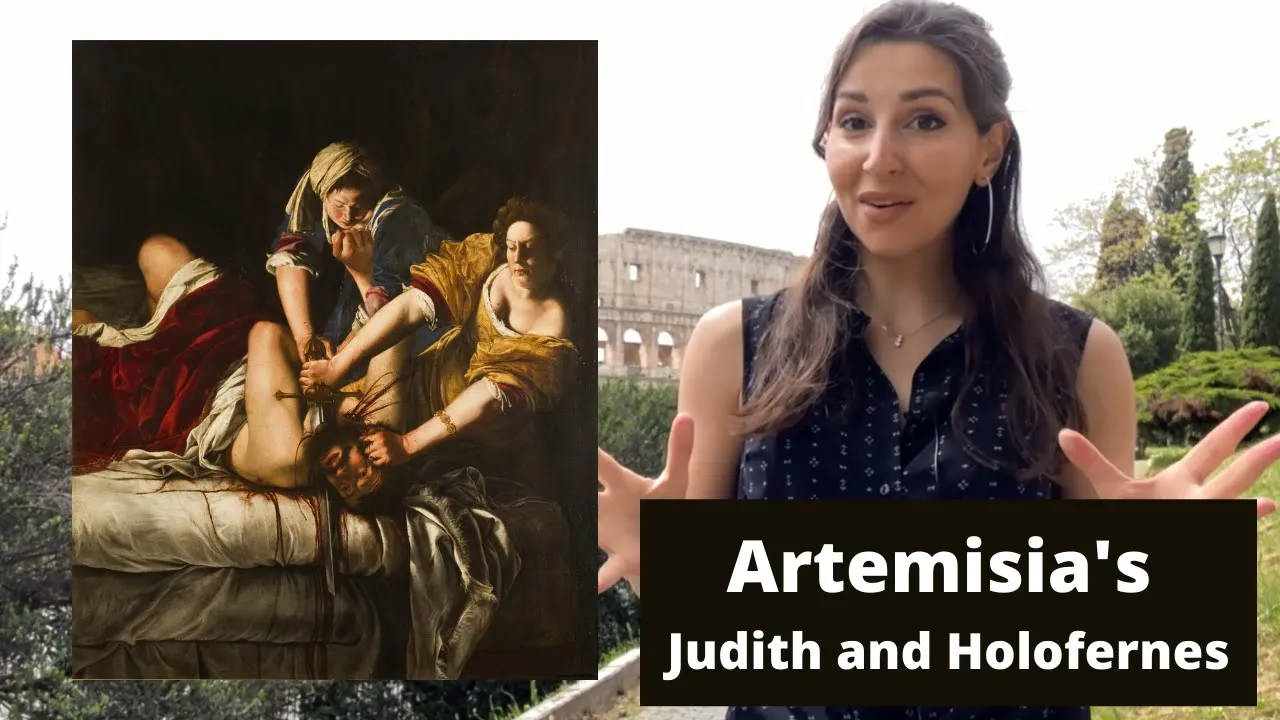
ARTEMISIA GENTILESCHI'S JUDITH BEHEADING HOLOFERNES: Painterly Revenge?
8.5K
The painting depicts the biblical story from the Book of Judith in the Catholic Old Testament. Judith, a beautiful widow, saved her city of Bethulia from Assyrian general Holofernes by seducing him, getting him drunk, and beheading him with his own sword. Artemisia's version is unprecedented in its graphic realism and violence, departing from previous artists who typically depicted the aftermath. Influenced by Caravaggio's revolutionary composition showing the act itself, Artemisia intensified the scene with dramatic lighting, sumptuous fabrics, and more vertical sword placement. Her modifications made the narrative more grisly and impactful, demonstrating her growing technical skill and understanding of visual storytelling through strategic pose and arrangement choices.
Click to watch →

Ирина Антонова "Жизнь и судьба: Сандро Боттичелли"
73.9K
Botticelli's painting of Judith and Holofernes (c. 1480s) depicts the biblical heroine Judith carrying the severed head of the Assyrian general Holofernes. The composition is notable for its unusual treatment of the subject, with Judith shown not standing triumphantly over her victim but walking through a landscape with a servant. The painting includes symbolic elements: Judith holds both the bloody sword she used and palm branches representing peace. This work demonstrates Botticelli's ability to combine narrative storytelling with symbolic meaning, a characteristic that would influence his later mythological paintings.
Click to watch →
Deep Dive
The influence of Michelangelo Merisi da Caravaggio and the stylistic school of the Caravaggisti on early 17th-century Italian art.
12#02. L’art italien au début du XVIIe siècle (D’après le Caravage)
3.5K
During the early 17th century, Caravaggio's revolutionary art style inspired a phenomenon called 'caravagism,' where artists directly imitated his dramatic chiaroscuro, naturalistic figures, and intense realism. Key imitators included Orazio Gentileschi, who created pastiches like 'The Palm of Martyrdom' while maintaining his Florentine training; Guido Reni, who transformed Caravaggio's 'Crucifixion of Saint Peter' into a more idealized version; and Giovanni Battista Salvi (Guercino), who competed with Caravaggio's works while retaining traditional Florentine elements. These artists selectively adopted Caravaggio's techniques rather than completely transforming their own styles, demonstrating how revolutionary artistic innovations spread through direct imitation and adaptation among contemporary painters.
Click to watch →
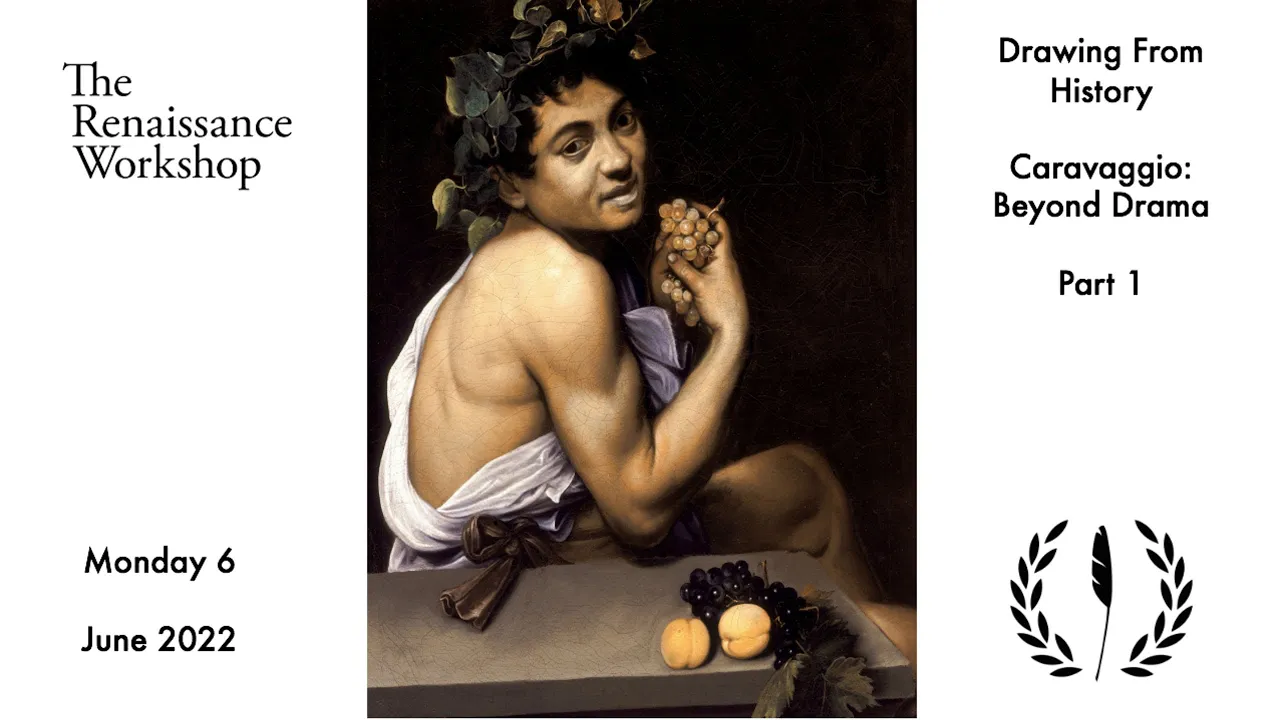
Drawing From History: Caravaggio | Beyond Drama | Part 1
652
Caravaggio (1571-1610) is considered the most influential painter of the 17th century despite his brief career. His profound impact was felt by every painter since, and it is impossible to appreciate the work of any subsequent 17th century painter without understanding Caravaggio's influence. His works impacted the course and development of painting so profoundly that he transformed the entire trajectory of European art. An entire school of Dutch Golden Age painting was named after him, called the Caravaggisti, which started during his lifetime. This movement included great painters like Hendrick ter Brugghen, Gerrit van Honthorst, and Dirck van Baburen, who were self-consciously deriving their aesthetic approach directly from Caravaggio.
Click to watch →

Artist Caravaggisti's Painting | WAA
124
The Caravaggisti (or Caravagesques) were stylistic followers of the late 16th-century Italian Baroque painter Caravaggio, whose profound influence on the emerging Baroque style from Mannerism was significant despite never establishing a workshop or formal school to spread his techniques; his psychological realism and artistic approach can be seen directly or indirectly in the works of Rubens, Jusepe de Ribera, Bernini, and Rembrandt, though Caravaggio himself was forgotten almost immediately after his death, with many of his paintings being re-attributed to his followers.
Click to watch →

Les arts en Europe au XVIIe s. #1 Caravage et le caravagisme
5K
Caravaggio revolutionized 17th century European art through his realistic style, dramatic chiaroscuro, and focus on everyday scenes, establishing the Caravaggisti movement that influenced artists across Europe; his innovative approach of depicting religious subjects with raw human emotion and naturalism transformed artistic conventions, with his technique of tight compositions, few characters, and minimal backgrounds becoming the 'Manfrediana method' that facilitated widespread adoption throughout the century.
Click to watch →

Complément - Caravage
102.3K
This section traces Caravaggio's revolutionary artistic development and lasting influence. He painted the head of Medusa on a shield for the Medici family in Florence - revolutionary because for the first time, Medusa was painted to genuinely terrify viewers. He painted a revolutionary still life - a simple basket of fruit on a plain beige background, with the bottom of the canvas serving as the table. This was completely contrary to the elaborate Dutch still life tradition. He painted Narcissus with extraordinary compositional audacity - the painting is cut exactly in half, with perfect symmetry between Narcissus and his reflection. The 'Conversion of Mary Magdalene' shows the courtesan stripping off her ornaments, represented sumptuously dressed but completely folded in on herself, almost in an oval or fetal form, symbolizing her transformation. The 'Martyrdom of St. Catherine' shows the saint in sumptuous clothing but completely counterbalanced by the extreme austerity and silence of the composition. The 'Meditation of St. Jerome' shows the saint in dialogue with death, represented by the skull - Caravaggio makes the skull so similar to the saint's body that one can feel the skull beneath the flesh. Caravaggio painted David three times, each version more revolutionary than the last. The 'Burial of Christ' in the Vatican Pinacoteca shows the moment when Christ's body is lowered into the tomb - Caravaggio deliberately shows the body as a 'corpse' with weight, matter, and even beginning to stiffen. The 'Crucifixion of St. Peter' uses a great diagonal that follows the body of the martyr. The 'Conversion of St. Paul' shows the saint falling from his horse, which seems about to crush him. Caravaggio creates the illusion of a miraculous light coming from the horse's head, illuminating the saint. The 'Virgin of the Pilgrims' shows the Virgin responding to pilgrims who want to see her child. Caravaggio painted the Virgin with divine innocence - neither completely detached nor completely distracted. The child weighs in her arms, not suspended. The painting creates a sense of truth and reality that makes the pilgrims believe they are truly seeing the Virgin and Child, not a painted vision. The 'Death of the Virgin' (now in the Louvre) is absolutely unbearable - the entire painting seems to fall from the ceiling in sorrow. The 'Seven Works of Mercy' compresses all seven charitable works into a single composition. The 'Resurrection of Lazarus' is audaciously composed - Caravaggio paints only the lower half of the scene, leaving the upper half completely empty. The 'Adoration of the Shepherds' uses empty space to create sacred silence. The 'Beheading of St. John the Baptist' uses three-quarters of the canvas as empty space, with only a divine ray of light illuminating the horror of the beheading. The 'Martyrdom of St. Matthew' shows St. Matthew being martyred in a public square - Caravaggio paints Matthew as a butcher, not a learned man. The 'Calling of St. Matthew' shows Christ entering a room where Matthew is counting money with other men. The miracle is that Christ is recognized by Matthew while others are distracted. Caravaggio creates this miracle through the 'miracle of chiaroscuro' - the light and shadow that reveals the divine moment within the mundane. Only two faces truly communicate - Matthew's and Christ's. Matthew's face is transfigured, with eyes more luminous than ever, almost with a smile. This represents the moment of spiritual recognition - the moment when the ordinary man becomes a saint. Despite dying alone and alone on a beach, Caravaggio made school - his influence shaped all 17th century painting. Ten years after his death, he was recognized as one of the greatest geniuses in painting. His influence spread throughout Europe - in Spain with Zurbaran and Velazquez, in Flanders with Rubens and Terbrugghen, in France with Georges de La Tour, and even to the Carracci brothers. Rembrandt's 'Head of Christ' is perhaps the best example of a painter who understood Caravaggio's revelation.
Click to watch →
Deep Dive
The socio-religious context of the Counter-Reformation and how the Catholic Church utilized dramatic visual art to engage viewers.

The Reformation: Martin Luther's 95 Theses and Legacy - Rick Steves' Europe
4.5M
By mid-1500s, the Roman Church employed the Counter-Reformation to stem the tide. The Vatican worked to reform internal corruption and reach out to alienated members, while also resorting to propaganda, intimidation, and force. Art became a propaganda tool—extravagant Counter-Reformation art dazzled with gold leaf and ornate decorations, offering glimpses of heaven for faithful. Counter-Reformation artists painted radiant, soft-focus Marys with warm colors and gentle light. This Baroque style featured large canvases, bright colors, rippling motion, wild emotions, grand themes, and holy saints, appealing to peasants and nobles alike and making heavenly visions real.
Click to watch →

Caravaggio's Taking of Christ: Great Art Explained
780K
During the Counter-Reformation, the Catholic Church commissioned hundreds of new artworks as powerful weapons of propaganda against Protestant faith. Artists were asked to produce emotionally engaging and intense works that were accessible and realistic enough to inspire the masses. This period marked a deliberate effort by the Church to reclaim religious influence through visual art that could reach ordinary people.
Click to watch →

Rob and Rylan Explore Venice and Rome | Compilation | The Travel Edit
190
Baroque art emerged as a powerful tool during the Counter-Reformation, when the Catholic Church fought back against Protestantism by creating spectacular religious experiences. Artists like Gaulli used trompe l'oeil techniques to create illusions that made viewers feel they were receding into the heavens. The Church's elaborate paintings and sculptures served as the primary visual medium for religious communication, since people had no access to modern media. This art functioned as the most expensive advertising campaign in history, designed to inspire awe and devotion. The daily apparition of St. Ignatius at Chiesa del Gesù exemplifies this theatrical approach to religious worship.
Click to watch →
이탈리아 바로크 미술 거장 카라바조 강연 안현배 미술사학자
46.2K
The Counter-Reformation encouraged elaborate religious art to inspire devotion and counter Protestant criticism. This policy led to the commissioning of grand, emotionally powerful religious paintings that would help Catholics feel chosen and connected to their faith. Baroque churches featured illusionistic ceiling paintings that created the illusion of infinite space, using perspective and light to make viewers feel as if they were looking up into heaven. The Jubilee (Holy Year) was a Catholic tradition where pilgrims could receive remission of sins by visiting Rome. Pope Clement VIII declared 1600 a Jubilee year, encouraging global Catholic pilgrims to visit Rome and bringing economic benefits to the city.
Click to watch →
Art II: Renaissance & Baroque 1400–1800, with Rick Steves
229.5K
The Catholic Church responded to Protestant challenges through the Counter-Reformation, using art and architecture to reaffirm Catholic doctrine and attract converts. Spain became the primary defender of Catholicism, with El Escorial palace serving as headquarters for this campaign. Baroque art served as propaganda promoting pro-status-quo values and divine monarchy. Paintings depicted angels seizing translated scriptures and burning them, condemning Protestant translations. The Counter-Reformation emphasized emotional engagement over intellectual debate, using dramatic art to communicate Catholic teachings to largely illiterate populations and reinforce loyalty to established religious authorities.
Click to watch →
Prerequisite Knowledge
- Concept 01Core characteristics of the Baroque art movement, including the use of high-contrast lighting (chiaroscuro and tenebrism).
- Concept 02The biblical story of Judith and Holofernes from the Book of Judith, providing the narrative context for the artwork.
- Concept 03The influence of Michelangelo Merisi da Caravaggio and the stylistic school of the Caravaggisti on early 17th-century Italian art.
- Concept 04The socio-religious context of the Counter-Reformation and how the Catholic Church utilized dramatic visual art to engage viewers.
Subsequent Learning
- Step 01Feminist art history and the biographical reading of Artemisia Gentileschi's work in relation to her personal trauma and agency.
- Step 02A comparative analysis of Gentileschi's 'Judith Slaying Holofernes' against Caravaggio's earlier, more passive depiction of the same subject.
- Step 03The broader dissemination of Caravaggism across Europe, examining figures like Georges de La Tour, Jusepe de Ribera, and Rembrandt.
- Step 04Technical art history methods, such as X-ray radiography and pigment analysis, used to reveal Gentileschi's 'pentimenti' (underpaintings).
Biblical Scene
Violence Detail
Biblical Scene
0:00Playing Section
- 1
Depicts Judith beheading Holofernes in a dark, violent Baroque style.
- 2
Shows Artemisia's dramatic tenebrism and physical realism.
- 3
Highlights the heroic act by two women against a powerful general.
Beyond the Biographical Fallacy: Formalist and Contextual Readings
While "Judith Slaying Holofernes" is famously analyzed through a biographical lens—often interpreted as Artemisia Gentileschi's personal artistic revenge against her rapist, Agostino Tassi—an important counter-perspective cautions against this "biographical fallacy." Prominent art historians argue that reducing Gentileschi’s masterpiece solely to personal trauma diminishes her agency, intellect, and status as a highly skilled professional. This alternative perspective reframes the painting within the context of artistic competition, patronage, and Baroque marketing. Gentileschi was actively engaging in a pictorial dialogue with Caravaggio, seeking to surpass his version of the scene by delivering a more anatomically realistic and dramatically tense composition. Furthermore, the violent imagery catered to the specific tastes of the Florentine Medici court and the Counter-Reformation's demand for powerful, theological allegories. By focusing on formalist elements, patronage, and stylistic innovation, this counterpoint views Gentileschi not as a traumatized victim painting for therapy, but as a calculated, ambitious professional dominating a competitive, male-dominated art market.
Deep Dive
Feminist art history and the biographical reading of Artemisia Gentileschi's work in relation to her personal trauma and agency.
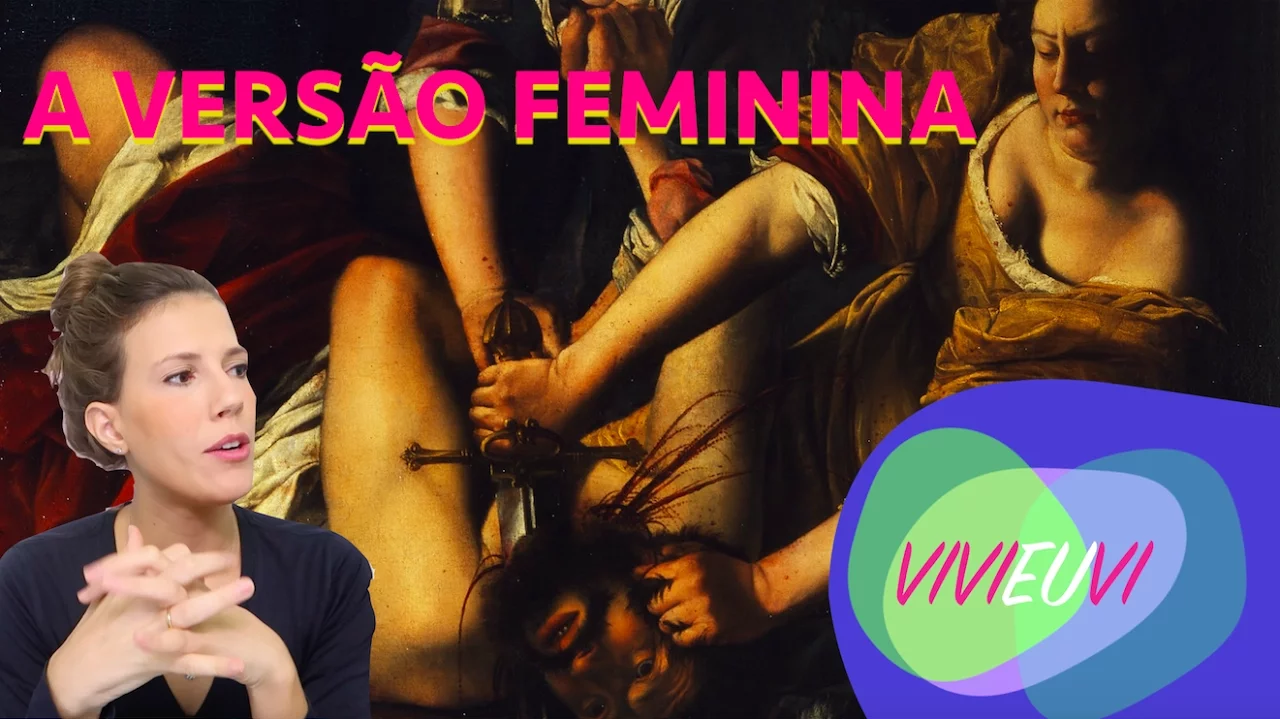
JUDITE DECAPITANDO HOLOFERNES DA ARTEMISIA - VEDA16 #VIVIEUVI
14.9K
Artemisia Gentileschi (1593-1656), a pioneering female Baroque painter, achieved recognition only in the 1970s as a feminist icon; her powerful paintings like 'Judith Beheading Holofernes' and 'Susanna and the Elders' demonstrate how personal trauma and female perspective transformed biblical narratives into profound artistic statements about female agency and resilience.
Click to watch →
Искусство и Феминизм | История Oдной Художницы | Артемизия Джентилески
20.6K
Artemisia Gentileschi (c. 1593-1653), an Italian Baroque artist, overcame significant gender-based barriers in the 17th century art world to create powerful paintings depicting strong, empowered women in biblical and mythological narratives, challenging the patriarchal norms that typically restricted women artists to portraiture and limited their access to formal training and patronage.
Click to watch →
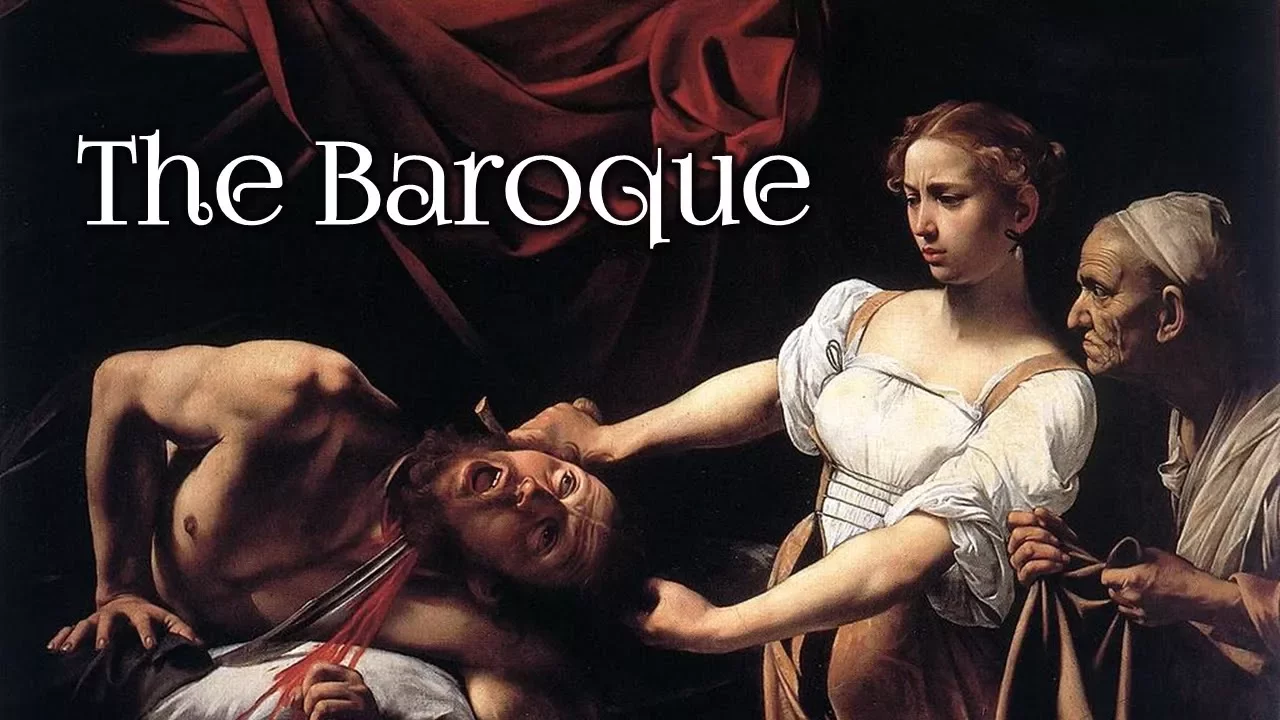
Baroque Painting (Baroque Art: Part I)
120.6K
Artemisia Gentileschi, first woman admitted to Florence's Academy of Fine Arts, channeled her profound personal trauma into powerful art. After being raped by her art tutor Agostino Tassi at age 18, she and her father pressed charges in a seven-month trial where she endured torture with thumbscrews to prove her testimony. Her painting 'Judith Slaying Holofernes' transforms biblical narrative into revenge art—showing Judith's rapist face contorted in suffering, with blood-soaked sheets and two active female figures representing collective female empowerment against patriarchal oppression. Comparing her work to Caravaggio's reveals how personal experience intensified her artistic interpretation.
Click to watch →

Seminario "La vendetta de Artemisia Gentileschi"
132
Artemisia Gentileschi (1593-1654) was a pioneering Baroque Italian painter who challenged the male-dominated art world by representing women as active, empowered subjects rather than passive objects of the male gaze. After being raped by fellow painter Agostino Tassi in 1612, she transformed her trauma into powerful artistic expression through works like 'Judith Decapitating Holofernes' and 'Susanna and the Elders,' which depict women as agents of resistance and vengeance. Despite her success during her lifetime, she was largely forgotten until the 20th century, when feminist art historians like Linda Nochlin began recognizing her as a precursor to feminist art, demonstrating how women artists have historically been marginalized despite their contributions.
Click to watch →
ТОП 4 картины со скрытым ужасом!
716
Artemisia Gentileschi's 'Judith Slaying Holofernes' depicts the biblical story of Judith beheading the general Holofernes, but unlike other artists who depicted Judith as clean and distant, Gentileschi shows two women pressing against the man with their entire bodies. The maid pins him to the bed, he struggles, while Judith calmly rolls up her sleeves and beheads him, blood spurting onto white sheets. This was written when Gentileschi was only 17. Her father hired her teacher Agostino Tassi, who raped her in her own room. The trial lasted 7 months but did not convict Tassi; instead, they tortured Artemisia by clamping her fingers in vice—the same fingers she used to hold her brush. Many art historians interpret this not as a biblical scene but as revenge she could not achieve in court but enacted on canvas. One interpretation suggests Judith's face is Artemisia's own face, while Holofernes' head represents her rapist. This demonstrates how art can encode personal trauma and vengeance.
Click to watch →
Deep Dive
A comparative analysis of Gentileschi's 'Judith Slaying Holofernes' against Caravaggio's earlier, more passive depiction of the same subject.

AP Art History - Global Contemporary (Part 3)
7.9K
The Judith and Holofernes narrative became a popular Baroque subject due to its dramatic violence. Both Artemisia Gentileschi and Caravaggio employed tenebrism—extremely dark backgrounds with highlighted subjects—to create dramatic effect. Gentileschi's Judith shows extreme determination with no hesitation, her knuckles popping as she drives the knife into Holofernes's neck. The maidservant plays an active role in holding him down. In contrast, Caravaggio's Judith appears hesitant with pinched brows, and the maidservant is an older woman playing a passive role. This passivity reflects the notion that women are not violent creatures, which Caravaggio's paintings seem uncomfortable with. Interestingly, despite Caravaggio literally murdering people during his lifetime, his Judith appears more squeamish than Gentileschi's.
Click to watch →
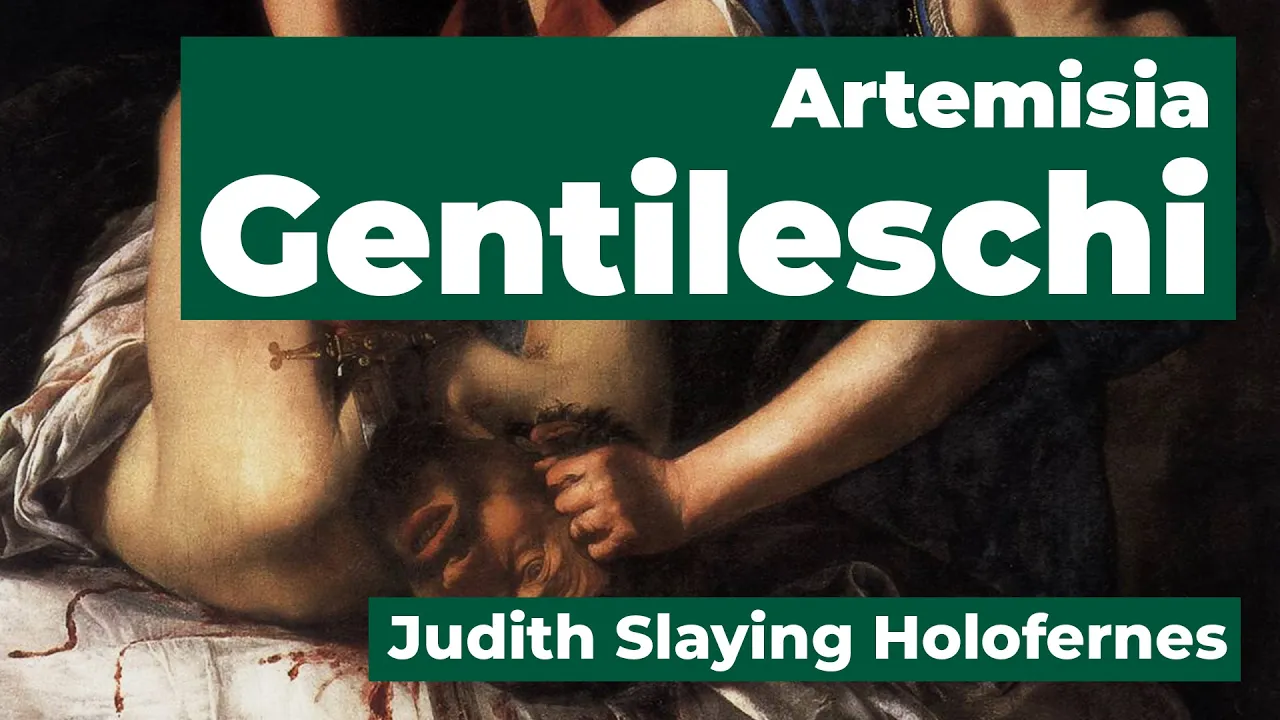
Judith Slaying Holofernes
22.5K
Artemisia Gentileschi, one of the rare female painters of the Baroque period, painted Judith Slaying Holofernes (1611-1612) with intense emotional force, depicting Judith and her servant overpowering the Assyrian general Holofernes through violent struggle; this painting contrasts sharply with Caravaggio's more restrained interpretation of the same biblical story, and reflects Gentileschi's personal experience of sexual abuse by her tutor Agostino Tassi, which she channeled into powerful artworks featuring women defeating men, thereby using her trauma as fuel for creating emotionally charged, empowering art that challenged the male-dominated art world of 17th century Italy.
Click to watch →

Artemisia Gentileschi in 8 paintings | National Gallery
114.2K
Artemisia Gentileschi began her career at age 17 with 'Susanna and the Elders' (1610), demonstrating technical mastery so advanced that many initially attributed it to her father. Her father Orazio acknowledged her talent in 1612, noting she had been painting independently for three years with no equal. Artemisia brought a unique feminine sensibility to biblical subjects, imagining herself in her protagonists' positions to capture their emotional states. The two versions of 'Judith and Holofernes' (Naples and Uffizi) are thought to date from around her trial period, where she depicted the brutal reality of beheading—a stark contrast to Caravaggio's impassive Judith. These paintings demonstrate how personal trauma influenced her artistic vision while establishing her reputation as a powerful storyteller who captured the physical and psychological realities of her subjects.
Click to watch →

Gentileschi Judith Slaying Holofernes
4.3K
Artemisia Gentileschi's Judith Slaying Holofernes exemplifies the 'female gaze' in art, where a female artist brings a distinct perspective different from male artists depicting the same subject; unlike Caravaggio's portrayal of Judith as frail and distant from the action, Gentileschi depicts her as strong, muscular, and physically engaged in the decapitation, reflecting themes of female empowerment that may relate to Gentileschi's own experience of sexual assault, thereby transforming a traditional biblical narrative into a powerful statement of female agency.
Click to watch →

Art Compare and Contrast Lesson - Judith Slaying Holofernes by Caravaggio and Gentileschi
10.3K
This compare-and-contrast lesson uses two 17th-century paintings of Judith Slaying Holofernes—one by Caravaggio and one by Artemisia Gentileschi—to explore how gender influences artistic representation; students analyze visual differences in the portrayal of Judith's strength and demeanor, then discuss and vote on which painting was created by a man and which by a woman, revealing their own biases about gender and power in art.
Click to watch →
Deep Dive
The broader dissemination of Caravaggism across Europe, examining figures like Georges de La Tour, Jusepe de Ribera, and Rembrandt.
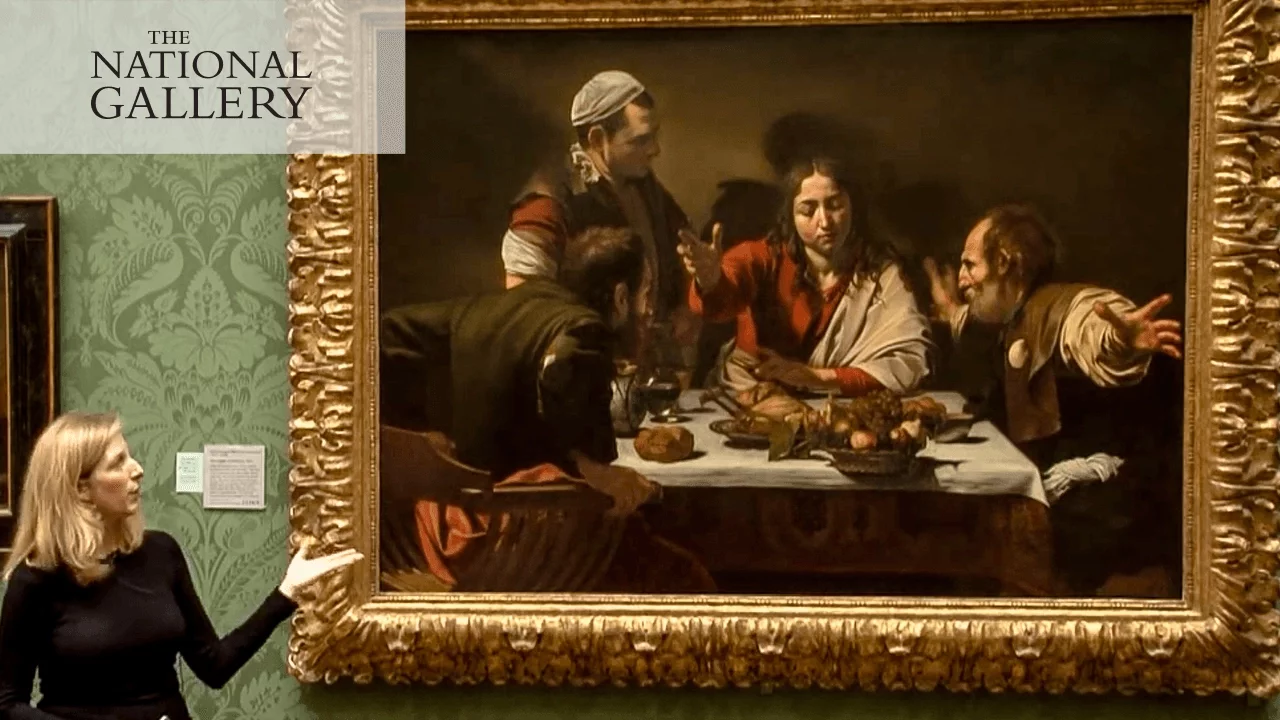
Caravaggio's Life & Artistic Evolution: A National Gallery Guide
2.5M
Caravaggio's fame spread across Europe despite his geographical confinement to Italy and Malta. Artists came to Rome specifically to study his work, including Dutch, Flemish, and French painters like Honthorst, Ter Brugghen, and Baburen. Northern artists particularly valued his use of nature and live models, aligning with their own traditions. His use of light influenced artists like Georges de La Tour, though de La Tour never visited Italy. This diffusion created Caravaggism, an artistic movement that transformed European painting in the early 17th century. After his death in 1610, Caravaggio fell into oblivion and remained largely forgotten until the early 20th century. A pivotal moment came in 1951 with an exhibition in Milan presenting all known works by Caravaggio and his followers for the first time, establishing him as one of art history's most influential figures despite his brief and tumultuous career.
Click to watch →
![Les clés du regard [8 ]- Georges de La Tour](https://i.ytimg.com/vi/NfB3gKpJTZQ/hqdefault.jpg?sqp=-oaymwEmCOADEOgC8quKqQMa8AEB-AHeA4ACwAKKAgwIABABGHIgTigyMA8=&rs=AOn4CLBxqpYdLrYjERqdAfBW1aWOgG6t5Q)
Les clés du regard [8 ]- Georges de La Tour
20K
Georges de La Tour's 'The Fortune Teller' (La diseuse de bonne aventure) is one of the few signed paintings by the artist, discovered in 1946 in a château corridor in Sarthe. The painting depicts a young man repeatedly robbed by a fortune teller and her accomplices, representing the prodigal son who strays from his path. This moralizing subject was popular in 17th-century art, reflecting the era's emphasis on ethical instruction. In 1635, France experienced a unique cultural paradox: political opacity coexisted with spiritual transparency. Louis XIII reigned amid three powerful enemies—his wife Anne of Austria, his brother Gaston d'Orléans, and Cardinal Richelieu—creating an era of unpredictable political intrigue. Yet simultaneously, France witnessed remarkable spiritual renewal through movements like Port-Royal, the founding of the Daughters of Charity by Saint Vincent de Paul, and Jansenius's influential work on predestination. The founding of the French Academy in 1635, along with Corneille's 'Le Cid' and Descartes' 'Discourse on Method,' marked France's emergence as a center of European intellectual life, shifting the 'eye of the world' from Italy to France for over a century. Michelangelo Merisi da Caravaggio (1573-1610) revolutionized Western art through his dramatic use of chiaroscuro and naturalistic depiction of sacred subjects. Born in Caravaggio, Italy, he trained from age 11 and traveled to Rome in 1592, where he was employed by the fashionable painter Giuseppe Cesari. His breakthrough came through patronage by Cardinal Del Monte, who provided housing and financial support. However, Caravaggio's passionate and extreme nature—marked by involvement with alcohol, women, and violence—ultimately led to his exile from Rome. His revolutionary approach involved depicting sacred subjects with the raw realism of everyday life, using ordinary people as models and painting scenes with dramatic, almost theatrical lighting. His mature works, such as 'The Deposition' (Vatican Pinacoteca) and 'The Beheading of Saint John the Baptist' (Cathedral of Mdina, Malta), demonstrate his ability to create profound spiritual imagery through increasingly simplified compositions. Despite dying at age 37 without formal disciples, his influence spread rapidly throughout Europe, establishing a new paradigm for visual storytelling that would shape Western art for centuries. In Italy, Guido Reni, Giovanni Battista Moroni, Orazio Gentileschi, and Artemisia Gentileschi (the first famous female painter in history) all created works influenced by Caravaggio's chiaroscuro and naturalism. In Spain, Zurbarán and Velázquez would develop their own traditions of dramatic lighting. In the Netherlands, Rembrandt would establish his own profound approach to light and shadow. The 'Southern Voice' of Caravaggism refers to the Spanish tradition of artists who developed Caravaggio's revolutionary approach in Spain. Young Spanish painters traveled to Rome to study the masters and then returned to develop their own interpretations. José de Ribera, Diego Velázquez, and Francisco de Zurbarán (1598-1664) all created works deeply influenced by Caravaggio's chiaroscuro and naturalism. Zurbarán, working primarily in Seville and later Madrid, created major works for religious orders including the Dominicans, Franciscans, and Jesuits. His paintings feature dramatic chiaroscuro, with figures emerging from darkness into pools of light. Unlike his Italian contemporaries, Zurbarán was reluctant to sacrifice the seduction of color for the sake of shadow, creating a distinctive Spanish tradition of Baroque painting that emphasized both spiritual intensity and visual splendor. The 'Northern Voice' of Caravaggism refers to the Dutch and Flemish tradition of artists who developed Caravaggio's revolutionary approach in the Low Countries. Like their Spanish counterparts, young Dutch and Flemish painters traveled to Rome to study the masters and then returned to their homelands to develop their own interpretations. Artists like Theodor de Bry, Hendrick ter Brugghen, and Rembrandt van Rijn (1606-1669) created works deeply influenced by Caravaggio's chiaroscuro and naturalism. Rembrandt, undoubtedly the most Caravaggist of the Caravaggisti, developed his revolutionary approach in the Dutch Republic. Born in Leiden to a miller's family, he studied at the University of Leiden before opening his own studio in 1625. He moved to Amsterdam in 1631, where he found a wealthy clientele eager for his dramatic, psychologically profound paintings. His career spanned from 1625 to 1669, with his most productive period occurring between 1631 and 1651. During this time, he created works that combined Caravaggio's dramatic lighting with his own profound psychological insight. His paintings featured ordinary people depicted with extraordinary humanity, using light and shadow to create emotional intensity. His later works, painted during his period of financial and personal crisis, demonstrated his ability to create profound spiritual imagery through increasingly simplified compositions. His influence would spread throughout Europe, establishing a tradition of Northern Baroque painting that emphasized psychological depth and spiritual intensity.
Click to watch →
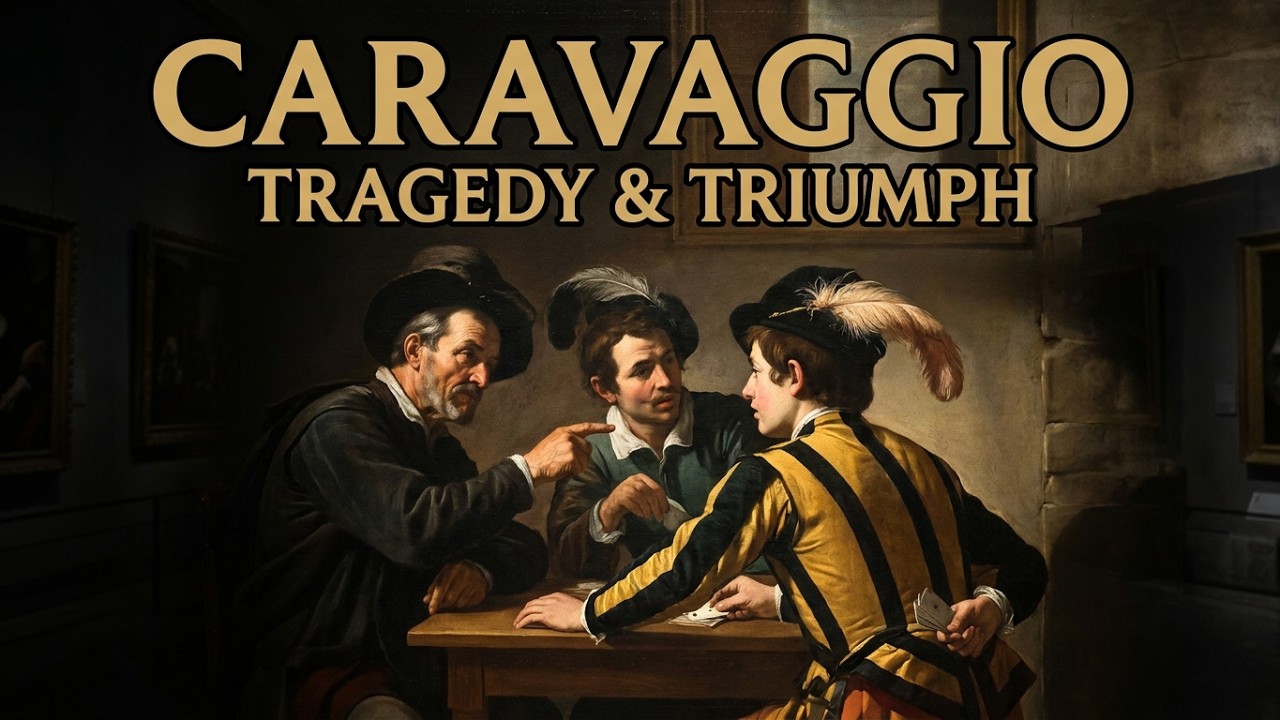
THE TRAGIC LIFE OF CARAVAGGIO: Rome, the first years
104
Caravaggio's influence spread across Europe through French painters like Valentin de Boulogne, Georges de La Tour, Nicolas Regnièr, and Simon Vouet. These artists adopted dramatic lighting and intense realism while developing distinctive styles. Their works depicted fortune tellers, card sharps, and theft scenes, often combining multiple deceptive elements. Even Cardinal Del Monte, Caravaggio's former patron, commissioned copies of these works, demonstrating the profound and lasting impact of Caravaggio's revolutionary approach to depicting deception and human vulnerability.
Click to watch →

Waldemar Januszczak on Caravaggio's Influence: Beyond Caravaggio at the National Gallery
242.8K
Caravaggio's influence spread rapidly across Europe through multiple channels. Northern artists like Honthorst and Ter Brugghen absorbed Caravaggio's darkness but transformed it into elegance, finding poetry in his shadows and bringing beauty to candlelight effects. Rubens, who saw Caravaggio's works in situ in Roman churches, was transformed at a nuclear level—his mood, storytelling, figure selection, and use of women all bore traces of this encounter. Despite Caravaggism fading in mainland Europe by 1640, it remained influential in England. William Dobson painted Caravaggesque scenes including John the Baptist's beheading during Oliver Cromwell's rise, positioning himself at the center of action. This demonstrates how Caravaggio's influence spread like wildfire across Europe, reaching unexpected places and persisting long after it had fallen out of fashion in its homeland.
Click to watch →
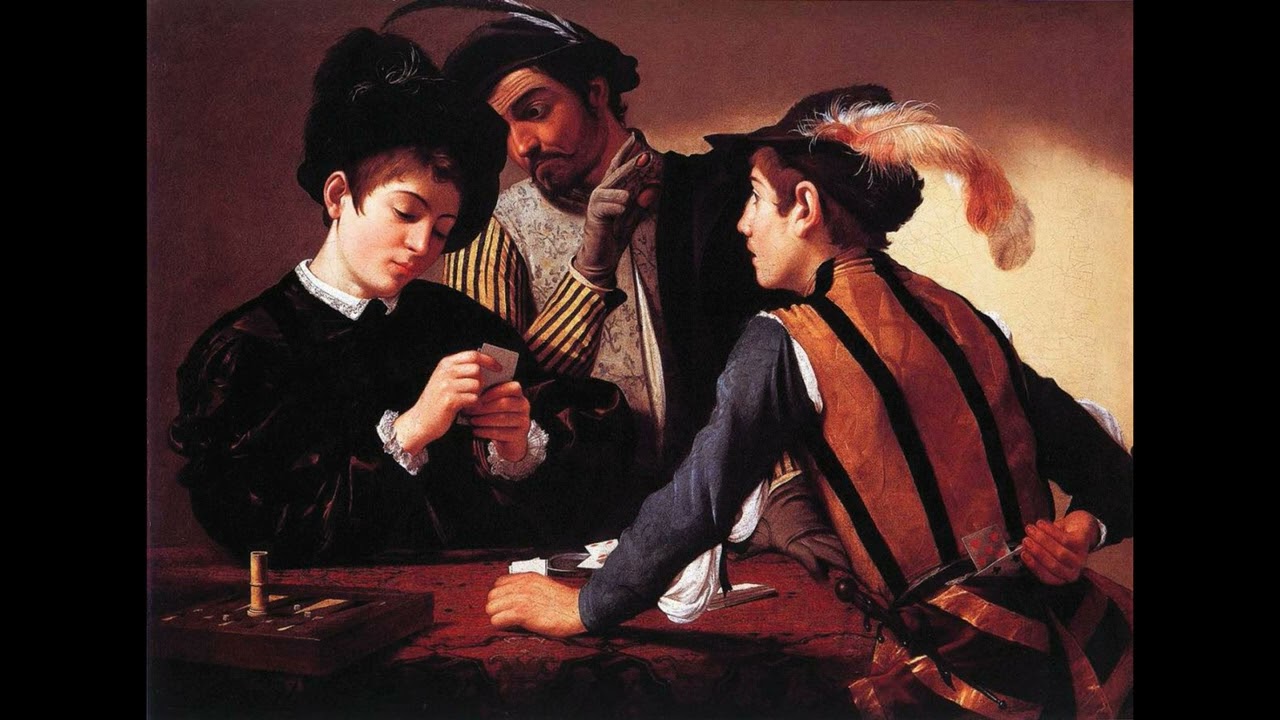
Autant en emporte l’Histoire : Le Caravage, peintre de génie et voyou
840
Caravaggio did not have time to formally establish an art school, but his style influenced many artists. Spanish painter Jusepe de Ribera imitated his technique after Caravaggio's death. The Neapolitan school was particularly influenced by his style. French artists like Simon Vouet and Valentin de Boulogne also adopted his approach. This 'Caravaggism' spread throughout Europe, with the style remaining popular until around 1625-1630, when classical art (particularly Poussin) became dominant. Caravaggio was largely forgotten for centuries after his death, with only his name surviving. In the early 20th century (1910s-1920s), his works were rediscovered and reattributed, leading to a revival of interest in his revolutionary style.
Click to watch →
Deep Dive
Technical art history methods, such as X-ray radiography and pigment analysis, used to reveal Gentileschi's 'pentimenti' (underpaintings).

Orazio Gentileschi at Colnaghi | The Rest on the Flight into Egypt
1K
Recent technical analysis has revealed that the painting was painted over an earlier altarpiece featuring an old man's head, and shows several pentimenti (changes of mind), notably the positioning of the Virgin's hand which appears as a clenched fist under x-ray but as a spread hand in the final painting.
Click to watch →

Revealing Secrets with X-Rays and Infrared Scans
5K
Pentimenti are changes made by an artist during the creation of a painting, such as reworking clothing from partial to full nudity. These alterations would remain hidden by the final smooth renderings if not for X-ray and infrared scans. When multiple almost identical copies exist, the one displaying evidence of pentimenti is typically the original rather than a copy.
Click to watch →

The Simple Novel-Writing Hack I Wish I’d Known When I Started Out
127.4K
Pentimenti (from Italian for 'to repent' or 'change your mind') refers to changes made to artworks during their creation. X-ray analysis reveals these alterations, such as how Leonardo da Vinci reworked the Mona Lisa's smile multiple times, starting with a big grin before achieving the haunting enigmatic expression. This demonstrates that even master artists weren't always certain of their final vision and refined it through successive layers.
Click to watch →
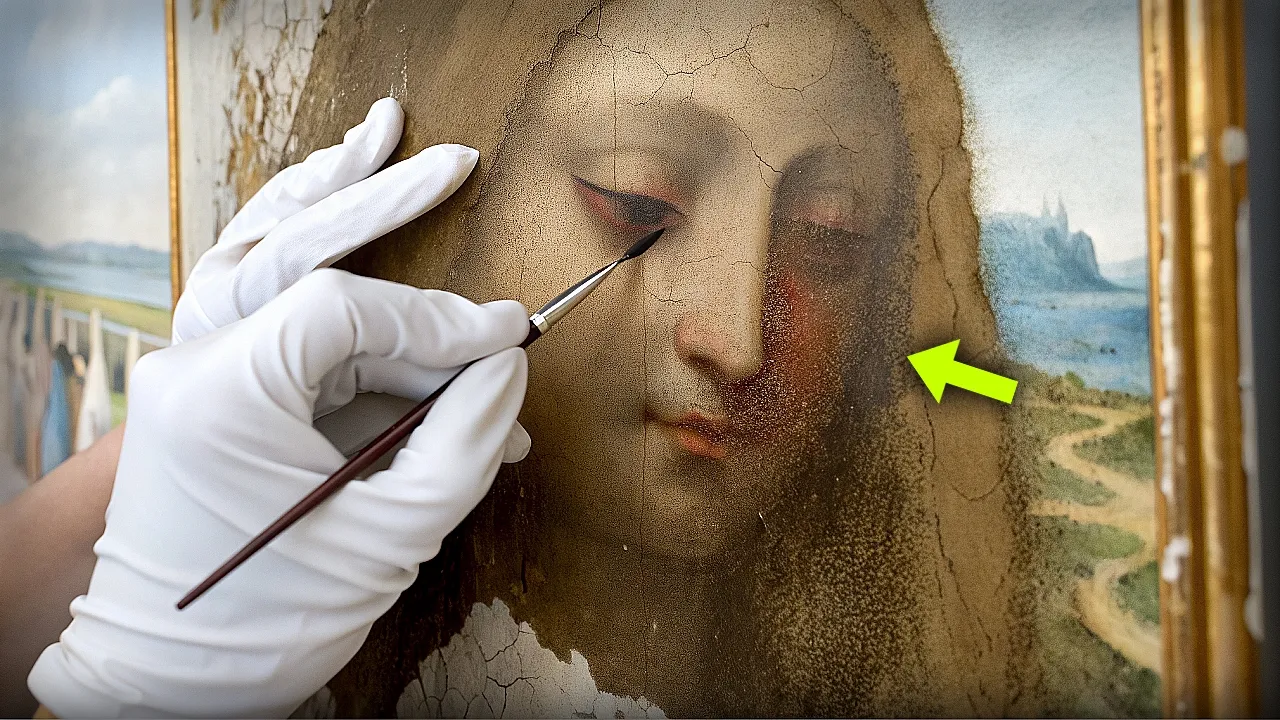
Вот как реставраторы испортили шедевр Леонардо да Винчи, это нужно увидеть!
5K
Pentimenti (Italian for 'repentance') are artist corrections made during painting, such as changes to hand positions, head angles, or drapery folds. These are usually hidden under layers of paint and varnish, visible only through X-ray or infrared reflectography. Strong solvents made the upper layers more transparent, revealing pentimenti that da Vinci intended to hide. A ghostly extra leg appeared under the infant Jesus's dress, and the lamb's head contour doubled, creating a vibrating effect. For historians, this reveals da Vinci's creative process; for viewers, it destroys the illusion of three-dimensional reality.
Click to watch →

How Did A 12 Year Old Michelangelo Paint This? Then it Disappeared
305
Infrared imaging revealed pentimenti—the changes and corrections an artist makes in the process of working. This confirmed the painting was an original composition rather than a mechanical copy. The underdrawing showed a young artist working intuitively, scraping back paint to clarify outlines, building up texture where needed, and figuring things out in real time.
Click to watch →
Biblical Scene
Violence Detail
Biblical Scene
0:00- 1
Depicts Judith beheading Holofernes in a dark, violent Baroque style.
- 2
Shows Artemisia's dramatic tenebrism and physical realism.
- 3
Highlights the heroic act by two women against a powerful general.
Beyond the Biographical Fallacy: Formalist and Contextual Readings
While "Judith Slaying Holofernes" is famously analyzed through a biographical lens—often interpreted as Artemisia Gentileschi's personal artistic revenge against her rapist, Agostino Tassi—an important counter-perspective cautions against this "biographical fallacy." Prominent art historians argue that reducing Gentileschi’s masterpiece solely to personal trauma diminishes her agency, intellect, and status as a highly skilled professional. This alternative perspective reframes the painting within the context of artistic competition, patronage, and Baroque marketing. Gentileschi was actively engaging in a pictorial dialogue with Caravaggio, seeking to surpass his version of the scene by delivering a more anatomically realistic and dramatically tense composition. Furthermore, the violent imagery catered to the specific tastes of the Florentine Medici court and the Counter-Reformation's demand for powerful, theological allegories. By focusing on formalist elements, patronage, and stylistic innovation, this counterpoint views Gentileschi not as a traumatized victim painting for therapy, but as a calculated, ambitious professional dominating a competitive, male-dominated art market.
Core characteristics of the Baroque art movement, including the use of high-contrast lighting (chiaroscuro and tenebrism).
The biblical story of Judith and Holofernes from the Book of Judith, providing the narrative context for the artwork.
The influence of Michelangelo Merisi da Caravaggio and the stylistic school of the Caravaggisti on early 17th-century Italian art.
The socio-religious context of the Counter-Reformation and how the Catholic Church utilized dramatic visual art to engage viewers.
Feminist art history and the biographical reading of Artemisia Gentileschi's work in relation to her personal trauma and agency.
A comparative analysis of Gentileschi's 'Judith Slaying Holofernes' against Caravaggio's earlier, more passive depiction of the same subject.
The broader dissemination of Caravaggism across Europe, examining figures like Georges de La Tour, Jusepe de Ribera, and Rembrandt.
Technical art history methods, such as X-ray radiography and pigment analysis, used to reveal Gentileschi's 'pentimenti' (underpaintings).
188.8K views1.1Klikes4:01@smarthistory-art-historyOriginal Release: 2014-05-06
(jazzy piano) Zucker: We're in the Uffizi in Florence looking at a large Baroque painting by the artist Artemisia Gentileschi.
Harris: This is the painting that's most often reproduced by Artemisia, the subject is Judith and Holofernes.
This is a biblical subject- Zucker: Old testament.
Harris: It's the story of a heroic woman and of course, that is always a handy thing when you're an art historian and you're talking about a woman artist.
In fact, it's difficult often with women artists not to read their biography into the paintings.
Let's just take a close look at the painting to start with.
Zucker: It is Baroque in almost every way.
We have this deep tenebrism, this painting in a dark manner.
This very shadowed background that creates this very shallow space and then the brilliantly highlighted figures in the foreground.
Harris: We are in the tent of the Assyrian general Holofernes.
So the story is that Judith is a Jewish widow from the town of Bethulia, which is under siege by the Assyrian army.
Holofernes is the general of that army.
Zucker: And the Jewish town is about to give up.
Harris: Judith hatches a plan to save Bethulia.
Zucker: She dresses herself up to catch the eye of the Assyrian general and is able to move across enemy lines because she's seen as betraying her own town.
This story is usually interpreted that she seduces the general, but he gets drunk and falls asleep.
Then she takes his sword and beheads him.
That's the moment that we're seeing here.
Harris: She's accompanied by her maidservant.
Artemisia also painted the next moment of the story, which is after the beheading, they take the head, put it in a bag and bring it back to Bethulia to show everyone in the town that they're now safe.
Zucker: The maid is pressing down on Holofernes with all of her might and he seems to be fighting back as best he can in his drunken, half-asleep state.
But Judith is at that moment severing his head and blood spurts everywhere, this is tremendously violent.
Harris: She grasps the beard and the hair on his head and holds his head down and with her right arm, draws that sword through his neck.
You can feel the force that it took.
This is very different from Caravaggio's version of the subject where Judith looks very dainty and as though she doesn't really have the strength to behead Holofernes.
Zucker: Look at the contrast of scale.
Look at the size of Holofernes' fist against the maidservant's face and just how powerful he is versus the scale of the woman.
Harris: Well it takes two of them to conquer one of him.
Zucker: Notice the way that both of the women's arms are fully extended, whereas Holofernes' arm breaks at the elbow.
His leg breaks at the knee so we have the sense of dismemberment that is not only at the head, but also at his other limbs.
The womens' arms diagonals pushing towards the center.
The general's legs functioning very much to pair with the parallel forearms of Judith.
But all of those limbs bringing our attention down to the severing, down to the violent act itself.
Harris: His body is radically foreshortened.
Something that is common in Baroque art.
With his head [verif clostas] and this blood spurting up and down those white sheets.
The bloodiest, goriest part of this painting is what's closest to us.
Zucker: And as you said, Judith holds his head down.
But what that does is dislocates it so that it seems no longer connected to his body.
Harris: We have this dramatic contrast of light and dark that we also see very oft in Baroque art.
Where we have areas of very bright illumination right up against very dark areas of shadow.
Zucker: What that creates is a kind of vivid physicality.
Harris: And it looks to me like she's rolled up her sleeves in order to do this.
The naturalism is so palpable here and of course, that is the heart of Baroque art.
(jazzy piano)
Up Next

53:00
Caravaggio's Technique: Grounds & Paint Application
@LuisBorreroVisualArtist
28.1K views•2022-04-09

114:18
Christian Iconography: History, Theology, and Meaning | Fr. Panayiotis Papageorgiou
@Trisagionfilms
58.8K views•2020-02-21

10:26
Redgrave's The Sempstress: Victorian Social Realism, 1846
@smarthistory-art-history
3.2K views•2011-10-22

16:34
Earliest Depictions of Jesus in Art: 10 Ancient Images Explained
@UsefulCharts
5.9M views•2022-06-03
Related Study Plans & Knowledge Roadmaps
Structured learning paths in Art History
art-history
Gothic Cathedrals: Engineering, Light & Society
01The Birth of the Gothic: Romanesque to Suger's Vision
02The Structural Triad: Pointed Arches, Ribbed Vaults, and Flying Buttresses
03Theology of Light: Lux Nova and Sacred Geometry
+ 2 more learning modules
14h5 modules
Explore Roadmap
art-history
Pre-Raphaelites: Realism, Symbolism & Critique
01The Victorian Art Establishment and Academic Formula
02The Founding of the PRB and Radical Realism
03Medieval Revivalism and Literary Symbolism
+ 1 more learning modules
8h4 modules
Explore Roadmap
art-history
Street Art: From Subways to Art Market
01Subcultural Origins in Philadelphia and New York (1970s)
02The Subway Era and Style Wars (Late 1970s - 1980s)
03The East Village Scene and Early Gallery Crossover
+ 2 more learning modules
10h5 modules
Explore Roadmap
art-history
Classic Maya Art: Iconography, Glyphs & Ritual
01Foundations of Classic Maya Visual Culture
02Deciphering Maya Hieroglyphs & Text-Image Integration
03Sacred Geography and Cosmological Architecture
+ 2 more learning modules
14h5 modules
Explore Roadmap