







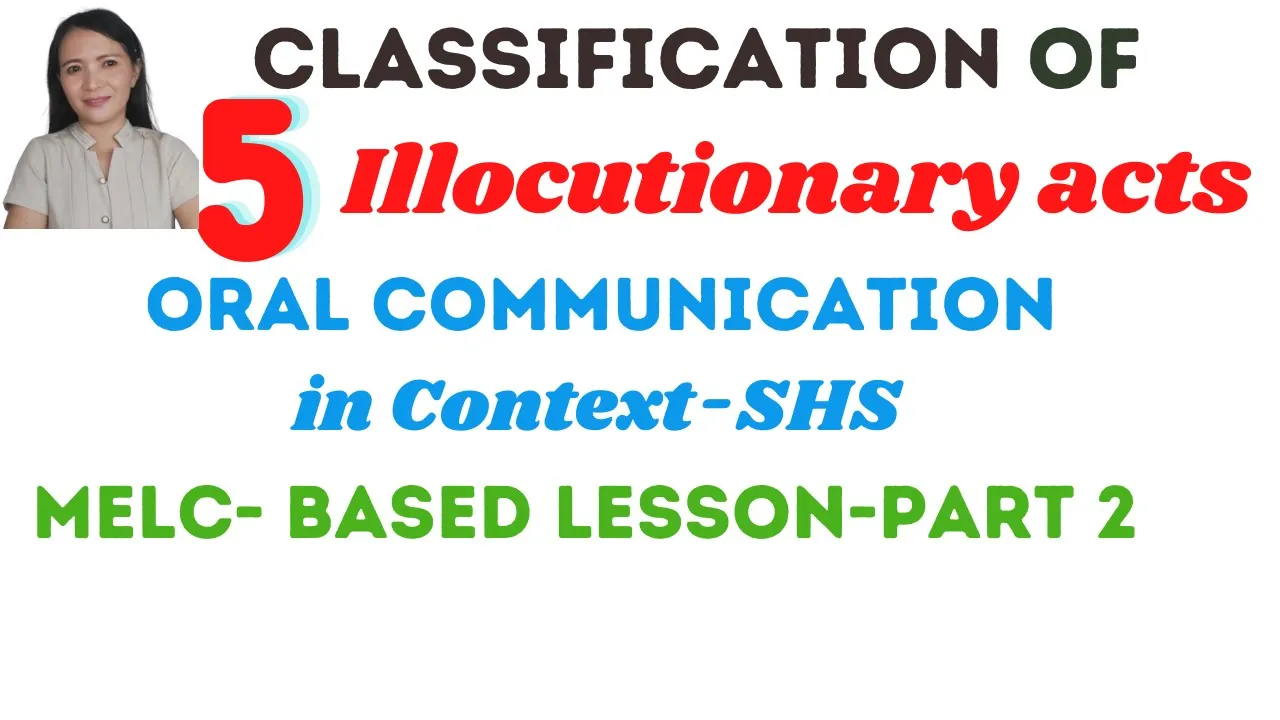

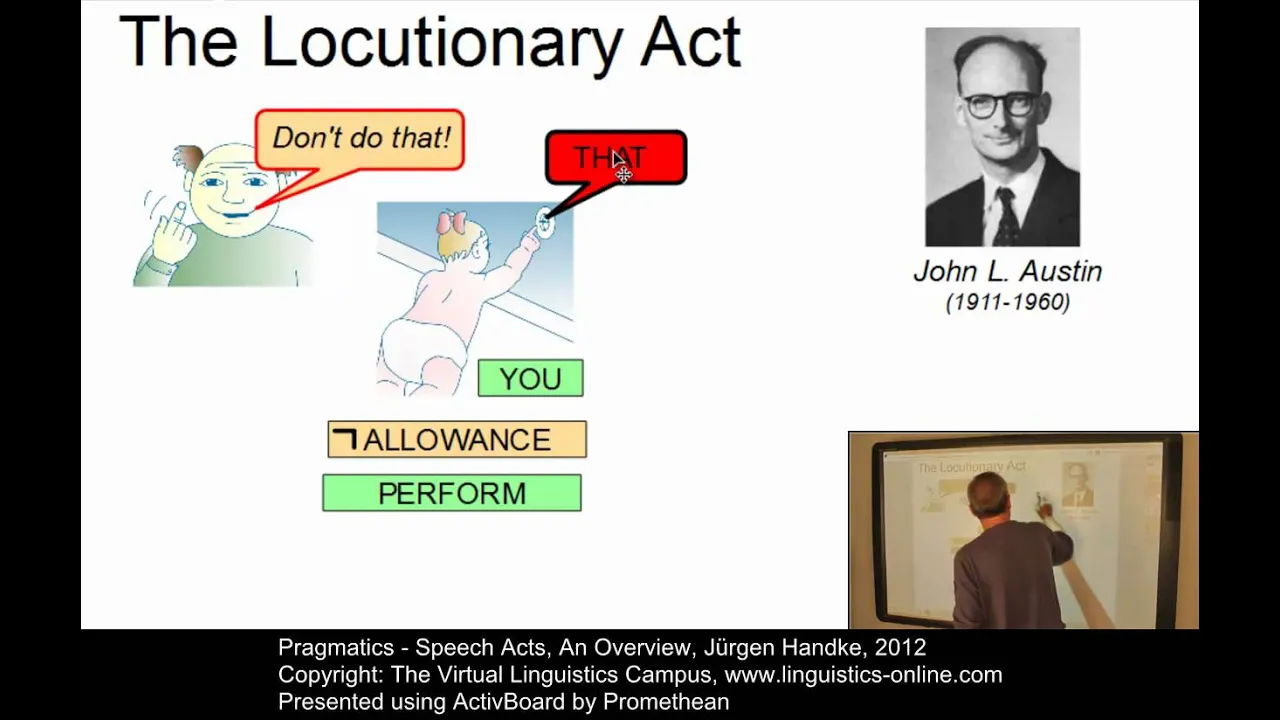










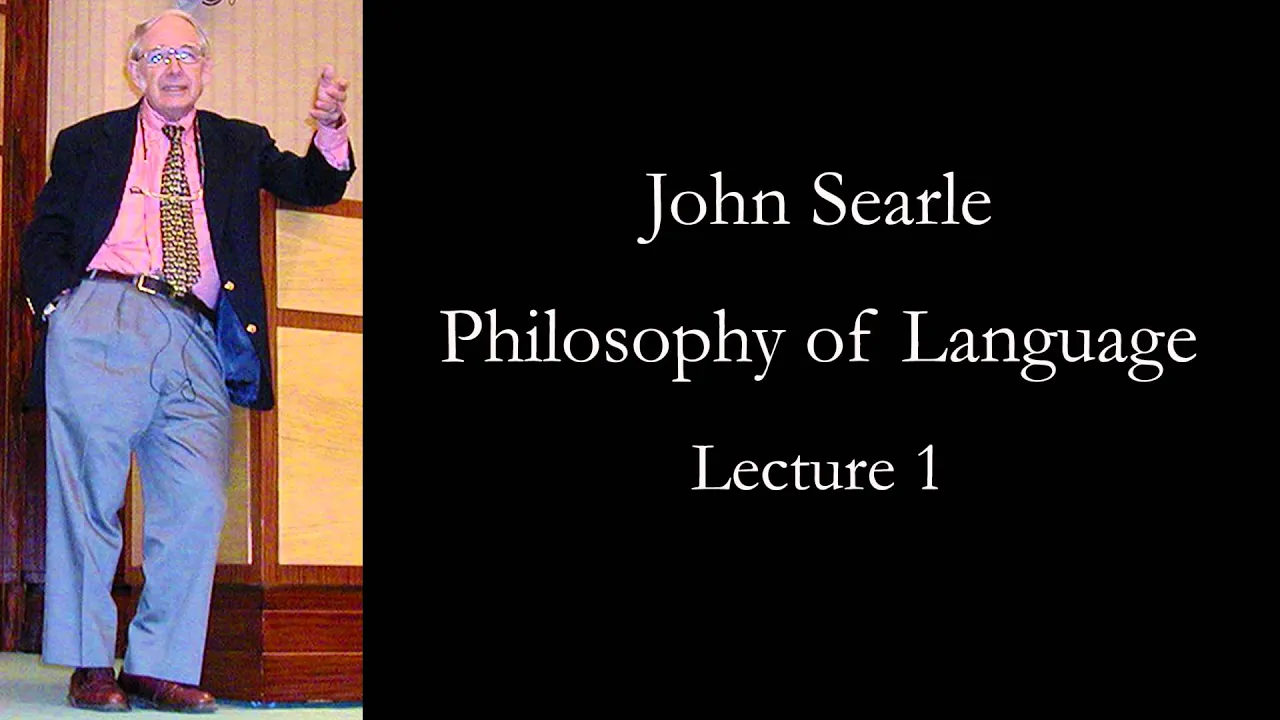

Speech Act Theory, proposed by John Austin in 1962 and later developed by John Searle in 1969, explains that utterances can perform actions rather than merely convey information; every speech act involves three simultaneous components: the locutionary act (the actual words spoken), the illocutionary act (the speaker's intention behind the utterance), and the perlocutionary act (the effect produced on the listener). The theory categorizes illocutionary acts into five types: representatives (describing states of affairs), directives (getting others to act), expressives (conveying feelings), commissives (committing to future actions), and declaratives (changing circumstances).
Speech Act Theory: Austin & Searle's Pragmatics Explained
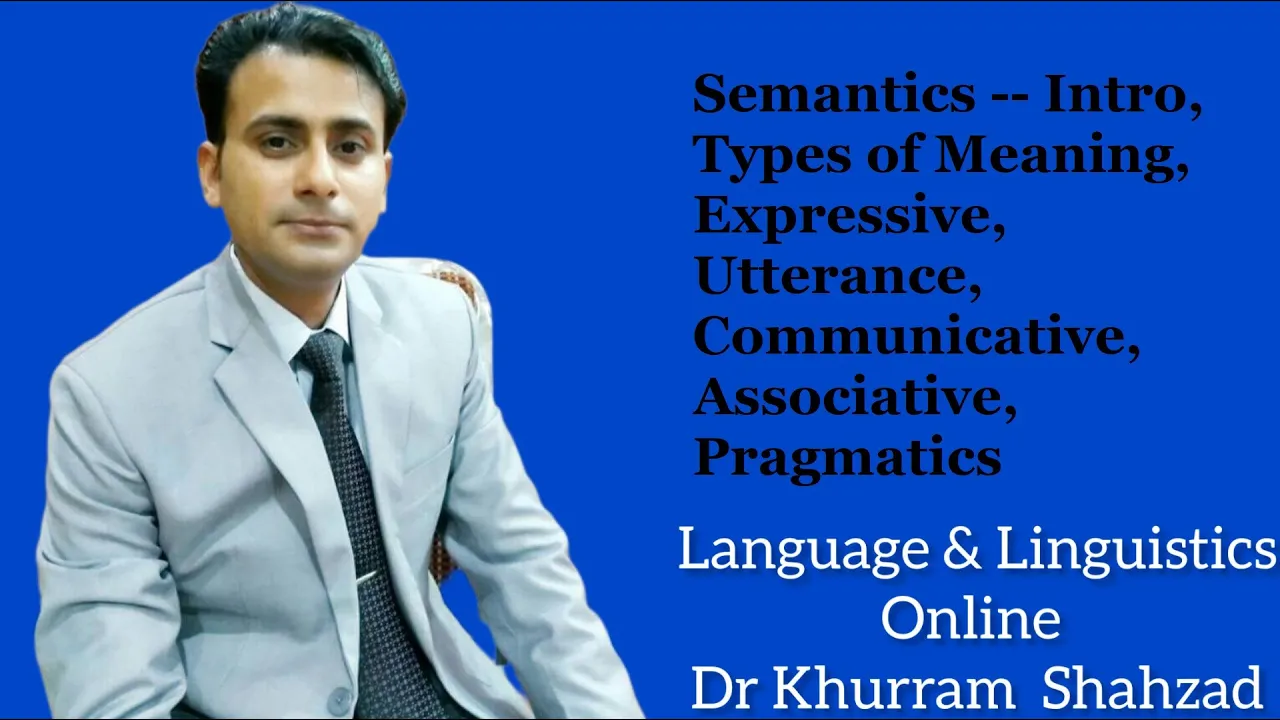
Added:The fundamental distinction between Semantics (literal meaning) and Pragmatics (meaning in context).
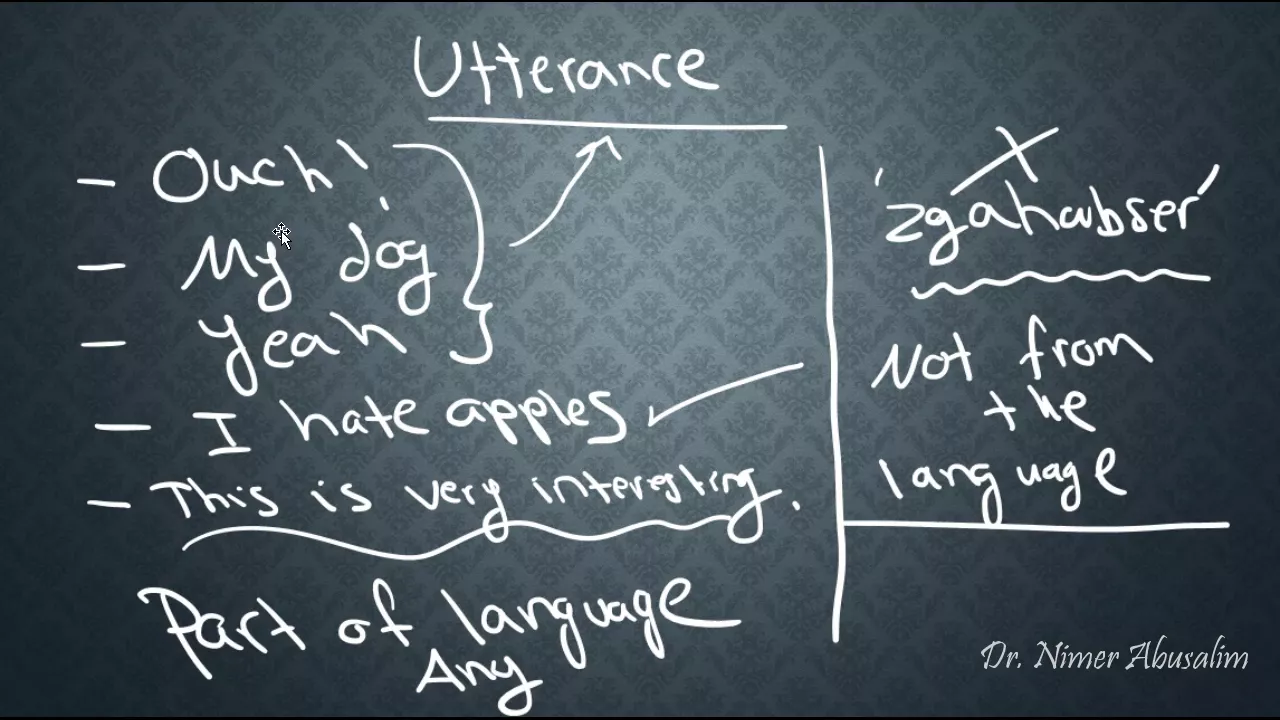
The linguistic concept of an utterance as a concrete, contextualized event versus a sentence as an abstract grammatical structure.
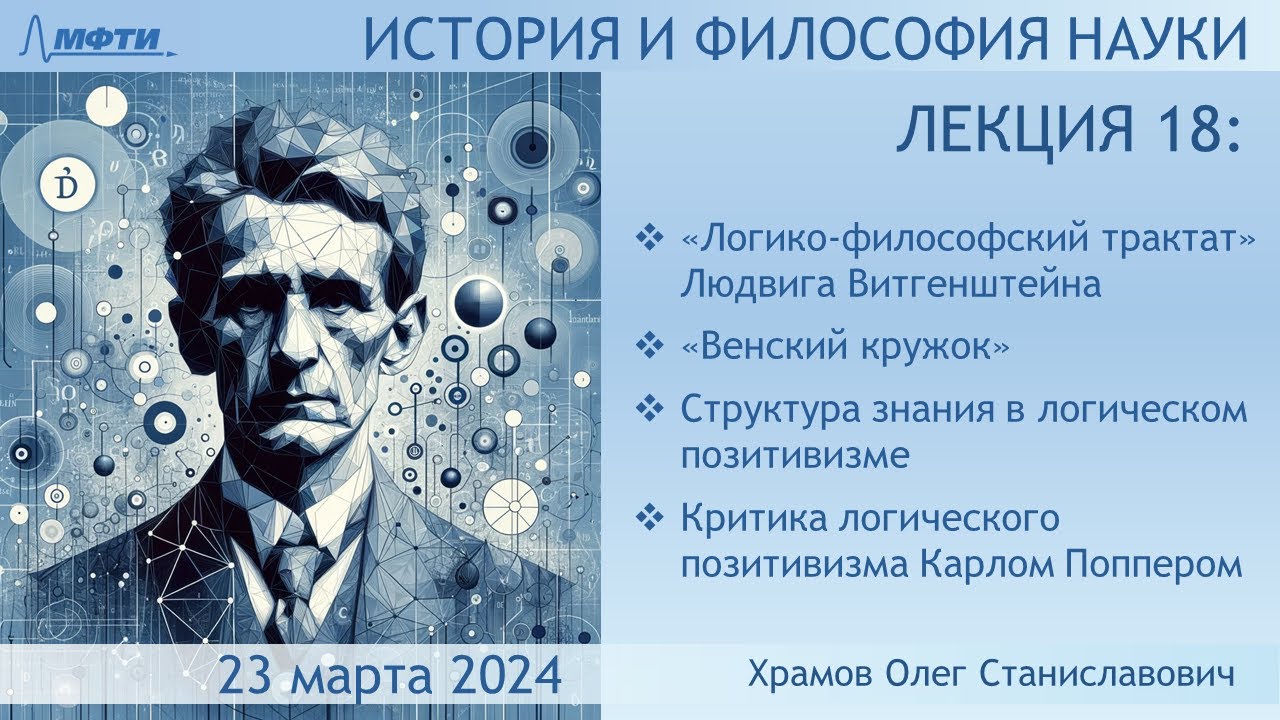
The historical context of Logical Positivism, specifically the early 20th-century view that the sole function of language is to make true or false statements.
John Searle's detailed taxonomy of illocutionary acts, including assertives, directives, commissives, expressives, and declarations.
Indirect Speech Acts and how speakers use them to navigate social politeness and face-saving dynamics.
Paul Grice's Cooperative Principle and Conversational Implicatures, which explain how we infer meaning beyond what is literally performed.
The application of Speech Act Theory in computer science and Natural Language Processing (NLP) for designing conversational agents and dialogue systems.
The analysis of performative utterances in legal philosophy and social power dynamics, such as marriage vows, legal verdicts, and hate speech.
36.6K views529likes9:10Original Release: 2021-09-18
[Music] hello everyone welcome with the new video today we will discuss speech act theory let's first go through some definitions an act of oral communication from a grunt to a very long conversation speech act indicate that an utterance can have the same impact as an action actions performed by utterances generally called speech acts so from definition it's clear that some time we perform actions through utterances and those actions which are performed or utterances are generally called speech acts for example if you order someone that bring me a glass of water so what are you doing you are performing an action through an utterance now the process of bringing the glass of water is an action but you are not doing it you are doing it by influencing someone else and this action is performed via utterance the concept of speech actually was proposed by john longsha austin in 1962 and it is later developed by john r cell in 1969 according to them language is not only used to inform and describe things but it is also used to do things and perform acts they further states that making statement may be paradigm paradigmatic use of language but there are all sorts of other things we can do with words like we can make requests ask questions give orders make promises offer apologies and so on according to austin speech actually deals with communication but communication in its wider sense does not refer to simple information but rather it furthermore includes making promises apologies apologizes and make decisions according to cell speech theory is designed to help us understand how people accomplish things with their words it means that every time a speaker utters a sentence he is attempting to accomplish something with words specifically he intends to have some impact on the listener and wants the listener to recognize this intention austin and cell established that whenever we say something three simultaneous acts are performed the first act is a locationary act illusionary act is the reason our purpose for utterance the intention we have while saying our writing in short the intention in the mind of a speaker behind an utterance is called illusionary act when this intention takes a concrete form and it become words then it's called locutionary act locutionary act is the basic utterance producing meaningful linguistic expression it is the act of saying or writing something so when the intention take a concrete form it is the concrete form is now location react and when this concrete form produce some eff effect on listener this is then called perlucusionary the perlocationary act is the interpretation of listener are the effect produced on listener or reader when we address something to intent an effect this is basically the response of hearing the effect of words created on here so there are three acts illocationally is the intention behind an utterance locutionary is the concrete utterance while the perlucinary is the interpretation of listener or the effect produced on listener the illusionary act is further divided into the following like the first one is representatives representative is the speech act in which the speaker describes something like for example he is a good boy the meat is delicious when the speaker describes something this is called representative directives when speaker intention is to do something for him and the speaker influence others to do something is called directives like you told someone that give me your pen or you bring me a glass of water or if you request someone this is called directives in expressive the speaker conveys inner feelings and inner states like for example if the speaker says that i'm not feeling well or i am sad i'm angry these are the examples of expressives commercials commissives are when the speaker commit to a future action in commercials we include the promises and threatening etc for example you told someone that i'll help you i promise you these are the example of commercials in which you commit to some future action declaratives and declaratives the speaker change or elder circumstances these are orders like you say that get out polish my shoes these are all there's a slight difference between the directives and declaratives in directives the listener has a choice that whether he accept your request or not if you told some morning director that bring me a glass of water it depends on our listener that whether it do it or not but in declarative listener has no option there's the relation of boss and servant so this is all about speech act theory in short spiritual theory are the actions which are performed via utterances the theory is proposed by john longsha and later on developed by uh later on developed by cell there are three simultaneous acts locationally locationary and parallel questionary following are some types of illusionary acts so this is all about speech and theory i hope that the video will be helpful and you will get you will able to get the basic concept of speech activity thank you very much you
Up Next
21:55
Master Cooper Ger Buckley: Whiskey Barrel Craft
@WhiskeyTribe
502.3K views•2019-07-27

12:54
Triumph of Orthodoxy Icon: Byzantine Art & History Explained
@BenCallan
2.1K views•2024-08-06

9:49
FastAPI vs Flask vs Django: Choosing the Right Python Web Framework
@TechWithTim
302.5K views•2024-05-26

1:42
Game of Thrones Opening Credits: A Cinematic Analysis
@gameofthrones
46.3M views•2011-04-18
Related Study Plans & Knowledge Roadmaps
Structured learning paths in General & Interdisciplinary Studies
general-studies
Elevator Engineering: History, Physics & Cities
01From Hoists to Safety Brakes: The Dawn of Vertical Lift
02Hydraulic vs. Traction: The Engineering Physics of Elevators
03Modern Speed, Safety, and Algorithms
+ 2 more learning modules
12h5 modules
Explore Roadmap
general-studies
Rubber: Material Science, History & Geopolitics
01Origins of Natural Rubber & Mesoamerican History
02The Chemistry of Natural Rubber & Vulcanization
03The Geopolitics of the Rubber Boom & Colonization
+ 2 more learning modules
12h5 modules
Explore Roadmap
general-studies
Containerization: Evolution, Logistics & Trade
01Ancient Trade & Bulk Cargo: Amphorae to Barrels
02The Industrial Revolution & Cardboard Packaging
03The Containerization Revolution: Malcom McLean
+ 2 more learning modules
12h5 modules
Explore Roadmap
general-studies
Textile Tech: Evolution, Labor & Global Impact
01Pre-Industrial Textiles: Handloom & Cottage Industry
02Mechanization: The Spinning Jenny to the Power Loom
03The Factory System & Global Labor Transformation
+ 2 more learning modules
10h5 modules
Explore Roadmap