


















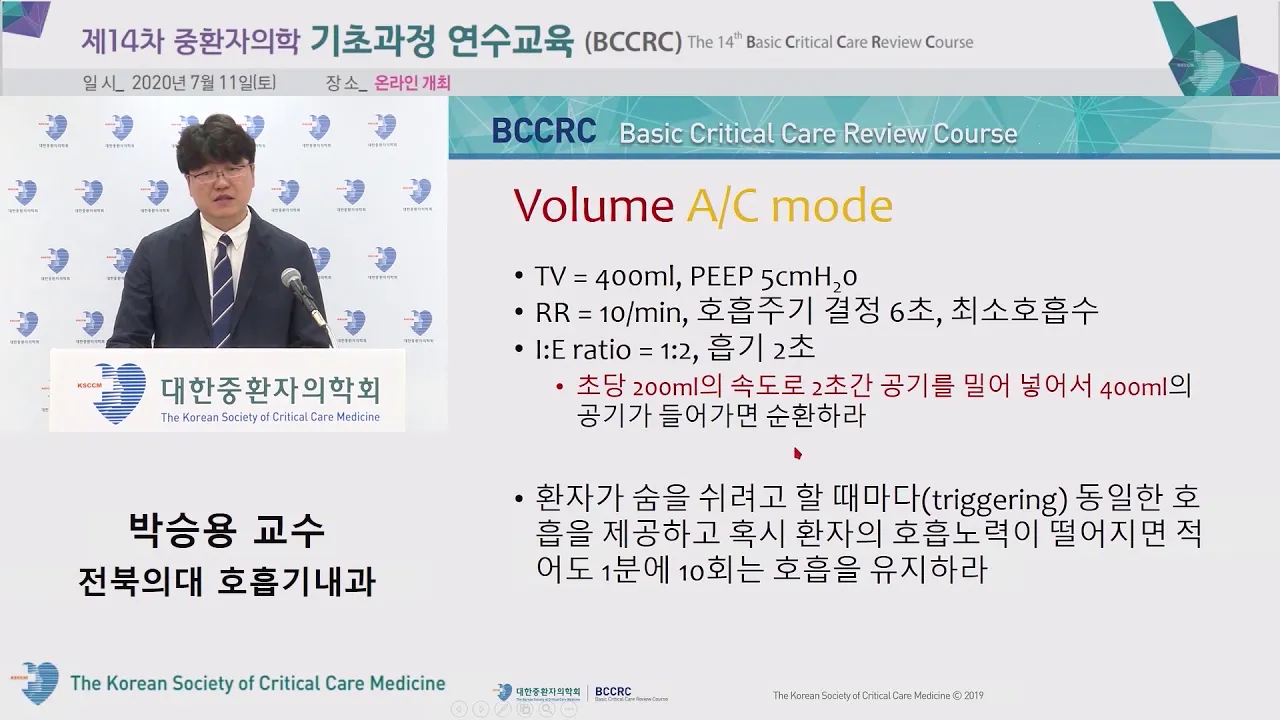


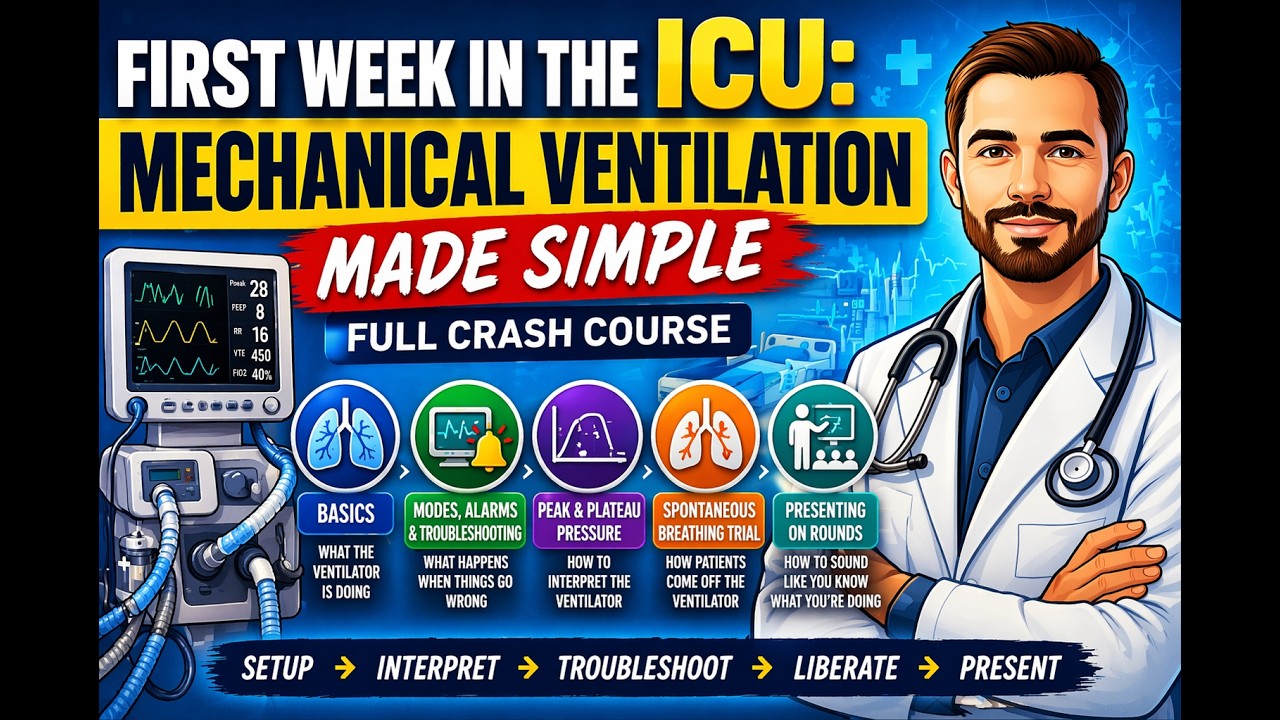


In mechanical ventilation, volume control delivers a fixed tidal volume (typically 6-8ml/kg) by gradually increasing pressure until the target volume is reached, while pressure control delivers a fixed pressure (e.g., 30cm H2O) for a set duration, allowing volume to vary based on lung compliance; pressure control is preferred in intensive care because it prevents dynamic hyperinflation (gas trapping in normal lung tissue) that occurs when volume control causes all gas to enter compliant normal lung before diseased lung begins expanding, potentially damaging healthy lung tissue at the expense of aerating consolidated areas.
Ventilator Modes Explained: Volume vs Pressure Control for ICU Beginners
Added:Basic pulmonary physiology, including the mechanics of breathing, lung compliance, airway resistance, and normal gas exchange.
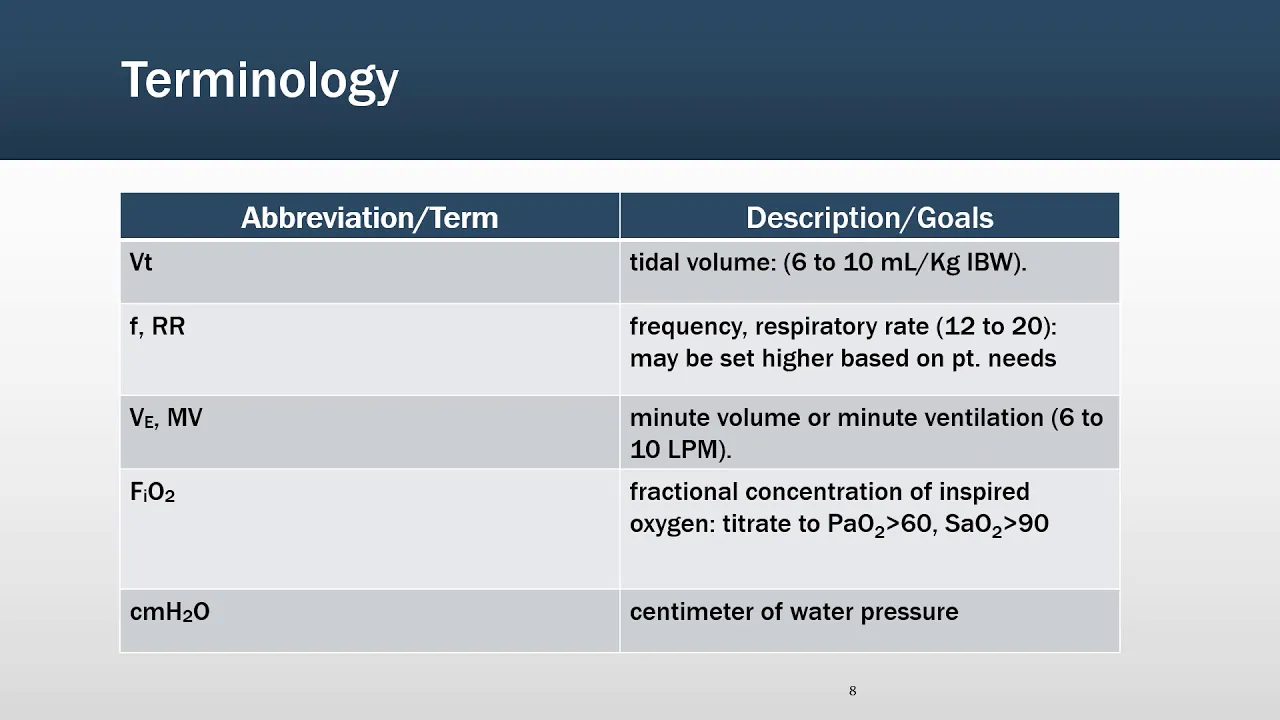
Fundamental respiratory parameters and definitions, such as Tidal Volume (Vt), Minute Ventilation (VE), and Positive End-Expiratory Pressure (PEEP).
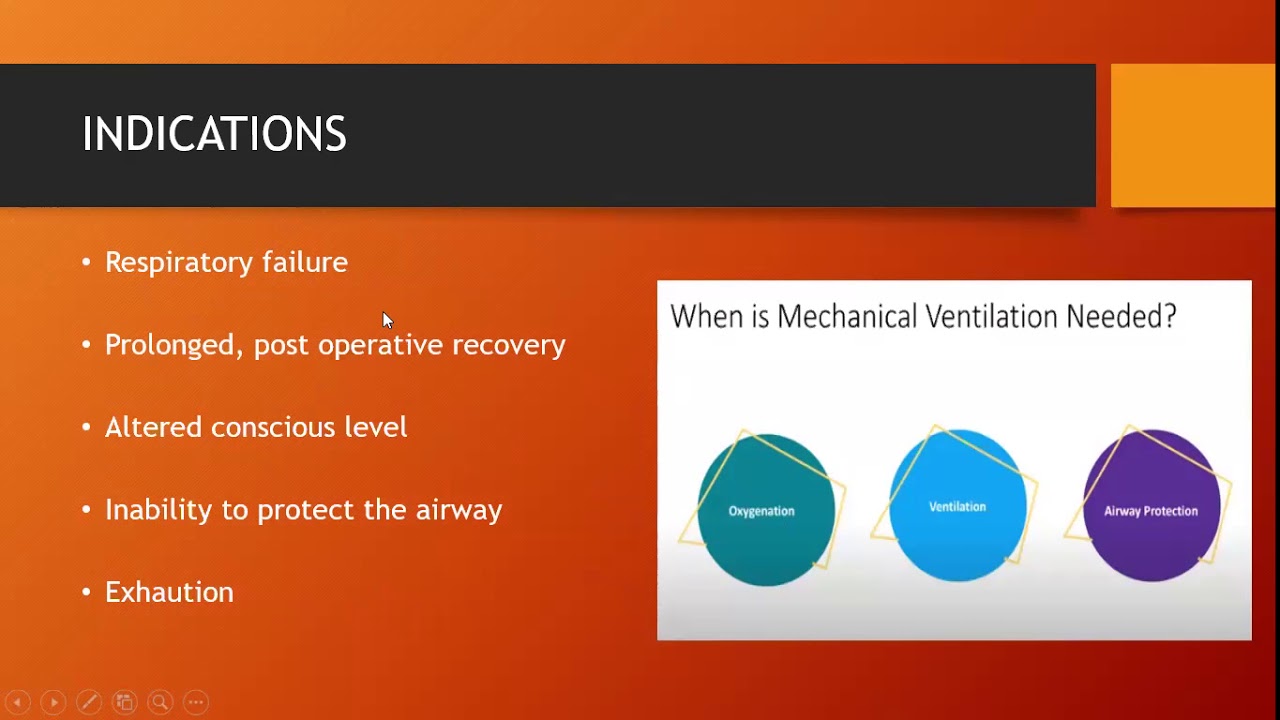
The clinical indications for initiating mechanical ventilation, such as acute respiratory failure, severe hypoxemia, and hypercapnia.
The physical distinction between physiological negative-pressure breathing and mechanical positive-pressure ventilation.
Advanced ventilator modes and spontaneous breathing trials, such as Pressure Support Ventilation (PSV) and Airway Pressure Release Ventilation (APRV).
Ventilator-Induced Lung Injury (VILI) and protective lung ventilation strategies, particularly the ARDSnet protocol for Acute Respiratory Distress Syndrome.
Troubleshooting ventilator alarms and managing patient-ventilator dyssynchrony, such as auto-PEEP and double-triggering.
The clinical protocols for weaning and extubating ICU patients, including the assessment of the Rapid Shallow Breathing Index (RSBI).
405 views27likes26:11Original Release: 2020-03-25
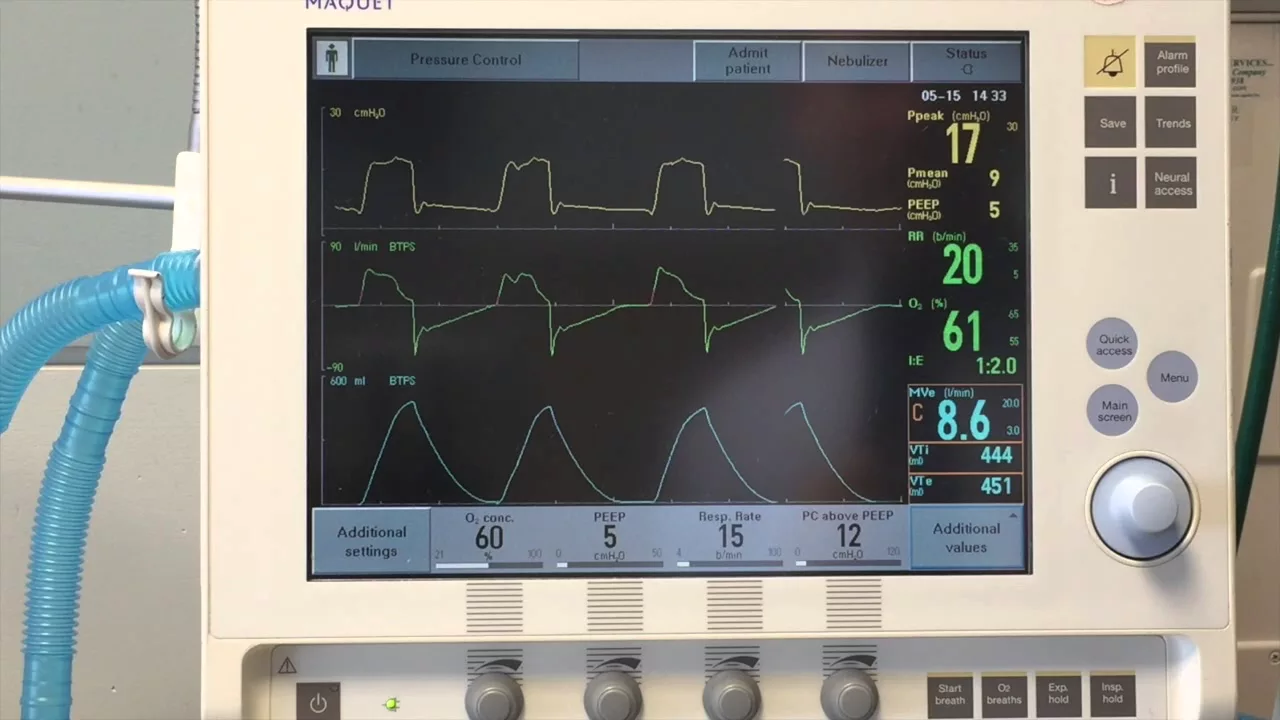
welcome to another adamite video and today we'll go through part three of the ventilator basics guide for junior doctors starting in intensive care again if you like this content please give this video a like subscribe to the channel and hit the bell notification for new videos and if you have any questions at all please do ask in the comments below this is a series and I'd really highly recommend that you watch the first two videos before coming on to this because every single one of these videos will be building on the knowledge based from the previous two with that being said let's jump into this one what I'm going to be talking about through this video is what you can set on the ventilator in terms of the parameters and about two basic modes of ventilation volume control and pressure control ventilation and then we'll talk a little bit about a concept called dynamic hyperinflation which will explain why we tend towards one form of ventilation over another in intensive care so the first thing you have to ask yourself is what can you actually set on a ventilator and before you answer that question it's worth just stopping and thinking about what a ventilator does it is essentially a really dumb piece of kit and its basics all it does is that it forces air from the ventilator through some tubing down the endotracheal tube and into the lungs for a certain amount appeared and then it stops forcing the area and then it lets that gas slowly release out back into the ventilator and it does this by creating pressure differentials like we talked about in the second video all gasp does is it moves from an area of high pressure to an area of relatively lower pressure and it tries to equalize the pressure between the two areas know something that we are all familiar with as doctors is providing patients with oxygen if the hypoxic this is increasing the fractional inspired concentration of oxygen I the fio2 and you see there usually is a dial that you turn up anything from 21% which is what room air is all the way up to a hundred percent and often we're intubating patients full hypoxia and so we start off with a high amount of oxygen and slowly wean down the amount of oxygen that we provide through the ventilator now as I said events later is a stupid piece of kit you need to tell it exactly what to do so it can provide a breath but you need to be able to tell how often did you give the breath and said that is the respiratory rate and because the ventilator won't know you need to tell it how much gas it needs to give so this is what we call volume control where we say to the ventilator I want you to give 500 mils of gas at a rate of 12 breaths per minute so in 12 in every breath is given so that you allow for 12 breaths in a minute and each of those breaths is five hundred mils and that is what we call volume control you can also be slightly clever and instead of saying that you want the ventilator to give 500 mils of gas you can say actually what I want you to do is to provide a pressure of say 30 centimeters of water and I want you to do that so that you get 12 breaths I'm gonna say 12 times in a minute I want you to just give 30 centimeter water for a certain amount of time and then relax and that is where the TI or that inspired time comes in because the ventilation knows that it needs to give 12 breaths in a minute but it doesn't know how long it's got to give each of those breaths and you also need to set the inspired time so this is the amount of time that the ventilator has to give that 500ml breath if you've set it in volume control to 500 and it's got say one second to provide that five hundred mils and you'll slowly increase the pressure until it hits five hundred mils and then it'll stop and it's got a second over which to try and achieve that volume in pressure control it's slightly different what it does is you say I want you to provide a pressure of 30 centimeters of water for a second the TI the time inspired and whatever that volume is it'll provide the final thing that you can adjust is the amount of pressure that stays within the system during expiration this is the positive end expiratory pressure essentially is the same as C per if you imagine you're driving down the road stick your head out of the car and you feel your lungs just starting to fill up with air as the air rushes past the car and gets forced into your lungs that's what peep is and as we talked about in the first lecture that is a way in which you can get alveolar recruitment stop the collapsing of those alveoli and therefore improve oxygenation because remember oxygenation is done it does not depend upon inspiration or expiration the only things it depends upon is that the alveolus is open and that it's got a higher concentration of oxygen in it than the blood that's rushing past in the capillary so these are the only five things that you need to set in a conventional ventilation so automatically is starting to see that ventilation isn't actually as complicated as people make it out to be because let's say for example the patient's very hypoxic you're gonna put them on a hundred percent oxygen so that won't automatically out the way peep you're going to adjust it so that you keep all the other alveoli open the tidal volume or the inspired pressure that's going to be dependent upon how much of a tidal volume you can give the patient we'll go through this in a lot more detail later but generally speaking most people accept between six and eight mil per kilo as a maximum tidal volume that the patients should get this is a so-called low tidal volume strategy or lung protective strategy and the reason for this is we don't want to damage the alveoli by over two standing them by giving them too much volume so if you've got a set tidal volume based upon your six to eight mile per kilo calculation your fi to is going to be adjusted based on your saturations and your peep is going to be adjusted based upon trying to keep the alveoli open the only things you're really changing other a spirit right and therefore the inspired time and we'll go through that in a little bit more detail later some modes of ventilation what you can see on in this picture is archaea veterinary ventilator but really every ventilator is basically boiled down to this what it is is a bellows that pushes air in London however much volume that you want to put in you can adjust and then it just gives that amount of volume over a period of time yet a rate that you said so there aren't that many complicated permutations to this but it's worth having a look at the graphs that a ventilator shows and if you have a look at events later screen it shows up all these different graphs and initially you just think oh that's just random information but if you start looking into it in a bit more detail you can start to get some really useful information which you can use to adjust your ventilator appropriately so let's think first of all about the simplest mode of ventilation this is volume control ventilation what you're telling the ventilator is I want you to give X amount let's say 500 mils of breath every 12 times in a minute and that's 12 breaths per minute and I want you to give it over one second so what the ventilator is gonna do is it needs to push in five hundred mils how is he going to do that well what it's gonna do is it's gonna slowly increase the pressure inside the ventilator so the pressure in the tubing and in the endotracheal tube slowly gonna increase up and it's going to look at the flow of gas coming through and it's gonna measure through so it's gonna keep increasing the pressure increasing the pressure increasing the pressure till you've hit about five hundred mils and then it's going to stop and that's what you can see in this bottom picture here on the left-hand side so just look at the volume control which is the left hand picture you can see here that it's slowly going up the red picture on the left hand side the volume is slowly going up slowly going up slowly going up til it hits that title for I met you need and then the pressure just releases and then it waits in its expiratory time till the next breath now if you look at the top graph on the left hand side which is the volume control graph you can see that the pressure waveform it goes up slowly slowly slowly slowly till it hit the maximum pressure maximum volume that you need and then it just stops and it comes back not down to zero but to the level of people that you said so now you can see that the volume is slowly increasing and the pressure is slowly increasing to get to a certain point and then the flow time is really important because what this is showing if you take it from the start that since the bottom blue curve that you can see on the left hand side the flow is series there's no movement of gas and then suddenly the pressure starts to go up as the breath is started and the volume goes up and so you get an increase in flow and so there's an increase in flow increasing flow continuous high flow until you've hit that volume that you want and then it's going to stop and then immediately the ventilator goes down to the people and so then you're going to get expiration that's why it becomes negative because now instead of the flow of gas into the patient now you're getting flow of gas out of the patient and into the ventilator so it becomes negative and then the flow of gas slowly goes slowly goes down to zero ie at the axis and then it stays there till the next breath that's really important to notice that it's come back to baseline because what that is saying is that there's no more flow I the pressures have equalized between the ventilator and the lung so if that doesn't happen if you get the next breath before all of the gas has come out what will happen is each breath there's a little bit more gas left in the lungs a slowly slow you're gonna expand out the lungs and so you can get what we call gas trapping and hyperinflation of the lungs which if you imagine over many many breaths even just 50 mils with each breath over ten breaths you've already got half a liter of extra gasp trapped within the lungs and that can be very dangerous and it can lead to patients developing new authorities or there is carbon dioxide removal isn't is great and you can gradually increase and increase the intrathoracic pressure such that you can compromise cardiac blood flow back to the right side of the heart so that's volume control it is the ventilator being told I want you to provide five hundred mils over a second and then the ventilator doesn't know what the compliance of the lungs are so slowly increases the pressure up and up and up and up till it hits that five hundred mils and then it releases and how much pressure it needs depends upon how long you're in spirit time is as you can imagine if you're trying to force in five hundred mils over half a second you're gonna need a much higher pressure to get all that gas to rush into the lungs compared to if you have the inspired time over a second where you've got much long you got twice as long to reach that 500 mil target so let's look a little bit more closely at these graphs so just for the volume control you can see him that you've got two aspects to it you've got the inspired time that's the time in which the pressure is going up and up and up and hitting that target tidal volume and then you for the expired time this is the amount of time that you allow the ventilator to just switch off it's just got the level of peep and gas is slowly coming out of the lungs and back into the ventilator now you might hear about people talking but I to e ratios so let's do a little bit of a calculation just to show you how that I to e ratio is calculated so let's imagine you've got a ventilator and you've set it at a rate of 20 breaths per minute so 20 breaths per minute means that each breath is going to take three seconds inspiration and expiration so the time between each inspiration is going to be three seconds if you set a inspired time of one second that means you've got two more seconds I three - one two for the expiration so you've got one second for the inspiration two seconds for the expiration so you're I sorry ratio is one to two so you will hear people talking about ite ratios and what they're talking about is the amount of time that they have for expiration compared to inspiration this is really important in patients with small Airways disease like asthma and COPD where expiration can take a lot longer intuitively you know that's true because when you hear the patient with a wheeze they take a short breath in and then there is long wheeze out and what that is is the they're trying to empty the lungs out as best as possible now with the ventilator you need to try and the same thing because there's resistance to the flow of air coming out of the lungs you need to have a long I to e ratio so normally people have about a 1 to 1.5 I to e ratio but that can increase up to 1 to 2 1 to 3 1 to 4 will even longer depending upon how much small Airways narrowing there is so that's great everyone should just get volume control right you can set the volume you can get the ventilator to give the same amount of volume each time so if the patient's thoracic compliance changes let's say you manage to offload 2 liters of fluid from the lungs and say they become much more compliant you're not going to overshoot with the amount of volume that you're giving because the ventilator is going to no it only gives five hundred mils each time but there's a problem with this because we're not ventilating normal lung what you've got air patches of abnormal lung with consolidation compared to normal bits of money now if you've ever seen a consolidated bit along on an x-ray you can see that's thick it's white it's sudden it's very non-compliant compared to the bits of normal and which look black because there's very little secretions there so they're like little balloons and so they're easy and compliant so that thick bit of infected lung might need let's say for example 10 centimeters of water to that she start to stretch out whereas the healthy bit of lung only needs 2 centimeters to sort of stretch up now let's have a look at the float the pressure time graph so this is the green one that you can see and the volume time graph so the ventilator starts its breath the pressure starts to increase and it slowly creeps up and so you're getting volume going in and let's say until 10 centimeters of water the only thing that's going to stand is the healthy because we already know that the unhealthy pneumonic lung is thick and it needs at least 10 centimeters of water before it starts to expand but if you look at the volume graph until you've hit the 10 centimeters of water pressure all of that volume can only go into normal lung so you out of the 500 mils of gas that you're going to put into the lung already half of it 250 mils has just gone into normal lung it's not gone into the infected lung and now at 10 centimeters of water both of them start to expand up so the remaining 250 will go into each lung equally and so you're getting almost three times the amount of gas going into your normal lung as into your diseased infected lung the problem with that is that you can imagine how you could hyperinflation normal lung now we touched a little bit upon folly former in the first video and that is exactly what we're risking to normal lung if we use volume control modes of ventilation because up until that point of which that thick diseased lung starts to expand all of the gas will just go into normal lung see over time we could potentially damage your normal lung by dynamically hyper inflating it at the expense of leaving the infected bit along with relatively less aeration so this is where pressure control rates of insulation come in this is slightly different if you imagine with the volume control your ventilator is thinking oh I don't know how much pressure I need so I'm going to slowly increase that pressure up till I hit the tidal volume that's been set for me in pressure control what happens is at the start of the breath you tell the ventilator I want you to get to 30 centimeters of water the pressure limit and so the ventilator as soon as the bread sauce will suddenly shoot up to 30 centimeters of water and so immediately both the disease and the normal long sought to expand up and so you get less of the dynamic hyperinflation overfilling of the normal lung because both sites start to open up similarly and again you set your TI since the inspired time so you've set your pressure which will be how much the lungs expand and over what period of time and a combination of the pressure limit that you sent which is to known as the P and Spore the inspiriting pressure in the amount of time that that inspired pressure is therefore will give you a tidal volume now the keen minded amongst you will already start to see a problem with this because as the pressure as the compliance of the lungs changes as the infection resolves the lungs become more springy that 30 centimeters of water may have only got you 400 mils of tidal volume to begin with but as the secretions reduce as the consolidation improves thus the amount of total body water reducers so their lungs become more compliant that same 30 centimeters of water might now suddenly give you 800 miles of tidal volume so the problem with pressure control is that you need to constantly be watching and adjusting your ventilator to make sure you're not over to standing your lungs as time improves but the benefit is that you're not dynamically hyper inflating normal bits of lung at the expense of the bad bits of lung this is pressure control ventilation and this is one of the reasons why we use this as our first line ventilatory mode the other useful thing about pressure control ventilation is if you imagine the pressure slowly increasing with volume control rates of ventilation the flow is slowly slowly slowly increasing up as you're increasing the pressure whereas if you've got a patient where you've got them on pressure control you're gonna have the maximum flow right at the start of the ventilation and you can see that in that lower blue graph which is the flow time graph you can see that the maximum flow is at the start and then it slowly wanes off as the to equalize the reason that's quite useful is patience with air hunger if they're really hypoxic you become very hungry for air you see people gasping for air and so the problem with a volume control meter ventilation is because it gives the the gas very slowly they'll not feel satiated they won't feel like they're air hunger is being addressed whereas with a pressure mode of ventilation the maximum flows at the start of the breath and so they can feel like the lungs are filling up quicker and therefore that neural Drive for breathing becomes lot less and this can be really helpful in patients with desynchronize ventilators and again this is a talk that I'll go into a lot more detail later but just to introduce that concept so now if we take exactly that same patient where instead of slowly increasing the pressure you've got the pressure mode of ventilation where you're suddenly going up to 30 you can see that only a tiny amount of volume has actually gone into this patient may be a hundred mils before you've got a pressure above 10 centimeters of water and therefore both normal and diseased lung start to expand up equally and therefore you're going to get less dynamic hyperinflation of healthy lung and therefore less damage to that healthy lung which is important for when the patient Wiens and comes off the intensive care so we went through some fairly complicated concepts there and what I hope you can see there is actually the settings on the ventilator are fairly easy there aren't that many things that you need to set the tidal volume is set by your calculation of 6 to 8 Mills per kilo and you will respect and your tyre and your TIR the things that you really try to adjust to change your minute ventilation to adjust to carbon dioxide levels your peep and your fio2 are really the two things that you're using oxygenation and you can use the to slightly separately again this is an oversimplification of what is quite a complicated topic but what I hope you can see is actually the basics of managing these patients in the acute setting until you get a senior are actually fairly simple as and through these videos I hope you starting to get an idea of how you can adjust them to manage your patient we then talked a little bit about volume control modes of ventilation and why we don't really use it in intensive care that commonly and then pressure modes of ventilation which is the more commonly seen mode of ventilation in intensive care and then I introduced you to the concept of dynamic hyperinflation and how that can be important in choosing your mode of ventilation now I hope you found that useful and if you have please like and subscribe this video and if you Hilda hit the bell need notification you'll see when the next video comes up if you have any questions at all please leave them in the comment section I'll get back to you as soon as I can and if you have any suggestions for new videos that you may want please again let me know and I'll try and do that for you
Up Next

54:44
Mechanics of Ventilation: Pressure, Flow, Volume & Waveforms
@ICUFordFellows
1.9K views•2015-04-10

48:47
Graphic Medicine: Comics for Collaborative Healthcare Communication
@nationalpatientadvocate
189 views•2023-12-04

10:28
Neuroanatomy: Central and Peripheral Nervous System Divisions Explained
@AKLECTURES
136.2K views•2014-09-20
3:05
Stages of Labor and Vaginal Birth | Childbirth Animation
@nucleusmedicalmedia
52.1M views•2017-08-18
Related Study Plans & Knowledge Roadmaps
Structured learning paths in Medicine
medicine
Abnormal LFTs: Diagnostic Workup & Pathology
01Liver Anatomy and Basic Physiology
02Introduction to Liver Function Tests (LFTs)
03Hepatocellular vs. Cholestatic Patterns
+ 3 more learning modules
12h6 modules
Explore Roadmap
medicine
Analyzing Blood Smears: RBC, WBC & Platelets
01Introduction to Blood Components & Smear Preparation
02Normal Morphology of Blood Cells
03Erythrocyte Pathologies & Morphological Variants
+ 2 more learning modules
12h5 modules
Explore Roadmap
medicine
Mechanical Ventilation: Waveforms & Alarms
01Anatomy and Physiology of Breathing
02Introduction to Mechanical Ventilation & Core Modes
03Ventilator Settings and Waveform Interpretation
+ 2 more learning modules
12h5 modules
Explore Roadmap
medicine
Neuro Exam: Localization & Stroke Syndromes
01Foundations of Neuroanatomy and Vascular Supply
02The Neurological Examination: Step-by-Step
03Principles of Neurological Localization
+ 3 more learning modules
18h6 modules
Explore Roadmap