



















Museums must evolve from repositories of extracted cultural artifacts to partners in cultural preservation by returning sacred objects to their communities of origin, acknowledging that cultural items hold spiritual significance beyond their material value and that institutions bear responsibility for correcting historical injustices in collecting practices.
The Dark History and Repatriation of Museum Artifacts
Added:Understanding the history of Western colonialism and imperialism, specifically how global powers historically acquired cultural assets from colonized regions.
The concept of tangible cultural heritage and why physical artifacts are vital to the cultural identity, sovereignty, and continuity of indigenous and local communities.
The historical origin of public museums as institutions, including the 'universal museum' model and the traditional philosophy of collecting and conserving global history.
Basic awareness of ethical principles surrounding property acquisition, provenance, and the rights of origin communities over their ancestral remains and sacred objects.
In-depth study of national and international legal frameworks governing cultural property, such as NAGPRA (Native American Graves Protection and Repatriation Act) and the 1970 UNESCO Convention.
Critical analysis of high-profile, ongoing repatriation disputes, such as the Parthenon Marbles, the Benin Bronzes, and the Rosetta Stone.
Examination of modern museum methodologies for decolonization, including collaborative curation, shared stewardship, and digital repatriation techniques.
The methodology and challenges of provenance research—how curators trace the chain of custody of historical artifacts with ambiguous or illicit acquisition histories.
34.9K views542likes13:22Original Release: 2017-08-22
Translator: Hana Colucci Reviewer: Cristina Bufi-Pöcksteiner A confession: I am an archaeologist and a museum curator, but a paradoxical one.
For my museum, I collect things, but I also return things back to where they came from.
I love museums because they are social, and educational, but I'm most drawn to them because of the magic of objects.
A one million-year-old hand-ax, a totem pole, an impressionist painting, all take us beyond our own imaginations.
In museums, we pause to muse, to gaze upon our human empire of things, in meditation and wonder.
I understand why US museums alone host more than 850 million visits, each year.
Yet, in recent years, museums have become a battleground, communities around the world don't want to see their culture in distant institutions which they have no control over.
They want to see their cultural treasures repatriated, returned to their places of origin.
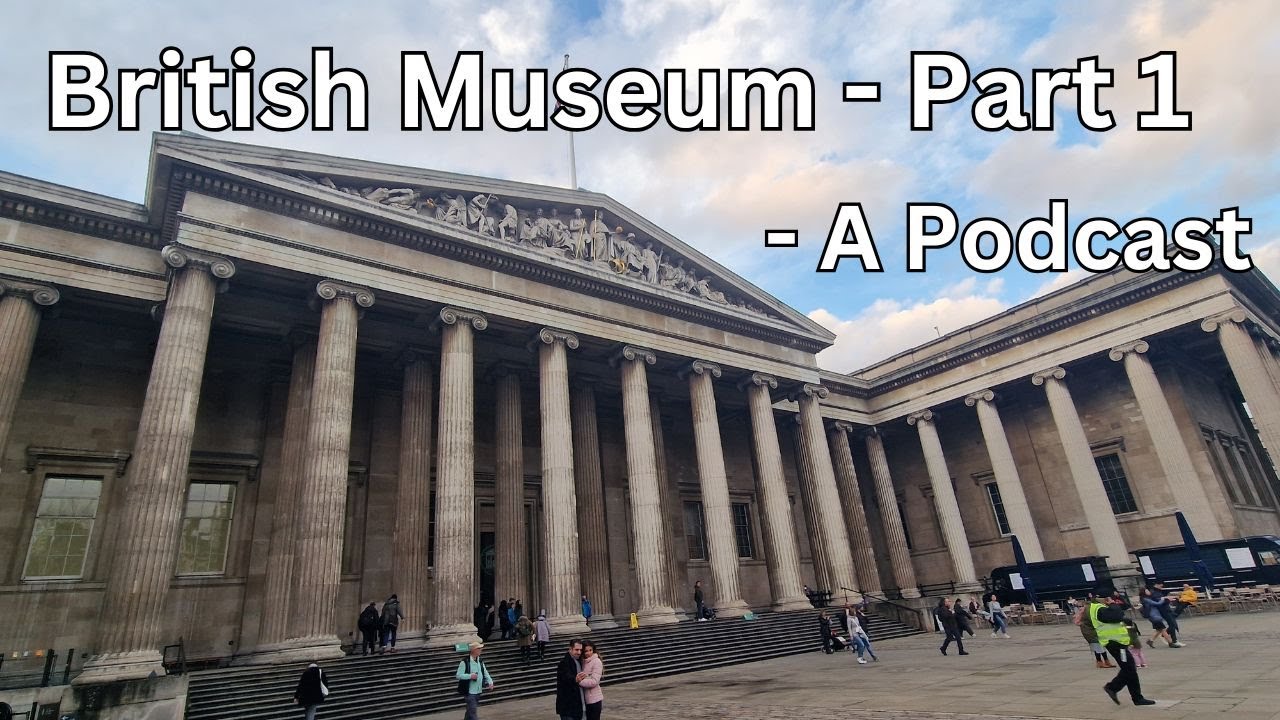
Greece seeks the return of the Parthenon marbles, a collection of classical sculptures, held by the British museum.
Egypt demands antiquities from Germany.
New Zealand's Maori want to see returned ancestral tattooed heads from museums everywhere.
Yet, these claims pale in comparison to those made by Native Americans.
Already US museums have returned more than one million artifacts and 50,000 sets of Native American skeletons.
To illustrate what's at stake, let's start with the war gods.
This is a wood carving made by members of the Zuni tribe in New Mexico.
In the 1880s, anthropologists began to collect them as evidence of American Indian religion.
They came to be seen as beautiful, the precursor to the stark sculptures of Picasso and Paul Klee, helping to usher in the modern art movement.
From one viewpoint, the museum did exactly as it's supposed to with the war god.
It helped introduce a little known art form for the world to appreciate.
But from another point of view, the museum had committed a terrible crime of cultural violence.
For Zunis, the war god is not a piece of art.
It's not even a thing, it's a being.
For Zunis, every year, priests ritually carve new war gods, the Ahayuta, breathing life into them in a long ceremony.
They are placed on sacred shrines where they live to protect the Zuni people and keep the universe in balance.
No one can own or sell a war god, they belong only to the earth.
And so, Zuni want them back from museums, so they can go to their shrine homes to fulfill their spiritual purpose.
What is a curator to do?
I believe that the war gods should be returned.
This might be a startling answer, after all my conclusion contradicts the refrain of the world's most famous archaeologist, "That belongs in a museum" is what - (Laughter) is what Indiana Jones said not just to drive movie plots, but to drive home the unquestionable good of museums for society.
I did not come to my view easily.
I grew up in Tucson, Arizona, and fell in love with the Sonoran Desert's past.
I was amazed that beneath the city's bland strip malls was 12,000 years of history just waiting to be discovered.
When I was 16 years old, I started taking archeology classes and going out on digs.
A high school teacher of mine even helped me set up my own laboratory to study animal bones.
But in college, I came to learn that my future career had a dark history.
Starting in the 1860s, Native Americans' skeletons became a tool for science, collected in the thousands to prove new theories of social and racial hierarchies.
Native American human remains were plundered from graves, even taken fresh from battlefields.
When archaeologist came across white graves, the skeleton was often quickly reburied.
Well, Native bones were deposited as specimens on museum shelves.
In the wake of war, stolen lands, boarding schools, laws banning religion, anthropologists collected sacred objects in the belief that Native peoples were on the cusp of extinction.
You can call it racism, or colonialism, but the labels don't matter as much as the fact that over the last century Native American rights and culture were taken from them.
In 1990, after years of Native protests, the US government, through the US Congress, finally passed a law that allowed Native Americans to reclaim cultural items, sacred objects, and human remains from museums.
Many archaeologists were panicked.
For scientists, it can be hard to fully grasp how a piece of wood can be a living God.
Or how spirits surround bones.
And they knew that modern scientists, especially with DNA, can provide luminous insights into the past.
As the anthropologist Frank Norvik declared: "We are doing important work that benefits all of mankind, we are not returning anything to anyone."
As a college student, all of this was an enigma that was hard to decipher.
Why did Native Americans want their heritage back from the very places preserving it?
And how could scientists spend their entire lives studying dead Indians, but seem to care so little about living ones?
I graduated, but wasn't sure what to do next, so I traveled.
One day, in South Africa, I visited Nelson Mandela's former prison cell on Robben Island.
I had an epiphany, "Here was a man who helped a country bridge vast divides to seek, however imperfectly, reconciliation.
I'm no Mandela, but I asked myself, "Could I, too, plants seeds of hope, in the ruins of the past?"
In 2007, I was hired as a curator at the Denver Museum of Nature & Science.
Our team agreed that, unlike many other institutions, we needed to proactively confront the legacy of museum collecting.
We started with the skeletons in our closet, 100 of them.
After months and then years, we met with dozens of tribes, to figure out how to get these remains home.
And this is hard work, it involves negotiating who will receive the remains, how to respectfully transfer them, where will they go?
Native American leaders become undertakers, planning funerals for dead relatives they'd never wanted unearthed.
A decade later, the Denver museum and our Native partners have reburied nearly all of the human remains in the collection.
We have returned hundreds of sacred objects.
But I've come to see that these battles are endless.
Repatriation is now a permanent feature of the museum world.
Hundreds of tribes are waiting their turn.
There are always more museums with more stuff.
Every catalogued war god in an American public museum has now been returned, 106 so far.
But there are more beyond the reach of US law, in private collections and outside our borders.
In 2014, I had the chance to travel with a respected religious leader from the Zuni tribe, named Octavius Seowtewa, to visit five museums in Europe with war gods.
At the Ethnological Museum of Berlin, we saw a war god with a history of dubious care.
An overly enthusiastic curator had added chicken feathers to it.
Its necklace had once been stolen.
At the Musée du quai Branly in Paris, an official told us that the war god there is now state property, with no provisions for repatriation.
He insisted that the war god no longer serves Zunis, but museum visitors.
He said, "We give all the objects to the world."
At the British Museum, we were warned that the Zuni case would establish a dangerous precedence for bigger disputes, such as the Parthenon marbles, claimed by Greece.
After visiting the five museums, Octavius returned home to his people empty-handed.
He later told me, "It hurts my heart to see the Ahayuta so far away, they all belong together.
It's like a family member that's missing from a family dinner.
When one is gone, their strength is broken."
I wish that my colleagues in Europe and beyond could see that the war gods do not represent the end of museums, but the chance for a new beginning.
When you walk the halls of a museum, you're likely just seeing about one percent of the total collection, the rest is in storage.
Even after returning 500 cultural items and skeletons, my museum still retains 99.999% of its total collections.
Though we no longer have war gods, we have Zuni traditional pottery, jewelry, tools, clothing, and arts.
And even more precious than these objects are the relationships that we formed with Native Americans, through the process of repatriation.
Now, we can ask Zunis to share their culture with us.
Not long ago, I had the chance to visit the returned war gods.
A shrine sits up high atop of Mesa, overlooking beautiful Zuni homeland.
The shrine is enclosed by a roofless stone building, threaded at the top with barbed wire, to ensure that they are not stolen again.
And there they are, inside, the Ahayuta, 106 war gods amid offerings of turquoise, cornmeal, shell, even T-shirts, a modern gift to ancient beings.
And standing there, I got a glimpse of the war gods' true purpose in the world.
And it occurred to me, then, that we do not get to choose the histories that we inherit.
Museum curators today did not pillage ancient graves or steal spiritual objects, but we can accept responsibility for correcting past mistakes.
We can help restore dignity, hope, and humanity to Native Americans, the very people who were once the voiceless objects of our curiosity.
And this doesn't even require us to fully understand others' beliefs, only that we respect them.
Museums are temples to things past.
Now, they must also become places for living cultures.
As I turned to walk away from the shrine, I drank in the warm summer air, and I watched an eagle turn lazy circles high above, I thought of the Zunis whose offerings ensure that their culture is not dead and gone, but alive and well.
And I could think of no better place for the war gods to be.
Thank you.
(Applause)
Up Next

87:05
Restorative History: Redefining Museum Practice for Community Healing
@zehrinstituteforrestorativ8647
398 views•2022-09-22

33:02
The Great Schism of 1054: Causes and Consequences
@SacredCathedrals
113.5K views•2026-02-19

14:06
Space Archaeology: Uncovering Heritage in Orbit | Alice Gorman TEDx
@TEDx
16.8K views•2013-05-09
17:05
Understanding the Cold War: Superpower Conflicts and the Road to Détente
@OverSimplified
46.1M views•2019-01-24
Related Study Plans & Knowledge Roadmaps
Structured learning paths in History
history
Byzantine Iconoclasm: Theology, Art & Politics
01Foundations of Byzantium and Early Christian Images
02The First Iconoclasm: Leo III and the Crisis of Images
03Empress Irene, Nicaea II, and the Second Iconoclasm
+ 2 more learning modules
9h5 modules
Explore Roadmap
history
Iranian Revolution (Causes, Events & Legacy)
01The Pahlavi Dynasty and the Roots of Discontent
02The Spark of Rebellion and the Rise of Khomeini
031979: The Fall of the Shah and the Climax of the Revolution
+ 2 more learning modules
8h5 modules
Explore Roadmap
history
Mali Empire: Mansa Musa, Trade & Timbuktu
01Foundations of the Mali Empire
02The Trans-Saharan Gold and Salt Trade
03The Reign and Pilgrimage of Mansa Musa
+ 1 more learning modules
6h4 modules
Explore Roadmap
history
1947 Partition: Politics, Borders & Legacies
01Foundations of British India and the Divide
02The Political Negotiations and the Mountbatten Plan
03Drawing the Boundary: The Radcliffe Line
+ 2 more learning modules
8h5 modules
Explore Roadmap