













![SACANI RESPONDE [TEMAS VARIADOS #01] - Ciência Sem Fim #311](https://i.ytimg.com/vi/JntgF5qy9wA/maxresdefault.jpg)




High-mass stars (greater than 8 solar masses) evolve much more rapidly than low-mass stars, burning through hydrogen via the CNO cycle rather than the proton-proton chain, and progress through successive fusion stages—helium, carbon, neon, oxygen, and silicon—building heavier elements until reaching an iron core where fusion can no longer release energy, ultimately leading to catastrophic supernova explosions that create the heavy elements found in our bodies and throughout the universe.
High-Mass Star Evolution: From Birth to Iron Core Collapse
Added:The concept of hydrostatic equilibrium and how gravity balances thermal pressure in a stable star.
The basics of nuclear fusion, specifically how hydrogen fuses into helium via the proton-proton chain and CNO cycle.
How to read a Hertzsprung-Russell (H-R) diagram and the general evolutionary path of main-sequence stars.
The differences in stellar classification, particularly identifying what constitutes a 'high-mass' star compared to low-mass stars like our Sun.
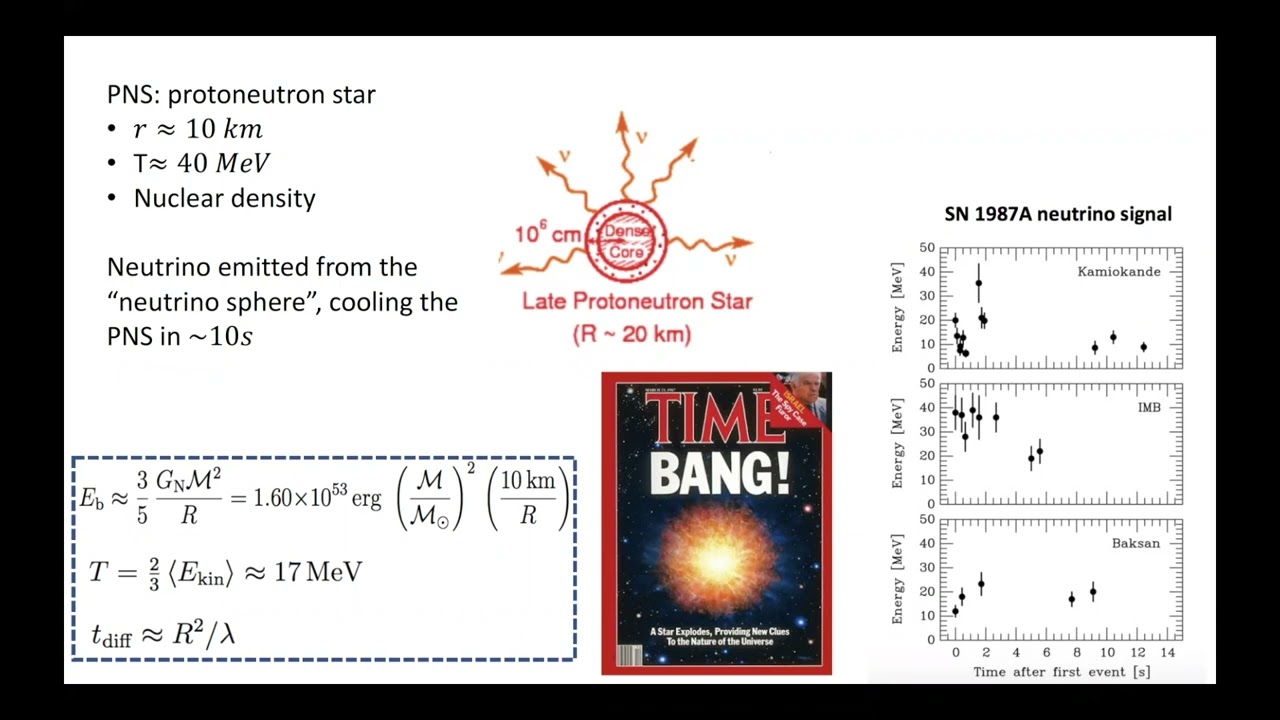
The physics of Core-Collapse Supernovae (Type II, Ib, Ic) and the shockwaves that dismantle the outer stellar envelopes.
The properties of compact stellar remnants, including neutron stars, pulsars, and stellar-mass black holes.
The concept of stellar nucleosynthesis and explosive nucleosynthesis, explaining how elements heavier than iron (like gold and uranium) are formed.
Degeneracy pressure physics, specifically the Chandrasekhar limit for white dwarfs and the Tolman-Oppenheimer-Volkoff limit for neutron stars.
37.6K views521likes41:42Original Release: 2018-08-29
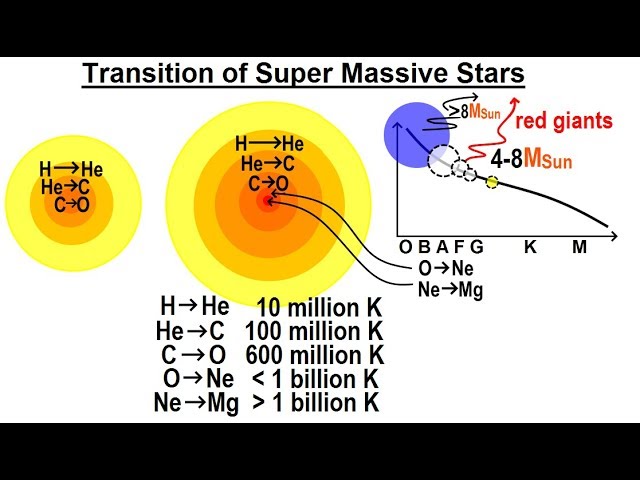
hello everyone this is Jason Kendall welcome to the next of my introductory astronomy lectures today we're going to talk about the exploding stars the biggest stars in the universe these are the ones that provide us with all the heavy metals that we see and use the aluminum that makes up your computer the iron in your blood and the gold in well in the gold in your in your wedding band anyway the we're talking today about the evolution of high mass stars how they live how they are born and how they die again let's go back and we can go back to look at the fiducial idea the topic area shows exactly how the Sun evolves from a protostar it has a long main-sequence lifespan of about 10 or 11 billion years it swells up into a red giant pops pop its outer layer so the planetary nebula revealing the core as a white dwarf and we see these things from the left-hand side which is a star forming region we thought with the with with the with the horsehead nebula in the middle and then in the middle picture we've got a globular cluster in the lower right and the beautiful open cluster in the open laughs which is the remnant of a new batch of stars and over on the right is the ring nebula which is a planetary nebula surrounding a tiny tiny tiny white dwarf star that illuminates it and causes it to glow by ionizing but that's a story for stars like the Sun that live about 11 or 12 billion years we're gonna look at more massive stars hot stars like oh oh and B type stars basically their masses are greater than about four solar masses they burn extraordinarily hot they live extremely fast lives and they die very young so their main sequence phase they do burn hydrogen to helium and their core is just through a different process not the proton-proton chain but through the CNO cycle they also build up a helium nugget in the core for their their main sequence phase because that's the definition of a main sequence phase is hydrogen to helium brain and they do this just like any other star the main sequence is where stars burn hydrogen into helium so but this but for high mass stars this lasts at most about ten million or so years so let's look at one of the more fiducial stars of this type in the sky you know it by sight in the stars but this is an artistic view of the star Betelgeuse and Betelgeuse is a nearby super giant red star in the constellation of Orion this a beautiful piece of artwork by el Callado at European Southern Observatory and this is a wonderful picture by evocative free sheet of the constellation Orion above the very large telescope array down in Chile and so what we see is we see the belt of Orion up there and because we're in the southern hemisphere Orion's inverted so just above the telescope the bright red star is the star Betelgeuse and Betelgeuse this is part this is a picture is a massive not an artistic picture but rather this is a match massive array of pictures put together as a mosaic by Raja Leoben Alejandro and it was featured in Astronomy Picture of the Day in in in 2010 so Betelgeuse is the upper left shoulder of the giant of Orion and there's all sorts of wonderful things going on in the Orion Nebula and the Ryan area of the sky but Betelgeuse is the star we're gonna be talking about which is this bright red juice is a red supergiant star it lies in the upper right area of the HR diagram with a spectral type of M and a luminosity of about a hundred thousand times that of the Sun and a compare end is much it's about the same temperature as little red dwarf stars on the main sequence or giants like Aldebaran but it's much much much larger and Betelgeuse is brighter and we call it a red giant because it's brighter at red wavelengths compared to blue wavelengths of light so this is a sample type m-type star that we might get from a I forget exactly where oh I grabbed this from the Sloan Digital Sky Survey and this particular thing shows an m-type star and the wavelength band is from four thousand angstroms to seven thousand angstroms which spans the visible light so to your eye this is the back this is the part that is visible to your eye and I kind of blew it up and kind of grayed out the rest right but you can see it actually glows a lot in the infrared but for visible light it's brighter in the red wavelengths than it is in the blue and as striking absorption features and so forth and because it's bright in the red compared to the blue that's why it looks red in the sky now we can also judge its whether it's a giant or a main-sequence star by looking at these absorption features of the dips from the continuum you can imagine that this is actually some sort of continuum that goes over the top with lots and lots and lots of dips that go through so with the peaks ours where the continuous so you could draw a line across the peaks of the continuum and then imagine that it's actually that the absorption lines are huge absorption lines down from the peaks where the peaks go up to the continuum and so you see they're very very very wide peaks very wide absorption features and if they're really myth they're comparatively narrow lines when there's only one or two then it's called a giant star and their wide absorption lines then that's a main-sequence star because main-sequence stars are compact so therefore they have a lot more Doppler broadening the atoms and molecules are moving faster so therefore the widths of the lines are broader and in a giant star the widths of the lines are narrower because the pressure is lower and because the pressure is lower there's less movement of the atoms and the atoms can't absorb and can only absorb it there near the frequency where they're absorbed but if they have our high pressure they're moving faster and so you can get Doppler shifts for the for the absorption anyway so from the spectrum which gives you the width line widths and the color which gives you the temperature you can deduce that this is a supergiant type star and of spectral Class M now how do we know it's really that big I mean what we can do is remember we can also take if we have a handle on the luminosity ever there's a luminosity relationship for the stefan-boltzmann relationship for the luminosity is equal to the surface area times the temperature to the fourth power so if we have a way of measuring the absolute luminosity of it somehow and then we know roughly its Radia then we know its temperature which is obvious from the spectrum then we can determine its radius and determinist extraordinarily large star and that's the stefan-boltzmann relationship and we do know that Betelgeuse is an extraordinarily rare star because it's a more massive star than the Sun so roughly less than a couple of percent like two to four like like almost three or four percent of the stars in the sky are even as mass or could be as massive as Betelgeuse actually more like about 1% so Betelgeuse is probably much more massive than a 2 to 4 solar mass star so we're really looking at the deep deep deep little blue sliver where we have a 4 to 8 or 10 solar mass type star which is about 1% of all the stars in the sky and Betelgeuse falls in that realm it's not one of the small mass stars between 1 & 2 or 1/2 or 1/4 or less than 1/4 the mass of the Sun it is in that elite category of very very very massive stars we're so few of them in the sky are that massive star now Betelgeuse is about 152 parsecs away or about 500 light-years and the luminosity is about 120 times that of the Sun so it's extraordinarily luminous and that puts it this is really fun statistic the absolute wattage is about four times 10 to the 26th watts and if you compare that to what human civilization puts out which is about 17 terra watts you know we were nothing compared to the luminosity of Betelgeuse we're nothing ten to the fourteenth times last oh my goodness and the beatlejuice beatlejuice itself is about 1,200 times that of the Sun that comes from the that comes from both direct measurements as we'll see in a second as well as the stefan-boltzmann relationship and we know that hundred earths for the cross the Sun but about 120 earths fit across Betelgeuse that means that it's bigger than the orbit of Jupiter all right so let's take uh some interesting looks this is the a seven millimeter radio image taken with the Very Large Array down with NRAO and it was taken in 1998 by Lim Corelli white easily and marcin and they found that the optical disk of Betelgeuse is this roundish sort of thing in there but the glow that we see here is a radio emission radio emission from Betelgeuse is very diffused atmosphere we see that Jupiter's orbit would easily fit inside of this atmosphere of Betelgeuse and so Jupiter would slowly spiral in and we see that another thing about Betelgeuse it's not spherical it's a not a spherical star so people thought well that's really interesting 1998 so following up and now well private prior to that Betelgeuse was measured in terms of in terms of its physical size with the Hubble Space Telescope image of a direct imaging by a bunch of prey at all it's Center for Astrophysics using the Hubble Space Telescope and this is a direct image of Betelgeuse we see that the star is actually quite large it's much larger than Earth's orbit much larger than Jupiter's orbit so Betelgeuse is this enormous enormous enormous physically large a star now the European a group at the European Southern Observatory took a series of images and then place them inside it using the VLT and infrared imaging as well as optical imaging to try to determine the actual dimensions of it and if we take the little red dot that's in Dupre's image from before it would just fit inside that red circle just barely and you can see that there's kind of Klu like structures that are visible in the infrared now the right hand side this plumie sort of thing is an infrared image where are these these types as we saw gently in the other spectrum that we saw the floor at the vast majority of the emission from this star is actually in infrared so because it's a cool hot it's a cool large star and since it's cool the dominant radiation is infrared well it's also puffy there's a plume shooting off to the side there's also other plumes kind of noodling around it's a really distorted thing and it's not actually spherical the way we think of this like the Sun the Sun is spherical but we can really think of Betelgeuse is not even spherical it's just this pom feed sort of thing and it's an incredibly sharp mt sharp image this was taken by the very large telescope in Chile which is that set of telescopes that we saw from Baba katha free Xi's image from the fort and we're actually seeing this unknown plume to the right what's funny is is the individual pixels are as small as 37 milli arc seconds which is about this sighs as a tennis ball viewed from the ground at the International Space Station and is all near infrared imaging and if we then zoom out with the different infrared camera and again with the VLT at eso we see the black disc is the thing that is used to occult the star because the star is incredibly right so when the brightest stars in the sky and so to actually get the image of material surrounding it you need to actually block it out so that black disc is actually what we call a coronagraph or a some sort of it'll block the light from the star so that you actually go a little cuts it and puts a little disc in front of it so you can actually see the dim stuff around it and the dent and the previous image was put in the center and the disc like image that we see from Dupre's images is the red circle in the middle and now we zoom out to show the full grandeur of this Betelgeuse which really doesn't actually seem like much of a star anymore it seems like a star nebula thing sort of thing and if you were actually were to take a spaceship and fly over near Betelgeuse you would find that you'd fly into this cloud like structure that got brighter and brighter and brighter towards the center you'd fly by globs of mass that's moving out with enormous winds that would Buffett your spacecraft as you tried to get closer and closer and eventually you'd find yourself in an incredibly bright foggy mist and get closer and closer to the star and you just all of a sudden be close to what would be bright enough that we would call the photosphere so many of the absorption features that are found in Betelgeuse the spectrum come from this expanding shell of gas and of gas that comes off of the star itself so Betelgeuse is shedding a lot of mass and just like we saw last time in the low mass stars how we had a star like the Sun pops itself apart in forms a planetary nebula Betelgeuse isn't waiting it's not done yet with its life before it starts really puffing itself apart as what as all high mass stars do and that means because it's puffing and moving its variable so it's an actual variable star which is easily seen with binoculars so if you want to in the night sky and take a pair of binoculars and see what the variation in magnitude is this is the this is this has come from the American Association of variable star observers this is there this is their data and is compiled by a number of observers and these observers then submit their data to America the double a via so you can become a member too it doesn't cost you well it cost you a little bit like 20 bucks a year but then you get to submit your data into this set and you can make meaningful science measurements just with binoculars specifically of this star but as you can see the star varies if we as time progresses from left to right we see that the brightness and magnitudes varies varies pretty big it can vary up to a magnitude and brightness as you can see roughly about 2008 or 2009 it was pretty dim and then it brightened from mag it went as dim as magnitude one and by about a couple years later it was as bright as magnitude point O one almost a zero magnitude star and it's been brightening and dimming by about a half foot by a quarter of a magnitude fairly regularly as it pops itself apart so Betelgeuse is an extraordinarily variable star it has fun to observe so I would invite you to use this as one of your primary variable stars if we want to observe them and do some science in your own home this is a great way to do it and you could learn how to do this by going to the American Association of variable star observers you don't have to become a member to submit your data but they always appreciate that you do alright so stars themselves can be extraordinarily big as we've seen in the past the Sun is only about 700 600 700 thousand kilometers across and so on this image it's really tiny and the bright star Arcturus which is in the constellation which is in the constellation of Abu T's is much much much larger than the Sun almost three almost almost 20 times larger at 30 times larger maybe about 30 times larger and if we then look at red the red supergiant Antares in Scorpius it's extraordinarily large larger than the orbit of Mars and Susy these are the red supergiant's so red supergiant's exist like Betelgeuse how do they live well they're so big they're so massive so no a large physical star like red supergiant isn't doesn't mean it starts like that it started as a main sequence star and swelled up but while he was on the main sequence it burned hydrogen to helium but it does not do so but these massive stars any star more massive than about four times the mass of the Sun is does not use the proton-proton chain to fuse hydrogen to helium it uses the CNO cycle it is it does fuse for protons you can see the equation was the set of these are a set of a set of eight of reactions where a proton P combines with a carbon-12 nucleus a collide together and the arrow says the output is a nitrogen 13 or a light nitrogen nucleus and that emits light in the form of a gamma ray that's what that little ye sort of images that's a gamma gamma ray so the next step in the CNO cycle is that the the the nitrogen 13 nitrogen decay is the one of the night one of the neutrons decay is to become a carbon nucleus heavy carbon carbon 13 and it emits a neutrino and some and some pocket a positron which is an anti electron which then slams into an electron and forms more light but then the carbon 13 then collides rapidly with another proton which forms nitrogen 14 s or back to nitrogen again and that emits current that emits light in the form of gamma rays and then that nitrogen slam gets slammed by a proton and it forms oxygen 15 which itself is radioactive and unstable falls apart to nitrogen 15 which is which is briefly stable and that emits again with a positron and a neutrino and then with that gets slammed by another proton and that forms this the chain which returns it back to a carbon-12 nucleus and that spits out a helium nucleus so we can add all this stuff together basically six six things go 16 objects 100 so the proton could be said about one in the upper left so sixteen things go together to make a carbon-12 and the helium but notice that the carbon-12 acts as a catalyst it returns to the beginning of the cycle having been used up and the intermediate processes of creating nitrogen and oxygen along the way so it doesn't really go anywhere it's what acts as a catalyst and that catalytic have reaction keeps the carbon going and it actually and this is this is incredibly important element so for the Sun the Sun times a little bit of this about two percent of the sun's output comes from this but once you get above one point one solar masses are just a little bit more massive than the Sun CNO is about 50% but why once you're up to about four solar masses it's about it is a hundred percent so by two solar masses you're doing a CNO cycle completely now this is of course in the efficient but it's really interesting to return to the idea that what does fusion energy give you remember when you fuse one gram of hydrogen in Teke into 0.99 3 grams of helium it loses mass some of the mass of the 4 hydrogen nuclei those four protons gets converted into energy about 0.7 0.7 percent of a the gram gets converted into energy and for every every single one of those things that provides 6 times 10 to the 18th Birds which is a large amount of stuff and that's a huge amount of energy by comparison just to do this one interaction that it's enough energy to list to lift about about 30,000 tons will 64 thousand tons of rock up to a height of a kilometer so basically just fusing 1 gram of hydrogen into helium is enough energy to take a building and throw it into the air about a mile that's what that's what fusion energy gives you so someday we can can figure out how to do this safely and efficiently we could replace all pretty much all of our energy needs with fusion if we can figure out how to do that we should be pretty cool anyway so just like low main.c low mass stars no party lasts forever and every star no matter what is big a bigger small population population one type star which are young stars that come from the rock reprocessed material have roughly about by abundance is about 10% by numeric abundance is helium but then about 90% by abundance meaning the number of particles is about 90% of the particles are hydrogen and by about 5 billion years after the Sun the sun's converted about half of its mass and helium and by about 10 billion years the Sun the Sun specifically now we're talking about sorry I'm just going back to the Sun just to get reference frame the Sun will have converted all of the core material to helium and a significant fraction out to about half the star's core will be helium now that's what happens in the Sun a very similar thing happens in the steppe in every main sequence star it builds up this nugget of helium in the core and when that runs out it's over and it doesn't matter whether it's using the proton-proton chain which is the upper left or the CNO cycle which is the upper right that's those are the two dominant ways that hydrogen gets fused into helium inside of star inside of stars on the main sequence that's the way it's done there's other things then will come later which is the triple alpha process we described that one talking with the Sun when the Sun started dying and that happens too but that's not though that's even that doesn't last helium fusion doesn't last because you run out of stuff to anyway so what'll happen to a massive star that is way up the main sequence that's an O and B type star when it starts to run out of fuel and it uses up its hydrogen in the core once it's exhausted it does the same dance that the Sun would do the inert helium core contracts down and starts heating up there's again the hydrogen burning shell around it and around that contracted core because pressure pressure pressure gravity pulls the star together and the only and it just gets compressed and compressed and hotter and hotter but it's not participating in fusion because it's not hot enough yet so hydrogen burning or hydrogen fusion is in the shell around that nugget in the core and then this huge puffy envelope gets to expand so these red supergiant's unlike the Sun which just kind of lazily goes up now shoots straight across a supergiant phase and they get enormous he radically enormous and in a very short period of time less than a million years now the funny thing is to clone the main sequence stars don't have a huge radius difference pretty much an o-type star in the main sequences just only a little bit bigger than the Sun on the main sequence so the radius isn't that much bigger but once it once a massive star runs out of hydrogen it swells up much larger than the Sun will ever get the Sun will never become a supergiant become a giant star but these stars become super Giants eventually this the star the super massive star gets the core temperature he raises to about almost 200 million Kelvin that's enough to start up helium burning and helium burning through the triple alpha process as we showed before that makes carbon and oxygen that only last we're in the Sun this would last about a billion years for the four massive stars it lasts about a million years or less and then we've got this layering set that happens down in the core where these helium burning in the core then there's hydrogen burning around and notice that there's no helium flash because now it's going to be there when it ignites it it ignites it smoothly star is more massive than about two and a half net times the mass of the Sun don't have a helium flash meaning the start never the the electrons do not get so compressed in the core that they become degenerate and degenerate the degeneracy never occurs for form stars more massive than two and a half times the mass of the Sun and they just kind of they just it starts burning very very very gradually so much more massive stars simply move Wagg back and forth and they get bigger and smaller bigger and smaller hotter and cooler and they don't get they don't they stay at that extraordinary luminosity but their temperature their surface temperature changes now remember the HR diagram shows the surface temperature so the surface temperature of a supergiant star range is between say 3000 Kelvin and maybe 20 or 30 thousand or ten to 20,000 Kelvin that's a supergiant a blue supergiant isn't really that blue it's or whitish because it's kind of the same temperature as an a star my guess at a star is kind of bluish who are them a bluer than the Sun in any event it becomes a blue supergiant when the core temp it when the helium ignition starts and then it start it smoothly moves back into this new framework so if that's producing more energy which is producing a little bit more luminosity but that allows the star to actually collapse back down all right so the helium when the helium finally runs out in the core and that doesn't take long that takes an extraordinarily short period of time in fact it doesn't get down to the horizontal giant horizontal branch at all it just kind of wags back and forth when it runs out of a unset of helium in the core then the carbon and oxygen core collapses and heats up and that's a big deal because now the hydrogen helium are acting are burning in shells around it it becomes a supergiant again so it does this whole dance all over again notice how the size of the star is dependent upon the co what's happening down in the core when the star grows in size it grows in luminosity and it's growing in luminosity because the energy output that must occur is getting very very very high in the core because there's no new energy source its contracting under gravity it's running out of fuel the type the atoms and molecules there aren't even atoms all right there just ions or the nuclei have to move insanely fast in order to find other nuclei that they can fuse with because they're running out of sources of things to hit so therefore the temperature has to rise to in or when the temperature rising means the things are the particles are moving faster and they have to move faster because they have to go farther in order to find something in order to hit in order to make diffusion so that's that's gonna what's happening so eventually the carbon-oxygen coracle continues to collapse it gets smaller and smaller and that releases more heat by gravitational collapse because as you collapse it it releases the heat and eventually the core temperature exceeds 600 million Kelvin and then the density is insanely large it's about up to 150 thousand grams per cubic centimeter which is a thousand times more dense than latter gold so a typical of a typical grant cubic centimeter gold might weigh a kilogram but this star which is a gas will weigh a hundred and fifty 450 kilograms per cubic centimeter and it's still a gas that just really bizarre it's not a solid even though it's much more dense than lead and gold a thousand times more dense finally we can get to the point where carbon fusion can occur and then we get all sorts of reactions carbon burning is a new set of reactions that happen for much more massive month stars that are much more massive than the Sun carbon can slam and do another carbon nucleus and that forms magnesium neon can slam into helium and oxygen can slam into double it can slam it into two helium nuclei and that builds up an oxygen neon magnesium core now the oxygen neon magnesium core is also inert because it's not hot enough to fuse oxygen into anything heavier than that and so these are so carbon 12:12 fusion creates the products of magnesium or neon and high helium or oxygen and helium those are its byproducts when carbon-12 smacks into another carbon-12 this doesn't release a lot of energy because remember the it takes a lot of energy to make them initially and each larger nucleus that you get gives off less and less energy so you got to do more of it and there's less of it to do so you have to do more of it there's less of it to use because now we're knocking together fewer objects because they're all combined together and you get less energy out of it hmm so this can't last long so the reaction rate must be higher so that it can stay so the star can stay aloft so carbon burning burning can only last about a thousand years before it runs it out and that's roughly where Betelgeuse is now we think that Betelgeuse will one des explode in a supernova which I'll talk about later and next time but it's might be within the next thousand years or ten thousand years or a million years so where Betelgeuse is now it has an inert carbon inert oxygen neon magnesium core very rapidly there's a carbon burning shell and happening fantastically quickly around it above that is it's hot it that and there's nothing in there except that the height the helium that mixes through and that creates helium burning in the shell around that and whatever protons are left that are just on the boundaries of that burn in hydrogen fused hydrogen into helium so the helium burning shell makes helium which descends into the helium burning shell which makes carbon which descends and the carbon burning shell which then descent when carbon burning disagree it's oxygen the enemies in which descends below and all above the the the supergiant envelope it's very very very unstable below its puffing off its outer layers just like we saw initially with Betelgeuse just puffing itself apart because the interior is extremely violent place so carbon oxygen neon magnesium core is about what stars between the masses about four and eight solar masses that won't ever do that contracts and contracts and contracts that core of oxygen neon and magnesium tracks and it basically that contraction releases even more heat and that pops the into end creates those shell burning around it which is incredibly unstable which pushes the star apart and makes it froth now these are the low end masses of stars that will end up making what we call Cepheid variable stars Cepheid variables run between about five and 20 solar masses and Cepheid variables will become incredibly important when we study the Milky Way and we study how we can find the distances to the cosmos so these are the progenitors and this is the time of life where some of these massive stars become Cepheid variables when they pass back and forth into the upper left area of the HR diagram above the main sequence so these kinds of stars eject all their stuff that we saw just like we saw Betelgeuse and they leave a white dwarf behind just like we saw with the Sun and the previous thing so I'll plant a massive super heavy-duty stellar wind coming off and leaving a core behind a white dwarf with a large planetary nebula much more massive than that at least eight times the mass of the Sun then carbon burning can happen the carbon burning evolution is insanely quickly it'll happen less than a thousand years and the Stars envelope has no time to respond to that and there's a big thing that's gonna happen really soon however there are incredible strong stellar winds that can be shown that are evident from these massive stars and they can erode the outer envelope pushing it outward making enormous bubbles and burbling appearance to the star and eight ocarina which which is one of the great examples of such a massive star star much more massive than eight times the mass the Sun I believe that ADA crown is about 20 to 40 solar masses and we see from this Hubble Space Telescope image of the burb of the nature of this particular star which is a two Carina which is clearly undergoing some violent stuff these bubbles were and show that the demonstrates that the star is incredibly variable it's puffing off its outer layers incredibly violently and this can't last of course and so this star is in the course of dying and very very very soon it will do something very catastrophic and one that when ADA Khurana finally goes supernova you will be able to read by it at night so for much more massive stars the oxygen neon magnesium core contracts and contracts and it still and by contraction it releases gravitational energy gravitational potential energy then heats the streets and up to one and a half billion Kelvin I mean how do you even get past what that is okay I really can't give you a handle on what one and a half billion Kelvin is like but let's just say it's bloody hot and the tenth the density is now about 10 billion grams per cubic centimeter or 10 a almost ten to the ten ten thousand killing grams per cubic centimeter these are extraordinarily rare conditions remember that massive stars extremely massive stars make up the most rare of all of the stars in the cosmos so even though they're incredibly bright they're they're quite rare with far fewer than 1% of the stars and this guy will ever do this so neon I'm not gonna really go through all the reaction rates because now they get extraordinarily complex and the neon there and when neon burning occurs it will create more oxygen more magnesium and lots and lots and lots of other heavy elements now we're below the element iron now a lot of these reaction networks remember the the carbon nitrogen oxygen created neutrinos as well as all of the carbon burning that created the oxygen media on magnesium that created enormous numbers of neutrinos and now most of the luminosity of the star becomes in neutrinos itself and the start rapidly creates in this core and neon burning can only last a couple of years before it runs out this temperature is simply too high the density is too high the in order for in order in the required and but neon does not provide it provides even less energy than the previous step and so you got a there's fewer particles it provides even less even less the temperatures even higher so the reaction rate is even faster Nyong'o is done in a couple of years when you're done with that well what the heck what's next well you burn oxygen oxygen then starts fusing and raise the temperature rises rapidly into into ability to about two billion Kelvin and the density rises even higher in the core remember this is still a gas this is still a gas and it's still gaseous because the temperature is so high even though it's 10 almost ten thousand twenty or thirty thousand times more well ten ten or 20 million times more dense than water and ten or twenty thousand times more dense than than LED or gold but this temperature finally allows oxygen to be fused into silicon sulfur phosphorus and pretty much everything up until fire now most of these things most of these reactions have enormous numbers of neutrinos because there's all sorts of many of the reactions I create huge numbers of neutrino Neutron neutrons which then decay rapidly these rapid decrease neutrons then get captured and also create nutrient neutrons as well so there's multiple different reaction processes that are happening in the star I'm not gonna really talk about the s processes is the the fast process or slow process the RS processes because that gets even more complicated but suffice it to say that the star will these last days the neutrinos losses are much more they're more energy coming out of neutrinos than there are in light now it's building up a silicon core so silicon is still is now building up and this lasts for about a year finally oxygen runs out the silicon core contracts and it heats up till it goes even higher in temperature and even denser over a hundred million times the that of water the density and finally is when when silicon burning occurs the temperature is so incredibly hot that the silicon itself cannot withstand the intensity of the light that's there they the photons are so incredibly energetic at this temperature that they actually break the silicon apart into helium again and back down to protons and neutrons so the silicon is getting destroyed by the light and then the rest of the silicon is fusing into nickel and iron that that doesn't decay yet this builds up an enormous lee heavy nickel and iron core which will last only for about a day so the Nutri the temperature of the star the luminosity of the star is incredibly large but yet it only lasts a day and here's our is nearly our finishing picture at the end of this life of this super massive star more than eight times the mass of the Sun there's hydrogen burning shells helium carbon night neon oxygen silicon and all of these fusion shells where each layers raining material down on top from above down below as the gravity as the pressure pushes it in and but yet down in the core there's an iron nickel core which is doing nothing the size of the shet the expanding envelope due to the instability is down happening down in the core is now bigger than the orbit of Jupiter just like we see Betelgeuse being and that and the reason for this iron nickel problem is what we call the nuclear impasse now why are we caring about this this is what's gonna happen this is why there's a big big big big problem when you fuse light elements together you release energy you release energy in the form of light and you release energy in the form of neutrinos but iron is the most tightly bound of those things so you get energy by fusing light elements into heavier elements so long as the elements are so lighter than have have an atomic number less than 56 which is iron so they release energy but if you want to if you want to fuse elements heavier than iron it must absorb energy so once an iron core forms there are no fusion reactions left for the star to tap in order to release energy so gravity is still working and that's what's happening and here's a view of that thing again the low iron fusion will give off energy above iron fusion takes energy or more specifically fission gives off energy so that's why we use uranium in order to power our nuclear power plants because nutrient uranium falls apart and as it falls apart radioactively it gives off energy and that's what the far right hand side shows but we're talking about stars we're talking about massive stars and that's and it's they all try to go towards iron because iron is the most bound of all the nuclei and if we look in zoom in really close to this binding energy we find that it's specifically iron 56 and nickel fixe 56 which are the most bound nuclei of all and this we see that this reaction work shows how much energy you get out with the largest jump in energy coming from hydrogen up from on the far right hit left-hand side when you start with hydrogen fusing to helium that's the biggest step when you fuse helium into carbon notice the step from helium four to carbon 12 is really tiny and then the step from carbon 12 to oxygen 16 is small - but is much smaller again from oxygen to neon u-kiss's teeny air step and so each step is smaller and smaller and smaller until you get to iron so each step of this fusion reactions gives off less and less and less energy as it goes until you get to iron and then it takes energy in order to fuse it because that's what the curve means so that's the end of the road at the end of the silicon burning day there's just an inert iron core with some some nickel in there too and there's a huge onion skin of burning shells all around it and very soon the iron core exceeds about one to two solar masses and begins to contract and heat up and what it does at the end is final catastrophic and amazingly bizarre and wild that's the end of the road for these stars and stars between masses between four and eight times the mass of the Sun they be they burn all the way up to carbon and anything less than four solar masses only burns helium and the cores of these intermediate-mass stars become white dwarfs anything bigger than eight solar masses gets all the way up to iron and does a catastrophic collapse and what happens then we'll talk about next time
Up Next
9:35
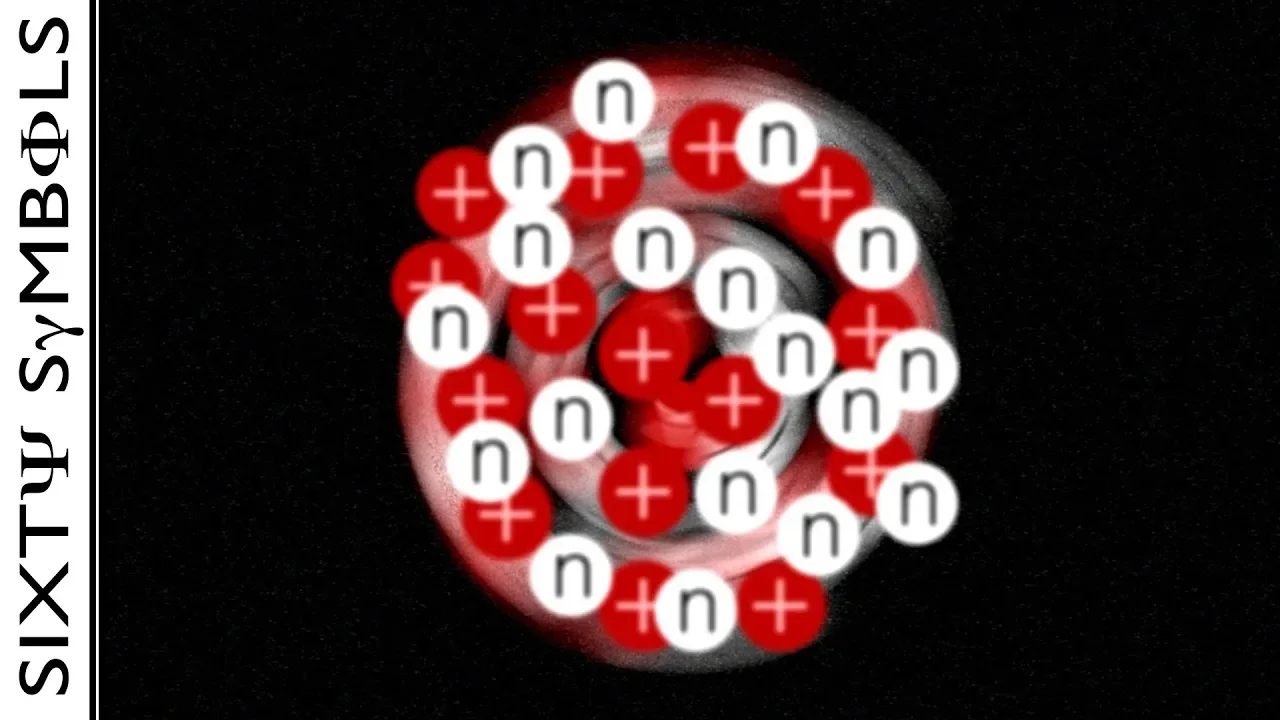
Understanding the s-Process: How Stars Create Heavy Elements
@sixtysymbols
229.5K views•2016-10-25
61:17
First Billion Years of the Universe with the Square Kilometre Array
@iaaudc
121 views•2022-05-26
29:29
Stellar Motions: Parallax, Proper Motion & Radial Velocity
@JasonKendallAstronomer
9.6K views•2018-07-16
6:10
Gamma-Ray Bursts: Cosmic Snipers Explained | Astronomy
@kurzgesagt
15M views•2016-07-31
Related Study Plans & Knowledge Roadmaps
Structured learning paths in Astronomy
astronomy
Reionization: Pop III Stars, IGM & 21cm Line
01Foundations of Cosmology & the Early Universe
02Population III Stars & Cosmic Dawn
03Physical Mechanisms of Reionization
+ 2 more learning modules
17h5 modules
Explore Roadmap
astronomy
Planetary Rings: Dynamics, Roche & Resonances
01Foundations of Gravity and Orbital Mechanics
02Tidal Forces and the Roche Limit
03Structure, Composition, and Collisions
+ 2 more learning modules
10h5 modules
Explore Roadmap
astronomy
Asteroseismology: Stellar Waves, Ages & Cores
01Foundations of Stellar Astrophysics & Wave Mechanics
02Stellar Oscillation Modes: P-modes and G-modes
03Mathematical Framework of Asteroseismology
+ 2 more learning modules
35h5 modules
Explore Roadmap
astronomy
Adaptive Optics: Physics, Engineering & Control
01Foundations of Wave Optics and Wavefronts
02Atmospheric Turbulence & Optical Distortion
03Wavefront Sensing Technologies
+ 3 more learning modules
35h6 modules
Explore Roadmap