Microfragmentation is a coral restoration technique where corals are cut into smaller pieces to stimulate faster tissue growth and reproduction, thereby accelerating reef restoration and increasing genetic diversity to make coral populations more resilient.
Microfragmentation in Coral Restoration: Mote's Wet Lab Process
Added:Deep Dive
Basic coral anatomy and biology, including the symbiotic relationship between coral polyps and photosynthetic zooxanthellae.

Klára Sobotíková: Blednutí koralů jako hrozba pro existenci jednoho z nejrozmanitějších ekosystémů
688
Coral polyps are cnidarians with stinging cells (nematocysts) for prey capture. Each polyp is embedded in a calcium carbonate structure called the coralite, containing internal partitions called septa that serve as species identification features. Polyps have distinct anatomical regions: the oral side with mouth and tentacles faces outward, while the aboral side attaches to the skeleton. The gastrodermis houses symbiotic algae called zooxanthellae, which perform photosynthesis and provide up to 90% of the coral's energy needs. This mutualistic relationship is essential for coral survival and explains why corals are limited to depths of approximately 30 meters where sunlight penetrates.
Click to watch →

Coral Polyp Anatomy: Build an Edible Model | Marine Biology STEM Activity
2.6K
Coral polyps are colonial invertebrate animals belonging to class Anthozoa and phylum Cnidaria, characterized by their protective calcium carbonate skeleton (calyx with theca walls and basal plate), stinging tentacles with nematocysts for defense and feeding, and symbiotic relationship with microscopic zooxanthellae algae that provide energy through photosynthesis.
Click to watch →

MONSTRUOS del Arrecife:Así era el Ecosistema Más Letal Cuando Todo Vivía en el Mar y Nada era Seguro
165
The most extraordinary relationship in the reef is between coral and zooxanthellae, photosynthetic algae living inside coral polyp tissues. This relationship is over 200 million years old and so intimate that neither can survive without the other. Zooxanthellae receive protection and inorganic nutrients from the polyp, while producing up to 90% of the energy the coral needs for living, calcifying, and reproducing. This symbiosis is the biological foundation of the entire reef. Without zooxanthellae, there is no coral; without coral, there is no reef; without reef, there are no 4,000 species of fish, mollusks, crustaceans, echinoderms, and cetaceans that depend on it.
Click to watch →
БОЛЬШОЙ БАРЬЕРНЫЙ РИФ: Жизнь в океане | Империя Кораллов | Документальный фильм | TERRA CORE | 4K
324.6K
Coral polyps form a mutualistic relationship with microscopic algae called zooxanthellae. The polyps provide the algae with a protected environment and access to waste products as nutrients. In return, the algae perform photosynthesis, converting sunlight into sugar, and provide up to 90% of the energy needed for coral growth. This partnership explains why corals grow only in shallow, clear waters where sunlight penetrates. Without this symbiosis, corals would be pale, starving organisms incapable of building reefs.
Click to watch →
L16: All about Coral Ecosystem | Crack UPSC CSE/IAS 2021 | Kinjal Choudhary
55.6K
Coral polyps have a symbiotic relationship with zooxanthellae (algae). The algae live inside the coral's tissues and provide color and nutrients through photosynthesis, while the coral provides shelter and protection to the algae.
Click to watch →
Deep Dive
The difference between sexual (spawning) and asexual (budding, fragmentation) reproduction in marine invertebrates.

احياء السادس العلمي || الفصل الثالث || المحاضرة الثامنة عشر
211.4K
Hydra belongs to the Phylum Cnidaria (شعبه اللاسعات) and is primarily a marine animal, though some species inhabit freshwater environments. Hydra reproduces through two main methods: asexual reproduction (التكاثر اللاجنسي) and sexual reproduction (التكاثر الجنسي). Asexual reproduction occurs through budding (البول) and fragmentation/regeneration (التقطيع والتجدد). Budding occurs when food is available: a small bud forms at the beginning of the posterior third of the body, develops tentacles and a mouth, then separates to become a new Hydra. Fragmentation involves cutting Hydra into pieces, each of which can regenerate into a new individual. Freshwater Hydra species reproduce only through asexual methods and lack a sexual reproduction stage.
Click to watch →

7.Sınıf Fen 2.Dönem 2.Yazılıya Hazırlık 📑 #2025
598.1K
Sexual reproduction involves two parents (male and female) producing genetically diverse offspring through meiosis and fertilization. Asexual reproduction involves one parent producing genetically identical offspring through mitosis. Sexual reproduction creates variation (important for evolution), while asexual reproduction produces clones. Sexual reproduction occurs in humans, mammals, birds, reptiles, amphibians, and flowering plants. Asexual reproduction occurs in bacteria, protozoa, some plants, and invertebrates.
Click to watch →
जनन | Biology class 10 chapter 6 bihar baord | Class 10 biology chapter 6 | 10th biology chapter 6
115.4K
Asexual reproduction involves fission where the body splits into parts, no gametes are involved, no fertilization occurs, offspring are genetically identical to the parent, only one parent is involved, and it occurs in simple organisms and plants. Sexual reproduction involves sperm and egg, fertilization occurs, offspring are similar to parents but not identical, gamete formation occurs, two parents of opposite sexes are involved, and it occurs in humans and all mammals. The key difference is that asexual reproduction produces clones while sexual reproduction introduces genetic variation.
Click to watch →

Reproductive system by kajal mam || Human Reproductive system
124.9K
Sexual reproduction involves the participation of both male and female reproductive organs, producing sperm and eggs that fuse during fertilization. Asexual reproduction does not involve sexual organs, sperm, or eggs - offspring develop from a single parent through processes like budding or fragmentation. Humans always practice sexual reproduction, while plants and simple animals like Hydra can reproduce through both methods. The key difference is whether gamete fusion occurs.
Click to watch →
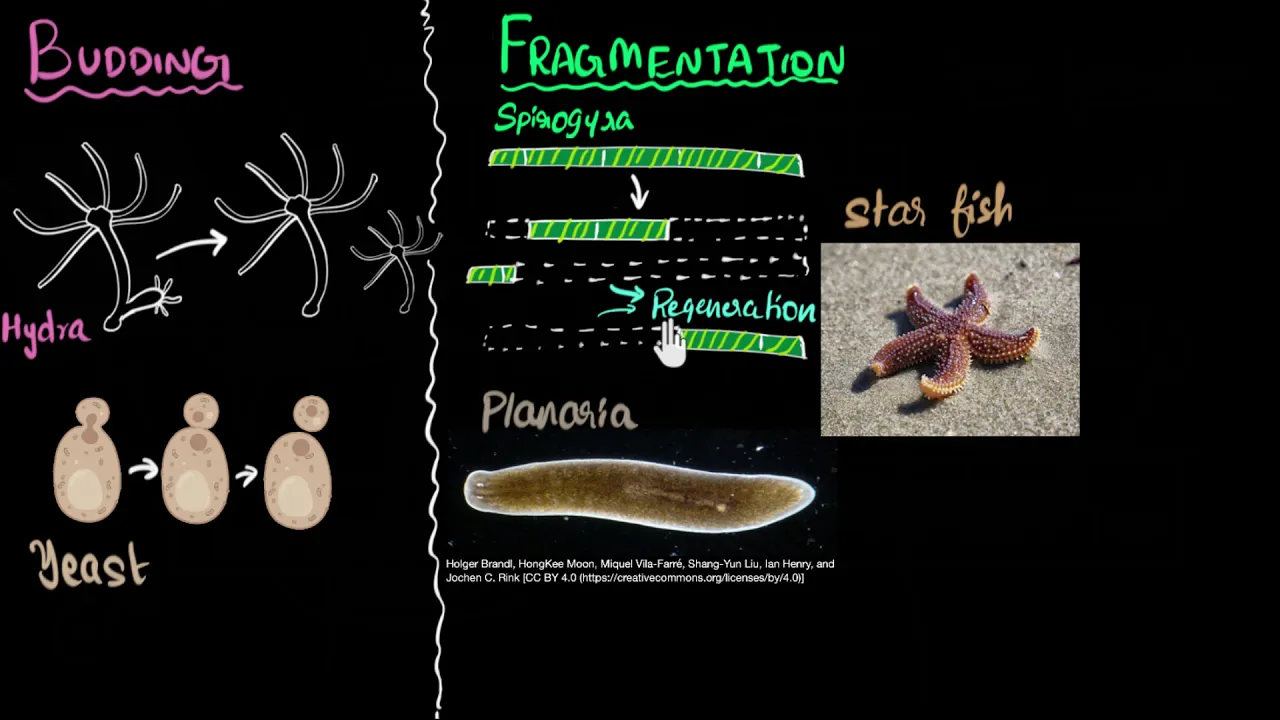
Budding, spores, fragmentation & regeneration | How do organisms reproduce | Biology | Khan Academy
220.7K
Budding is an asexual reproduction method where a multicellular organism develops a tiny outgrowth called a bud from its body. This bud grows into a new individual and eventually detaches from the parent body. The offspring looks identical to the parent because there is no DNA mixing—this is asexual reproduction where the DNA remains exactly the same. Examples include Hydra (a sea creature) and yeast. Unlike fission where one cell splits into two new offspring and the parent disappears, budding leaves the original parent intact while producing a new organism.
Click to watch →
Deep Dive
The primary ecological threats to coral reefs, such as ocean warming, acidification, and mass bleaching events.

Riscaldamento Globale: a che punto siamo?
60.9K
Coral reefs face a dual threat from ocean warming and acidification. When water temperatures rise by just 2°C, corals expel their symbiotic algae (zooxanthellae), causing bleaching and loss of primary food source. The Great Barrier Reef lost 30% of corals in 2016, followed by 20% the next year. Ocean acidification dissolves calcium carbonate structures, weakening corals and making them susceptible to disease. A 2017 study found deep ocean waters are 27% more acidic than surface waters, affecting deep-sea species and plankton. Since the 1980s, bleaching events have occurred every 6 years instead of 27-year cycles, exceeding coral recovery capacity. This threatens entire reef ecosystems and the millions of species that depend on them.
Click to watch →

Shaye Wolf, Center for Biological Diversity
275
Coral reefs are among the most imperiled ecosystems, harboring 25% of marine species and supporting half a billion people's livelihoods. They face dual threats: ocean warming causing mass bleaching events (50% bleached in some areas) and ocean acidification (oceans absorbed one-third of human CO2 emissions). Scientists warn that protecting corals requires reducing CO2 to 350 ppm or below. At 320 ppm, mass bleaching began; at 450 ppm, corals stop growing; at 560 ppm, all corals dissolve. Arctic species rapidly losing sea ice represent another frontline extinction threat.
Click to watch →

How Bleaching, Acidification, and Ocean Heating are Killing Coral Reefs with Ove Hoegh-Guldberg
6.1K
Coral reefs are experiencing unprecedented decline due to three interconnected threats: coral bleaching from rising ocean temperatures (where corals expel their symbiotic algae and die when stressed beyond their thermal tolerance), ocean acidification (which reduces carbonate availability needed for coral skeleton formation), and increased frequency of extreme weather events. Research indicates that without significant emission reductions, 70-99% of coral reefs could disappear by mid-century, threatening 500 million people who depend on reefs for food, livelihoods, and coastal protection. The solution requires urgent global action to limit warming to 1.5°C while protecting remaining reef refugia.
Click to watch →
E22: Coral Reefs - Significance, Threats & Conditions for Healthy Growth | Environment for UPSC
571
Coral reefs face multiple threats: climate change and ocean warming cause coral bleaching; ocean acidification reduces skeleton formation; pollution from agricultural runoff and sewage causes eutrophication and algal blooms; overfishing and destructive practices like blast fishing damage reefs; unsustainable coastal development destroys habitats; unregulated tourism causes physical damage; coral diseases and invasive species threaten biodiversity; natural disasters like hurricanes also impact reef health.
Click to watch →

Climate Change in the 21st century: Lecture
260
Oceans are warming significantly in all scenarios, with surface ocean warming of 1°C or more in worst-case scenarios. Oceans are also acidifying because dissolved carbon dioxide produces hydrogen ions that make water acidic. In the worst-case scenario, ocean pH will decrease from about 8.12 to below 7.8. This threatens marine life with carbonate shells, particularly coral reefs. When carbon dioxide dissolves in water, it forms carbonic acid that breaks down into hydrogen ions and carbonate ions. Increased hydrogen ions (acidity) consume carbonate ions needed for shell formation. This process, combined with ocean warming causing coral bleaching, is destroying coral reefs worldwide.
Click to watch →
Deep Dive
The fundamental concept of cell division (mitosis) and how organisms heal or regenerate tissue.

7. Sınıf Fen Bilimleri - Mitoz Bölünme | 2022
156.6K
Cell division is the process by which cells create new cells when reaching maturity, serving as a fundamental characteristic of all living organisms. There are two main types: mitosis and meiosis. Mitosis is the process where a single cell copies itself to create two genetically identical daughter cells, similar to making a photocopy. The chromosome number remains unchanged—for example, human cells with 46 chromosomes produce daughter cells with 46 chromosomes. The speed of mitosis varies across organisms and life stages, being fastest during early development and puberty, slowing with age. In multicellular organisms, mitosis enables growth, development, tissue renewal, and wound healing. In single-celled organisms, mitosis is the primary method of asexual reproduction. Mitosis consists of four stages: prophase (chromosome condensation), metaphase (chromosome alignment), anaphase (chromatid separation), and telophase (nuclear reformation).
Click to watch →

División celular: Mitosis
649.9K
All living organisms are composed of cells, which serve as the structural and functional unit of life. Cells contain hereditary information passed from parent to daughter cells. Division cellular is the process by which a single cell reproduces to produce two identical daughter cells. In asexual reproduction (mitosis), there is no recombination of genetic characters, and one cell generates two genetically identical cells. This type of cell division occurs in plants and animals through a process called mitosis, which produces two diploid cells from one diploid parent cell.
Click to watch →

🔥 أبسط شرح للانقسام الخلوي | الدرس الأول الباب الثالث علوم تانية إعدادي ترم ثاني 2026
38.3K
Cell division is the fundamental process by which living organisms reproduce and grow, involving two main types: mitosis (somatic cell division) and meiosis (reproductive cell division). Mitosis produces two genetically identical daughter cells (2n → 2n) for growth and tissue repair, while meiosis produces four haploid gametes (2n → n) for sexual reproduction, ensuring genetic diversity through crossing over. The chromosome number in somatic cells is species-specific and unrelated to organism size, and reproduction can occur asexually (single parent, mitosis, genetically identical offspring) or sexually (two parents, meiosis, genetically unique offspring).
Click to watch →

Mitoz Checkpoint | Dr. Biyoloji | Dönem 2026 - 2027
83.3K
Mitosis is the process of nuclear division in eukaryotic cells. Homologous chromosomes (pairs of same shape/size, one from each parent) determine diploid (2n) status. Chromosome number is counted by centromeres, not chromatids. During metaphase, chromosomes align at the equator (2n count); during anaphase, sister chromatids separate temporarily (4n count). The cell cycle includes Interphase (G1, S, G2) and M phase (mitosis + cytokinesis). Mitosis serves different functions: reproduction in unicellular organisms, growth/repair in multicellular organisms. Key features include genetic stability (identical daughter cells) and no strict chromosome number rules.
Click to watch →

الانقسام الخلوي علوم الصف الثالث الاعدادي الترم الاول مستر محمد ابراهيم | تالتة اعدادي
214.7K
Mitosis is the process by which a single cell divides into two genetically identical daughter cells, consisting of four main stages: prophase (chromosomes condense and nuclear envelope breaks down), metaphase (chromosomes align at the cell's equator), anaphase (sister chromatids separate and move to opposite poles), and telophase (nuclear envelopes reform and chromosomes decondense). The chromosome exists as a single chromatid before and after mitosis, but appears as a double chromatid during prophase and metaphase. The number of cells produced by mitosis follows the formula 2^n, where n is the number of divisions. This process is essential for growth, tissue repair, and regeneration, as demonstrated by the liver's ability to regenerate damaged tissue through mitotic division.
Click to watch →
Prerequisite Knowledge
- Concept 01Basic coral anatomy and biology, including the symbiotic relationship between coral polyps and photosynthetic zooxanthellae.
- Concept 02The difference between sexual (spawning) and asexual (budding, fragmentation) reproduction in marine invertebrates.
- Concept 03The primary ecological threats to coral reefs, such as ocean warming, acidification, and mass bleaching events.
- Concept 04The fundamental concept of cell division (mitosis) and how organisms heal or regenerate tissue.
Subsequent Learning
- Step 01Coral outplanting techniques, specifically how laboratory-grown microfragments are attached to degraded reefs and fused back together.
- Step 02The role of genetic diversity and selective breeding in cultivating heat-tolerant and disease-resistant coral strains.
- Step 03Methods for monitoring reef restoration success over time, including 3D photogrammetry and ecological surveying.
- Step 04The challenges of scaling up lab-based restoration to large-scale, ecosystem-level marine conservation projects.
Coral Restoration
MGF Benefits
Coral Restoration
0:16Playing Section
- 1
Technician explains coral restoration role and process.
- 2
Micro-fragmentation cuts corals into small pieces.
- 3
This method accelerates coral tissue regrowth.
The Root-Cause and Genetic Diversity Critique of Active Coral Restoration
While microfragmentation accelerates coral growth in controlled environments, critics argue that active restoration techniques can act as a 'band-aid' solution that distracts from the root causes of coral decline, such as climate change, ocean acidification, and localized pollution. Without addressing these global stressors, outplanted corals face the same hostile conditions that caused their initial demise. Furthermore, scientists raise concerns regarding genetic diversity and scalability. Microfragmentation often relies on asexual cloning of a limited number of resilient genotypes. If overused, this approach can reduce the genetic diversity of restored reefs, making them more vulnerable to future disease outbreaks or temperature anomalies. Additionally, the high financial cost and labor-intensive nature of wet-lab microfragmentation limit its ability to scale effectively to match the global, ecosystem-wide degradation of coral reefs.
Deep Dive
Coral outplanting techniques, specifically how laboratory-grown microfragments are attached to degraded reefs and fused back together.
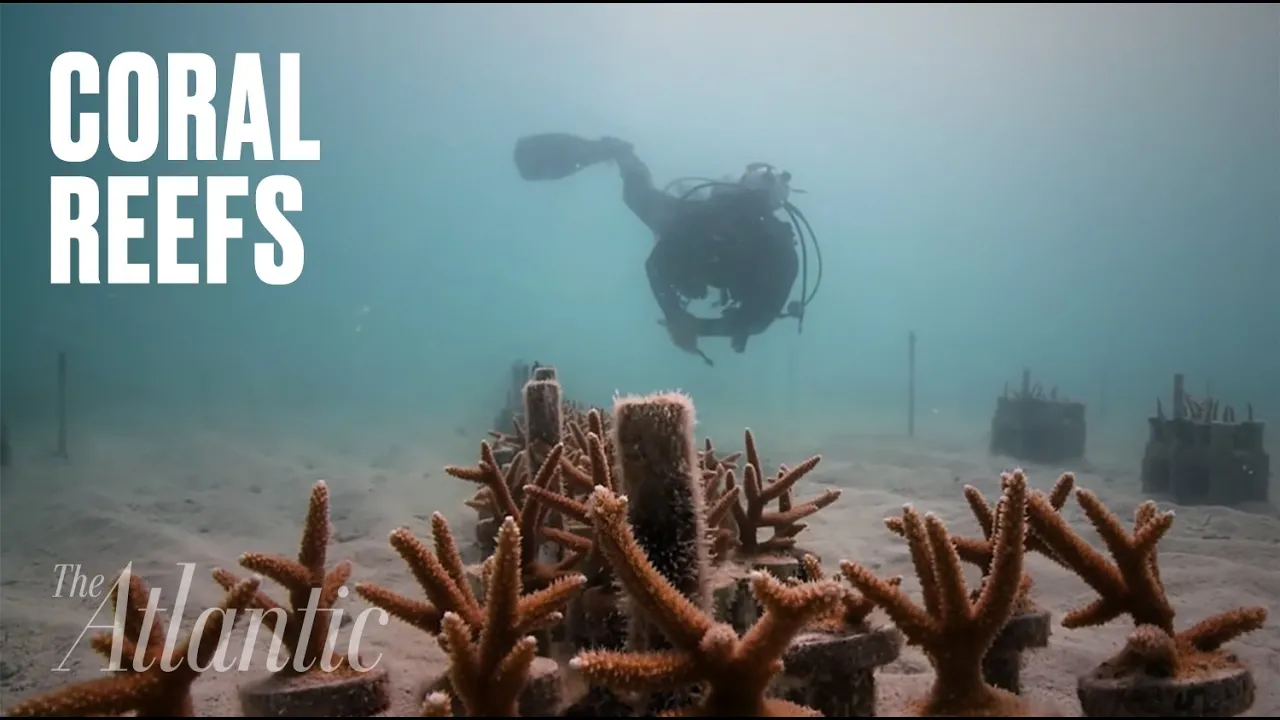
Coral Reef Restoration: Micro-Fragmenting Technique Explained
134.1K
Micro-fragmentation is a coral restoration technique where corals are cut into extremely small pieces, which stimulates rapid healing and accelerated growth. This method enables corals to grow and multiply at 25 to 40 times the normal recorded growth rate. Scientists produce thousands of corals through this technique, which are then ready for outplanting back onto damaged reefs within months rather than years.
Click to watch →
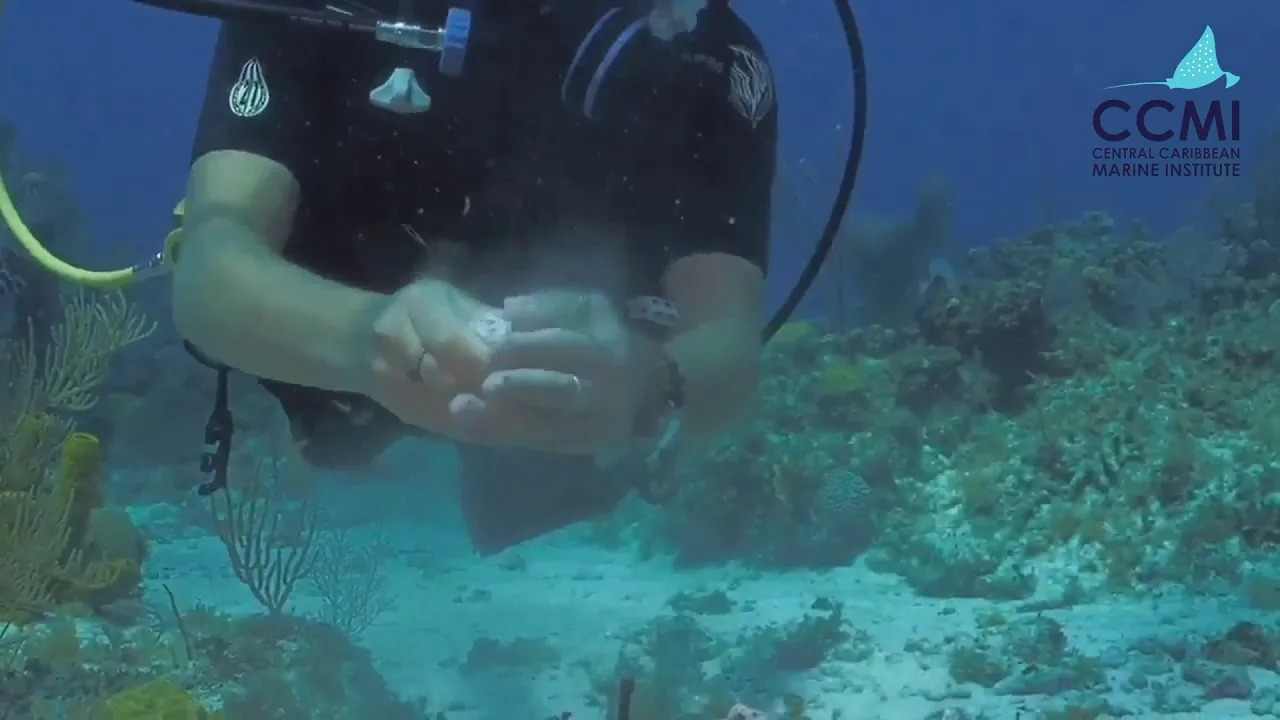
Reefs Go Live: How Do Scientists Grow Corals? - Outplanting
1.3K
Scientists grow corals by fragmenting broken pieces from nurseries, then outplanting them onto reefs using marine epoxy and zip ties; the coral tissue grows over the foreign materials within one to two weeks, eventually incorporating them into its skeleton, which helps restore damaged reef ecosystems.
Click to watch →

How to Outplant Coral HD 1080p
355
Coral outplanting is a reef restoration technique where healthy coral fragments are carefully placed onto degraded reef structures to promote natural growth and ecosystem recovery, requiring proper site selection, handling, and placement methods to ensure survival and integration with existing reef communities.
Click to watch →

S3 E2 Let's Go Cut Coral
196
Coral microfragmentation is a restoration technique where coral is cut into small one-centimeter fragments using a diamond blade, which triggers a growth response that accelerates growth 50-60 times faster than natural growth, allowing fragments to grow from one centimeter to cover a plug in 6-8 months instead of 5-25 years; each coral has a unique genotype (DNA) that must be kept with related genotypes to prevent fighting, and the fragments are glued onto ceramic plugs using reef-safe adhesive for outplanting.
Click to watch →
FL Keys Underwater Music Festival | Travel Vlog | DestinatioNow S6 E155
326
Coral outplanting uses specialized materials including Reef Supply blue gel, which sets well in saltwater environments. Tiny coral fragments are placed on plugs that develop into 'pucks' attached to reef structures using marine epoxy called Z-spar. The process takes two to four months for corals to establish. Different coral species have varying growth rates: massive corals take approximately six months to grow significantly, while branching corals like staghorn and elkhorn grow more quickly. Grazer programs, led by Dr. Jason Zordaro, are essential for reef health because they consume algae that would otherwise overgrow and kill corals. The program involves raising crabs in controlled environments until larvae survive to a size where they can be released onto reefs to maintain the balance between corals and algae.
Click to watch →
Deep Dive
The role of genetic diversity and selective breeding in cultivating heat-tolerant and disease-resistant coral strains.

Sexual Reproduction And Selective Breeding Of Corals
833
Selective breeding applies principles used for centuries in domesticating plants and animals to coral conservation. It involves crossing corals with different beneficial traits—disease resistance, thermal tolerance, fast growth—to produce offspring with combined advantages. The key principle is avoiding creation of monocultures or selecting only a few best individuals, as genetic diversity is essential for adaptive potential. If all individuals are genetically identical, a single disease could wipe out an entire population. Through sexual reproduction, offspring inherit different trait combinations, increasing the likelihood that some will possess advantageous characteristics for surviving environmental changes.
Click to watch →
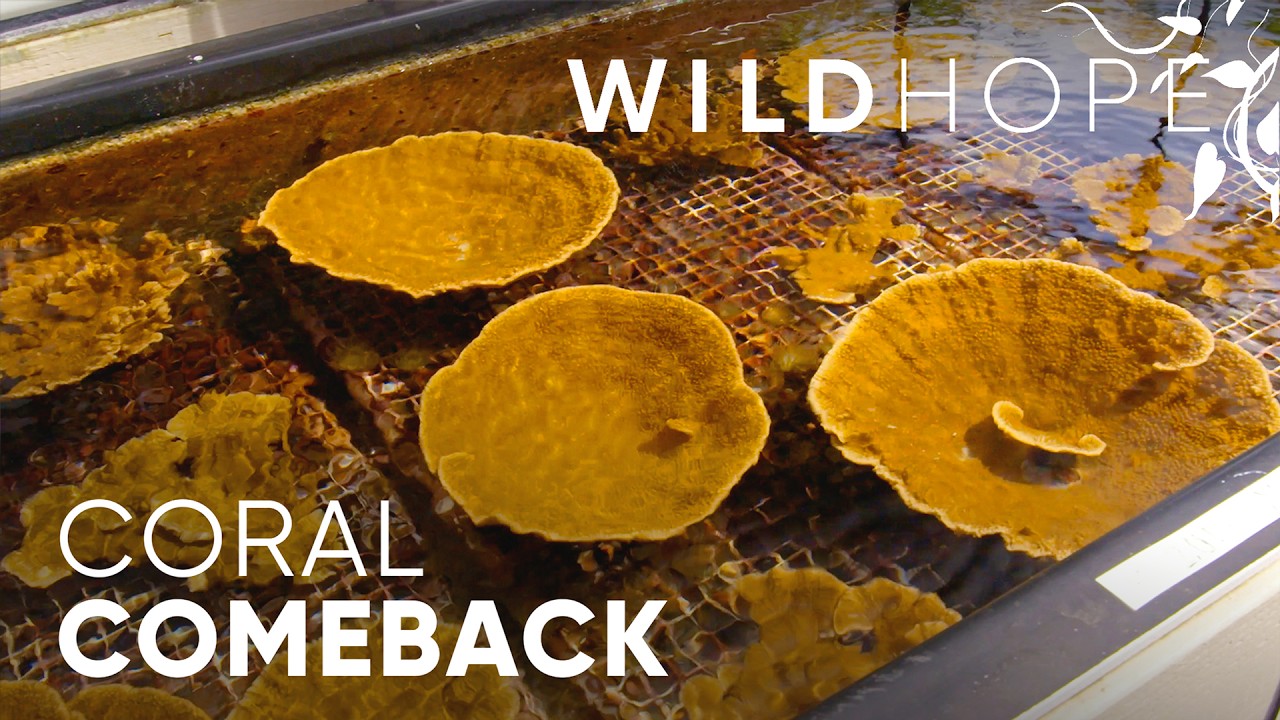
Coral Reefs That Can Finally Beat the Heat | WILD HOPE
298.3K
Scientists at the Coral Resilience Lab in Hawaii are selectively breeding corals to increase their resilience to heat stress by identifying naturally heat-tolerant parent corals, exposing their offspring to controlled temperature stress tests, and replanting the most resilient corals back onto reefs; this approach leverages the fact that thermal tolerance is an inheritable trait, allowing each successive generation to become more heat-resistant and potentially helping reefs survive the warming oceans caused by climate change.
Click to watch →

The Horniman Museum's Felicity Kinsella | The Prestige Reef Dork Show Ep 138
775
Within coral species, there is significant individual variation in thermal tolerance. Some individuals survive at temperatures (30-31°C) that would cause mortality in others. Selective breeding focuses on thermal tolerance due to climate change threats. However, this may create genetic bottlenecks. Each offspring from spawning between heat-tolerant parents is genetically distinct, providing some diversity.
Click to watch →

Spawning Goniopora and Other LPS Corals At a Commercial Scale | #108
4K
Developing heat-tolerant coral strains through selective breeding requires a systematic approach: first, sexually propagate corals to create genetic diversity; second, gradually expose developing larvae to increasing temperatures; third, selectively retain only those genotypes that survive thermal stress. This process eliminates heat-sensitive individuals over generations, progressively improving the population's thermal tolerance. Similar principles apply to coloration, where environmental cues during development may unlock latent genetic color variants.
Click to watch →
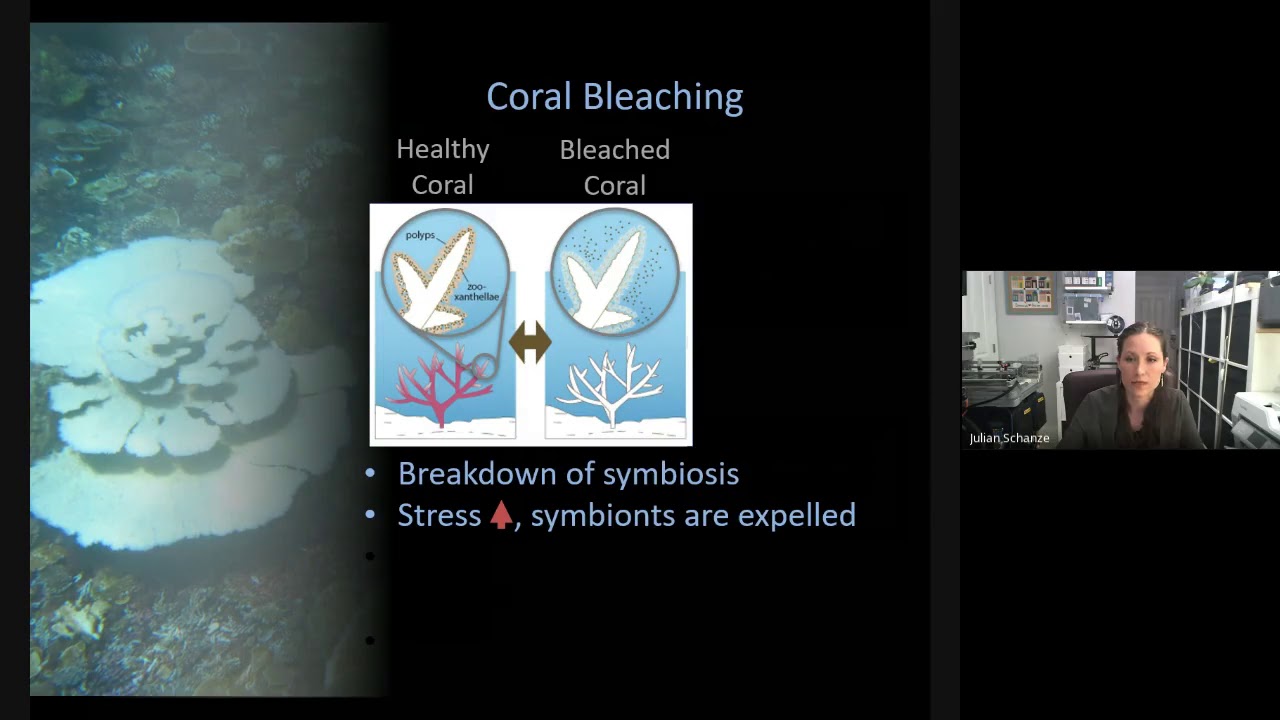
Genomic Social Hour #19: Genomic approaches to understanding coral resistance & resilience
408
Assisted gene flow represents an intervention strategy to accelerate coral adaptation to climate change by moving genetic material from naturally heat-tolerant populations to threatened reefs. On the Great Barrier Reef spanning over 3,000 km, northern reefs experience warmer temperatures than southern reefs. Researchers collected reproductive colonies from northern sites that survived extreme bleaching and selectively bred them with colonies from cooler central regions. Experimental results showed that warm-parent corals crossed with heat-tolerant Durusdinium symbionts produced juvenile corals with 26 times higher survival under heat stress. Genomic analysis using SNP sequencing revealed that interpopulation crosses generated offspring with allele frequency distributions significantly different from purebreds and modeled null distributions. This novel genetic diversity concentrated in genomic regions associated with heat tolerance, including genes involved in cell membrane formation, metabolism, and immune responses. The findings demonstrate that selective breeding not only combines existing genetic variation but generates new combinations that may enhance adaptation rates, providing tools for reef restoration amid accelerating climate change.
Click to watch →
Deep Dive
Methods for monitoring reef restoration success over time, including 3D photogrammetry and ecological surveying.

Gilles Siu - CRIOBE - De la 2D à la 3D pour surveiller le récif : une nouvelle dimension
159
Scientists are using photogrammetry technology to monitor coral reefs in three dimensions by taking 2,000-4,000 photos of the same reef location, which allows computers to reconstruct the reef in 3D and enable more precise analysis of coral health, bleaching events, and recovery over time compared to traditional 2D photography methods.
Click to watch →
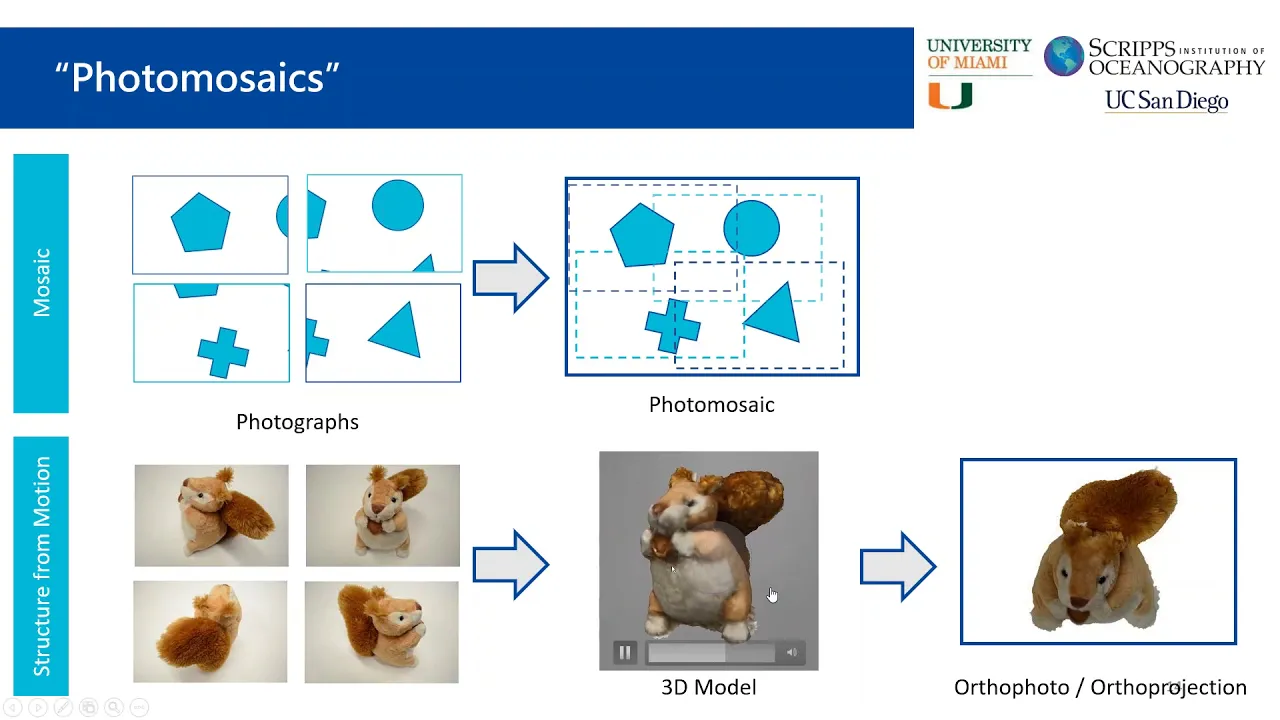
Photomosaics as a Tool for Monitoring Coral Restoration Success
1.9K
Photo mosaics are a powerful tool for coral reef restoration monitoring that create large-scale digital archives enabling landscape-level ecological assessment while maintaining fine-scale resolution for tracking individual coral colonies, growth rates, and structural complexity over time; the technology involves four key pipeline steps—image acquisition with proper overlap and scale references, model construction using structure-from-motion software, ecological data extraction through point counting or digitization, and data curation for long-term storage and sharing—which can be adapted to different organizational needs and budgets, from basic dual-camera setups to high-resolution dual-SLR systems, making large-area reef monitoring scalable and accessible for restoration practitioners worldwide.
Click to watch →
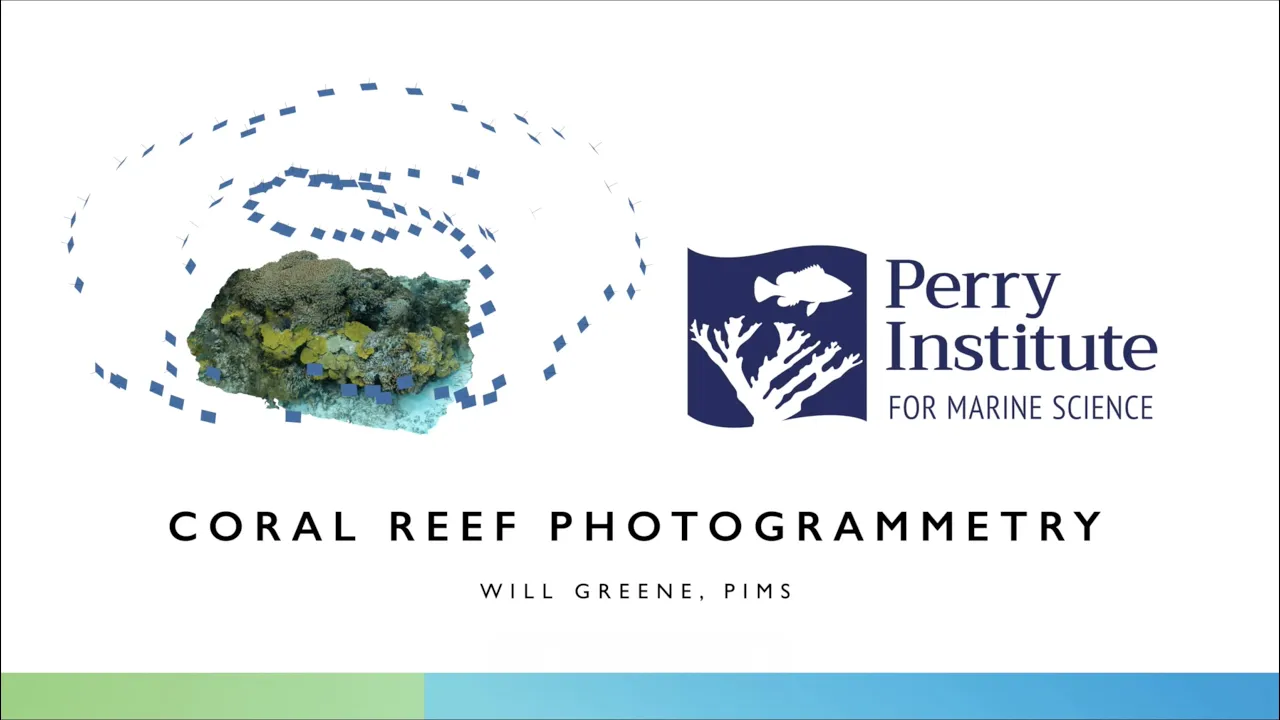
Mapping Reef Health: Using Photogrammetry and 3D Models to Monitor and Visualize Coral Reefs
6.1K
Photogrammetry is a technology that converts 2D underwater photographs into detailed 3D models and 2D ortho-mosaics, enabling scientists to monitor coral reef health by measuring structural complexity, tracking coral growth and bleaching over time, and creating visualizations that reveal reef characteristics invisible in traditional underwater photography.
Click to watch →

Monitoring Coral Reefs with Conventional Images and 3D Photogrammetry Solomon Islands Bruce Carlson
802
Structure-from-Motion (SfM) photogrammetry enables precise, quantitative monitoring of coral reef changes over time by compiling thousands of photographs into detailed 3D models, allowing scientists to track coral and algal cover, reef structure, and individual colony health with greater precision than traditional photography methods.
Click to watch →

September 24, 2024 | Using Photogrammetry as a Tool to Improve Restoration Monitoring
562
Photogrammetry is a well-established technology that uses photographs to collect precise 3D measurements, which can significantly improve coral reef restoration monitoring by providing higher accuracy, larger data quantities, and greater operational efficiency compared to traditional visual estimation methods; it enables researchers to capture millimeter/submillimeter precision data on coral growth, survival, and habitat structure across various stages from nursery tanks to outplanted colonies and entire reef habitats, while also creating valuable digital archives for long-term monitoring and community education purposes.
Click to watch →
Deep Dive
The challenges of scaling up lab-based restoration to large-scale, ecosystem-level marine conservation projects.

Architecture of the Enclosed Sea | 4: Planetary Ocean Protection as Architectutal Project
122
Coral restoration through scaling up involves transplanting aquarium-grown corals back onto reefs, requiring collaboration between scientists, hobbyists, commercial aquarists, and public aquariums. However, significant challenges exist: emphasis on Pacific reef species excludes local species; transporting highly localized species long distances is difficult; breeding must occur close to outplanting locations requiring deep local community connections; there's emphasis on charismatic, beautiful organisms (clownfish) rather than ecologically important 'unloved others.' When Hawaii shut down commercial hobby collectors, poaching increased and reef conditions deteriorated because conservation communities forgot commercial aquarists link local economies to conservation goals. Scaled-down oceans can only produce limited numbers of corals, and captive techniques cannot keep pace with disease rates and climate change speed.
Click to watch →
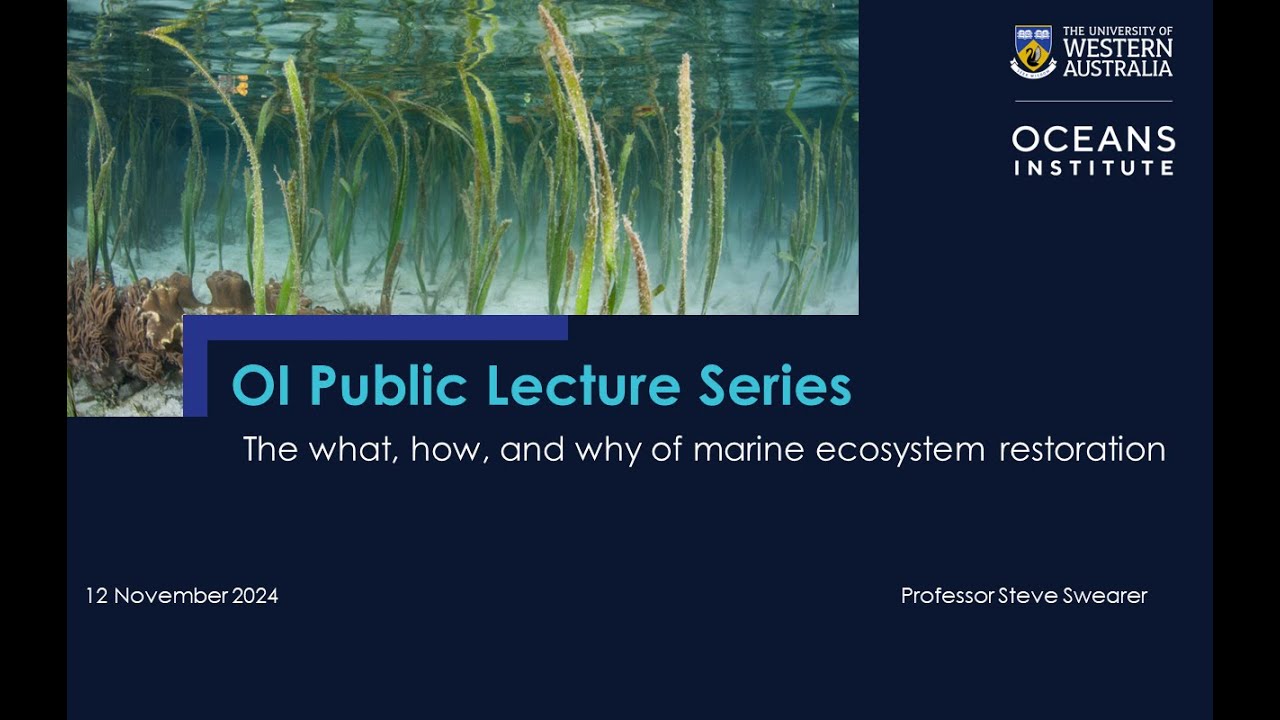
OI Public Lecture Series: The what, how, and why of marine ecosystem restoration
879
The Anthropocene era has accelerated human impact on Earth, replacing natural habitats with human uses. Marine ecosystems have suffered massive losses: 85% of coastal shellfish reefs, 50% of coral reefs, 35% of mangroves, 30% of seagrass, and kelp forests declining at 2% annually. Marine restoration is a relatively new field, with most projects operating at small scales (1 hectare). Successful large-scale restoration exists for shellfish reefs and mangroves, but coral restoration at scale remains challenging. Achieving global biodiversity goals requires upscaling restoration efforts and fundamentally rethinking resource production to benefit nature.
Click to watch →
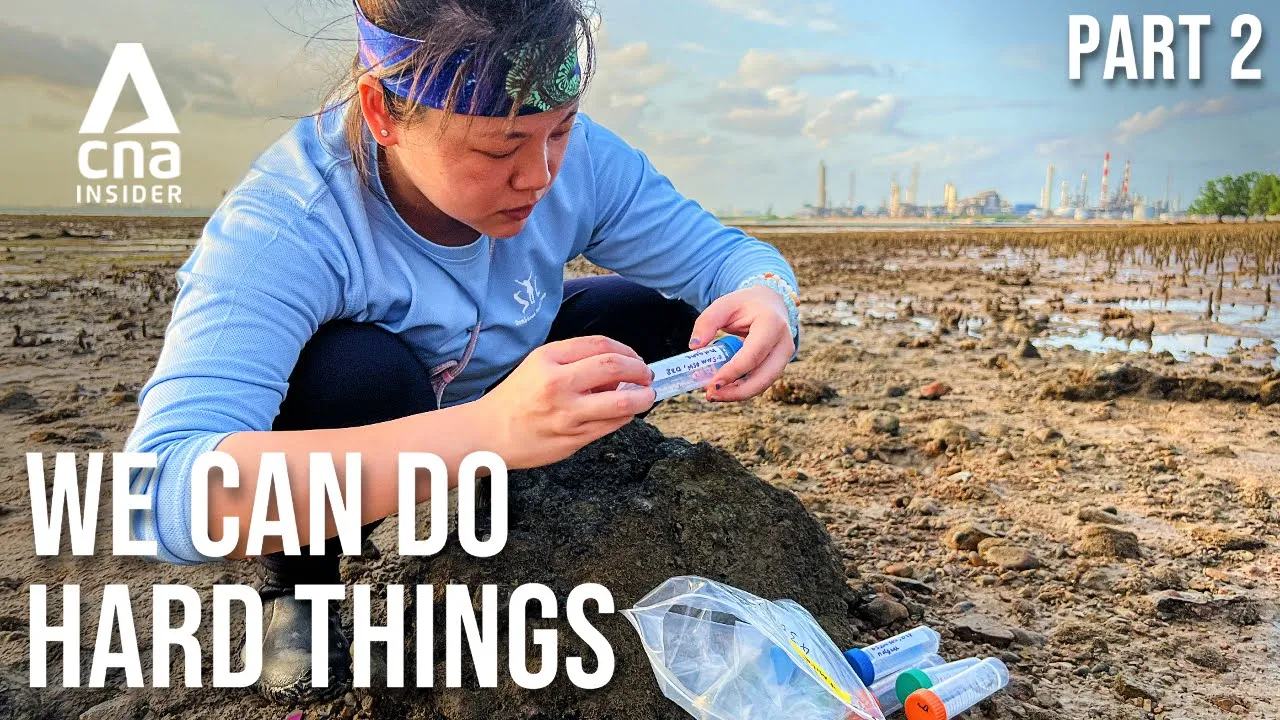
These Scientists Protect Marine Creatures Living On Singapore's Shorelines | We Can Do Hard Things
12.9K
A fundamental challenge in marine restoration is scaling up efforts from small experimental plots to ecologically meaningful areas. Effective restoration requires sufficient coral sources and implementation at scales that can genuinely impact reef ecosystems, balancing practical limitations with conservation objectives.
Click to watch →

ECSA Files! November 2022 - Restoring altered seascapes (Laura Govers)
286
Restoration successes have been location-specific, with the Diaz method (large-scale restoration) being less successful at other sites. This highlights the challenge of scaling restoration successes. The speaker is now moving toward a new government-funded project focusing on dwarf eelgrass restoration and expanding knowledge to restore seagrasses in the Dutch Delta and Lake IJsselmeer, while also working on restoring Zostera marina in the Wadden Sea.
Click to watch →

4th CEM Dialogue-Principles&Best Practices for Ecological Restoration&Allied Restorative Activities
194
Cumulative value is gained when ecological restoration is applied at large scales, though smaller projects also have benefits. Scaling up increases complexity and potential for cumulative damage. Landscape context is important because small-scale projects may fail due to continued destruction elsewhere. Species requirements may not be met by small-scale projects unless linked within larger programs or to protected areas. Restoration at landscape scales can provide large-scale environmental benefits, maintain species at risk, produce carbon credits, and generate livelihoods.
Click to watch →
Coral Restoration
MGF Benefits
Coral Restoration
0:16- 1
Technician explains coral restoration role and process.
- 2
Micro-fragmentation cuts corals into small pieces.
- 3
This method accelerates coral tissue regrowth.
The Root-Cause and Genetic Diversity Critique of Active Coral Restoration
While microfragmentation accelerates coral growth in controlled environments, critics argue that active restoration techniques can act as a 'band-aid' solution that distracts from the root causes of coral decline, such as climate change, ocean acidification, and localized pollution. Without addressing these global stressors, outplanted corals face the same hostile conditions that caused their initial demise. Furthermore, scientists raise concerns regarding genetic diversity and scalability. Microfragmentation often relies on asexual cloning of a limited number of resilient genotypes. If overused, this approach can reduce the genetic diversity of restored reefs, making them more vulnerable to future disease outbreaks or temperature anomalies. Additionally, the high financial cost and labor-intensive nature of wet-lab microfragmentation limit its ability to scale effectively to match the global, ecosystem-wide degradation of coral reefs.
Basic coral anatomy and biology, including the symbiotic relationship between coral polyps and photosynthetic zooxanthellae.
The difference between sexual (spawning) and asexual (budding, fragmentation) reproduction in marine invertebrates.
The primary ecological threats to coral reefs, such as ocean warming, acidification, and mass bleaching events.
The fundamental concept of cell division (mitosis) and how organisms heal or regenerate tissue.
Coral outplanting techniques, specifically how laboratory-grown microfragments are attached to degraded reefs and fused back together.
The role of genetic diversity and selective breeding in cultivating heat-tolerant and disease-resistant coral strains.
Methods for monitoring reef restoration success over time, including 3D photogrammetry and ecological surveying.
The challenges of scaling up lab-based restoration to large-scale, ecosystem-level marine conservation projects.
1K views34likes3:57@keyseducation5247Original Release: 2020-04-23
you [Music] but he was Alicia pan-fried and I am a land-based nursery full restoration technician get one green lab in the keys my job consists of a lien for a husband tree for every to Boulder Falls that we're growing here on site as well as the process called micro fragmentation I've been walking you through the process of my presentation today during micropigmentation we came to brought the size of a silver dollar and cut it into about the size of a single leg [Music] you [Music] [Music] [Music] [Applause] [Music] [Applause] [Music] micro fragmentation let's talk about why it is important much like when you get a cut on your arm and your skin is back and of accelerating free by cutting the corals through micro fragmentation we are able to stimulate pearl tissue growth at a faster rate this helps us achieve two main rules the full restoration first by adding more pearls under the Florida reef shop and second by accelerating their growth when the balls get to be about the size of a ski all very able to reproduce this increase in genetic diversity of clumps it makes the fluttery tract more resilient thank you for watching our microwave make sure you tune in to the next video you
Up Next
18:26
Coral Reef Restoration: Micro-Fragmentation Technology
@TEDx
41K views•2017-07-13

12:54
Triumph of Orthodoxy Icon: Byzantine Art & History Explained
@BenCallan
2.1K views•2024-08-06

9:49
FastAPI vs Flask vs Django: Choosing the Right Python Web Framework
@TechWithTim
302.5K views•2024-05-26

1:42
Game of Thrones Opening Credits: A Cinematic Analysis
@gameofthrones
46.3M views•2011-04-18
Related Study Plans & Knowledge Roadmaps
Structured learning paths in General & Interdisciplinary Studies
general-studies
Elevator Engineering: History, Physics & Cities
01From Hoists to Safety Brakes: The Dawn of Vertical Lift
02Hydraulic vs. Traction: The Engineering Physics of Elevators
03Modern Speed, Safety, and Algorithms
+ 2 more learning modules
12h5 modules
Explore Roadmap
general-studies
Rubber: Material Science, History & Geopolitics
01Origins of Natural Rubber & Mesoamerican History
02The Chemistry of Natural Rubber & Vulcanization
03The Geopolitics of the Rubber Boom & Colonization
+ 2 more learning modules
12h5 modules
Explore Roadmap
general-studies
Containerization: Evolution, Logistics & Trade
01Ancient Trade & Bulk Cargo: Amphorae to Barrels
02The Industrial Revolution & Cardboard Packaging
03The Containerization Revolution: Malcom McLean
+ 2 more learning modules
12h5 modules
Explore Roadmap
general-studies
Textile Tech: Evolution, Labor & Global Impact
01Pre-Industrial Textiles: Handloom & Cottage Industry
02Mechanization: The Spinning Jenny to the Power Loom
03The Factory System & Global Labor Transformation
+ 2 more learning modules
10h5 modules
Explore Roadmap