
![FBH [2.2] | Akordy na stopniach gamy | #21 FUNDAMENTY BASOWEJ HARMONII (vol.2) #porannebasowanie](https://i.ytimg.com/vi/PMilpicwVxY/maxresdefault.jpg)







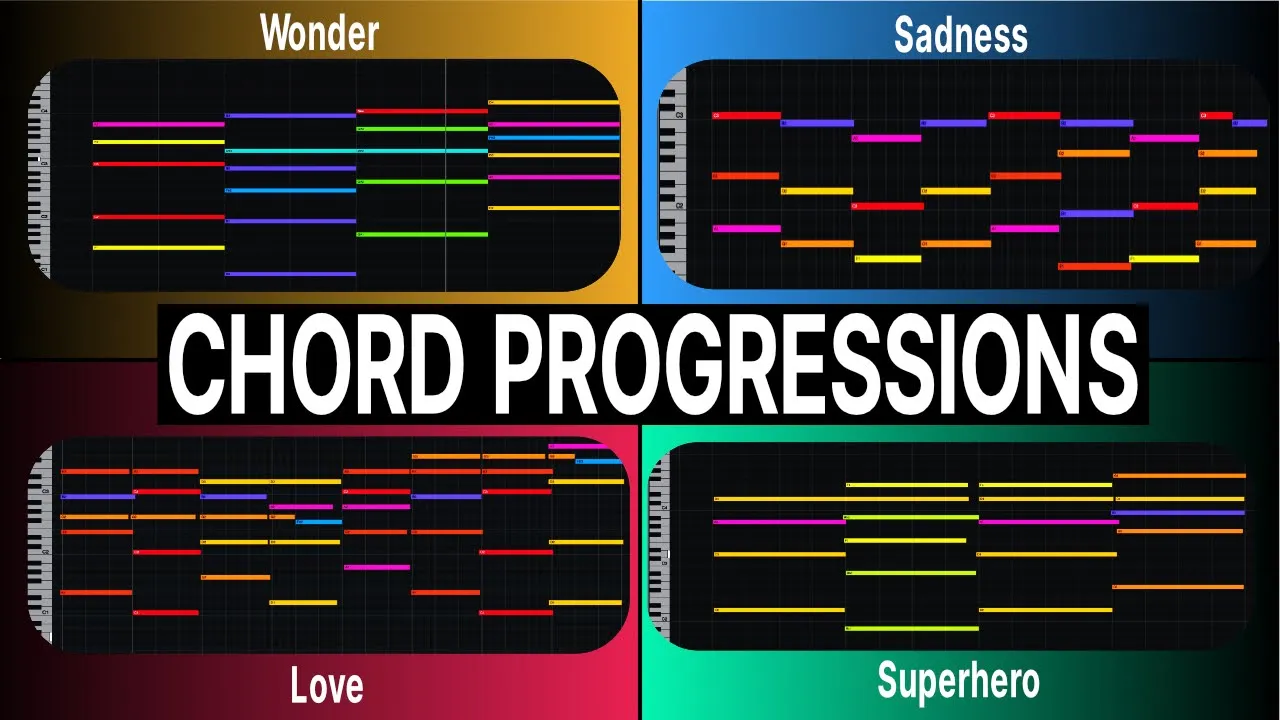







To compose fantasy-style music like Danny Elfman, combine three elements: create melodies that step outside diatonic major/minor patterns using modes or chromaticism, move chords by major or minor thirds (rather than diatonically) with the melody landing on the third of each chord, and use orchestration with woodwinds and higher registers for magical sounds or lower registers for dark fantasy.
How to Compose Fantasy Music: Elfman-Style Techniques
Added:Basic music theory, including scale degrees, intervals, and diatonic triad construction.
An introductory understanding of musical modes (such as Lydian and Dorian) and how they differ from standard major/minor scales.
Familiarity with the instrument families of the orchestra (strings, woodwinds, brass, percussion) and their basic timbres.
Basic keyboard geography or notation reading skills to visualize harmonic movements and chord progressions.
Advanced study of chromatic mediants and non-functional harmony, which are core to the 'magical' Elfman sound.
Orchestral color and texture techniques, specifically focusing on the use of auxiliary instruments like the celesta, harp, and choir.
Thematic development and leitmotif variation to adapt a fantasy theme to different narrative and emotional contexts in film scoring.
Practical application through MIDI mockups, learning how to program realistic-sounding orchestral samples in a DAW using these techniques.
37.2K views1.8Klikes6:47Original Release: 2022-09-26
type of sound so we're talking fantasy magic type of thing for those who don't know me my name is Mark Giovanni I'm a composer time music for movies that have gone to Netflix Amazon Prime Palmer Channel lifetime I'm also the founder of cinematic opposing where we take composers from zero to full-time career if you want to work directly with me and another 12 mentors theater colored Spider-Man composer Christopher Young Oscar nominee composer having writing so many more schedule a call let's talk see if you're a good fit we just take 20 composers alright moving on I recreated Alice in Wonderland something like this right [Music] thank you so straight to the point the trick of kind of like more magic fantasy Danny Elfman and we are using his name to make it easy to identify the style It's a combination of three things the melody the Harmony and how you orchestrate the melody is very important because if you come up with a Melody that already sounds a bit like magic fantasy it's gonna be much easier but let's start with a Melody that doesn't sound as fantasy Danny Elfman so let's go with something like what okay we'll try we'll try just so you know a couple of days ago my main computer's main hard drive got corrupted the backup was corrupted as well so I don't have a studio at this point that's why I'm composing with this laptop by the way it's a MacBook Air 16 gigs of RAM so let's go with this very simple Melody [Music] if we harmonize this in the typical diatonic way one four it does not sound magic so the trick is move to connect those chords by major or minor thirds seriously seriously so basically maybe we've got this chord here the next chord is going to be up or down a third it can be a major or minor third so so that's step number one the course can be major minor diminished or augmented so two major chords and the minor chord so the melody that we had earlier [Music] now if we change the chords and we move them by Third a flat major thank you C minor and then e major now the trick is on the third of the chord and by the way there are many ways to explain this like median chords your borrow chords from other keys I like to keep it super super simple so again this is how we are connecting this course but the tree is on the third meaning the melody should land on the third of the chord each time we change chord my kids always need to stop on the table this is chord A this is chord B the melody should land blue blue this is a chord this is the first the third and the fifth so the melody should land on the third of the chord and then we've got another chord and it should land on the next third of the chord this is the silliest thing I've ever done on YouTube hopefully you got the concept and so this is what creates motion when we land on the third of the chord is the emotion if we move those chords by thirds as I mentioned then we get this fantasy magic type of feeling if we move those chords like diatonically then it's more Adventure type of thing so for example How to Train Your Dragon foreign this is not the Third but this is the third third first five four two it's very diatonic if we instead connect those chords and we move them around like I don't care what key I'm in if on top of that we add a little bit of their ear candy foreign [Music] if we add a little bit [Music] then this is gonna add a little bit of the earth handy and it's gonna contribute to that more like magic fantasy feeling so that's the third thing we said the melody try to make it as magical as possible like if you stay major minor type of Melody it's gonna sound less magical if you are using some modes or you're stepping outside of the key then it's gonna sound a little bit more magical second Harmony moving those chords by thirds and then finally the orchestration the more Arbors and blocking spills in telestas and the woodwinds the more magic is going to sound but then if we go on the other side of things or casual mifonic it's got some more like Dark Fantasy right foreign ER [Music] [Music] see same court basically C minor to a flat minor [Music] to F minor all minor chords in the mid low register of a phonic we've got the strings a little bit of breath a little bit of choir so there you have it if on top of that we've got something like foreign [Music] and that's it three things craft a Melody that sounds magical so step a little bit outside of diatonic major minor type of Melody move the chords by Third major or minor thirds and then the chords can be major minor diminished and triadic generate make sure that the melody lands on the third not always but it helps and then finally the orchestration it's gonna be brighter and more funny lower registers gonna sound more ominous see in the next video
Up Next

4:58
Mastering Vocal Harmony: A Simplified Method for Any Song (Music Theory Guide)
@BradCarlMusic
456 views•2020-04-19

10:20
Mozart's Musical Dice Game Explained: History, Rules, & Fun
@webpianoacademy
5K views•2023-03-13

47:36
Understanding Diatonic 7th Chords in Major Keys | Music Theory Tutorial
@GracieTerzian
54.7K views•2022-03-02
10:49
Understanding John Coltrane's Giant Steps: A Music Theory Analysis
@Vox
10.4M views•2018-11-12
Related Study Plans & Knowledge Roadmaps
Structured learning paths in Music Theory
music-theory
Composing Galant Music: Partimento & Schemata
01Foundations of Figured Bass and Keyboard Harmony
02The Rule of the Octave (Regola dell'Ottava)
03Galant Schemata: The Building Blocks of Form
+ 2 more learning modules
30h5 modules
Explore Roadmap
music-theory
Decoding Overtone Series: Tuning & Drone Music
01Acoustic Foundations: The Physics of the Overtone Series
02Tuning Systems: Equal Temperament vs. Just Intonation
03Microtonality and Spectralism: Beyond Standard Pitches
+ 2 more learning modules
24h5 modules
Explore Roadmap
music-theory
Impressionist Harmony: Scales, Planing & RPGs
01Foundational Music Theory: Keys, Intervals, and Seventh Chords
02Impressionist Color: Chord Planing and Parallel Harmony
03Whimsical Textures: Pentatonic Cascades and Whole-Tone Scales
+ 1 more learning modules
14h4 modules
Explore Roadmap
music-theory
Negative Harmony: Axis Reflection in Indie Pop
01Music Theory Foundations: Scales, Intervals, and Triads
02Functional Harmony and the Circle of Fifths
03Demystifying the Negative Harmony Axis Reflection
+ 2 more learning modules
16h5 modules
Explore Roadmap