






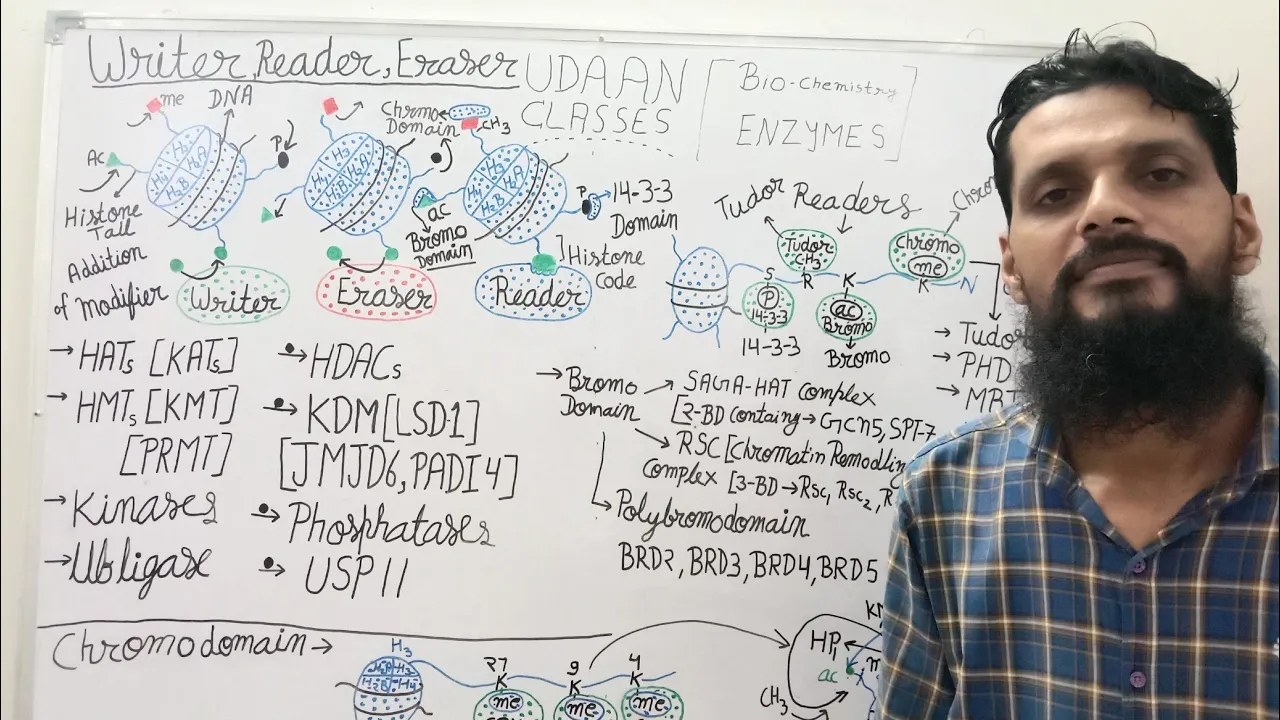








The histone code is a specific pattern of covalent modifications (acetylation, methylation, phosphorylation) on histone tails that determines whether genes are expressed or silenced; this code is read by reader complexes consisting of scaffold proteins associated with smaller proteins that recognize specific modification patterns, enabling recruitment of effector proteins that either activate or silence genes, while writer complexes modify the chromatin and eraser complexes remove modifications, with heterochromatin spreading being prevented by barrier proteins at chromatin boundaries.
Histone Code Read by Reader-Writer Complexes | Chromatin Biology
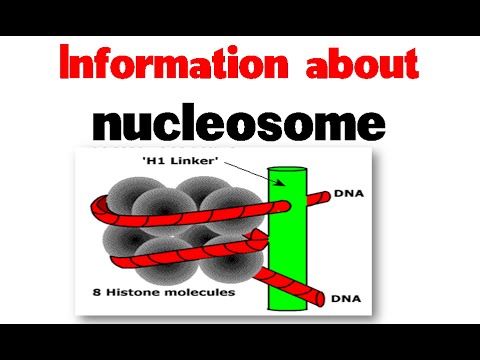
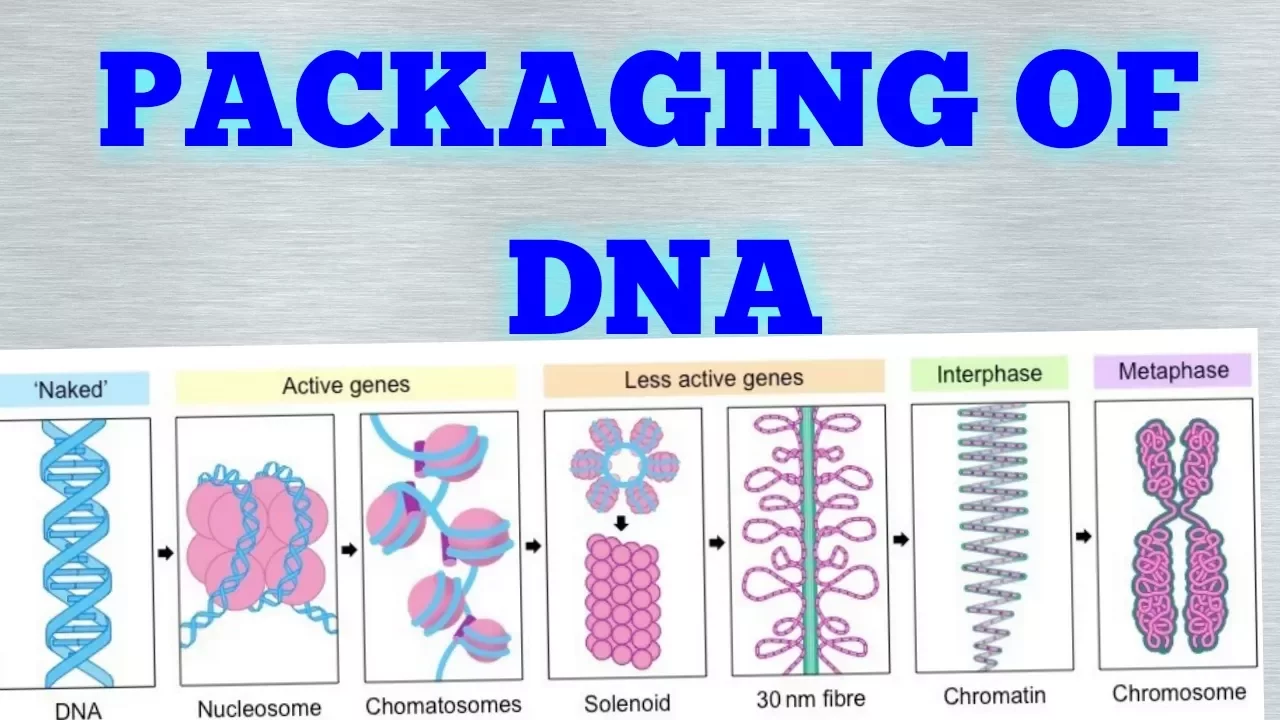
Added:Basic structure of the nucleosome, including the core histone proteins (H2A, H2B, H3, H4) and how DNA wraps around them.
The concept of chromatin states, specifically the structural and functional differences between transcriptionally active euchromatin and silent heterochromatin.
Fundamental mechanisms of eukaryotic gene transcription, including how RNA polymerase and transcription factors access genomic DNA.
Common post-translational modifications (PTMs) of proteins, particularly the chemical natures of acetylation, methylation, and phosphorylation.
The role of 'eraser' enzymes (such as histone deacetylases and demethylases) in reversing histone modifications to dynamically regulate chromatin.
ATP-dependent chromatin remodeling complexes (e.g., SWI/SNF) and how they physically reposition nucleosomes in response to histone codes.
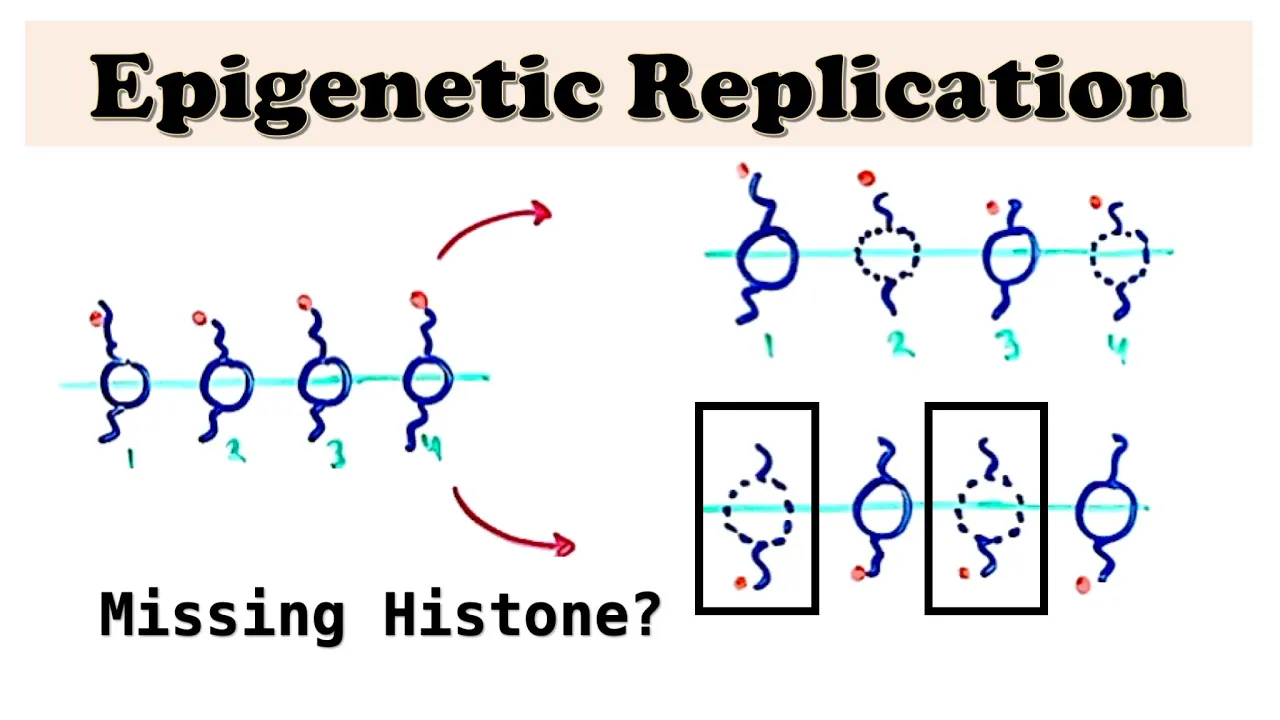
Mechanisms of epigenetic inheritance, specifically how reader-writer complexes propagate histone marks to daughter strands during DNA replication.
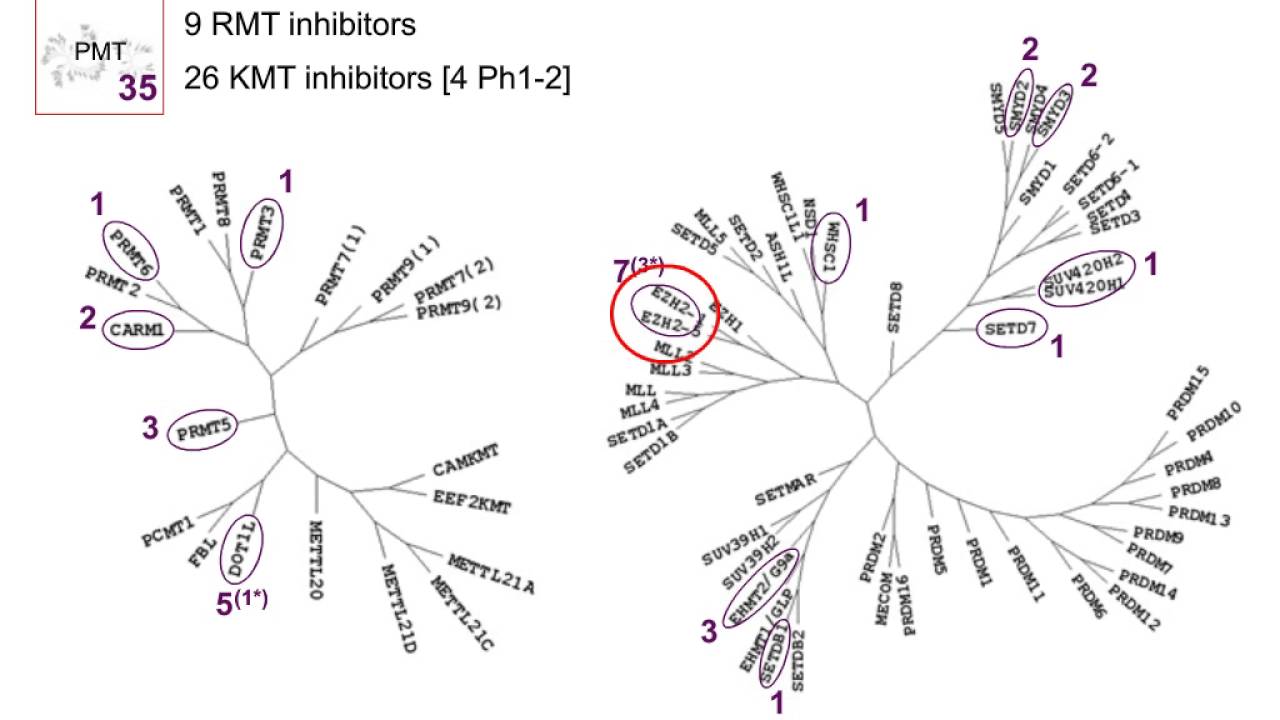
Clinical applications and epigenetic therapies, such as using small-molecule inhibitors targeting readers (e.g., bromodomain inhibitors) or writers to treat cancers.
10.6K views215likes19:17Original Release: 2020-06-11
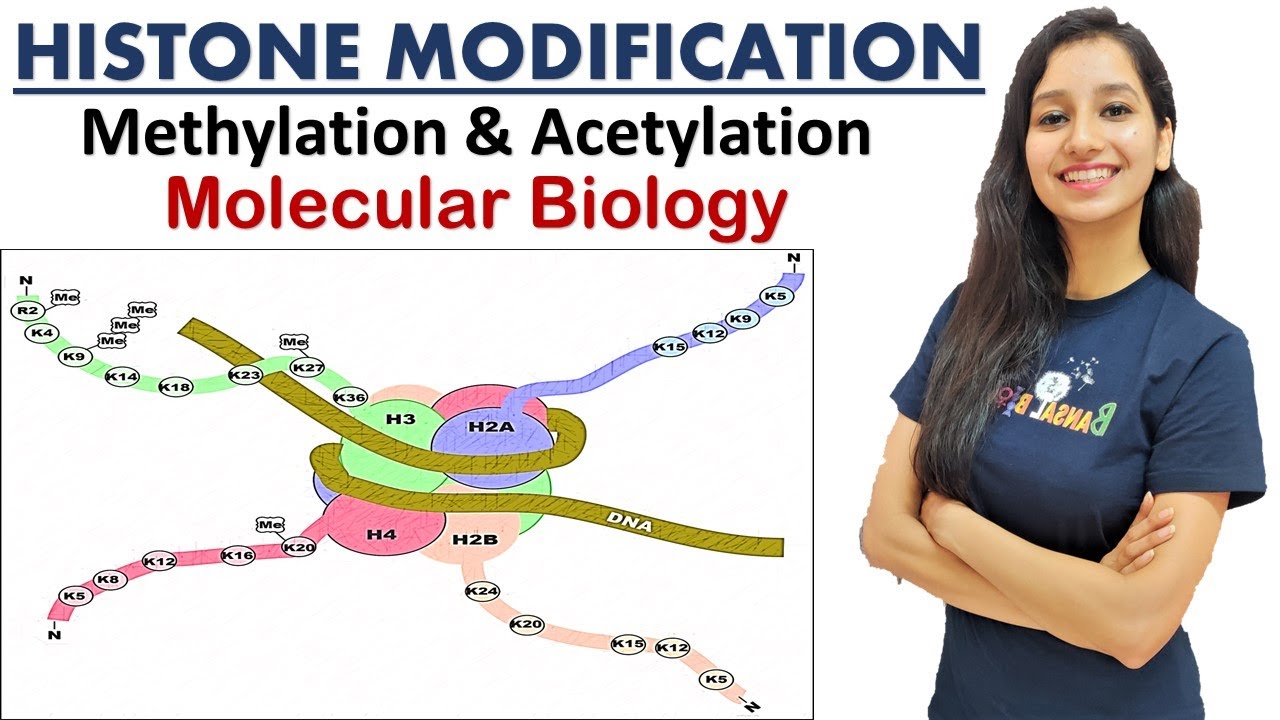
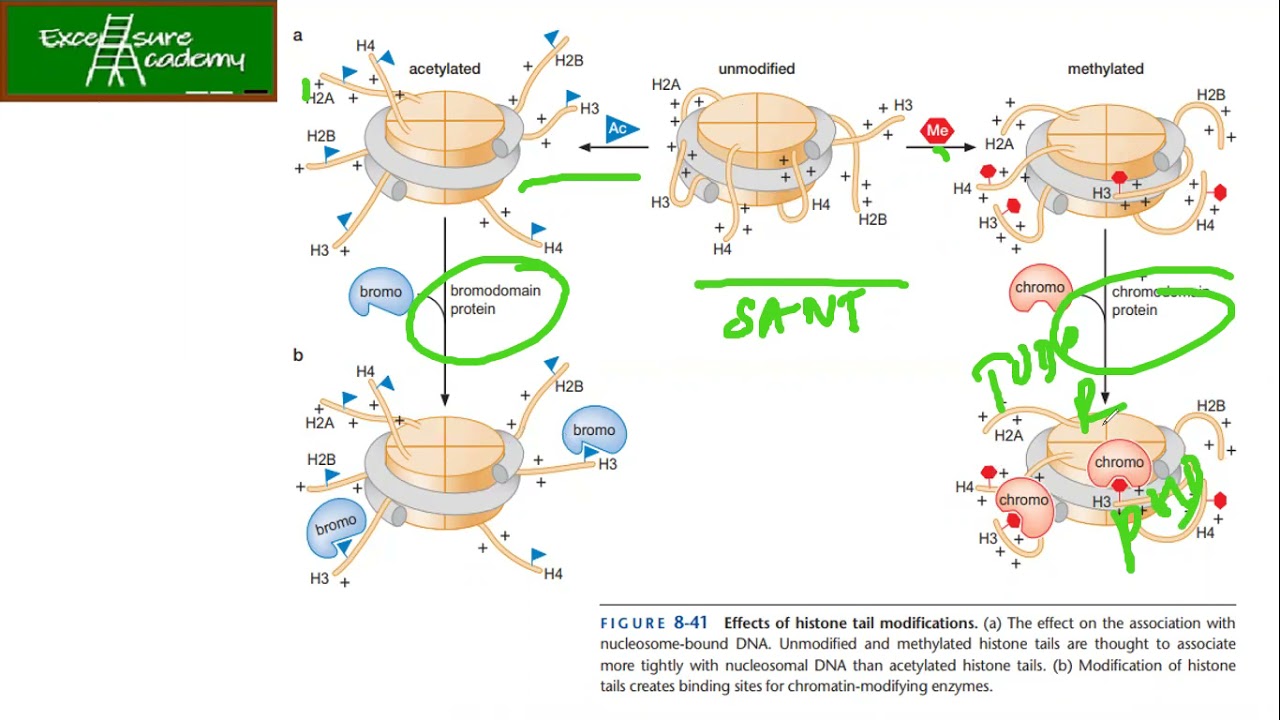
hello everyone so today we are going to talk about reading of the histone code by quadrature complex so we have previously discussed that the strong modifications lead to what we call a histone code and this histone code may have certain meanings so depending upon the modification state whether certain residues are methylated dilated or phosphorylated this would lead to a specified result in the in the gene expression a gene can either get expressed or it can get silenced why I had to come chromatin formation or it can get inactivated like in the form of X chromosome so how does this thing take place why would a certain code why would a certain pattern on these histone tails have an impact and can either lead to gene expression or silencing of a particular gene so what happens basically is that we know about these covalent modification on these stone tails these could be escalations methylation or forceful asian so in either case this leads to what we have we have discussed the information of a specific pattern a histone code so certain residues would be methylated some others would be escalated and some of them would be phosphorylated so this histone code can lead to different outcomes and how does it lead to these different outcomes is because there are I mean for example in some cases that code can mean this this histone code can also give a signal that the DNA is damaged and it needs to be repaired and in some other cases it can mean or it can signal that and that certain genes need to be silenced when in other case it it could signal that the genes need to be activated they need to be expressed so this code can lead to different outcomes and how does it lead to different outcomes is because this histone code can be read by the reader complexes and what are these reader complexes so basically they consist of a larger protein what we call a scaffold protein and this scaffold protein is associated with certain smaller proteins so basically this as the name indicates this works as a scaffold for other smaller proteins and these smaller proteins basically can recognize and bind to these covalent modifications on these front tails or on these modified residues so because this pattern is specific as we have previously discussed whether the first two residues here are methylated or ésta later what is the status of the lysine at ninth position whether it is estimated or methylated so this entire code would basically lead to the binding of a certain code reading complex so because this code reading complex consists of consists of specific proteins so this leads this makes it pretty specific for binding to a certain region on the on the chromatin so this the sequence on of the proteins on this scaffold protein needs to match with the sequence of covalent modifications on the histone tails are on the Eastern code so the sequence of the proteins on the scaffold protein or on the code reader complex it depends upon the histone code on the chromatin so if there is mismatch then this scaffold or this reader complex cannot bind to the histone proteins when this reader complex which consists of a scaffold protein and some smaller proteins when this scaffold protein along with other proteins binds to this specific histone code then this can recruit certain other protein complexes and these protein complexes can either have some catalytic activities means they can perform certain enzymatic functions or they can also work as like multi talking proteins which can lead to the binding of certain other proteins and then these proteins can carry out the job and this would ultimately the attachment of these proteins would lead to the activation of the certain genes or it can also lead to the silencing of the genes or certain other biological functions so just to repeat that there is a particular histone code on these histone tails which can be read by a reader complex a reader complex consists of a scaffold protein which is associated with certain other smaller proteins which have a specific pattern so the pattern of the proteins or the sequence of the proteins on this scaffold protein needs to match with the histone code so if this match does not take place then this reader complex cannot bind to the stone coat and the downstream processes cannot take place but if there's a compatibility between the two then the reader complex would bind to this histone code and this would recruit certain other proteins which can either have catalytic activities or they can have additional binding sites further for other proteins and other proteins can bind to it and then these proteins can perform certain biological functions they can switch on the genes or they can switch off the genes or they can silence them so this is how the histone code can be read by a code reader complex we know that the the DNA is organized in the nucleus in two forms it's either in the form of euchromatin or it is in the form of heterochromatin so euchromatin is the relaxed form of the chromatin while heterochromatin is the compact form of the chromatin so the genes inside the heterochromatin cannot get expressed why we have previously discussed because the the the activation machinery does not have access to the genes which are embedded inside the heterochromatin this is also known as sometimes it's also known as a positional factor irrigation so what is position effect variegation means if you have a gene which is active when it is present in in the in the euchromatin you take this gene and you put it into a region somewhere closer to the heterochromatin there are chances that this can this gene can get silenced not because there was something wrong with the gene but because of its different position so this is now positioned in a region which is either inside the actor chromatin already is somewhere closer to the heterochromatin so the heterochromatin can have an impact on this nearby gene and can silence this gene and why does this happen this happens because in addition to code reader complexes we also have code writer complexes if you can remember one of the previous slides I can go back to that slide yeah this one so we have previously discussed that chromatin remodelling basically depends upon two things I mean if you want to modify the chromatin you can either have writer complexes or you can have arrays or complexes so in result complexes wood arrays installation and lead to the compaction of the chromatin and writers would put honest elation but they can also put on methyl groups and lead to the compaction of the chromatin readers would only read the code on the histone proteins whatever there is whether it is in the heterochromatin or it is in the you chromatin the job of the reader complexes is just to read the code and carry out the the the the downstream processes while writers and erasers they can modify the chromatin itself readers do not modify the chromatin they just read the histone code while writers and erasers can modify the chromatin and we have discussed that there could be a style transferases which can carry out escalation and a style and the deist releases which can remove the Austral group or we have methyl transferases which can carry out methylation of the DNA so installation would relax the DNA while de-escalation or methylation would lead to the compaction of the DNA and switching off of the genes so if you take a particular gene which is located in the euchromatin region and you put it somewhere inside the Hat to chromatin or somewhere closer to the heterochromatin then this gene may get silenced and why does this happen is because we have this writer complexes we were just talking about so these were the reader complexes and we have writer complexes what do the writer complexes do for example we have a gene regulatory sequence here so a gene regulatory protein we have regulatory sequence here and a gene regulatory protein can bind to this sequence initially so let's assume this is a euchromatin so what happens that this regulatory protein recruits a writer enzyme so this writer enzyme can be an a histone acetyl transferase which can carry out a style ation it can be a methyl transferase which can carry out methylation it can be a DA stylist which can remove style groups so what our the purpose is and depending upon whether it was heterochromatin or euchromatin for example for example if this is a euchromatin and it needs to be condensed then obviously the writer would be a histone methyltransferase or so that it can lead to the methylation of say stone proteins and ultimately compaction of the chromatin or it can also be a strong da stylus which could remove the previous installation on the histone tails so in either case what is happening basically a gene regulatory protein binds to a certain regulatory sequence on the DNA then it recruits a writer enzyme so this writer enzyme writes a code means it carries out certain covalent modification of the histones what we have previously discussed so when this modification is done this is followed the recruitment after reader/writer complex so here we have two things there's a reader protein which will read this modification this code on the histone which was done by the first write for enzyme so the reader reads this court and it positions the writer enzyme on to the next nuclear zone so that the stone tails on the next micro stone can be modified and then the second modification is read by another read write or complex where the reader protein reads the modification of the on the previous histone proteins and positions the writer complex on to the next nucleus form so that it can carry out the modification on the next nuclear zone so in in this case this is how the modification on the chromatin propagates and in addition it is not shown here there's also another atp-dependent chromatin remodeling protein so what does this protein do this protein when this process takes place so the modification takes place the job of the remodelling protein so these are only reader and writer complexes they are not going to directly lead to the compaction of the DNA they're rather rather dependent on the DNA on the chromatin remodeling proteins so this chromatin remodeling protein would bind to them and lead to the compaction of the of the chromatin and this this protein would push the nucleus homes closer to each other so we call them atp-dependent chromatin remodeling proteins but anyhow so this is how these reader/writer complexes can spread the information along the chromatin and can either relax the chromatin or they can condense the chromatin so if we we were talking about the position effect variation so in this case what happens that if if a gene was if we insert a gene somewhere here and in in in the neighborhood have you chromatin sorry I have to chromatin and the the gene was located somewhere here the gene that we inserted into the new chromatin so this was you chromatin but it is closer to the heterochromatin so what happens that depending upon some previous modifications here or because of the binding of this regulatory protein here what happens a process of modification of the of the chromatin initiates so this modification leads to the condensation of the DNA so if the DNA is condensed or if this is modified leading to the compaction of the DNA or leading to the formation of the haptic protein then the gene that we placed somewhere here in the u k-- roman region can also get embedded into the heterochromatin because of these modifications so a euchromatin would be converted into a heterochromatin so with this we have a problem the problem is that this modification can carry out for longer distances and if this keeps on happening the entire chromosome we have the DN in the form of chromosomes so the entire chromosome or even maybe we want more than one chromosomes can get can get converted into the internet'll chromatin and if this happens then lots of genes would not be able to get themselves expressed so at certain regions this needs to be stopped so we need some mechanism so that this modification does not it does not carry on for for like for always so once it is initiated then it travels along a distance we need to hold it somewhere at a certain point so in order to carry out this job there are certain barriers which can stop spreading of the heterochromatin information we have discussed it the so this was euchromatic and if this process keeps on keeps on working along the nucleus ohms this will this will convert the entire euchromatin into heterochromatin and all the genes would ultimately be silenced but this needs to be stopped how is this stopped the chromatin generally has some barriers which protect the this long distance effect of heterochromatin on to the you chromatin here are a few examples for example for chromatin which is lying closer to the nuclear membrane we have a nuclear pore here and then certain we have certain barrier proteins which can bind to the DNA at one end and they can bind to the nuclear pore at the other end so these barrier proteins does not allow these code reader and writer complexes to proceed further towards the euchromatin so this heterochromatin region remains separate from this euchromatin region so if something is altered in this region this would not have an impact on this euchromatin region because of the presence of this barrier protein in the middle in a second scenario we do not have a barrier protein here like it is not angled onto some nuclear pore rather we have a different type of barrier protein now this barrier protein masks the euchromatin certain Nicolas ohms which are lying closer to the heterochromatin and this masking does not allow the writer complexes to write any code or to bring about any covalent modification on these on this is on the only strong proteins on these nuclear arms so if something travels from this direction towards the in and and and and converts the euchromatin and heterochromatin this needs to stop here because there is no chance that Reiter complex can carry out modification on the histone protein here because of the presence on the histones here because of the presence of the barrier protein and a third scenario we have we have a different a barrier protein which has been recruited here in between the heterochromatin between the heterochromatin and the euchromatin now this barrier protein has a binding site on the DNA and it has got an enzymatic function and what is it's in enzymatic function that it can either inhibit the the modification which is which which can possibly take place by the writer complexes here or it can also remove what was the code that was written here on this histone by the by the right proteins for example this protein here the writer complex adds methyl group here it carries out methylation or it is response preferred destination so if it methylates this histone protein here this enzyme is going to demethylate it it is going to remove the methylation or if this enzyme the writer enzyme here removes it was a DA stylist and it removes a previous estill ation then this protein here is going to again add an S tile group onto this under this nucleosome so that further effect or further impact of the writer complexes towards the euchromatin can be prevented so this is our different types of barriers can stop spreading of the heterochromatin so i think that is sufficient for today thank you very much for your attention
Up Next
4:18
Induced Pluripotent Stem Cells: How iPSCs Are Made and Used
@ioanatheiguana2990
5.5K views•2022-09-01
14:12
Quantitative Real-Time PCR (qPCR): Principle, Method & Data Analysis
@animatedbiologywitharpan
129.2K views•2023-09-06
23:33
Microbial Degradation of Plastics: Biodegradation Pathways & Sustainability
@majeedhammad
2.9K views•2021-04-11
16:04
CRISPR and Genetic Engineering: How Gene Editing Works and Why It Matters
@kurzgesagt
30.5M views•2016-08-10
Related Study Plans & Knowledge Roadmaps
Structured learning paths in Biotechnology
biotechnology
AAV Production: Transfection, Prep & qPCR
01Introduction to Gene Therapy and AAV Biology
02Mammalian Cell Culture: Suspension HEK293 Cells
03Upstream Bioprocessing: Triple-Transfection Optimization
+ 2 more learning modules
18h5 modules
Explore Roadmap
biotechnology
Building Gut-on-a-Chip: PDMS, Cells & TEER
01Foundations of Microfluidics and Gut Anatomy
02Cleanroom Fabrication & PDMS Soft Lithography
03Epithelial Cell Culture and On-Chip Seeding
+ 2 more learning modules
26h5 modules
Explore Roadmap
biotechnology
Optimizing CFPS: E. coli Extract & Yield
01Fundamentals of Molecular Biology and Translation
02Introduction to Cell-Free Protein Synthesis (CFPS)
03Preparing E. coli Crude Lysate (The Extract)
+ 2 more learning modules
19h5 modules
Explore Roadmap
biotechnology
Haematococcus PBR: Design, Stress & Astaxanthin
01Biology and Life Cycle of Haematococcus pluvialis
02Bench-Scale Photobioreactor (PBR) Design and Engineering
03Culture Media Formulation and Inoculation
+ 2 more learning modules
15h5 modules
Explore Roadmap