

![[영어학기본개념뽀개기]임용영어학101:음성학#5](https://i.ytimg.com/vi/gToF9qfzXhw/maxresdefault.jpg)






![Phonetics: Intro to linguistics [Video 2]](https://i.ytimg.com/vi_webp/GLBsvdaR_ow/maxresdefault.webp)








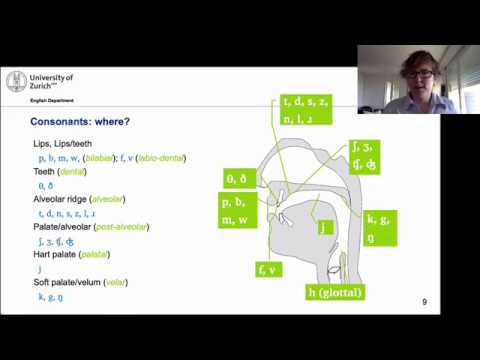
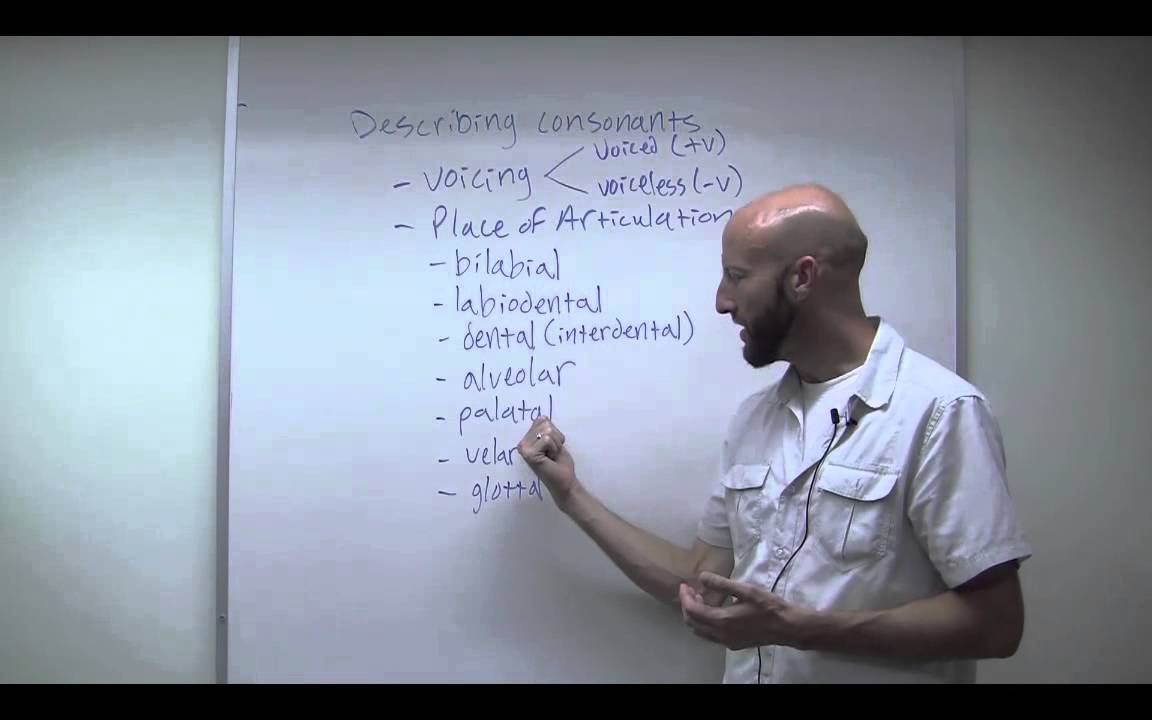
The manner of articulation describes how consonant sounds are produced in English, categorized into six main groups: plosives/stops (complete closure followed by sudden release, e.g., /p/, /b/, /t/, /d/, /k/, /g/), fricatives (air flows through a narrow opening creating turbulence, e.g., /f/, /v/, /s/, /z/, /ʃ/, /ʒ/, /h/, /θ/, /ð/), affricates (combination of plosive and fricative, e.g., /ʧ/, /ʤ/), nasals (air released through the nasal cavity, e.g., /m/, /n/, /ŋ/), approximants/glides/semi-vowels (narrow space without audible friction, e.g., /j/, /w/), and liquids (air flows around the tongue, e.g., /l/, /r/), plus the tap/flap T (single quick tongue tap against alveolar ridge).
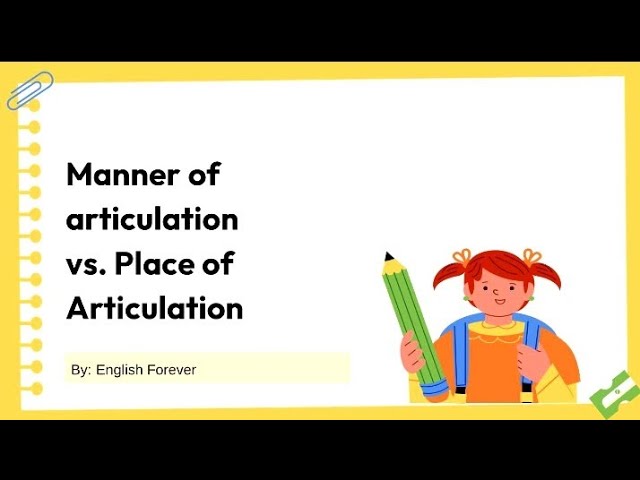
Manner of Articulation Explained: English Consonant Sounds
Added:Understanding the basic phonetic distinction between vowels (unobstructed airflow) and consonants (obstructed or restricted airflow).
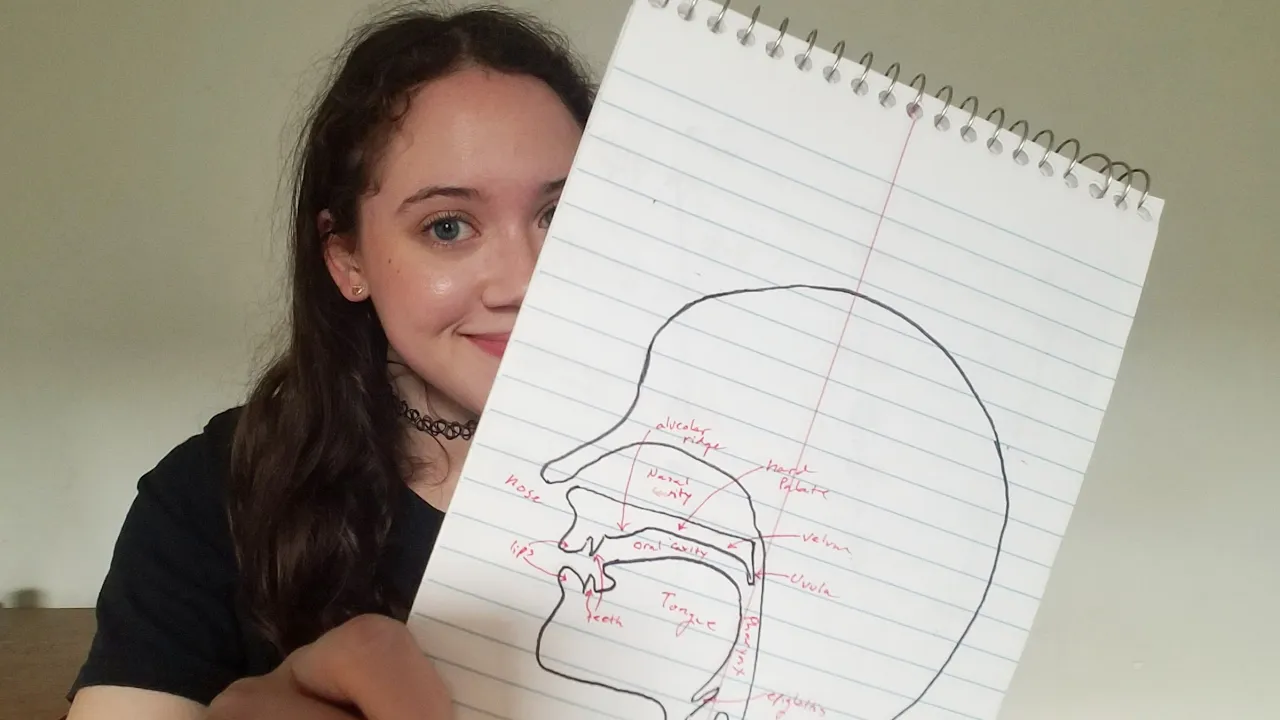
Familiarity with the anatomy of the human vocal tract, including articulators such as the tongue, lips, teeth, alveolar ridge, and velum.
Knowledge of 'Place of Articulation' (where sounds are made in the vocal tract), which pairs with manner of articulation to classify consonants.
The concept of voicing, specifically how vocal fold vibration distinguishes voiced consonants from voiceless ones.
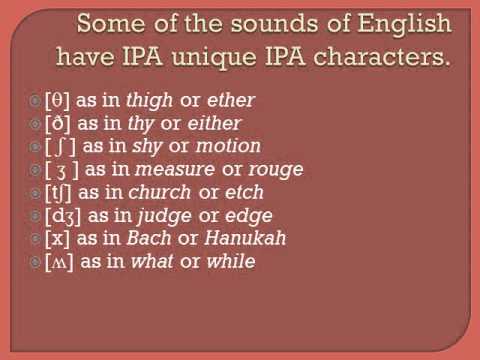
Applying phonetic symbols from the International Phonetic Alphabet (IPA) to transcribe English words based on their place, manner, and voicing.
Studying phonological processes and coarticulation, such as how manners of articulation change in connected speech (e.g., assimilation and elision).
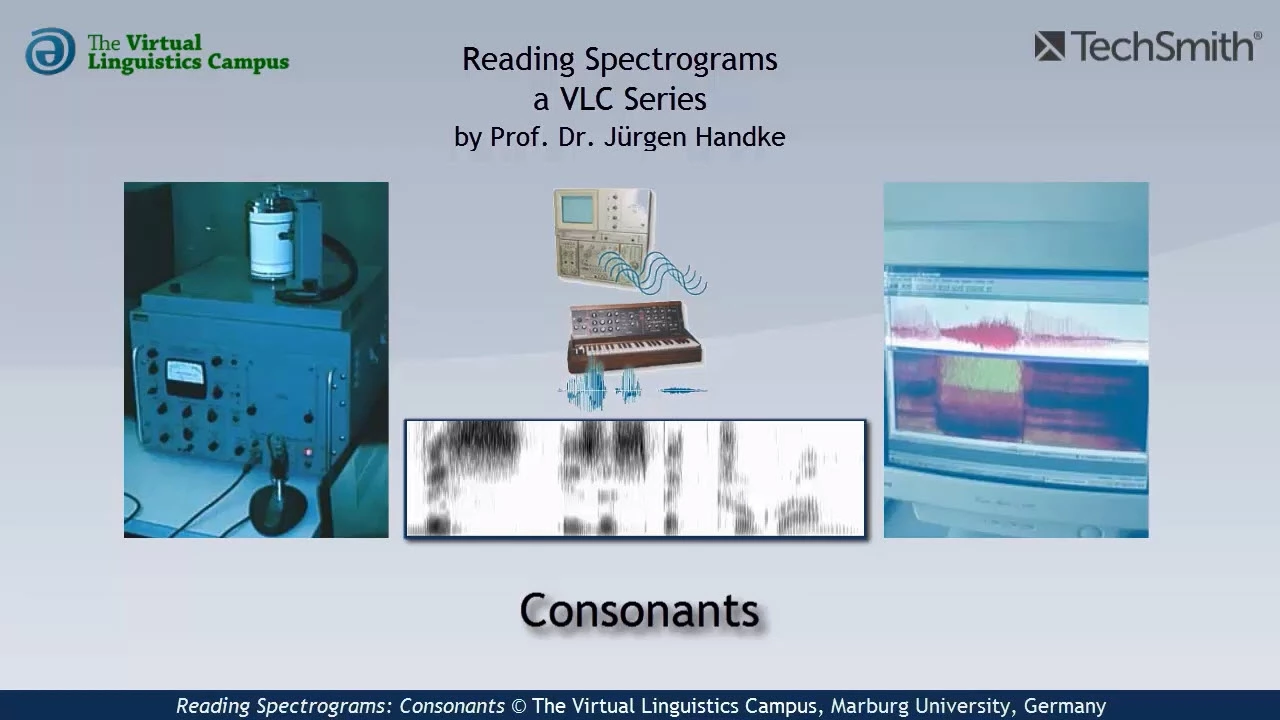
Exploring acoustic phonetics to analyze how different manners of articulation (like the silence of a plosive vs. the noise of a fricative) appear on a spectrogram.
Examining cross-linguistic phonology to compare English consonant manners with non-English speech sounds, such as trills, uvular fricatives, or clicks.
148.7K views4.2Klikes20:05Original Release: 2023-09-29
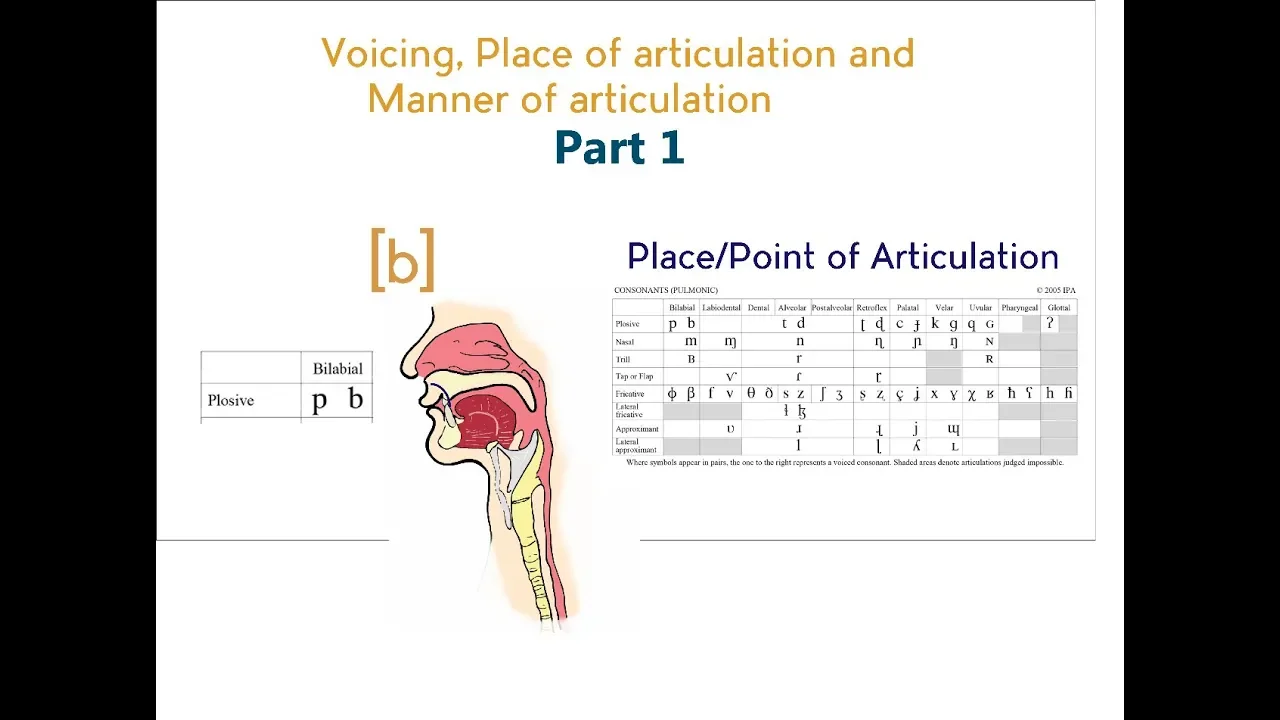
hi everybody Welcome to today's video we're going to have a look at the manner of articulation to describe a sound we talk about the place of articulation the manner of articulation and phonation as well and in today's video we'll look at the manner of articulation there are different manners of articulation for consonant sounds in English sometimes the manner of articulation is also called the quality of a consonant let's look at them first of all we have plosives sometimes they are also called stops so you will see both of those terms being used now how are they formed part of the vocal tract is closed off completely so there will be full closure and no air can escape but then the air is released suddenly with a sharp burst and suddenly is really important because it leads to this little explosion of air that's where we get the word plosive from here are all the places that we have in English as in pay and Gap B and table and you can see here the closure is formed with both my lips then we have in two and Pat de and mad and Cat and make and go and bag and another plosive sound that you might not have heard of before is the glottal stop this funny looking symbol and that we have usually in between vowels for example when we say oh the glottal opens and closes and opens again and forms a glottal stop so it's not in the word ah or or it's in between if this is new to you you want to find out more about the glottal stop I have a specific video on the glottal stock so all of those are plosives in English in total we have seven plosive consonants in English I added a little image for you to remember plosives ear explosion that you can hear hopefully it will help you remember the plosives now of course if you want to know where exactly the closure occurs so the place of articulation make sure to check out my other video on that and also before we move on very quickly remember phonations some of these plosives are voiced and others are unvoiced but again there's a separate video on that let's move on the next group also a very big group are the fricatives fricatives are formed very differently to plosives here two articulators move close so that the air flows flows through a small opening so there isn't complete closure it's just that there is a very narrow space a very small opening and now what happens is that this causes the air turbulence that we can hear it's really the friction of the air passing through this little small opening that we can hear when we form fricatives here are all the fricatives we have in English as in fun or half as in very or have and think and tooth I know this is a funny symbol for the unvoiced th sound the voice th sound is the as in they or breathe then we have in C or less in zebra or is and then we have sh in and push in pleasure and Asia and last but not least we have in happy and behind so we have nine fricatives in English this is the biggest group actually of sounds and in the sound shh I think it's very noticeable we have a little closure here but it's not completely it's just a small opening near the teeth and the air passing through we can hear the air turbulence of course all of those have the same manner of articulation but then our tongue and the position or movement of our tongue of course helps form the sound as well that is why yes they're all fricatives but obviously they do not all sound the same because the place where the small opening occurs is different and also the tongue Position will be different and just like with the closest some of these are unvoiced and some of these are voiced so they differ in quite a lot of other characteristics again I added a little image to help you remember fricatives so this is just like a cloud blowing out some wind and I thought maybe this helps you remember fricatives has something to do with air turbulence and the little small opening let's have a look at the next group number three those are affricates now those are actually quite easy to remember I think because they are basically a combination of the first two groups so it's a combination of a plosive followed straight away by a fricative and that means that the African sounds starred by fully stopping the air first from leaving the vocal tract but then the the air is released and not maybe as suddenly as with a plosive or pupilosive but it's released through a small constricted opening okay so there's a difference here it's not like a full open release it's just a small opening and again we can hear the air friction and so we have for example and this is now a new sound and classified as one sound CH as in child and March so we have t straight away followed by and then we have the voiced counterpart the engine together J for example in juice or orange here we have it at the end so the only two African sounds in English now we have a fourth group and those are the nasals now nasals makes you think of nose and that's quite good because the nose or the nasal cavity plays a big role when we produce nasal sounds so here the sound is blocked through either the lips or the tongue somewhere in the vocal tract it's blocked from leaving the mouth and instead the sound is released through the nasal cavity now the nasal cavity is the the big space from our throat up through our nose and we have three nasals in total we have um and I've given you a couple of example words but just before we have a look at them to demonstrate that the air is really released through the nose and not the mouth so if I say um and I pinch my nose see what happens um the sound stops because it cannot really Escape anymore all right and the same is true for um and um so the sound is really released through your nose so we have um in more or come um no or sun and then the um and think so we have this sound always when the spelling is n g or n k they are three nasals in English and I put an image of a nose to help you remember those next we have an interesting group number five is the group of the approximants now it's not a huge group but the sounds that belong to this group still vary a little bit so how are they formed approximants are formed when two articulators come together to form a narrow space in the mouth and again the air flows through it you might think wait isn't that the same for the fricatives why are they a different group there is a difference because this little space is not as small as with fricative sounds so it flows through this narrow space but it's not close enough or not small enough to make the air friction Audible so there's a difference in size in this small opening that is formed now you could say therefore approx approximants are in between fricatives and vowel sounds vowel sounds is really no closure or the mouth is pretty wide open like very wide and fricative there's a very small opening so the approximants are kind of in between those two groups in terms of opening of the mouth and here are the four approximants that we have in English first of all we have ye as in yes or young then we have in when or in between and then we have uh and light or milk yes there is a dark and a light L but they don't really cause any difference in meaning so we just treat it as one phoneme and then we have in right and carry now because this group is a bit special and there are subgroups within approximants I've created this little table for you to help you and both approximants that's true but they're also often called Glides or semi vowels so you will see those terms being used and they also share something in common if you say ye and just pay attention to your articulators yeah there's a little movement in your tongue when you form the sound yeah and the same with there's movement in the lips also articulators so because of this movement both of those are called transitional sounds and that just means the articulators move during the sound production yeah and now let's have a look at the other two and those are also called liquids now is also called a lateral approximate and in fact very very often you will see um the other sounds you will and also being called approximants with a specific adjective before it and that usually refers to either the manner of articulation or the place and that's just to distinguish them from one another also called a lateral or a lateral approximant and here if you just form the sound you can see the tip of the tongue is touching the alveolar Ridge and the air flows on either side of the tongue out of the mouth and so that is really what we call a lateral but it's still an approximant because the opening is quite big and we hear a sound but we don't hear the air friction and R is sometimes also called a roteg now I've used the symbol here from the Adrian Underhill chart the one that you can see in the IPA looks a little bit different it looks like an upside down and again two images to help you remember those four approximate sounds you can remember them maybe in their subgroups so we have this figure skater here too because they're Gliding Over the ice and so those are the Glides or the semi vowels and then the liquids you've got this little image of some liquid some water okay and now we come to one more group number six and that's the tap now again this is a very specific sound we call it usually the flap T you can see the IPA symbol here looks like a bit of a funny and this is produced when the tongue just very quickly tabs against the alveolar Ridge so there's only one flap t a tap sound and so it's always exactly the same production it's always against the alveolar Ridge in English we don't have any other tap sounds so I've given you an example here again you can see the IPA symbol and then we have the word butter now if you have more of a British English pronunciation like me you probably just say butter and pronounce a full T sound which is of course a plosive however Americans very often will say butter so instead of a full they just do a little flap t-tap so it's just butter just say it a few times and pay attention to the movement of your tongue especially the tip of your tongue butter so there's this very quick tap against the alveolar Ridge we also have it in between words so for example here a lot of if I say it fast a lot of a lot of and in fact here I would say the majority of English speakers will use a flat T sound like this little flap instead of a full set a lot of because usually we talk fast it's much quicker to say this tab instead of a full plosive and I put a little picture of a tap dancer hopefully this will help you remember tap sound so here's a summary again we have different manners of articulations of all the sounds in English we have ploses also called stops we have fricatives then those were two big groups and then we had affricates and they were a combination of plosives with fricatives and there were only two then we had three nasals four approximens and they were in really divided into subgroups of Glides or semi vowels and laterals or what's it called liquids and last but not least we had one tap sound the flap t and finally I thought you might find this table really helpful here you have all the consonant sounds of English in a chart showing the place and manner of articulation so on the left you can see the manner that we've just went over plosives fricatives affricates nasals laterals and approximants and then of course you also might want to know well where in the mouth are they produced that is the place of articulation and it literally goes through the mouth from bilabial that means really formed with both your lips to labial Dental into dental alveolar post alveolar palatal and Velar and glottal in all of the consonant sounds are given and in fact the only one that are left out is the flap T apologies for that it would be um a list obviously a manner of articulation on its own and it is an alveolar sound as well like the full T now the what is given twice and that is because it's really produced if you say it it's yes produced at the front with both of the lips but the tongue Also Rises um near the velum and so it is a bilabial Velar sound that slides listed twice and you can see that they are color coded so I've also given you the phonation by that I mean whether the sound is unvoiced or voiced so voiced means we're using our vocal chords the vibrating in the sound production this gives a lot more volume and resonance to the sound so the voice sounds are all red and the unvoiced sounds are in this green teal color and they are a lot quieter as a result because the vocal cords stay open and are not involved in the sound production please leave me a comment or any questions you have underneath this video I'd love to get back to you you can find many more videos on English pronunciation and phonology on my channel on the IPA pitch the vowel chart linking sounds connected speech everything you can find a lot there I've organized it into playlists but if you can't find anything or you have a suggestion for a future video please write to me and leave a comment
Up Next
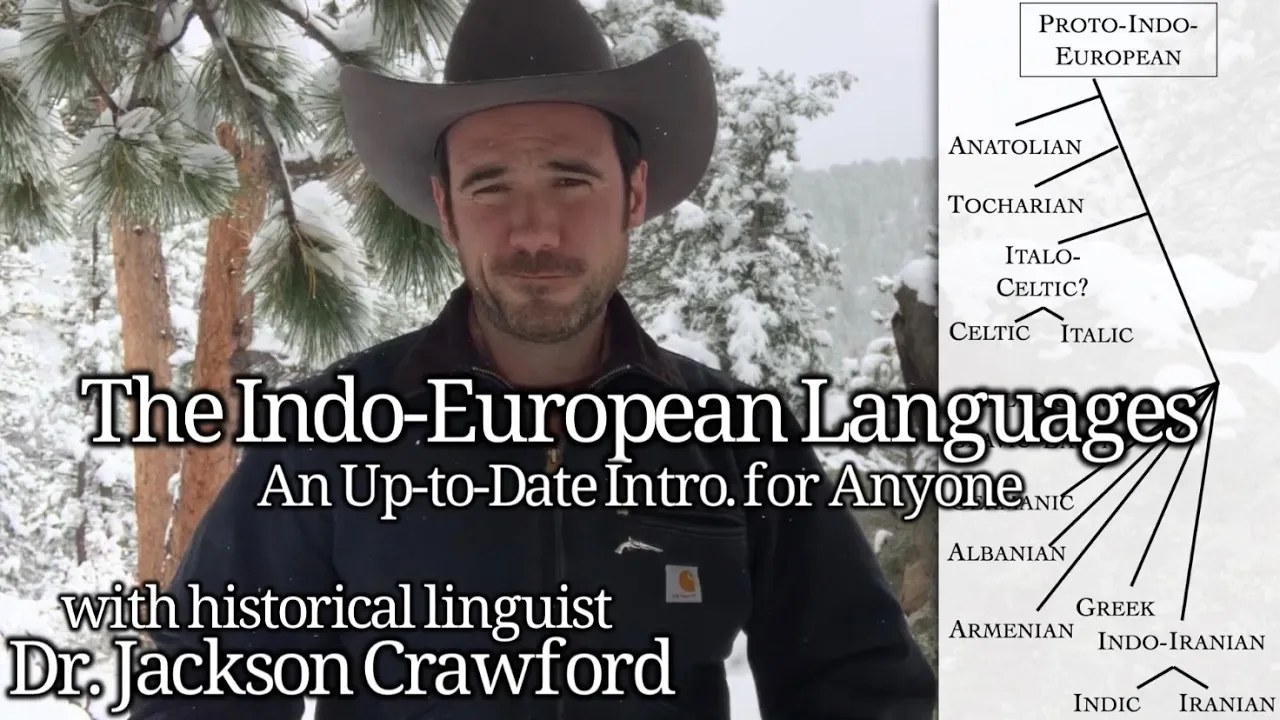
37:49
Indo-European Languages Explained: Origins & Branches
@JacksonCrawford
311.2K views•2020-09-16
36:52
Constraint Interaction in Optimality Theory: Epenthesis & Deletion
@Vidyamitra
180 views•2018-08-20

14:20
Syllable Structure Explained: Onset, Nucleus & Coda in Phonology
@BillieEnglish
103.2K views•2023-05-26

21:32
Accent Expert Explains U.S. Regional Dialects | Part 1
@WIRED
9.3M views•2021-01-21
Related Study Plans & Knowledge Roadmaps
Structured learning paths in Linguistics
linguistics
Optimality Theory: Tableaux & Constraints
01Phonological Basics: Sounds, Syllables & Rules
02Foundations of Optimality Theory: GEN, CON, and EVAL
03The Constraint Inventory: Markedness vs. Faithfulness
+ 2 more learning modules
15h5 modules
Explore Roadmap
linguistics
Morphosyntactic Alignment: S, A & P Systems
01Foundations of Syntax: Transitivity and Arguments
02The Linguistic Variables: Mapping S, A, and P
03Nominative-Accusative Alignment
+ 3 more learning modules
12h6 modules
Explore Roadmap
linguistics
Analyzing Sign Language: Phonology & Syntax
01Foundations of Sign Language Linguistics
02Phonology: The Five Parameters of a Sign
03Morphology: Word Formation and Classifiers
+ 2 more learning modules
14h5 modules
Explore Roadmap
linguistics
Pragmatics: Speech Acts, Grice & Politeness
01Introduction to Pragmatics: Meaning in Context
02Grice’s Cooperative Principle & Implicature
03Speech Act Theory
+ 2 more learning modules
14h5 modules
Explore Roadmap