






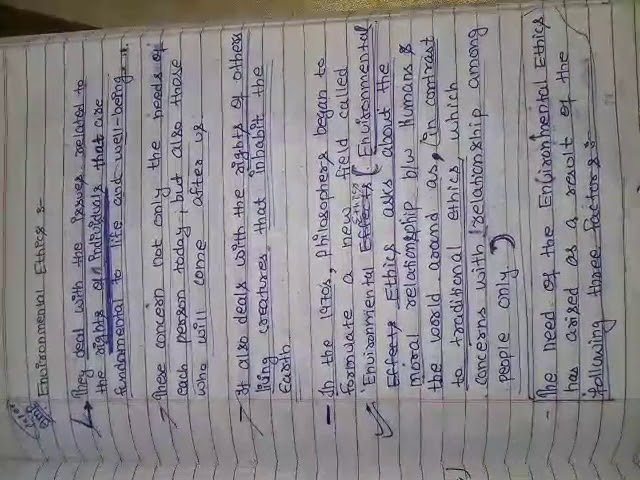



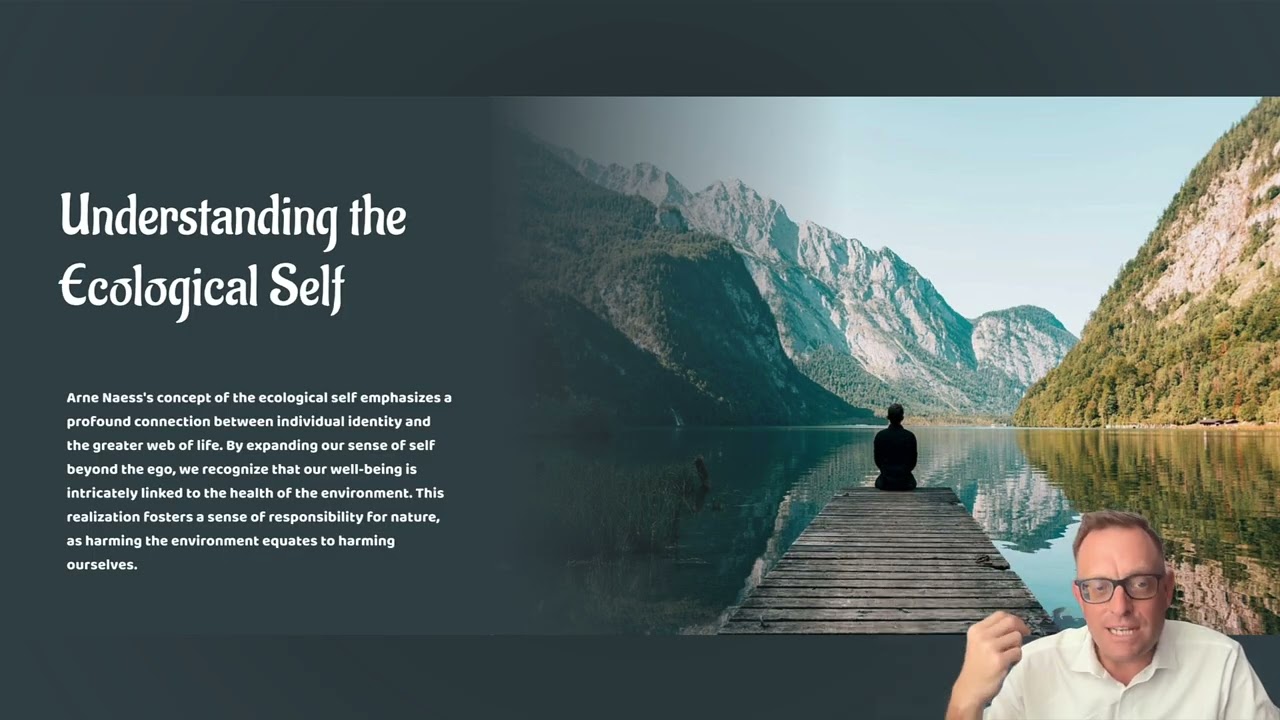









Environmental ethics debates what entities possess intrinsic value (value in themselves) versus instrumental value (value as a means to an end), with three major schools: shallow green environmentalism (only humans have intrinsic value), mid-green environmentalism (extending intrinsic value to sentient beings), and deep green environmentalism (extending intrinsic value to all living things or ecosystems). Richard Sylvan's 'Last Man' thought experiment challenges anthropocentric ethics by imagining a scenario where the last surviving human destroys all remaining life on Earth; if we intuitively judge this action as wrong despite no human interests being served, it suggests that nature possesses intrinsic value independent of human concerns, motivating deeper environmental ethics positions.
Environmental Ethics: Sylvan's Last Man Argument Explained
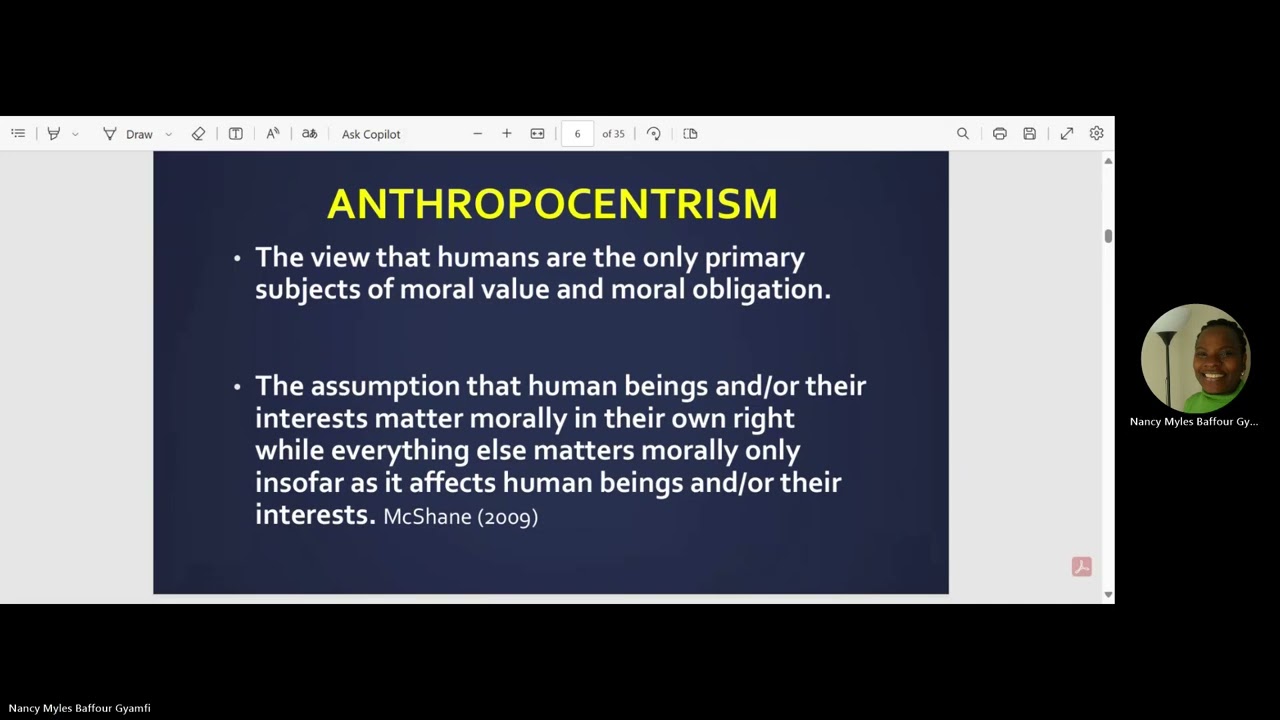
Added:hello YouTube well there's a very important debate in environmental ethics about what kinds of being have intrinsic value so we say that something is intrinsically valuable if it is valuable in itself and something is instrumentally valuable if it's valuable as a means to something else so for many people there's nothing intrinsically valuable about clean water clean water is valuable because we take it to be a necessary condition of a good standard of living for humans humans have intrinsic value and a good life for humans has intrinsic value and clean water is instrumentally valuable because it's uh necessary condition of that good life uh if we' evolved differently if it was beneficial for us to consume water containing ecoi then uh clean water as we Define it wouldn't be valuable this is fairly simple Stu I think now with the distinction between intrinsic and instrumental value we can Define three different schools of environmental ethics shallow mid and deep green environmentalism right shallow green environmentalism limits intrinsic value to humans alone uh shallow ethics are entirely anthropocentric human centered non-human beings have value only in so far as as they are useful to or valued by humans um so on a shallow ethics there's nothing intrinsically wrong with destroying a species or with felling a forest just because you find it fun to cut down trees or with dog fighting or even just getting an animal and torturing it for no reason um this is not to say that a supporter of shallow ethics would defend such practices um it's just that the most that could be argued by defend of shallow ethics is that these are instrumentally wrong so for example cutting down a forest might be bad because other people enjoy walking in the forest or because the forest help helps prevent landslides for example uh in the case of dog fighting and torturing animals it could be argued that this has a sort of brutalizing effect on the individual so people should abstain for that reason but they wouldn't argue that the forest or the dog has any is worthy of moral consideration in itself this was the traditional view until fairly recently I think these days people are somewhat more ecologically minded it seems to me that nowadays uh mid-green environmentalism is the mainstream view on this view intrinsic value is extended to some other beings um and I think the most popular form is what we might call centio centrism which extends intrinsic value to other sentient creatures so the mainstream animal rights or animal Liberation arguments are an example of mid-green Ethics um so on this view the reason why dog fighting or dog torture is wrong is simply that dogs are sentient beings who can feel pain and pain is a bad thing and pain should not be inflicted whether or not we're dealing with a human that's the sort of standard kind of animal Liberation argument um dogs then are worthy of moral consideration in themselves and sometimes as in the case of dog fighting or torturing a dog uh we should judge in favor of the dog and against the human who wants to use it okay but what about felling a forest for fun well as before the centio Centrist would say that there's nothing intrinsically wrong here it's wrong because other people enjoy it because it helps prevent landslides because it provides a habitat for other animals but not because the forest itself is worthy of moral consideration right um that's fairly simple and now we move on to uh deep green environmentalism deep green environmentalism um there are different forms of this uh but they involve extending intrinsic value to uh to say all living things or to all ecosystems or to all natural wildernesses or to the Earth itself or to particular kinds of natural processes or or whatever the point is that a deep green ethics is uh biocentric or more broadly Ecentric um so on deep green ethics felling a forest is bad in itself intrinsically bad even if nobody cares about the forest even if there are no other creatures living in the forest so suppose we wish to strip down a forest in order to mine gold uh it's not a big Forest it's inaccessible to other people and we promise to rehome all the sentient animals in it well even in this case there's still a conflict of values according to the Deep green ethicist and we may have to rule in favor of keeping the forest even if no one cares about it no animals in it the forest is in itself valuable that's the position of deep green environmentalism obviously this can seem rather counterintuitive I think uh a lot of people probably associate this view with perhaps slightly crazy new Agy style hippies um but um yes it is uh a serious position that has been proposed I think most people appreciate the idea of extending moral value to other sentient animals after all um you sentient animals can feel things just like we can they can feel pain and they can suffer um in fact what's more many non-human animals have cognitive capacities that rival uh or even Excel that of human infants um so if human infants have rights why shouldn't for example great apes um but when we're dealing with trees and plants that sort of there's not that familiarity there trees and plants are not like us really in any way are they uh they don't have any feelings at all so why would it be intrinsically wrong to cut down a tree the tree doesn't feel anything the tree uh isn't inconvenienced is it the tree doesn't care because the tree has no cares again that's why people perhaps associate this with you know new Agy style hippies uh you know kind of crazy hippie style people because uh they might believe that that trees do have feelings obviously trees don't have feelings that's ridiculous um so why would it be wrong to cut it down um well Richard silven was a supporter of deep environmentalism and his article is there a need for a new and environmental ethic is considered a classic of that field he presents a thought experiment to to motivate a deeper ethics this is a thought experiment to to try to kind of push your intuition in a different direction um silven was was very very you know kind of rationalistic he didn't accept uh he wouldn't have accepted that trees have feelings or anything like that but he still felt that they have intrinsic value um so this thought experiment that he developed is called the last man thought experiment right so imagine that all humans are dead save one man the last man uh this man decides that if all humans are going extinct they may as well take everything else with them why not so here attempts to destroy every living plant animal bacterium and so on on the planet he's got access to quite powerful technology so he just may achieve his AIM now silven says that on traditional ethical approaches in which humans are the only objects of moral concern and the environment is a moral issue only in so far as it relates to humans the last man has done nothing wrong but for many people this conclusion is counterintuitive uh it it it certain seems that he's done something wrong to to many people and this suggests the need for a new ethic an ethic on which Nature has value independent of our interests uh an ethic on which Nature has intrinsic value if you believe that forests for example are merely instrumentally valuable then it should not be counterintuitive to say that the last man has done nothing wrong but we do find it counterintuitive so perhaps we recognize that forests do have some intrinsic value now silven was writing in the early '70s and at this time this AR argument may have made people think these days it's become very popular to uh support extending moral consideration to non-human animals so it's easy to see why somebody might judge against the last man while still not accepting a deep green ethic um we could argue that the problem is simply that he kills so many sentient animals um but the thought experiment can uh obviously be strengthened to take into account this fact we can imagine that all sentient beings are dead save one man uh the last man decides to take the rest of life with him this time destroying all the plants bacteria fungus and so on so uh again do we feel he's done something wrong if so it would seem that perhaps we we have to have a deep green ethic um even in this case though I think the anthropocentrist or Centrist still has an easy response I think anthropocentrism uh and centrism can be reconciled with our intuition that the last man's actions are wrong in this case um you see we can argue that what makes it wrong to destroy all life is that this destroys the potential for future intelligent or sentient life uh so we can say that only intelligent or sentient life is valuable in itself but the continued existence of non-sentient life is instrumentally valuable because it may allow intelligent or sentient life to one day evolve um the last man destroys this possibility hence his actions are wrong so you can see we can judge against the last man even in this case without assigning intrinsic value to non-sentient beings but of course the thought experiment can be modified further so this time imagine that all human all sentient beings are dead save one man further it's known that in 1 million years the sun will die so there's no time for sentient life to evolve the last man decides to take out the rest of life with him destroying all plants bacteria fungus and so on now I think this better captures sven's point in this argument we really do only have non-sentient life to consider if you think the last man has done something wrong in this case it's difficult to see how you could avoid accepting a deep green ethic of course with the thought experiment modified in this way perhaps far less people would be prepared to say that the last man has done anything wrong um but there we there we have it uh if your intuition is that he's done something wrong here then it would seem that you do accept some sort of uh deep green ethic um now note that the argument can actually be modified even further um what we have at the moment is biocentrism or ecocentrism but but silven actually went a bit further than this silven believed that even lifeless planets have intrinsic value so we could imagine that uh all life is dead say one man and he Destro decides to destroy the planet in fact we don't even need to imagine this much since there are plenty of lifeless planets in the universe so imagine if the human race were to die out save one man who has access to Planet destroying technology would it be acceptable for him to destroy Pluto if not it would seem that Pluto has some sort of intrinsic value now it's important to recognize a limitation of this argument um in other work silven distinguished the sole value assumption from the greater value assumption the sole value assumption is that only humans and human projects have intrinsic value the greater value assumption is that non-human things do have intrinsic value but that this value is always outweighed by the value of humans and human projects so whenever there is a conflict between non-human value and human interests the latter must always take precedent the last man argument attacks the soul value assumption but one could still accept it and maintain a form of the greater value assumption so we could say that whenever there is a conflict between non-human value and human needs the latter must always take precedence human needs might be defined as those things that are essential to our survival um now this of course has a great deal of intuitive plausibility um you know there are plenty of things that we do value but our needs tend to take precedence so it is intuitively plausible and one could argue that the last man has done wrong since it clearly isn't essential to his survival that he destroy all other beings um but nevertheless Whenever there is a genuine conflict between human needs and non-human value we should favor the humans uh now Richard silven along with pretty much every other deep environmentalist rejected both the soul value assumption and the greater value assumption but the greater value assumption is very intuitive and the last man argument doesn't seem to push our intuitions in a different direction again though it's easy to construct arguments that do um an initial consideration is that the greater value assumption at least as stated uh here has the unfortunate consequence that if you had to choose between saving a human and saving a non-human you should always choose the human of course if the human is somebody like say you know Hitler or someone like that uh and the non-human is your pet dog many of us would rather save the non human um of course it's easy to explain away such scenarios we could you know argue that uh you since Hitler has so uh egregiously violated other people's rights you know he deserves to die okay people have a responsibility to uh to not violate other people's rights and so on so there are all sorts of arguments we can have to explain away these sorts of scenarios but um that's an initial sort of problem with the greater value assumption and I think another modification of the last man argument can serve to motivate against it as well so we imagine that all sentient beings are dead save one man further it's known that in 1 million years the sun will die so there's no time for sentient life to evolve now imagine further that the only remaining non-sentient life is in a laboratory deep underground the surface of the Earth has been completely ravaged by climate change and other environmental problems and all the life is gone except for something a laboratory underground that was designed to get it started again now also in the laboratory is the last man um and the last man has a choice he can release some of the organisms to the surface perhaps to repopulate the planet or he can eat them uh now there's only enough to provide him with nutrition for a week so he's only he's going to die soon no matter what um but his choice is either release the life to the surface and die tomorrow or eat the life and die in about a week and the last man would like to have that week as we can see there's a conflict here between non-human uh value and human needs uh the last man needs to be to survive um so would it be wrong for the last man to eat the the life I think many people would have the intuition that he should give up that week and release the life uh but if so the greater value assumption must be wrong um uh as you can see there are all sorts of modifications we can make the last man argument uh hopefully it's given you some sense of why people might be inclined to deeper environmental ethics it's just a matter of um taking what the last man argument really does is is it it takes our moral principles and then sees if our intuitions uh in certain cases can square with them so so in the case of the original last man argument the moral principle might be that humans are the only beings who have value but then how does that square with our intuition that it was wrong for the last man to destroy all the all the life uh well there's something to think about anyway um that was uh Richard silvin and environmental ethics thanks for watching goodbye
Up Next

Climate Crisis in Social Thought: Chakrabarty on Capital & Planetarity
@harvard
5.3K views•2014-02-13

John of Damascus on Holy Images: A Theological Defense
@BannedBooks
139 views•2026-04-25
Aesthetic Realism Explained: Objectivity in Art and Beauty
@KaneB
9.5K views•2024-04-06
The Myth of Sisyphus: A Greek Legend of Eternal Punishment
@TEDEd
8.6M views•2018-11-13
Related Study Plans & Knowledge Roadmaps
Structured learning paths in Philosophy