








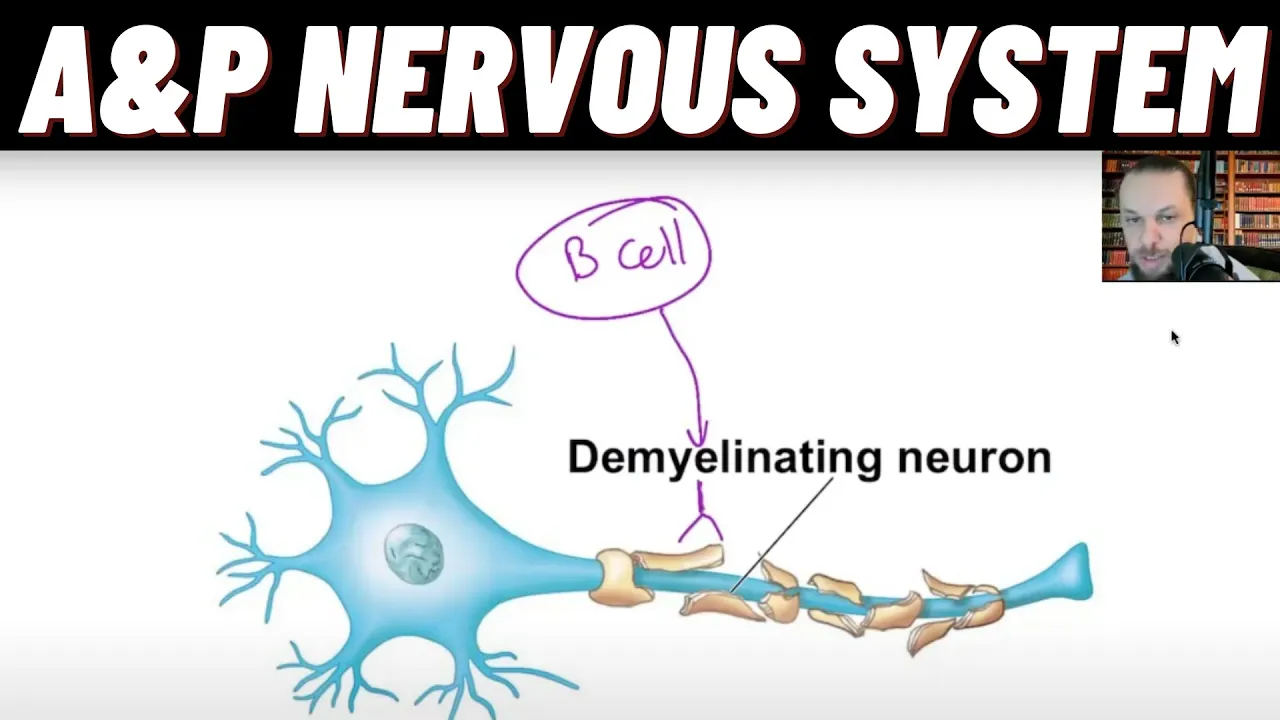


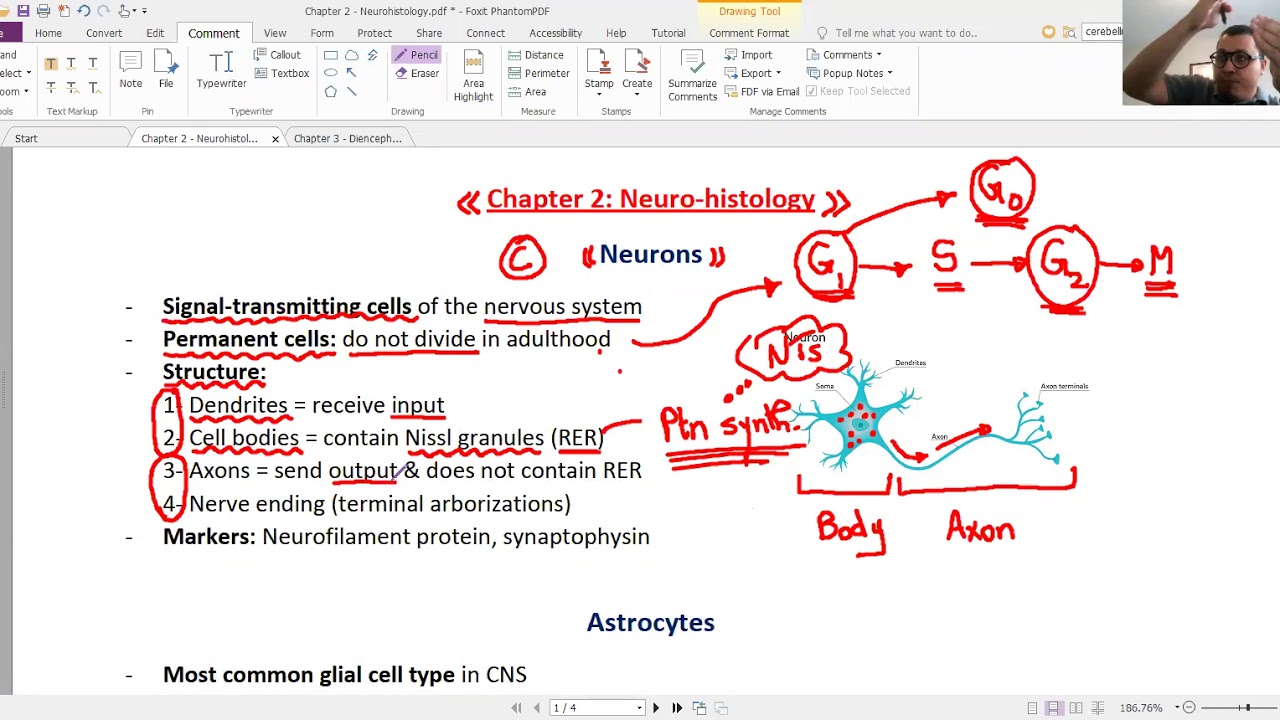
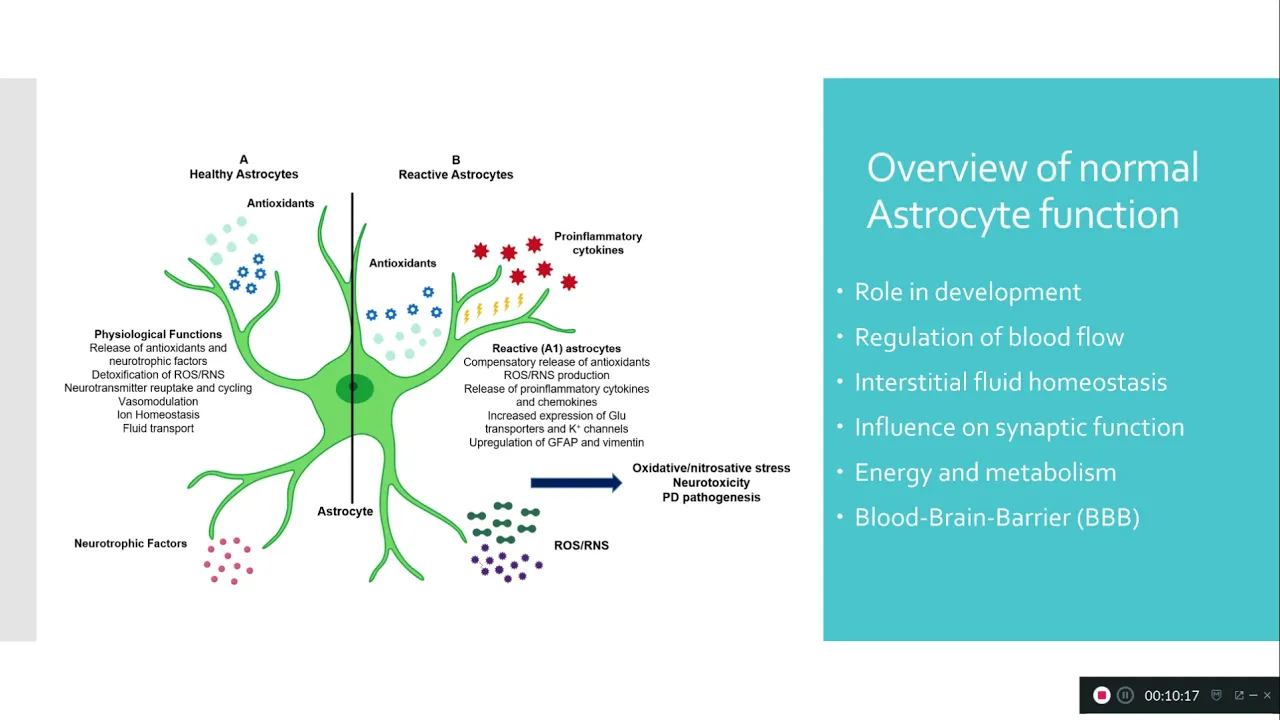

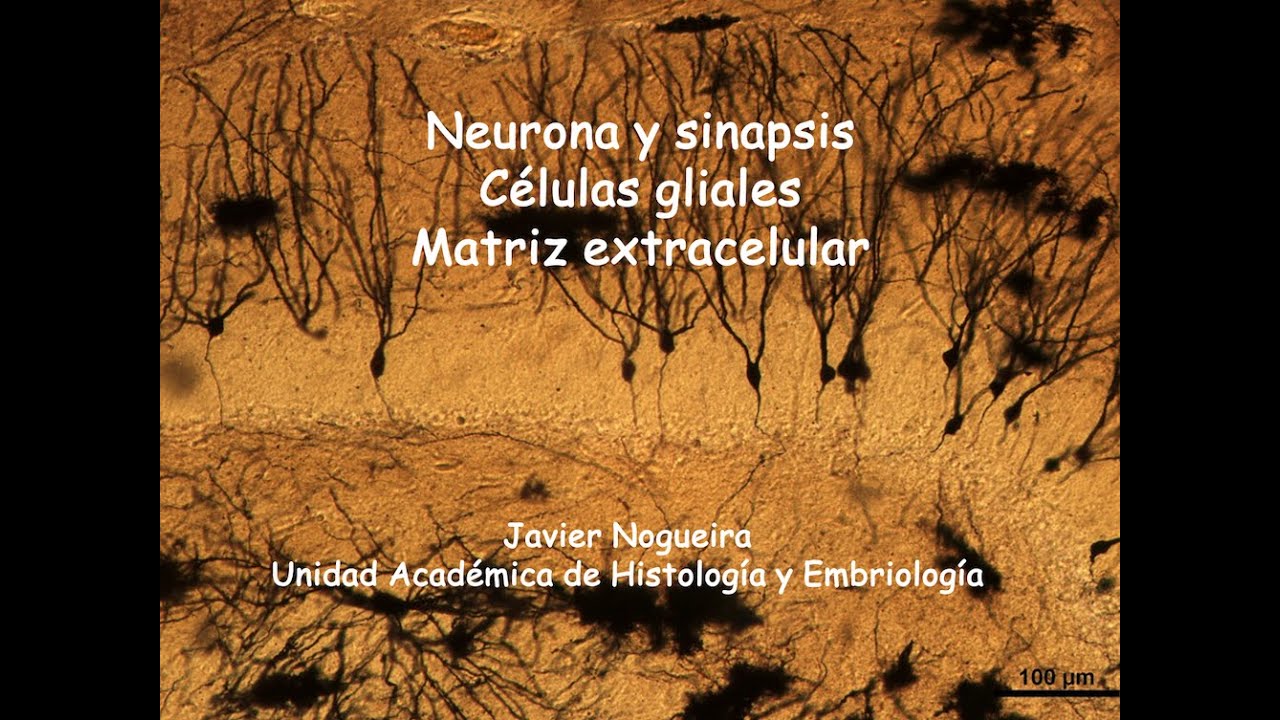






Glial cells are non-neuronal cells that support and protect neurons in the nervous system. The five main types include: (1) Astrocytes - star-shaped cells that maintain the extracellular environment, support neurons, form part of the blood-brain barrier, and are identified by GFAP; (2) Microglia - small immune cells derived from mesoderm that act as phagocytes in the CNS, producing reactive oxygen species; (3) Oligodendrocytes - myelinating cells in the CNS with a fried egg appearance, derived from neuroectoderm, and damaged in leukodystrophies; (4) Schwann cells - myelinating cells in the peripheral nervous system, derived from neural crest; (5) Ependymal cells - cells lining the ventricles that regulate cerebrospinal fluid and have cilia on their apical surfaces.
Glial Cells Explained: Astrocytes, Microglia, Oligodendrocytes & More
Added:in this video i'm going to do a rapid review of the various types of glial cells the reason that i was inspired to make a quick video on this topic is that i notice a lot of questions keep popping up about the various glial cells and while this is a really small topic the question seems to come up so often that i just wanted to make a quick video about it so that any of my subscribers watching this video would literally never get this question wrong again so in this video what we'll do is we will differentiate between the five types of cells you see on this slide here those include astrocytes microglia schwann cells oligodendrocytes and ependymal cells before i get into this video if you like the content that i'm making please smash the like button click subscribe and share this video with your friends whether you're in graduate school medical school nursing school pa school np school maybe you're even a resident or an undergrad student it doesn't matter sharing it on your social networks helps get my video out there to more people for free quality education so i really appreciate your help so let's get started with astrocytes astrocytes are star-like cells that are responsible for the chemical environment for signaling so in a nutshell the primary function of astrocytes is to maintain the proper extracellular environment so that various other cells in the central nervous system can carry out their jobs so you can think of astrocytes as playing a very supportive role these are also involved in maintenance of the blood-brain barrier and they're involved in reactive gliosis the term reactive gliosis is the catch phrase that refers to the changes you see in the brain after traumatic injury to the brain and you'll see astrocytes in reactive gliosis and you'll also see the cell on the next slide which is microglia you're going to see the presence of gfap i don't need to get into exactly what this stands for or what it does what it means all you need to know is that if you see gfap the answer is astrocytes so astrocytes equals gfap just memorize that now the thing about astrocytes is you want to know that these are actually the most abundant cell in the brain and that they communicate via gap junctions so all of these points on this slide with the exception of the gfap thing which you just need to memorize basically tell you that astrocytes play a supportive role in the brain they maintained the extracellular environment to support other neurons and other structures locally in the cns so those are astrocytes now the prefix astro astro is star-like right like astrophysics right like the physics of stars in outer space and all that stuff that i don't know about so astro equals star shouldn't be a surprise to you that these are star-like cells and the other thing that i like to memorize is that astrocytes are the stars of the extracellular environment so they maintain that extracellular environment so those are astrocytes now let's talk about microglia microglia are tiny cells hence the prefix micro and they're responsible for the process of phagocytosis in the central nervous system so you can think of these as like the brain's macrophages so these literally show up to the scene in reactive gliosis like i said before that occurs after some traumatic injury and they act as scavengers so they eat up all the things that need to get phagocytosed out of the brain and these actually form reactive oxygen species and you want to know that because reactive oxygen species are used in the phagocytosis of foreign pathogens and foreign materials but we also have some evidence that this process can actually lead to some neurodegenerative conditions and reactive oxygen species in the brain have been possibly implicated in things like als and other cns diseases so the microglia definitely serve a purpose they phagocytize anything that needs to get out of the central nervous system they're involved in reactive gliosis and they form reactive oxygen species which are supposed to be helpful but maybe it's thought that when these cells act out of control there's reactive oxygen species that form and actually can inadvertently damage the brain and one more point that you want to memorize microglia are derived from the mesoderm so so far we've talked about two cells astrocytes the stars of the extracellular environment astro means star and microglia micro meaning small these are the small cells that are basically like your cns macrophages now let's talk about the cells that are responsible for myelination and there are two cells here one is the oligodendrocyte and one is the schwann cell and we're going to talk about them side by side because they're both responsible for myelination there's actually just one small difference between these two cells so everything on the left part of this slide that you see in red will correspond to the oligodendrocytes everything that you see on the right side of this slide shown in blue will be for the schwann cells and so the first thing that you need to know is obviously these are both in involved in myelin formation so these are myelin-forming cells the big difference here is that oligodendrocytes do that in the central nervous system so we're talking brain and spinal cord whereas the schwann cells do that in the peripheral nervous system the other thing you want to know is that oligodendrocytes are derived from neuroectoderm whereas schwann cells are derived from the neural crest and then for oligodendrocytes you want to memorize that these cells are actually damaged in various leukodystrophes so if you kind of flip forward in whatever textbook or question bank that you're using and you get to that part on leukodystrophies part of the pathophysiology involves the destruction or the damage of the normal cells the oligodendrocytes that normally myelinate the central nervous system and when you lose the ability to myelinate you lose the ability to propagate signals adequately in the brain and therefore you get the manifestation of neurologic disease and the last really important and very high yield fact for oligodendrocytes is that under a microscope these are said to have a fried egg appearance and what that looks like is what you see here again uh i think that's a generous phrase i don't know that i would say these look like fried eggs but you know certainly if you crack open an egg and fry the egg you can you can see somewhat of a resemblance now you need to memorize two things when it comes to oligodendrocytes and schwann cells one for the oligodendrocytes you need to memorize that it has the fried egg appearance because that's a buzzword that's high yield and gets thrown out all the time and for schwann cells you actually need to memorize that they're derived from neural crest the reason being is that when you're taking an exam you want to memorize that schwann cells come from the neural crest and oligodendrocytes come from something else that's not the neural crest so there's really i think it only makes sense to memorize one of them so if you memorize schwann cells equals neural crest then if you were taking an exam and they gave you neural ectoderm you'd be like oh well it's not schwann cells because i know that's neural crest therefore it's got to be oligodendrocytes because these are similar but different so with that in mind there are two mnemonics i want to give you for oligodendrocytes memorize all eggo dendrocytes which tells you about the fried egg appearance and when i think about schwann cells it kind of sounds like swan and swans have those crests or those really prominent beaks so i think of the schwann's crest and that helps me memorize that schwann cells are derived from neural crest so olego dendrocytes and the schwann's crest those tell you very very high yield things and then if i was taking the exam and they asked me where do ollego dendrocytes come from i'd be like all right well it doesn't come from the crest the neural crest because that's the swan or the schwann's crest so i know it's the other thing that sort of sounds like neural crest therefore it's got to be the neural ectoderm so those are very very high yield points make sure you memorize those the last cell we need to talk about are ependymal cells now ependymal cells are actually cells that are involved in csf regulation so they line the ventricles and they can either be simple columnar or simple cuboidal cells and if you've done any histology and i'm making you go back in time now to your first year of medical school or or np school pa school etc you know that columnar and simple cuboidal cells functionally are involved in fluid regulation depending on which cavity they're lining so ependymal cells are involved in csf regulation and the apical surface of the ependymal cell contains cilia and microvilli so the little hairs are literally like ushering the csf along helping to maintain that fluid compartment now you absolutely need to memorize this function so my mnemonic here is that the csf depends on ependymal and you see that in depends there's e p e and d append for ependymo so the csf depends on ependymal that's it guys really really fast i told you this was going to be a rapid review here is your summary table for your reference i didn't put my astrocyte mnemonic in here but just remember astro equals star and these are the stars of maintaining that extracellular environment all egg oh dendrocyte for fried egg appearance swan's crest for schwann cells coming from the neural crest and csf depends on ependymal cells hope this was helpful good luck
Up Next

Is Your Brain Really Made of Fat? Anatomy of Myelin
@theanatomylab
569.2K views•2021-07-30
Deciphering Neural Circuits Controlling Anorexia in Mice | Richard Palmiter
@AllenInstitute
2.3K views•2011-10-10

Vagus Nerve (CN X): Anatomy, Nuclei & Functions Explained
@Alilamedicalmedia
305.2K views•2022-10-31
How Exercise Benefits Your Brain: Science Explained
@TED
11.4M views•2018-03-21
Related Study Plans & Knowledge Roadmaps
Structured learning paths in Neuroscience